Hello. This is OJIKO Hospital & N+ Plus, which is dedicated only to your beautiful and healthy nose.
The content we prepared this time is about low nose rhinoplasty, transformed into a beautiful nose line.
In modern times, people of all ages and genders can try various methods to change their image. Through different means such as dieting, skin care, makeup, and hair styling, it is easy to make changes on your own. Even so, the part that is difficult to change is the nose. The nose is located at the center of our face and is the most three-dimensional feature, so even a small change can have a big effect. On the other hand, when the shape of the nose falls outside the general standard, it can make the balance of the entire face feel off. For this reason, interest in rhinoplasty has grown as people seek to restore facial balance.
Therefore, for those looking into rhinoplasty, external features such as a low nose, upturned nose, hump nose, or crooked nose are often the first considerations. Among these, people whose noses are so low that their whole face looks less dimensional and flat often seek information about low nose rhinoplasty in hopes of improving their image into something more three-dimensional and refined.
Common characteristics of patients undergoing low nose rhinoplasty include a low nasal bridge or both a low nasal bridge and a low nasal tip. In the past, excessively high shapes were often preferred, but today the trend is to enhance the nose naturally while preserving individuality and matching the facial features. It is therefore better to proceed with a nose line that suits the individual’s overall image. In addition, while cosmetic improvement is important, the nose is also an organ responsible for breathing and the sense of smell. Because of this, functional aspects must be checked before surgery in order to achieve satisfactory low nose rhinoplasty.
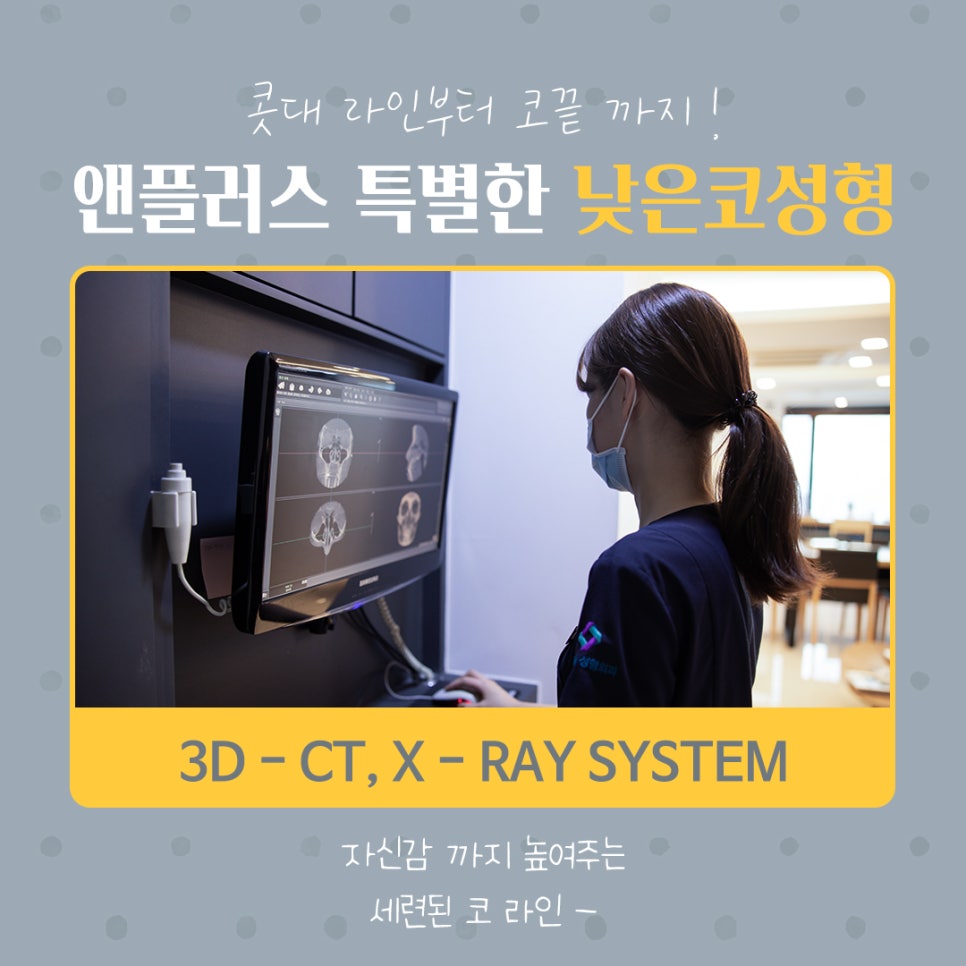
At OJIKO Hospital & N+ Plus, to ensure safe and satisfying low nose rhinoplasty, preoperative 3D-CT imaging, internal endoscopic imaging, various allergy tests, and internal nasal function tests are performed. Surgery is then carried out using materials and methods suited to the individual’s current condition.

The surgical methods for low nose rhinoplasty are divided into cases where only the nasal bridge is low and cases where both the nasal bridge and the nasal tip are low.
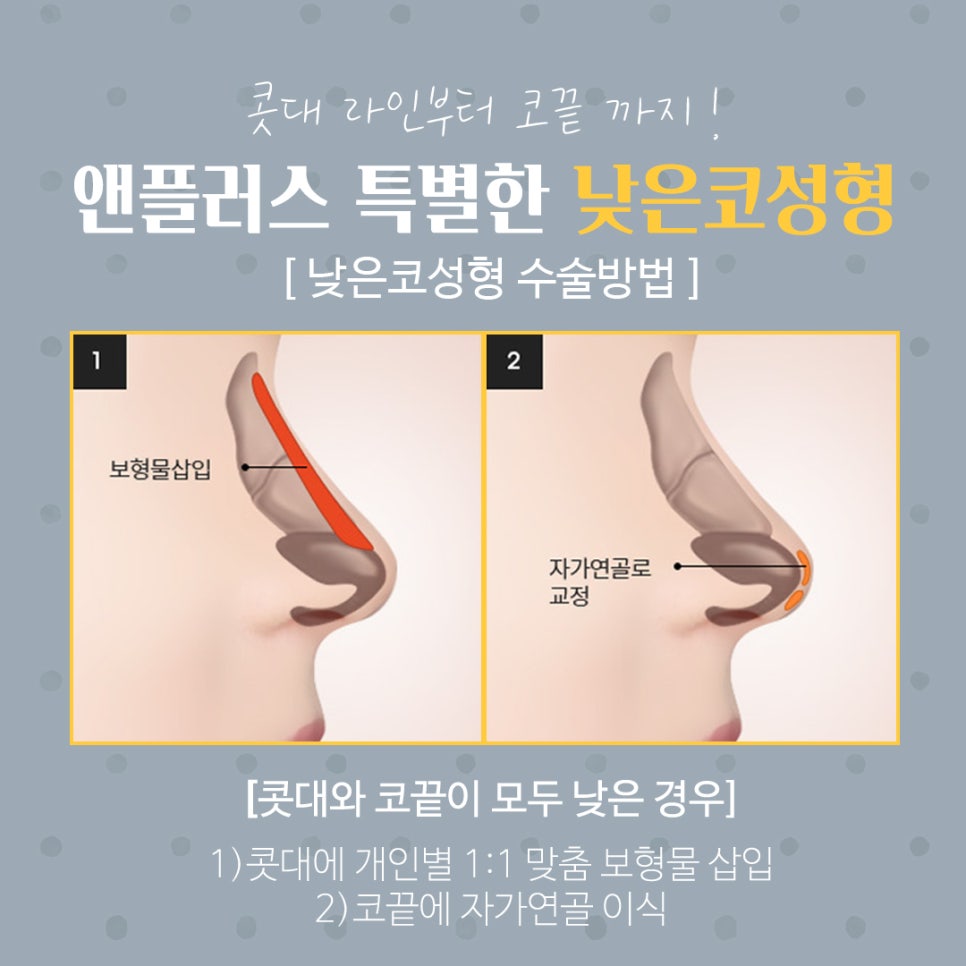
In low nose rhinoplasty where both the nasal bridge and the nasal tip are low, the bridge is corrected with silicone, and the tip is corrected using the patient’s own cartilage.
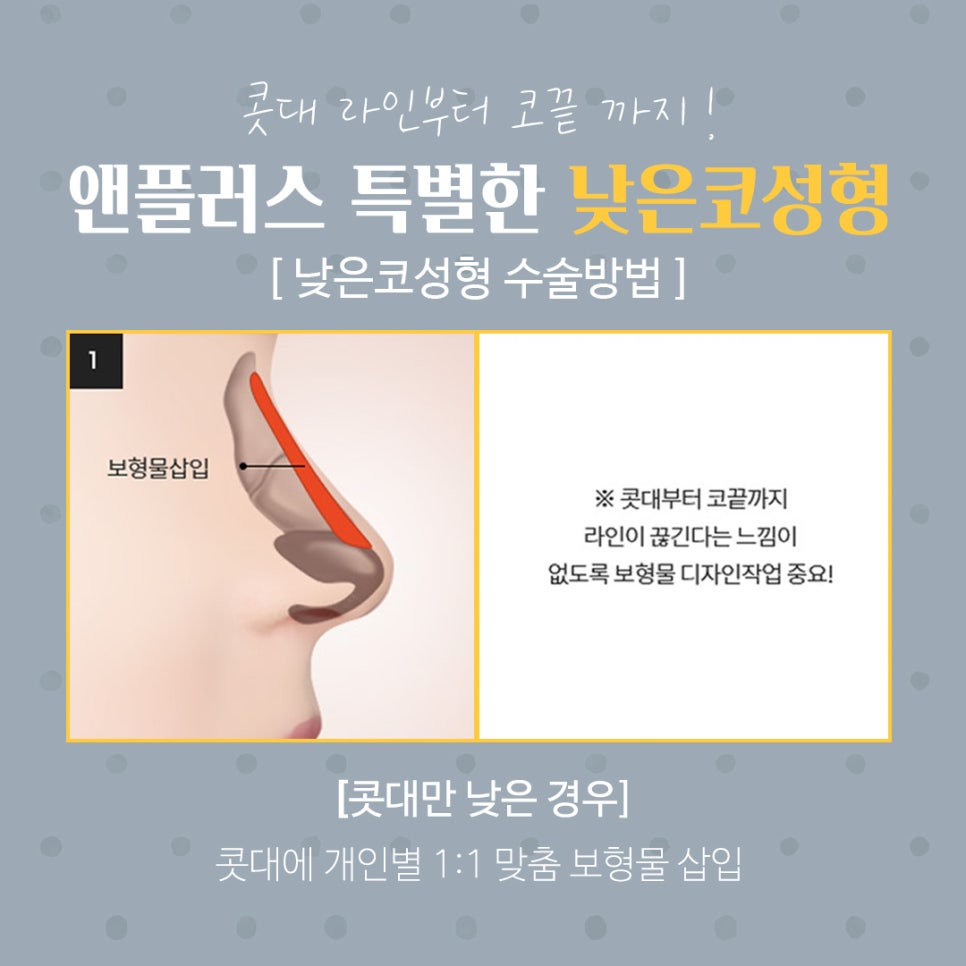
In low nose rhinoplasty where only the nasal bridge is low, silicone is inserted into the bridge and the correction is performed by designing the line so that the nasal tip and bridge connect smoothly.
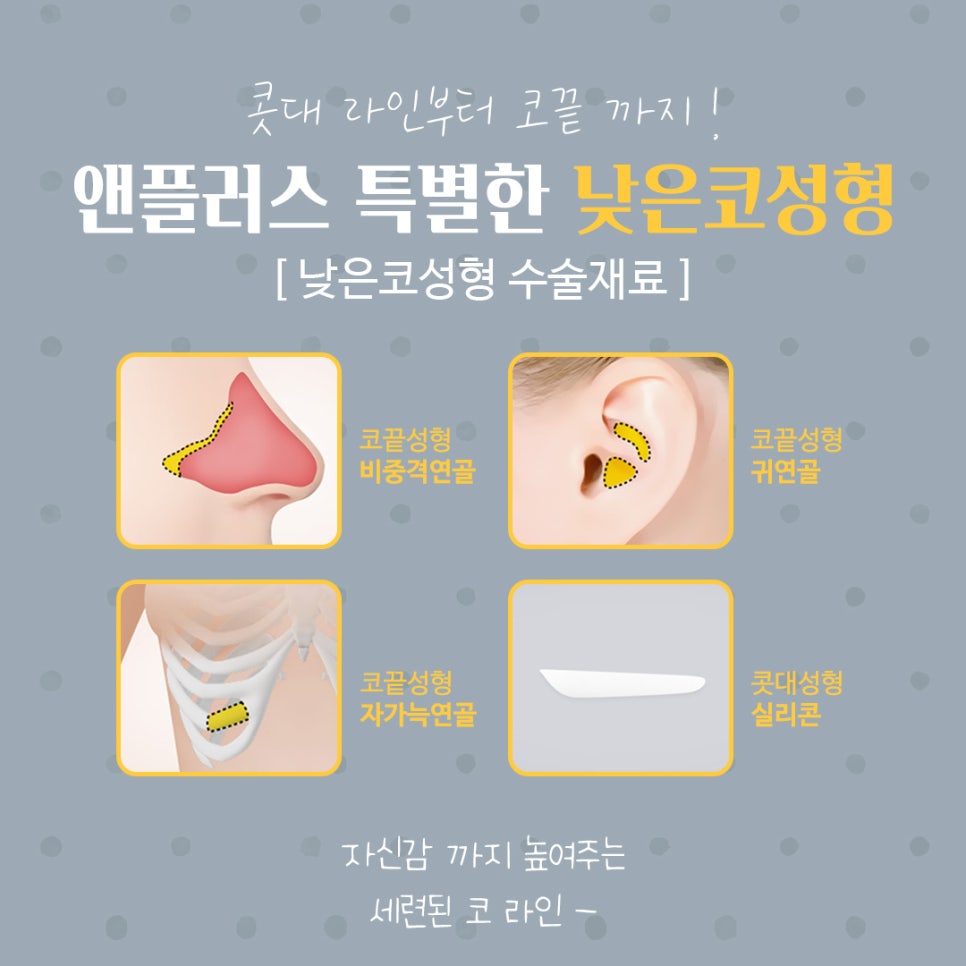
As for materials used in low nose rhinoplasty, the nasal bridge is generally corrected with silicone and the nasal tip with the patient’s own cartilage. In the case of autologous cartilage used for the tip, it is selected as a material suited to the individual after preoperative testing. Types of autologous cartilage include ear cartilage, septal cartilage, and costal cartilage.
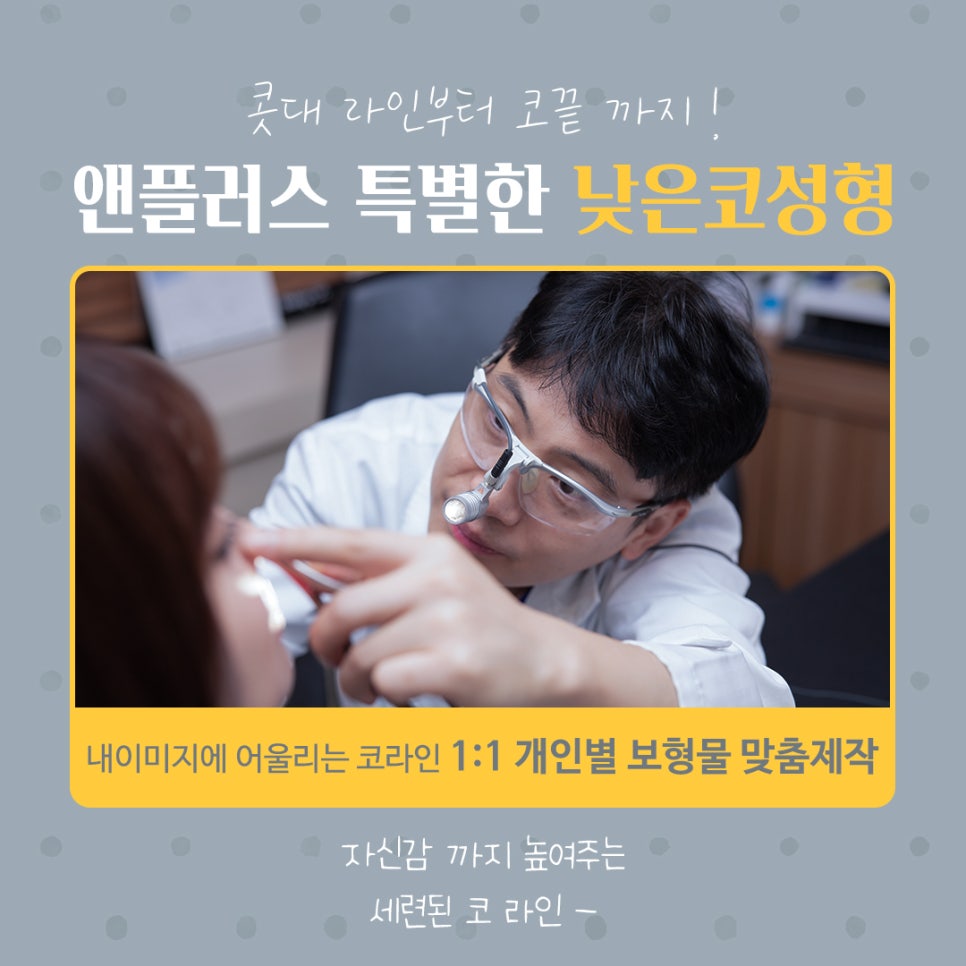
The silicone implant used for the nasal bridge is not simply the pre-manufactured product as-is. Instead, it is carefully shaped by hand after considering the individual’s overall image as well as the width, length, breadth, and height of the nasal bridge. In this way, a somewhat artificial-looking nose line can be designed into a natural line that suits the individual.
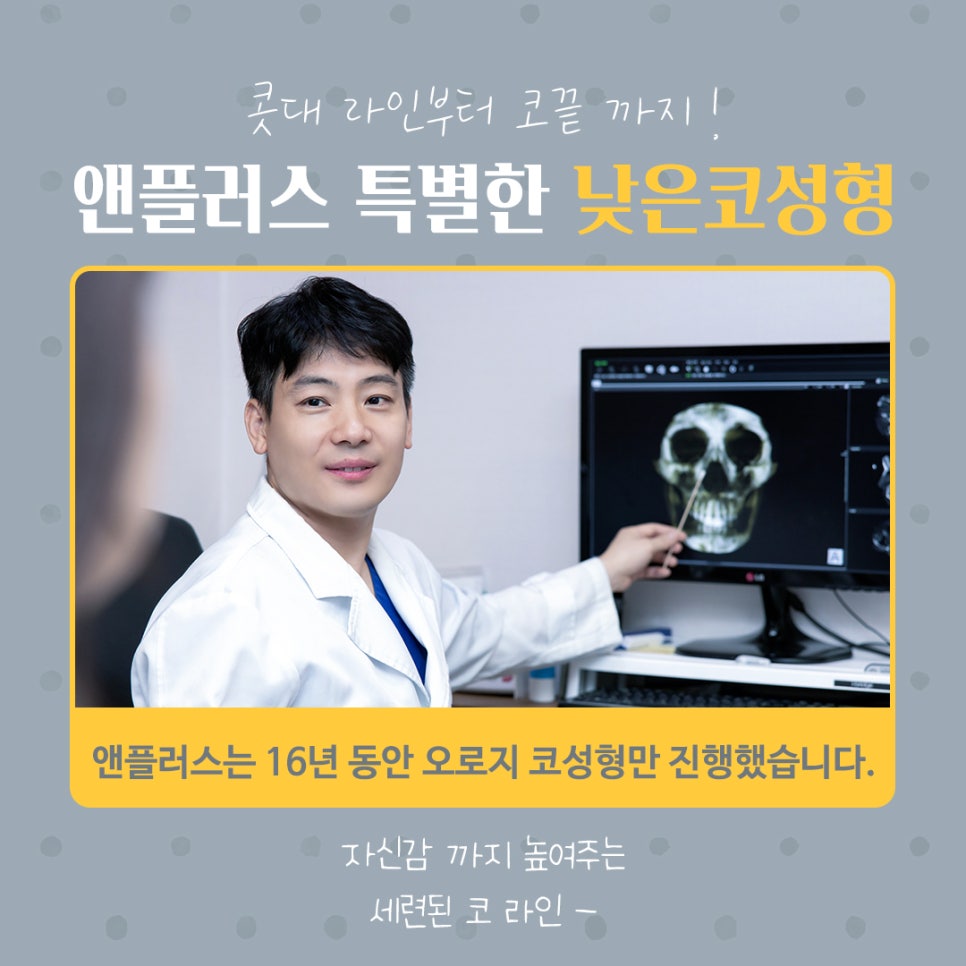
As such, low nose rhinoplasty may seem simple, but as mentioned earlier, because the internal functional aspects must be checked at the same time, it can be considered one of the more difficult procedures in plastic surgery. Therefore, it is important to make your decision only after carefully checking whether the medical staff have strong anatomical knowledge, whether they have sufficient experience and expertise in the procedure, whether equipment is available to accurately assess your nose, and whether aftercare is reliably guaranteed. This can help prevent the need for revision surgery after the operation.
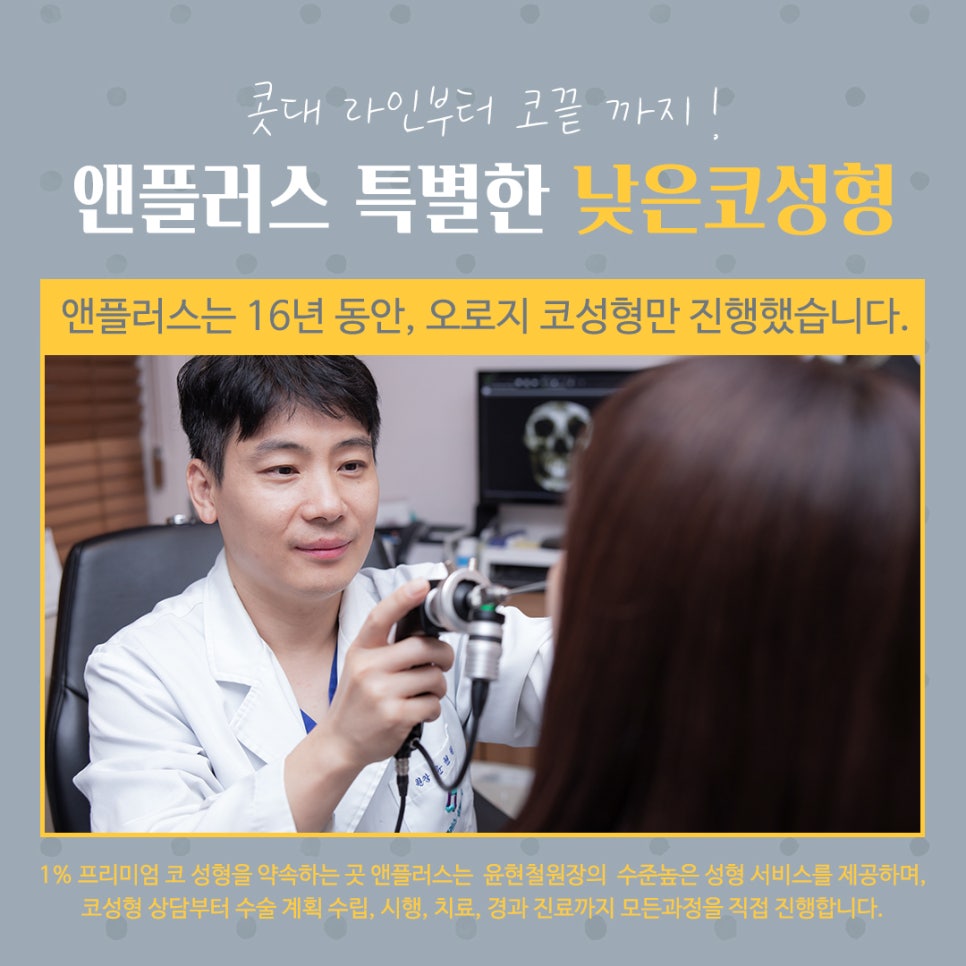
At OJIKO Hospital & N+ Plus, CEO surgeon Yoon Hyun-cheol personally takes charge one-on-one, handling every step from consultation related to low nose rhinoplasty, to surgical planning, procedure, treatment, and follow-up care, allowing patients to receive a higher level of medical service.

For aftercare, an N+ Plus membership card is issued, providing an A/S system that guarantees support for one year after surgery. In addition, a surgical responsibility guarantee system is in place to prepare for any post-surgery pain, inflammation, or dissatisfaction with the shape that may occur. Those who hold the N+ Plus membership card can receive aftercare benefits at any time.
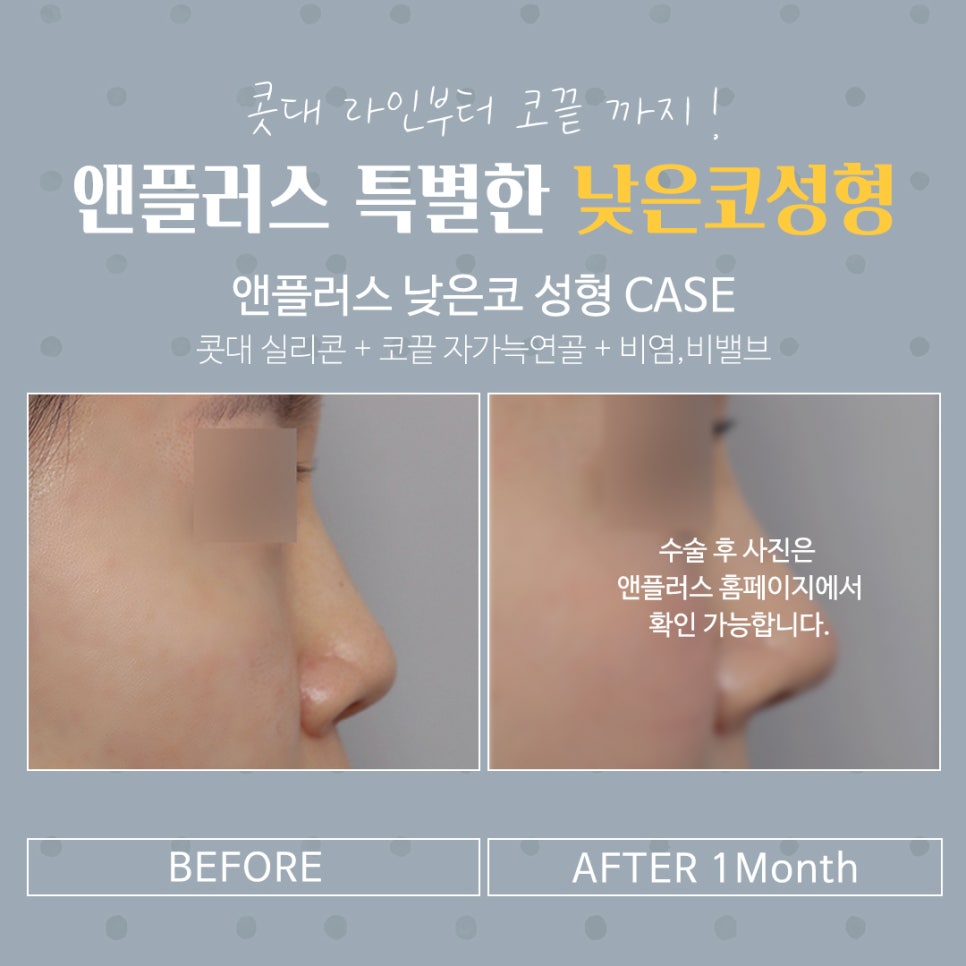
(The image above shows before-and-after photos of low nose rhinoplasty at OJIKO Hospital & N+ Plus.)
This concludes the information about low nose rhinoplasty at OJIKO Hospital & N+ Plus. I hope this article is helpful for those who are considering rhinoplasty because their low nose shape makes their impression look flat or less three-dimensional. Thank you.