
Hello. This is OJIKO Hospital N+PLUS, which only thinks about your beautiful and healthy nose.
Today’s topic is implant-free rhinoplasty.

When it comes to first impressions, people tend to prioritize what is visual, so appearance can be said to be the main standard. For that reason, improving one’s appearance for self-satisfaction or to leave a favorable impression on others has become a trend. Many people try methods such as exercising, skin care, or changing their makeup through various media, but there are still many who want to improve areas that do not change through surgery. Among these, the nose is located at the center of the face and is the most three-dimensional feature, so even a small change in its shape can greatly affect one’s image. That is why it is one of the more popular cosmetic procedures. People who want their image to change in a more natural and refined way through rhinoplasty look for information about the procedure.

Those who are looking into rhinoplasty can improve a nose that is low, has a hump, is upturned, drooping, or crooked—shapes that deviate from the center of the face. However, for those whose nasal bridge is already high and who do not want silicone or an implant inserted, more detailed information about implant-free rhinoplasty may be useful.
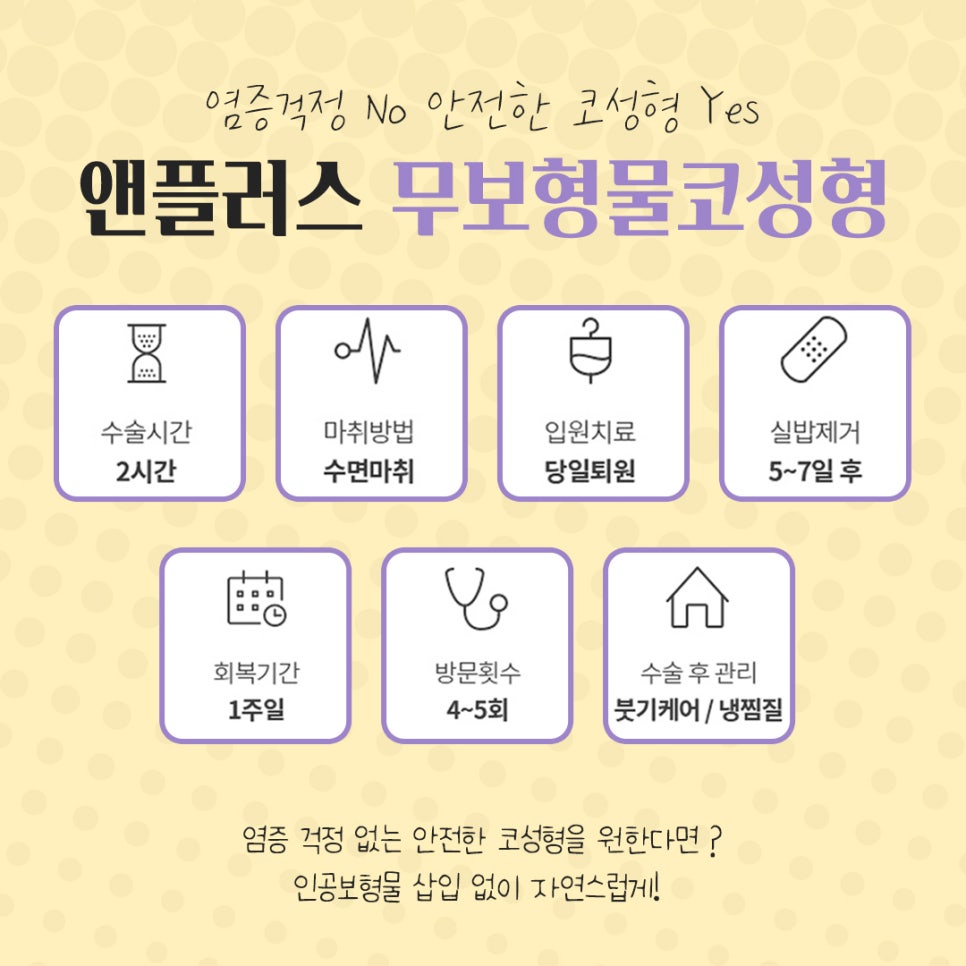
What is implant-free rhinoplasty? It refers to surgery that does not use an implant on the nasal bridge and instead corrects the tip of the nose using autologous cartilage. In the case of implant-free rhinoplasty, because autologous cartilage is used, the likelihood of inflammation can be much lower. Therefore, it can be considered suitable for people who are sensitive to inflammatory reactions or want to improve to a more natural nose shape.

Types that may require implant-free rhinoplasty include cases where the bridge is high but the tip droops, a nose with a hump, an upturned nose with a lifted tip, a nose with a tip that resembles an arrow nose or a long nose, and a nose with a downward-pointing tip.
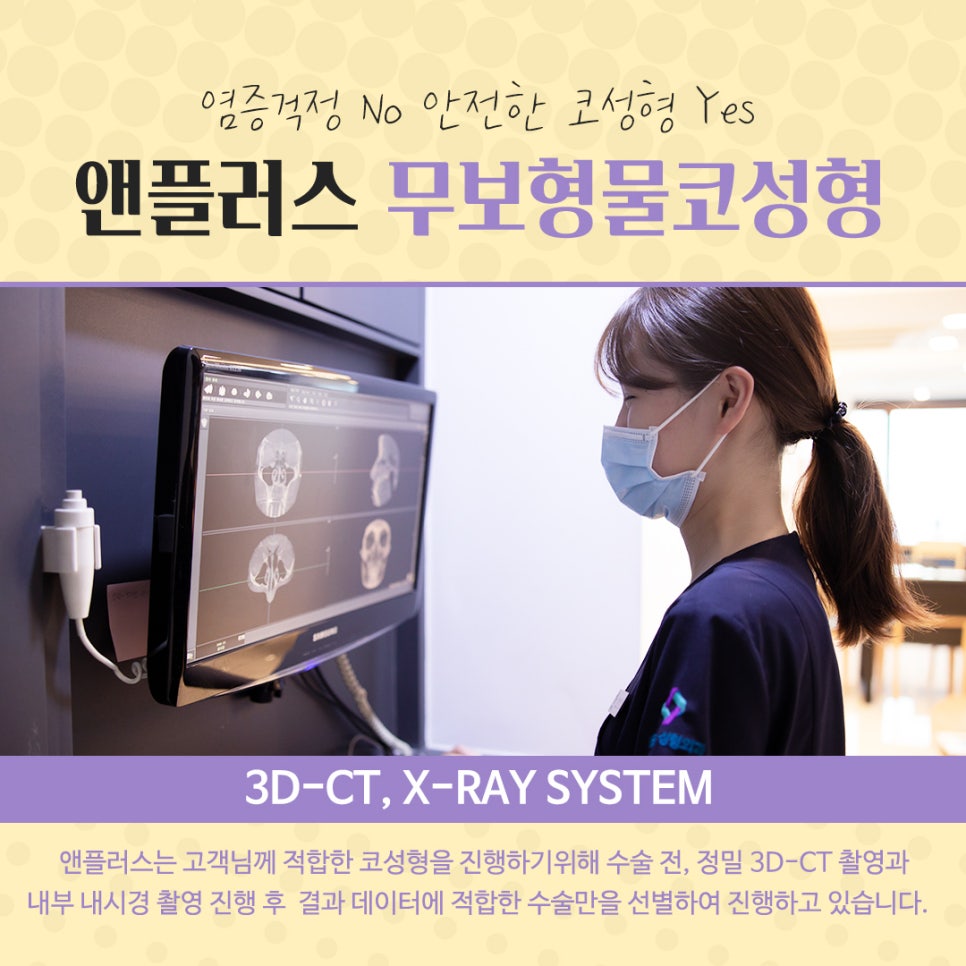
At OJIKO Hospital N+PLUS, to ensure safe and satisfactory implant-free rhinoplasty, 3D-CT scans, internal endoscopic imaging, various allergy tests, and internal nasal function tests are performed before surgery to accurately understand each person’s current nasal condition. Based on the extracted data, a plan is established and the surgery is performed.
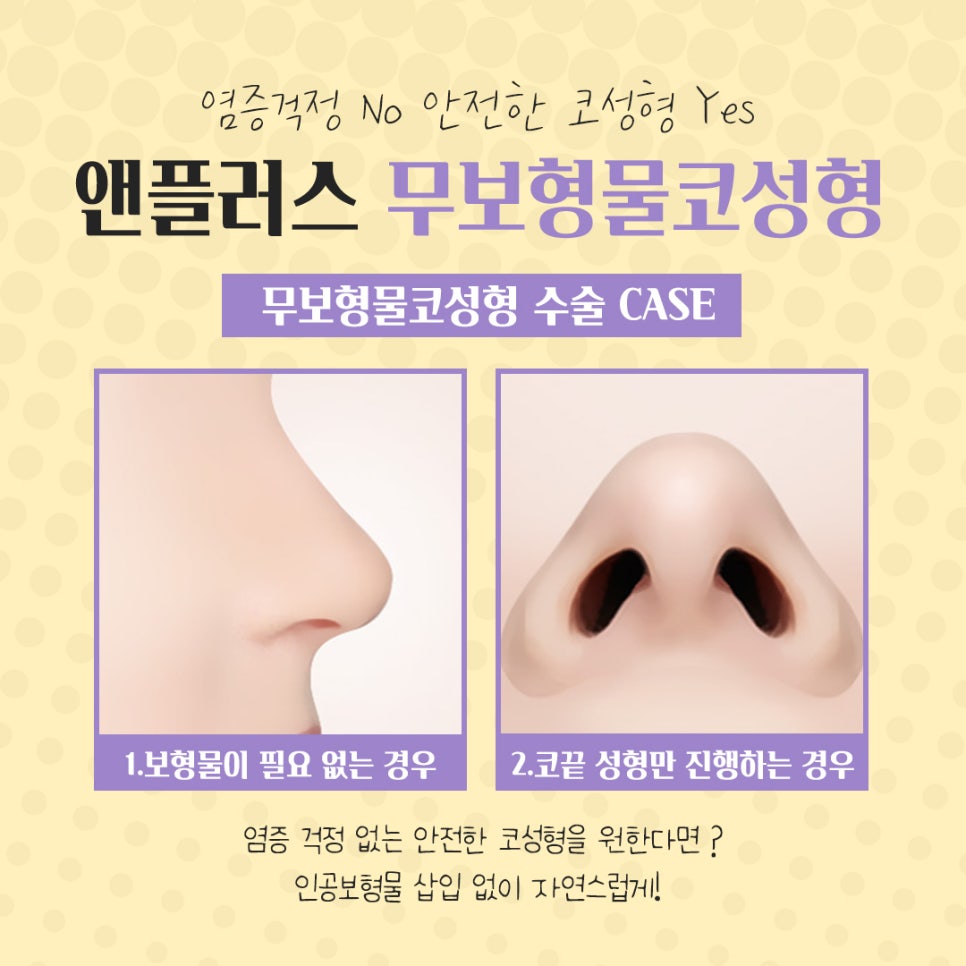
The surgical methods for implant-free rhinoplasty are divided into cases where the nasal bridge is high and an implant is unnecessary, and cases where the bridge has no problem and only the tip of the nose is to be reshaped.
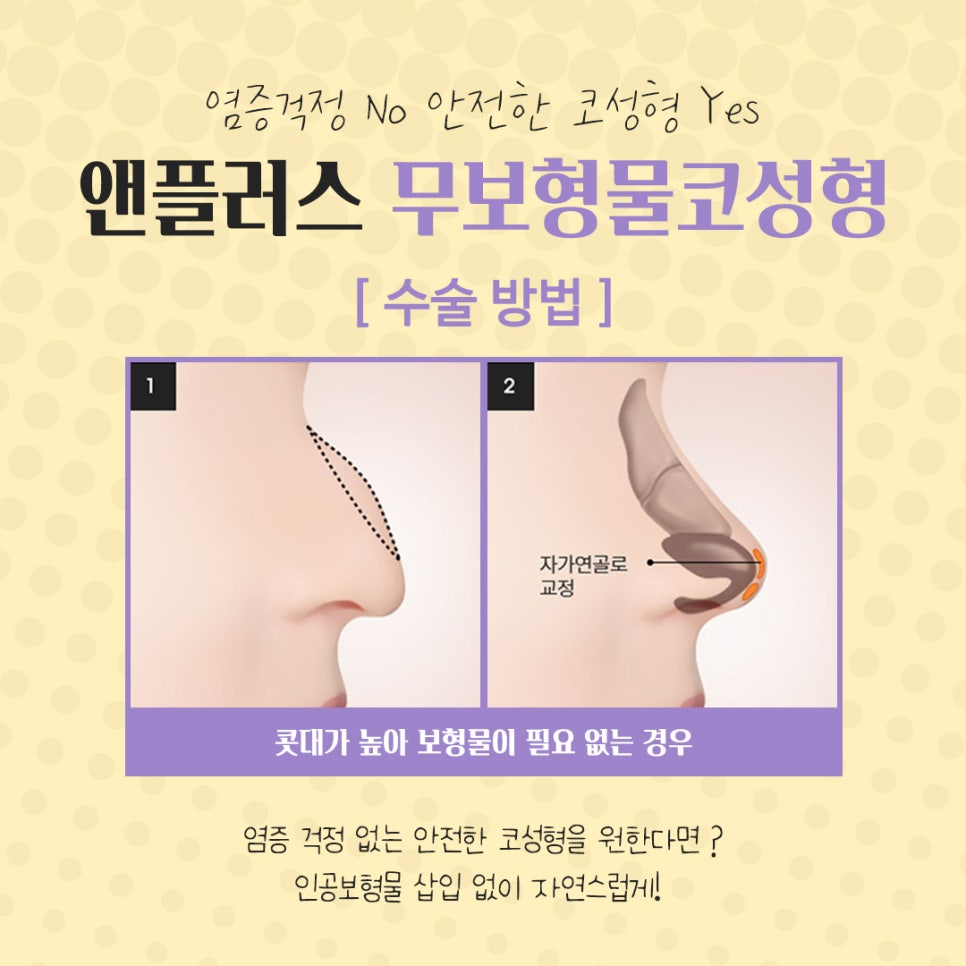
In implant-free rhinoplasty where the bridge is high and an implant is not needed, if there is a hump on the bridge, hump removal or osteotomy is performed, and the tip is corrected using autologous cartilage.
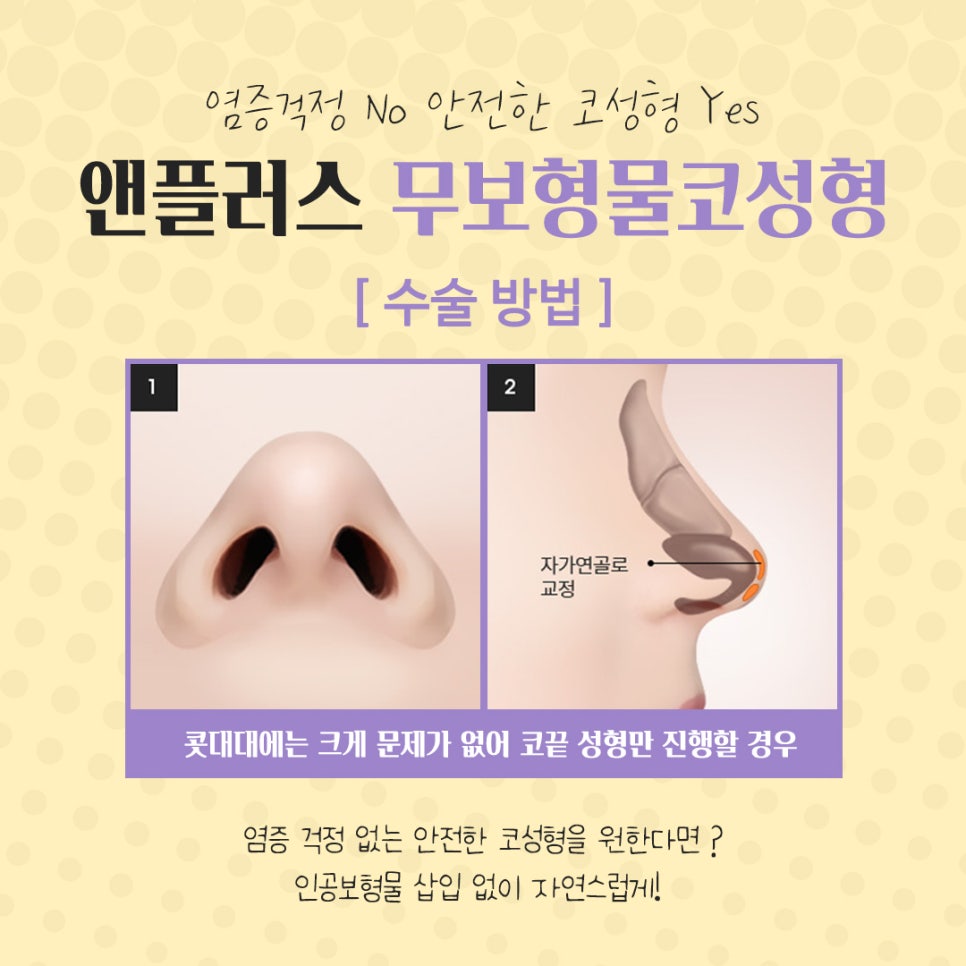
In implant-free rhinoplasty where there is no problem with the nasal bridge, the tip is corrected with autologous cartilage and then smoothly connected to the bridge to refine the nasal line.
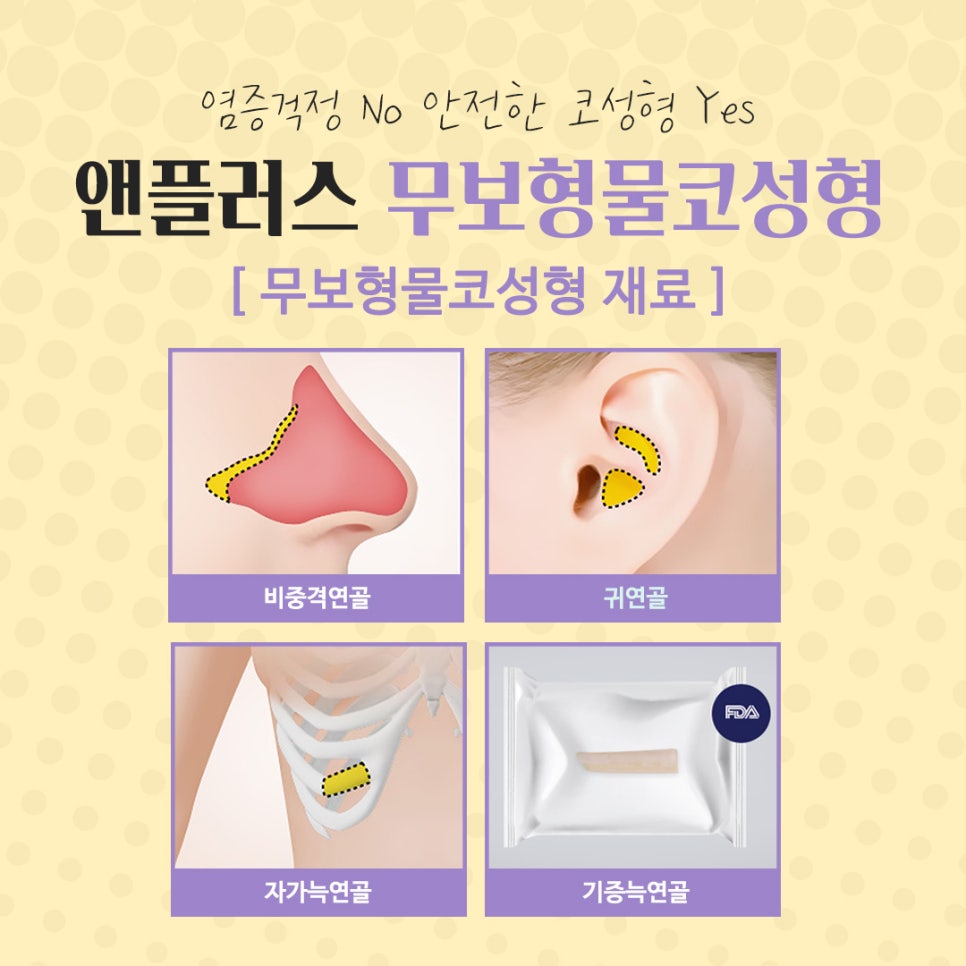
The autologous cartilage used for the tip in implant-free rhinoplasty includes septal cartilage, ear cartilage, and autologous rib cartilage. These are selected as the material best suited to the individual through preoperative examinations before surgery. If the use of autologous cartilage is unavoidable, donated rib cartilage is used, and implant-free rhinoplasty is performed using donated rib cartilage, which is a safe material approved by the U.S. FDA.

Although implant-free rhinoplasty may seem like a relatively simple procedure because it does not involve the entire nose, the nose is an organ responsible for breathing and smelling, and its internal structure is highly complex. For that reason, while appearance is important in rhinoplasty, it is essential that the surgery also takes internal functional aspects into account. Therefore, it is important to carefully consider whether the medical team has strong anatomical knowledge of the nose, whether they have sufficient experience and expertise, whether equipment is available to accurately assess the condition of your nose, and whether post-treatment care can be reliably guaranteed. After carefully checking these points, you can choose a procedure that allows for a satisfying implant-free rhinoplasty.

At OJIKO Hospital N+PLUS, Director Yoon Hyun-cheol personally takes charge one-on-one of every process related to implant-free rhinoplasty, from consultation, surgical planning, and the procedure itself to treatment and follow-up visits, allowing you to receive high-level medical care from before surgery through recovery.

Postoperative care is also supported through the issuance of an N+PLUS membership card, with an A/S system that guarantees support for one year after surgery. In addition, the hospital operates a surgical responsibility guarantee system to prepare for any postoperative pain, inflammation, shape-related concerns, or other possible issues, so you can receive safe benefits even after surgery.
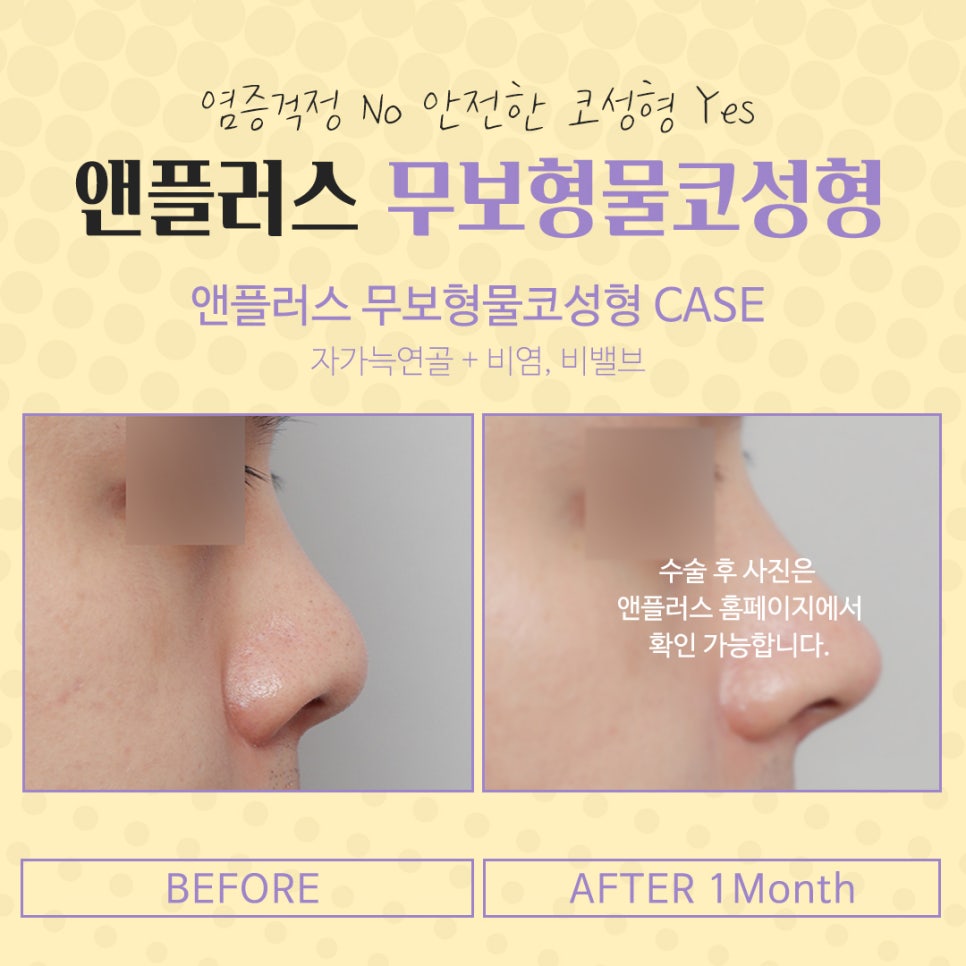
That concludes the information on implant-free rhinoplasty at OJIKO Hospital N+PLUS. I hope this post is helpful for those who are considering rhinoplasty because they are unhappy with their current nose shape. Thank you.