Relief for nasal congestion when sleeping, explained by N+

Hello. We are Ogiko Hospital N+, where we have spent the past 16 years thinking only about your healthy and beautiful nose.
The topic prepared this time is nasal congestion when sleeping.

As the seasons change, more and more people are complaining of discomfort due to rhinitis symptoms. Rhinitis symptoms include sneezing, a runny nose, and nasal congestion, with nasal congestion being the most representative symptom. These symptoms cause inconvenience in everyday life, but in particular, nasal congestion when sleeping can significantly interfere with daily life. As a result, people who have these symptoms often seek information about rhinitis surgery to improve them.

When people look into rhinoplasty, they often focus first on the appearance of the nose, such as a low bridge, a hump, an upturned tip, a drooping tip, or a crooked nose. In the same way, when nasal congestion caused by rhinitis occurs, rhinoplasty can also be used to improve the symptoms. For those who have nasal congestion in daily life or nasal congestion when sleeping, it may be helpful to check the condition of the nose accurately and proceed with surgery. Even if there are no symptoms, if surgery is performed for cosmetic purposes alone, secondary surgery may be needed later due to functional problems. To prevent this, we recommend that you be sure to check carefully.
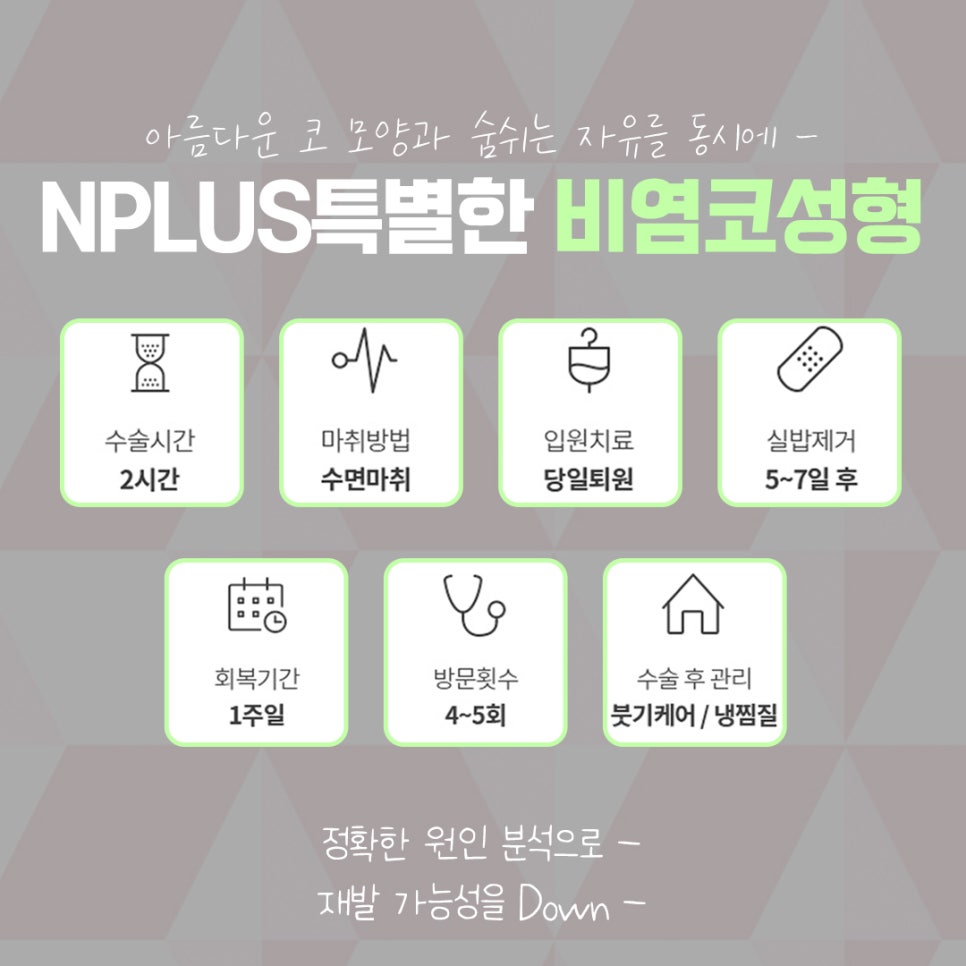
The reason nasal congestion when sleeping occurs is mostly due to rhinitis. Rhinitis is a common condition affecting more than 70% of adults in Korea, and it refers to symptoms such as nasal congestion, a runny nose, and sneezing. Of these, 20% is allergic rhinitis, and the remaining 80% is structural rhinitis caused by abnormalities in internal structures. Causes of structural rhinitis include a deviated septum, nasal valve stenosis, and inferior turbinate hypertrophy. In the case of allergic rhinitis, symptoms appear due to certain substances or seasons, so a complete cure is difficult. However, with consistent medication treatment and improved immunity, you can see temporary improvement.
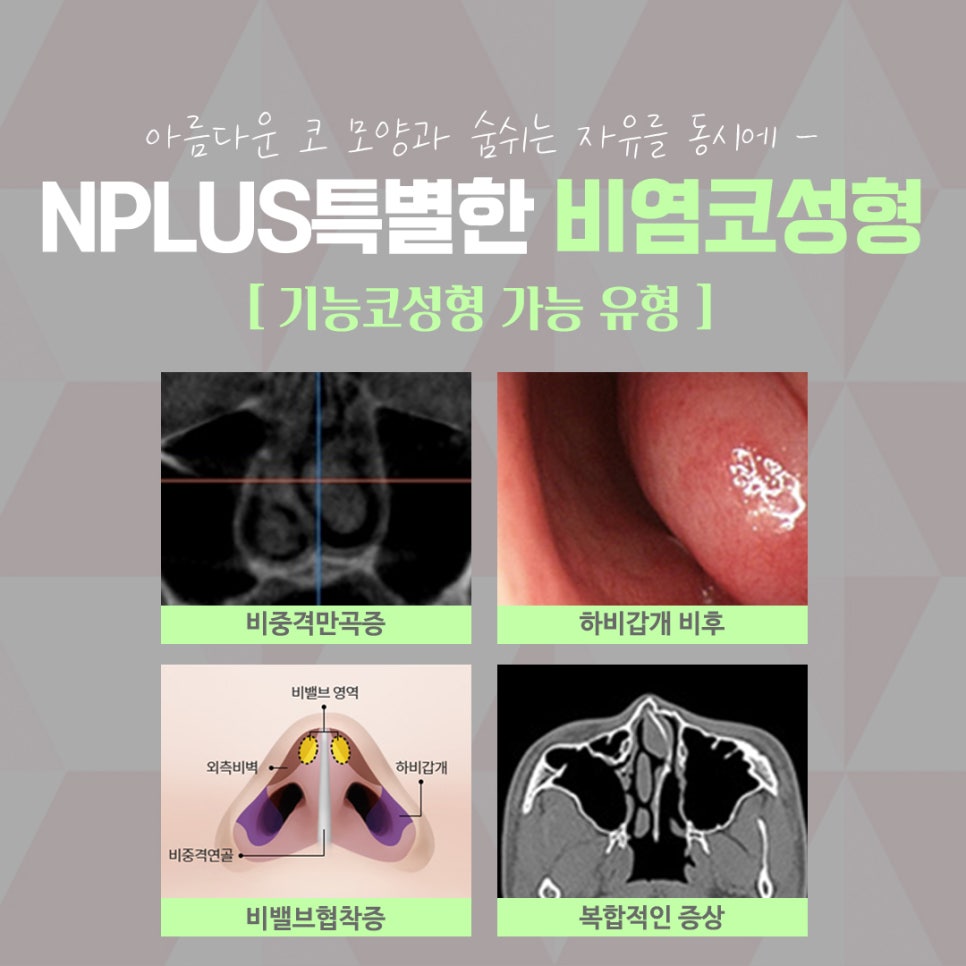
On the other hand, in the case of structural rhinitis such as a deviated septum, inferior turbinate hypertrophy, and nasal valve stenosis, a cure is possible through surgery. Although these are different conditions, they all share the common feature of obstructing the flow of air into the nose. Therefore, it is important to perform the appropriate surgery based on the symptoms. In general, when symptoms such as nasal congestion, sneezing, and a runny nose appear, many people mistake them for allergic rhinitis and leave them untreated. If they are left untreated like this, there is a high possibility that they will develop into chronic rhinitis. If chronic rhinitis progresses, it can lead to decreased concentration, fatigue, chronic headaches, migraines, and other problems that make daily life more difficult. For this reason, only when the inside of the nose is accurately diagnosed and surgery is performed can it help improve nasal congestion when sleeping or nasal congestion in daily life.

Surgery that improves function and cosmetic rhinoplasty at the same time is called functional rhinoplasty. Functional rhinoplasty is popular because it combines functional improvement and cosmetic improvement that people have long felt dissatisfied with in a single surgery.

Therefore, because functional rhinoplasty involves more than one procedure—cosmetic rhinoplasty and functional improvement—it is a good idea to choose surgery only after checking in detail whether the medical staff have a high level of anatomical knowledge of the nose, whether they have abundant relevant experience and expertise, whether the necessary equipment is available to accurately assess the condition of your nose, and whether aftercare can be reliably guaranteed.
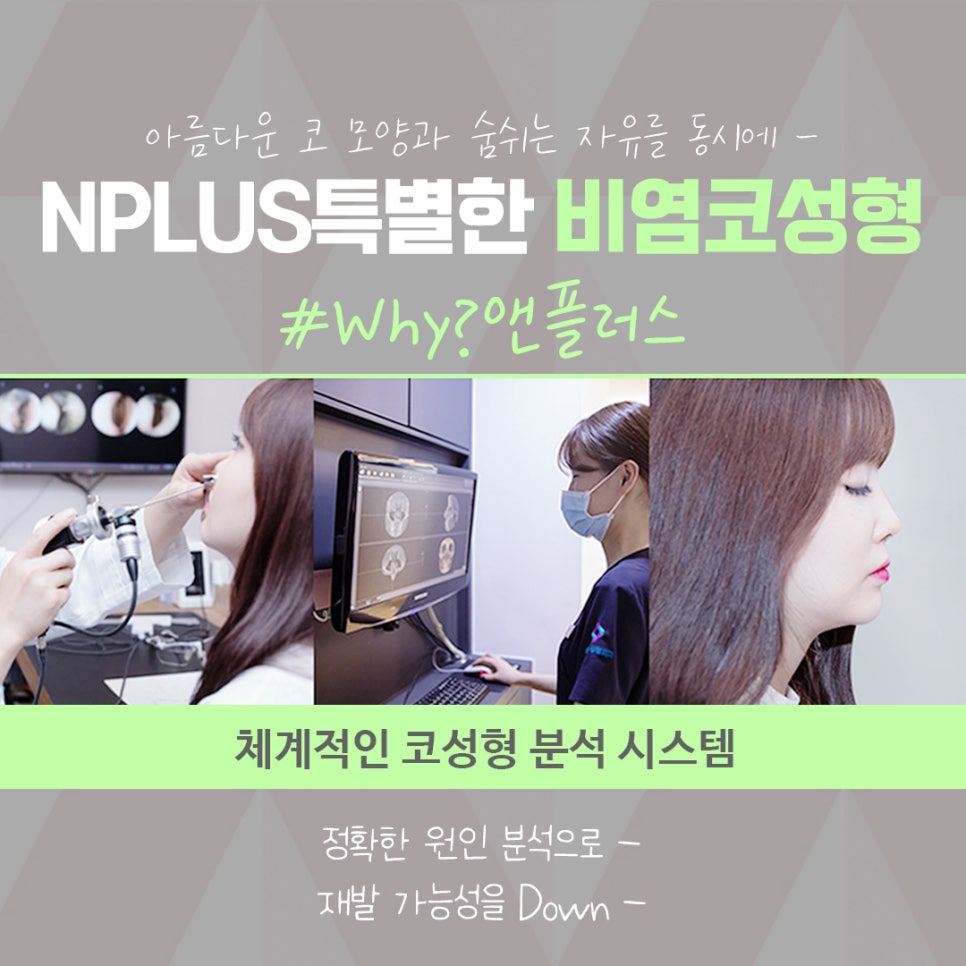
At Ogiko Hospital N+, to ensure safe and satisfying rhinitis surgery, we accurately identify and analyze the causes of nasal congestion when sleeping or nasal congestion in daily life through various allergy tests, internal endoscopy, 3D-CT imaging, and internal nasal function tests before surgery. Based on the extracted data, we establish and carry out the surgical plan.

The methods of rhinitis surgery are divided into procedures for a deviated septum, inferior turbinate hypertrophy, and nasal valve stenosis. A deviated septum refers to a condition in which the septum, which acts as the partition dividing the nostrils into two, is bent, and surgery is performed to straighten it. Inferior turbinate hypertrophy is a condition in which the inferior turbinates, the soft tissue inside the nose, have enlarged, and their size is adjusted through laser treatment. Nasal valve stenosis refers to a condition in which the nasal valve, which serves as the roof of the nose, becomes narrowed and stenotic. This nasal valve is treated using one of four surgical methods suited to the symptoms. As such, although the conditions of structural rhinitis differ, they all cause nasal congestion that obstructs the flow of air into the nose, so the surgical method must be applied according to the specific condition.
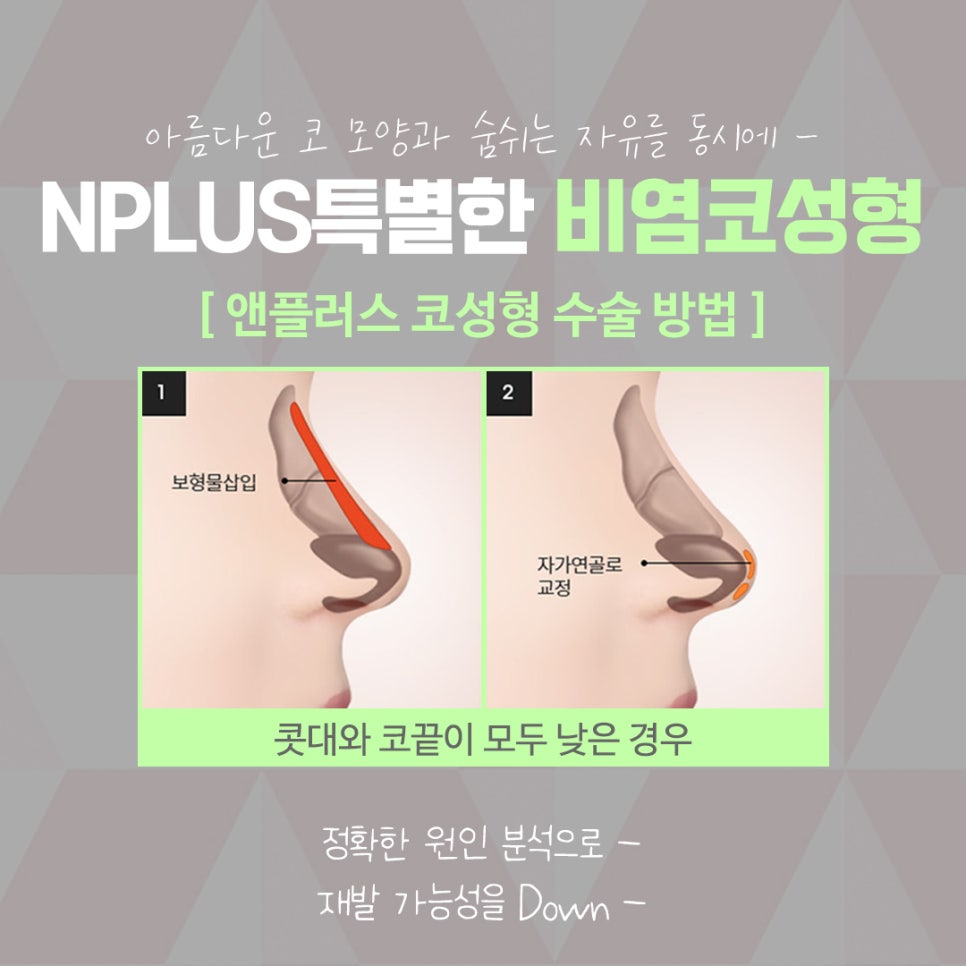
After functional surgery such as rhinitis surgery, cosmetic rhinoplasty can be performed. On average, the nasal bridge is corrected with silicone, and the nasal tip is corrected with autologous cartilage.
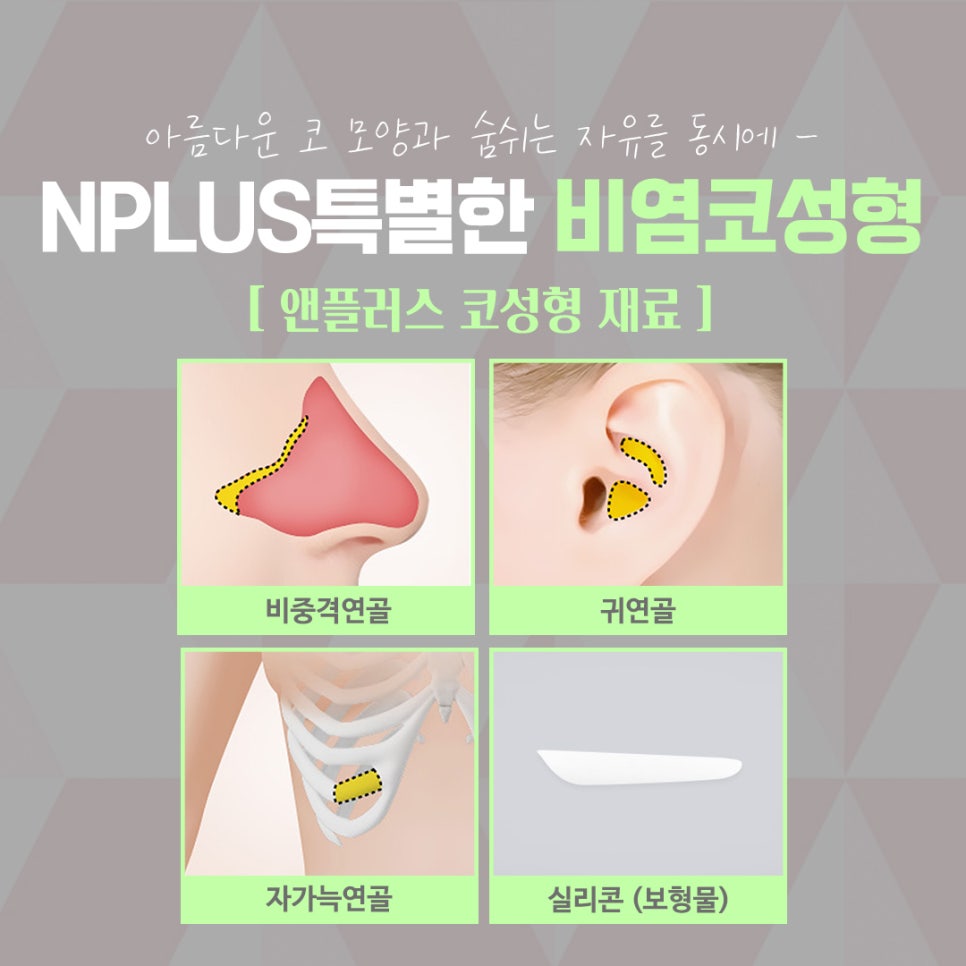
First, the autologous cartilage used for the nasal tip includes septal cartilage, ear cartilage, and autologous rib cartilage. The material used for the nasal tip is also selected through preoperative examinations to choose the most suitable material for each individual.

In the case of silicone used for the nasal bridge, in order to minimize an artificial feeling after nose surgery, we do not use a mass-produced implant as is. Instead, we carefully shape it by hand while considering various aspects such as the individual's overall image and the width, length, breadth, and height of the nasal bridge, and then use a customized implant.

As such, in the case of rhinitis surgery, there are cases where only rhinitis surgery is performed to improve nasal congestion when sleeping or nasal congestion in daily life, and there are also many cases where cosmetic rhinoplasty to correct the nose shape that had long been unsatisfactory is performed at the same time. For this reason, at Ogiko Hospital N+, Director Yun Hyun-cheol personally oversees every step one-on-one—from consultation related to rhinoplasty, to surgical planning, implementation, treatment, and follow-up care—in order to pursue safer and more satisfying rhinitis surgery.

For aftercare, we operate a warranty system that guarantees service for one year after surgery, as well as a surgery responsibility guarantee system prepared for all possible situations such as postoperative pain, inflammation, or dissatisfaction with the result. Those who have an N+ membership card can receive aftercare benefits at any time.
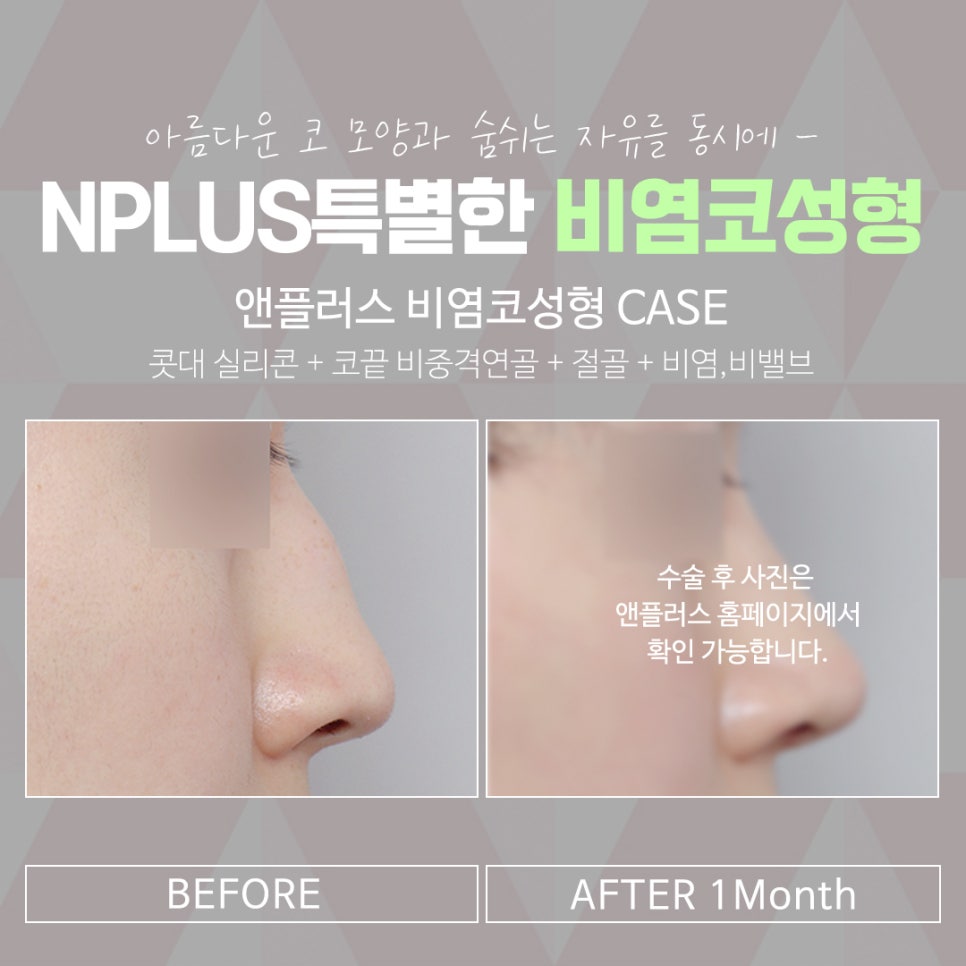
(The image above shows before-and-after photos of rhinitis surgery for improving nasal congestion when sleeping at Ogiko Hospital N+.)
That concludes the information from Ogiko Hospital N+ about nasal congestion when sleeping or nasal congestion in daily life. We hope this article will be of great help to those considering rhinoplasty for these reasons. Thank you.