
Hello. We are OjiGo N Plus Clinic, which thinks only about your beautiful and healthy nose.
This time, we have prepared information about improving your image through autologous rib cartilage rhinoplasty.

The nose is located at the center of our face and plays a role in balancing the features. As the most three-dimensional part of the face, even a slight deviation from the standard shape can make the overall facial balance appear disrupted, so many people are becoming increasingly interested in rhinoplasty. However, rhinoplasty is not a single type of surgery for everyone. The shape of each person’s nose, the condition of the nasal bones, the condition of the cartilage, the state of the skin tissue, and internal functional issues of the nose all differ. Therefore, it is important to receive an accurate diagnosis of your individual nasal condition first and then undergo a procedure suited to it, so we recommend carefully reviewing various details before proceeding.
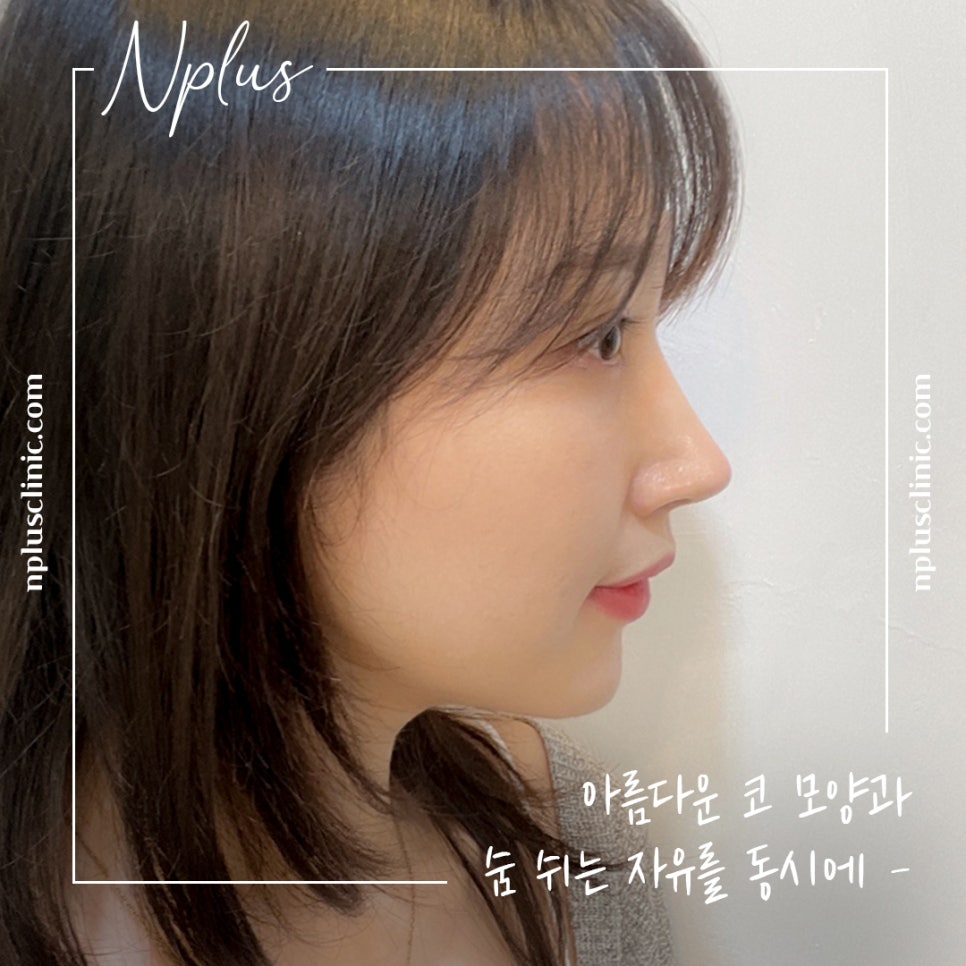
In general, people looking into rhinoplasty often want to address issues such as a low nose, a hump, an upturned nose, a crooked nose, a drooping nose, or a hooked nose. In the case of rhinoplasty, aesthetic concerns like these are important, but the nose is also a functional organ responsible for breathing and smell. The materials used in rhinoplasty also vary depending on the individual’s condition, so rather than judging only by before-and-after images, it is better to visit in person and accurately check the condition of your own nose.

Accordingly, interest in the materials used for rhinoplasty is also increasing. In general, people who look into rhinoplasty want to improve the nose line into a high, smooth shape using silicone for the bridge and autologous cartilage for the tip. The autologous cartilage used for the tip includes ear cartilage, septal cartilage, and autologous rib cartilage.
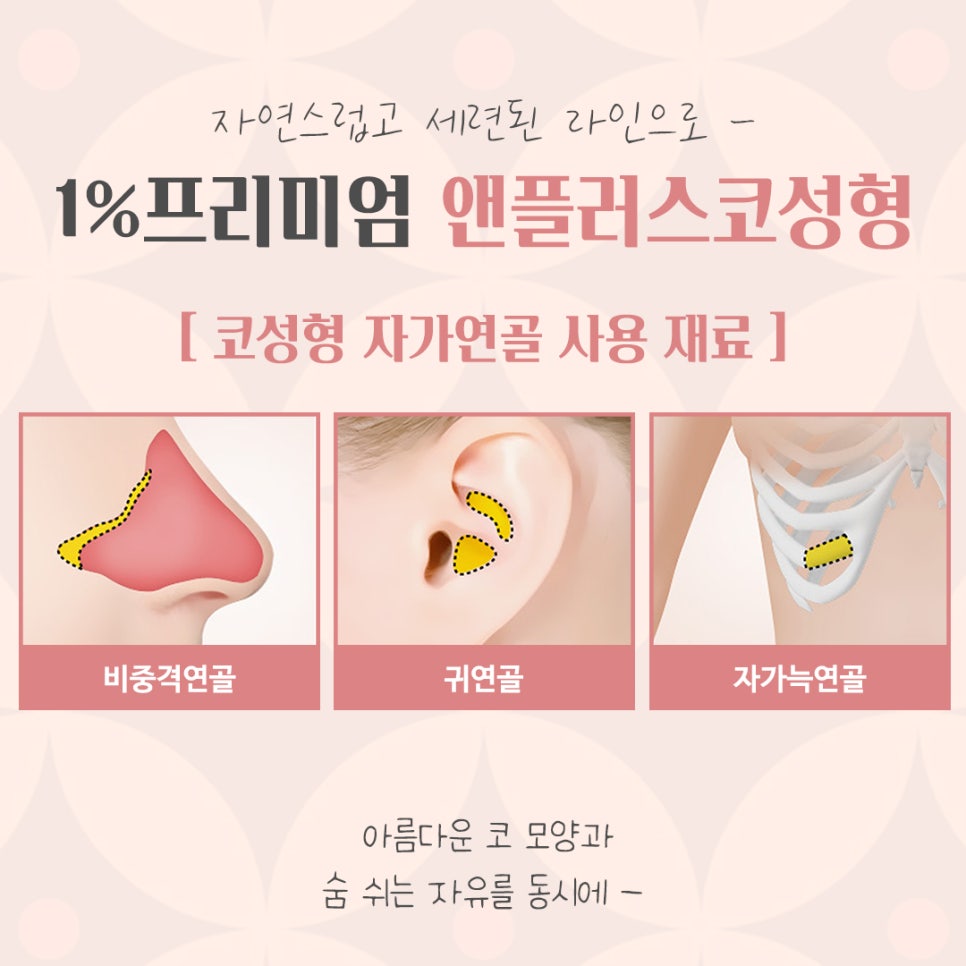
The characteristics of autologous cartilage used in rhinoplasty are as follows: septal cartilage refers to the cartilage that serves as the partition dividing the nostrils in half, ear cartilage is the small cartilage located inside the ear, and autologous rib cartilage refers to the cartilage made of soft bone located in the ribs. Septal cartilage or ear cartilage is commonly used, but recently autologous rib cartilage rhinoplasty has become quite popular. Cases in which autologous rib cartilage rhinoplasty is needed include revision rhinoplasty where there is insufficient ear cartilage or septal cartilage, as well as noses that are small, low, or upturned.
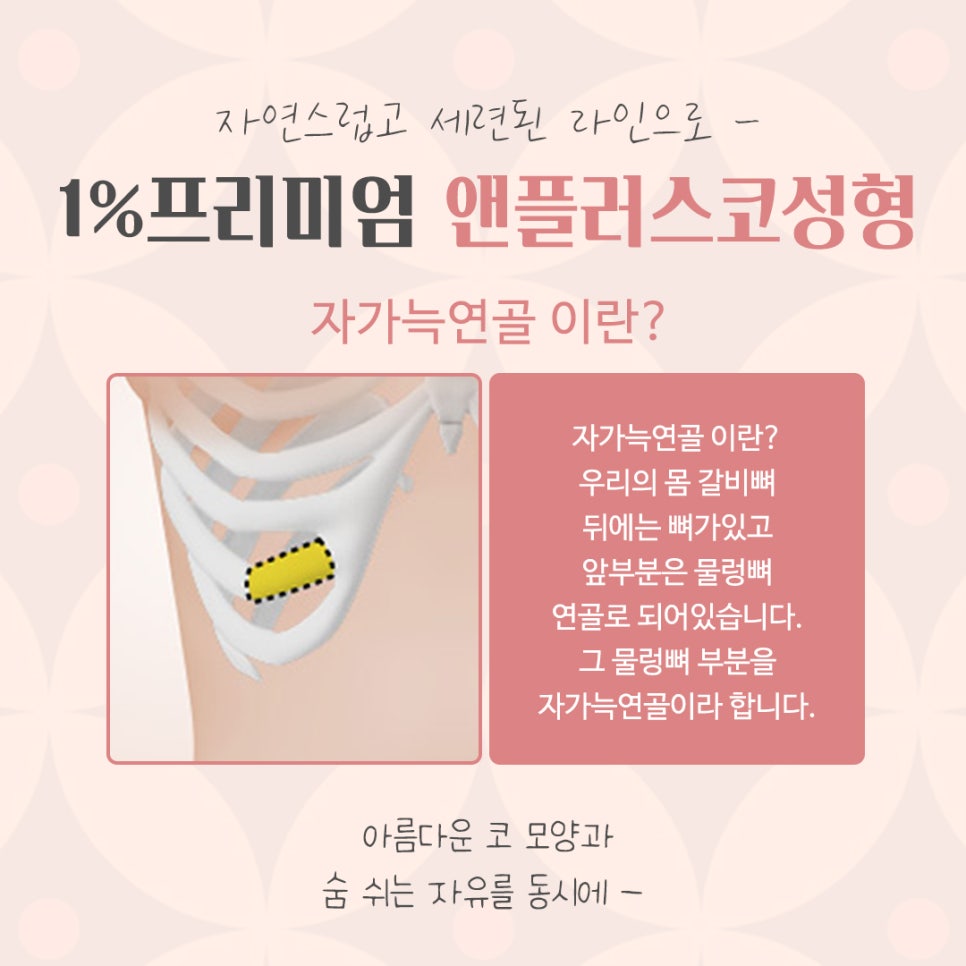
What is autologous rib cartilage rhinoplasty? If you look at the human body, there is a hard bone behind the ribs, and the front part is made of soft cartilage. In the case of first-time rhinoplasty, many people understand it as adding volume to the nose using septal cartilage, ear cartilage, and silicone. Autologous rib cartilage rhinoplasty is often known as a material used for revision rhinoplasty, but recently, it has also been widely used in primary rhinoplasty and revision surgery by taking advantage of the size and firmness of autologous rib cartilage.

Autologous rib cartilage rhinoplasty is performed by categorizing cases such as when only the bridge is low, when both the bridge and tip are low, and when only the tip is low.
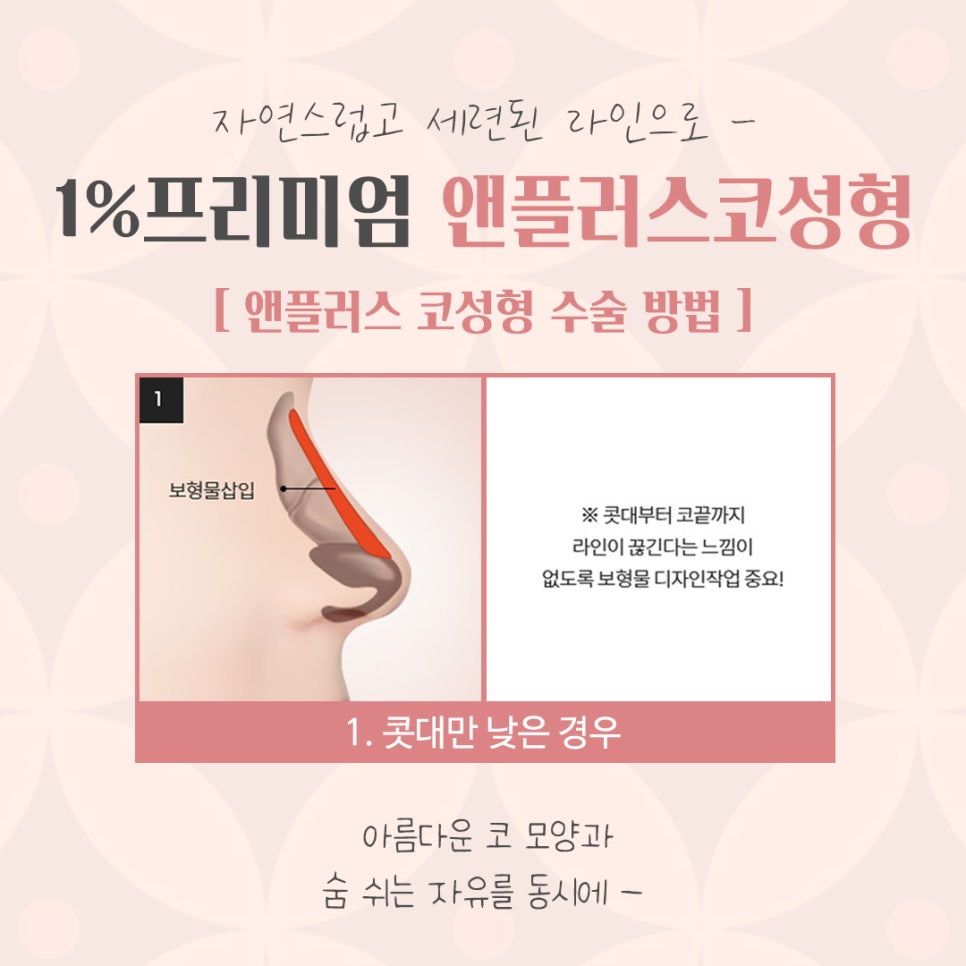
In cases of autologous rib cartilage rhinoplasty where only the bridge is low, a custom implant is inserted into the bridge to correct the overall nasal line.
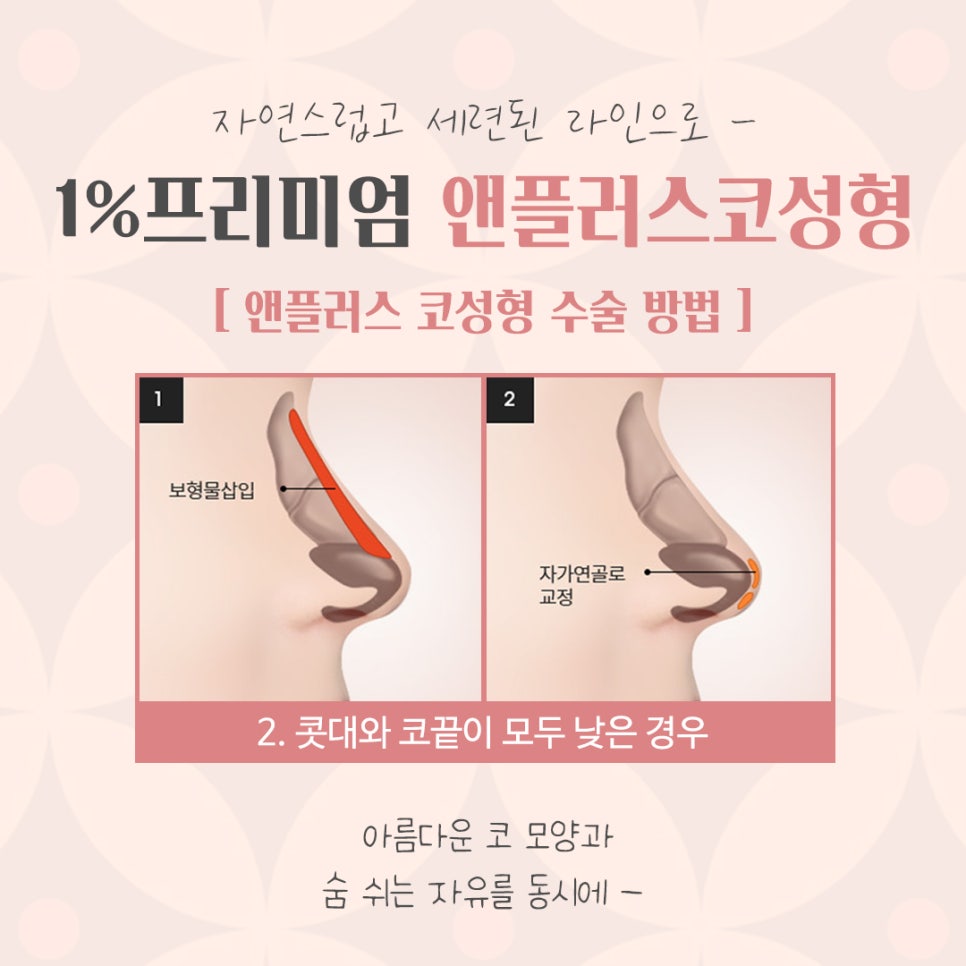
In cases of autologous rib cartilage rhinoplasty where both the bridge and tip are low, a custom implant is inserted into the bridge, and autologous rib cartilage or other autologous cartilage is grafted to the tip to correct the overall nasal line.
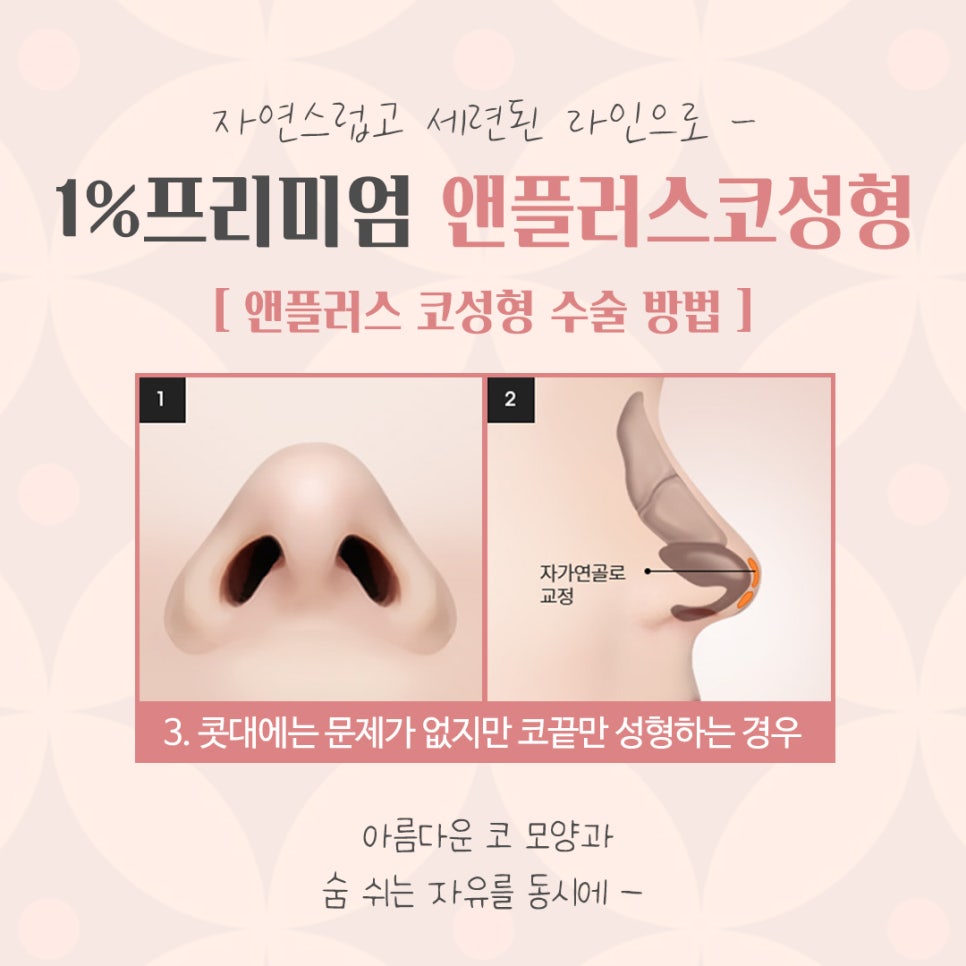
In cases of autologous rib cartilage rhinoplasty where the bridge has no issue and only tip surgery is performed, the tip is improved by grafting autologous rib cartilage or other autologous cartilage, and the connection between the bridge and the tip is also made smooth to correct the overall nasal line.

In addition, for silicone used in the nasal bridge, we do not use commercially available silicone as is. Instead, we carefully shape it by hand after considering the individual’s overall image and the bridge’s width, length, breadth, and height, so we use custom silicone tailored to each person.
When undergoing autologous rib cartilage rhinoplasty, no matter how excellent and safe the autologous rib cartilage material may be, if the approach leans only toward aesthetics, it can lead to functional problems after surgery and require revision surgery. Therefore, it is important to pursue both aesthetic and functional approaches at the same time. For those looking into autologous rib cartilage rhinoplasty, it may be helpful to check whether the medical staff have a high level of anatomical knowledge of the nose, whether they have sufficient experience and expertise, whether they have the equipment needed to accurately assess your nasal condition, and whether aftercare is reliably guaranteed.
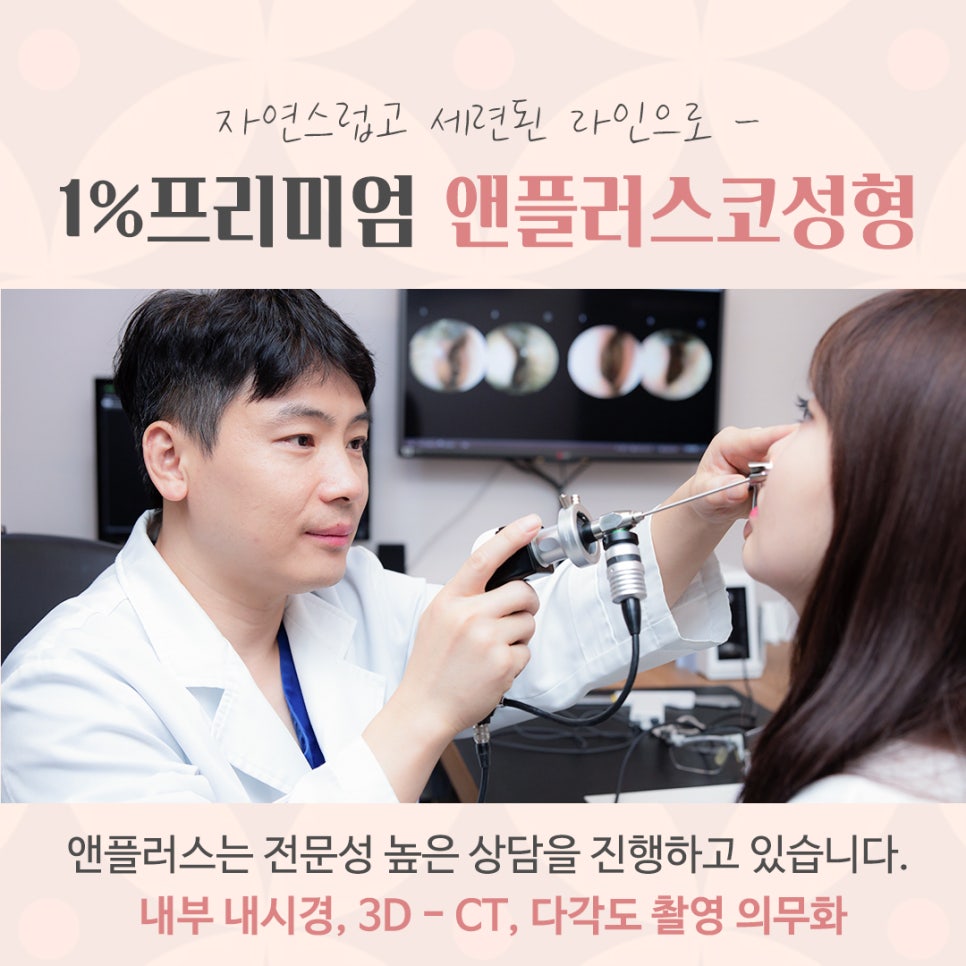
At OjiGo N Plus Clinic, in order to provide safe and satisfactory autologous rib cartilage rhinoplasty, we accurately assess the current condition of the nose through preoperative 3D-CT imaging, internal endoscopy, various allergy tests, and nasal functional tests, and then establish a surgical plan based on the extracted data before proceeding.

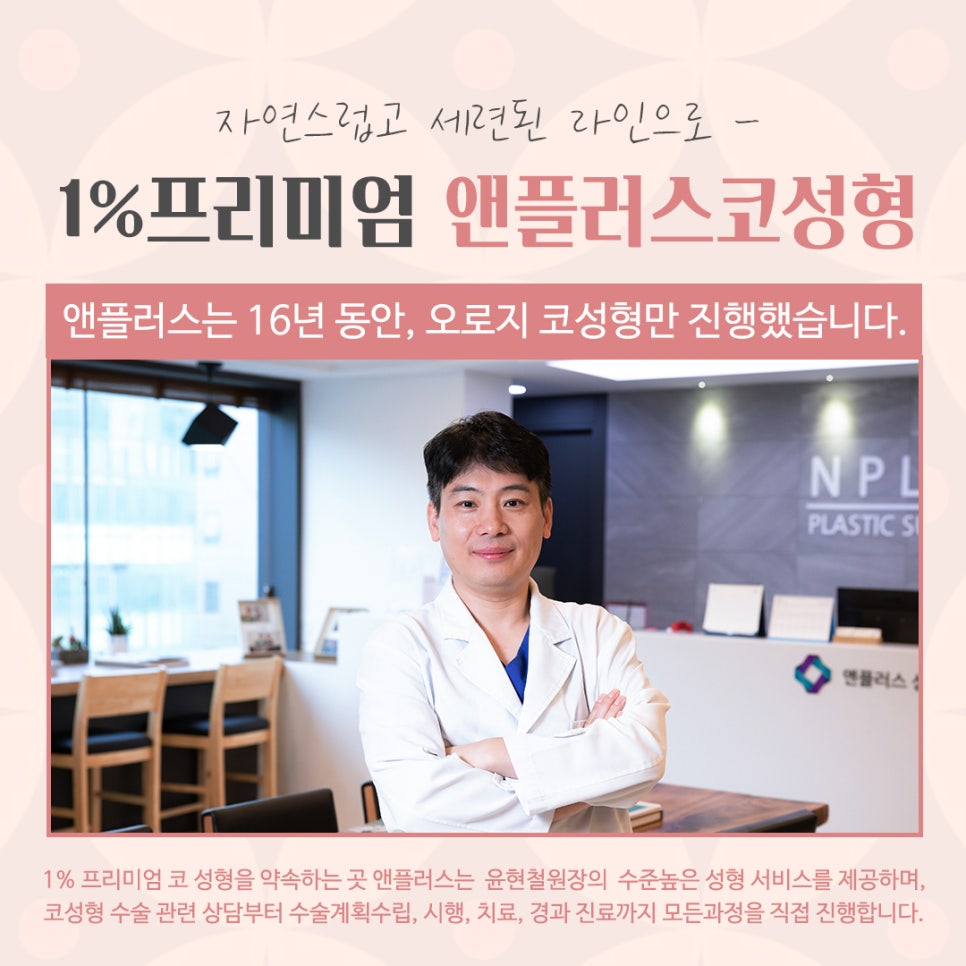
In addition, the chief director, Yoon Hyun-chul, personally handles the entire process one-on-one, from consultation regarding autologous rib cartilage rhinoplasty to surgical planning, procedure, treatment, and follow-up visits, so you can receive a high level of medical service from before surgery through aftercare.

For aftercare, we provide a one-year warranty after surgery through our A/S system and operate a surgical responsibility guarantee system that covers all situations, including postoperative pain, inflammation, or dissatisfaction with the shape that may occur, allowing for a more satisfying rhinoplasty.
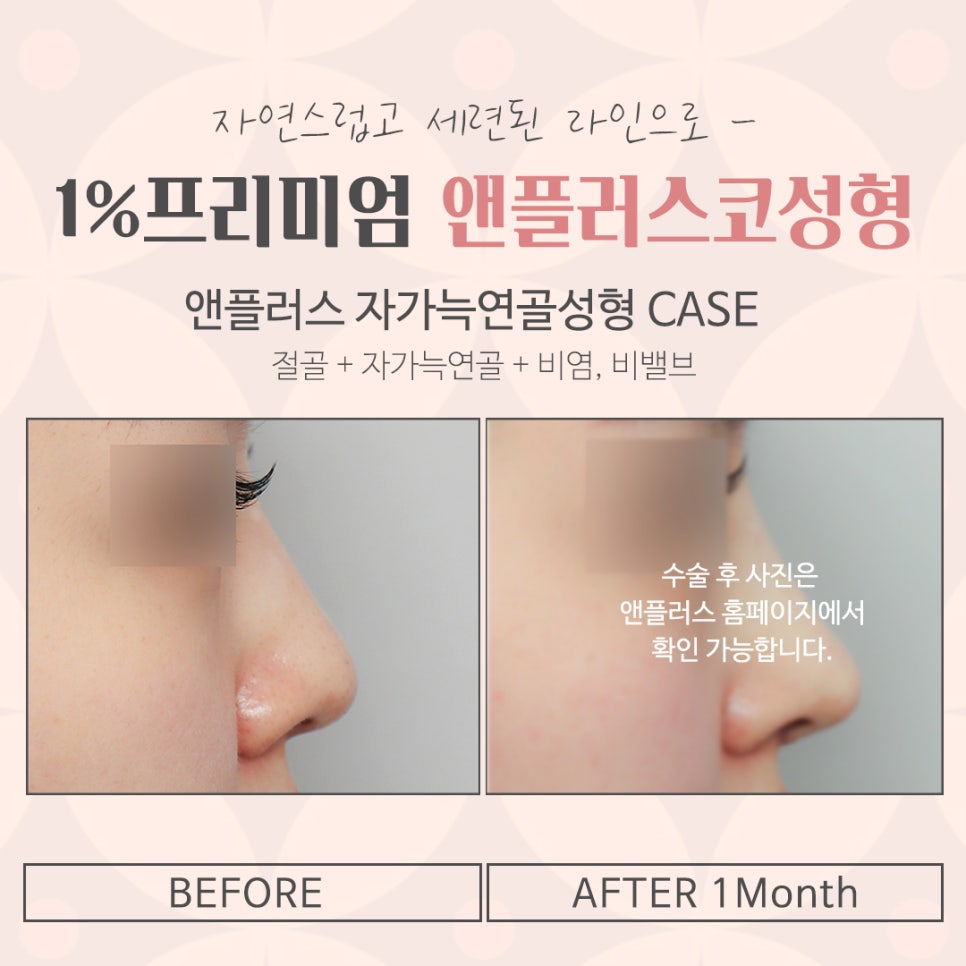
(The image above shows before-and-after photos of autologous rib cartilage rhinoplasty at OjiGo N Plus Clinic.)
That concludes the information we shared about autologous rib cartilage rhinoplasty at OjiGo N Plus Clinic. We hope this post is very helpful for those who are currently considering rhinoplasty because they are unhappy with the shape of their nose. Thank you.
https://youtu.be/oSpO_v12LoY