
Hello. This is OJIKO Plastic Surgery & N Plus, which focuses only on your healthy and beautiful nose.
The content we will introduce this time is about self-rib cartilage nose surgery.

These days, self-care has become a trend, and many people are making great efforts to improve their image through exercise, dieting, makeup, and more. However, even with these efforts, there are areas that are difficult to change, and people may try to improve them through plastic surgery. Among the many types of plastic surgery, the nose is located at the center of the face and is the most three-dimensional area, so even a small change in the nose shape can have a big effect on the overall image. For that reason, it is a very popular procedure, and interest in the materials and methods has also increased. Accordingly, interest in self-rib cartilage nose surgery, a material used in nose surgery, is growing even more.

On average, the nose shape of people in Korea often reflects East Asian characteristics, with a low nasal bridge and a tip that is blunt and broad, creating a fleshy nose shape in many cases. Therefore, for the nasal bridge, silicone is used, and for the tip, correction using autologous cartilage is preferred, allowing for a fuller bridge and a natural-looking tip line.
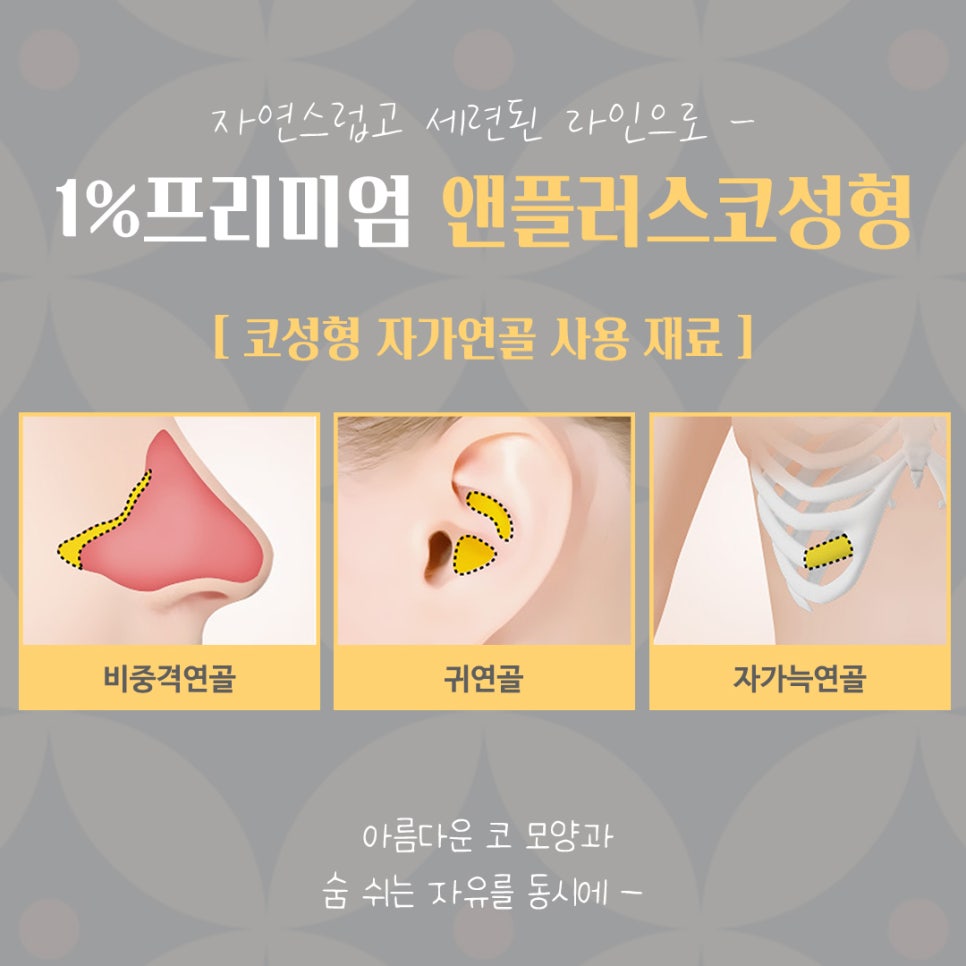
The autologous cartilage used for the nose tip includes septal cartilage, ear cartilage, and self-rib cartilage. Septal cartilage refers to the cartilage that divides our nostrils into two, while ear cartilage refers to the small cartilage made of soft tissue located on the inner side of the ear. Lastly, self-rib cartilage is cartilage made of soft tissue from the ribs. In general, self-rib cartilage has been widely known as a material used for revision surgery, and septal cartilage and ear cartilage have often been used as materials for nose surgery. However, recently, because self-rib cartilage is larger and firmer, it has also been used frequently in primary nose surgery, helping prevent the need for revision surgery later.
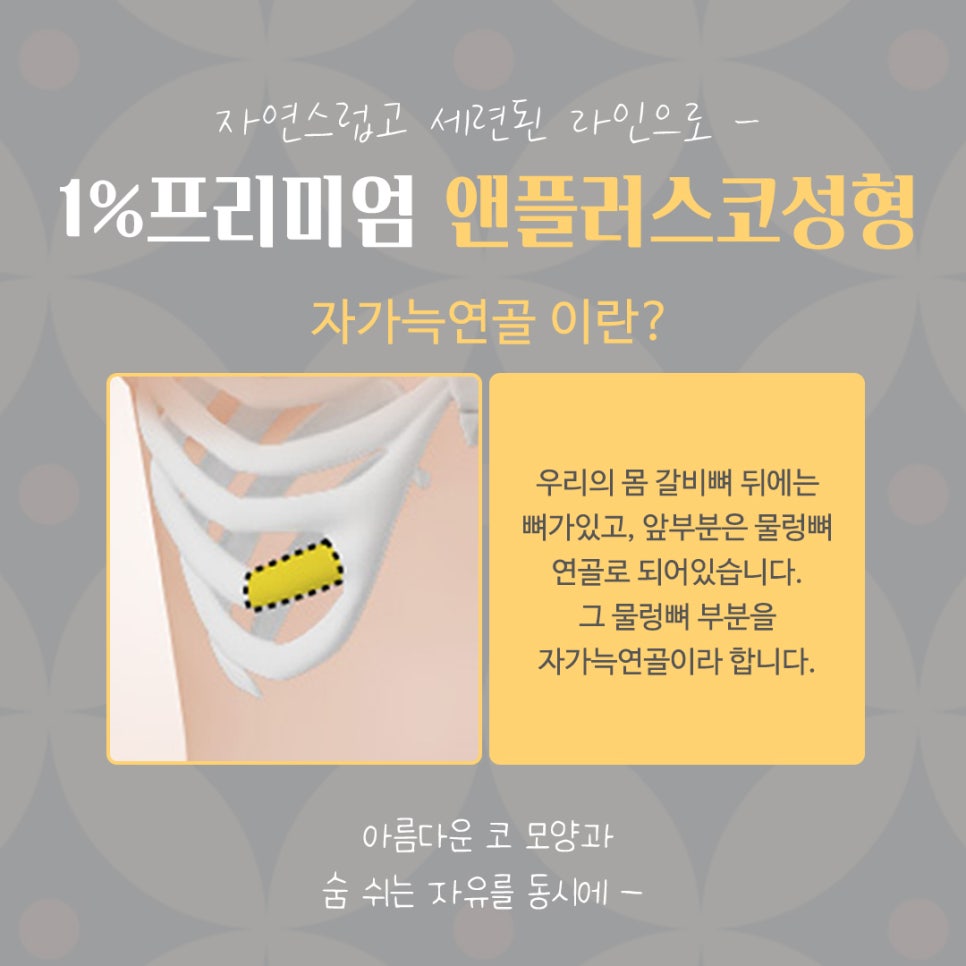
What is self-rib cartilage nose surgery? Self-rib cartilage is located in the ribs. The back part of the rib is made of hard bone, and the front part is made of soft cartilage. This front cartilage is reprocessed and used as a material for the nasal bridge or nose tip. Because self-rib cartilage is large and firm, it is commonly used for revision surgery, short noses, and upturned noses.
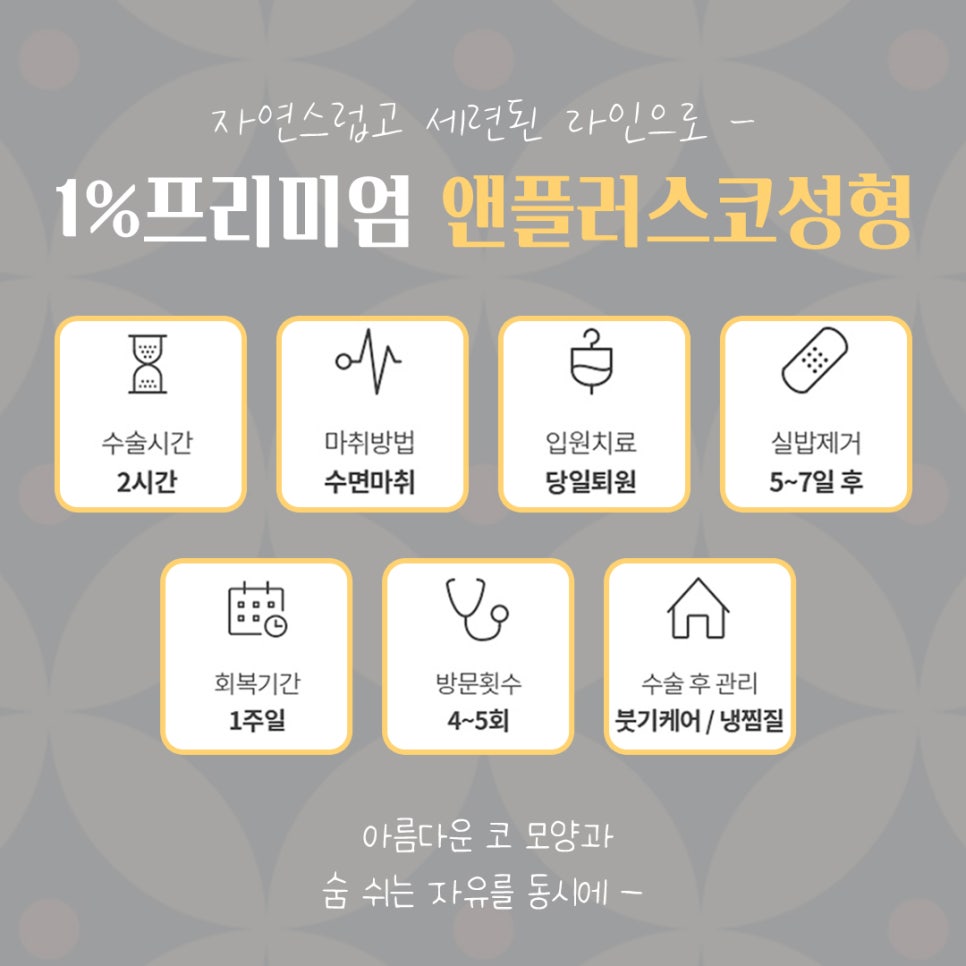
Therefore, people who look into self-rib cartilage nose surgery can be grouped into cases such as having insufficient ear cartilage or septal cartilage due to revision nose surgery, having a small nose, having a low nose, or having an upturned nose. Because the surgical method and materials differ depending on factors such as the nose shape, the condition of the cartilage, the condition of the nasal bones, the condition of the skin, and whether there are functional issues, checking the exact condition of the nose before proceeding can lead to higher satisfaction after surgery.
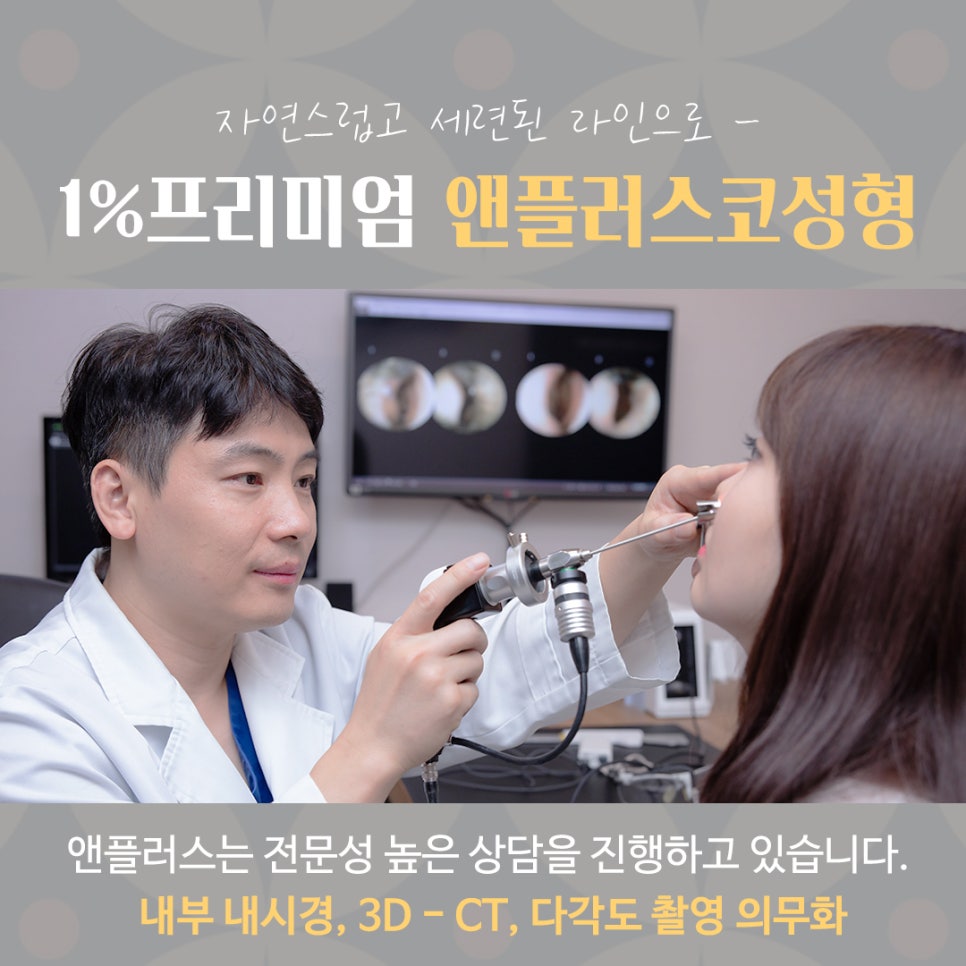
At OJIKO Plastic Surgery & N Plus, to ensure safe and satisfying self-rib cartilage nose surgery, we accurately diagnose each person's nasal condition through preoperative internal endoscopy, various allergy tests, internal nasal function tests, and 3D-CT imaging. Based on the collected data, we establish and carry out a surgical plan.

Self-rib cartilage nose surgery can be divided into three types: cases where both the nasal bridge and the nose tip are low, cases where only the nose tip is low, and cases where only the nasal bridge is low.
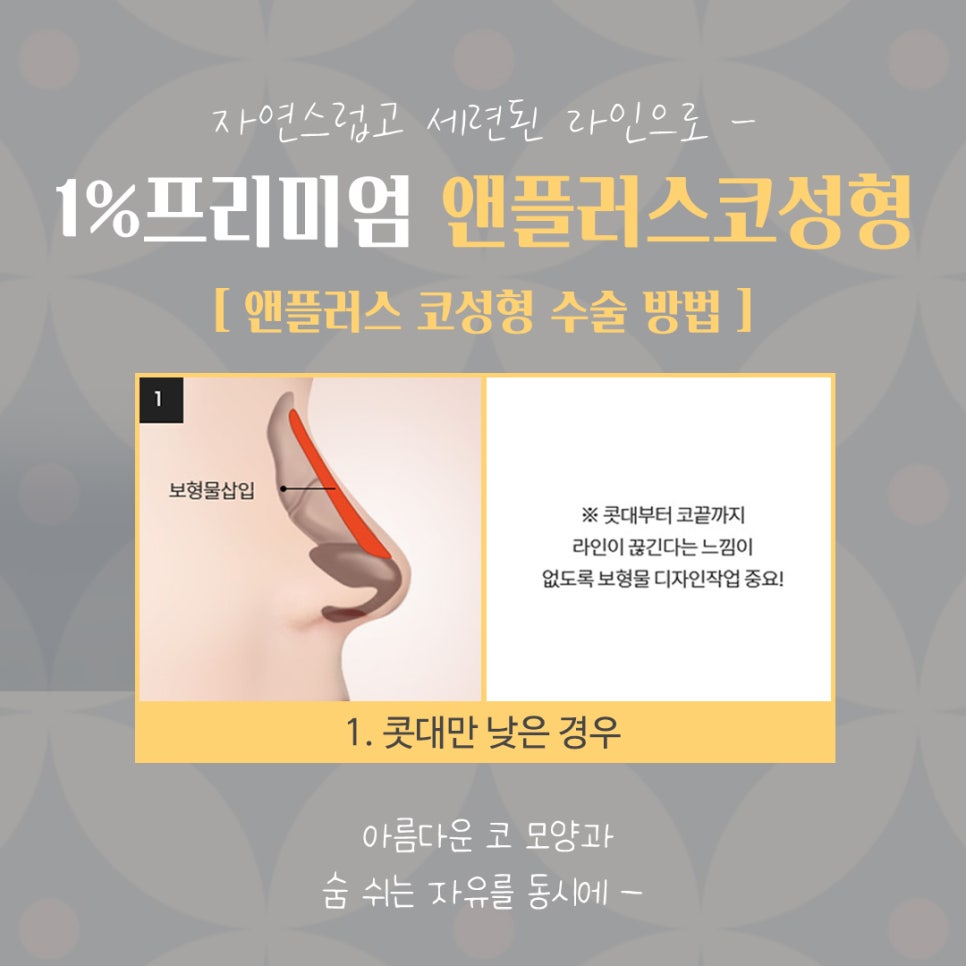
In self-rib cartilage nose surgery for a low nasal bridge only, the bridge is corrected with custom silicone or self-rib cartilage, and the design is made so that it does not disconnect from the nose tip.
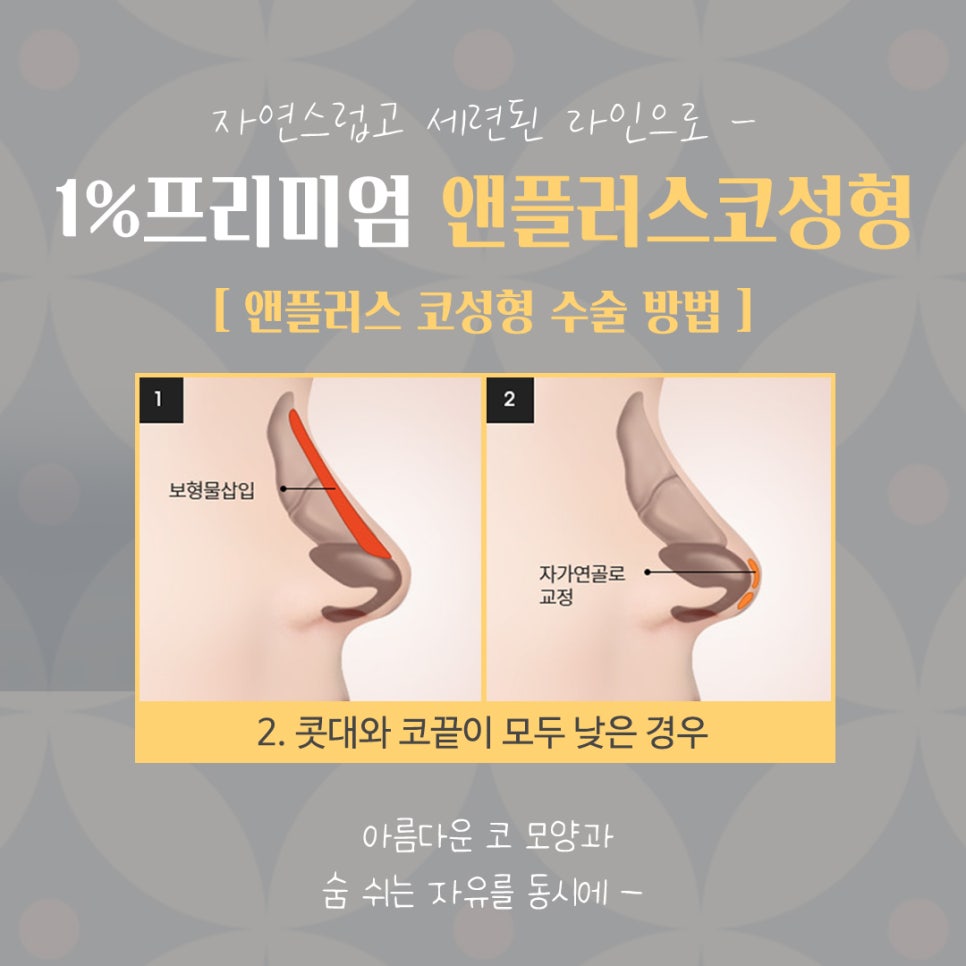
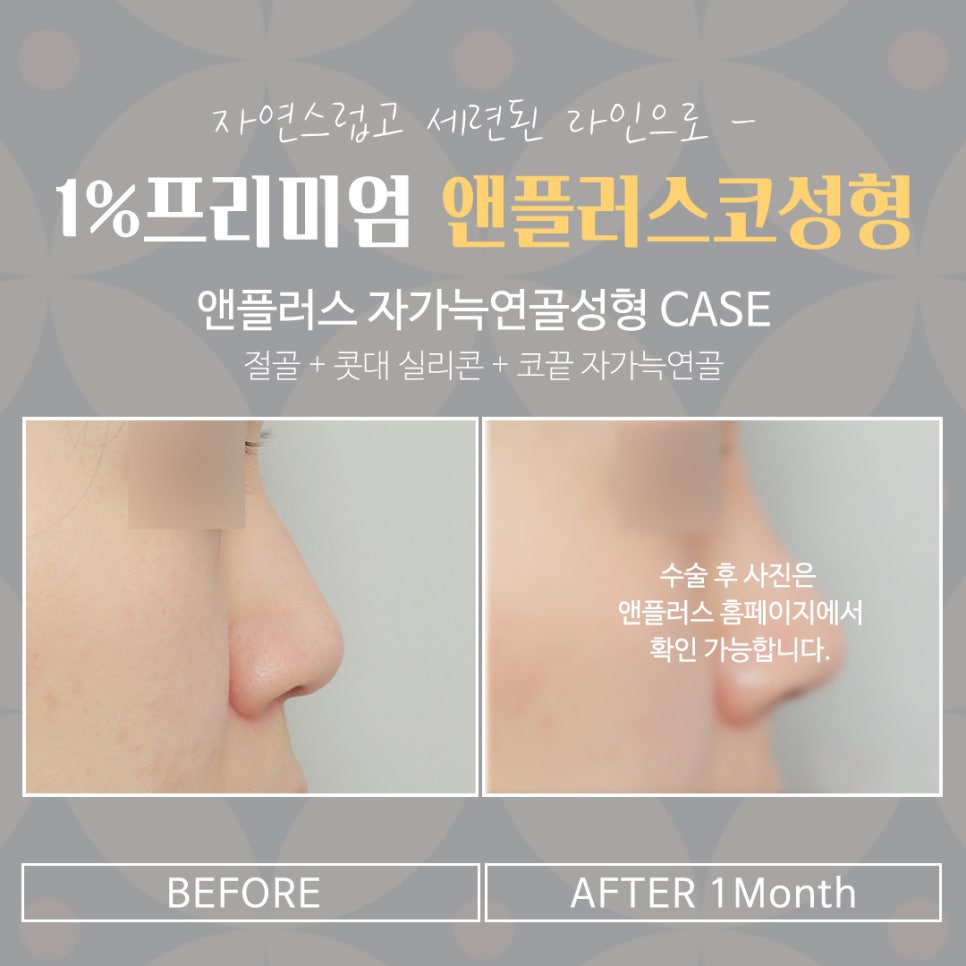
In self-rib cartilage nose surgery for both a low nasal bridge and a low nose tip, custom silicone is inserted into the bridge, and the nose tip is firmly fixed with self-rib cartilage, allowing it to be corrected into a sharp and refined image.
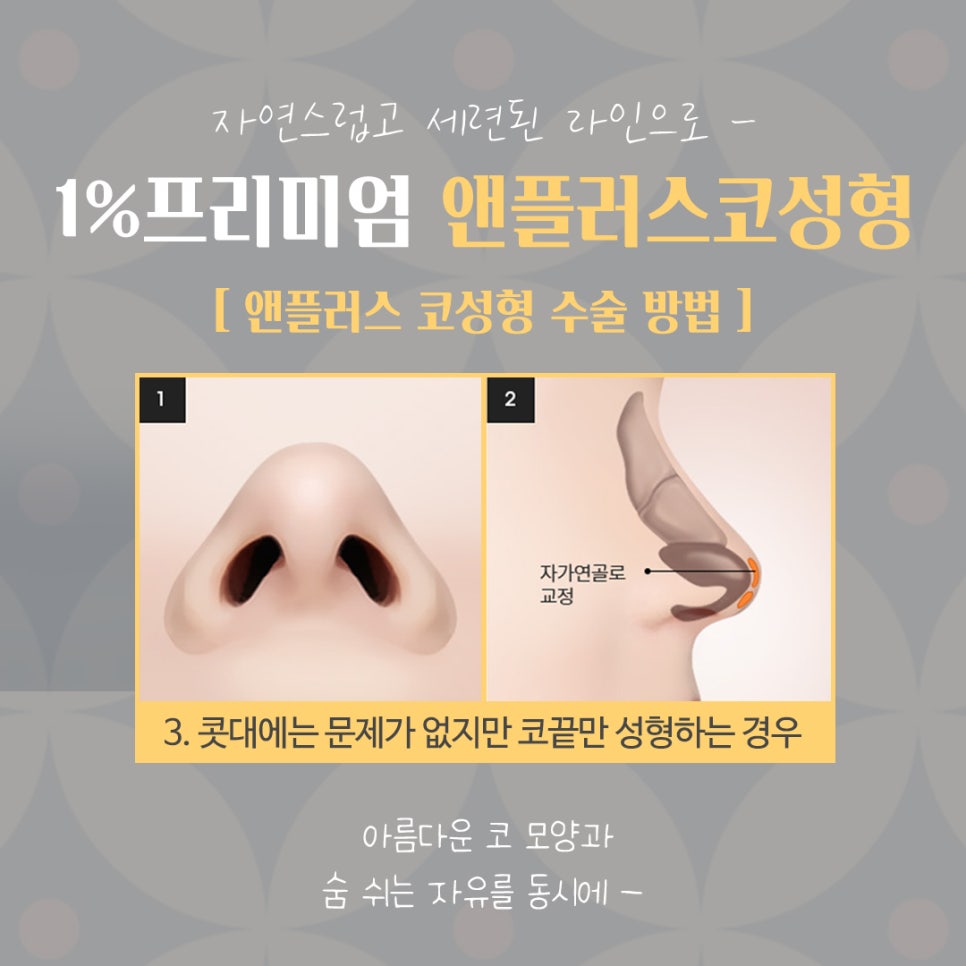
In self-rib cartilage nose surgery for a low nose tip only, the nose tip is given volume with self-rib cartilage, and the overall line is designed so that it does not feel disconnected from the nasal bridge.

For silicone used additionally in the nasal bridge, the existing mass-produced silicone is not used as is. Instead, it is carefully tailored to the individual's overall image and the width, length, breadth, and height of the nasal bridge before insertion, which can lead to higher satisfaction after self-rib cartilage nose surgery.

As such, self-rib cartilage nose surgery is a highly advanced procedure because even with the same material, the surgical method is applied differently depending on the current condition of the nose. Therefore, for those considering self-rib cartilage nose surgery, it may be helpful to carefully check whether the medical team has strong anatomical knowledge of the nose, whether they have ample relevant experience, whether the necessary equipment to accurately assess the condition of your nose is in place, and whether aftercare is reliably guaranteed.
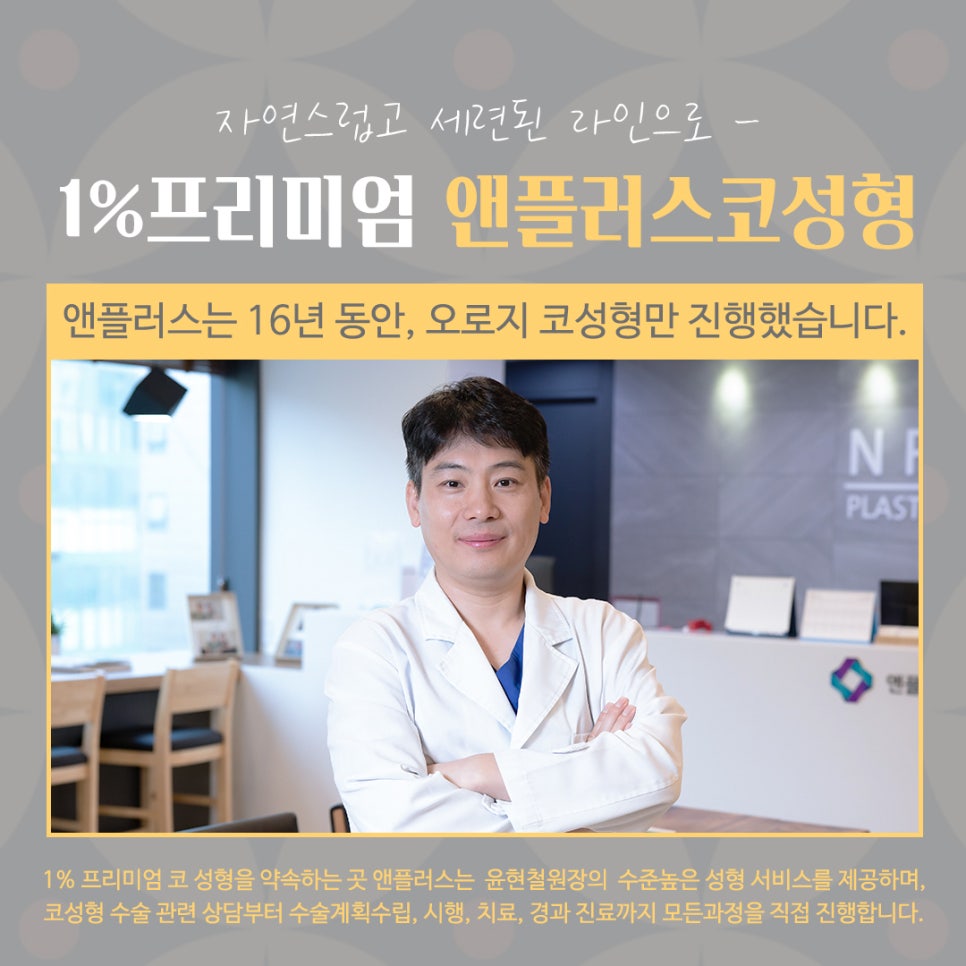
At OJIKO Plastic Surgery & N Plus, Director Yoon Hyun-cheol personally handles everything one-on-one, from consultation regarding self-rib cartilage nose surgery to establishing the surgical plan, performing the procedure, treatment, and follow-up care. This means you can receive a high level of medical service from before surgery through after surgery.

Aftercare is also provided through an after-sales service system guaranteed for one year after surgery, as well as a surgical responsibility guarantee system prepared for all possible situations, including postoperative pain, inflammation, and dissatisfaction with the appearance. Those who hold an N Plus membership card can receive aftercare benefits at any time.
This concludes the information about self-rib cartilage nose surgery at OJIKO Plastic Surgery & N Plus. I hope this post has been very helpful for those currently considering nose surgery or revision nose surgery because they are unhappy with their current nose shape. Thank you.
https://youtu.be/9K9mG6XJd-Q