
Hello, we are Ohjiko N+ Clinic, which only thinks about your healthy and beautiful nose.
This time, we have prepared information about autologous cartilage nose surgery that improves the nose in a sophisticated and natural way.

In the past, when it came to rhinoplasty, there was a tendency to focus only on a high nose line. However, recently, a naturally high line that suits each person has become a trend, and interest in autologous cartilage nose surgery is increasing. In general, there are not many side effects from rhinoplasty, but a representative side effect is that excessive use of artificial implants may cause the skin to become thinner, or the implant may be recognized as a foreign body, leading to inflammation or contracture. For those who feel burdened by such side effects, it may be helpful to learn more detailed information about autologous cartilage nose surgery.

Therefore, people who are looking into autologous cartilage nose surgery often have nose types such as a low nose, a crooked nose, a hump nose, an upturned nose, or a nose with nasal congestion due to rhinitis. In general, they want the shape of the nose to be improved into a straight and high line. However, because the shape of the nose differs from person to person, and even when the shape appears similar, the condition of the nasal bones, the condition of the skin, and whether there are internal nasal functional problems all vary, an accurate diagnosis and a nose surgery tailored to the individual are necessary to prevent revision surgery.
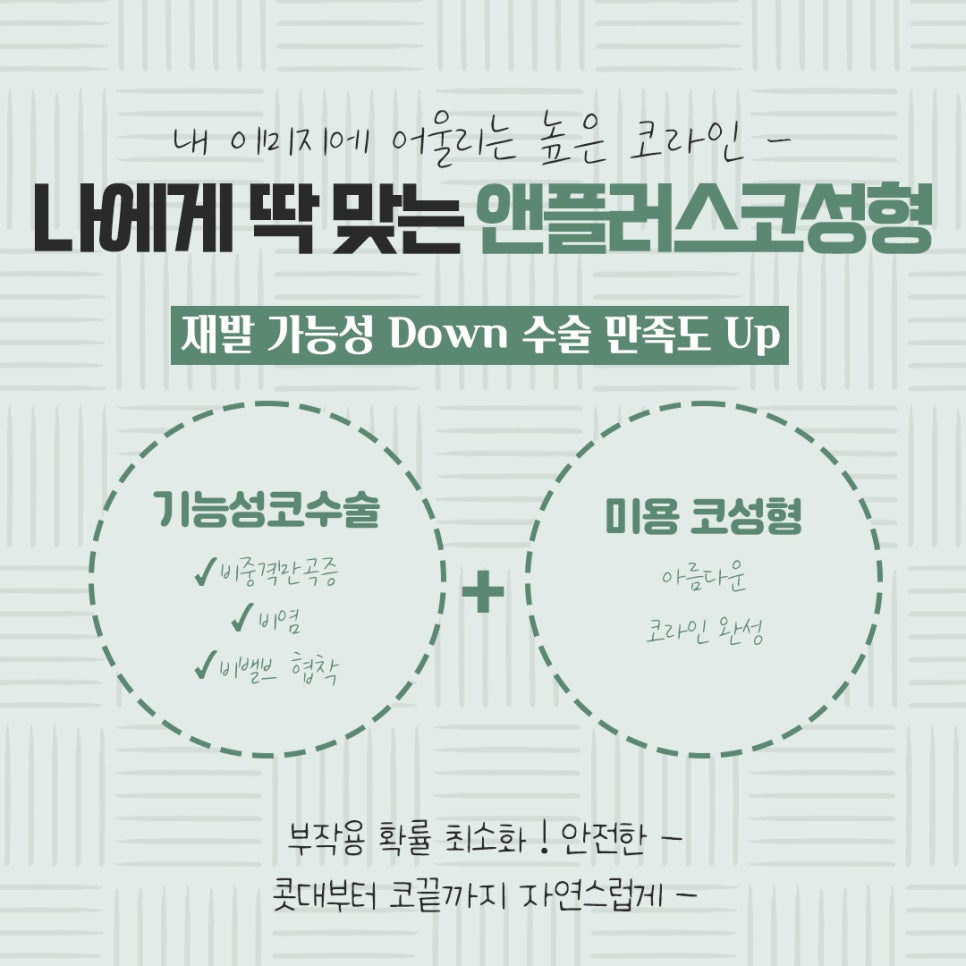
Also, for those looking into autologous cartilage nose surgery, the approach is first and foremost aesthetic. However, since the nose is also a functional organ that plays an important role in appearance and is responsible for breathing and the sense of smell, surgery should be performed only after clearly checking whether there are any internal functional problems. This helps prevent revision surgery due to functional issues after the operation.
That is why, for those looking into autologous cartilage nose surgery, it is important not only to compare photos in reviews with noses similar to your own, but also to carefully check whether the medical team has a high level of anatomical knowledge of the nose, whether they have ample experience and expertise, whether they have equipment that can accurately assess the condition of your nose, and whether aftercare is handled thoroughly. These points can be of great help.
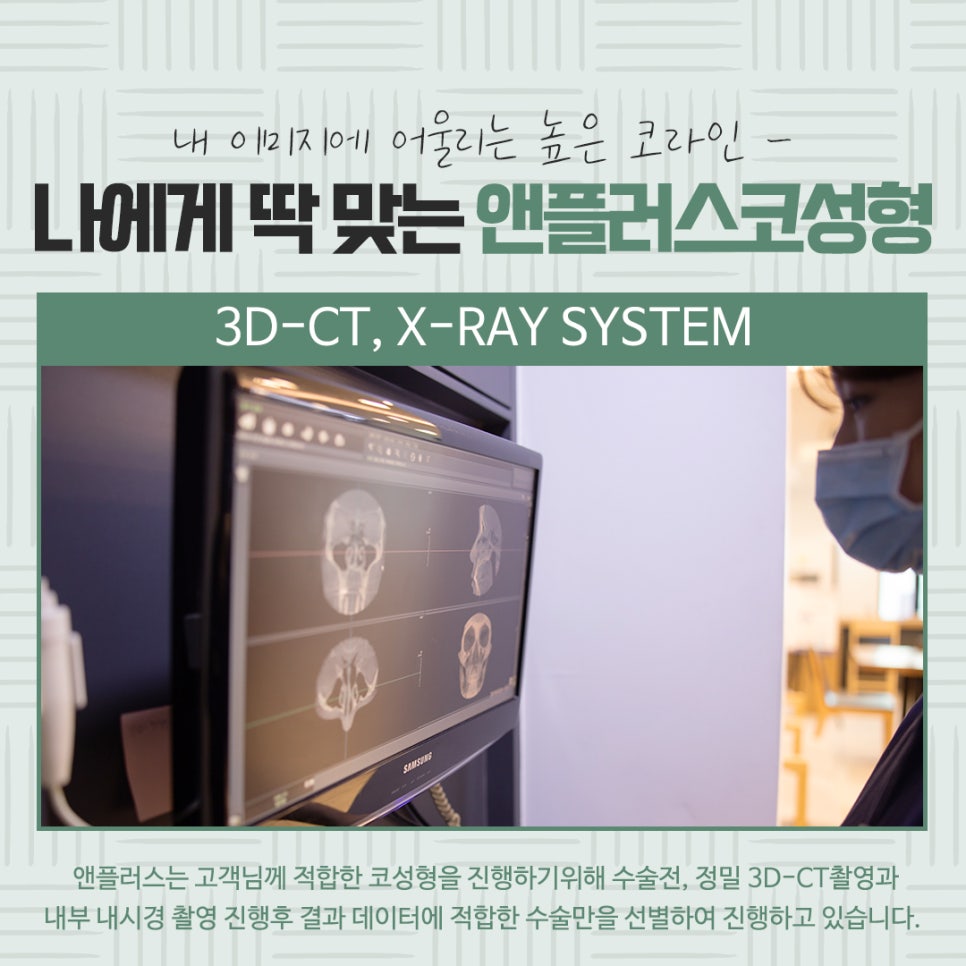
At Ohjiko N+ Clinic, to ensure safe and satisfying autologous cartilage nose surgery, we accurately diagnose the current condition of the nose through preoperative 3D-CT scans, internal endoscopic imaging, internal nasal function tests, and various allergy tests. Based on the extracted data, we establish a surgical plan and perform the surgery best suited to each individual.

On average, rhinoplasty methods correct the bridge of the nose with silicone and the tip of the nose with autologous cartilage. In detail, the procedures are broadly classified into three types: when both the bridge and tip are low, when only the bridge is low, and when only the tip is low.
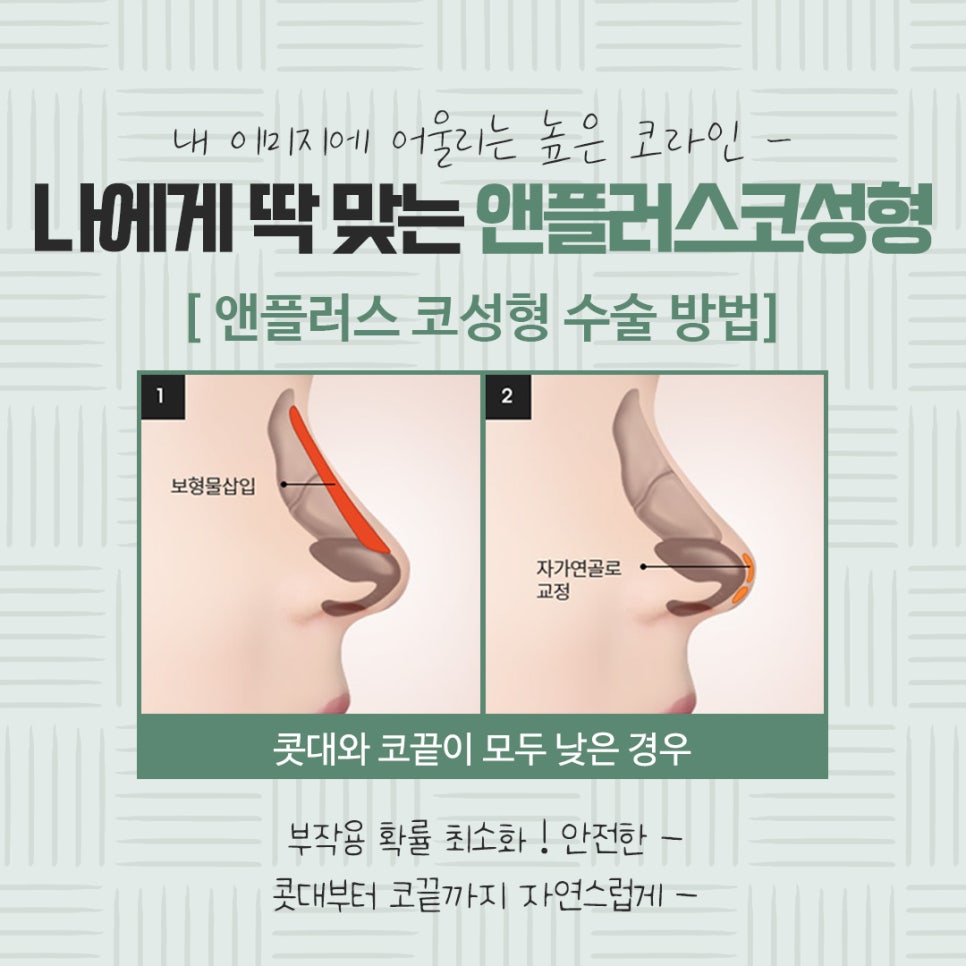
The nose surgery method for a nose with both a low bridge and a low tip corrects the overall nose line by inserting an implant into the bridge and using autologous cartilage for the tip.
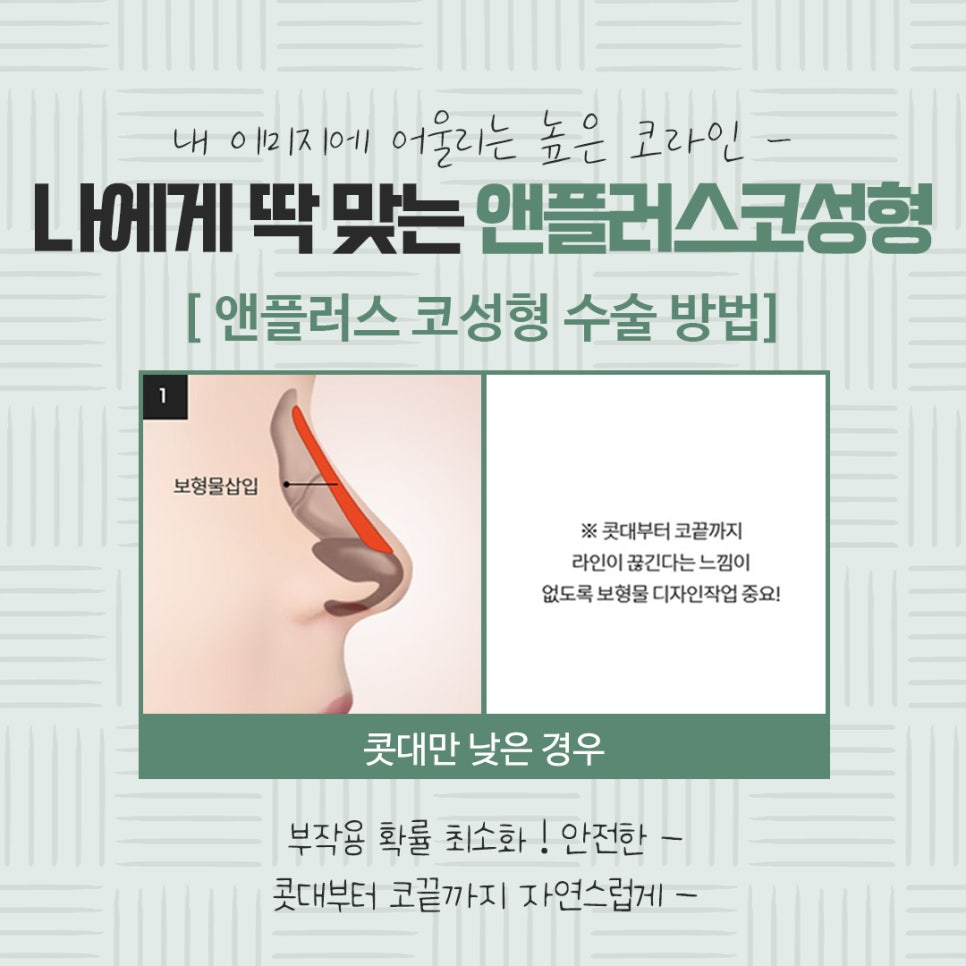
For a nose with only a low bridge, the bridge volume can be added by inserting a bridge implant or using autologous rib cartilage, and the overall line is corrected so that the line does not break at the tip.
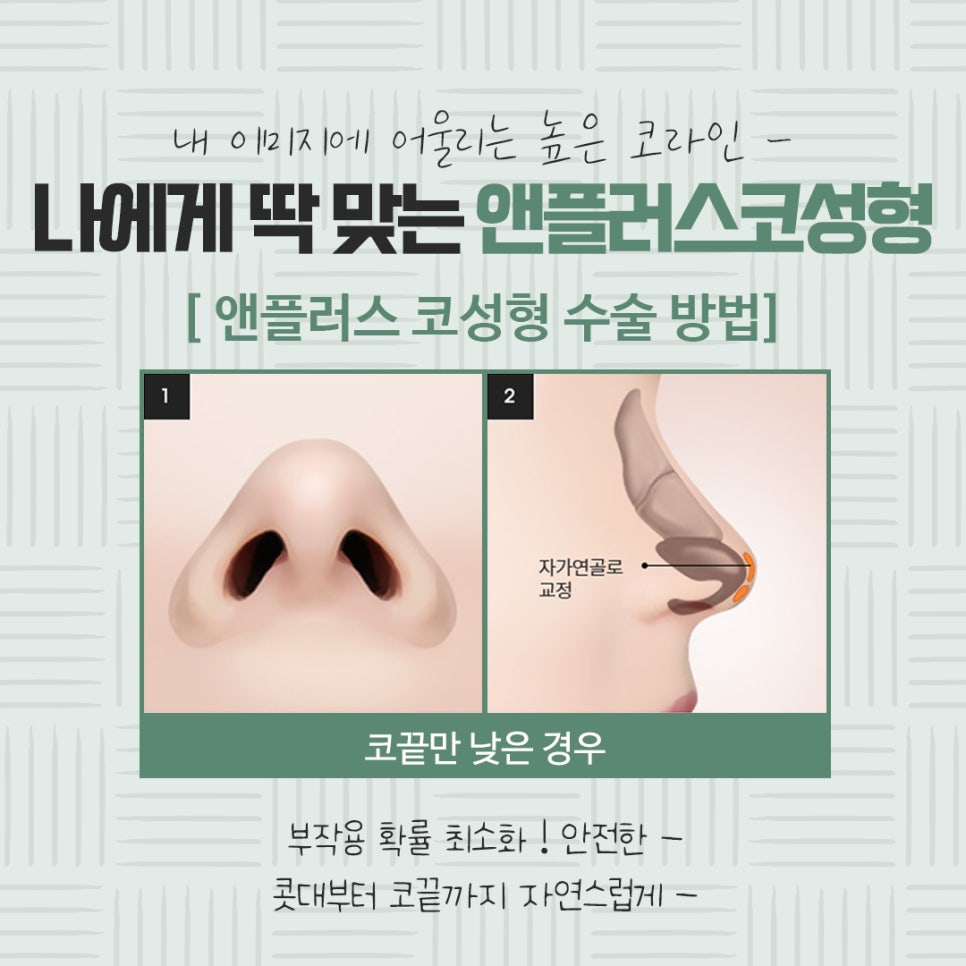
For a nose with only a low tip, the tip is corrected using autologous cartilage, and the overall nose line is adjusted so that the line does not break at the tip.
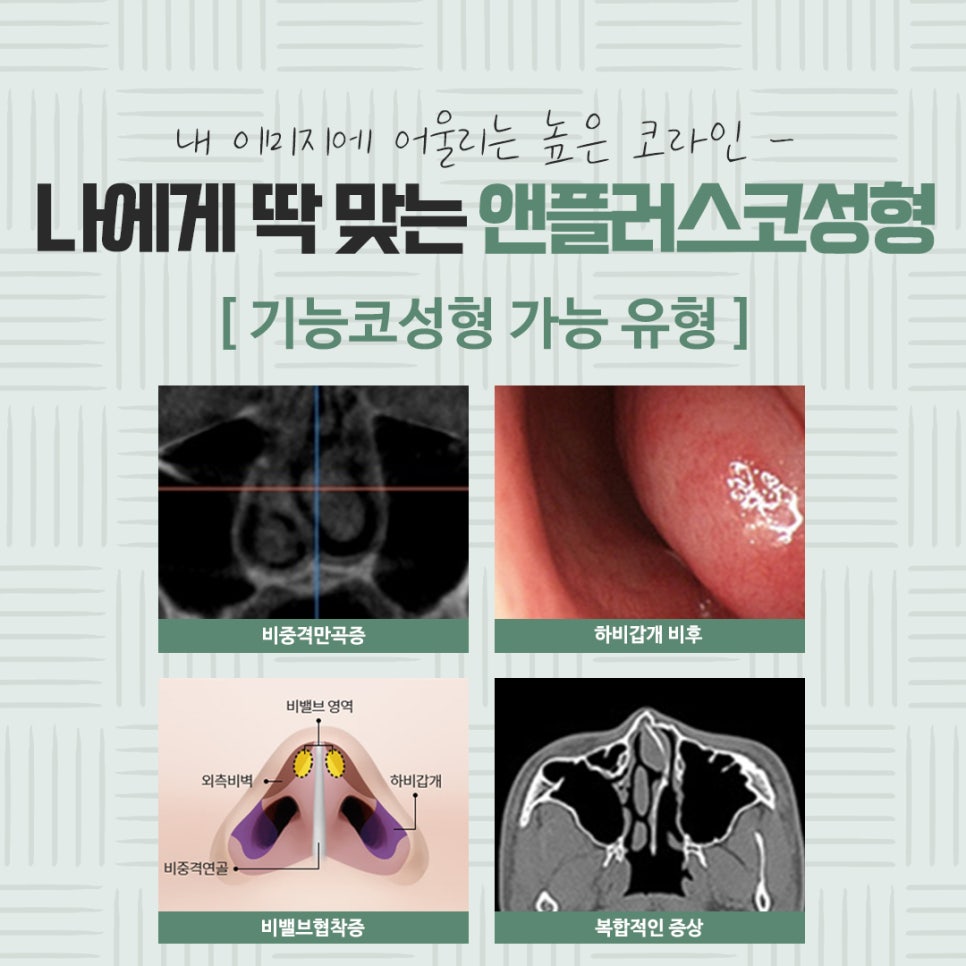
If there is a functional problem, the functional issue is corrected first and then aesthetic rhinoplasty is performed. The most representative symptom is nasal congestion due to rhinitis, and the causes that can be improved through surgery include a deviated septum, inferior turbinate hypertrophy, nasal valve stenosis, and complex symptoms.
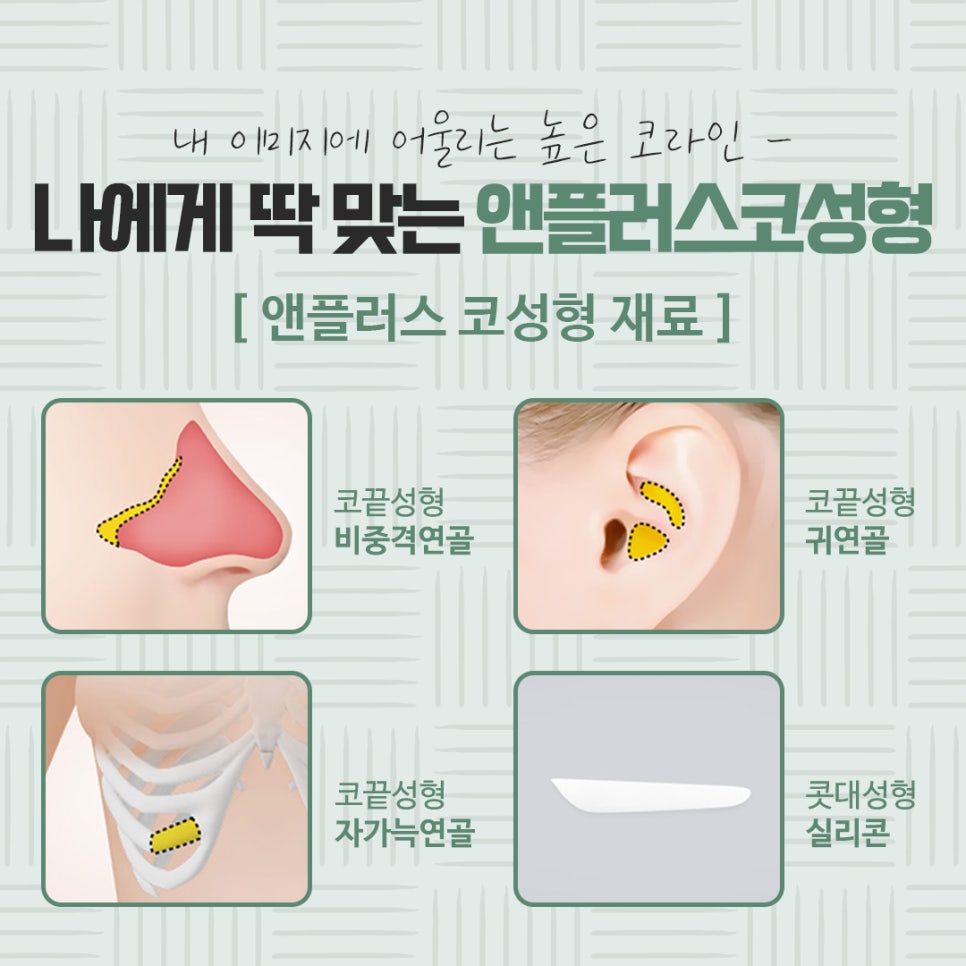
The materials used in autologous cartilage nose surgery include autologous cartilage such as septal cartilage, ear cartilage, and autologous rib cartilage. In addition, the bridge of the nose can be operated on using silicone.

In the case of silicone, which can be added as an implant in autologous cartilage nose surgery, pre-made silicone is not used as-is in order to minimize the artificial feel after surgery. Instead, a custom-designed silicone implant is inserted after considering various aspects such as the individual's overall image and the width, length, breadth, and height of the nasal bridge, allowing for a more satisfying rhinoplasty.

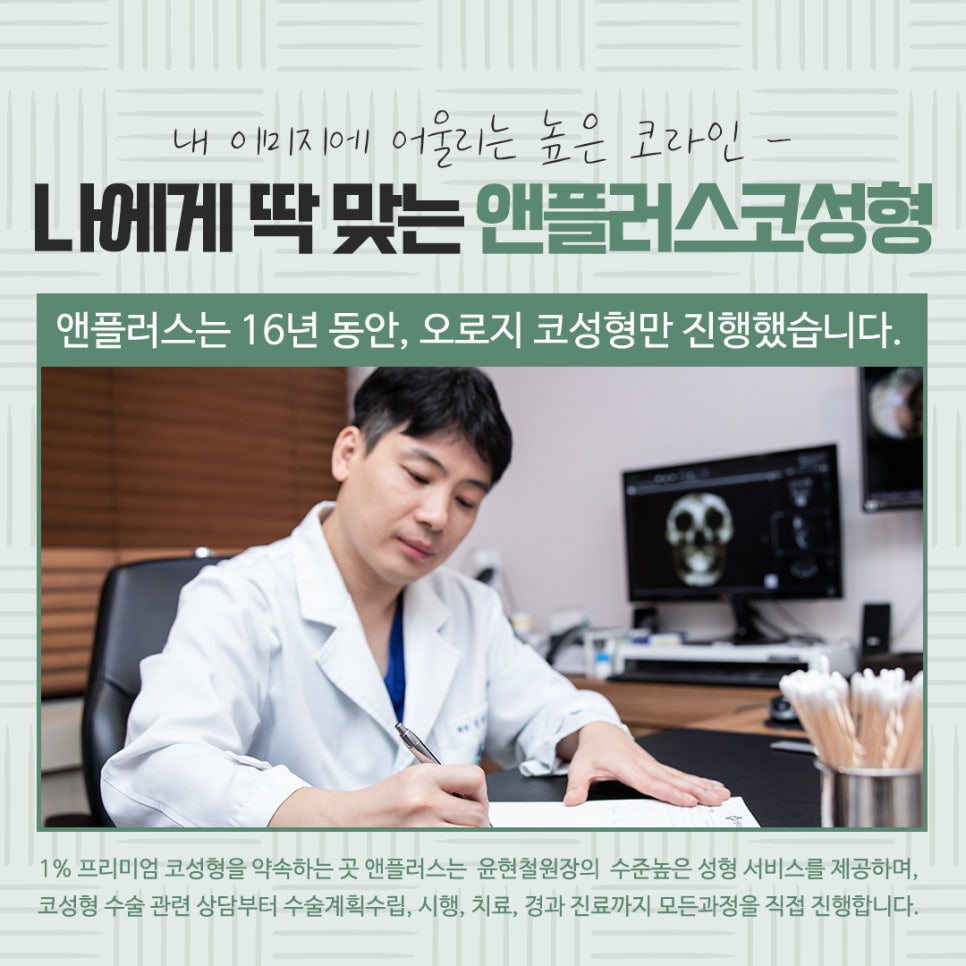
At Ohjiko N+ Clinic, Director Yun Hyun-cheol personally handles all processes one-on-one, from consultation regarding autologous cartilage nose surgery to surgical planning, the procedure itself, treatment, and follow-up visits. As a result, you can receive high-level medical services from before the surgery through aftercare.

At N+ Clinic, not only do we provide a free A/S system guaranteed for one year after surgery, but we also operate a surgery responsibility guarantee system that prepares for all possible post-surgery situations, including pain, inflammation, and dissatisfaction with the shape, ensuring thorough aftercare.
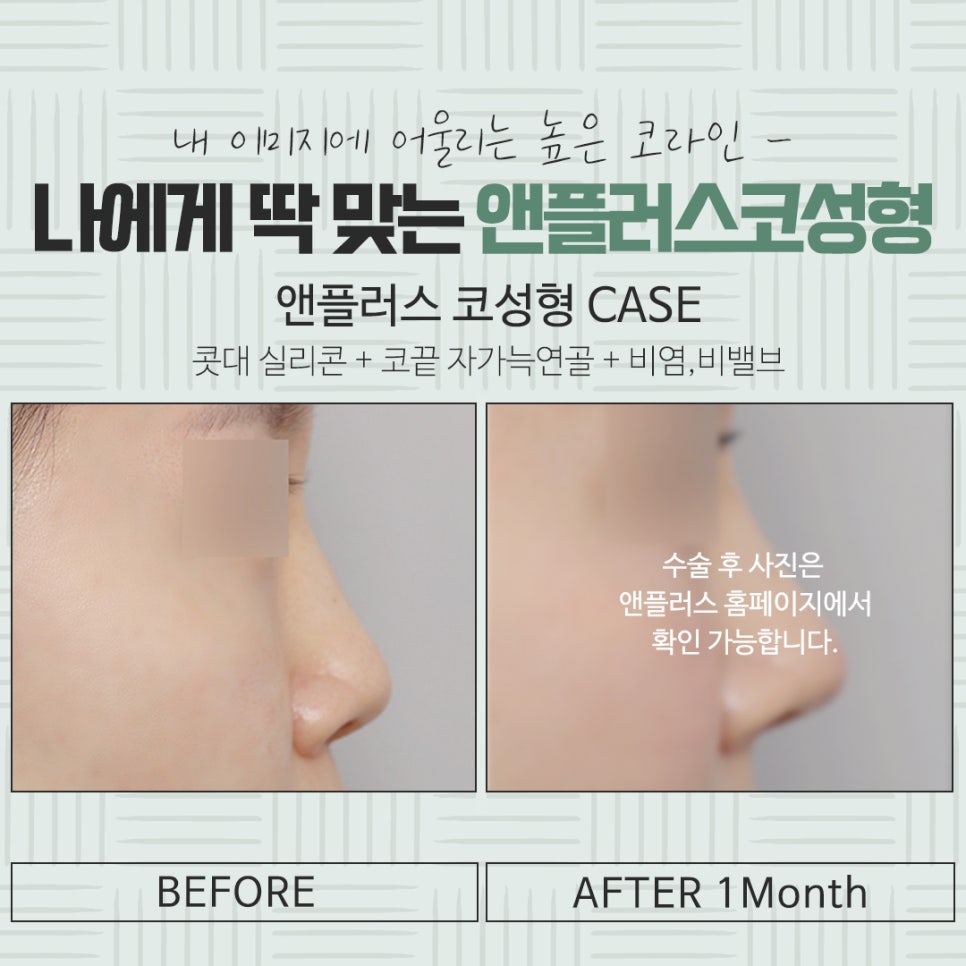
(The image above shows before-and-after photos of autologous cartilage nose surgery at Ohjiko N+ Clinic.)
That concludes the information about autologous cartilage nose surgery at Ohjiko N+ Clinic. I hope this article was very helpful to those who are considering rhinoplasty because they are bothered by a nose shape they are not satisfied with in daily life. Thank you.
https://youtu.be/6GtwNbh4mrc