
As self-care has become a trend as many people work to take better care of themselves, it can be said that through various media, they make different attempts to improve their current appearance into a more favorable image. However, one area that is difficult to change despite various efforts is the shape of the nose. Because the nose is located at the center of our facial features, even a slight change in its shape can have a great effect on improving the overall image. For those who want to improve the tip of the nose naturally without inserting silicone into the tip, you can learn more about nasal tip surgery.

First, the types of people who look into rhinoplasty include those whose noses are low, too high, crooked, drooping, upturned, or bulbous. Because the nose is not straight and well-shaped, it draws attention from the face as a whole and stands out more, so they want to make the shape of the nose straight and smooth.
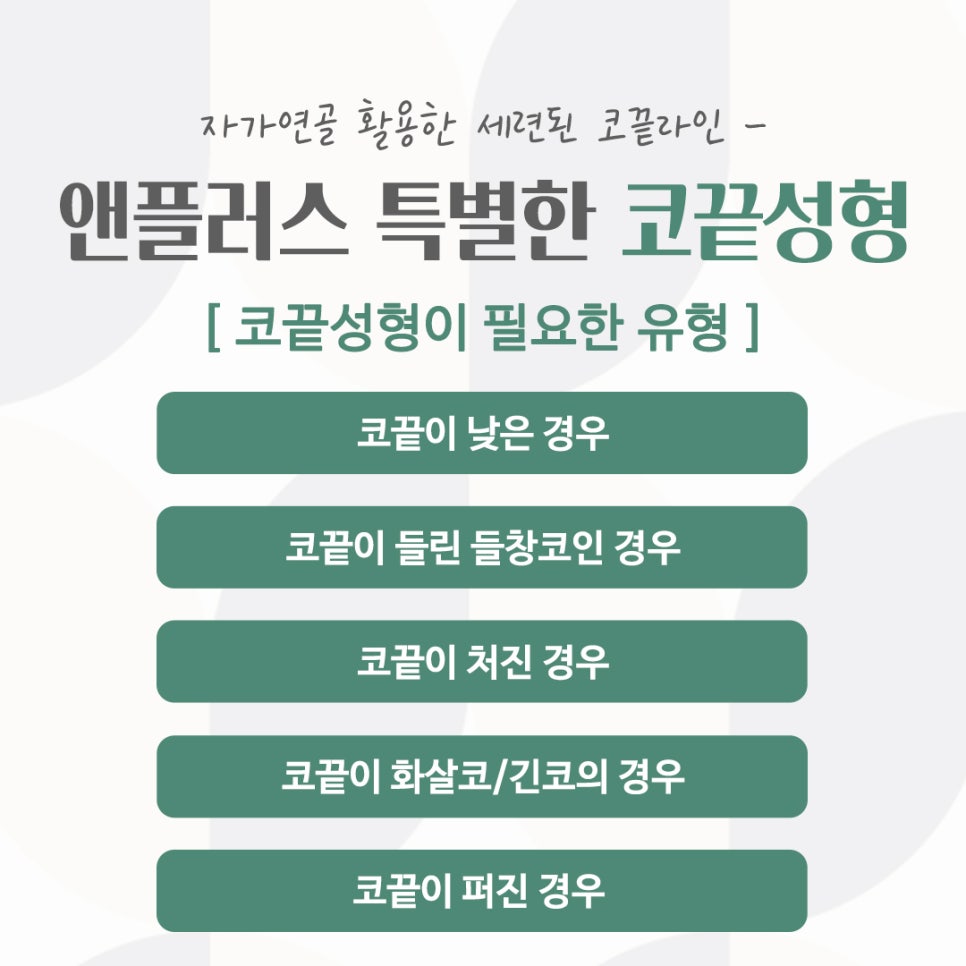
Therefore, in general rhinoplasty, the bridge of the nose is corrected with silicone and the tip is corrected with autologous cartilage. However, those looking into tip cartilage stitching are seeking a more natural improvement than full nose surgery, so it is divided into more detailed types, such as when the tip is low, when the tip is upturned, when the tip is drooping, when the tip is a hooked nose or a long nose, and when the tip is spread out and looks bulbous. As such, rhinoplasty is primarily approached as an aesthetic procedure, but the nose is also a functional organ responsible for breathing and smell, so surgery must be performed with consideration of internal nasal function issues as well. This can help prevent revision surgery caused by functional problems after the operation.
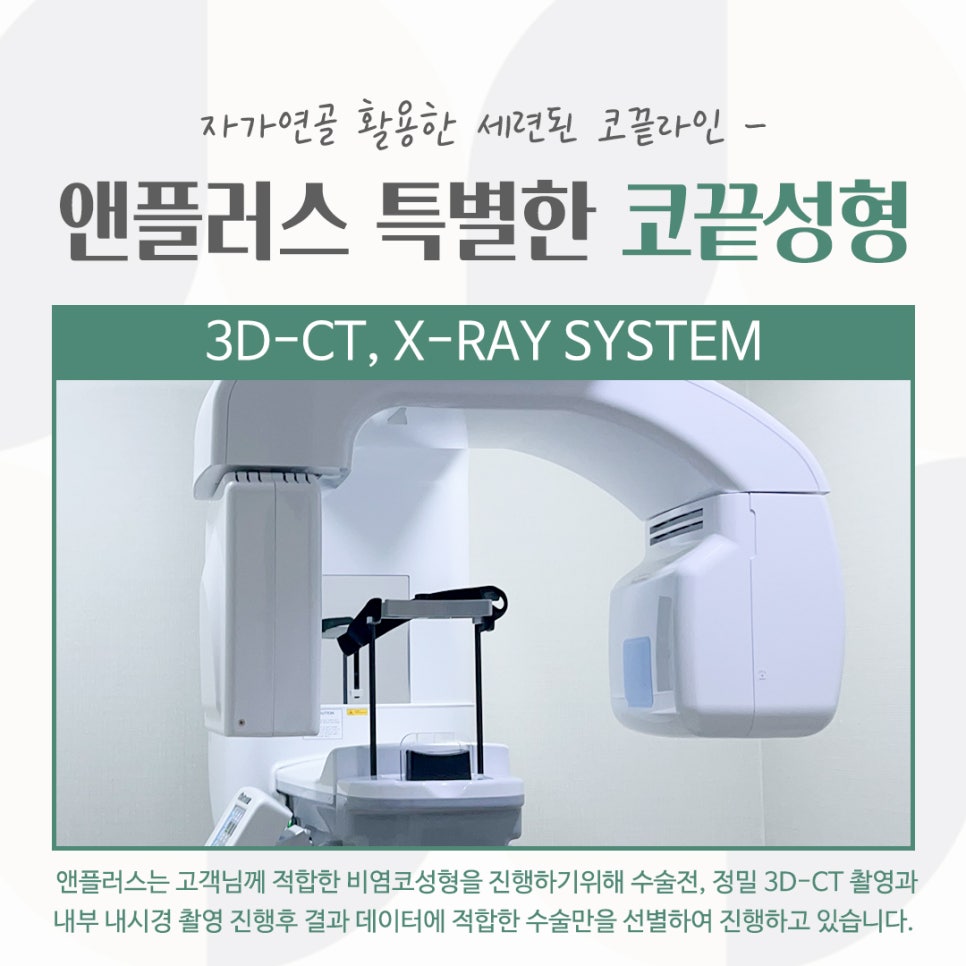
At Ojiko Hospital N Plus, before performing rhinoplasty, 3D-CT scans, internal endoscopic examinations, various allergy tests, and nasal function tests are used to accurately identify and analyze the cause of each person’s current nasal tip deformity. Based on the extracted data, a surgical plan is established and carried out.
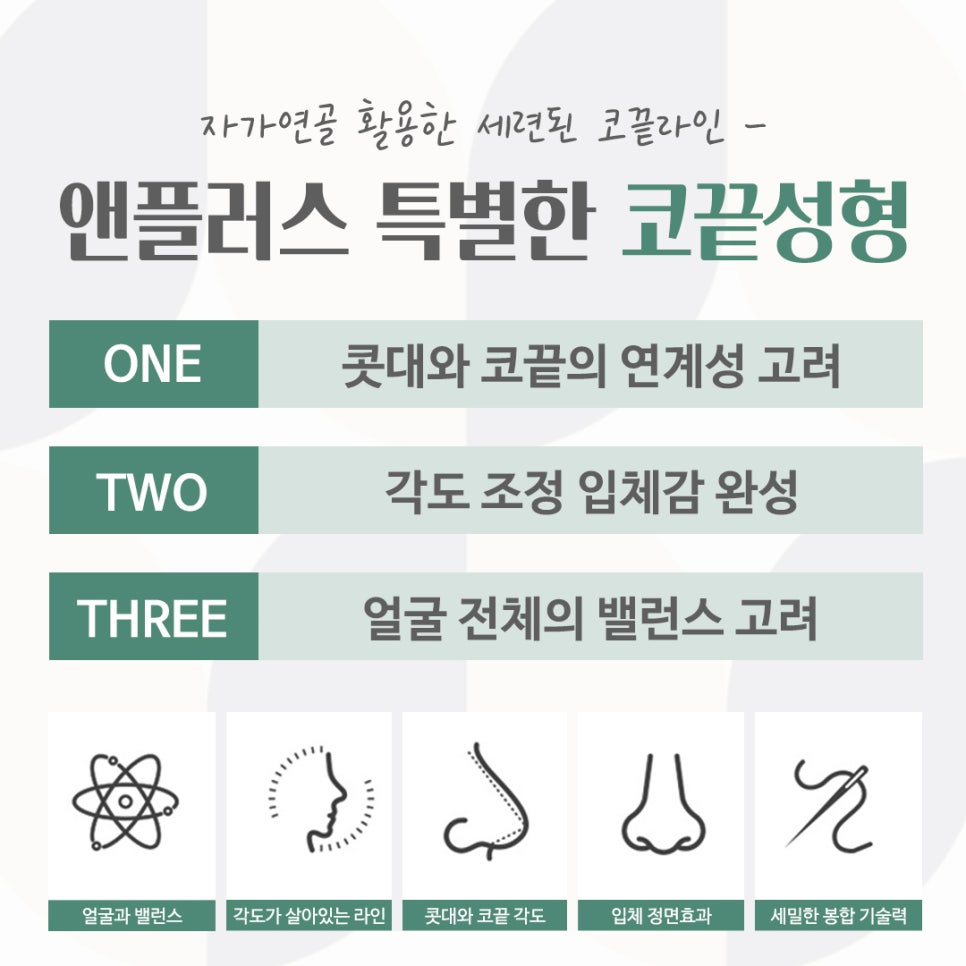
For nasal tip surgery methods, you may come across terms such as tip cartilage stitching and columellar strut support. In the case of this kind of nasal tip surgery, people often judge based only on before-and-after photos, but even if the nose shape looks similar, the surgical method and materials differ depending on each individual’s skin condition, cartilage condition, nasal bone condition, and whether there are functional issues. Therefore, it is important to accurately assess the current condition through equipment first and then proceed with the appropriate surgery.
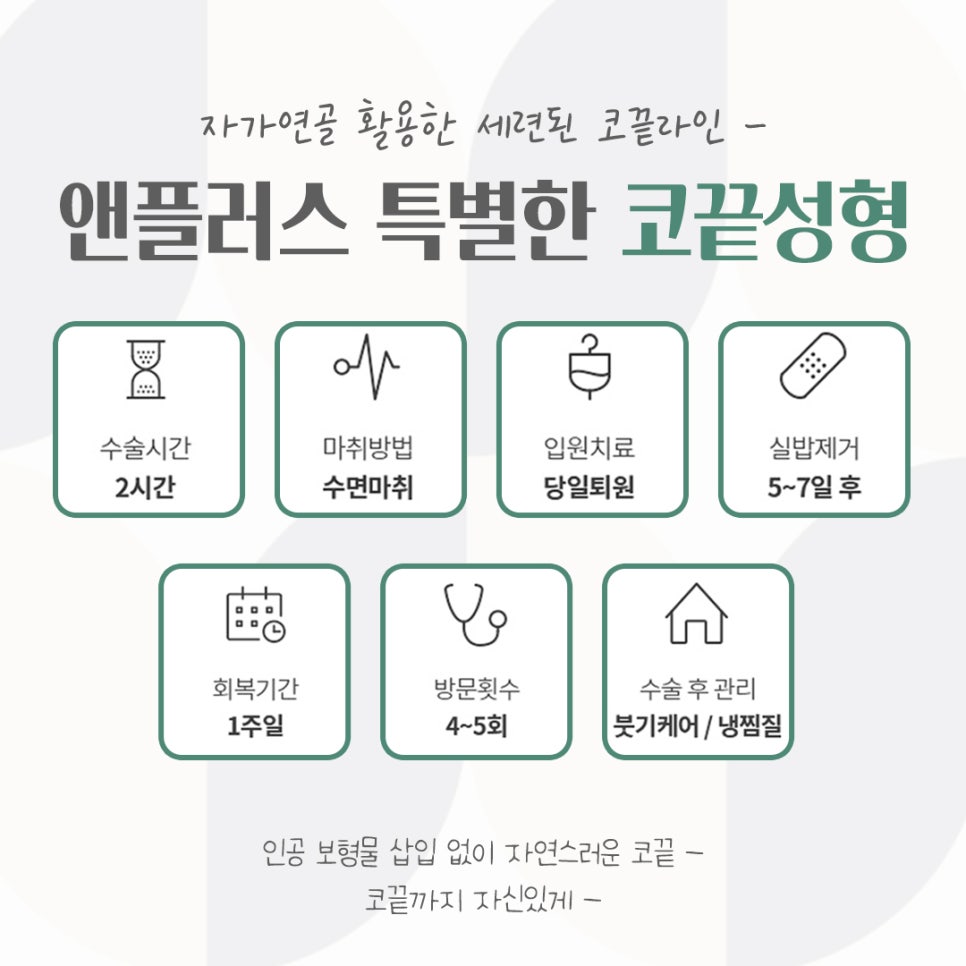
Accordingly, nasal tip surgery is performed by dividing cases into a low tip, an upturned tip, a drooping tip, or a spread-out tip.
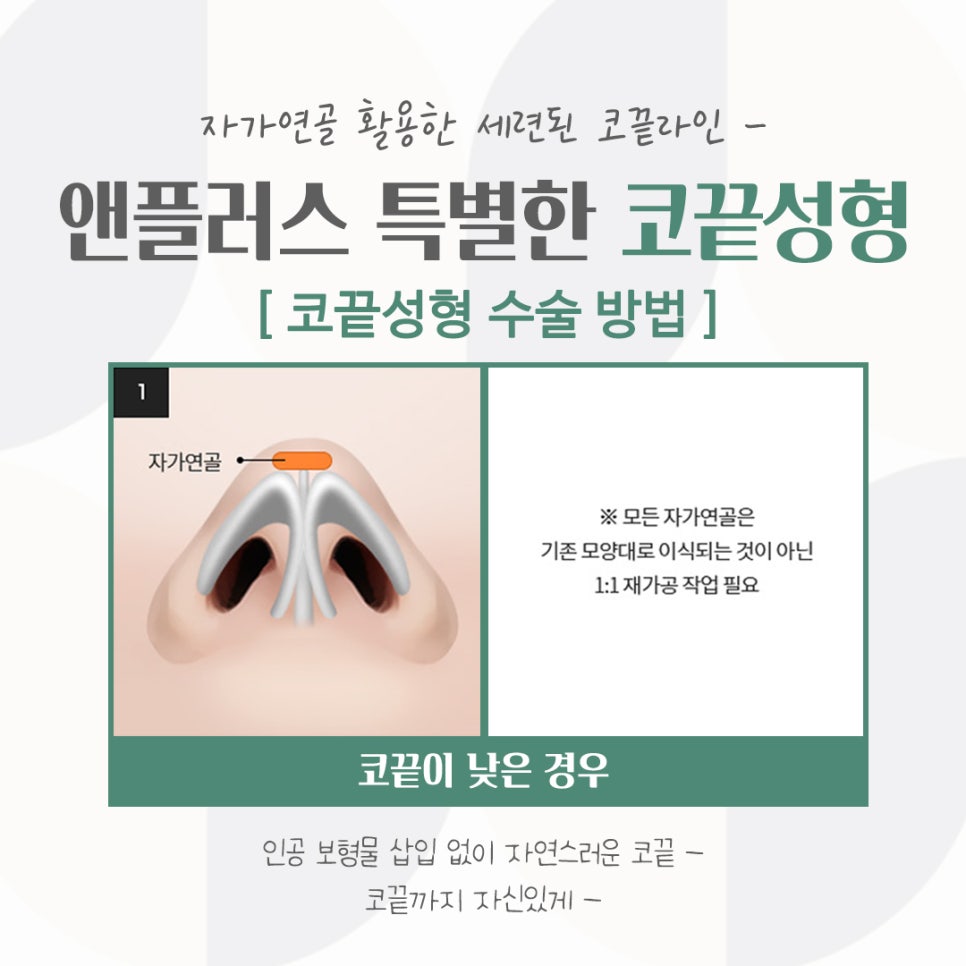
When the nasal tip is low, autologous cartilage is additionally grafted on top of the nasal tip cartilage to correct the tip and design the overall nose line.
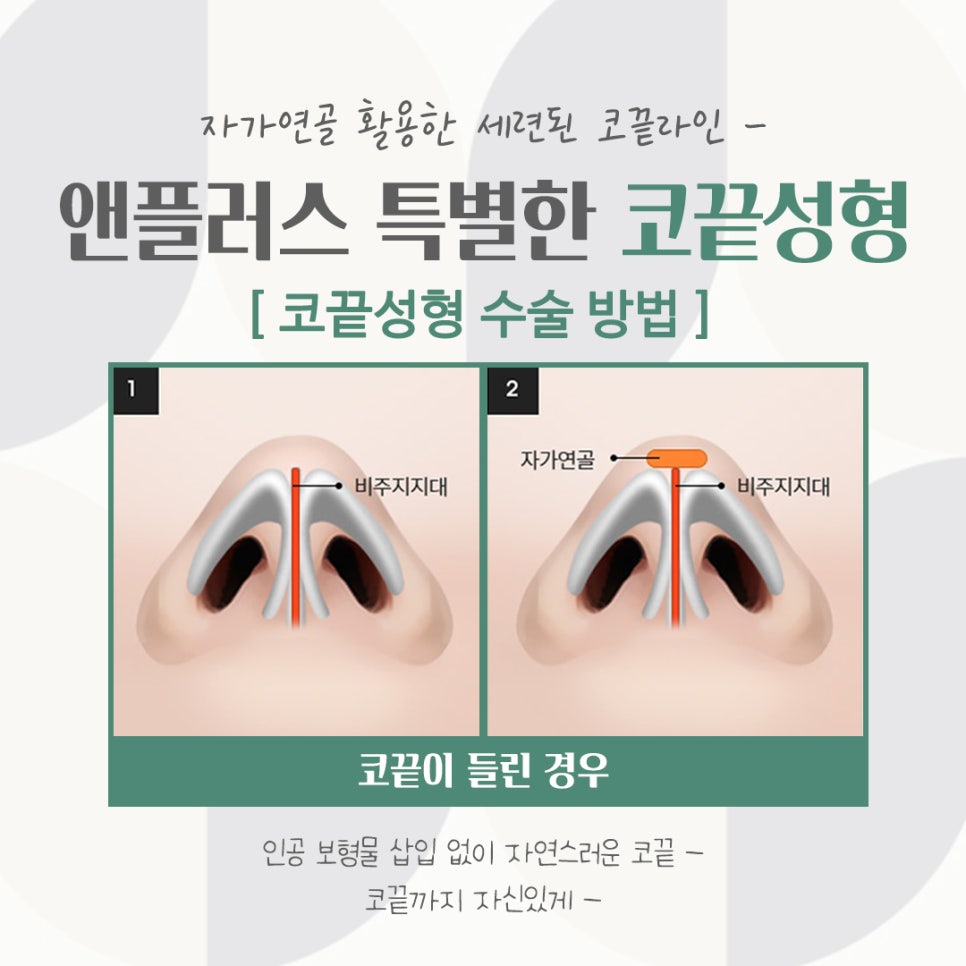
When the nasal tip is upturned, a columellar strut is placed or the septum is extended, and autologous cartilage is additionally placed on the supported nasal tip cartilage to reshape the tip and keep it from turning up again.
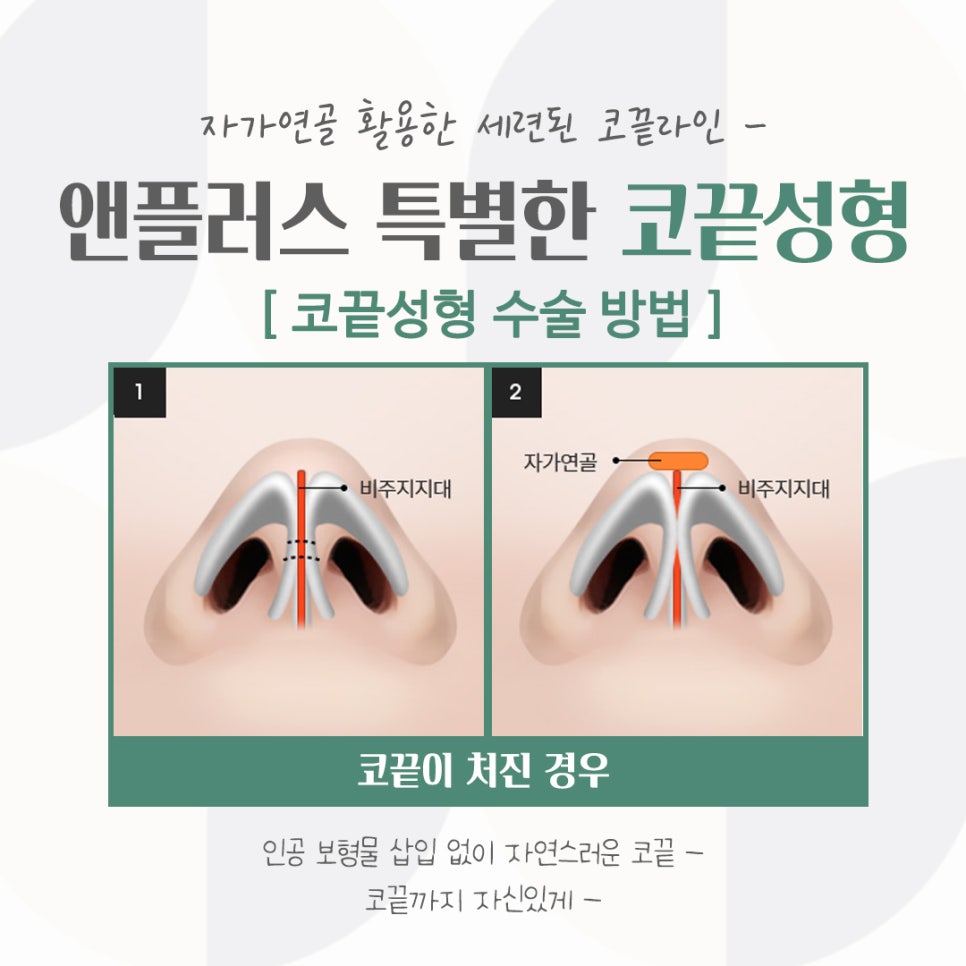
When the nasal tip is drooping, a columellar strut is placed to firmly fix the weak, drooping nasal tip cartilage, and autologous cartilage is additionally placed on the supported cartilage to correct the shape of the nasal tip.
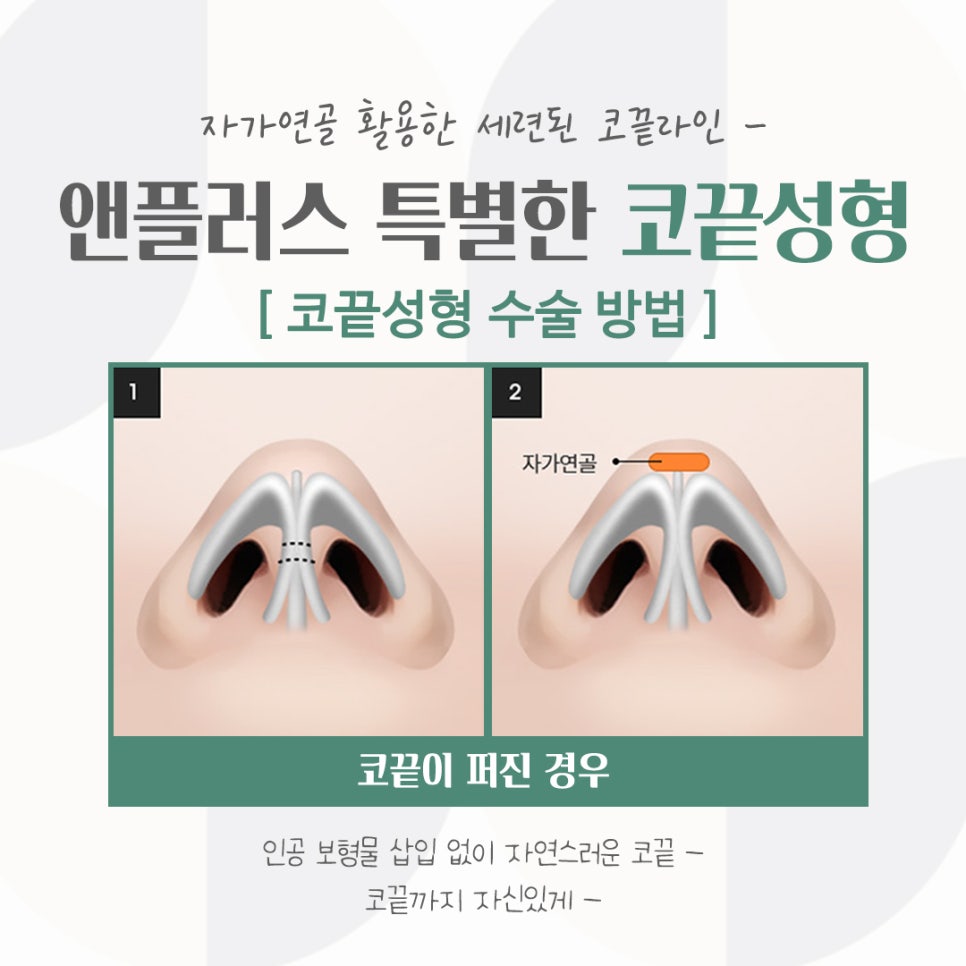
When the nasal tip is spread out, the spread nasal tip cartilage is brought together through tip cartilage stitching and firmly fixed, and if needed, autologous cartilage is grafted to correct the overall nose line.
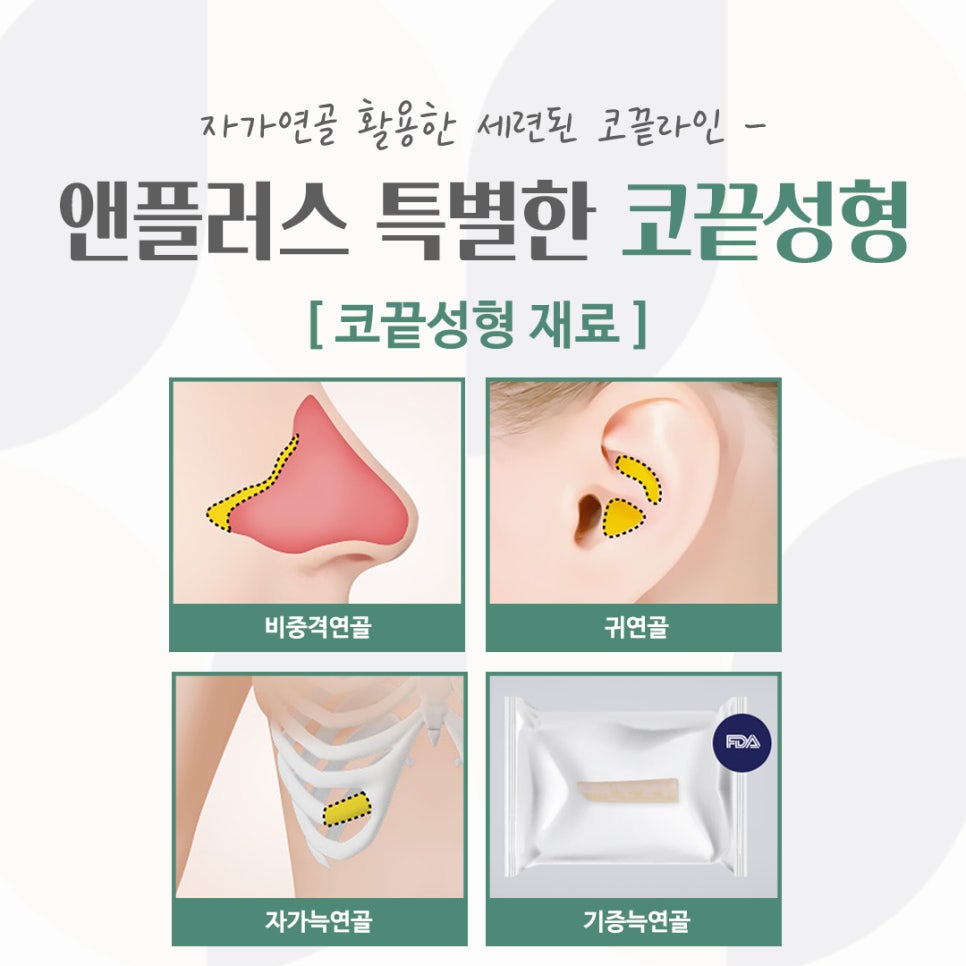
The autologous cartilage materials used in nasal tip surgery include ear cartilage, septal cartilage, and autologous rib cartilage. The material can be selected according to each person’s condition through preoperative testing before surgery, and if autologous cartilage is difficult to use, it can be replaced with donated rib cartilage approved by the U.S. FDA.
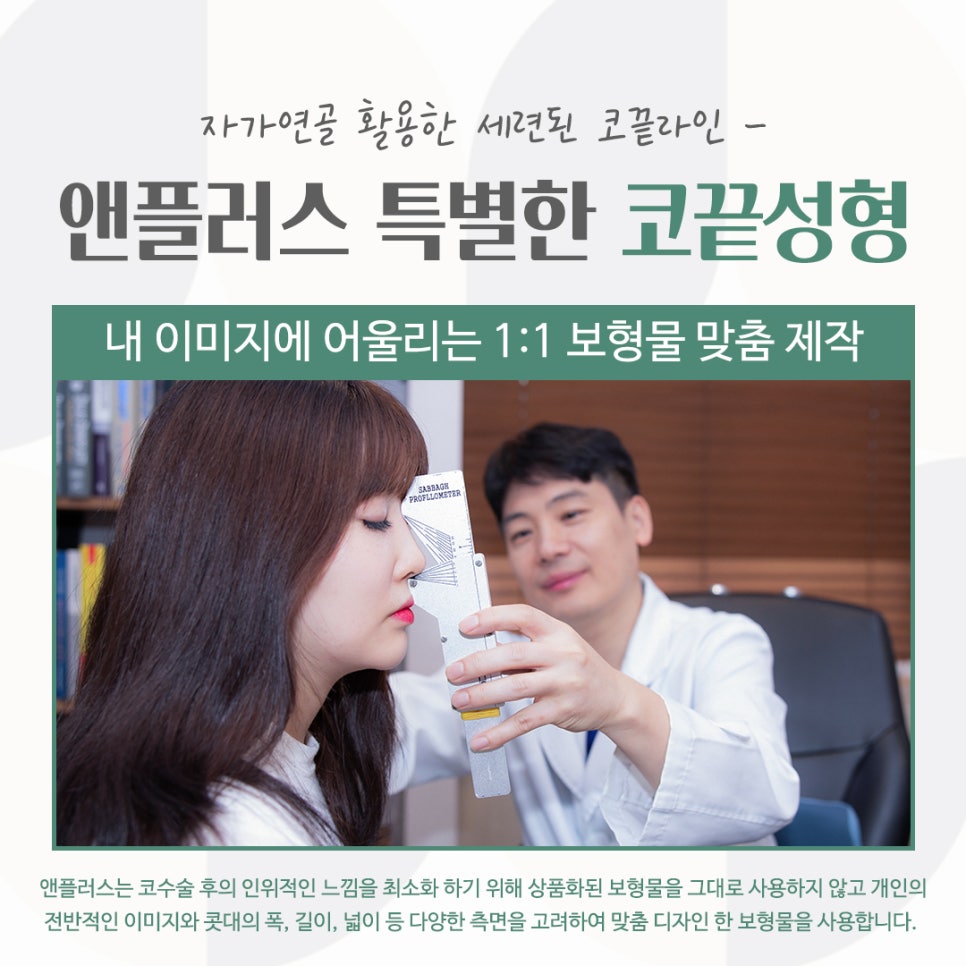
When silicone is added to the bridge of the nose during nasal tip surgery, the effect can be even greater. In the case of the silicone inserted into the bridge, it is not used as a pre-made commercial silicone that gives an artificial look. Instead, it is carefully trimmed by hand while considering the width, length, breadth, and height of the bridge in light of the person’s overall image, and then inserted. This allows the surgery to proceed with a natural line that suits me, which can lead to higher satisfaction.
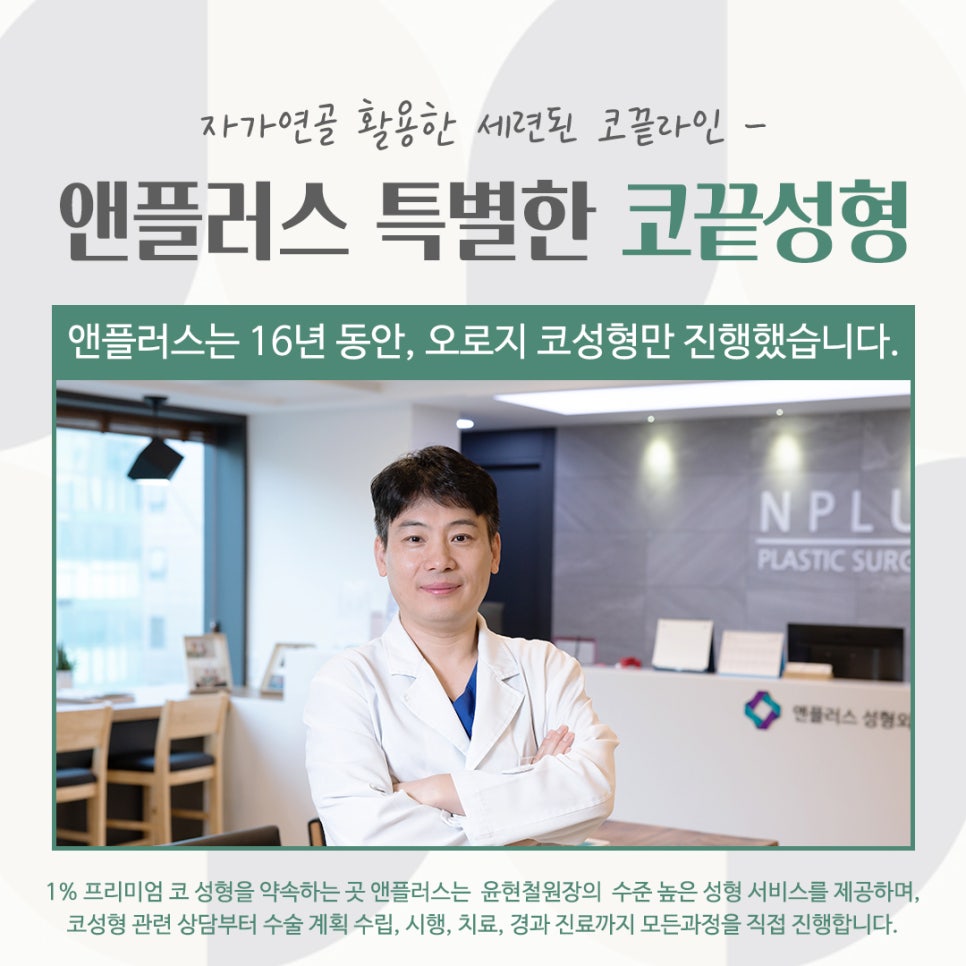
As such, nasal tip surgery may seem relatively simple, but it is a high-difficulty procedure because two or more surgeries are applied. Therefore, for those looking into tip cartilage stitching, it can be helpful to carefully check whether the medical team has strong anatomical knowledge of the nose, whether they have abundant experience and expertise, whether the necessary equipment is available to accurately assess the condition of your nose, and whether aftercare is fully guaranteed.

At Ojiko Hospital N Plus, Director Yoon Hyun-cheol personally handles every step one-on-one, from consultation on nasal tip surgery, to surgical planning, procedure, treatment, and follow-up care, so you can visit with greater peace of mind.

Aftercare is also supported by a one-year warranty after surgery and a surgical responsibility guarantee system prepared for any situation that may arise after surgery, including pain, inflammation, and dissatisfaction with the result. Customers who hold an N Plus membership card can receive aftercare benefits at any time.
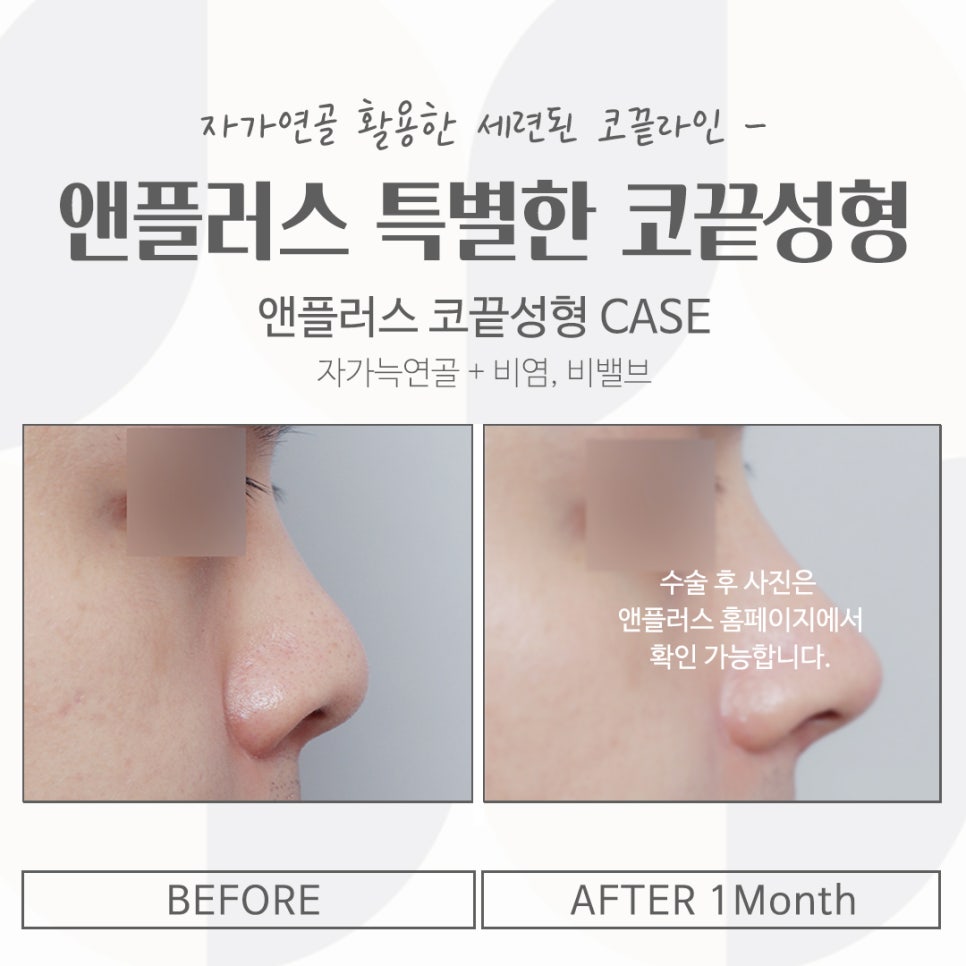
(The images above are before-and-after photos of nasal tip surgery at Ojiko Hospital N Plus.)
That concludes the explanation of tip cartilage stitching and nasal tip surgery at Ojiko Hospital N Plus. I hope this article is very helpful for those who are looking into tip cartilage stitching to naturally improve the current shape of their nasal tip. Thank you.
https://youtu.be/WXBJPNc4fXw