To find out about medical expense coverage for functional rhinoplasty, you first need to know what functional rhinoplasty is, right!?

Functional rhinoplasty is a surgery that simultaneously performs functional nasal surgery to correct various discomforting symptoms inside the nose and
cosmetic rhinoplasty, which also slightly improves any areas that feel a bit lacking in the shape of the nose.
Since this is a surgery that corrects the functional aspects of the nose,
insurance companies cover a certain portion of the cost.
This is medical expense coverage for functional rhinoplasty.
�a0
Then let’s look at what cases fall under medical expense coverage for functional rhinoplasty.
�a0
There are exactly three representative conditions that require functional rhinoplasty.
�a0
The first is rhinitis.

The second is a deviated septum.

The third is nasal valve stenosis.
These three cases can be said to qualify for medical expense coverage for functional rhinoplasty.
There may be some differences depending on the individual, so for the exact handling of reimbursement, it would be best to check once again with each insurance company.
�a0
Let’s start with rhinitis.
Rhinitis is broadly classified into allergic rhinitis and structural rhinitis caused by internal abnormalities in the nose.
�a0
Allergic rhinitis is rhinitis that reacts to specific substances such as mites, pollen, food, and dust, so it is closely related to an individual’s constitution.
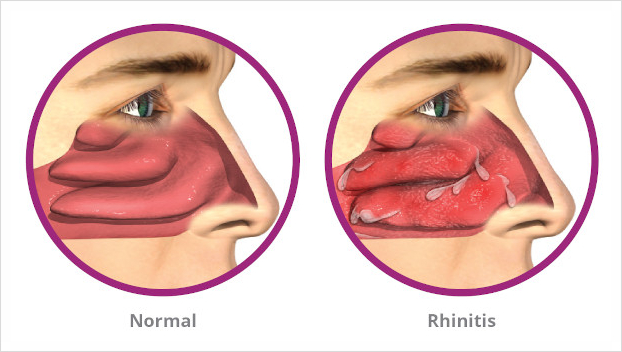
Allergic rhinitis is actually not improved by undergoing functional rhinoplasty.
Unfortunately, rather than expecting symptom improvement through surgery, allergic rhinitis calls first for steady medication treatment and health management that can strengthen one’s immunity.
�a0
Next is structural rhinitis caused by abnormalities in the internal nasal structure.
In fact, rhinitis caused by structural abnormalities and a deviated septum are essentially the same thing.
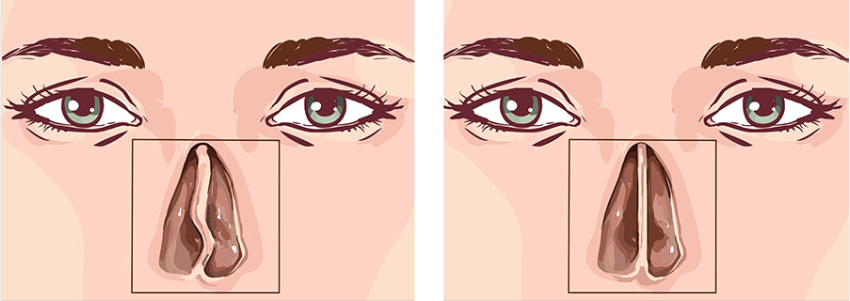
Left (deviated septum) / Right (normal)
Even when surgery is performed for symptoms of a deviated septum,
it is also covered by medical expense reimbursement for functional rhinoplasty.
A deviated septum means that the septum is bent.
The septum is a structure like a partition that divides our nostrils into two.
�a0
This septum is not a hard structure; it is positioned as slightly soft bone, that is, cartilage.
�a0
Septal cartilage may be bent congenitally,
but in many cases it becomes bent after being struck by external impact.
�a0
When a septum that had been standing straight becomes bent, one side of the nose becomes wider
and the other side becomes narrower, making normal breathing through the nose difficult.
�a0
In the end, just because the septal cartilage is bent, breathing becomes uncomfortable,
the nose feels blocked, and even headaches can occur.
However, structural rhinitis, that is, a deviated septum, can be sufficiently opened up through functional rhinoplasty.
Also, because it is rhinoplasty due to a disease, it is included in medical expense coverage for functional rhinoplasty.

People often say things like, “I heard rhinitis surgery has a high recurrence rate,”
or “I heard it doesn’t do much anyway.”
�a0
Cases where symptoms recur after surgery are usually when only the swollen inferior turbinate tissue inside is removed,
or when surgery is performed by reducing the size with radiofrequency or laser alone.
�a0
When septoplasty is also performed to straighten the bent septum properly,
rhinitis almost never recurs.
�a0
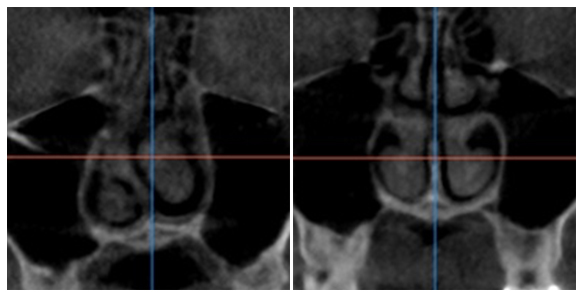
If you are not sure whether you have structural rhinitis,
you can find out quickly by getting a CT scan at an otolaryngology clinic.
And the third case that qualifies for medical expense coverage for functional rhinoplasty is nasal valve stenosis.
This part may differ somewhat depending on the insurance company, so it would be best to check with your insurer before undergoing functional rhinoplasty.
�a0
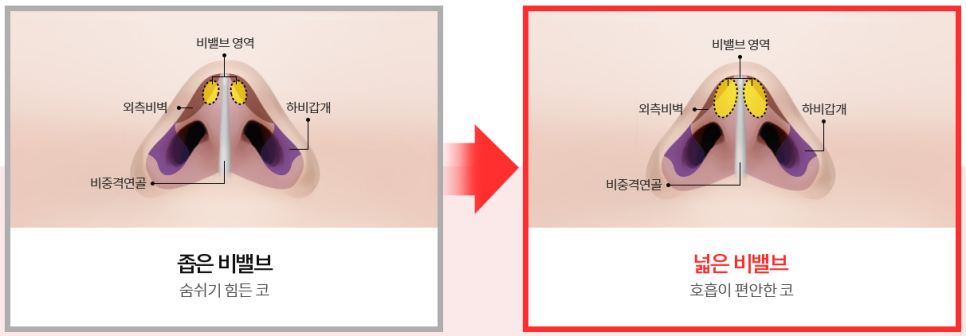
The nasal valve is the area where the septum and the outer wall of the nose meet.
It is the narrowest passage for air inside the nose.
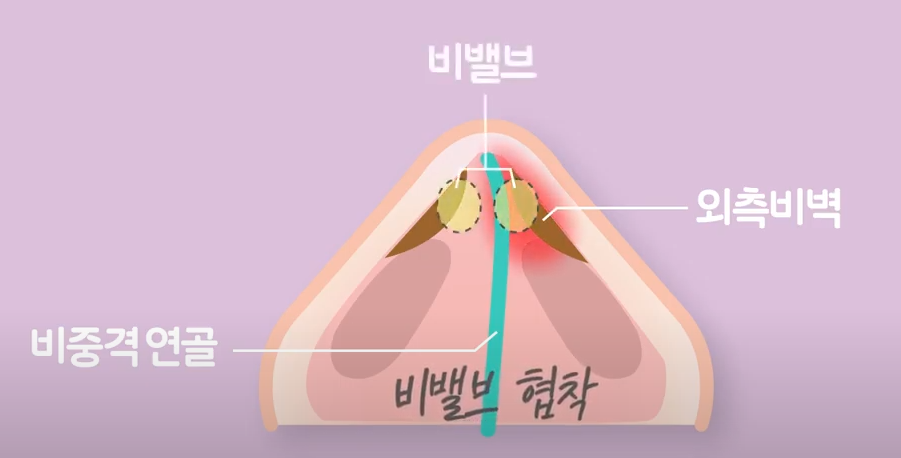
In fact, it is the most important part of breathing through the nose.
Nasal valve stenosis! As the term suggests, it is a state in which the nasal valve has become narrower than average.
�a0
When this nasal valve narrows, the passage for breathing through the nose itself becomes narrower, so it can feel very uncomfortable.
�a0
That is why it is good to perform surgery to widen the nasal valve, namely nasal valve correction.
�a0
If you previously had surgery for a deviated septum but still have persistent nasal congestion,
the probability that the problem is in the nasal valve is almost 99%.
�a0
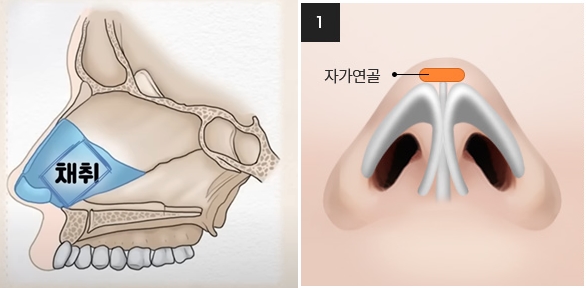
Also, when performing functional rhinoplasty, it is common to straighten the septum and then slightly trim away any excess cartilage.
�a0
The excess septal cartilage that is trimmed at this time is then used as material in cosmetic rhinoplasty
for raising the tip of the nose.
So far, we have looked at the types of functional rhinoplasty that qualify for medical expense coverage for functional rhinoplasty.
�a0
In addition, because the essence of medical expense coverage for functional rhinoplasty is to solve functional problems in the nose,
a medical institution where an otolaryngology specialist performs the surgery, like Nplus, may have a higher chance of being covered.
�a0
Above all, with functional rhinoplasty,
it is important to identify what kind of functional problem exists in the nose.
If cosmetic surgery is performed without improving these internal nasal symptoms,
after surgery, nasal congestion may actually become worse,
or the septum, which serves as the internal support structure, may weaken, causing the nose to gradually become more and more crooked.
Therefore, it is important to choose an experienced medical team with know-how that encompasses both otolaryngology and plastic surgery.
�a0
Also, do not forget that medical expense coverage for functional rhinoplasty
falls under medical expense insurance, which covers medical expenses incurred after purchasing insurance, unlike life insurance.
�a0
When claiming medical expense coverage for functional rhinoplasty, the required documents vary slightly by insurance company,
but the usual documents are:
�a0
- Surgery confirmation
- Admission/discharge confirmation
- Detailed medical expense statement
- Inpatient (discharge) medical expense receipt
- Other insurer forms
�a0
Also, even if you receive the same medical expense coverage for functional rhinoplasty, the reimbursement rate may differ slightly from person to person.
Policies issued before August 1, 2009: 100% coverage
Policies from August 1, 2009 onward: 90% coverage
Policies from April 1, 2016 onward: 80% coverage
Even if you signed up for medical expense insurance before 2009, the reimbursement rate may differ depending on the coverage terms, so
it is recommended that you directly check your insurance signup date, coverage rate, and whether payment is possible with the insurance company,
and then proceed with functional rhinoplasty.
�a0
Reference URL:
http://nplusclinic.com/page.php?pageIndex=130102
https://youtu.be/a4GpYOCHp-k
�a0