
Many people may try various methods to improve an image that looks harsh or strong, but when it is difficult to make changes through those efforts alone, they may turn to cosmetic surgery. Among various cosmetic procedures, even a small change to the nose can soften a harsh-looking image, so interest in hump nose surgery reviews is increasing.

The nose is located at the center of the face and is the most three-dimensional feature, so the shape of the nose alone can influence the overall impression of the face. Because even a slight improvement in the shape of the nose can have a significant effect on improving one’s appearance, it is one of the more popular cosmetic procedures. In particular, hump nose cases often show a large before-and-after difference, so those with these concerns may want to look into hump nose surgery reviews in more detail.
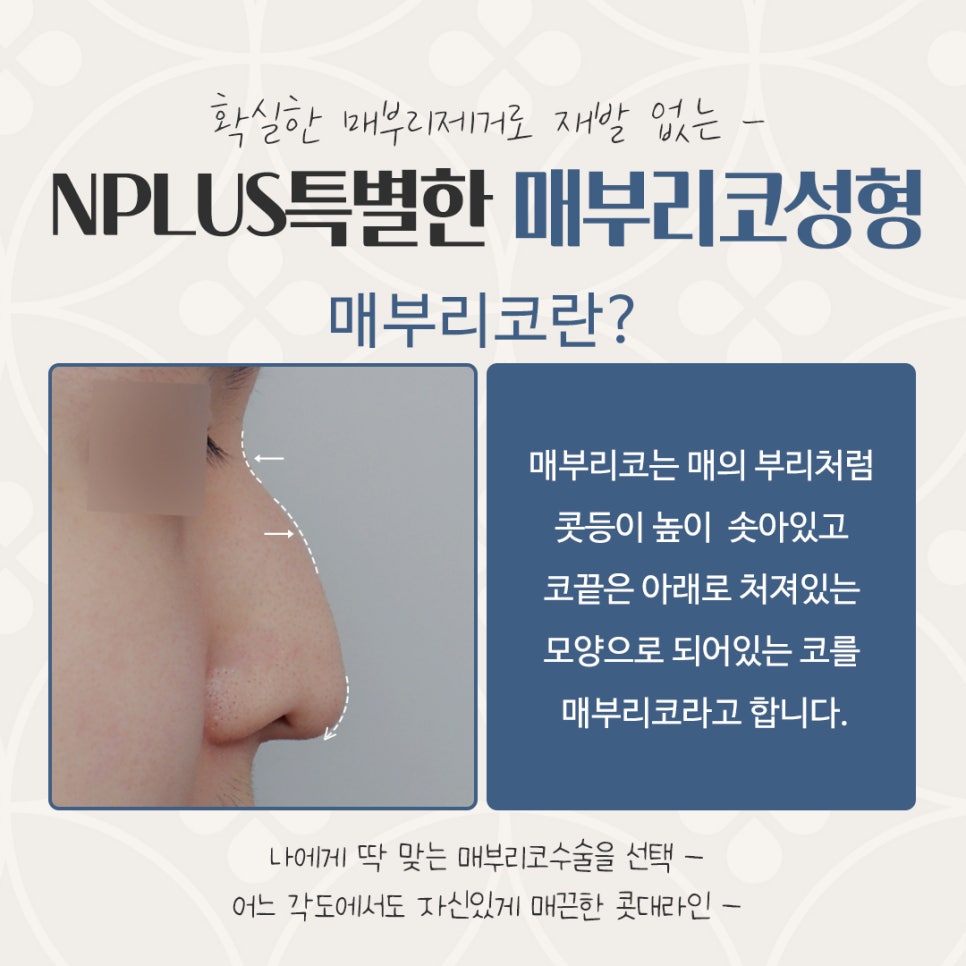
What is hump nose surgery? A nose with an uneven bridge, a hump that rises like an eagle’s beak, and a tip that droops downward is called a hump nose. In many cases, it is influenced by genetics, but it often occurs due to acquired trauma. Surgery to remove this hump through resection/osteotomy and correct the nasal tip is called hump nose surgery.
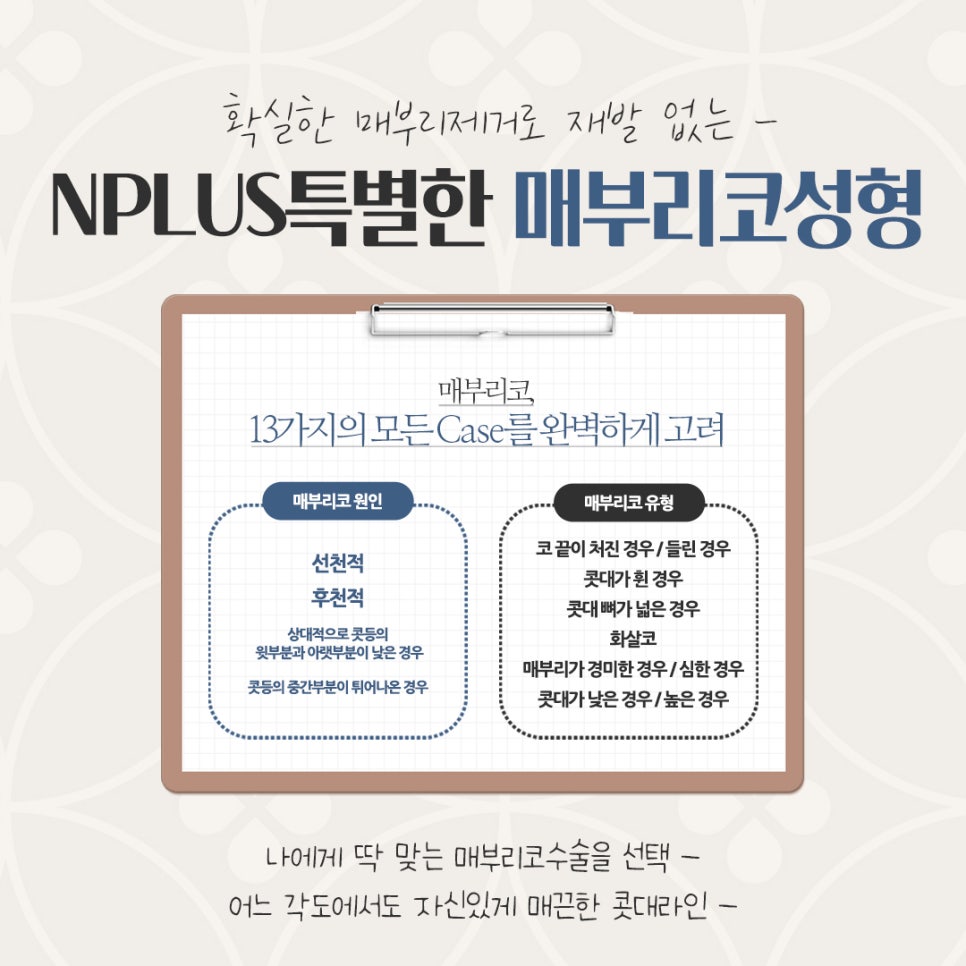
Therefore, the types of noses that people looking into hump nose surgery reviews may have can be categorized as: a hump on the bridge, a drooping or upturned tip, a crooked bridge, a wide nasal bone bridge, a mild hump, a severe hump, or a low hump nose. Since the surgical method and materials used vary depending on the cause of the hump nose, the procedure should be carried out in a way that is appropriate for the individual through an accurate diagnosis.
When looking at hump nose surgery reviews, the hump is usually visible to the naked eye. However, problems with internal nasal function or the internal condition of the nasal bone are difficult to assess visually, so an accurate diagnosis must be made with equipment. For those researching hump nose surgery reviews, it can be helpful to carefully check whether the medical staff have strong anatomical knowledge of the nose, whether they have sufficient experience and expertise, whether the clinic has equipment that can accurately assess the condition of your nose, and whether aftercare is reliably guaranteed.
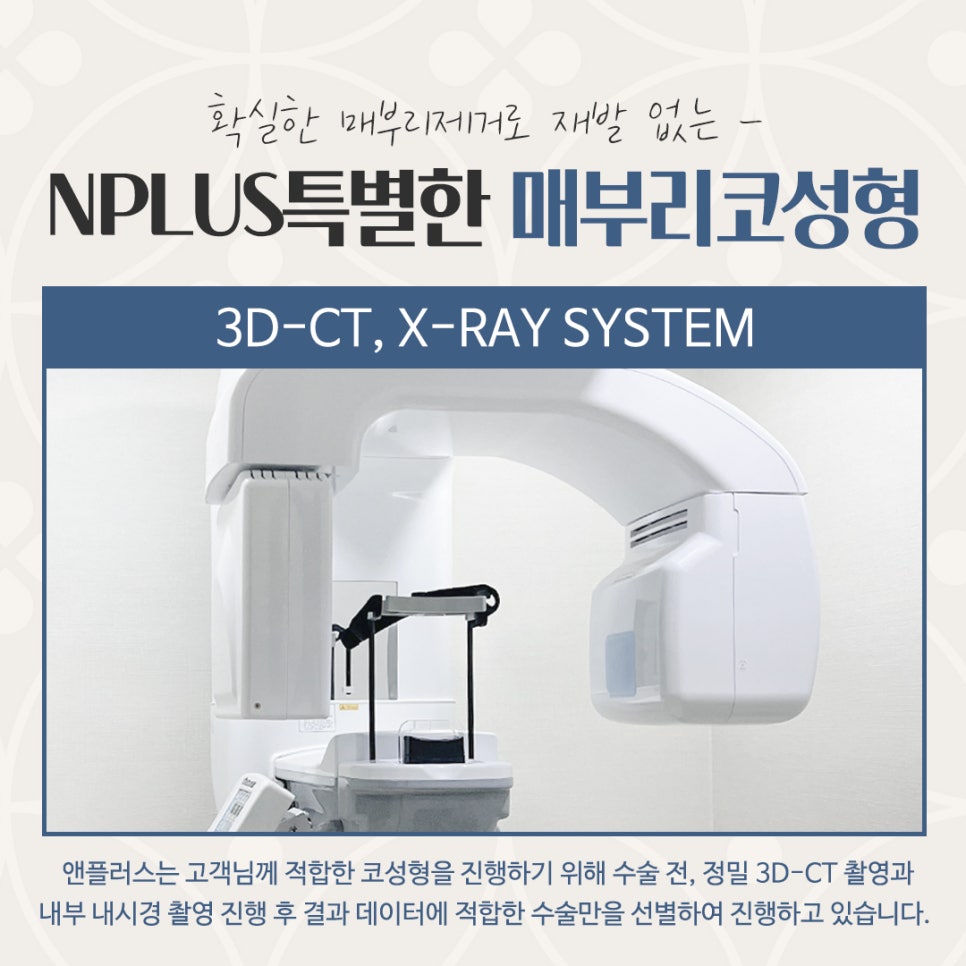
At Ojiko Hospital N+Plus, before surgery we perform 3D-CT scans, internal endoscopic imaging, various allergy tests, and internal nasal function tests to accurately understand the current condition of each patient’s nose. Based on the extracted data, we establish and carry out a surgical plan.

The hump nose surgery procedure is carried out by correcting the bridge through hump removal and osteotomy, nasal bridge silicone, and autologous cartilage for the nasal tip. Surgery is performed by dividing cases into a high nasal bridge line, a low nasal bridge line, and a mild hump on the bridge.
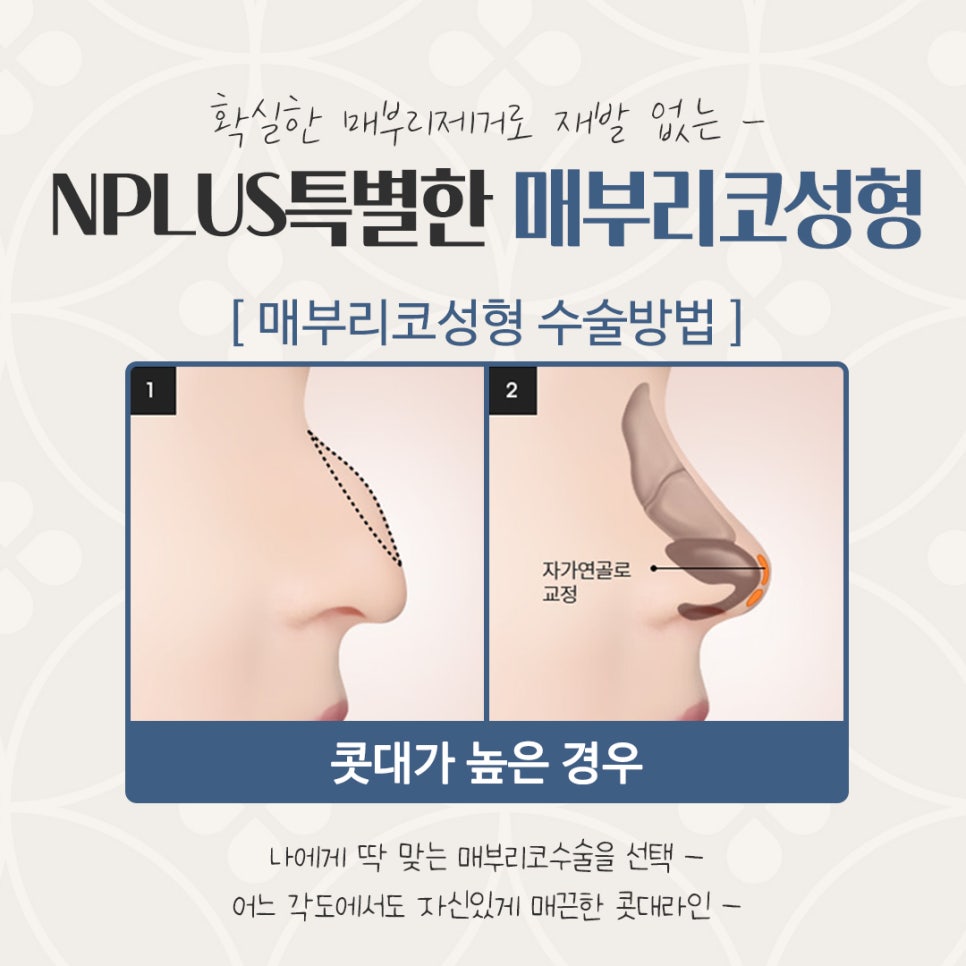
In the case of a hump nose with a high bridge, the hump on the bridge is corrected through osteotomy and resection, and the overall nasal line can be refined by correcting only the tip with autologous cartilage.
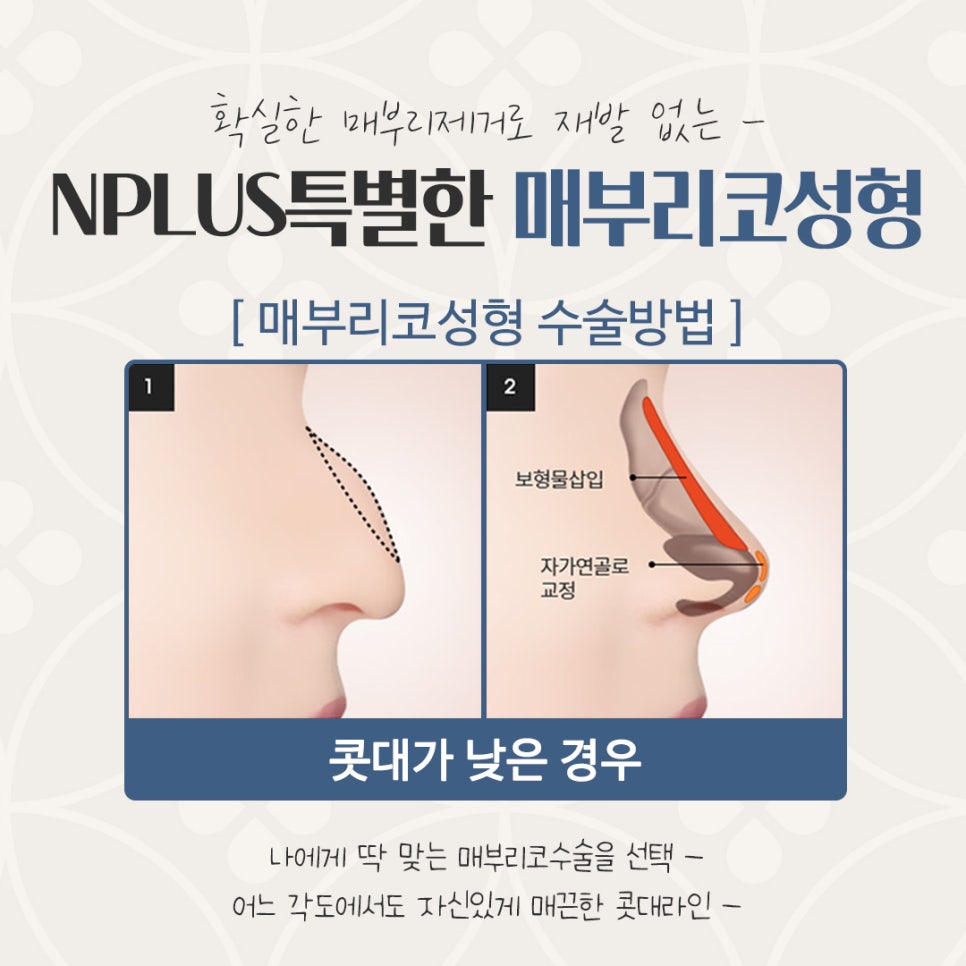
In the case of a hump nose with a low bridge, the hump on the bridge is resected and osteotomized, then silicone is inserted into the bridge, and the tip is designed with autologous cartilage to create the overall nasal line.
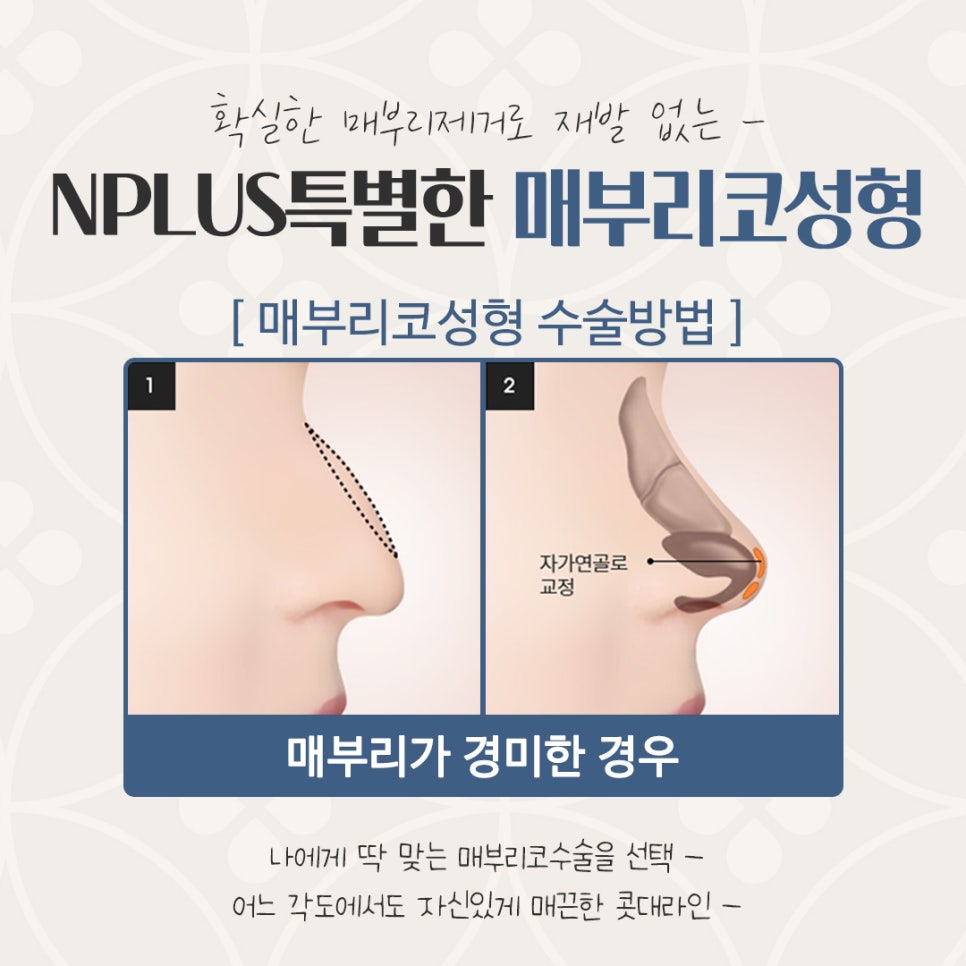
In the case of a mild hump nose, the hump on the bridge is removed, and if necessary, the tip can be corrected with autologous cartilage.
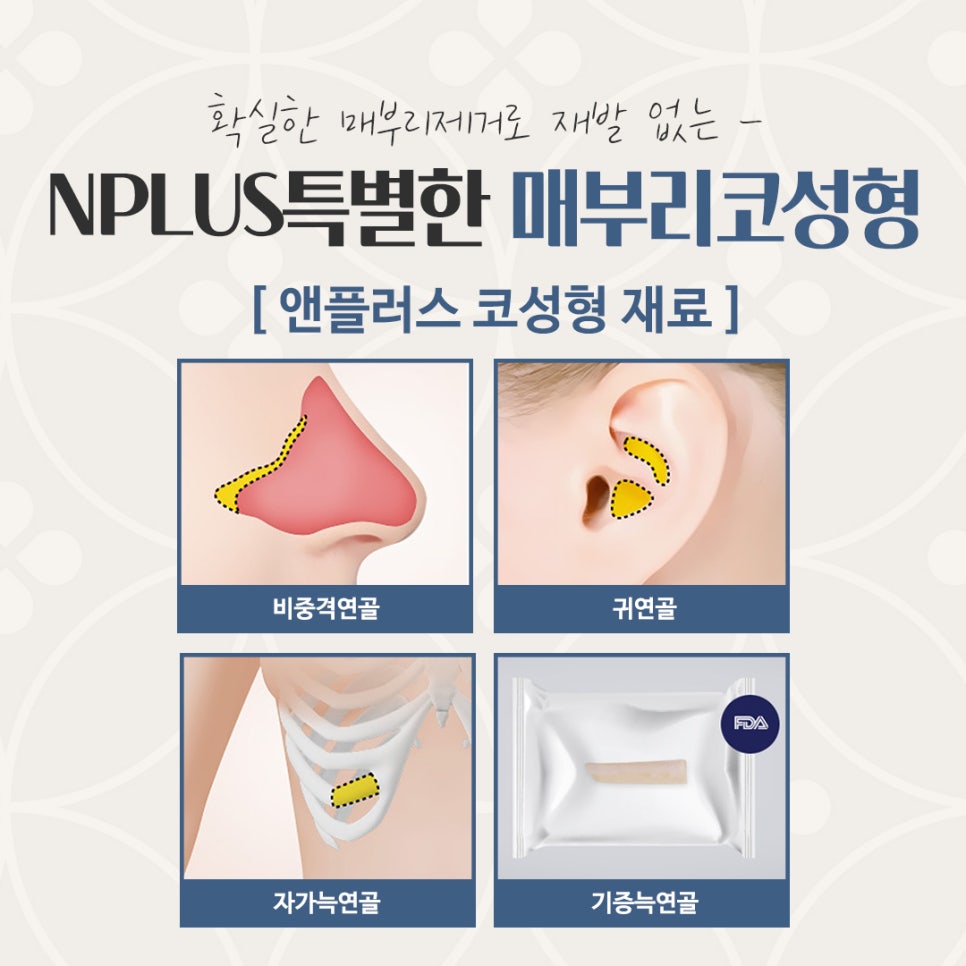
As for the autologous cartilage used for the nasal tip, septal cartilage, ear cartilage, and autologous rib cartilage are used. If the use of autologous cartilage is unavoidably difficult, the nasal tip can be corrected using donated rib cartilage approved by the U.S. FDA.

For the silicone used in the bridge of the nose, rather than using a pre-made commercial silicone as is, a custom-designed silicone is used after considering various aspects such as the individual’s overall image and the width, length, breadth, and height of the nasal bridge, in order to minimize any artificial feeling after surgery and achieve a more satisfying hump nose surgery result.

As such, in the case of hump nose surgery, the surgical method and materials differ depending on the size and location of the hump, the condition of the nasal bone, skin condition, and internal functional issues. Therefore, surgery should be performed based on the individual’s exact condition in order to help prevent revision surgery. The key point of hump nose surgery is to remove the hump cleanly. That is why, while it is important to refer to before-and-after images from hump nose surgery reviews, it can be very helpful to choose a place that can accurately assess the condition of your nose and receive a consultation there.

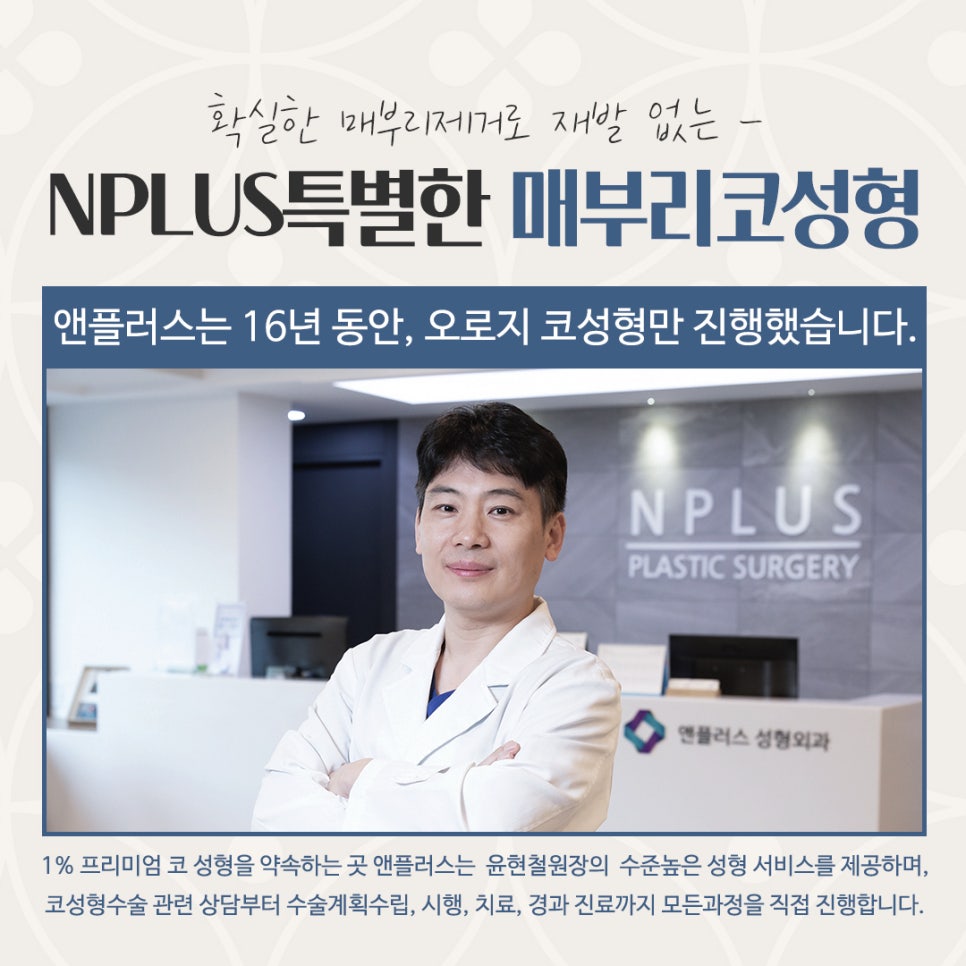
At Ojiko Hospital N+Plus, Director Yoon Hyun-cheol personally handles every stage one-on-one, from consultation regarding hump nose surgery to establishing the surgical plan, performing the procedure, treatment, and follow-up visits. This allows patients to receive high-level medical services from before surgery through aftercare.

For aftercare following surgery, an N+Plus membership card is issued, and an after-sales service system is guaranteed for one year after surgery. In addition, a surgical responsibility guarantee system is in place to prepare for any situation that may arise after surgery, such as pain, inflammation, or dissatisfaction with the shape, so you can safely receive aftercare benefits as well.
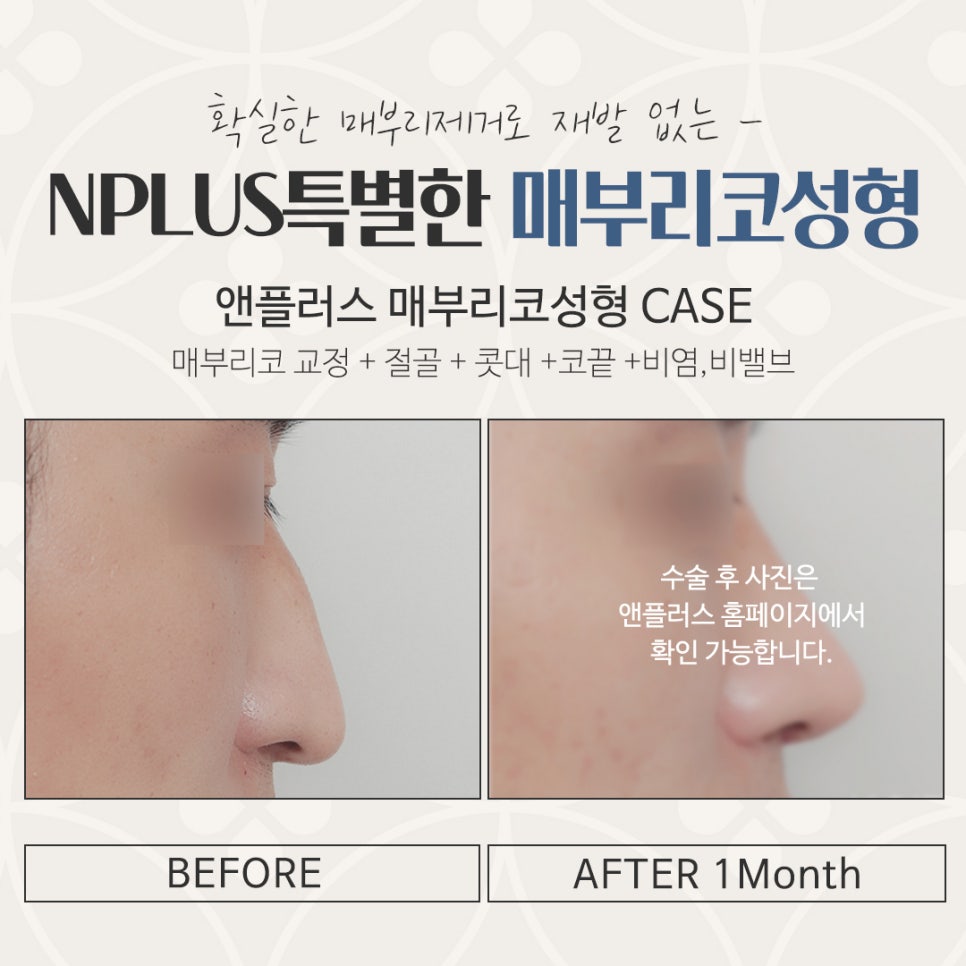
(The image above shows before-and-after photos from hump nose surgery reviews at Ojiko Hospital N+Plus.)
That concludes the information we shared about hump nose surgery reviews at Ojiko Hospital N+Plus. I hope this article was very helpful for those who are currently looking into rhinoplasty because they are dissatisfied with the shape of their nose. Thank you.
https://youtu.be/xRMF-b_rVac