Recently, interest in appearance has led many people of all ages and genders to take an interest in self-care and try various things to create change. As part of these efforts, interest in cosmetic surgery is also increasing as people seek to improve areas that are difficult to change otherwise.

Among the many types of cosmetic surgery, rhinoplasty, which is centered on the most noticeable features of the face, is especially popular. The reason is that even a small change to the nose can greatly improve one’s impression. On the other hand, when the shape of the nose does not match a person’s own 기준, it stands out even more. Therefore, for those looking into rhinoplasty, the nose can be categorized as low, humped, drooping, upturned, bulbous, and so on. In particular, when the nose is shaped like a very drooping arrow nose, it can make a person appear older, so many people look into arrow nose surgery in greater detail to improve it.

People considering arrow nose surgery may have noses in cases such as: the tip droops and looks like an arrow nose, the nose is too long compared to the length of the face, the tip droops and the angle between the upper lip and the nose tip is small, the tip gradually sags with age, or they want revision surgery because there was no improvement even after arrow nose surgery. Overall, these nasal shapes can create a strong impression or a prematurely aged look.

Arrow nose surgery refers to surgery that corrects a nose that is generally long in shape or has a downward-drooping tip, often with a septal cartilage that is developed more than average and gives the nose an arrow-like appearance.
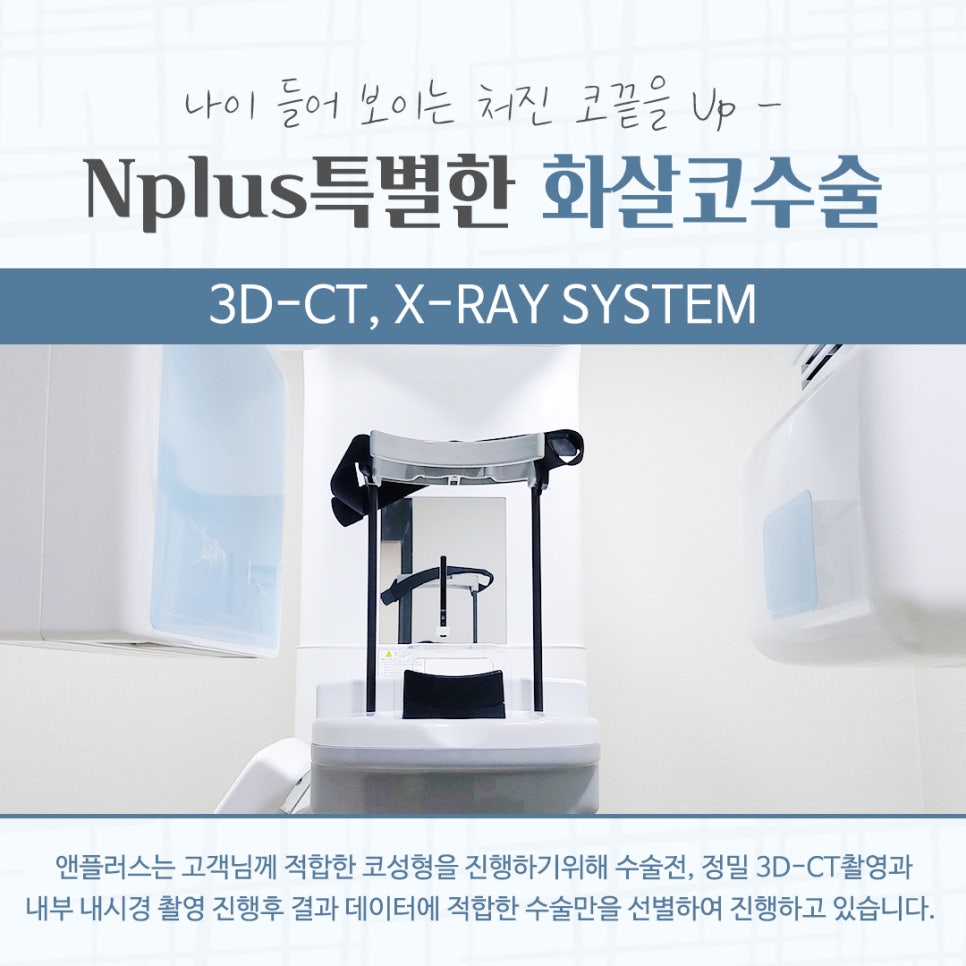
At OJ Nose Plastic Surgery & N+ Plus, to ensure safe and satisfying rhinoplasty, preoperative 3D-CT imaging, internal endoscopic imaging, various allergy tests, and internal nasal function tests are performed to accurately identify the cause of the arrow nose. Based on the collected data, a surgical plan is established and the procedure is carried out.
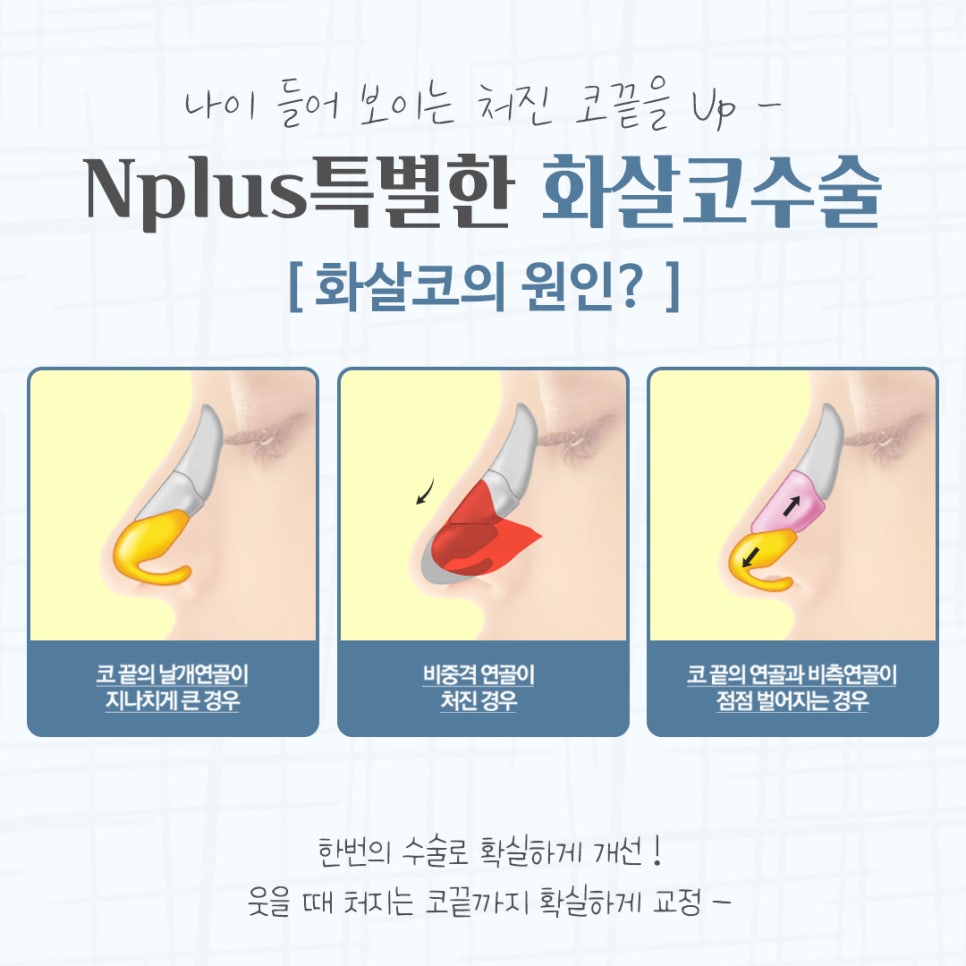
The surgical method for arrow nose surgery varies depending on each individual’s nasal structure, internal issues, the condition of the nasal bones, and the condition of the cartilage. The procedure is divided into cases where the alar cartilage at the tip is excessively large, the septal cartilage is sagging, or the cartilage at the tip and the nasal cartilage are gradually separating.
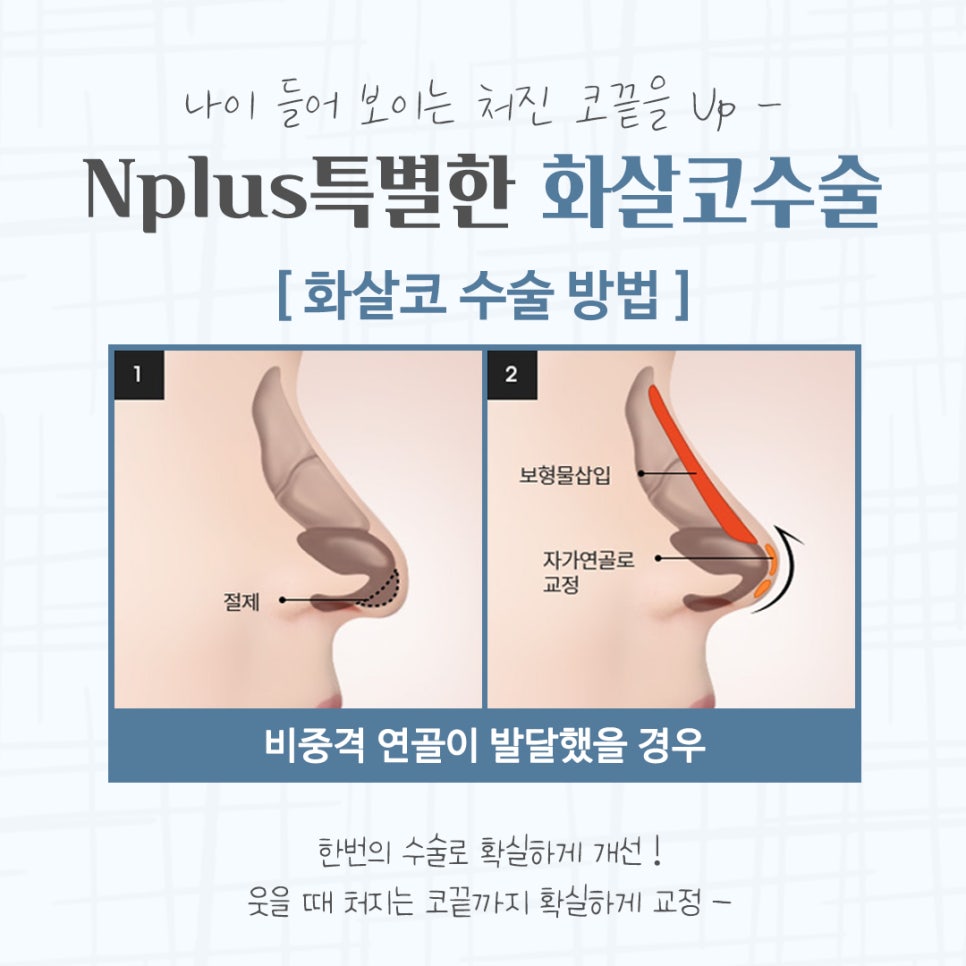
When the septal cartilage is developed, part of the end of the septal cartilage is resected and corrected. If correction of the bridge height and tip height is also needed, implants or autologous cartilage can additionally be used for correction.
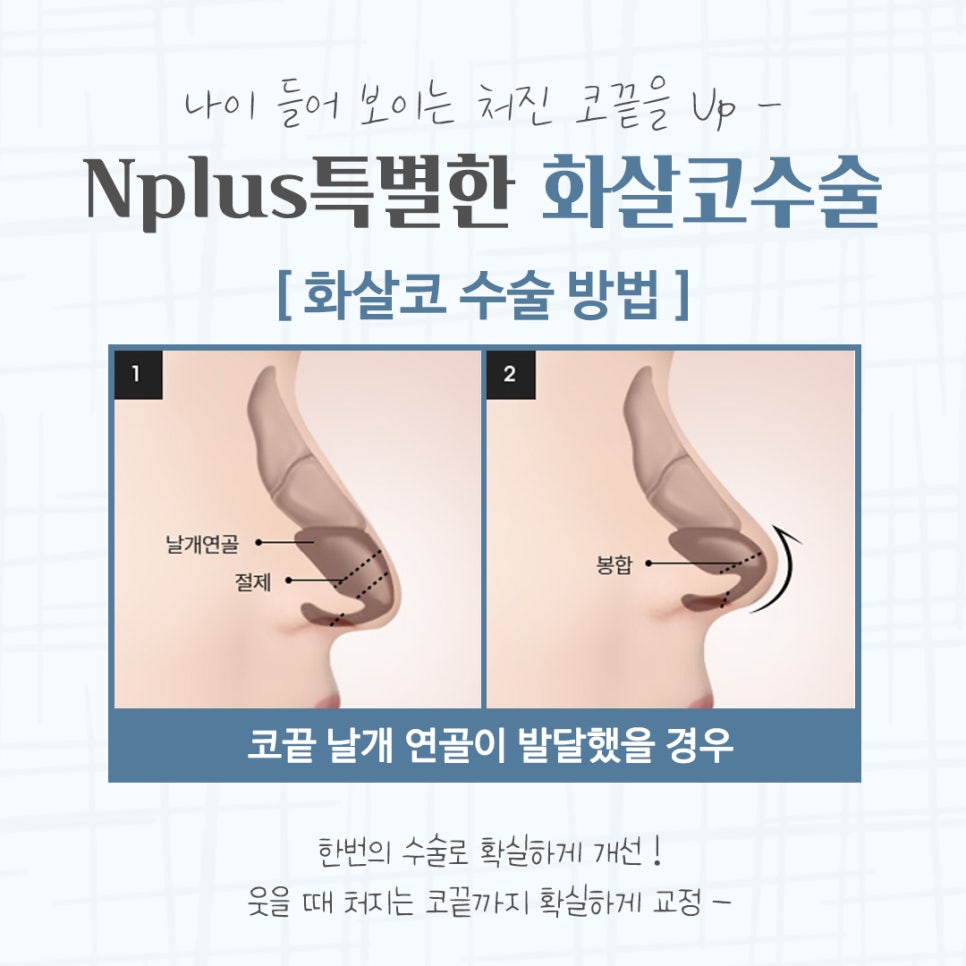
When the alar cartilage at the tip is developed, the size of the cartilage is corrected by resecting and resuturing the alar cartilage. When the cartilage is reinserted, it is rotated upward from its drooping angle before being grafted.
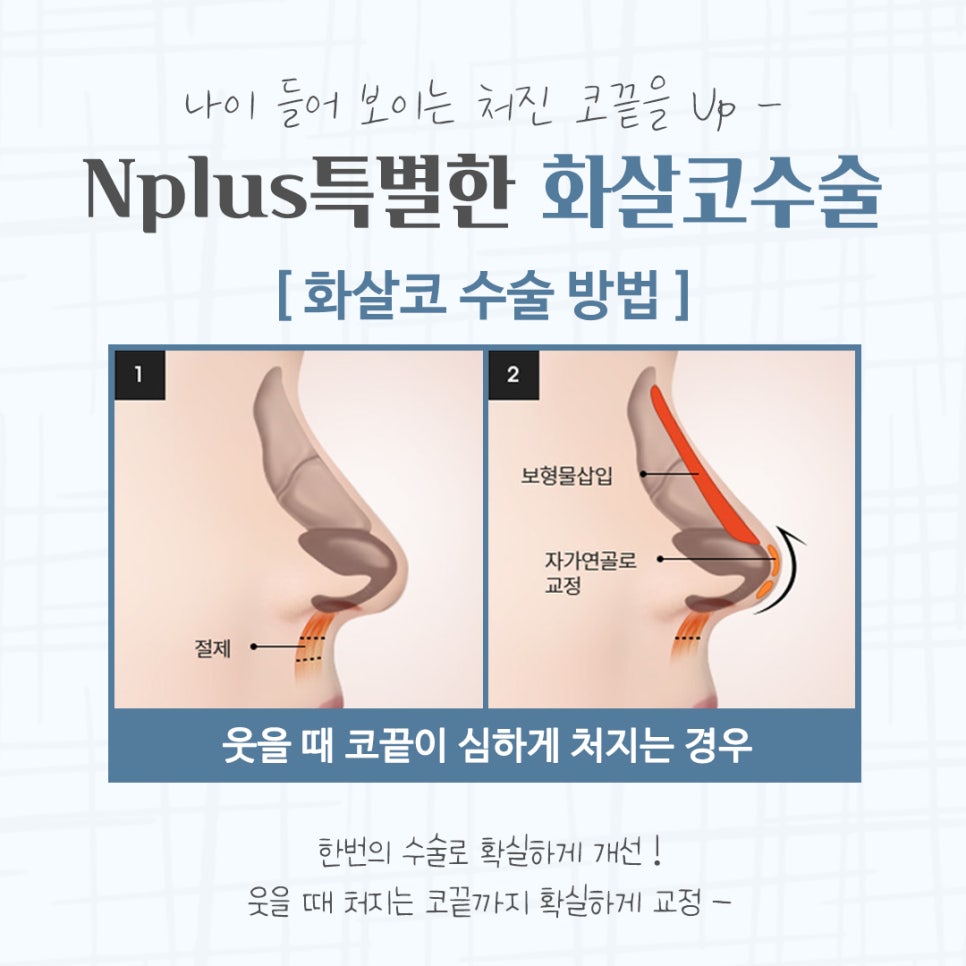
When the tip of the nose droops significantly while smiling, the length of the muscles around the nasal tip is shortened, and the overall bridge line can be corrected. The tip can be corrected using autologous cartilage to refine the overall line.
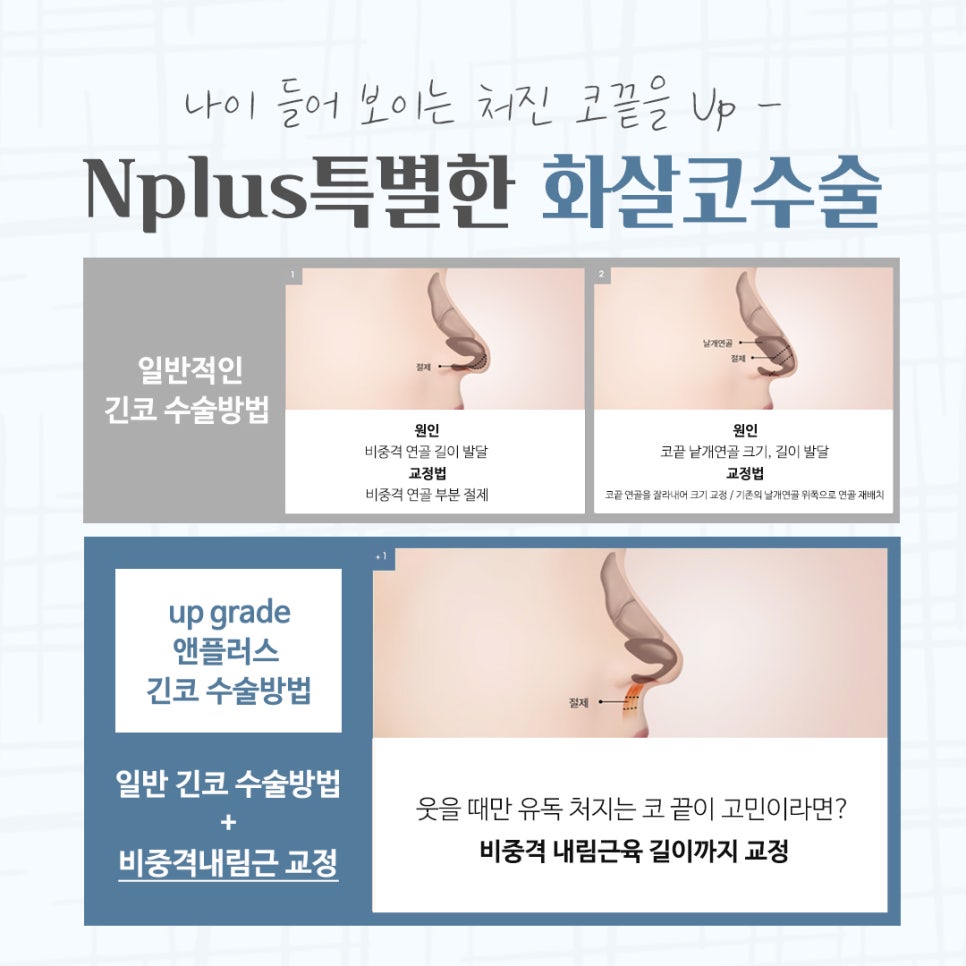
In addition, at OJ Nose Plastic Surgery & N+ Plus, the surgery is performed together with correction of the depressor septi nasi muscle, so the tip does not droop even when smiling. Because the procedure also takes internal nasal function into consideration, a more satisfying cosmetic result can be achieved.
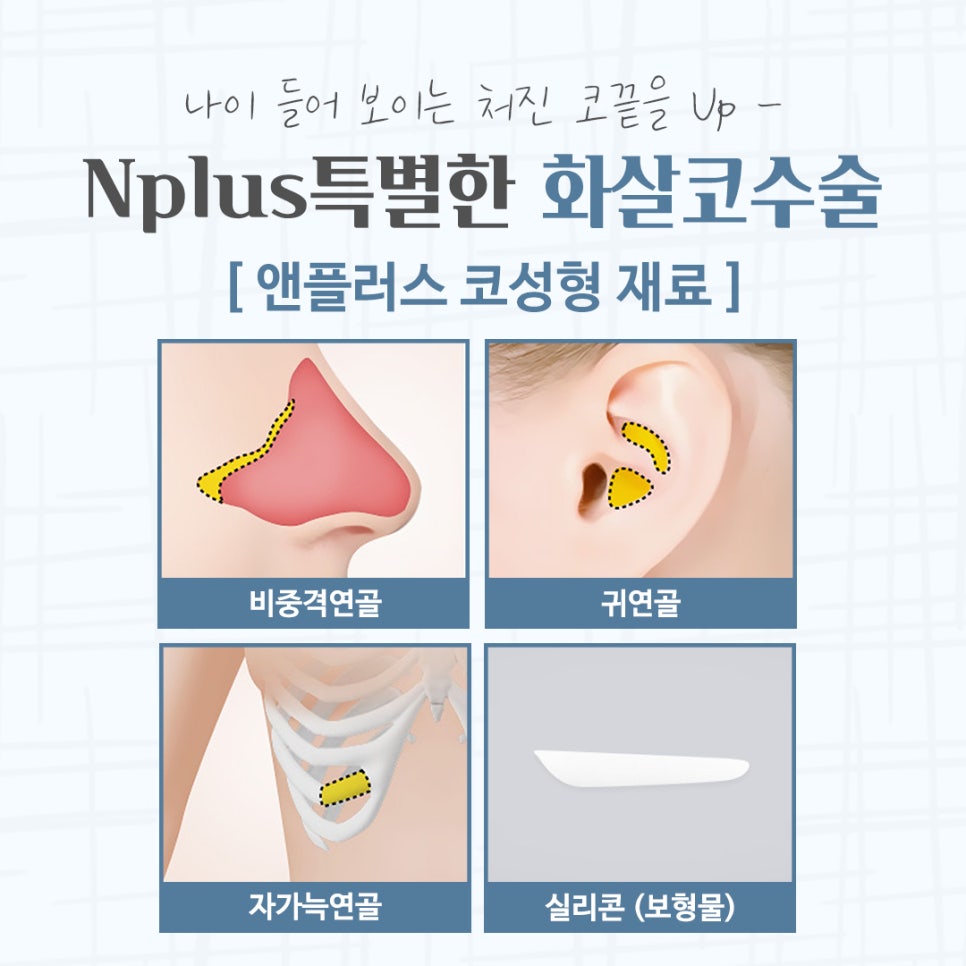
The materials used in arrow nose surgery include silicone for the bridge and autologous cartilage for the tip. The autologous cartilage used for the tip may include ear cartilage, septal cartilage, and autologous rib cartilage. The material can also be selected based on preoperative examinations to suit the individual.
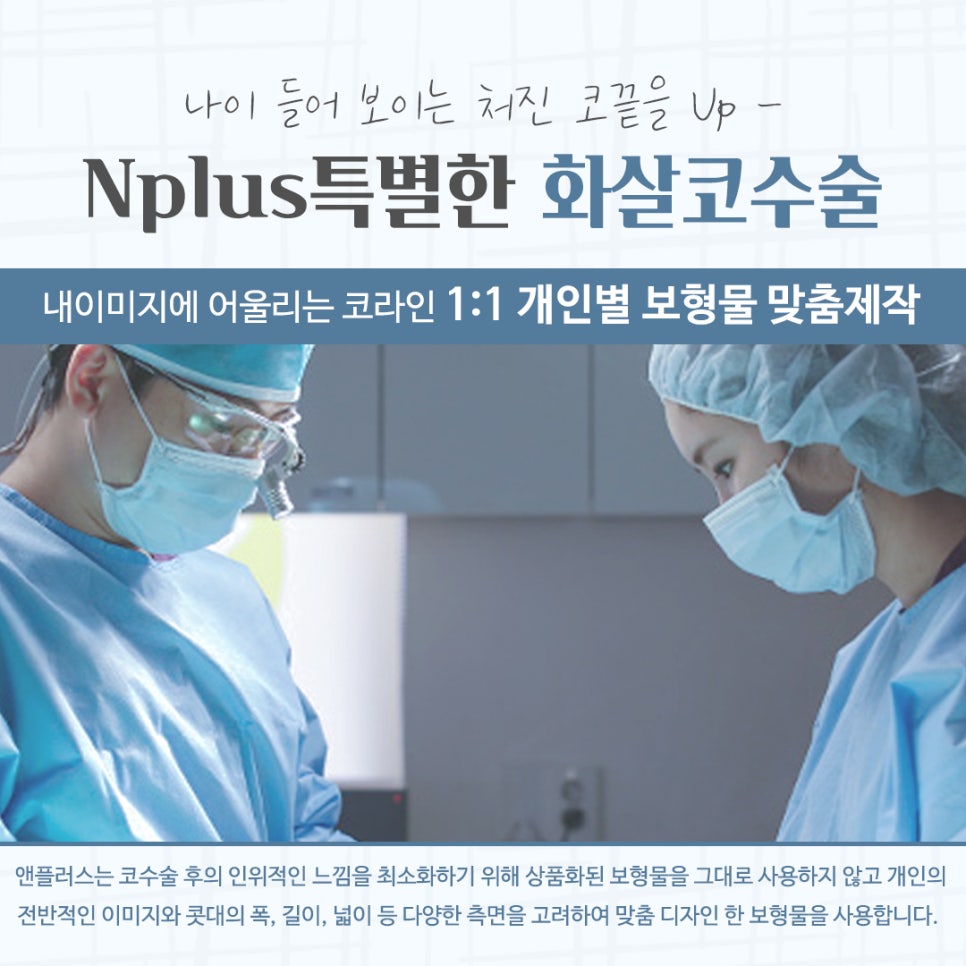
Silicone is used for the bridge, and rather than using a pre-made commercial silicone implant as is, it is carefully shaped by hand to reflect the individual’s overall appearance as well as the width, length, breadth, and height of the bridge before insertion.

In the case of arrow nose surgery, it is not a single procedure but involves two or more procedures, making it a highly complex type of nasal surgery. For those looking into arrow nose surgery, it is helpful to carefully check whether the medical team has strong anatomical knowledge of the nose, whether they have extensive relevant experience and expertise, whether equipment is available to assess the condition of your nose, and whether thorough postoperative care is guaranteed.
At OJ Nose Plastic Surgery & N+ Plus, Director Yoon Hyun-cheol personally handles every step one-on-one, from rhinoplasty consultation to surgical planning, the procedure itself, treatment, and follow-up visits, providing a high level of medical care before and after surgery.

Postoperative care is also supported by a free one-year after-service guarantee and a surgical responsibility guarantee system that covers all possible postoperative situations, such as pain, inflammation, or dissatisfaction with the shape. This means you can also receive benefits for aftercare following surgery.
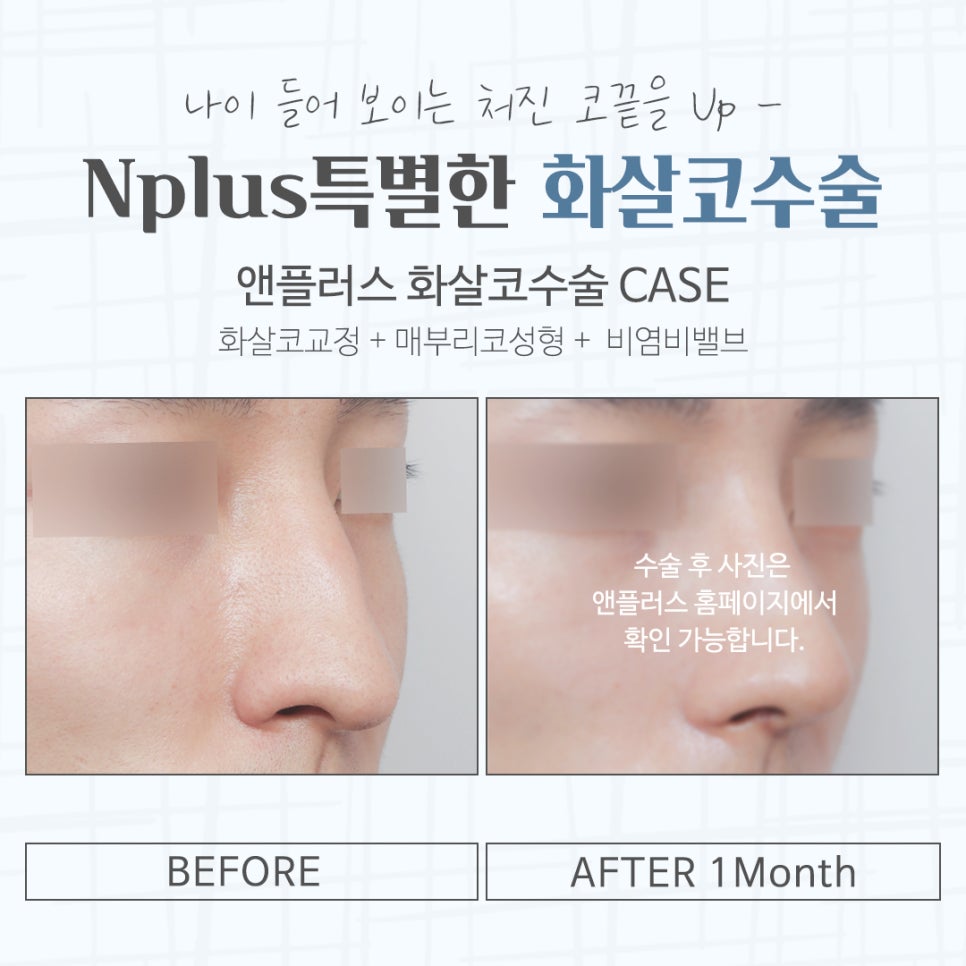
This concludes the explanation of arrow nose surgery performed at OJ Nose Plastic Surgery & N+ Plus. I hope this article is very helpful for those currently looking into rhinoplasty because their nose appears droopy or arrow-shaped. Thank you.
https://youtu.be/gpcz676vFx4