
In modern society, many people are increasingly interested in cosmetic surgery to improve their appearance. In particular, the shape of the nose is located at the center of our face and is the most three-dimensional feature, so when the nose is not straight or well-proportioned, the balance of the entire face can appear disrupted. Therefore, even a small change to the shape of the nose can have a significant effect on improving the overall image, which is why you may look into rhinoplasty.

For those looking into rhinoplasty, concerns may arise when the nose is too low, has a hump, is upturned, crooked, drooping, or has a bulbous shape—cases where the nose shape does not match the person’s own 기준. In particular, when there is a hump on the bridge of the nose or the tip is drooping, the impression may seem sharper or more severe, so to improve this, you may want to look into hump nose surgery reviews in more detail.
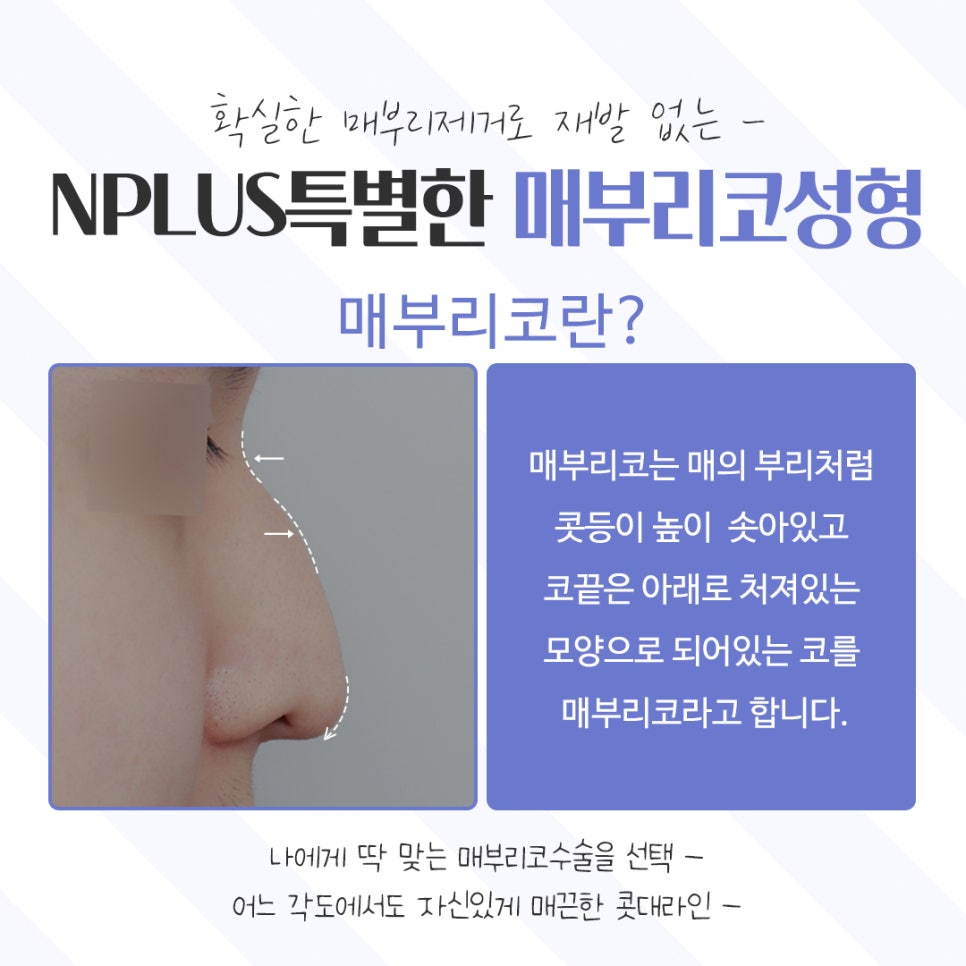
A hump nose refers to a nose shape where the bridge rises high like an eagle’s beak and the tip droops downward. Hump noses can be broadly divided into genetic cases and cases caused by acquired trauma. In many cases, the hump develops due to acquired trauma, and in hump nose surgery, it is important to accurately identify the cause of the hump first and then proceed with the appropriate surgery accordingly.

Therefore, the nose types of those looking into hump nose surgery reviews can be divided into a drooping tip, an upturned tip, a wide nasal bridge bone, an eagle nose, a severe hump, and a mild hump.

In most cases, the hump can be seen with the naked eye, but it is difficult to diagnose the condition inside the nose visually. For that reason, it is necessary to use equipment to assess various factors, including the state of the hump, the condition of the nasal bones, and whether there are internal functional issues.

In the case of hump nose surgery, external appearance is important, but the nose is also a functional organ responsible for smell and breathing. It is important to clearly confirm both the improvement of the hump nose and whether there are functional problems before proceeding. Therefore, those looking into hump nose surgery reviews should also check whether the medical staff have strong anatomical knowledge of the nose, whether they have sufficient experience and expertise, whether the clinic has the equipment needed to accurately assess the condition of the nose, and whether aftercare can be reliably provided, as these points can help in making a decision.
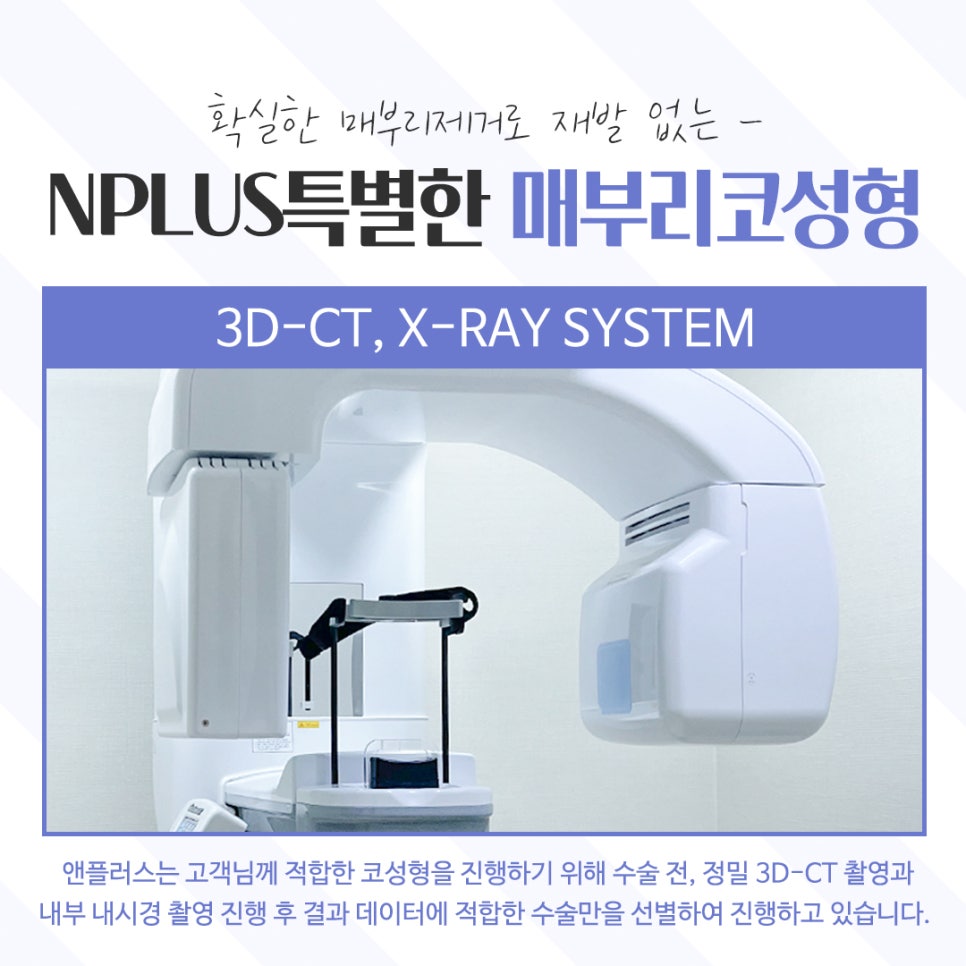
At N+ Clinic, the current external and internal condition of each individual’s nose is accurately assessed through preoperative internal endoscopy imaging, various allergy tests, nasal internal function tests, 3D CT imaging, and multi-angle photography. Based on the collected data, a surgical plan is established and carried out.

The methods for performing hump nose surgery can be broadly classified into three categories: cases with a high bridge line, cases with a low bridge line, and cases with a mild hump.
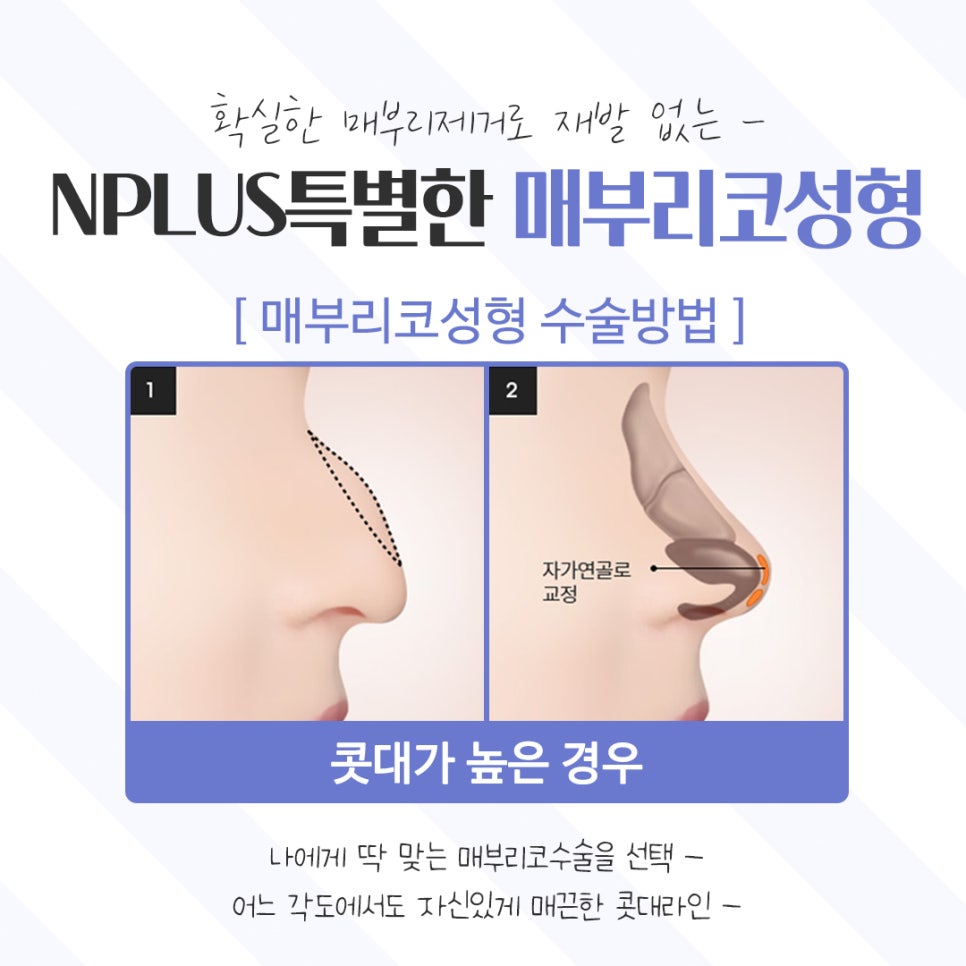
When the bridge line is high, the hump on the bridge is removed and osteotomy is performed to refine the nasal bridge. Then, without using an implant in the bridge, only the tip is corrected with autologous cartilage to adjust the overall nasal line.
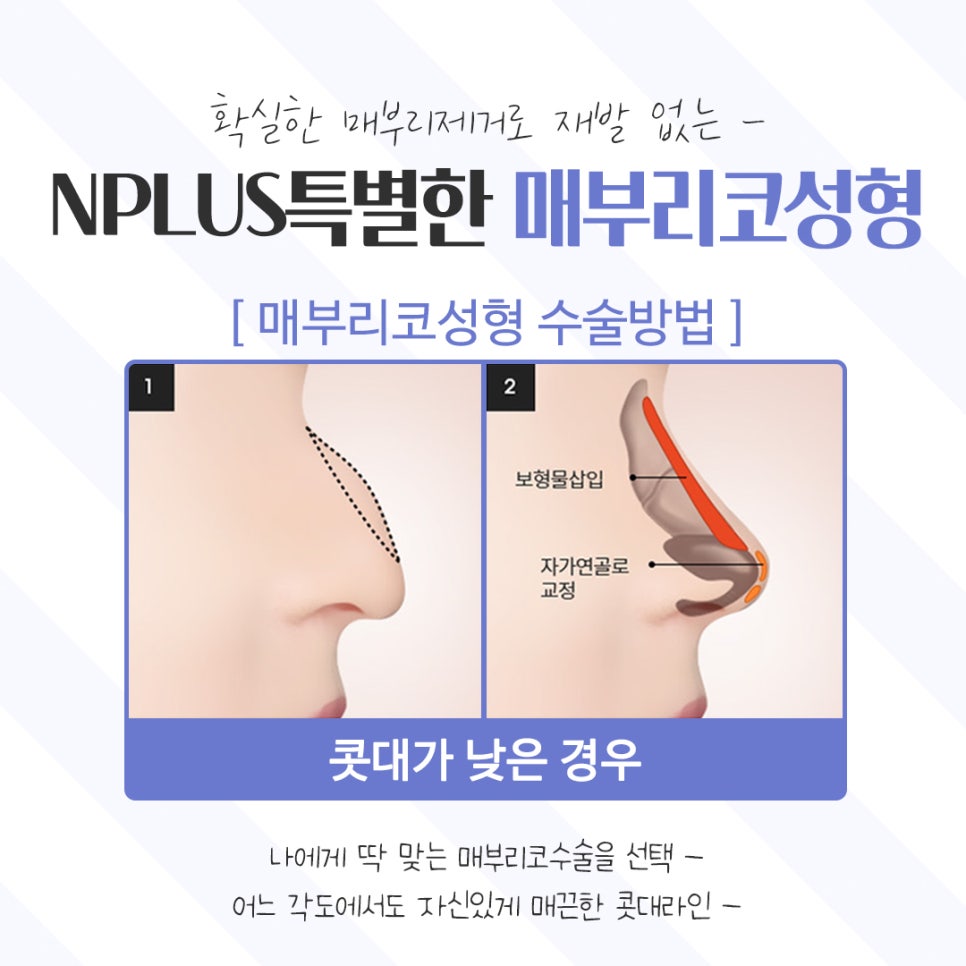
When the bridge is low, the hump on the bridge is removed and osteotomy is performed to refine the overall bridge line. Then silicone is inserted into the bridge, and the tip is corrected with autologous cartilage to improve the overall nasal line.
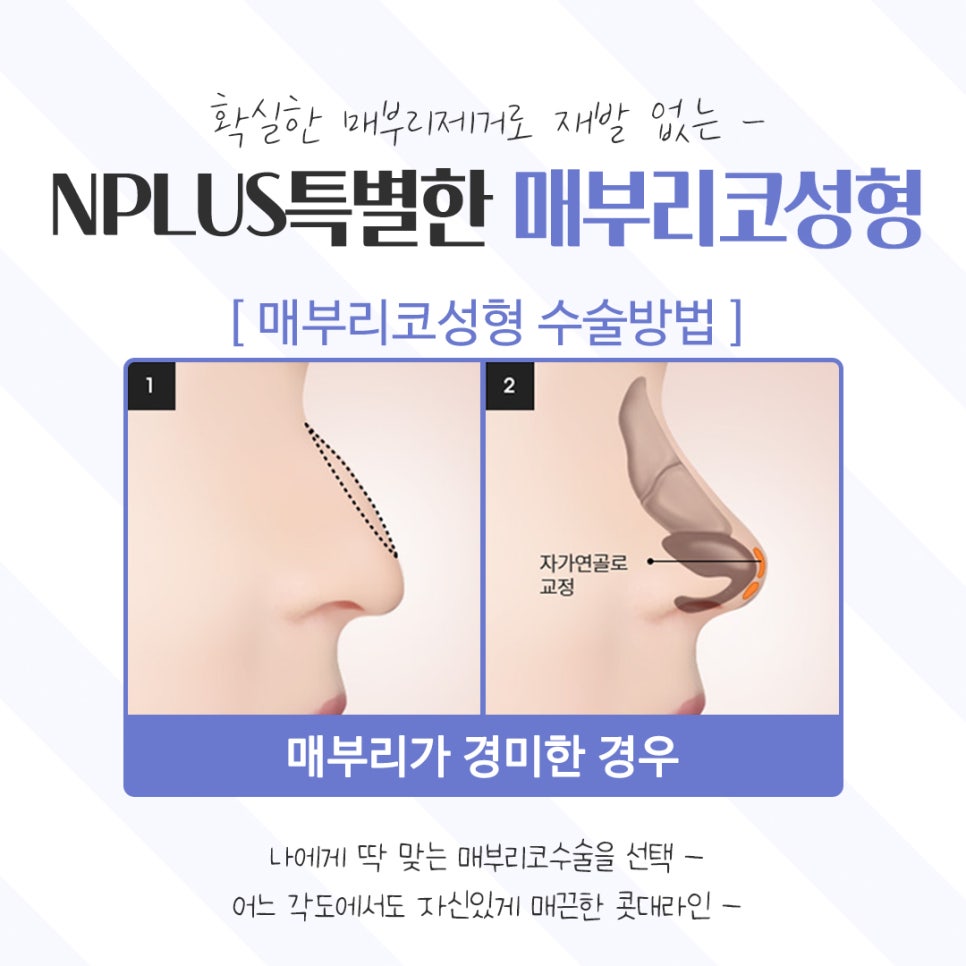
When the hump is mild, the hump on the bridge is removed and osteotomy is performed, then the tip is corrected with autologous cartilage. If necessary, autologous cartilage can also be used at the tip to refine the overall nasal line.
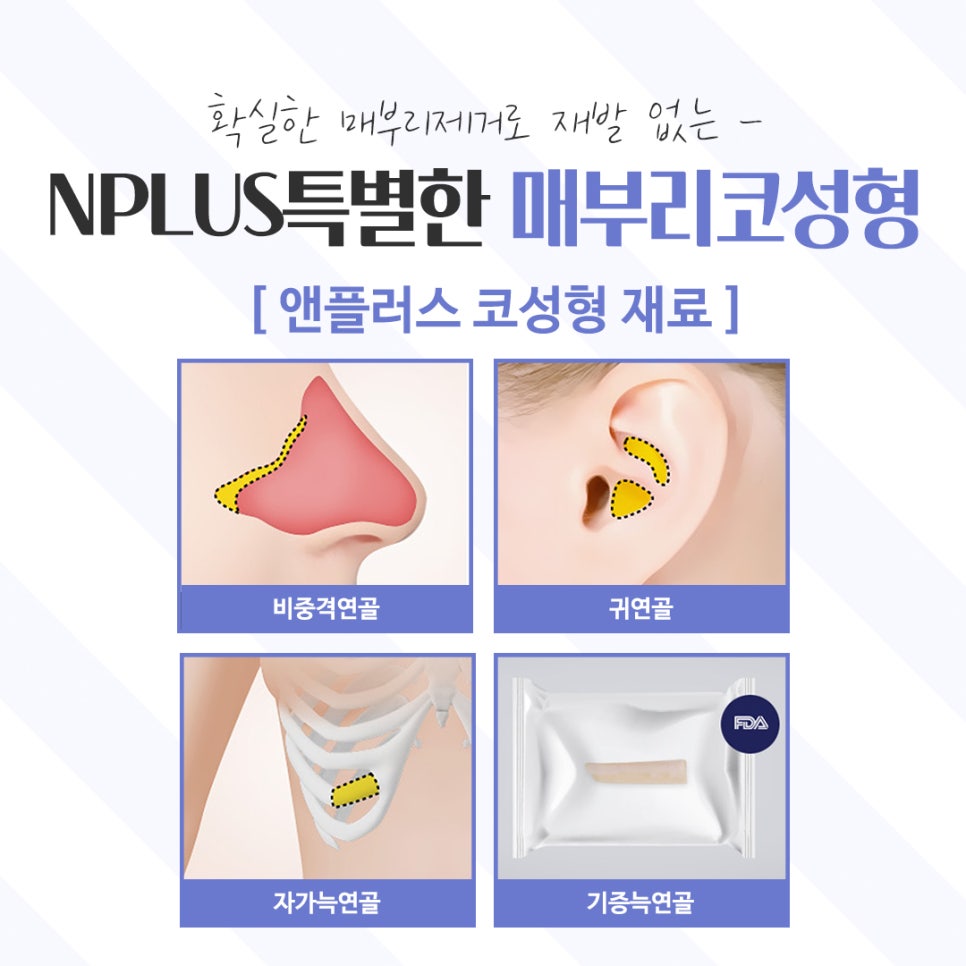
First of all, when looking at hump nose surgery reviews, you can see that the materials used in rhinoplasty vary from person to person. This is because, through preoperative examinations, the materials can be selected to suit the individual. The autologous cartilage used for the tip includes septal cartilage, ear cartilage, and autologous rib cartilage. If autologous cartilage is difficult to use, it can be replaced with donated rib cartilage approved by the U.S. FDA.

Silicone is used for the bridge of the nose. Rather than using a pre-made commercial silicone product as is, it is carefully shaped by hand after considering various aspects such as the individual’s overall image and the width, length, breadth, and height of the bridge, which can lead to higher satisfaction after surgery.

At N+ Clinic, Director Yoon Hyun-cheol personally handles everything one-on-one, from counseling about nose surgery to establishing the surgical plan, performing the procedure, treatment, and follow-up visits, allowing you to receive a high level of medical service.

The aftercare provided after surgery includes a one-year A/S warranty system and a surgical responsibility guarantee system prepared for all possible post-surgery situations, such as pain, inflammation, or dissatisfaction with the shape. This helps make hump nose surgery reviews safer and more satisfying.
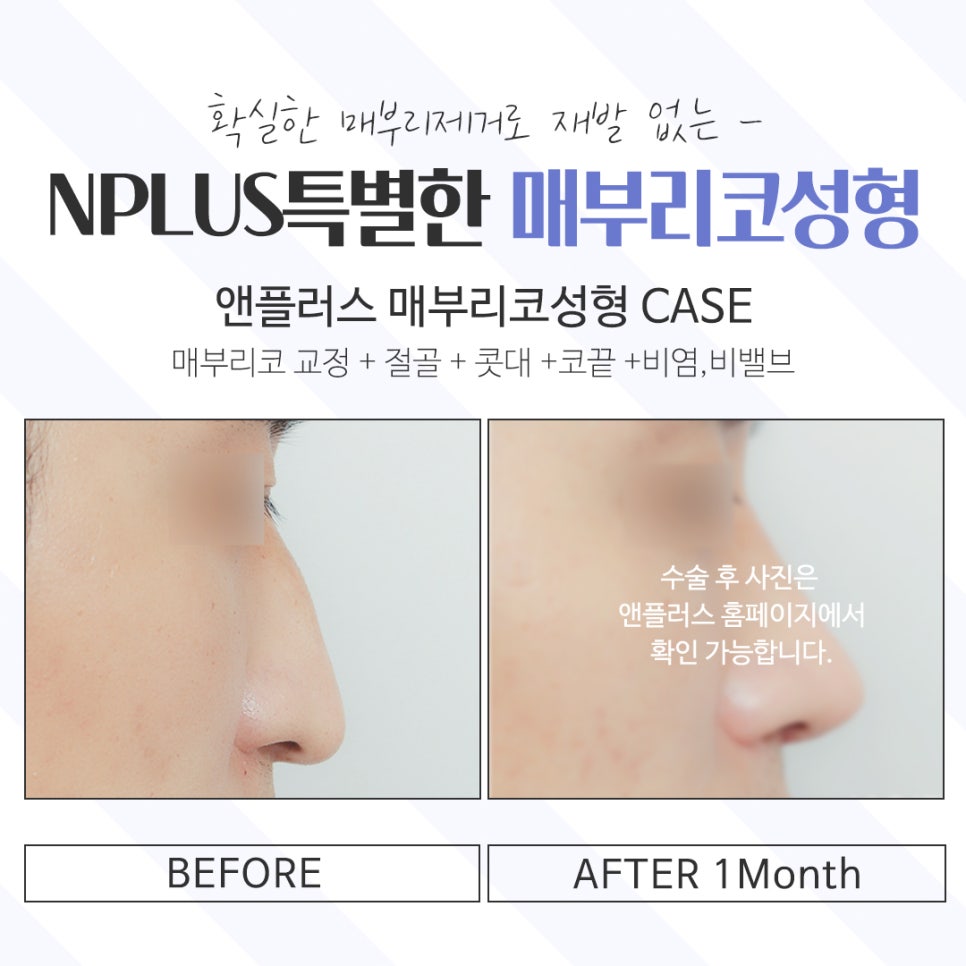
(The images above are before-and-after photos from N+ Clinic’s hump nose surgery reviews.)
That concludes the explanation of N+ Clinic’s hump nose surgery reviews. I hope this article is very helpful for those considering rhinoplasty to improve a bumpy nasal bridge with a hump, or a drooping nose tip that makes the entire face look more severe or sharp. Thank you.
https://youtu.be/MWJJFLatKnk