
For those who are considering rhinoplasty, improving your appearance may be a top priority. The nose is located at the center of the face and is also one of its most prominent features, so when the shape of the nose is judged to be out of line with your personal standards, the overall balance of the face can appear disrupted. Therefore, if you are concerned about improving your appearance because of the shape of your nose, you can look into rhinoplasty information in detail.

Accordingly, those looking into rhinoplasty can approach it from the perspective of various nose shapes. In particular, when the nose is blunt and spread out in a bulbous shape, the overall appearance can seem dull and old-fashioned, so you can look into bulbous nose surgery reviews in detail to improve this.

A bulbous nose refers to a nose with a low bridge and a blunt, spread-out tip, and it is a characteristic more common among East Asians than among Westerners. In the past, it was called a bulbous nose because it was believed to bring good fortune, but under modern beauty standards, the perception of bulbous noses has become strongly associated with looking old-fashioned and dull, so you can expect improvement to a refined and sleek line through bulbous nose surgery.

For this reason, the nose shapes of those looking into bulbous nose surgery reviews can be categorized as cases where the tip is blunt and not sleek, the nostrils are wide and spread out, the skin tissue and fat around the nostrils are thick, the nostrils and tip are overall flat, or where a previous rhinoplasty did not bring improvement and revision surgery is desired.
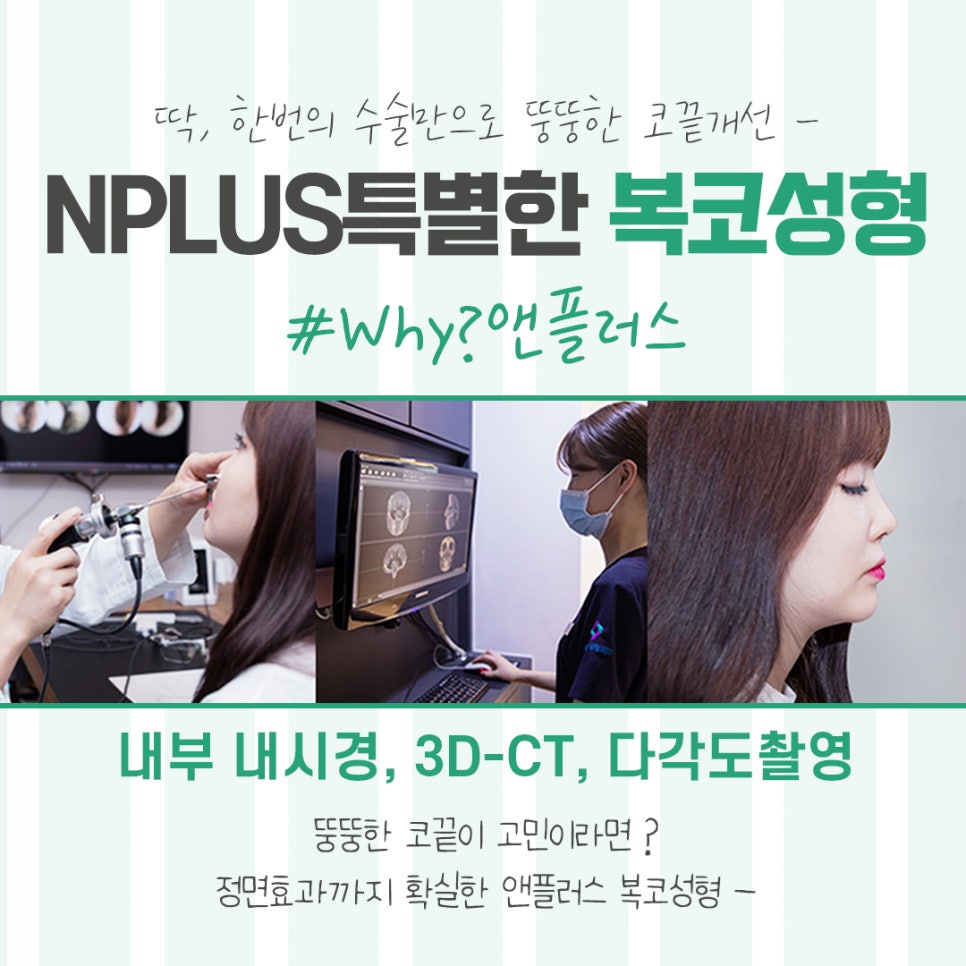
At OjiGo N+Plus Clinic, before surgery they perform multi-angle photography, internal endoscopic imaging, various allergy tests, 3D-CT imaging, and internal nasal function tests to accurately assess each individual’s current internal and external nasal condition, and they proceed by establishing a surgical plan based on the extracted data.

In the case of bulbous nose surgery, if you look at reviews, even if the nose shape seems similar, the surgical methods and materials are applied differently depending on each person’s cartilage condition, nose condition, and skin condition. Therefore, it is better to confirm these precisely using equipment, and the surgical methods are classified and performed according to cases such as when there is a lot of subcutaneous fat at the tip, when the tip cartilage is spread apart, when the nostrils are wide, and when the tip cartilage is large.
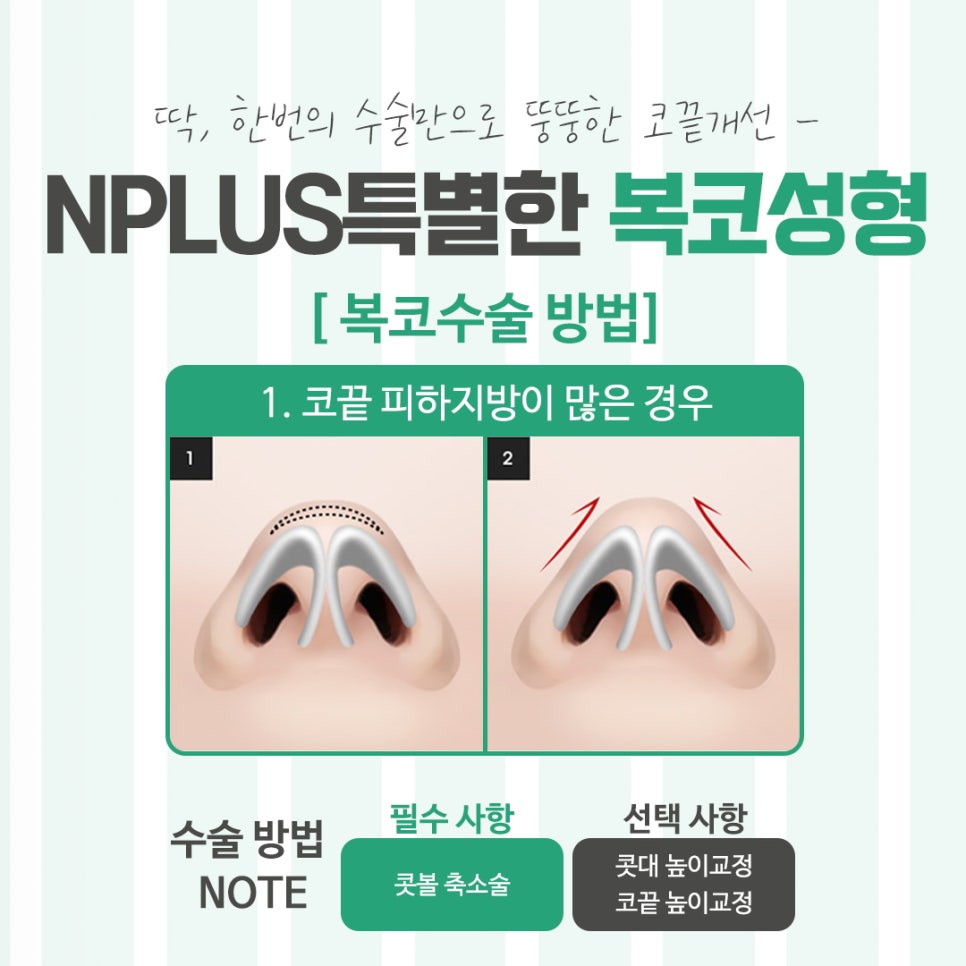
When there is a lot of subcutaneous fat at the tip, unnecessary subcutaneous fat and soft tissue are removed, and then the overall nose line can be corrected by additionally adjusting the height of the bridge and tip.
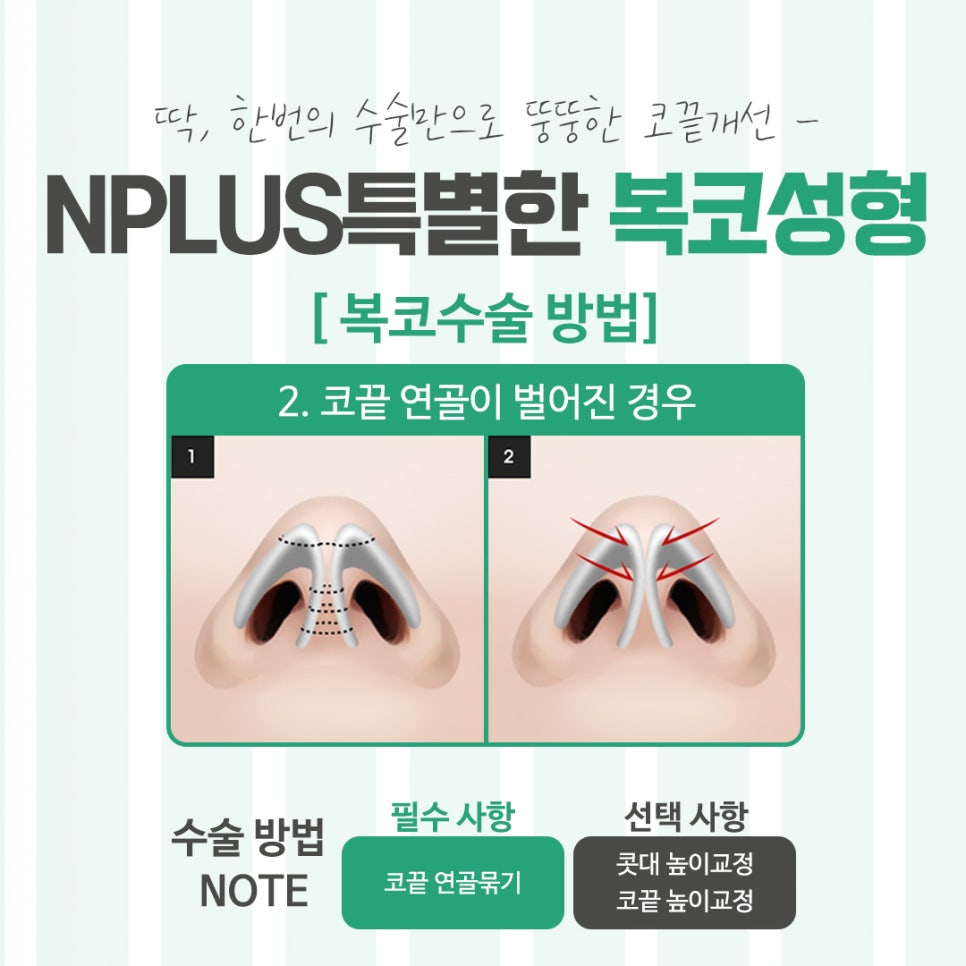
When the tip cartilage is spread apart, the widely separated alar cartilage is sutured together to bring it in naturally, and the overall nose line can be designed by adjusting the height of the bridge and tip.
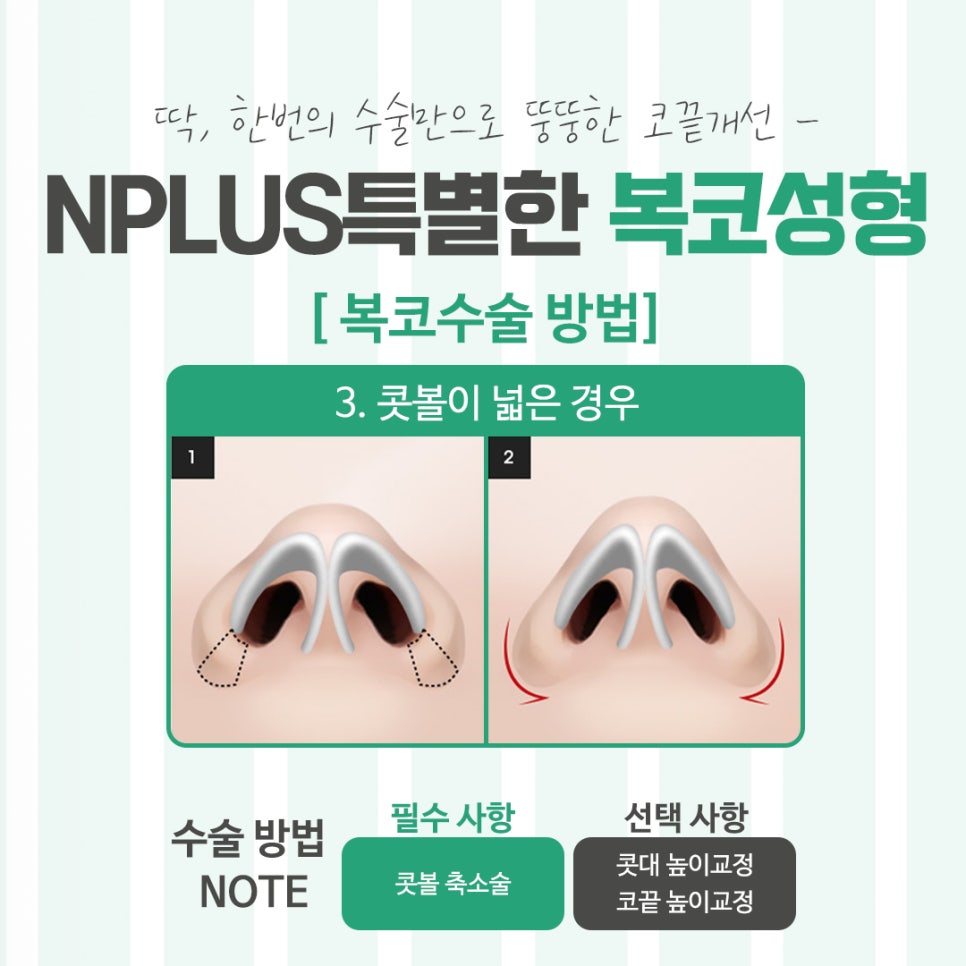
When the nostrils themselves are wide, part of the nostril tissue can be removed for correction. If the degree of widening is mild, correction can be made by tying it with a special thread, and additionally the overall nose line can be designed by adjusting the height of the bridge and tip.
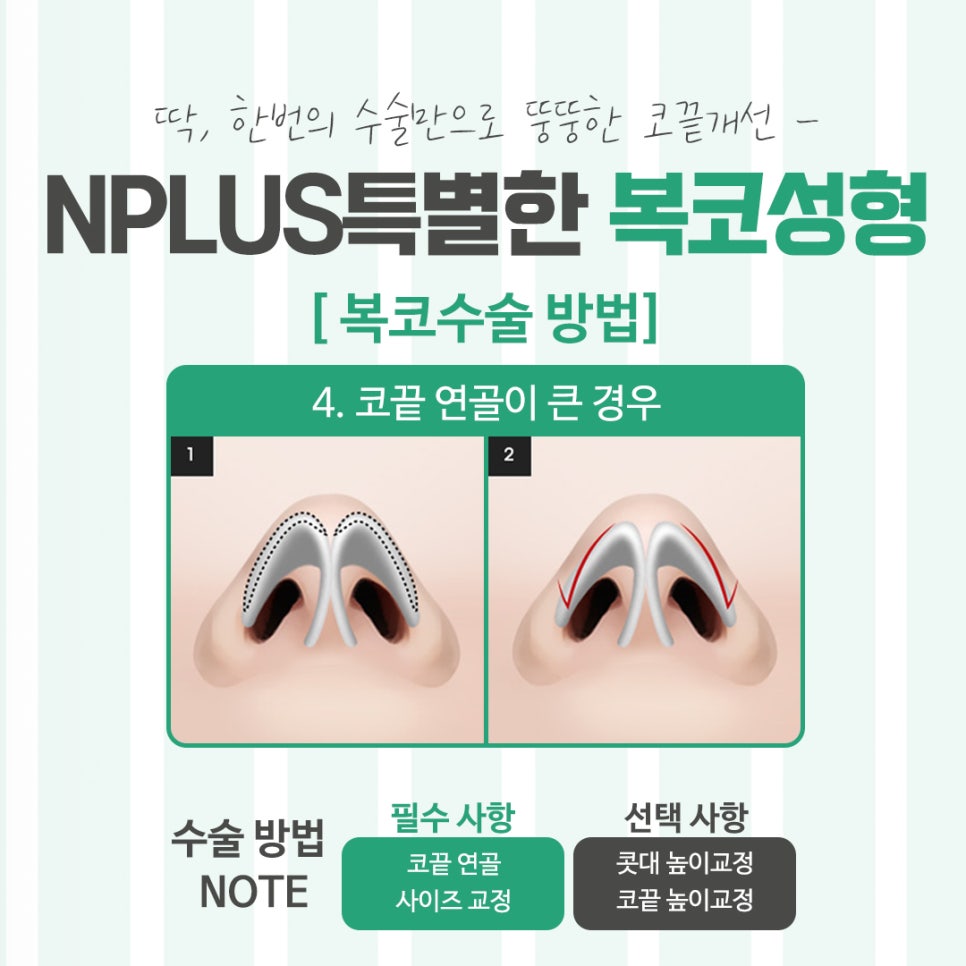
When the cartilage size is large, part of the tip cartilage can be trimmed, and after correcting the cartilage size and overall shape, the overall nose line can be designed by adjusting the height of the bridge and tip.
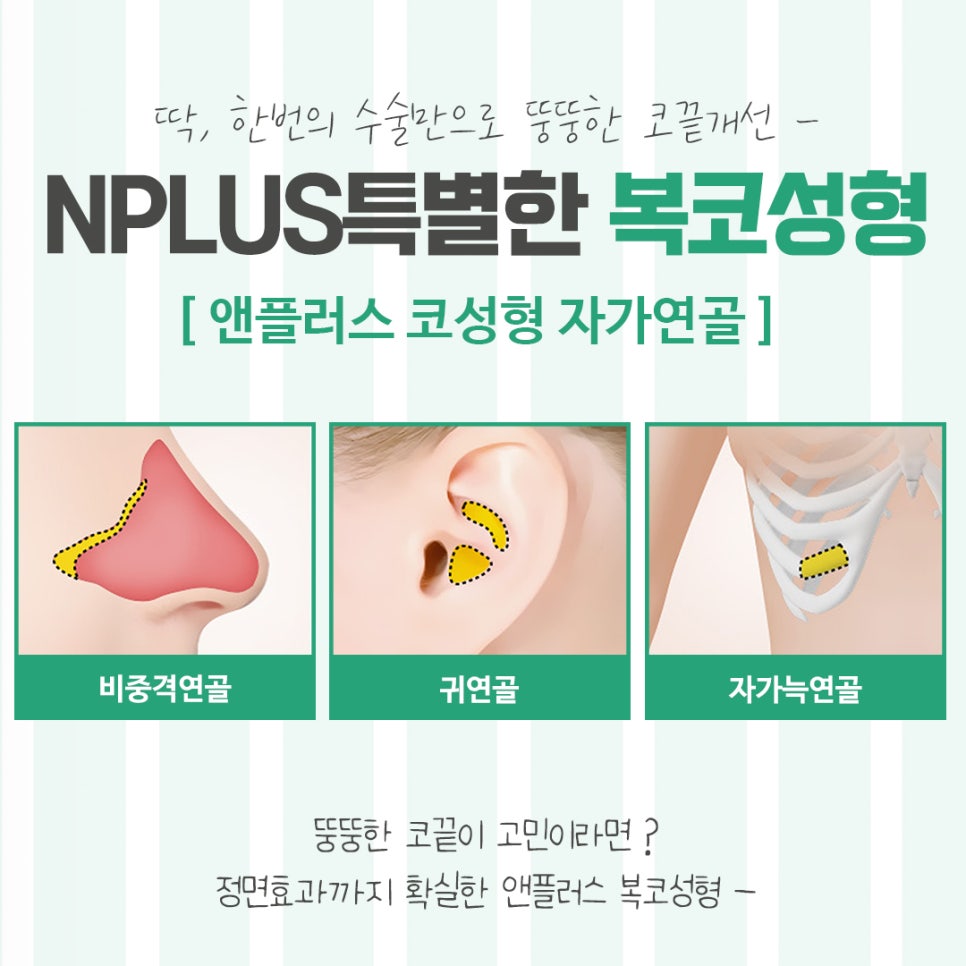
The materials used in bulbous nose surgery may include autologous cartilage for the tip and silicone for the bridge. For the autologous cartilage used at the tip, the material suitable for the individual can be selected through preoperative testing. Autologous cartilage includes ear cartilage, autologous rib cartilage, and septal cartilage.

In addition, for silicone, the implant used for the bridge, they do not use pre-manufactured silicone as is. Instead, they carefully shape it themselves after considering various aspects such as the individual’s overall appearance and the bridge’s width, length, breadth, and height, which makes for a safer and more satisfying bulbous nose surgery review.

If you look at bulbous nose surgery reviews, there may be a common perception that bulbous nose surgery is simple because it is thought to involve only reducing the nostrils. However, in rhinoplasty, a wide variety of surgical methods are applied depending on the condition of the individual’s nasal bones, cartilage, skin, and whether there are functional issues. Therefore, it may be helpful to carefully check whether the medical team has a high level of anatomical knowledge of the nose, whether they have abundant related experience and expertise, whether equipment is available to accurately assess the condition of your nose, and whether aftercare can be reliably guaranteed.
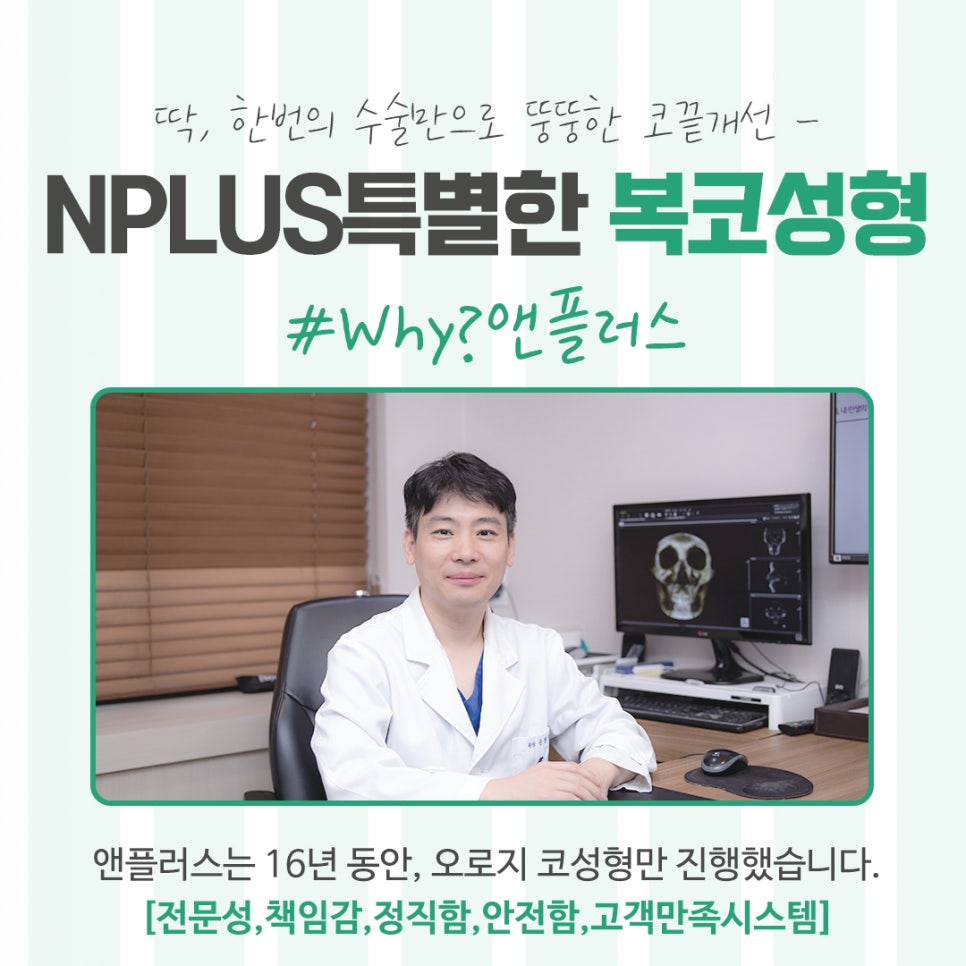
At OjiGo N+Plus Clinic, Director Yoon Hyun-cheol personally handles everything on a one-to-one basis, from consultations related to rhinoplasty to surgical planning, the procedure itself, treatment, and follow-up examinations, so you can receive a high level of medical service from before surgery through after.

The postoperative aftercare that follows is also covered by a one-year A/S system and a surgical responsibility guarantee system prepared for all possible situations, including postoperative pain, inflammation, and dissatisfaction with appearance, so you can receive reliable benefits from post-surgery care as well.
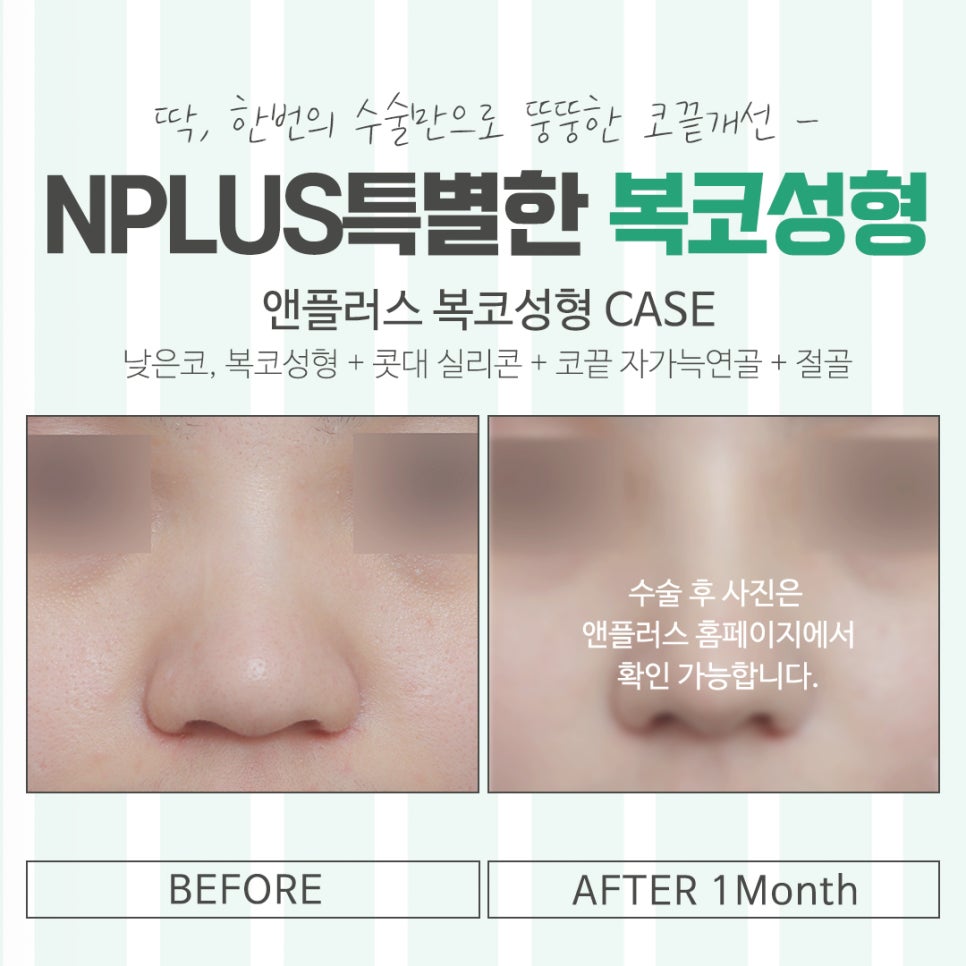
(The images above are before-and-after photos from OjiGo N+Plus Clinic’s bulbous nose surgery reviews.)
This concludes my explanation of OjiGo N+Plus Clinic’s bulbous nose surgery reviews. I hope this article has been very helpful for those who are looking into rhinoplasty because their nose shape is wide and spread out in a bulbous form and want to improve it. Thank you.
https://youtu.be/Pp_kvXcAjSs