
Recently, more people have been looking to improve aspects of their appearance that they feel are lacking through plastic surgery. The reason image improvement through plastic surgery is increasingly considered is that modern standards for appearance are higher. While people can try various things on their own before deciding on surgery to meet those standards, there are still areas where change is difficult, and for those areas, surgery may be worth considering more seriously.
Among the many types of plastic surgery, the nose is located at the center of the face and is one of the most three-dimensional features. Because even a slight irregularity in the shape of the nose stands out more, nose surgery is one of the more popular procedures. If the nose has a hump, is too low, turned up, droops downward, or has an overall bent shape, you may consider nose surgery. In particular, if the nose is very small and short, your concerns about surgery may deepen, so it is better to learn more about short nose surgery before making a decision.
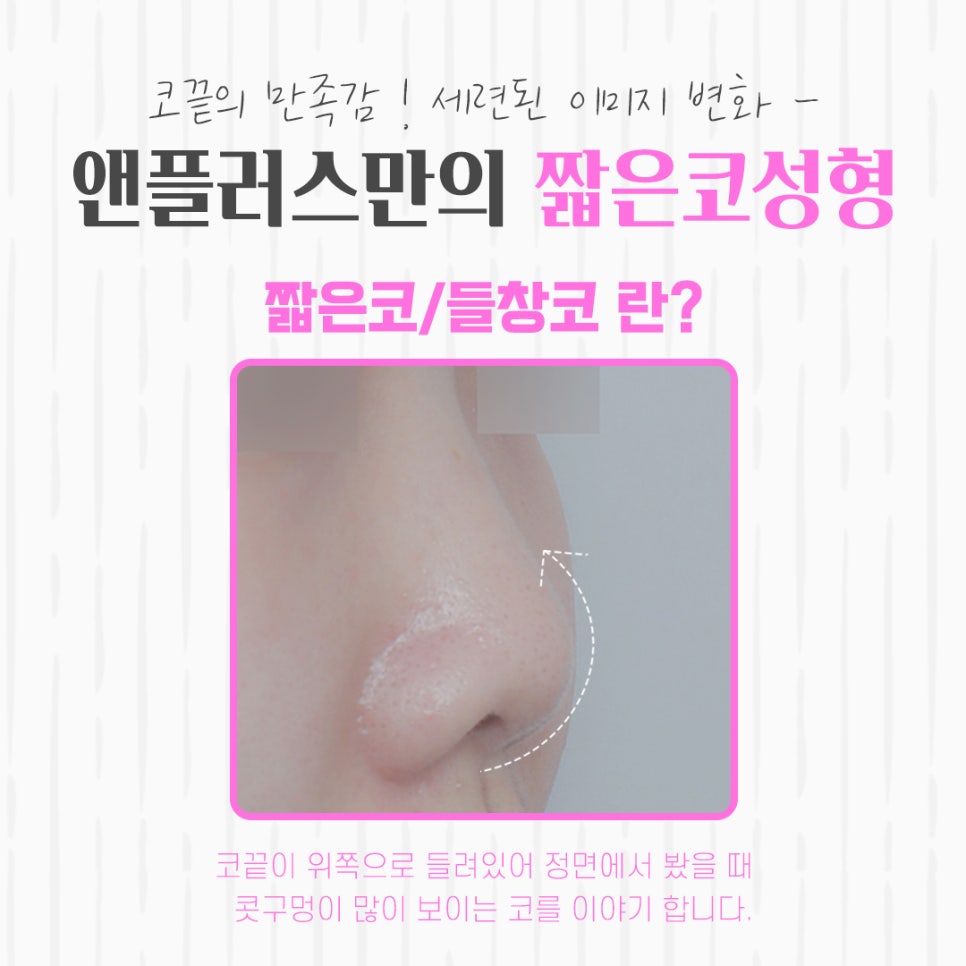
In the case of short nose surgery, it refers to a nose whose tip is turned upward and whose nostrils are highly visible from the front. A short nose may be congenital, or it may develop into contracture due to shrinkage caused by side effects after surgery. Short nose surgery should be performed after accurately identifying the cause of the shortened nose, and the appropriate procedure should be applied accordingly to prevent the nose from turning up again after surgery.
Therefore, for those looking into short nose surgery, it is important not to rely only on before-and-after photos or assume that a similar nose shape means the same surgical method and materials will be used. It is advisable to visit the clinic and thoroughly check the condition of your nasal bone, skin, cartilage, and whether there are any internal nasal functional issues before proceeding, as this can help prevent secondary surgery.
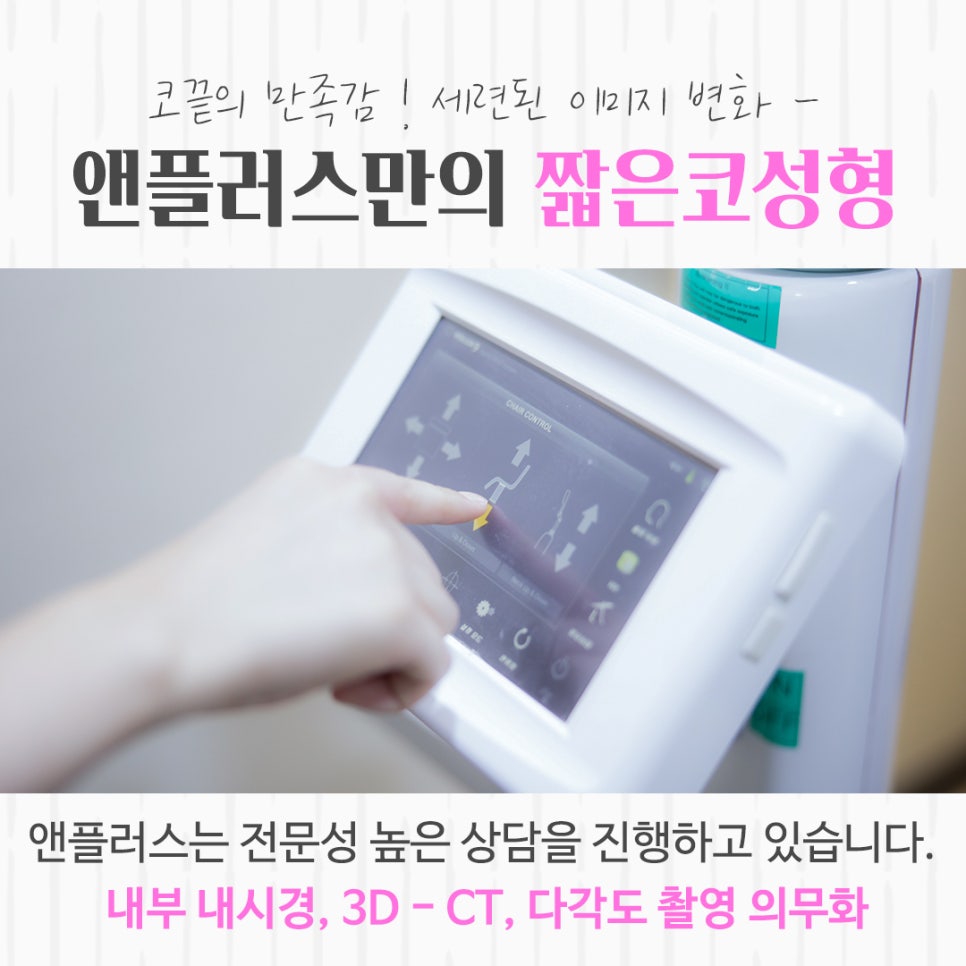
At Oji Go & Plus Clinic, before short nose surgery, we perform 3D-CT scans, various allergy tests, internal nasal function tests, and multi-angle photography to accurately identify the reason why the patient’s nose has become short. Based on the data obtained, we establish and carry out a surgical plan.
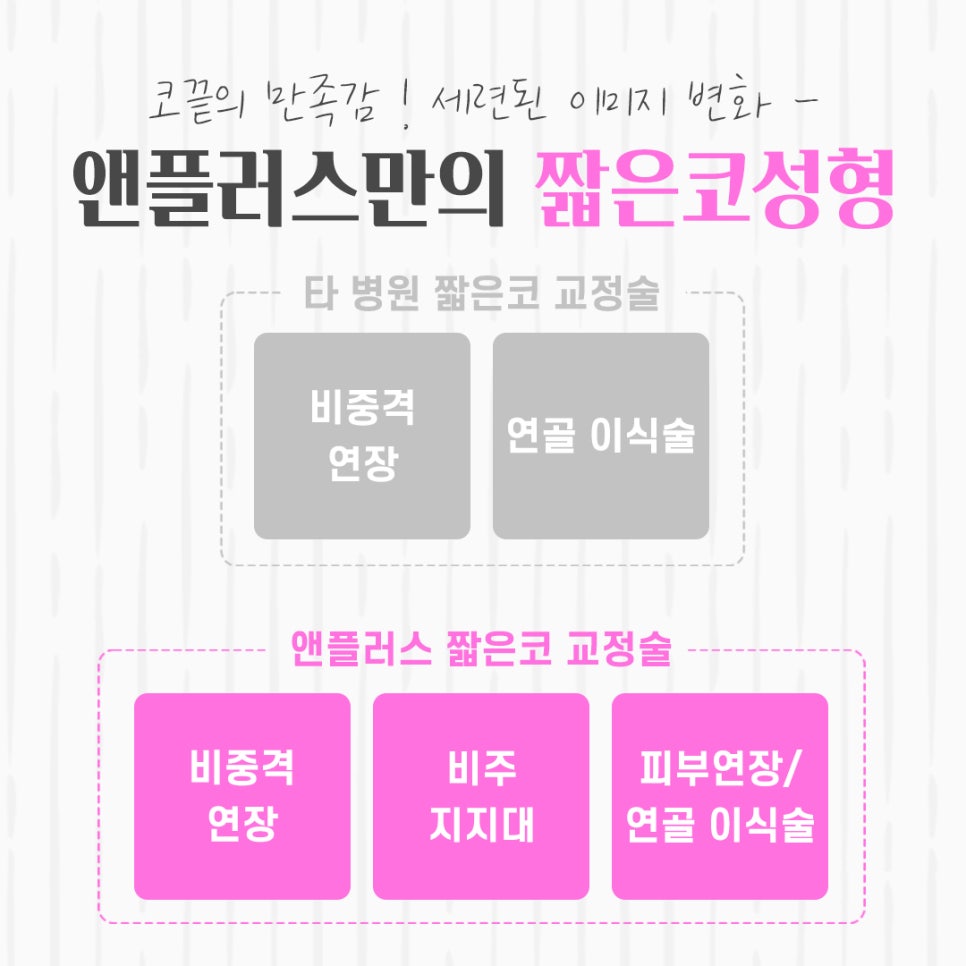
Since the causes of a short nose vary and the surgical methods and materials differ, Plus uses its own short nose surgery program to build a more detailed treatment process. In combined corrective surgery, the columellar support, septal extension, skin extension, and cartilage grafting can be applied together to correct the nose so that it does not turn up again.

Short nose surgery methods are divided into cases of severe and mild nasal tip upturning.
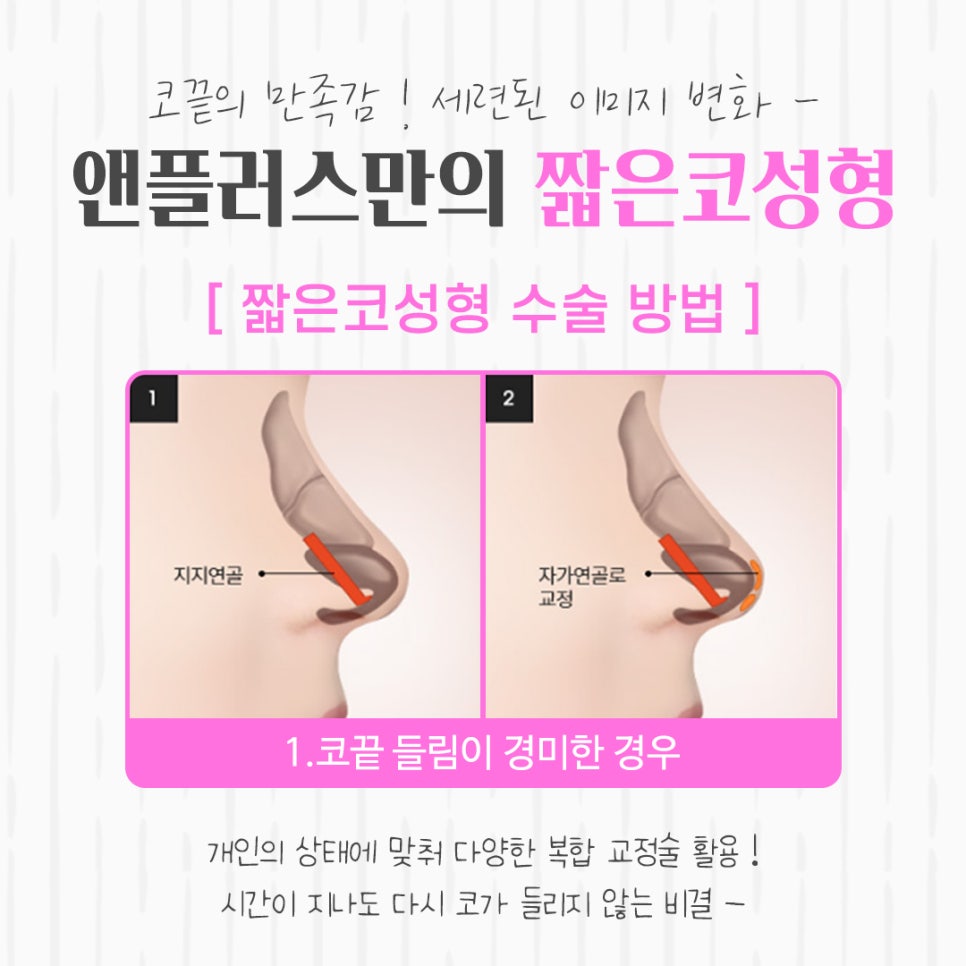
When the nasal tip upturning is mild, a strong support cartilage is grafted between the columella to prevent the tip cartilage from moving, and autologous cartilage is grafted to the nasal tip to correct the overall nasal line.
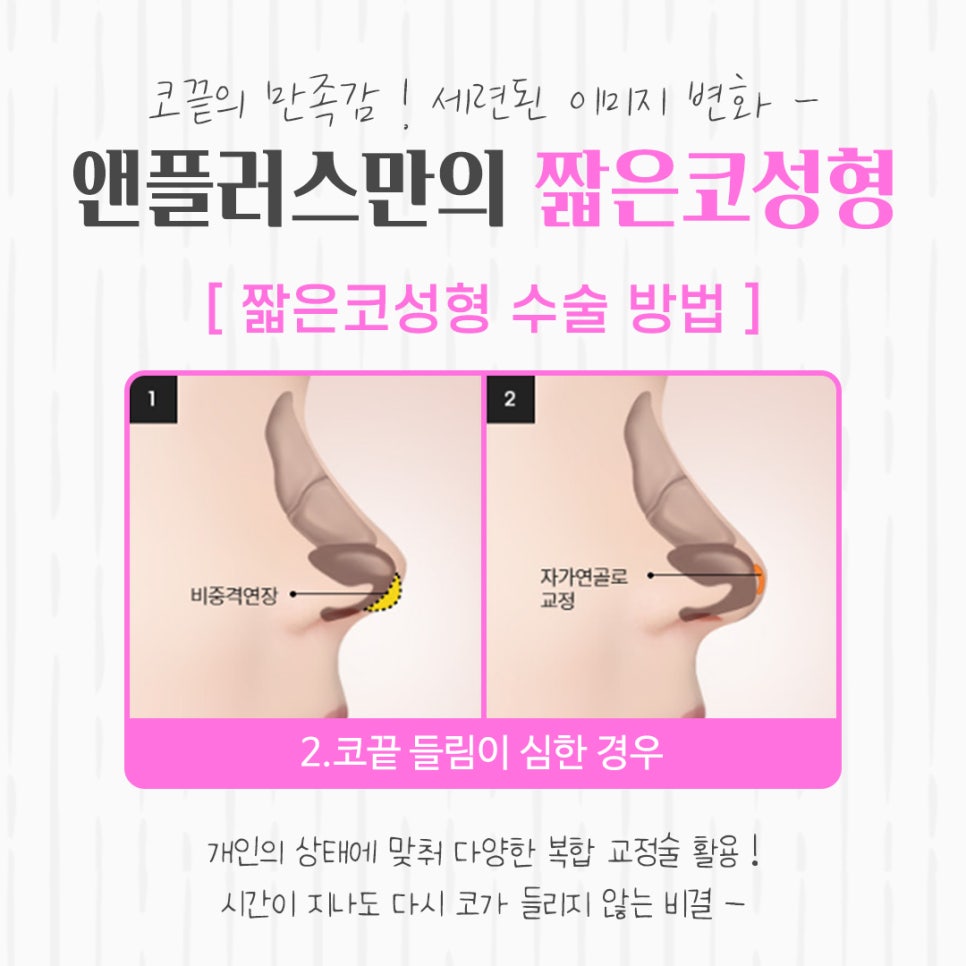
When the nasal tip upturning is severe, the length of the nasal tip can be sufficiently extended using strong autologous cartilage, and then autologous cartilage can be grafted to the nasal tip to correct the overall nasal line.
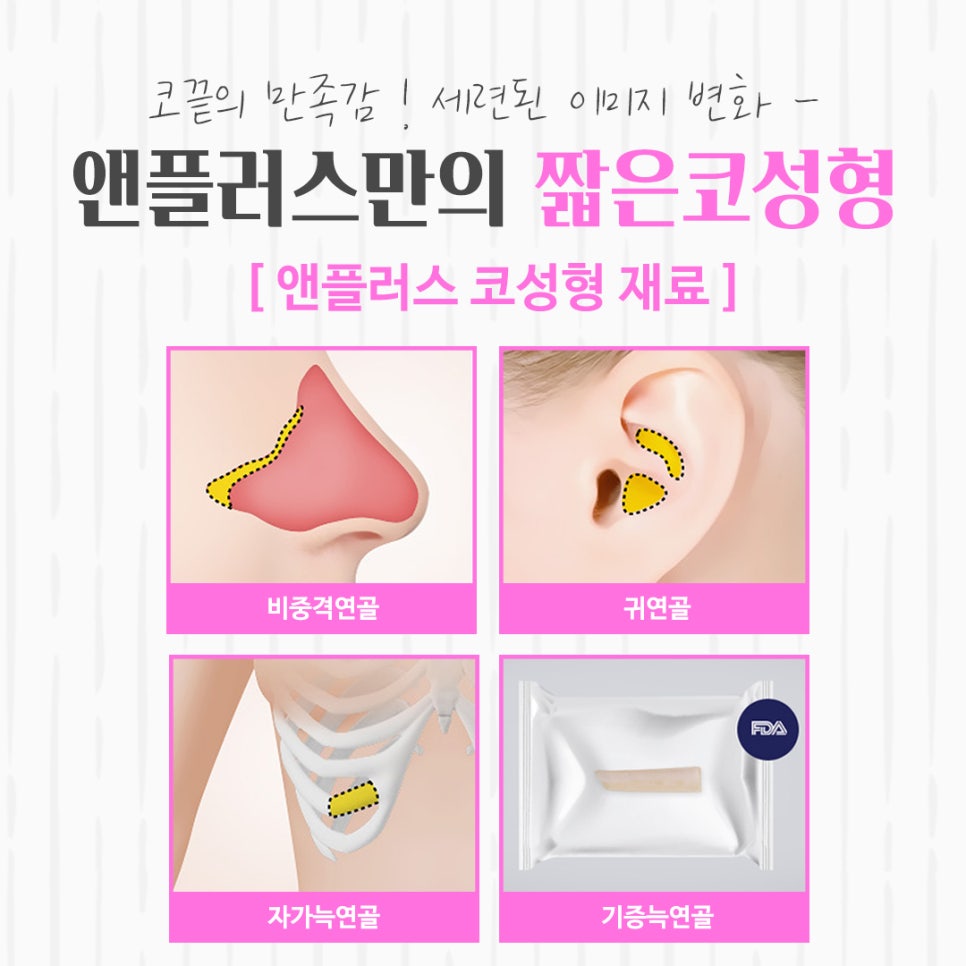
In short nose surgery, the bridge of the nose can be corrected with silicone and the nasal tip with autologous cartilage. In the case of autologous cartilage, the material is selected through preoperative testing to suit the individual. Types of autologous cartilage include ear cartilage, septal cartilage, and autologous rib cartilage. If the use of such autologous cartilage is difficult, it can be replaced with donated rib cartilage approved by the U.S. FDA.
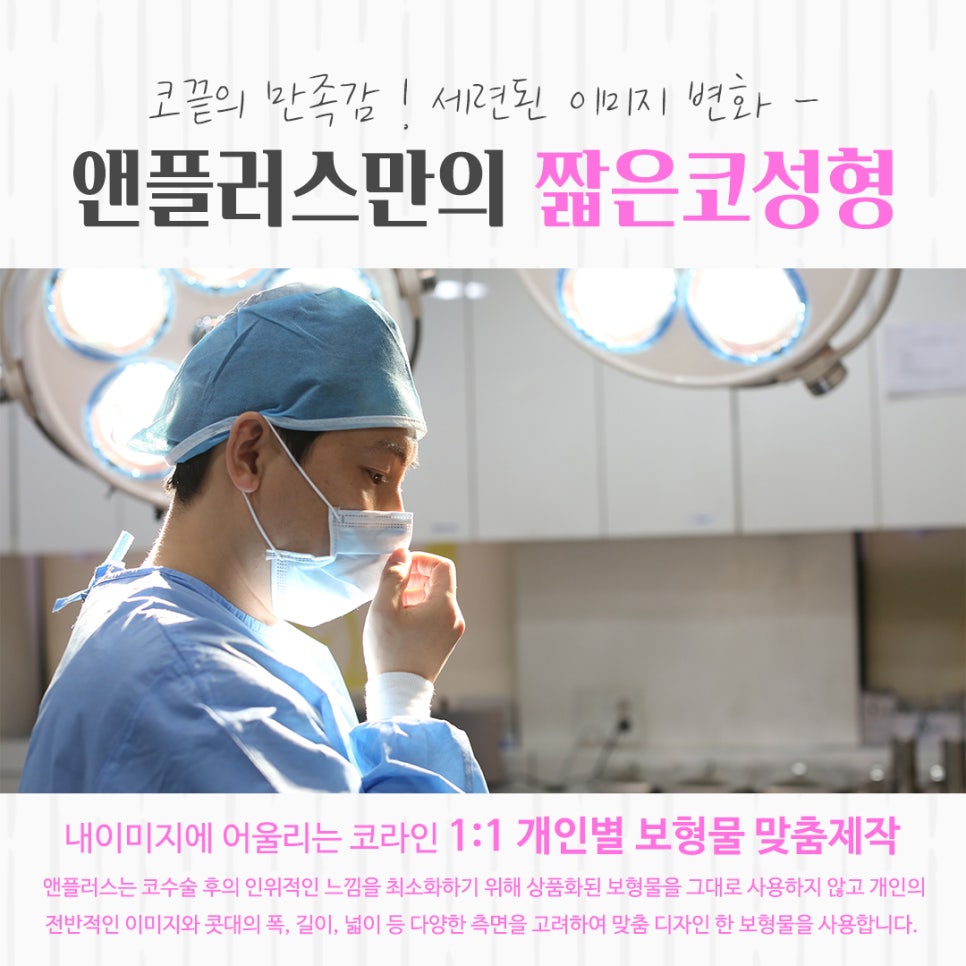
The silicone used for the nasal bridge is not a pre-manufactured product used as is. Instead, it is carefully shaped by hand while considering various aspects such as the patient’s overall image, as well as the width, length, breadth, and height of the nasal bridge, allowing for a more reassuring procedure.
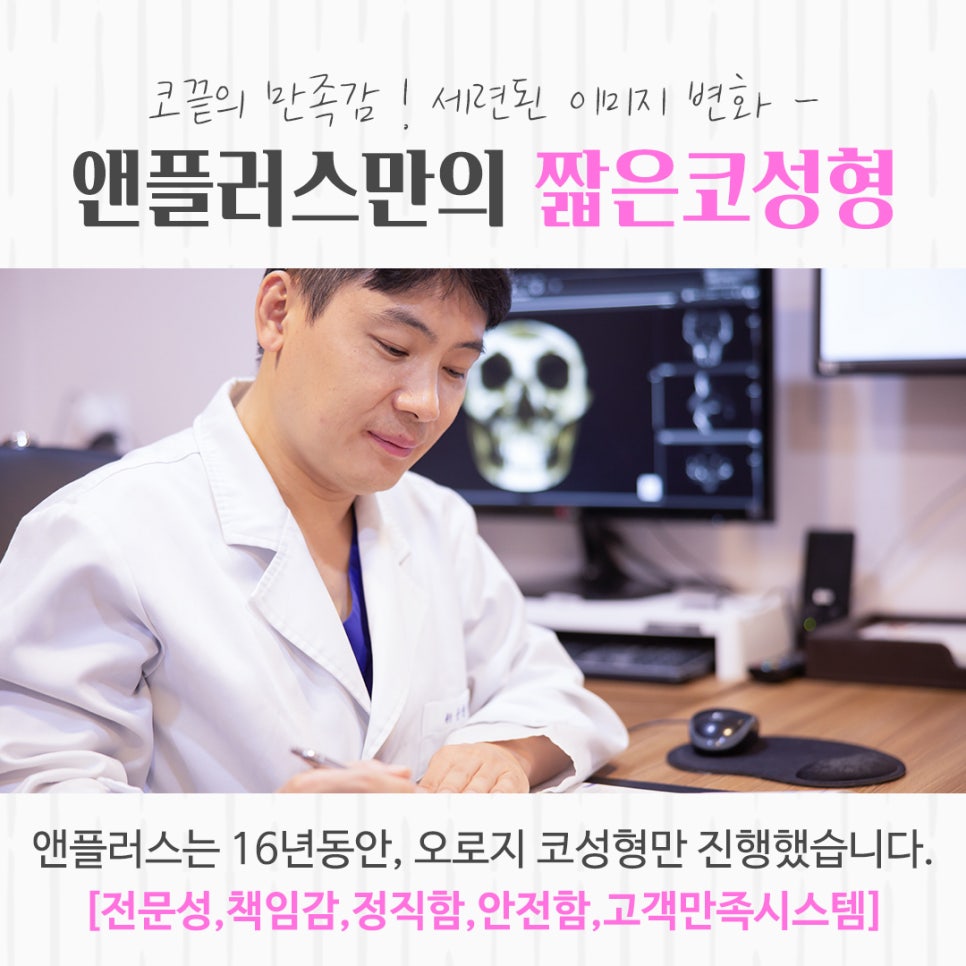
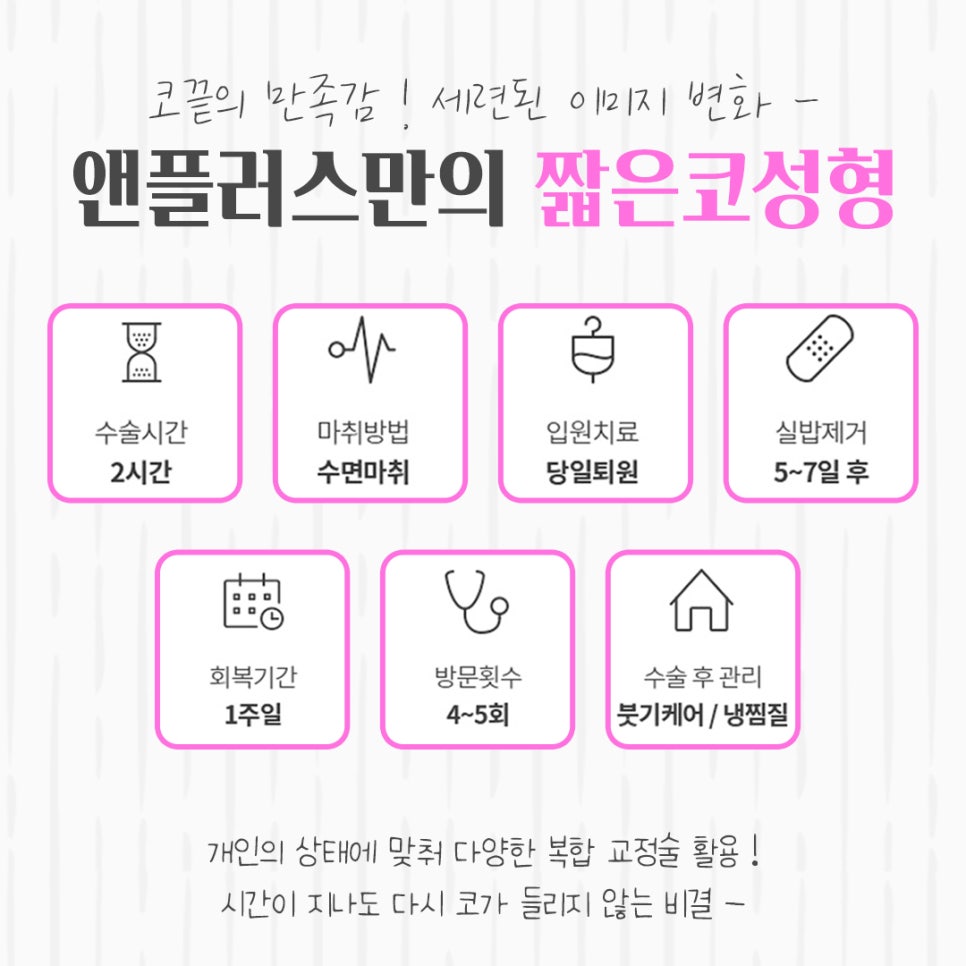
Because short nose surgery involves two or more surgical methods, it is considered one of the more difficult nose procedures. For those looking into short nose surgery, it may be helpful to carefully check whether the medical team has strong anatomical knowledge of the nose, whether they have sufficient experience and expertise, and whether the clinic is equipped with devices that can accurately assess the condition of your nose.
At Oji Go & Plus Clinic, Director Yoon Hyun-cheol personally handles one-on-one consultations, surgical planning, the procedure itself, treatment, and follow-up care for nose surgery, so you can visit with peace of mind from before surgery through aftercare.

The post-operative care provided after surgery includes a one-year service warranty and a surgical responsibility guarantee system that prepares for all possible post-surgery situations such as pain, inflammation, and dissatisfaction with the appearance, so you can receive clear aftercare benefits.
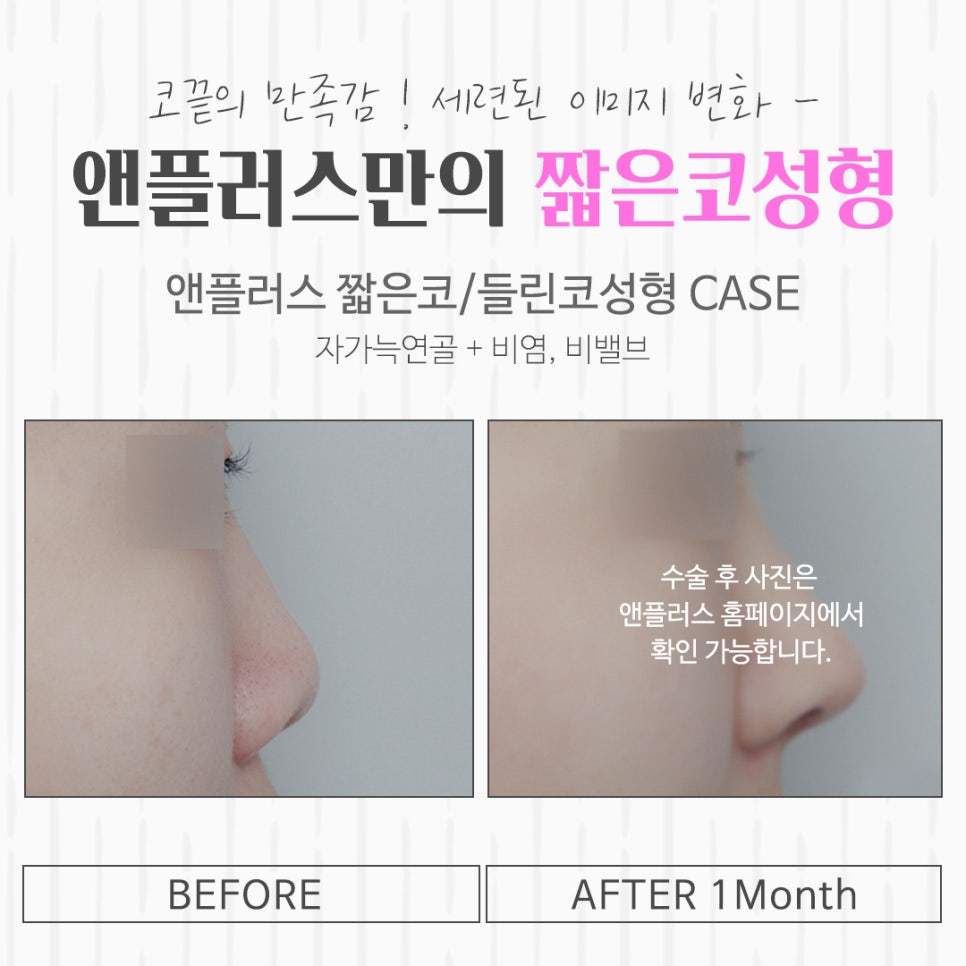
(The image above shows before-and-after photos of short nose surgery at Oji Go & Plus Clinic.)
That concludes the explanation of short nose surgery at Plus Clinic. I hope this article is very helpful for those who are unhappy with the current shape of their nose or are looking into nasal tip surgery. Thank you.
https://youtu.be/GD714lY3tKI?si=YXYq3Oh5cb5hiVwI