
To improve your appearance, you can try various efforts such as exercising on your own through media content, changing your makeup, or altering your hairstyle in order to create a better image of yourself. However, even with these efforts, more and more people are considering plastic surgery for areas that are difficult to change.

Accordingly, while personal complexes can be improved through plastic surgery, indiscriminate surgery can cause side effects, so it is helpful to look into it more carefully. Among the various types of plastic surgery, the shape of the nose is located at the center of our face and is the most three-dimensional feature. When the shape of the nose differs from the standard a person has in mind, it can become a complex and lead people who want a change to look into it.

However, our nose is important in appearance and also serves as a functional organ responsible for breathing and smelling. If nose surgery is performed only from a cosmetic or cost-focused approach, postoperative functional problems may lead to revision surgery. Therefore, if you feel there is a problem with function, you can learn more about functional rhinoplasty and functional nose surgery medical expense coverage.
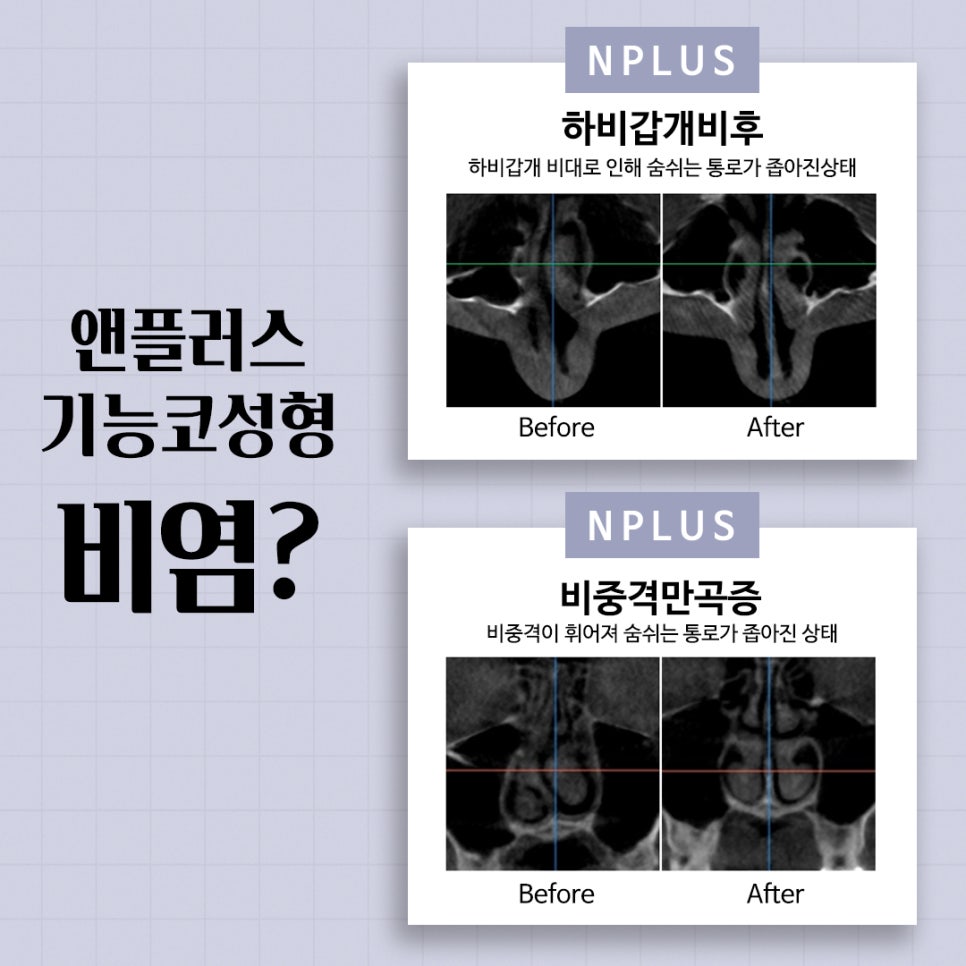
First of all, the most representative symptom that may qualify for functional nose surgery medical expense coverage is nasal congestion caused by rhinitis. Rhinitis is classified into allergic rhinitis and structural rhinitis. Allergic rhinitis reacts to specific substances such as mites, pollen, food, and dust, whereas structural rhinitis occurs due to problems in the internal structure of the nose, so it can be cured through surgery, which is why you may look into functional rhinoplasty. The causes of structural rhinitis include a deviated septum, inferior turbinate hypertrophy, and nasal valve stenosis.

In the case of deviated septum, inferior turbinate hypertrophy, and nasal valve stenosis, which are internal nasal functional problems that can be treated with functional rhinoplasty, symptoms may be temporary, so some people mistake them for allergic rhinitis or a common cold. However, if nasal congestion caused by an internal functional problem in the nose lasts more than two weeks, it is advisable to visit a hospital for diagnosis. If these symptoms are left untreated, they can develop into chronic rhinitis, leading to headaches, chronic fatigue, loss of appetite, decreased concentration, and facial deformity.

In addition, a deviated septum is one of the most representative symptoms among those looking into functional nose surgery medical expense coverage, and it refers to a condition in which the septum, the cartilage that divides our nostrils in half, is bent. A deviated septum can be divided into congenital cases and acquired cases caused by trauma. Surgery to correct the septum is considered one of the more difficult types of rhinoplasty, so if you are looking into functional nose surgery medical expense coverage, it is important to carefully check whether the medical staff have a high level of anatomical knowledge of the nose, whether they have abundant relevant experience and expertise, whether equipment is available to accurately assess the condition of your nose, and whether aftercare is reliably guaranteed.

As such, people considering rhinoplasty due to nasal congestion may hesitate because of the cost. However, conditions such as rhinitis, deviated septum, nasal valve stenosis, inferior turbinate hypertrophy, and nasal bone fracture may qualify for functional nose surgery medical expense coverage. If you suspect any of the above conditions, you can visit a nearby otolaryngology clinic and receive a diagnosis to check whether you have the condition.
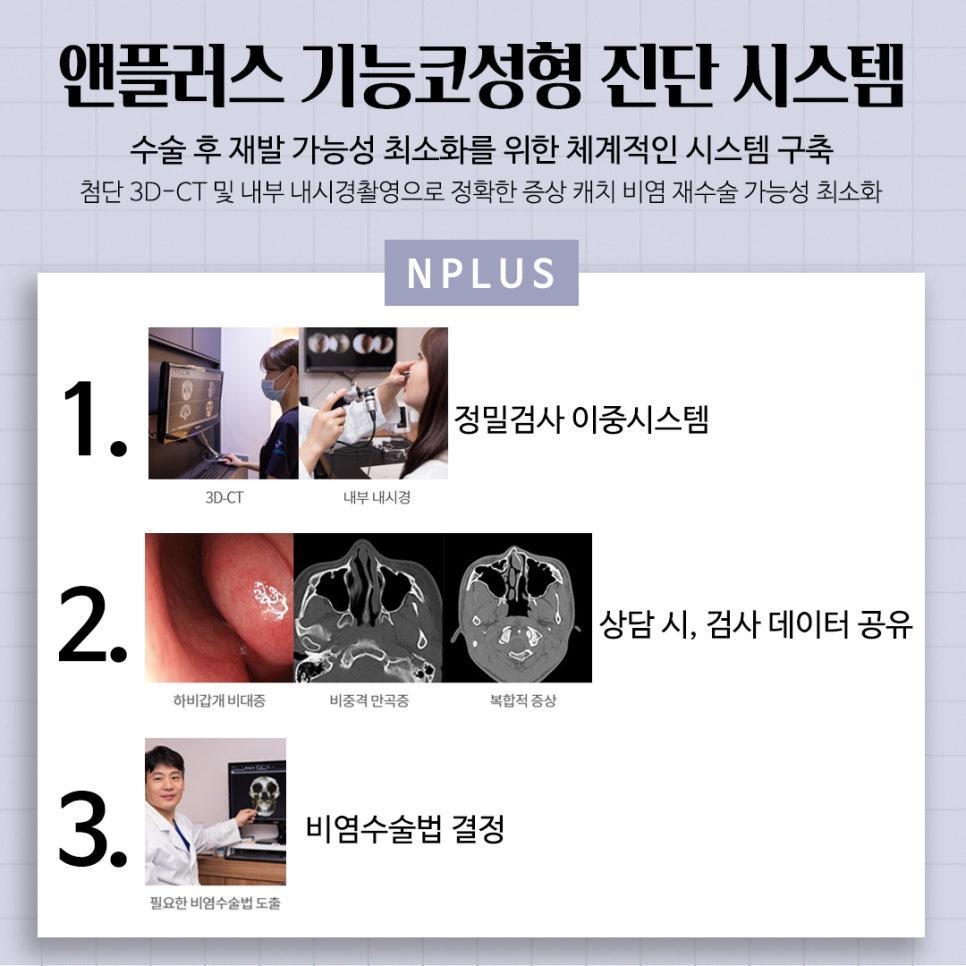
When choosing a hospital, it is important that surgery is carried out with both external and internal factors in mind. Accurately identifying the internal cause of the nose before surgery can help prevent symptoms from worsening due to such conditions. In cases like these, if surgery is performed based on assumptions without an accurate diagnosis, it may be difficult to receive benefits for functional nose surgery medical expense coverage. Therefore, after obtaining an accurate examination and understanding the diagnosis and condition, it is best to contact the relevant insurance company for precise guidance before proceeding.
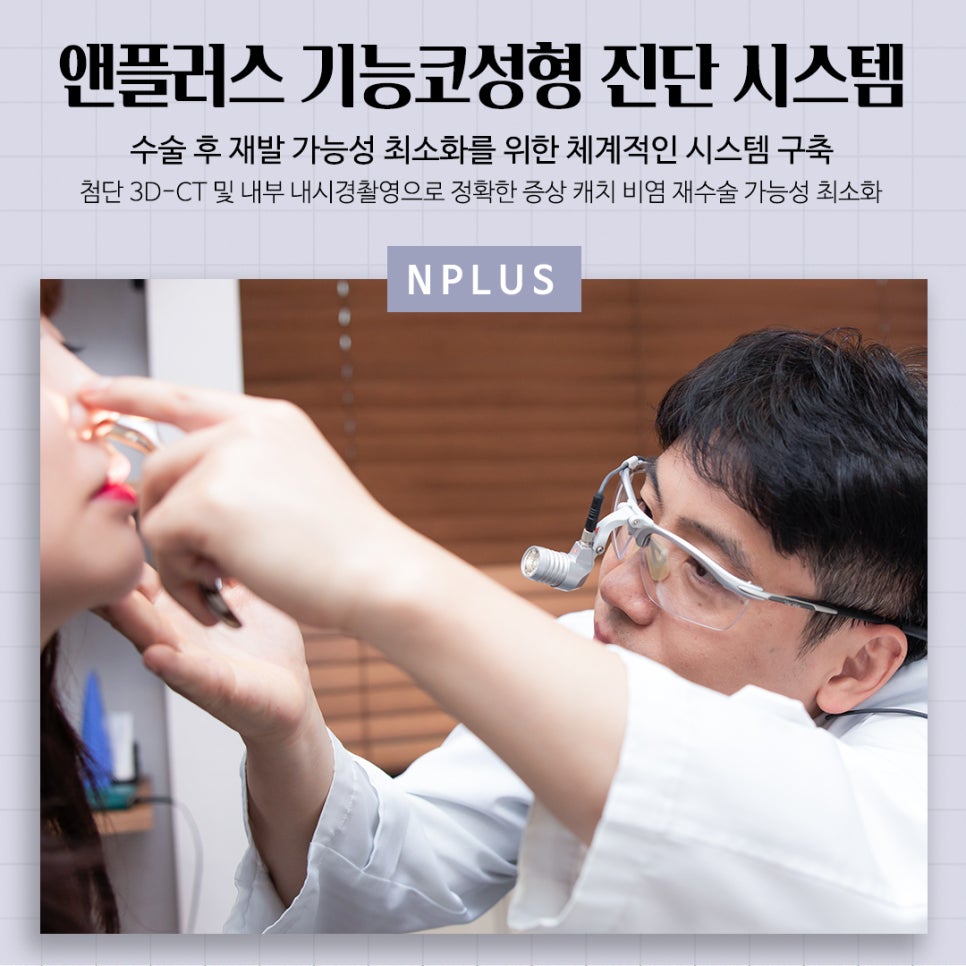
That is why N+ Plus conducts various allergy tests, internal nasal function tests, 3D-CT scans, and multi-angle photography before surgery to accurately assess the current condition of each individual, then establishes and proceeds with a surgical plan based on the collected data so that safe and satisfying rhinoplasty can be performed.
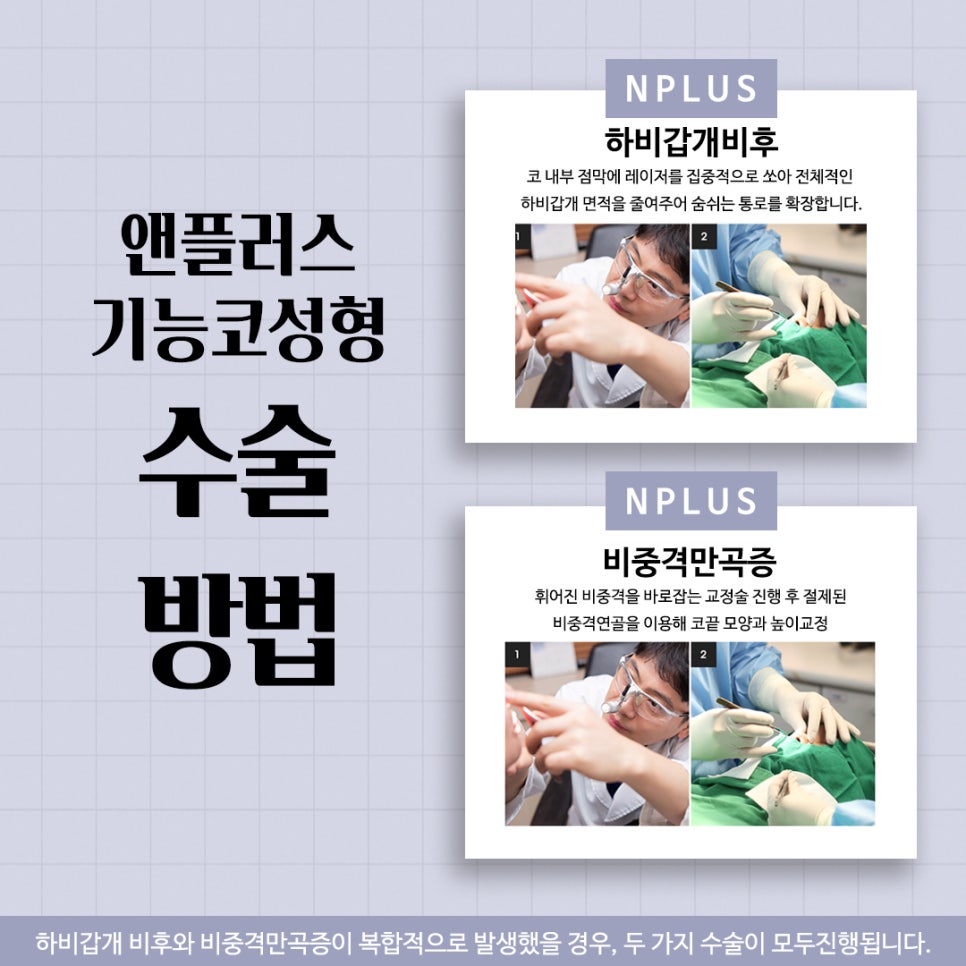
As for the surgical methods for functional rhinoplasty, after accurately identifying the symptoms of deviated septum, inferior turbinate hypertrophy, and nasal valve stenosis, different surgical methods and materials can be applied to each individual. In addition, correction of the nasal bridge and tip can also be performed at the same time.

The procedure for applying functional nose surgery medical expense coverage is carried out in the following order: detailed examination, confirmation of eligibility for payment and reimbursement rate, surgery and treatment, checking the documents required for medical expense claim and requesting them from the hospital, submitting individual documents to the insurance company, and receiving the insurance payout after the insurer's individual review.
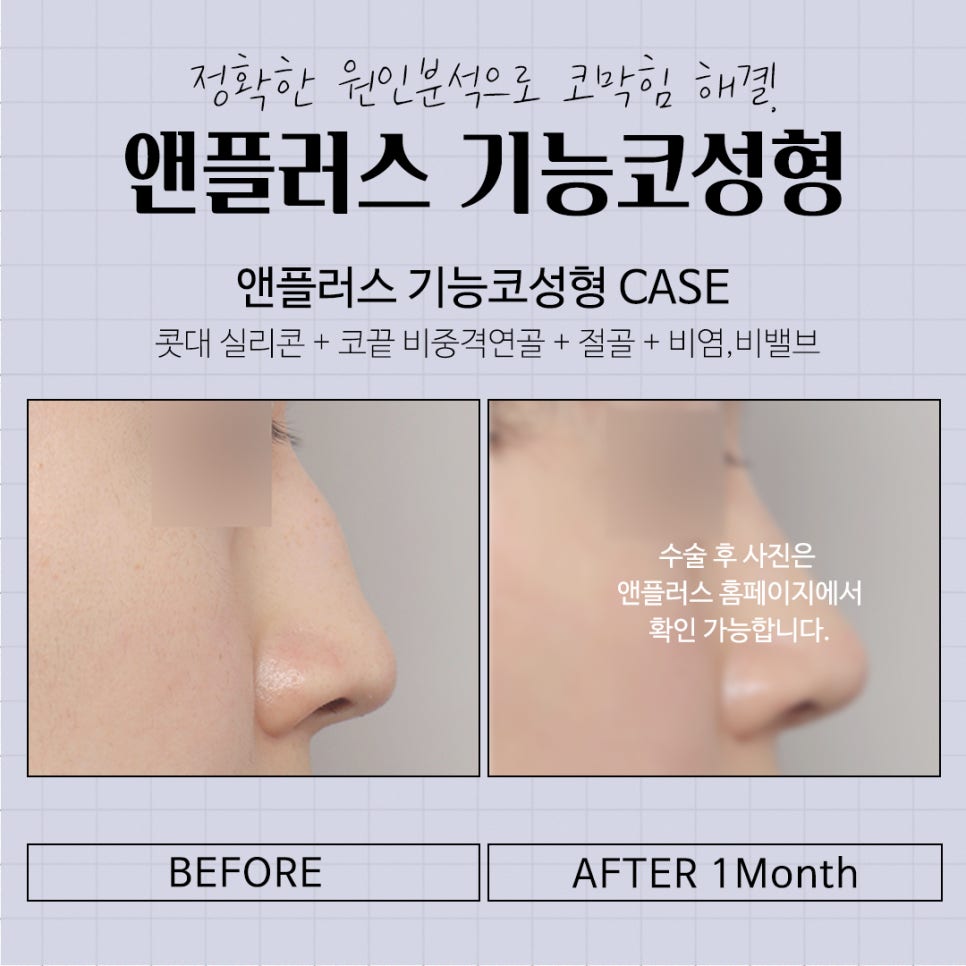
(The images above are before-and-after photos of N+ Plus functional rhinoplasty.)
I have summarized information about N+ Plus functional nose surgery medical expense coverage. I hope this article is helpful for those who are unhappy with the shape of their nose or are looking into rhinoplasty because of nasal congestion caused by internal nasal function problems. Thank you.
https://youtu.be/PrtUDgrGraY?si=001iGUG5xsDR23oW