
Hello. We are OjiKo N Plus Clinic, dedicated for 17 years to thinking only about your beautiful and healthy nose. The content prepared this time is about autologous rib cartilage rhinoplasty. The nose is located at the center of our face and is the most three-dimensional part, so if the shape of the nose is even slightly out of line with the standard you have in mind, the balance of the entire face can appear disrupted, making it a priority among cosmetic procedures.

That is why people looking into rhinoplasty may have noses that are too low, bumpy with a hump, upturned, crooked, or shaped like a bulbous nose. In general, you may look into rhinoplasty for these external reasons, but the nose is not only important in appearance; it is also a functional organ responsible for breathing and smell. Therefore, it is helpful to choose a place where you can have not only the nose’s appearance evaluated, but also its internal condition checked.
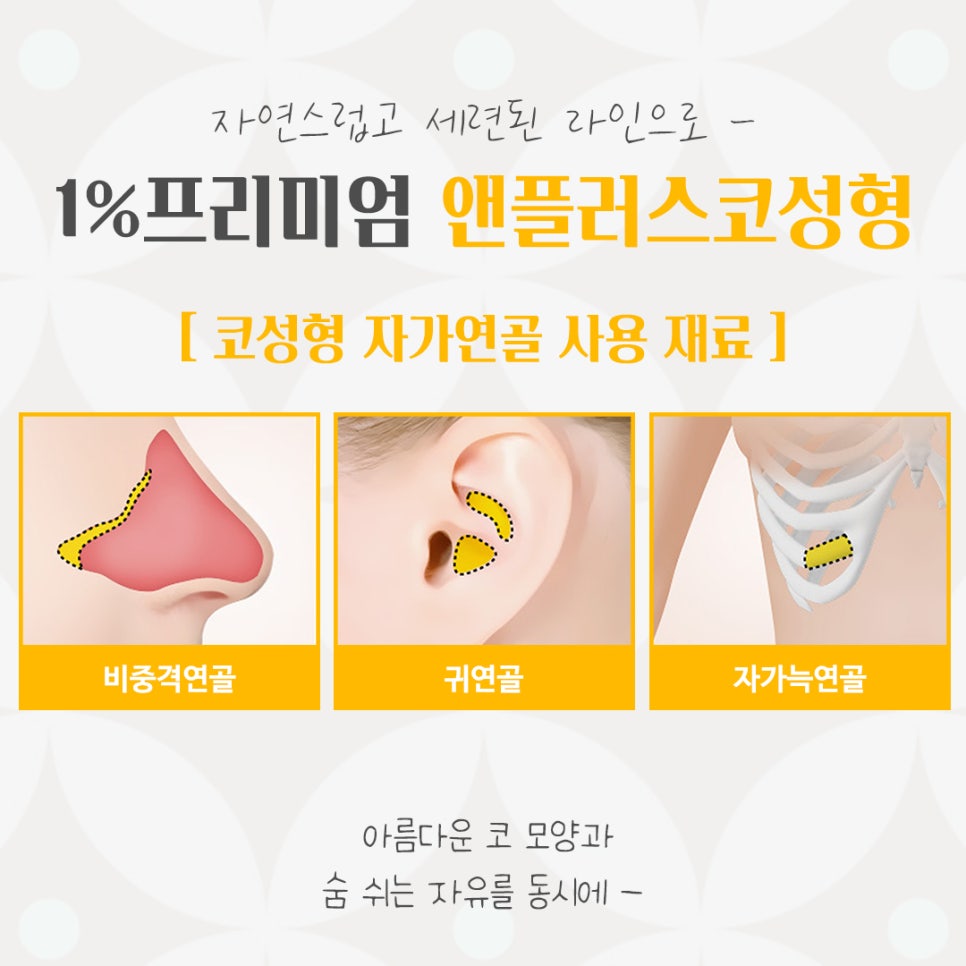
There are also various materials used in rhinoplasty, but in general, the bridge is corrected with silicone and the tip is corrected with autologous cartilage. Autologous cartilage can include ear cartilage, septal cartilage, and autologous rib cartilage. Septal cartilage refers to the cartilage that divides our nostrils in half, ear cartilage refers to the cartilage located inside the ear, and autologous rib cartilage refers to the cartilage located in the ribs.

To briefly explain the pros and cons of these autologous cartilage types: ear cartilage is soft, septal cartilage is firmer than ear cartilage, and autologous rib cartilage is strong and available in large quantity. Therefore, it is important to fully consider these advantages and the individual’s nasal condition and apply the most suitable material. Today, among these three materials, I will explain autologous rib cartilage rhinoplasty, which offers abundance and durability.
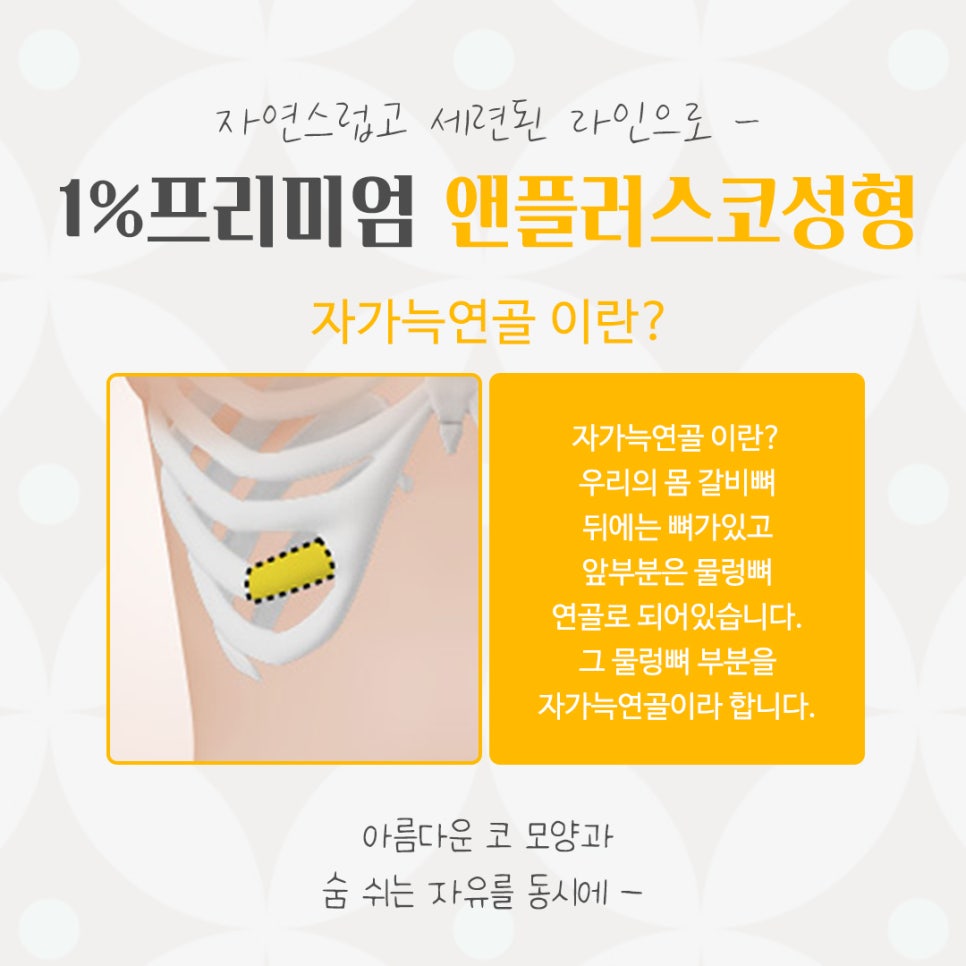
Autologous rib cartilage rhinoplasty refers to using a portion of the firm cartilage behind the ribs in our body. The front part of the ribs is made of soft cartilage, and this soft cartilage is called autologous rib cartilage. It is large and sturdy, so it is widely known as a material for revision surgery, but these days it is also often used in primary surgery because of these advantages.
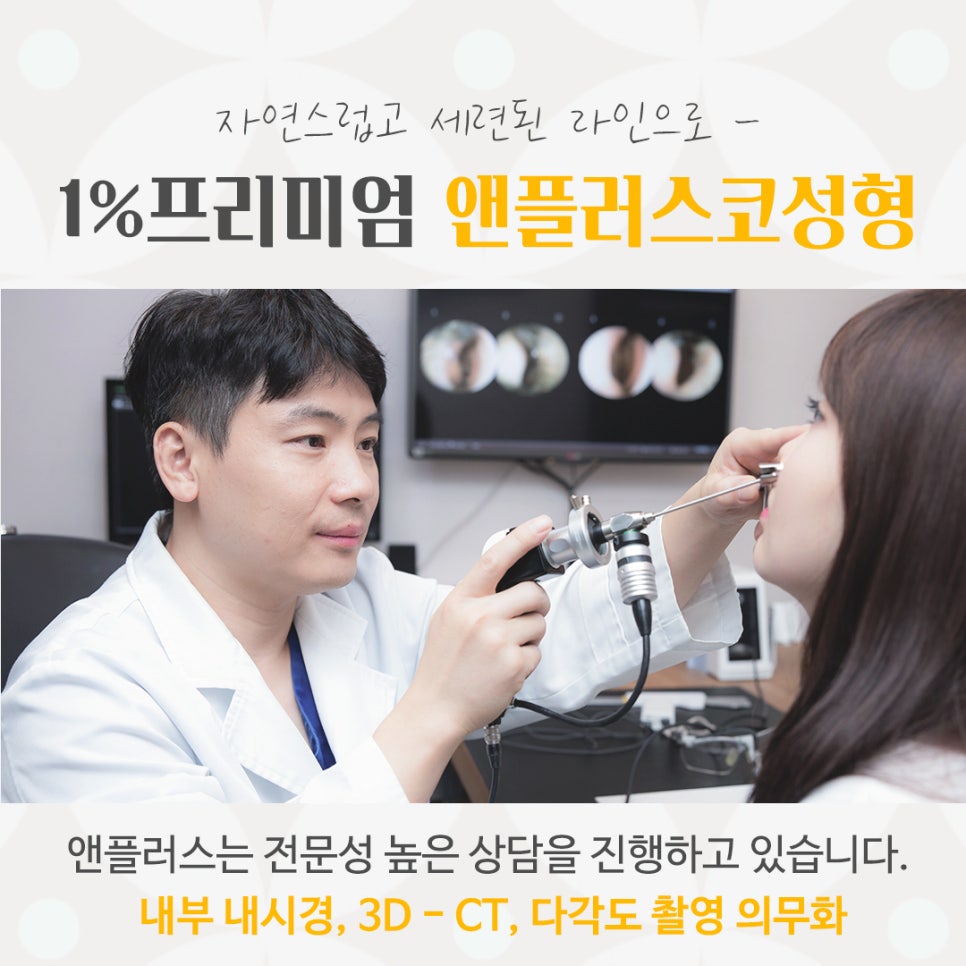
At OjiKo N Plus Clinic, before proceeding with autologous rib cartilage rhinoplasty, we make it mandatory to perform multi-angle photography, various allergy tests, internal nasal function tests, 3D-CT imaging, and internal endoscopic imaging. Based on the extracted data after accurately identifying the patient’s current internal and external nasal condition, we establish and carry out the surgical plan.

The surgical methods for autologous rib cartilage rhinoplasty are divided according to cases such as when only the bridge is low, when both the bridge and the tip are low, and when only the tip is low.
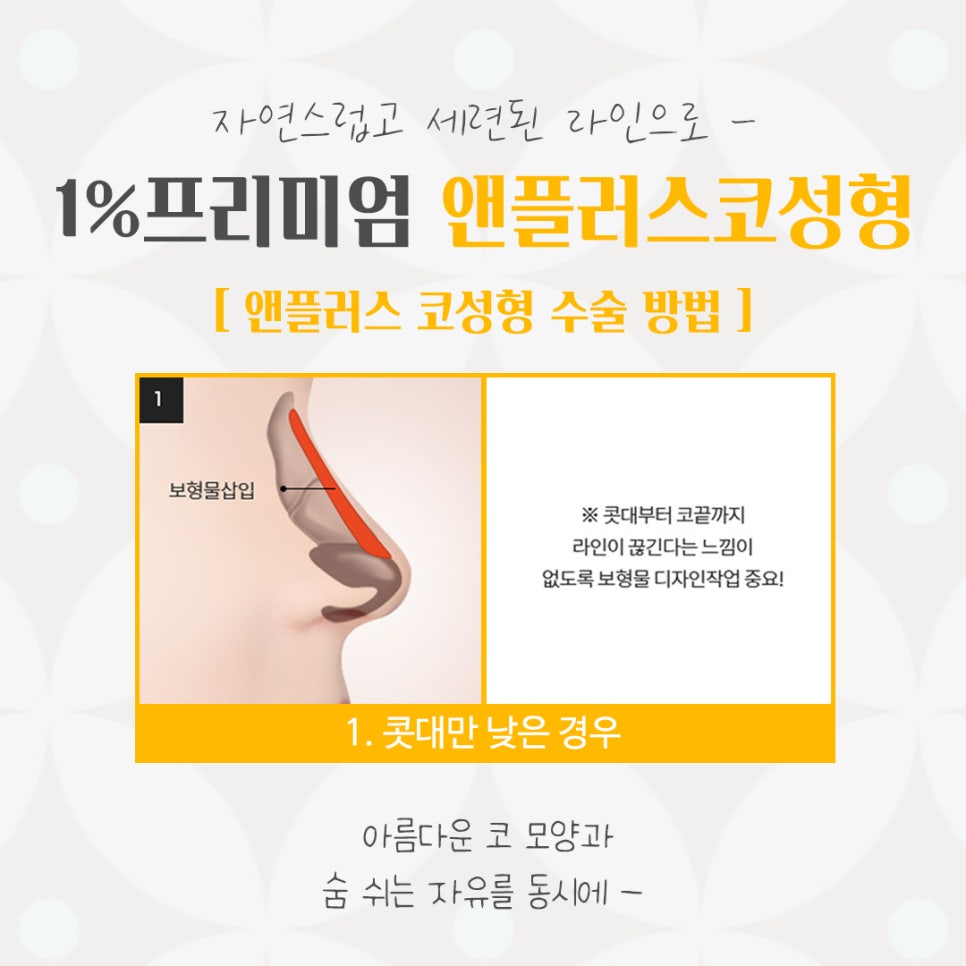
If only the bridge is low, the overall nasal line can be corrected using an implant or autologous rib cartilage for the bridge.
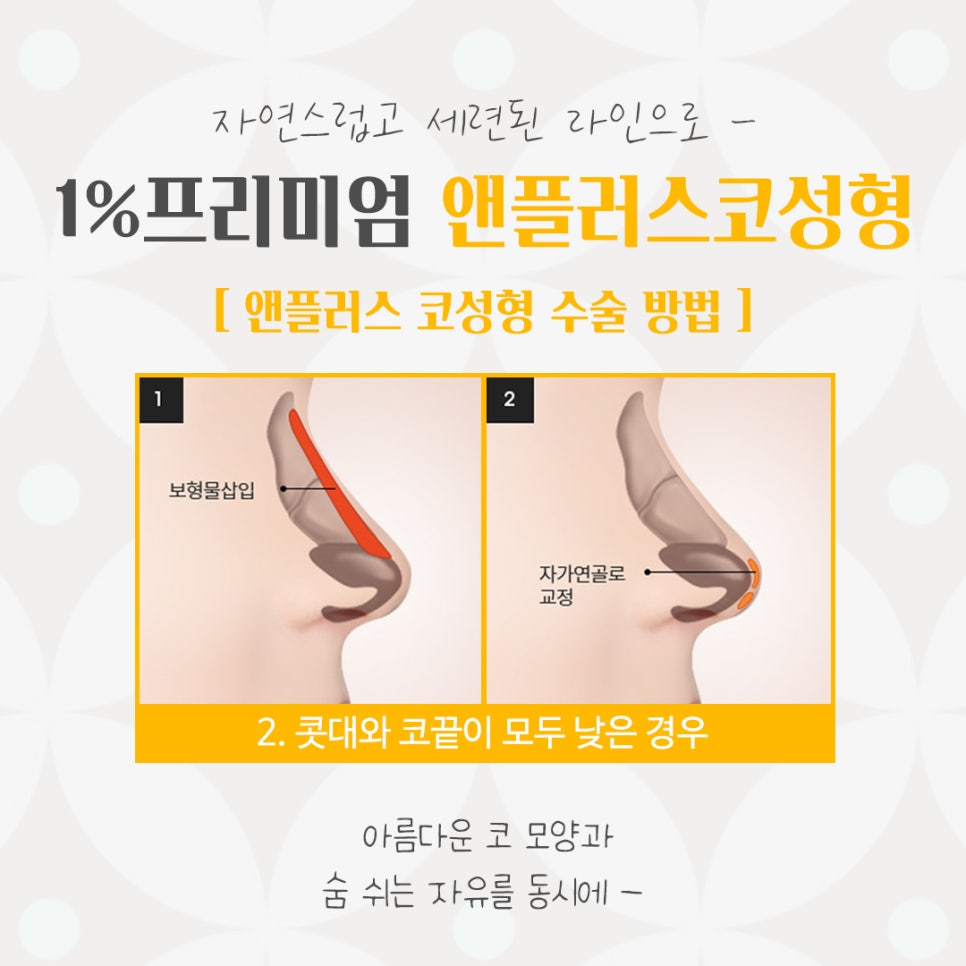
If both the bridge and the tip are low, the overall nasal line can be corrected by using silicone for the bridge and autologous rib cartilage for the tip.
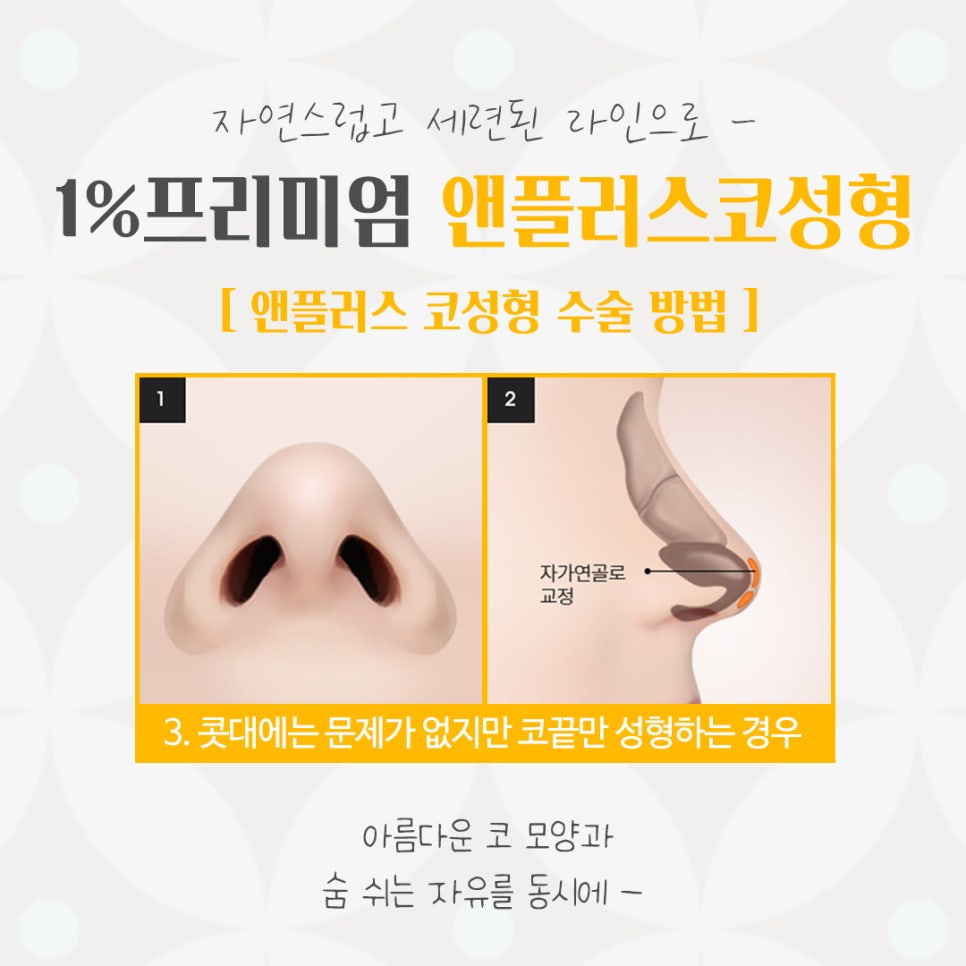
If the bridge is not a problem and you want only tip surgery, the overall nasal line can be corrected using autologous rib cartilage for the tip.

In the case of silicone implants used additionally, rather than using a commercially produced implant as is in order to minimize an artificial look after nose surgery, we carefully shape it ourselves by taking into account various aspects such as the individual’s overall image and the width, length, breadth, and height of the bridge. This can lead to higher satisfaction after surgery.

Therefore, for those looking into information related to autologous rib cartilage rhinoplasty, it is helpful to check carefully not only the before-and-after photos but also whether the medical team has strong anatomical knowledge of the nose, whether they have sufficient experience and expertise, whether the necessary equipment is available to accurately assess your nasal condition, and whether aftercare is reliably guaranteed.

At OjiKo N Plus Clinic, to ensure safe and satisfying autologous rib cartilage rhinoplasty, Director Physician Yun Hyun-cheol personally handles everything one-on-one—from consultation related to rhinoplasty, to establishing the surgical plan, performing the procedure, treatment, and follow-up care—providing a high level of medical service from before surgery to after.

For aftercare, we issue an N Plus membership card and operate an A/S system that guarantees support for one year after surgery, as well as a surgical responsibility guarantee system prepared for all possible situations such as post-surgery pain, inflammation, and dissatisfaction with the shape. This means you can also receive clear aftercare benefits after surgery.
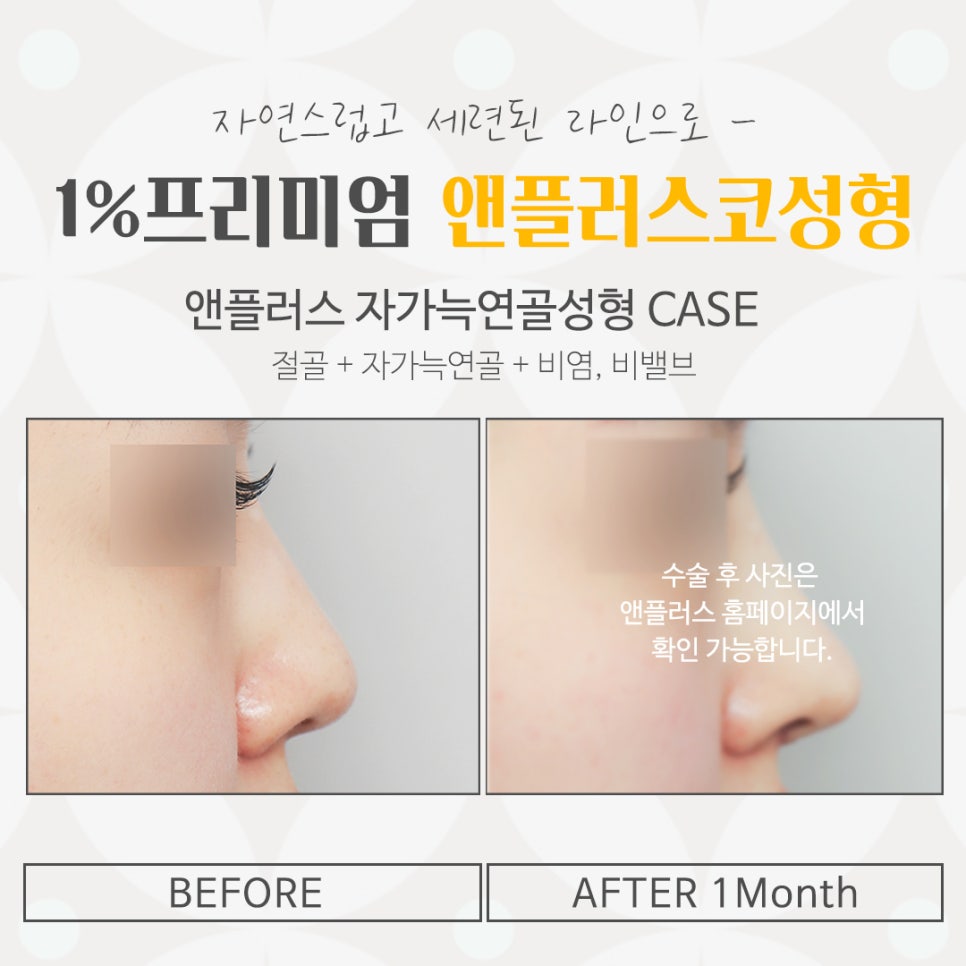
(The image above shows before-and-after photos of autologous rib cartilage rhinoplasty at N Plus Clinic.)
We have shared information about autologous rib cartilage rhinoplasty at OjiKo N Plus Clinic, and I hope this article has been very helpful for those looking into rhinoplasty materials. Thank you.
https://youtu.be/oPgZ-dwfeG8?si=0KW57dPT3bZ9BkwO