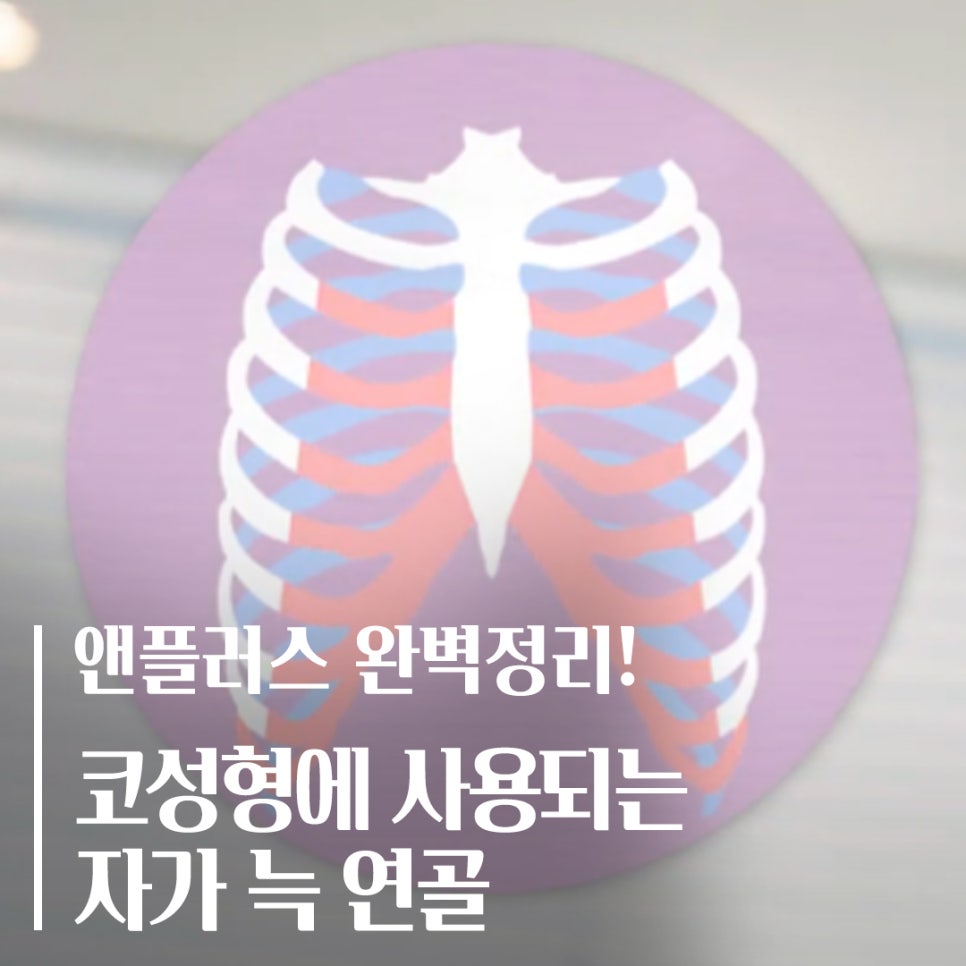
This time, I’ve prepared information related to autologous rib cartilage used in rhinoplasty.
Hello. This is N+ Clinic, which thinks only about your healthy and beautiful nose.
Today, I’ll explain nose surgery using autologous rib cartilage.
The number of people undergoing nose surgery using autologous rib cartilage has increased a lot. In the past, when we recommended autologous rib cartilage surgery, many patients seemed a little surprised or hesitant.
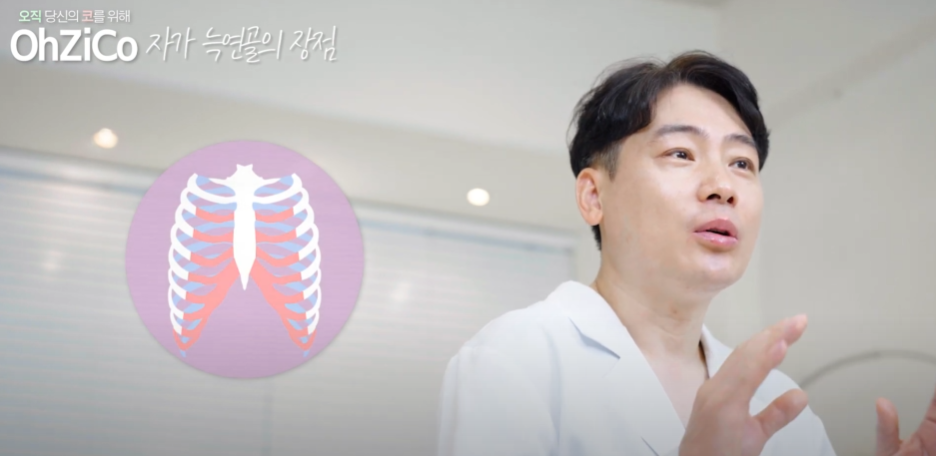
The advantages of autologous rib cartilage are that the material is abundant, and because it is firm in hardness, it is advantageous for creating the desired shape.

The biggest disadvantage of autologous rib cartilage is ossification.
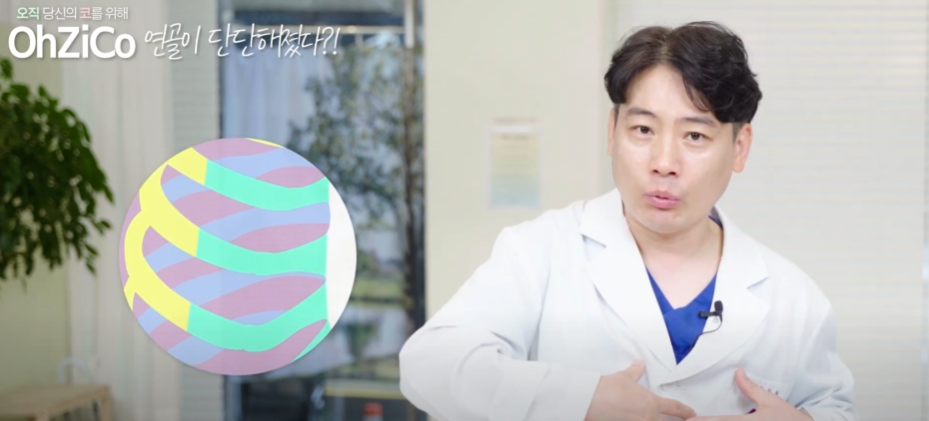
If you look at the rib cartilage, the outer part is bone, and as you move toward the inner part and the center, it becomes cartilage,
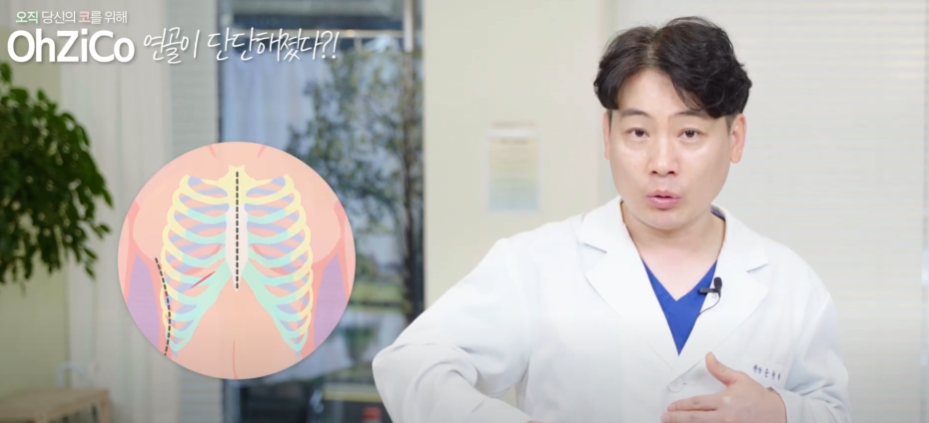
so an incision is made somewhere between the midline and the lateral side to harvest the rib cartilage.
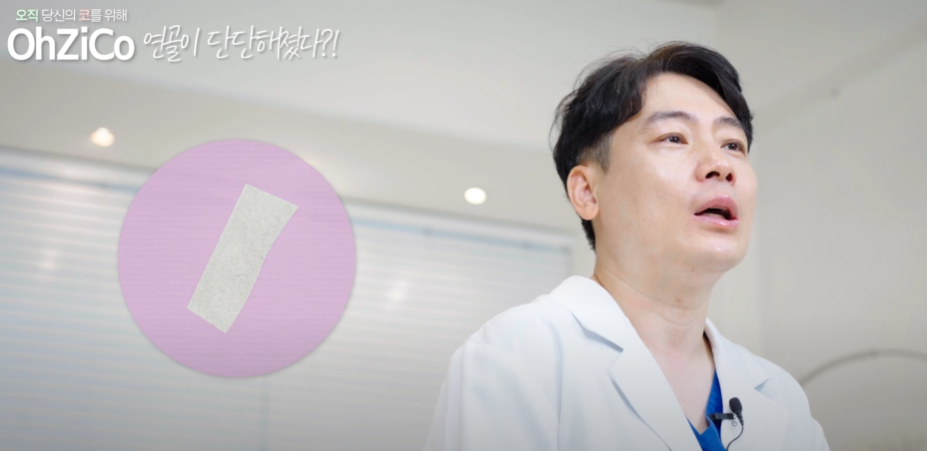
In some cases, the harvested area may have transformed into ossification or calcification. The area from which cartilage can be harvested may become smaller and smaller, or in severe cases, there may be no cartilage to harvest at all. In such cases, it becomes quite problematic. The incision has already been made, and the preparation for using rib cartilage has been completed, but
if rib cartilage cannot be harvested, another cartilage source must be found, which would require making yet another incision, making it the worst possible situation.
That is why, at N+ Clinic, we have conducted extensive research on how to avoid ossified cartilage and find cartilage optimized for harvesting as much as possible. Before surgery, we palpate the rib area extensively,
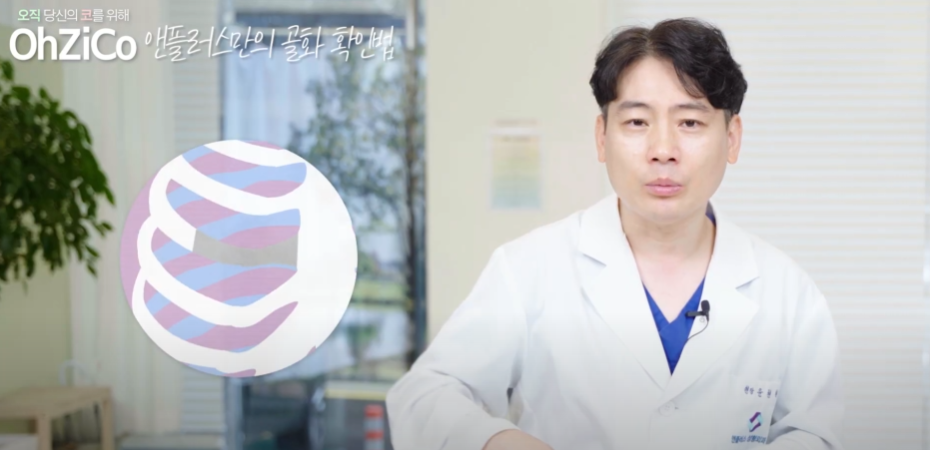
because in areas where ossification has progressed, it feels hard when touched. Even if you feel it yourself, you can tell the difference between touching the outer bone and the inner soft cartilage, and you can roughly estimate it by how much bone is involved.

There are also cases where bone is embedded inside the cartilage like a core, and to check for that, N+ Clinic has its own custom-made probe. Using that, we can examine it one by one, like finding treasure buried in the ground,
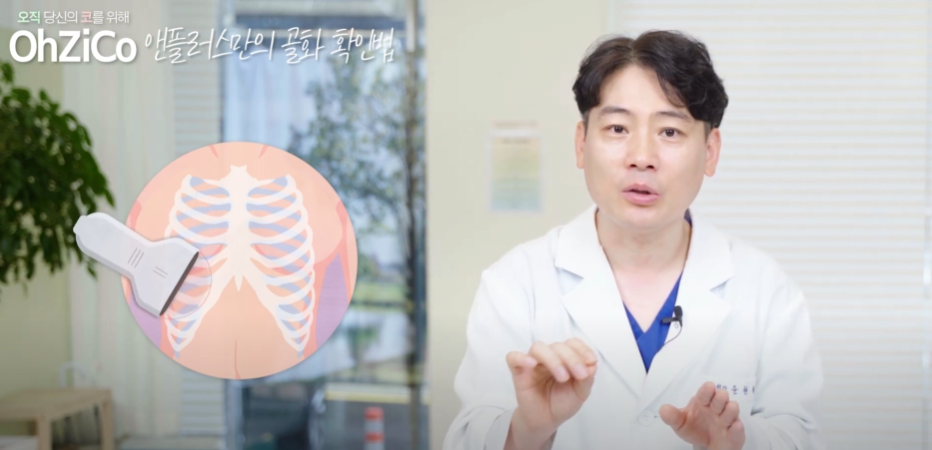
and determine whether the area is cartilage or whether hard bone is inside, allowing us to harvest cartilage from the exact area. Since the incision is also made only where needed, cases in which surgery cannot be performed due to ossification or calcification are rare, so you can proceed with confidence.

Is it difficult to harvest rib cartilage if you are overweight?
When it comes to harvesting autologous rib cartilage, there are cases where it is easy and cases where it is difficult, but first of all, a lean body type is more favorable for feeling the cartilage clearly.

If you have more body fat, cartilage can still be harvested without much difficulty as long as the incision is slightly extended, so there is not a big difference.

I sleep badly. If cartilage is harvested under sedation, will that be a problem?
Cartilage is harvested under sedation, and if there is hyperventilation or sleep apnea, the chest may move without you realizing it.
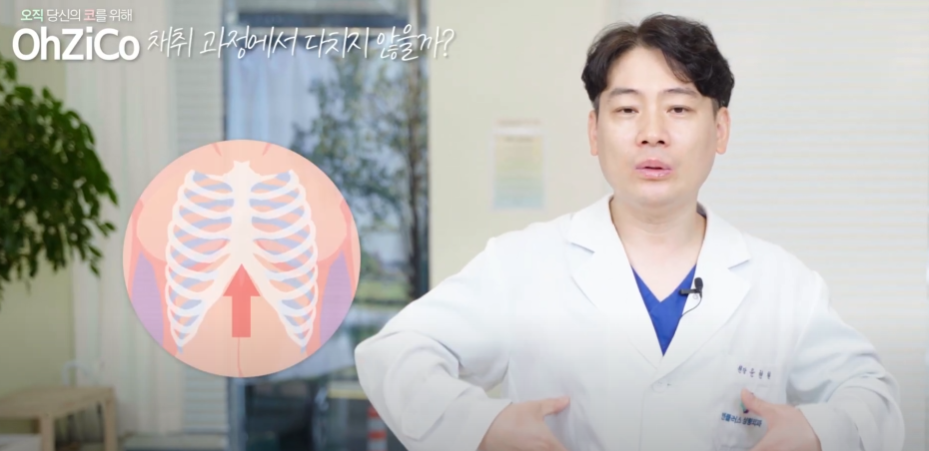
In particular, since the lower part moves upward during chest motion, the area where the cartilage is harvested must be incised carefully because the lungs are 바로 below that area, and that part may move. In such cases, if breathing is kept comfortable enough by using a breathing support device, there is no problem with the surgery.

How severe is the pain after cartilage harvesting?
Usually, when harvesting autologous rib cartilage, pain on the first day is barely felt because of the anesthesia.

People usually start to feel pain more from the second day, but it generally eases after about a week. So rather than a sharp kind of pain, it can be described as a heavy pain similar to muscle soreness. Therefore, it is not considered pain that is excessively difficult to endure.
Today, I explained information related to the increasingly common nose surgery using autologous rib cartilage. We took time to look at the pain that occurs after autologous rib cartilage surgery, who has difficulty with harvesting and who finds it easy, and what happens when rib cartilage has ossified and how that surgery is performed. I hope this information is very helpful for those who are considering their first rhinoplasty or revision surgery. Thank you.
https://youtu.be/9K9mG6XJd-Q