
Hello. This is N+.
For this post, we prepared information related to non-implant rhinoplasty reviews.

Usually, when communicating, we face each other, so to look good to others or for personal satisfaction, many people make various efforts to improve their appearance. While changes can be made through exercise, makeup, skin care, or hairstyle, more and more people are hoping to develop a better appearance through plastic surgery when these changes are not enough.

Many people consider plastic surgery to improve their facial features, but indiscriminate surgery can cause more side effects, so it requires greater caution. Among the various types of plastic surgery, the nose in particular is located at the center of the face and is the most three-dimensional feature, so even a small change in its shape can have a big effect on improving the overall image. Because of this, it is a popular procedure, and those who want a natural improvement may want to learn more about non-implant rhinoplasty reviews.

Non-implant rhinoplasty refers to surgery that does not place an implant such as silicone into the bridge of the nose, but instead uses the patient's own cartilage at the tip of the nose to add volume. Since non-implant rhinoplasty uses autologous cartilage, the likelihood of inflammation is significantly lower, making it suitable for those who are sensitive to inflammatory reactions or who want to improve to a more natural nose line.

Therefore, for those looking into non-implant rhinoplasty reviews, surgery may be performed according to nose shapes such as a high bridge with a drooping tip, a hooked nose, an upturned nose, a drooping tip or aquiline nose, a long nose, or a lowered tip.

In the case of standard rhinoplasty, silicone is used for the bridge and autologous cartilage for the tip to raise the overall nose line. In non-implant rhinoplasty, however, the procedure is performed using autologous cartilage without silicone implants.
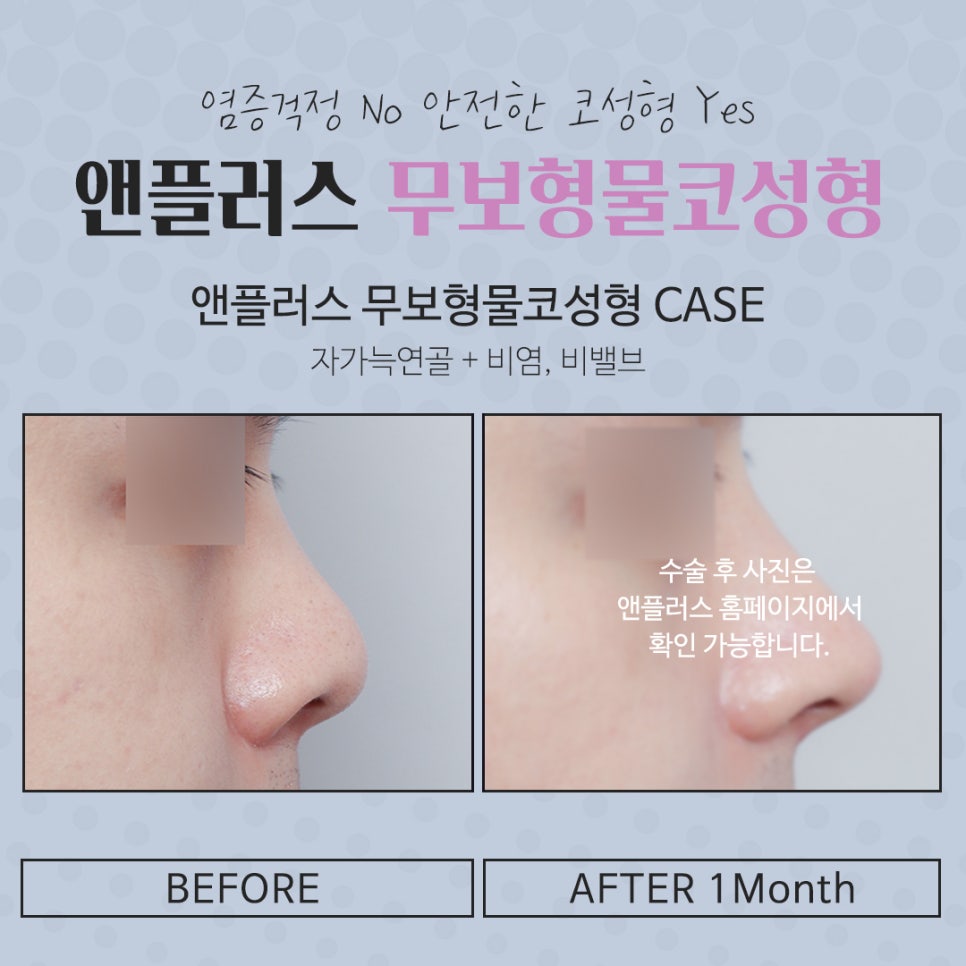
(The image above is a real before-and-after photo of an N+ non-implant rhinoplasty review.)
If you look into non-implant rhinoplasty reviews, the surgical method and materials are applied differently depending on each person's condition. Autologous cartilage includes septal cartilage, ear cartilage, and autologous rib cartilage, and if using autologous cartilage is difficult, it can be replaced with donated rib cartilage approved by the U.S. FDA. In the case of non-implant rhinoplasty, the appropriate material can be selected through a preoperative examination based on the individual's nose condition, skin condition, and cartilage condition.
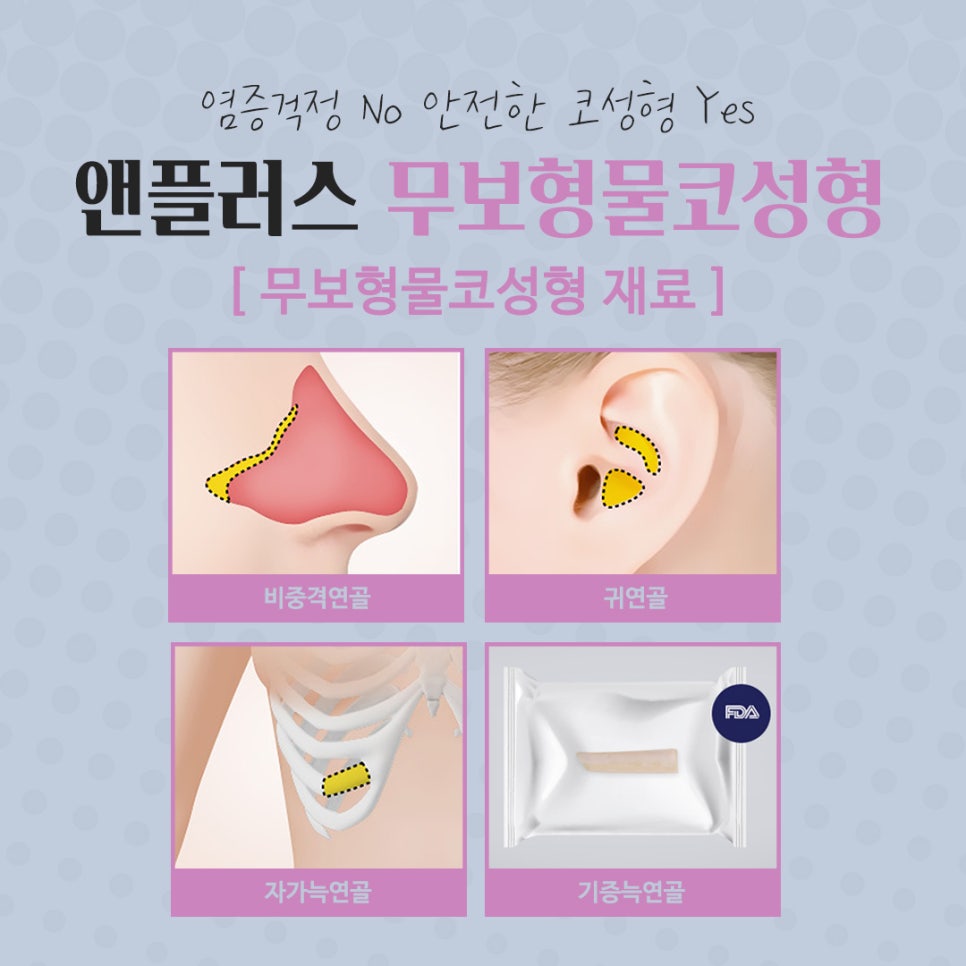
The characteristics of the autologous cartilage used in non-implant rhinoplasty are as follows: septal cartilage is the cartilage that supports the nose and the partition that divides the nostrils in half, helping create a natural nose shape, and because it is firmer than ear cartilage, the tip of the nose is less likely to droop. Ear cartilage is softer than septal cartilage, helping to create a natural, well-defined nose tip, and because it is relatively easy to harvest and soft compared with other cartilage, it is a commonly used material. Autologous rib cartilage is cartilage located in the ribs and is used when septal cartilage or ear cartilage is insufficient. It is large and firm, so it is used when the nose is short or upturned. Lastly, donated rib cartilage is used as an alternative when harvesting autologous cartilage is difficult; it is specially processed and approved by the U.S. FDA.
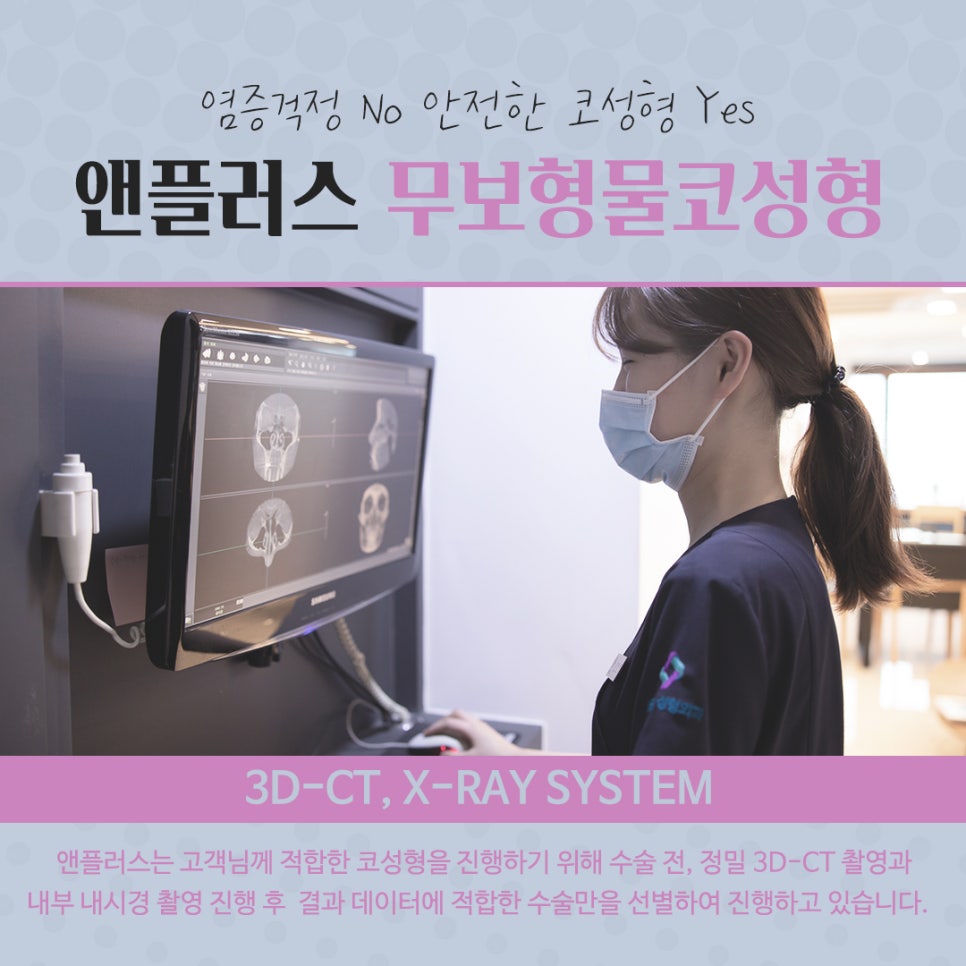
At N+, before surgery, 3D-CT scanning, internal endoscopy, multi-angle photography, various allergy tests, and internal nasal function tests are performed to accurately understand the individual's current condition, and the surgical plan is established based on the extracted data.
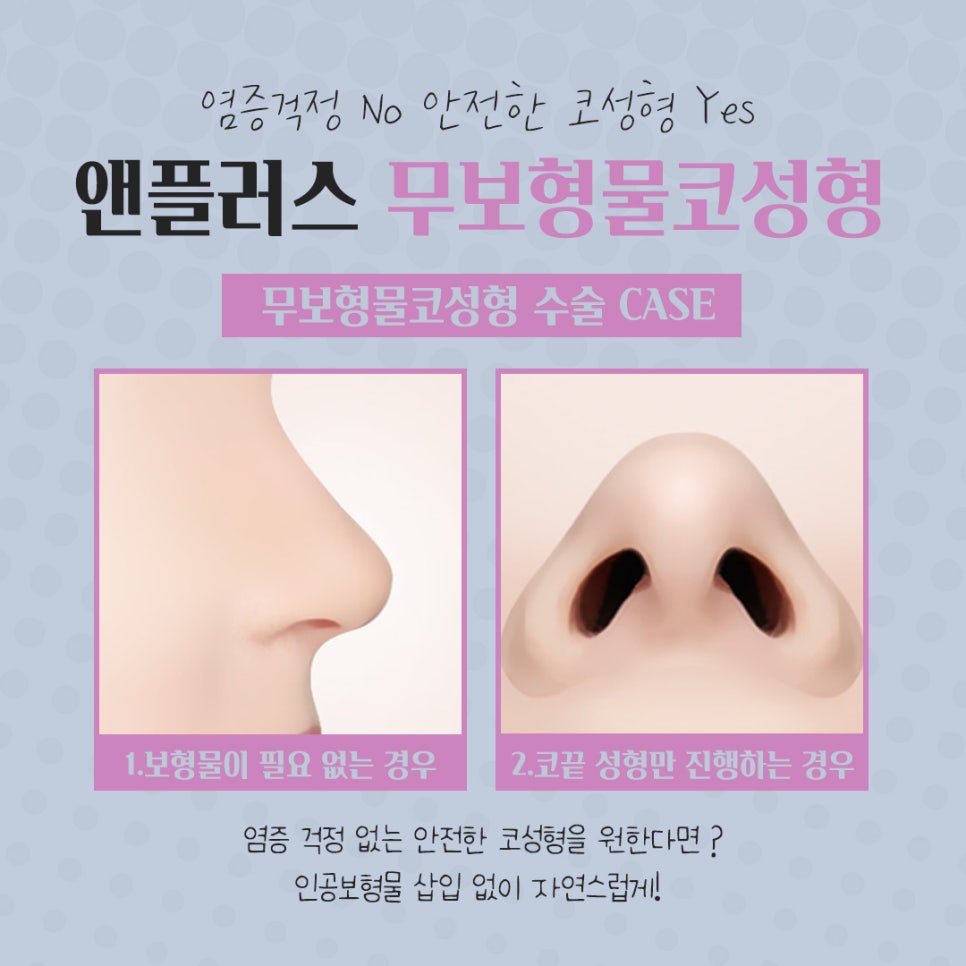
The non-implant rhinoplasty methods are divided into cases where no implant is needed and cases where only tip surgery is performed.
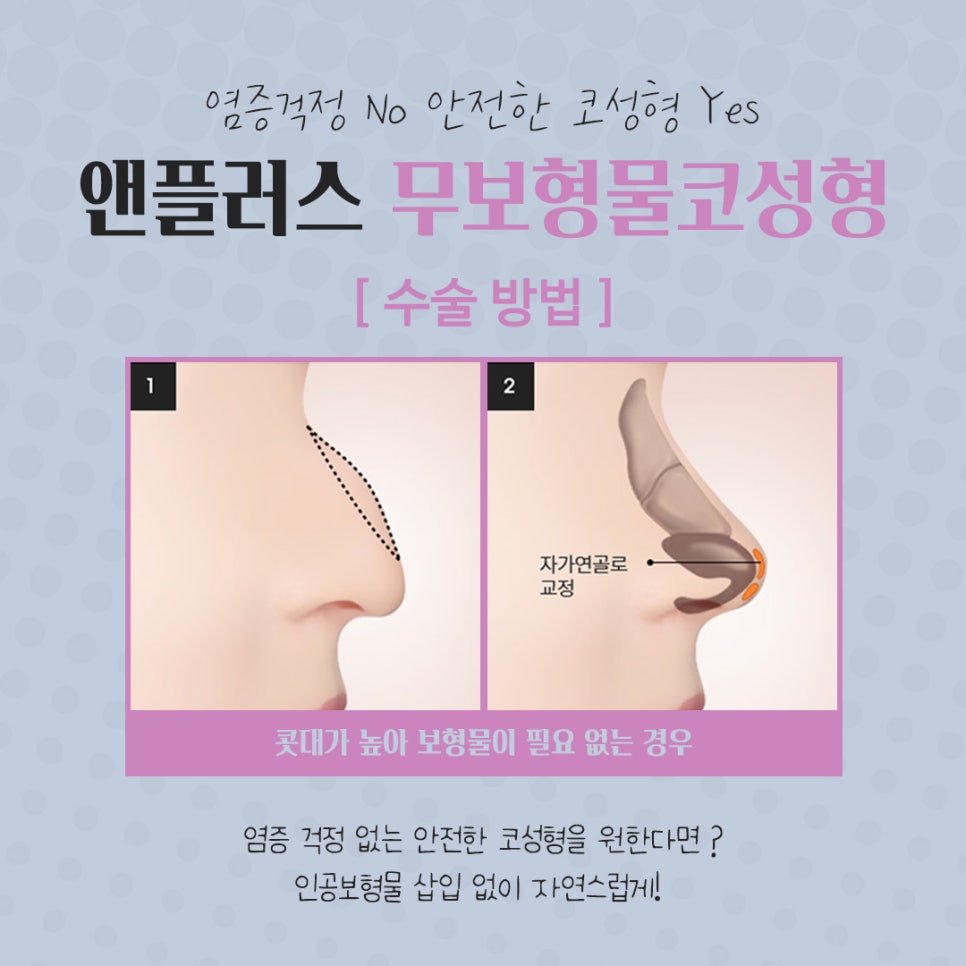
First, if the bridge is already high enough that no implant is needed, hump removal and osteotomy can be performed if there is a hump, and the tip can then be corrected using autologous cartilage. It is important to design the nose so that the bridge and the line are not interrupted.
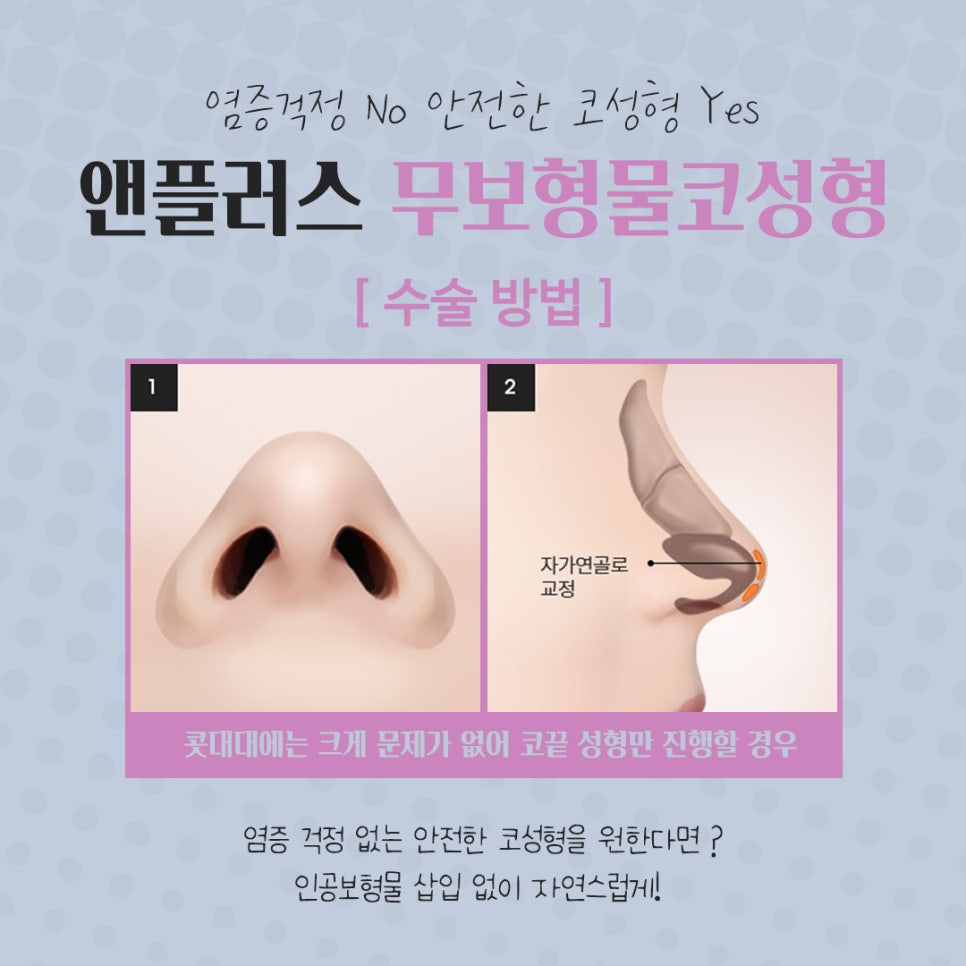
If there is no major problem with the bridge and you only want tip surgery, it is important to add volume to the tip using autologous cartilage and design it so that it does not break the line with the bridge.

Because silicone is not used in the bridge, non-implant rhinoplasty may seem like a relatively simple procedure. However, rhinoplasty must consider both the internal and external structures of the nose at the same time, so it is considered a highly difficult surgery. For those looking into non-implant rhinoplasty reviews, it can be helpful to carefully check whether the medical team has a high level of anatomical knowledge of the nose, whether they have abundant relevant experience and expertise, whether equipment is available to accurately assess the condition of your nose, and whether aftercare is clearly guaranteed.

At N+, Director Yoon Hyun-cheol personally handles every step one-on-one, from consultations related to rhinoplasty, to surgical planning, the procedure itself, treatment, and follow-up care. In addition to an aftercare system that guarantees support for one year after surgery, N+ also operates a surgical responsibility guarantee system prepared for all possible situations, including postoperative pain, inflammation, and dissatisfaction with the shape. This allows patients to receive high-level medical services from before surgery through recovery.

That concludes the information we shared about non-implant rhinoplasty reviews performed at N+. We hope this post was very helpful for those who are considering rhinoplasty but want a natural line or are looking into it because they are concerned about implants. Thank you.
https://youtu.be/WXBJPNc4fXw?si=3uJ5o31Usi__VaJG