
Recently, many people have been trying to improve their image on their own through various media in order to enhance their appearance, but despite these efforts, more and more people are considering plastic surgery for areas that are difficult to change.

Although individual complexes can be improved through plastic surgery, indiscriminate procedures can cause side effects, so it is better to look into them more carefully. Among various cosmetic procedures, the nose is located at the center of the face and is the most three-dimensional feature. If the shape of the nose differs even slightly from the standard a person has in mind, the balance of the entire face can seem off, so you may look into rhinoplasty to improve facial balance.
When people think of rhinoplasty, they usually focus first on appearance, but the nose plays an important external role while also being the organ responsible for breathing and smell. If surgery is performed with only a cosmetic approach without considering these internal aspects, postoperative functional problems may lead to revision surgery. Even if you do not feel any functional problems, it is helpful to choose a clinic that also considers the internal functional aspects of the nose. In addition, you can also look into functional rhinoplasty insurance coverage.
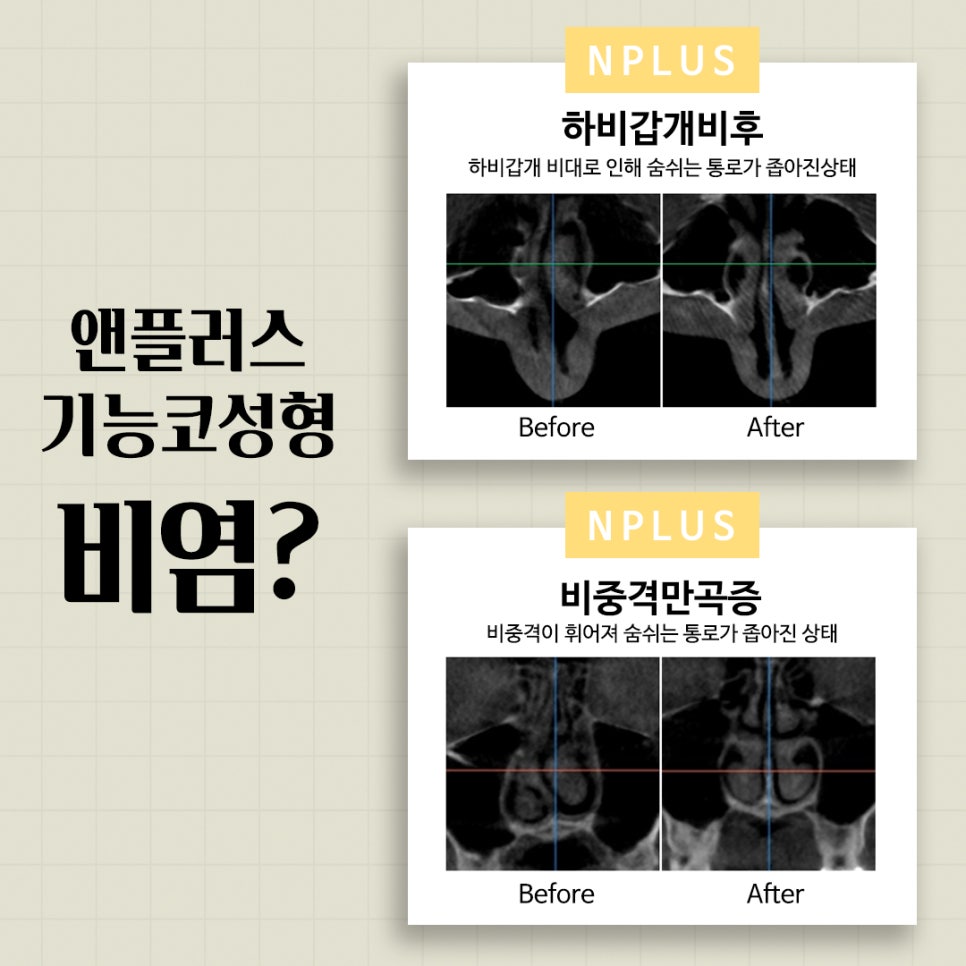
A representative case where functional rhinoplasty insurance coverage may apply is nasal congestion caused by rhinitis. Rhinitis is divided into allergic rhinitis and structural rhinitis. In the case of allergic rhinitis, because it appears due to specific substances or environments, a cure is difficult, and drug treatment or improving immunity should come first. On the other hand, structural rhinitis can be cured through surgery, and because it results from problems in the internal structure of the nose, it is important to accurately diagnose these internal nasal issues and proceed with the appropriate surgery. Causes of structural rhinitis can include a deviated septum, inferior turbinate hypertrophy, and nasal valve stenosis.

In the cases described above where functional rhinoplasty insurance coverage may be possible, causes of structural rhinitis such as a deviated septum, inferior turbinate hypertrophy, and nasal valve stenosis are sometimes mistaken for temporary symptoms or a cold. However, structural rhinitis is difficult to diagnose with the naked eye and must be diagnosed using equipment. If symptoms are left untreated, they can develop into chronic rhinitis, leading to headaches, migraines, chronic fatigue, loss of appetite, reduced concentration, facial deformity, and more. If you have symptoms, it would be helpful to visit a hospital for a diagnosis.

For those looking into rhinoplasty and functional rhinoplasty insurance coverage, surgery must take into account both the inside and outside of the nose, so it is important to research carefully. In addition, it would be helpful to thoroughly check whether the medical staff have a high level of anatomical knowledge of the nose, whether they have abundant related experience and expertise, whether equipment is available to accurately assess the condition of your nose, and whether aftercare can be reliably guaranteed.

To explain in more detail the cases where functional rhinoplasty insurance coverage can apply, the procedure may be performed for reasons such as a deviated septum, inferior turbinate hypertrophy, nasal valve stenosis, or a nasal bone fracture. If you suspect nasal congestion due to rhinitis or a nasal bone fracture, it would be a good idea to visit a hospital and receive a clear diagnosis of your condition.
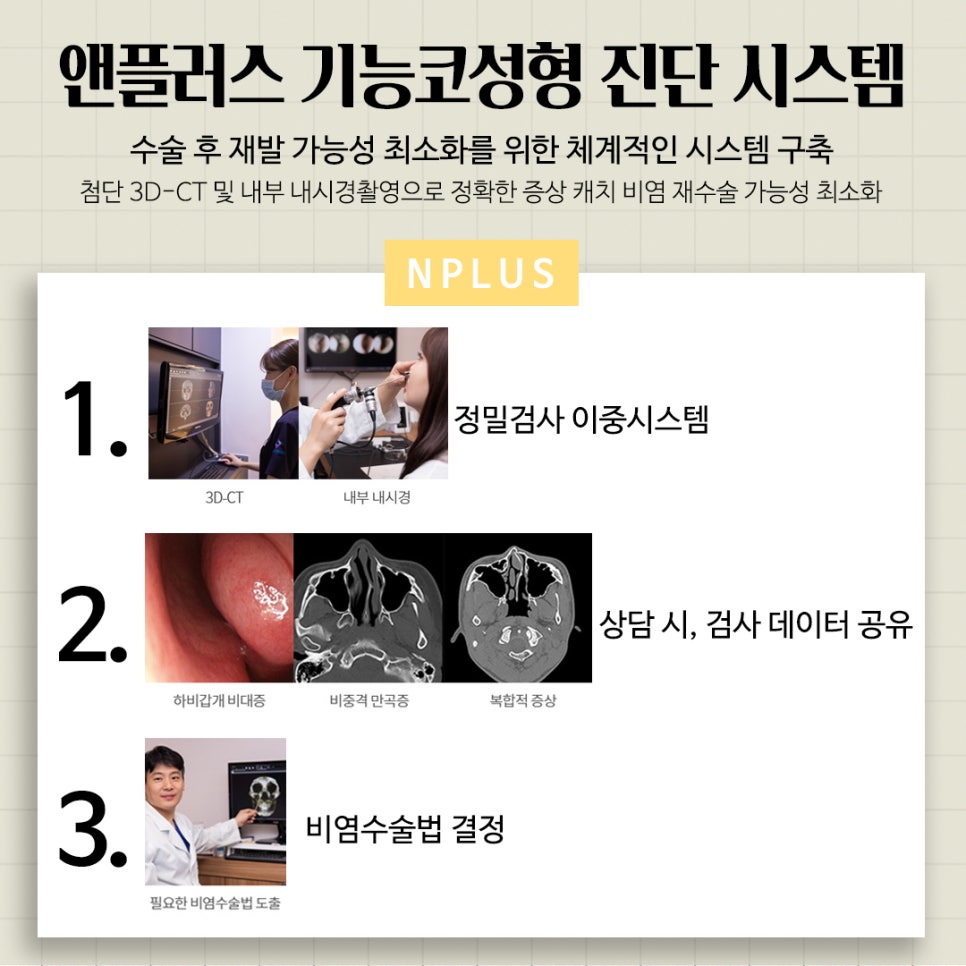
Also, because it is important to accurately understand the condition of the inside and outside of the nose in order to qualify for functional rhinoplasty insurance coverage, if surgery is performed based only on assumptions, it may be difficult to receive insurance coverage. If surgery is not performed according to the cause, symptoms may worsen after surgery or fail to improve. Therefore, after a precise examination and confirmation of the diagnosis and condition, it would be helpful to contact the relevant insurance company.
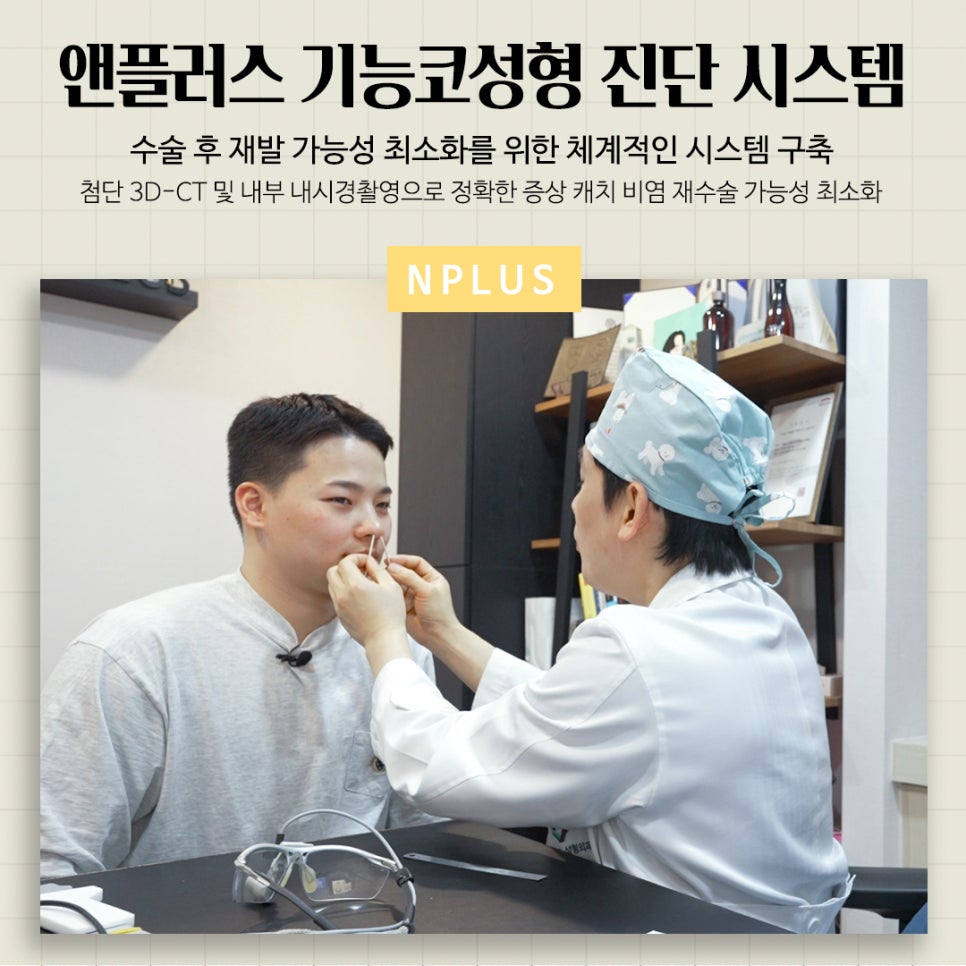
Accordingly, at ANPLUS Clinic, in order to ensure accurate nasal surgery, the team first determines the exact condition of the inside and outside of the nose through preoperative 3D-CT scans, internal endoscopic examination, various allergy tests, nasal functional tests, and multi-angle photography. Surgery is then performed based on the collected data. Director Yoon Hyun-cheol, with over 20 years of experience, personally oversees the entire process one-on-one, from consultation related to nasal surgery, surgical planning, and the procedure itself to treatment and follow-up care, providing high-level medical services from before surgery through aftercare.

The methods used for functional rhinoplasty are selected according to the specific symptoms of a deviated septum, inferior turbinate hypertrophy, and nasal valve stenosis. If there are combined symptoms, two or more procedures are performed together. After this functional surgery, cosmetic rhinoplasty can also be performed, resulting in a highly satisfying rhinoplasty.

The procedure for applying functional rhinoplasty insurance coverage, which many people are curious about, is as follows: precise examination, CT scan, internal endoscopic examination, confirmation of whether the case is eligible for payment and the reimbursement rate, surgery and treatment, confirmation of the documents needed to file a functional rhinoplasty insurance claim and request for issuance from the hospital, individual submission of the documents to the insurance company, and finally receiving the insurance payout after the review.
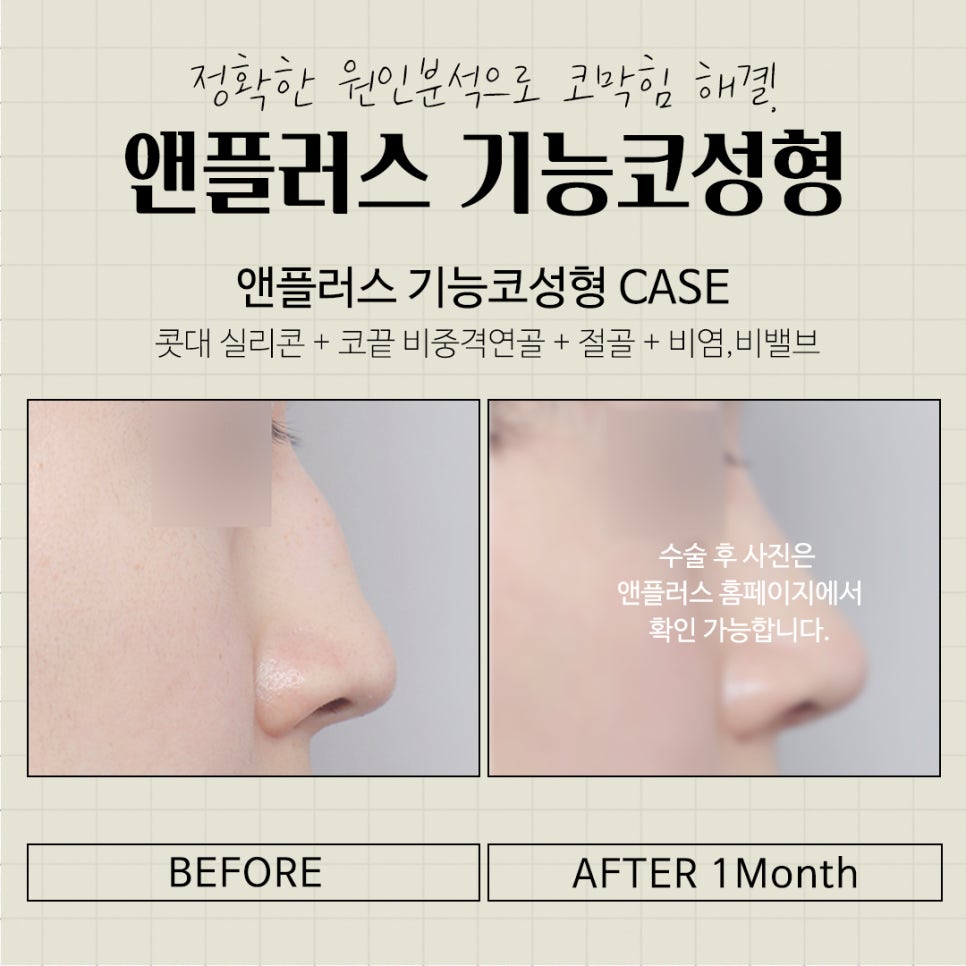
(The image above shows before-and-after photos of functional rhinoplasty at ANPLUS Clinic.)
This time, I explained information related to functional rhinoplasty insurance coverage at ANPLUS Clinic. I hope this information is very helpful for those who are looking into nasal congestion caused by rhinitis or rhinoplasty. Thank you.
https://youtu.be/GnUyzZwEl6E?si=Gwfpg-n-9hqTj0j1