
In modern times, the development of various media has created many ways to improve one’s appearance on one’s own, so people of all ages and genders can try various methods to enhance their image. However, for areas that are difficult to change, cosmetic surgery may be considered, but indiscriminate surgery can cause side effects, so it is something to think about even more carefully.

That is why, when thinking about cosmetic surgery for our face, the first area many people consider is the nose. The nose is located at the center of our facial features and is a three-dimensional structure, so if its shape is not straight and well balanced, the overall facial balance may appear disrupted. As a result, more people are looking into nose surgery to improve this. The nose shapes of people researching this type of surgery may include a nose that is too low, a hump nose, an upturned nose, a crooked nose, a drooping nose, or a hooked nose—shapes that are not straight or well balanced. In particular, if the nose is too low and lacks volume, making the face look flat, many people look for more detailed information about lower nose surgery as a way to improve that image.
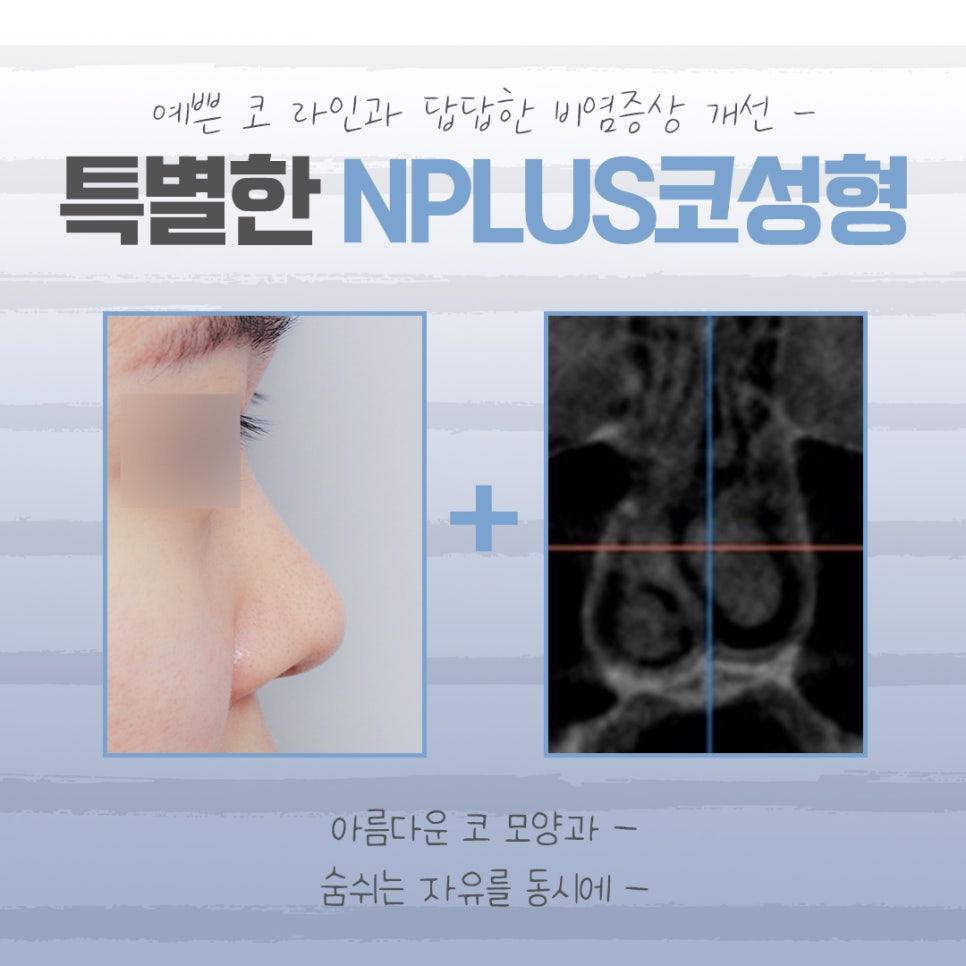
In the case of lower nose surgery, because the nose lacks overall volume, the entire face may look flat, old-fashioned, or dull, so people may look into lower nose surgery based on external appearance. However, our nose is not only important aesthetically but also functions internally as an organ responsible for breathing and smell. Surgery must therefore be performed with both external and internal considerations in mind to help prevent the need for revision surgery due to functional problems after the operation.
For those looking into lower nose surgery, it is important not only to refer to before-and-after images and reviews, but also to check the internal condition of the nose. It is helpful to carefully confirm whether the medical team has strong anatomical knowledge of the nose, whether they have extensive relevant experience and expertise, whether equipment is available to accurately assess the condition of your nose, and whether aftercare is reliably guaranteed.
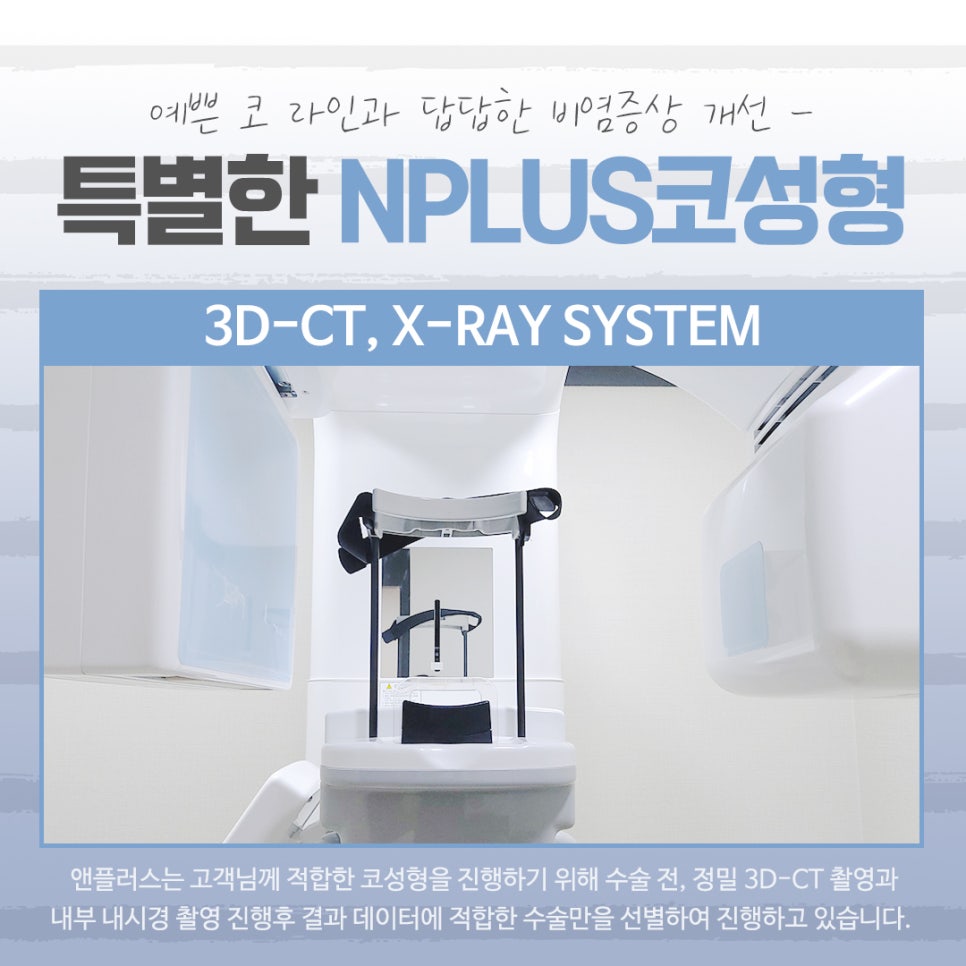
At Nplus, before performing lower nose surgery, they conduct 3D-CT scans, internal endoscopic imaging, various allergy tests, internal nasal function tests, and multi-angle photography to accurately understand the current external and internal condition of the patient’s nose. Based on the extracted data, they establish and carry out a surgical plan.
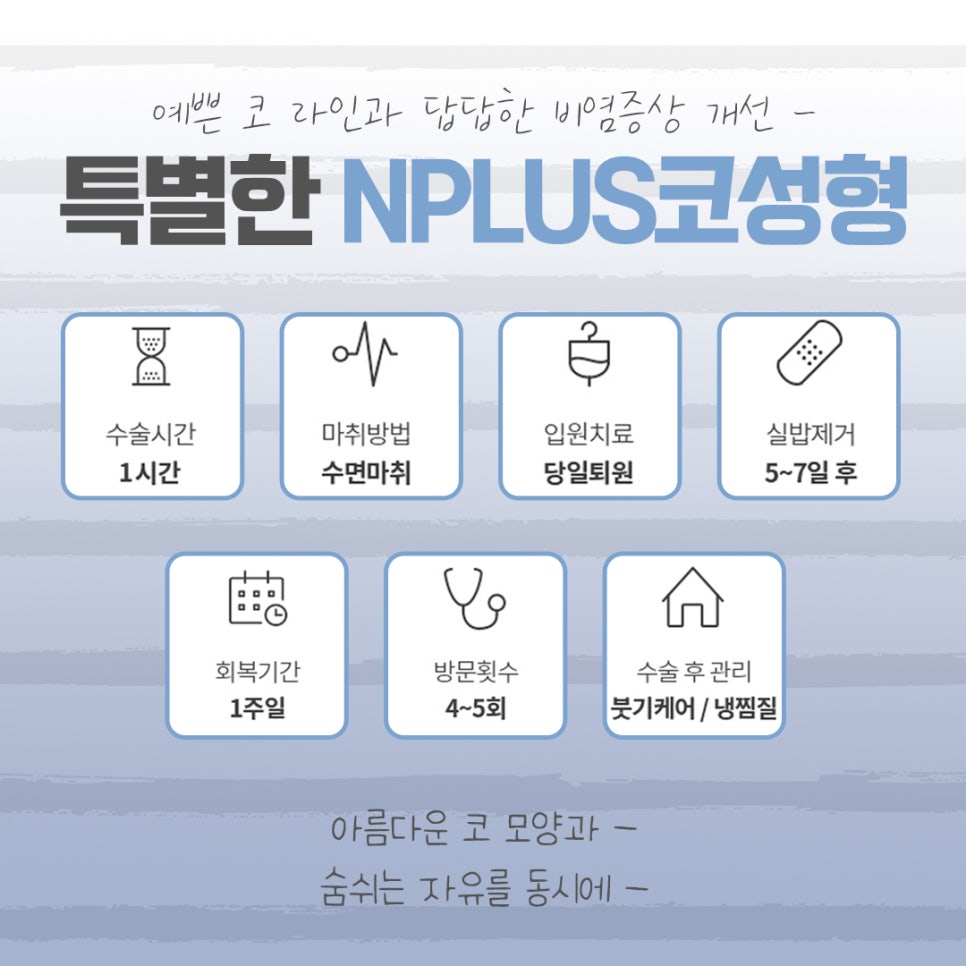
As for the method used in lower nose surgery, the bridge can be corrected with silicone and the tip with autologous cartilage to improve the overall nasal line. Even though it is called lower nose surgery, it is not performed in the same way for everyone. The materials and methods may differ depending on whether there are internal functional issues, the condition of the nasal bones, the condition of the cartilage, and the condition of the skin.
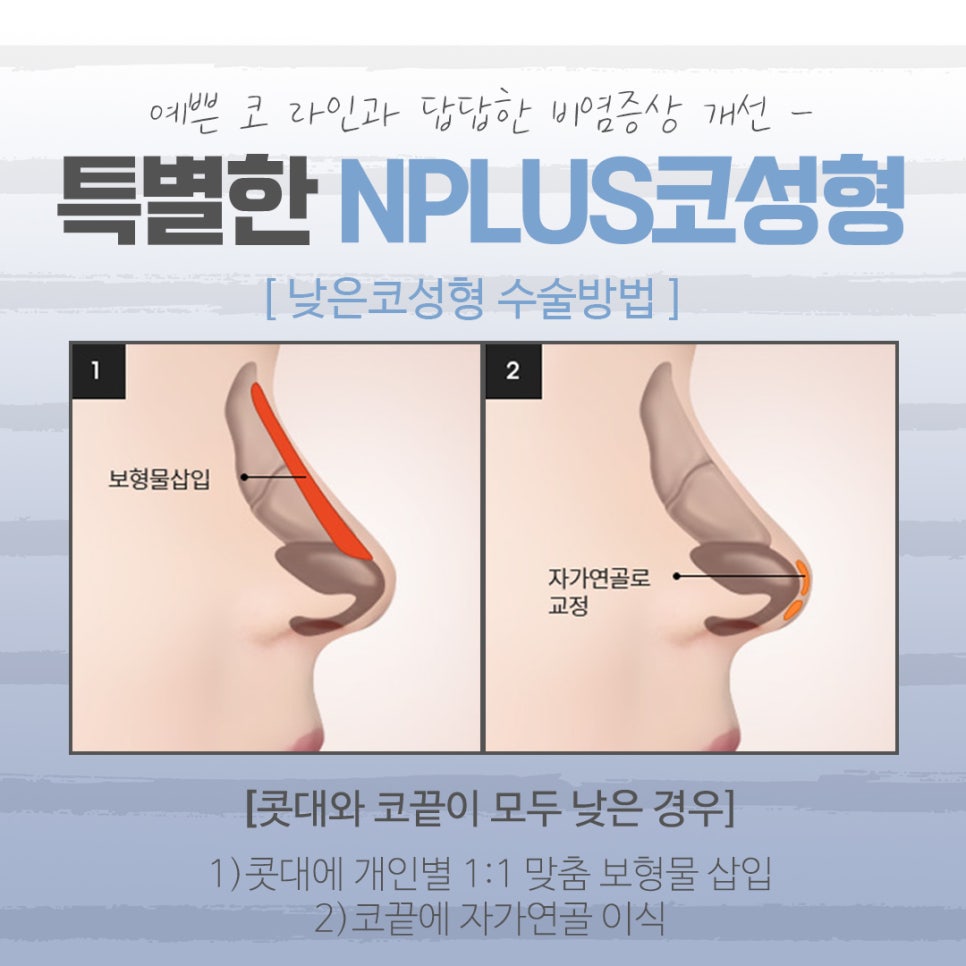
The average lower nose surgery involves inserting silicone into the bridge and grafting autologous cartilage to the tip to correct the overall line.
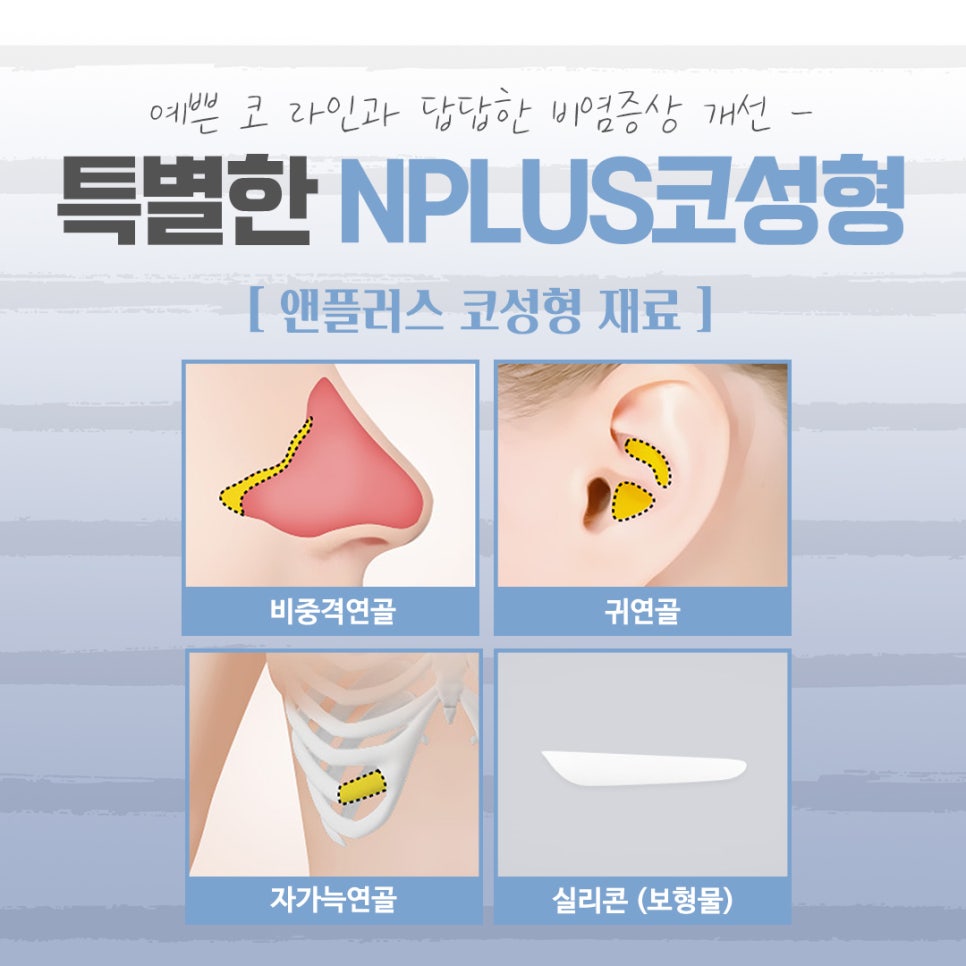
In the case of autologous cartilage used for lower nose surgery, the appropriate material can be selected for each individual through preoperative testing. Autologous cartilage includes ear cartilage, septal cartilage, and autologous rib cartilage.
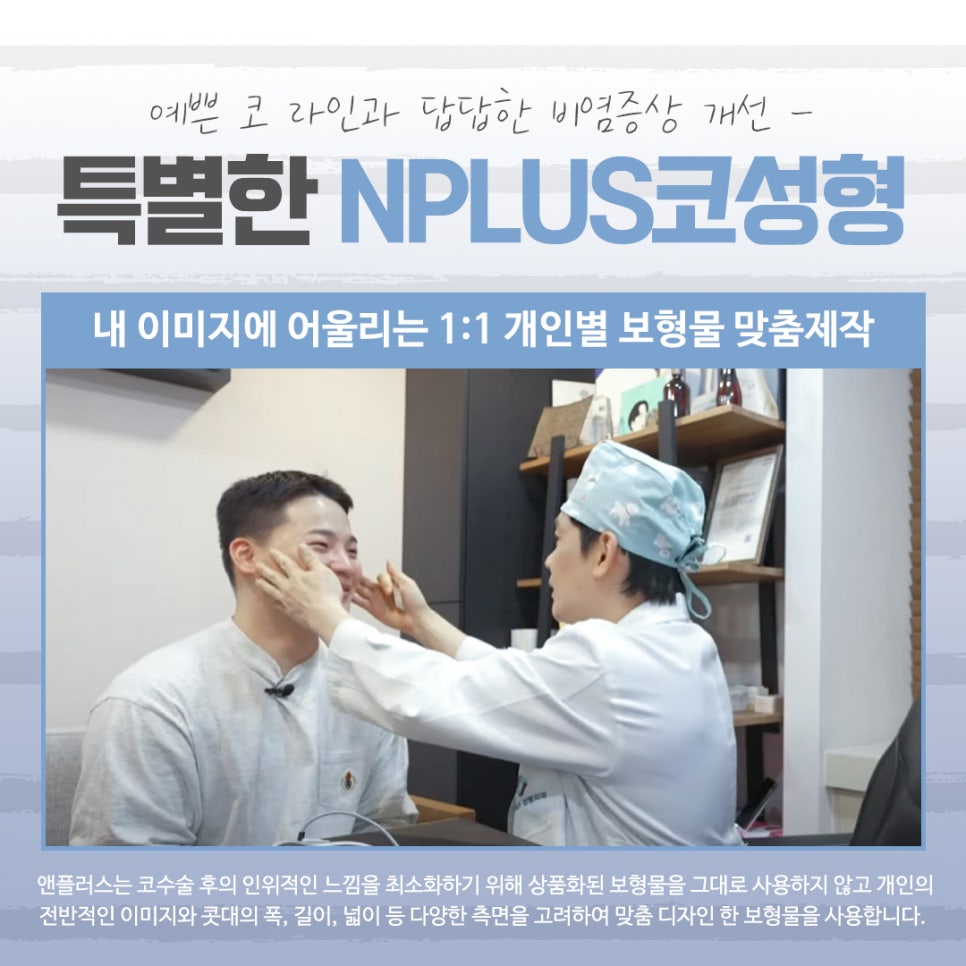
For the silicone used in the bridge, rather than using a mass-produced implant as is to minimize an artificial look after nose surgery, it is carefully and delicately shaped by hand after considering various aspects such as the individual’s overall appearance and the width, length, breadth, and height of the nasal bridge. This can lead to more satisfying lower nose surgery.

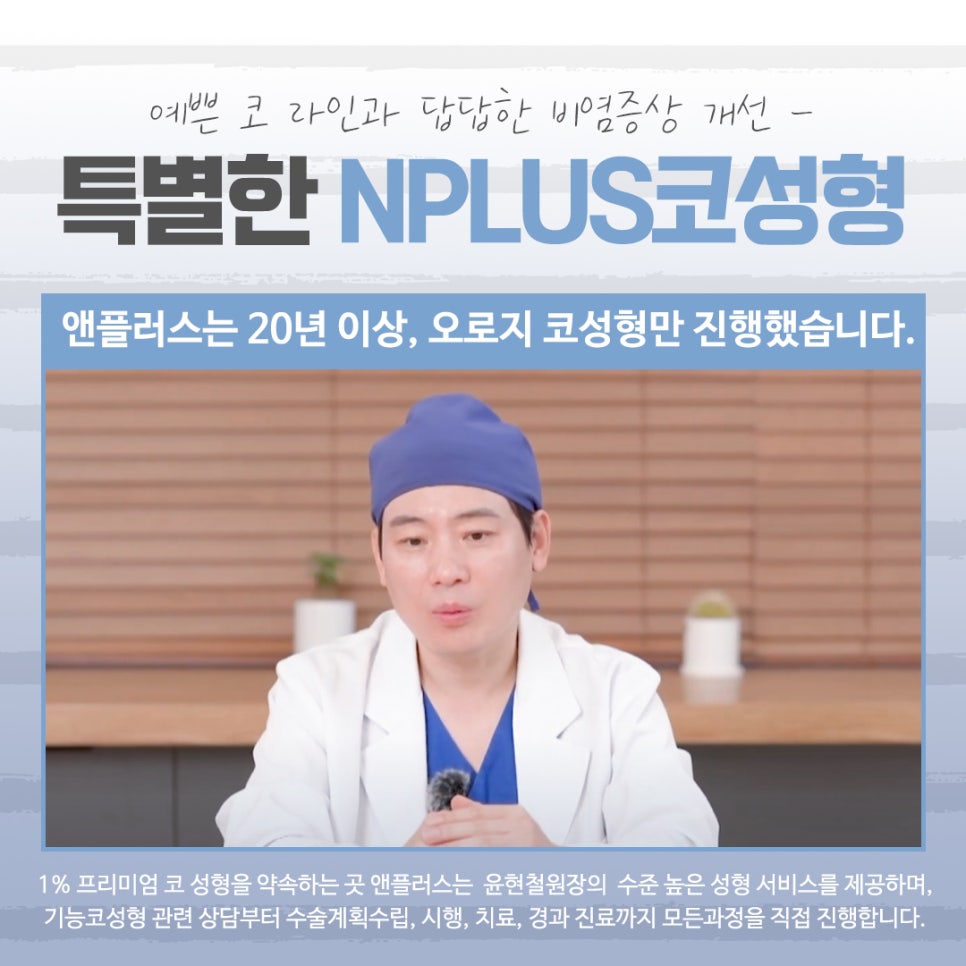
In addition, at Nplus, Director Yoon Hyun-cheol, who has over 20 years of experience, personally handles one-on-one care throughout the entire process—from consultation for lower nose surgery, surgical planning, and the procedure itself to treatment and follow-up examinations—so you can receive high-level medical service before and after surgery.

The aftercare provided after surgery is also covered by an after-sales service system guaranteed for one year after the operation, as well as a surgical responsibility guarantee system prepared for all possible situations, such as postoperative pain, inflammation, or dissatisfaction with the shape. This means you can receive high-level medical service from before surgery through aftercare.
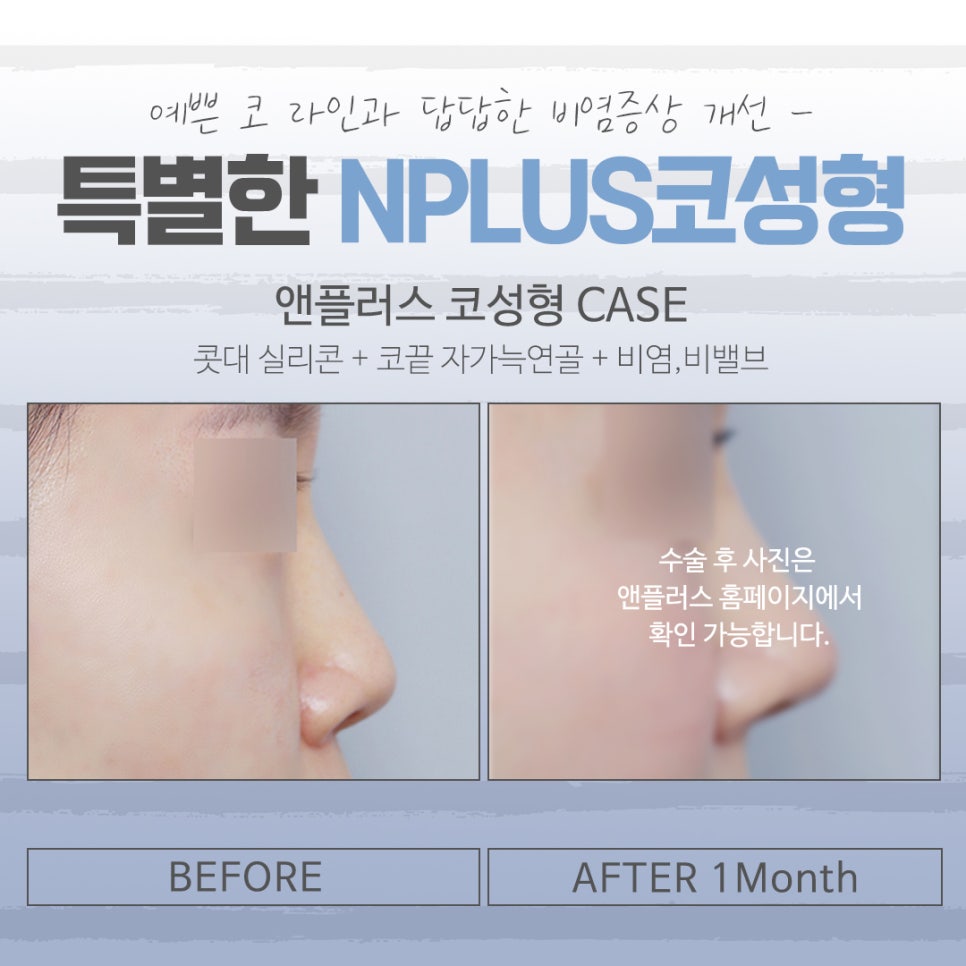
That concludes the information shared here about lower nose surgery performed at Nplus. I hope this article was very helpful for those who are looking into lower nose surgery because their nasal bridge or tip is too low. Thank you.
https://youtu.be/uMUnNFNvx8Y