
Hello, we are A+ Plastic Surgery Clinic, a nose surgery specialty hospital. Today, we have prepared information related to long nose surgery. First, for those looking into rhinoplasty, when the nose located at the center of the face is not straight or properly shaped, it can make the overall balance of the face look off, so there are many different forms to consider.

The nose may be too low, have a dorsal hump, be upturned, droopy, crooked, or have a bulbous shape. If the nose looks long and the face as a whole already looks aged, it can be even more concerning. That is why those whose nose appears long relative to their facial features may want to look into long nose surgery in more detail.

Long nose surgery refers to correcting a nose that appears long overall, with a tip that droops downward and looks arrow-shaped. It also refers to surgery that corrects a nose that appears long because the septal cartilage inside the nose is more developed than average, or because of development of the alar cartilage at the tip. The ways a long nose can be identified include: when the tip droops and looks like an arrow nose; when the nose is too long compared to the length of the face; when the tip droops and the angle between the upper lip and nose tip is small; when the nose tip gradually droops with age; and when someone wants revision surgery because there was no improvement even after long nose surgery.

In cases like this, most people who are considering long nose surgery can clearly tell the concern by looking with the naked eye, but it is difficult to confirm the degree of cartilage development inside the nose. Rather than making a personal judgment, it would be helpful to visit a clinic and receive an accurate diagnosis through a CT scan.

Therefore, if you are looking into long nose surgery, it is helpful not to judge only from before-and-after photos, but also to check whether the medical staff have strong anatomical knowledge of the nose, whether they have ample relevant experience and expertise, whether the clinic is equipped with devices that can accurately assess the condition of your nose, and whether aftercare is clearly guaranteed.
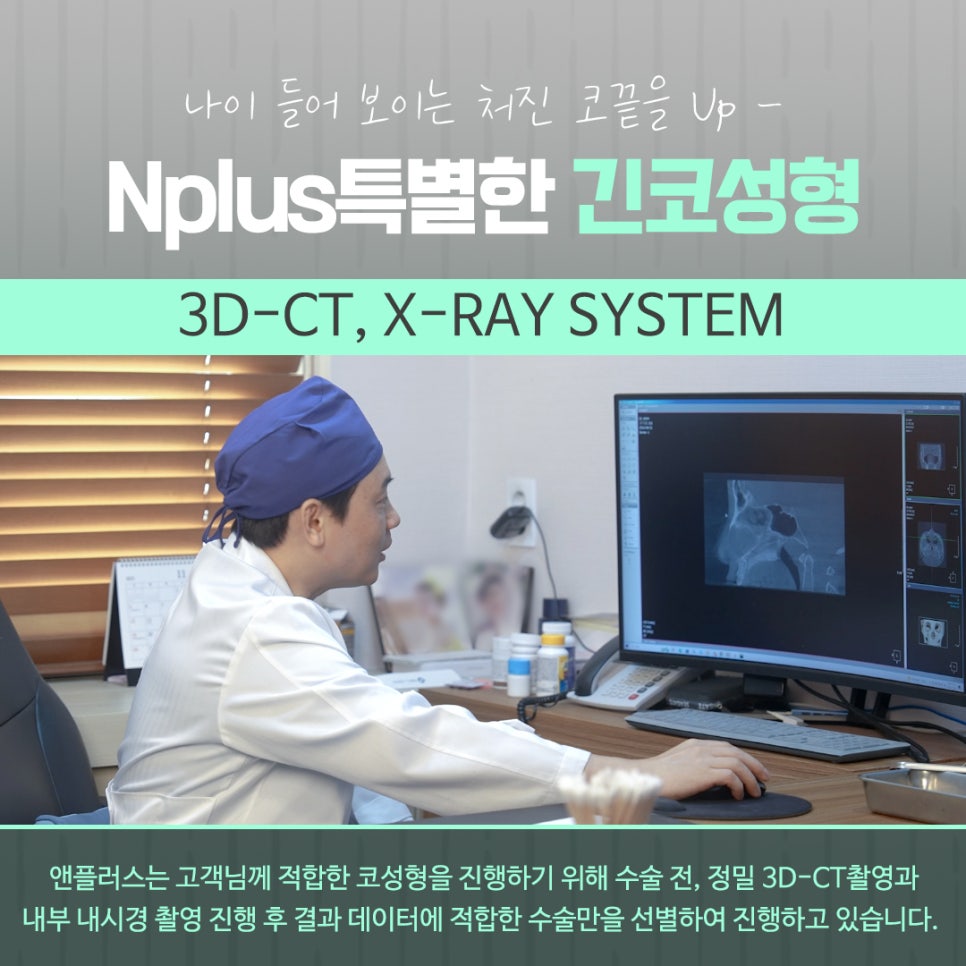
At A+ Clinic, to provide each patient with suitable long nose surgery, we perform 3D CT imaging, internal endoscopic imaging, various allergy tests, nasal function tests, and multi-angle photography before surgery. Based on the collected data, we accurately identify the current internal and external condition of the nose and the cause of its length, then establish and carry out a surgical plan.
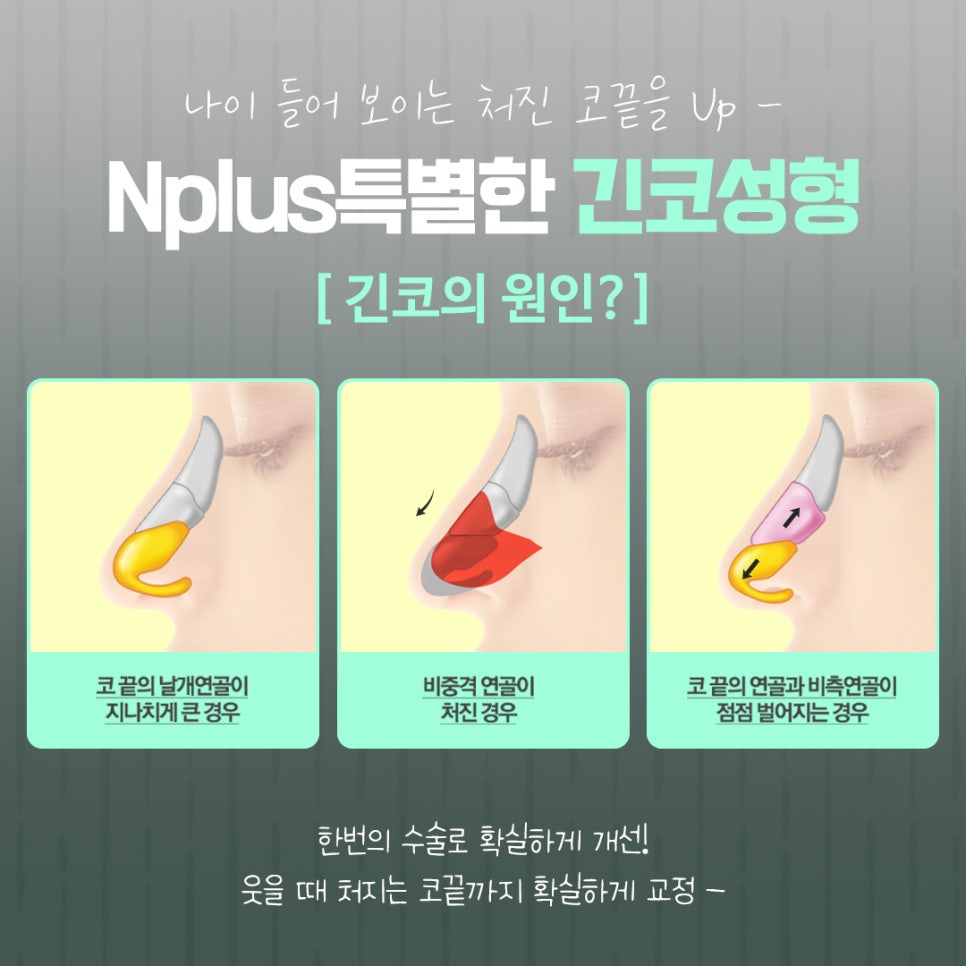
The surgical method for long nose surgery is applied according to the individual's internal nasal condition, and is divided into cases where the septal cartilage is overdeveloped, where the alar cartilage at the tip is overdeveloped, and where the nose tip droops severely when smiling.
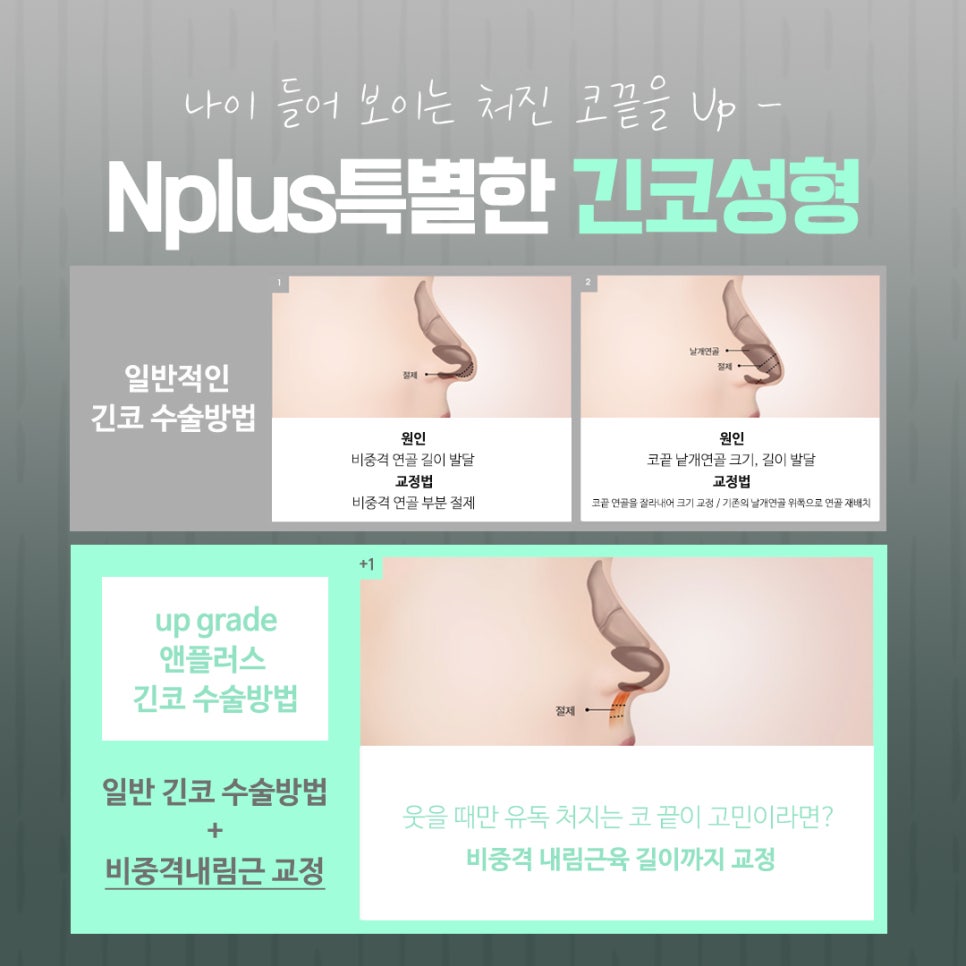
Also, in long nose surgery, the operation is generally performed to address overdevelopment of the septal cartilage length and enlargement of the alar cartilage at the tip. However, at A+ Clinic, to improve a nose that droops when smiling, we also correct the length of the depressor septi nasi muscle, allowing for a more definite long nose surgery result.
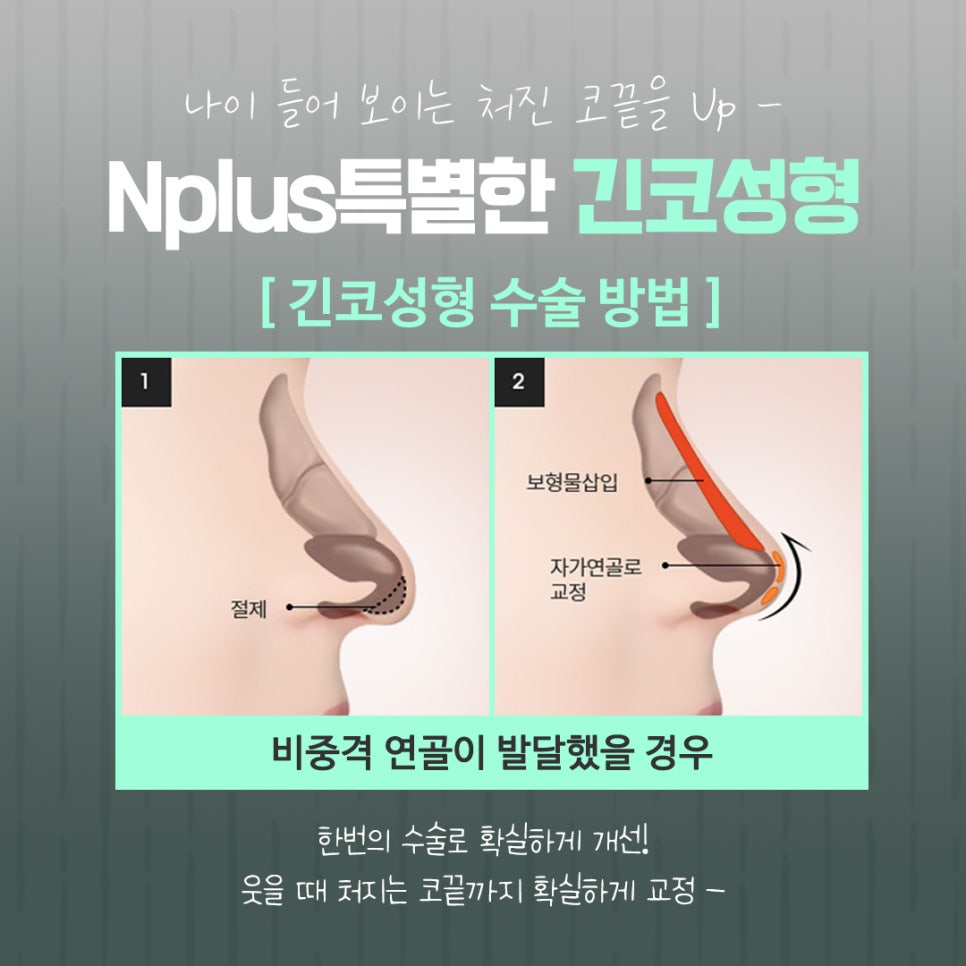
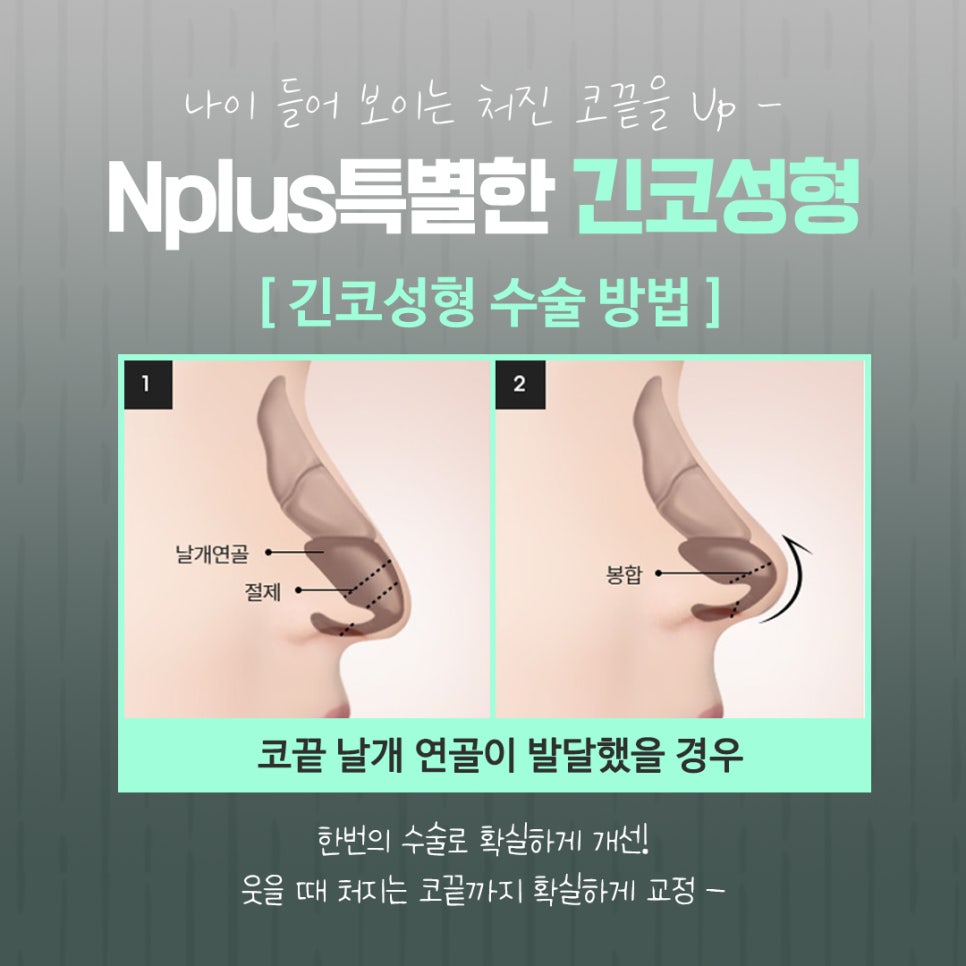
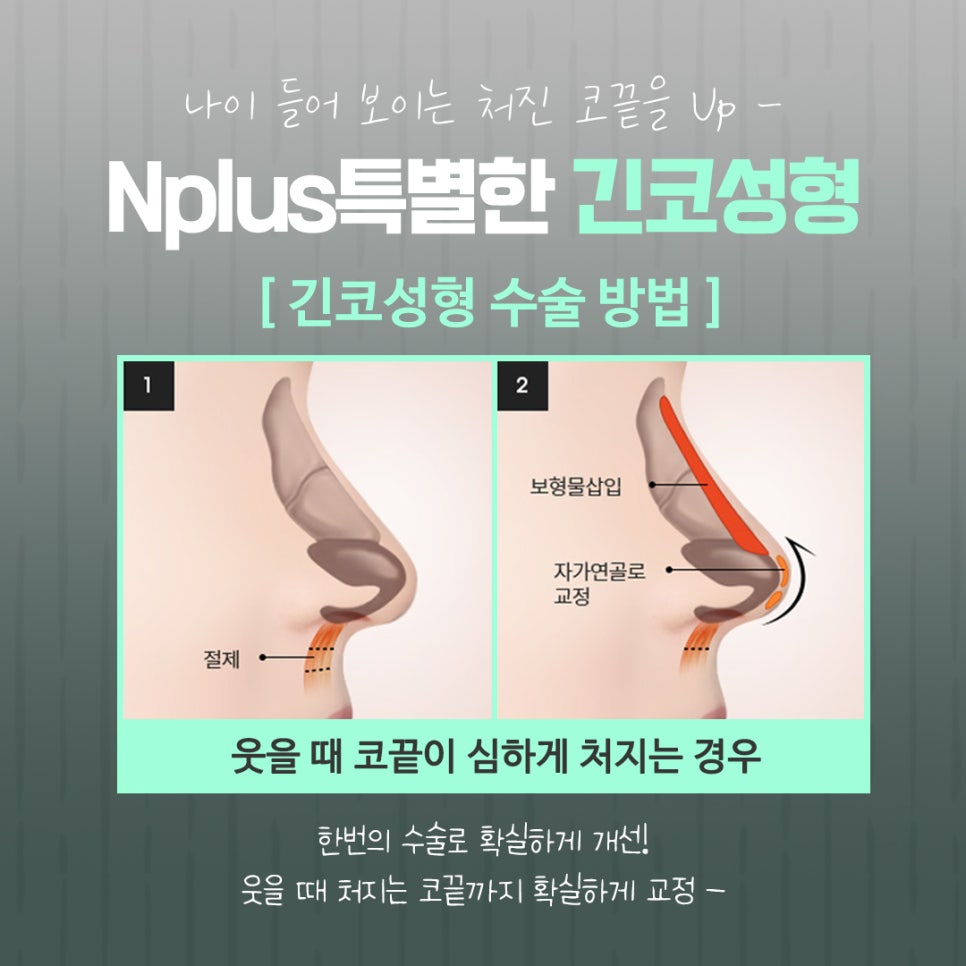
When the septal cartilage is overdeveloped, a portion near the end of the septal cartilage is removed to correct the length, and if correction of the bridge and tip height is also needed, implants and autologous cartilage are additionally grafted. When the alar cartilage at the tip is overdeveloped, the alar cartilage is removed and re-sutured to adjust the size of the cartilage, and when re-grafting the cartilage, the drooping angle is rotated upward before grafting. Lastly, when the nose tip droops severely when smiling, the muscle around the tip of the nose (the depressor septi nasi muscle) is shortened, the overall bridge line is corrected, and the tip can be refined with autologous cartilage to improve the overall line.
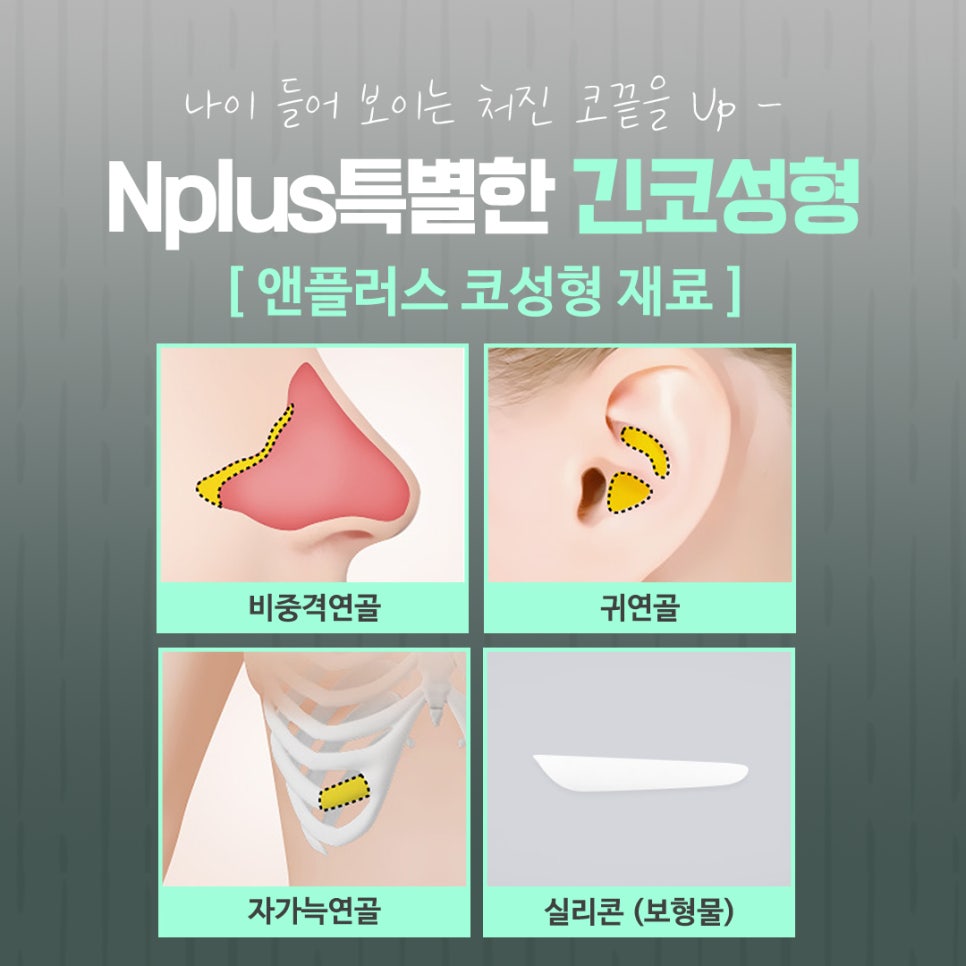
As with general nose surgery, long nose surgery can correct the bridge with silicone and the tip with autologous cartilage. First, for the autologous cartilage used in the tip, the appropriate material for each individual can be selected through preoperative testing. Autologous cartilage includes ear cartilage, septal cartilage, and autologous rib cartilage.
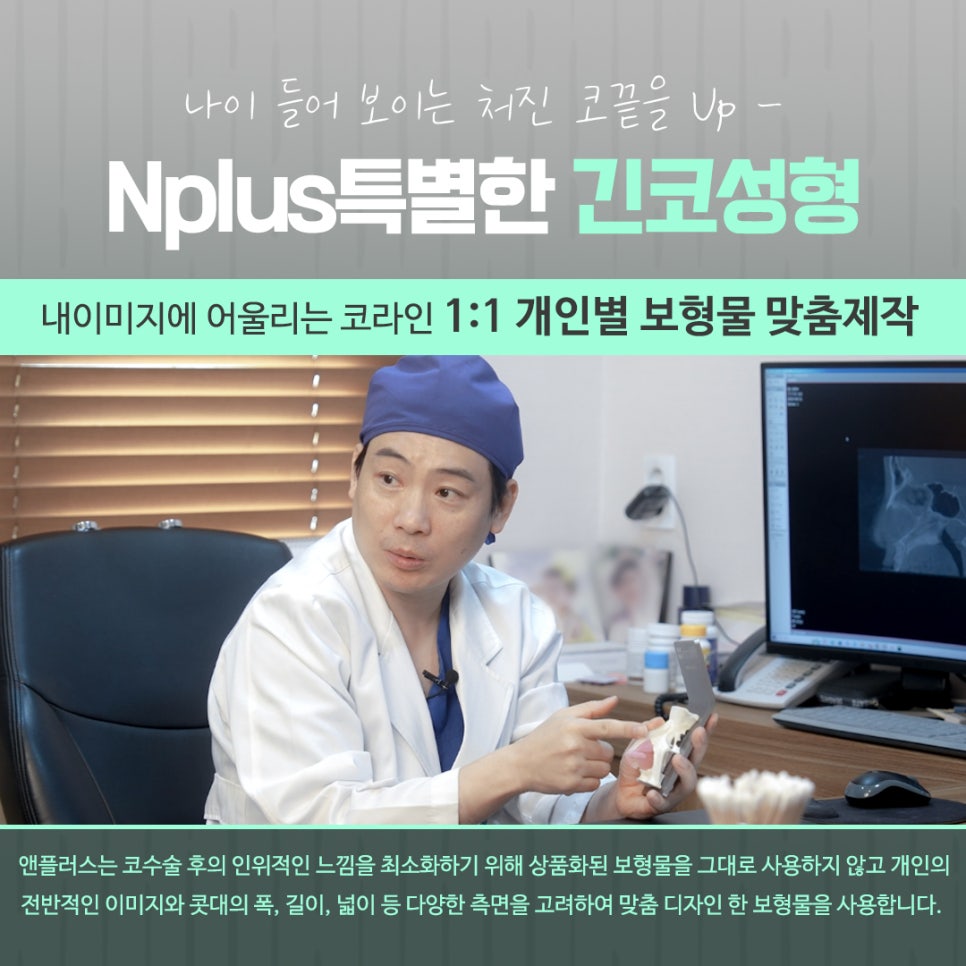
The silicone used for the bridge is not the same as commercially available silicone used as-is. To minimize an artificial appearance after surgery, it is carefully hand-shaped by considering various aspects such as the individual's overall facial image, as well as the bridge's width, length, breadth, and height. This can lead to higher satisfaction after surgery.
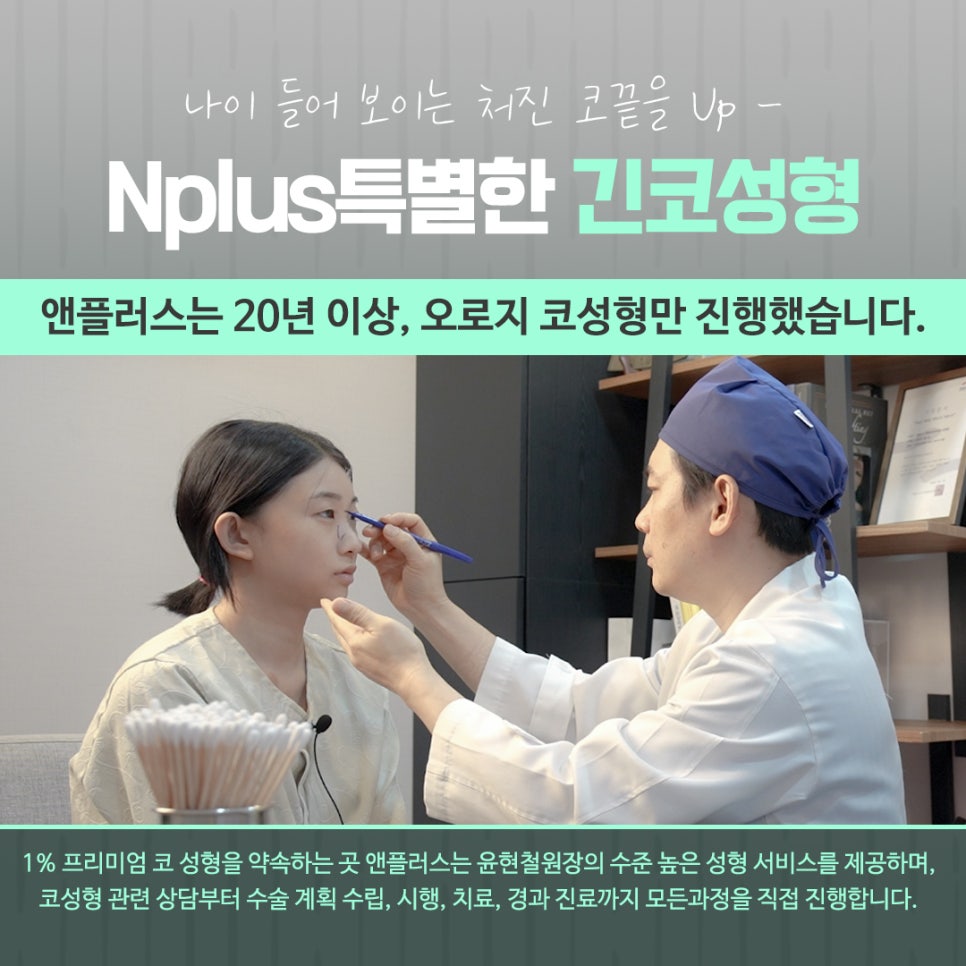
At A+ Clinic, Director Yoon Hyun-cheol, with over 20 years of experience, personally handles one-on-one care, directly overseeing every step from consultation on nose surgery, to surgical planning, performance, treatment, and follow-up visits, so you can receive high-level medical care from before surgery through aftercare.

Aftercare is also supported by a warranty system that guarantees one year after surgery, as well as a surgery responsibility guarantee system prepared for all possible situations such as postoperative pain, inflammation, or dissatisfaction with appearance, so you can also receive clear aftercare benefits after surgery.
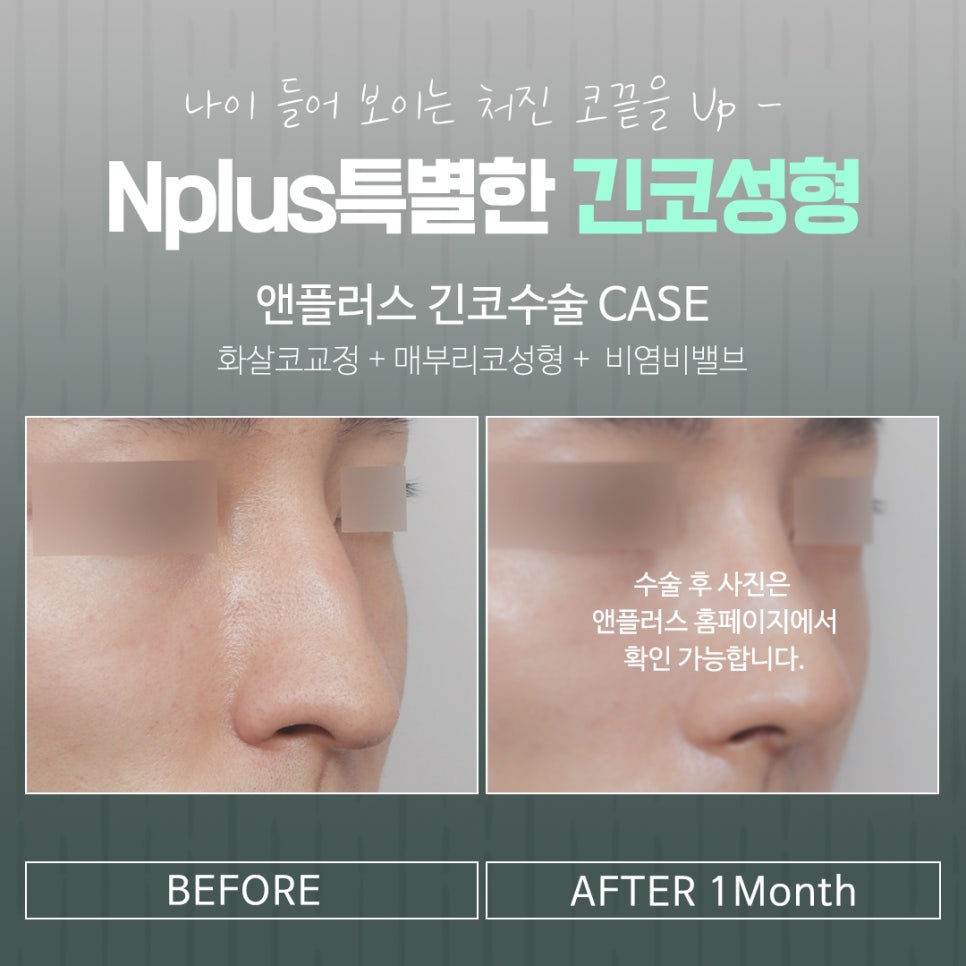
(The images above are before-and-after photos of long nose surgery actually performed at A+ Clinic.)
Today, we shared information about long nose surgery performed at A+ Clinic. We hope this article has been very helpful for those who are looking into long nose surgery because a nose that is too long or droops downward when smiling has become a concern. Thank you.
https://youtu.be/tEC4lAs7HTs