
This is N+Plus, where we focus only on your healthy and beautiful nose. The topic introduced this time is autologous rib rhinoplasty. In modern times, as many people have become more interested in their appearance, the number of people considering cosmetic surgery has been increasing. However, careless surgery can lead to various side effects, so careful judgment comes first. Among the many types of cosmetic surgery, the nose is located at the center of the face and is one of the most three-dimensional features. If the shape of the nose is not straight or well-balanced, it can be a top priority for improving the overall image of the face.

Therefore, for those looking into autologous rib rhinoplasty, the shape of the nose may be classified in various ways, such as a bridge or tip that is too low, a bumpy hump, an upturned nose, a crooked nose, or a boxy nose. Overall, it can be described as a nose with a smooth bridge and a tip that is not well-defined. For this reason, you may try to improve your appearance through autologous rib rhinoplasty, but

our nose plays an important external role, and it is also a functional organ responsible for breathing and smell throughout the body. For that reason, checking it more carefully can help in making a choice, and confirming the characteristics of the materials can make autologous rib rhinoplasty safer and more satisfying. The commonly used materials in rhinoplasty are silicone for the bridge and autologous cartilage for the tip. In general, septal cartilage and ear cartilage are used for first surgeries, while autologous rib rhinoplasty is said to be used for revision surgery. However, due to its larger size and firmness, cases where autologous rib rhinoplasty is performed even for primary surgery are increasing today.
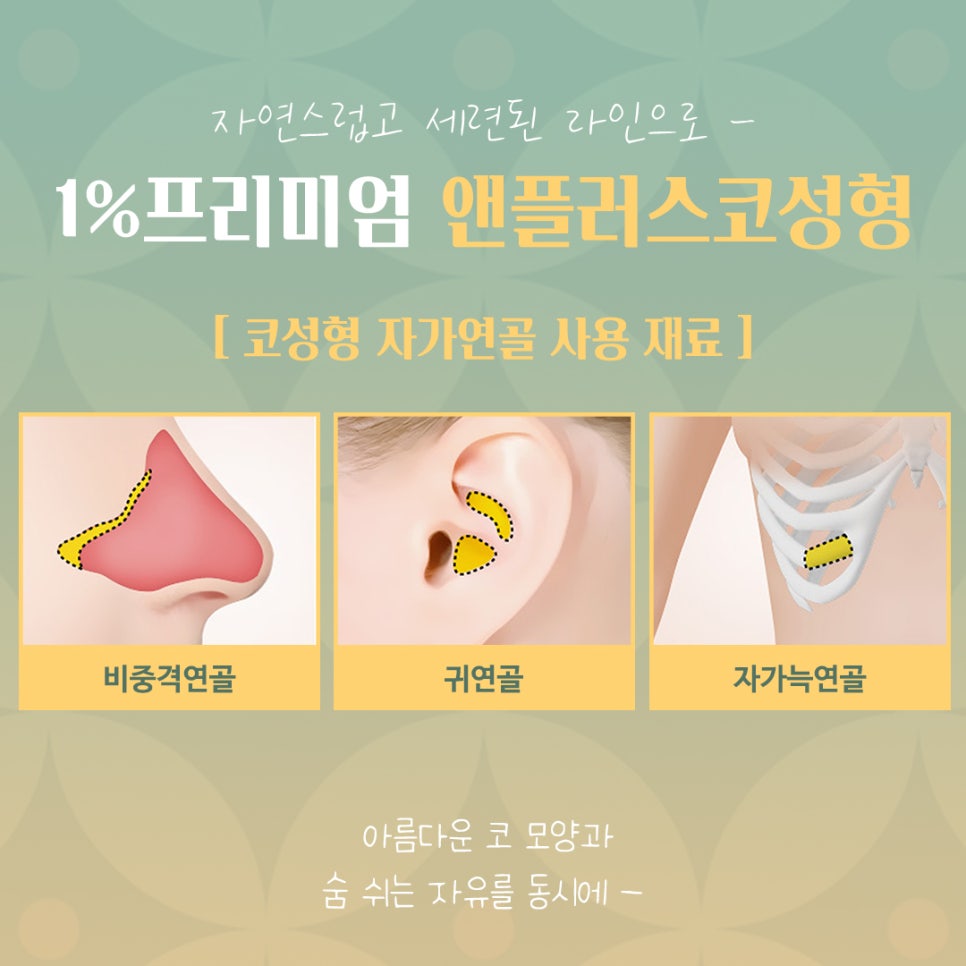
First, septal cartilage refers to the cartilage that acts as a partition dividing the nostrils in half. Septal cartilage is firmer than ear cartilage, so it can be used, but depending on the condition inside the nose, there are cases where it cannot be used. Ear cartilage is located on the outer side of the ear, is soft, and is easy to harvest, so it is a commonly used material. However, the amount is limited, and its softness can be both an advantage and a disadvantage. In the case of autologous rib cartilage, it is located in the ribs, so harvesting is difficult, but because it is large and firm, it can help correct the nose tip well so that it does not collapse again or turn upward. For this reason, many people have recently been looking into autologous rib rhinoplasty for a permanent result with a single surgery.
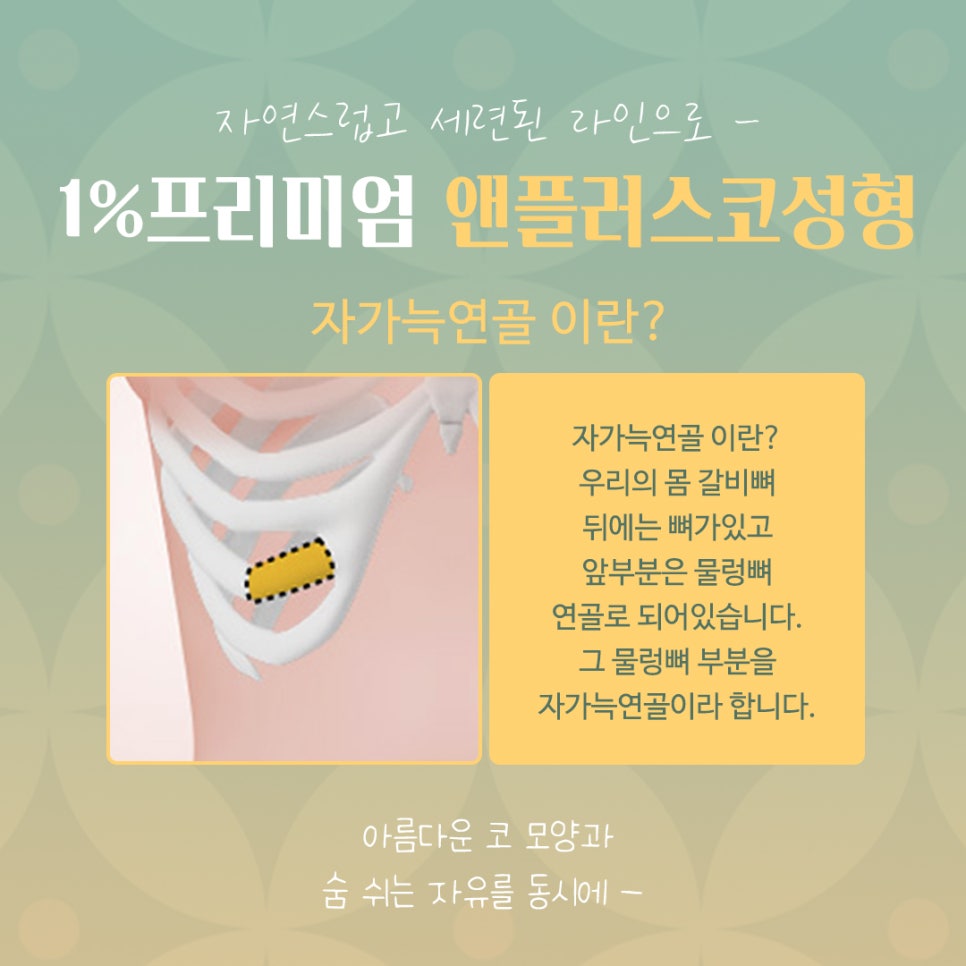
To explain autologous rib rhinoplasty in a bit more detail, the body has ribs, and behind these ribs is a hard bone structure, while the front part is made of soft cartilage. This soft cartilage is called autologous rib cartilage.
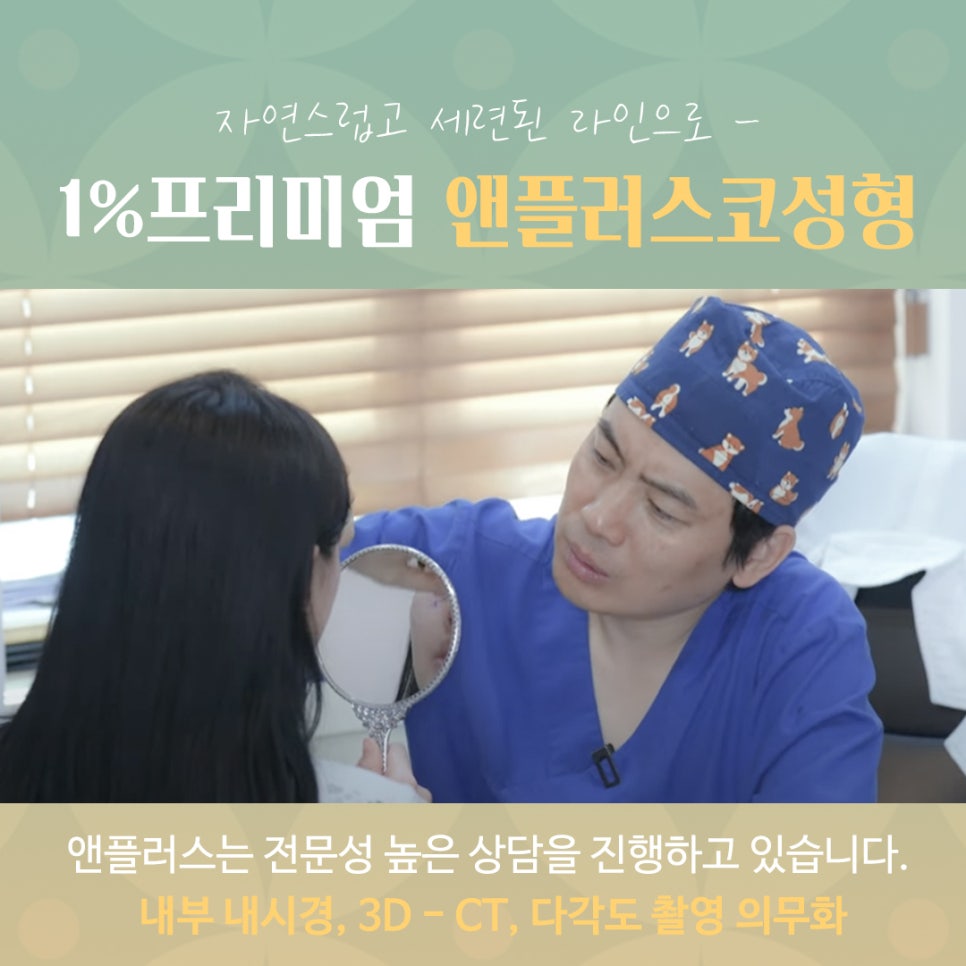
To ensure safe and satisfying autologous rib rhinoplasty, N+Plus performs 3D-CT scans, internal endoscopic imaging, various allergy tests, internal nasal function tests, and multi-angle photography to accurately assess each individual’s external and internal nasal condition. Based on the collected data, a surgical plan is established and carried out. The methods of autologous rib rhinoplasty can be classified according to cases such as a low bridge only, both a low bridge and low tip, or a low tip only.

Previous image
Next image
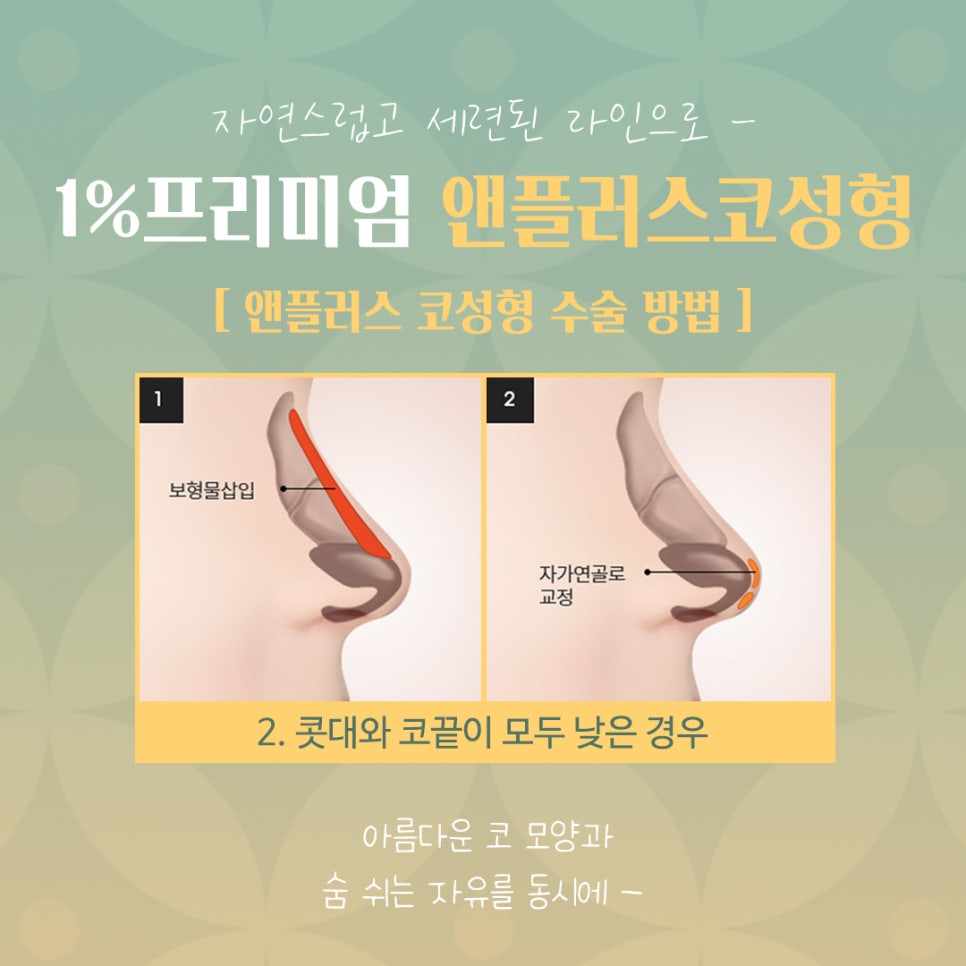
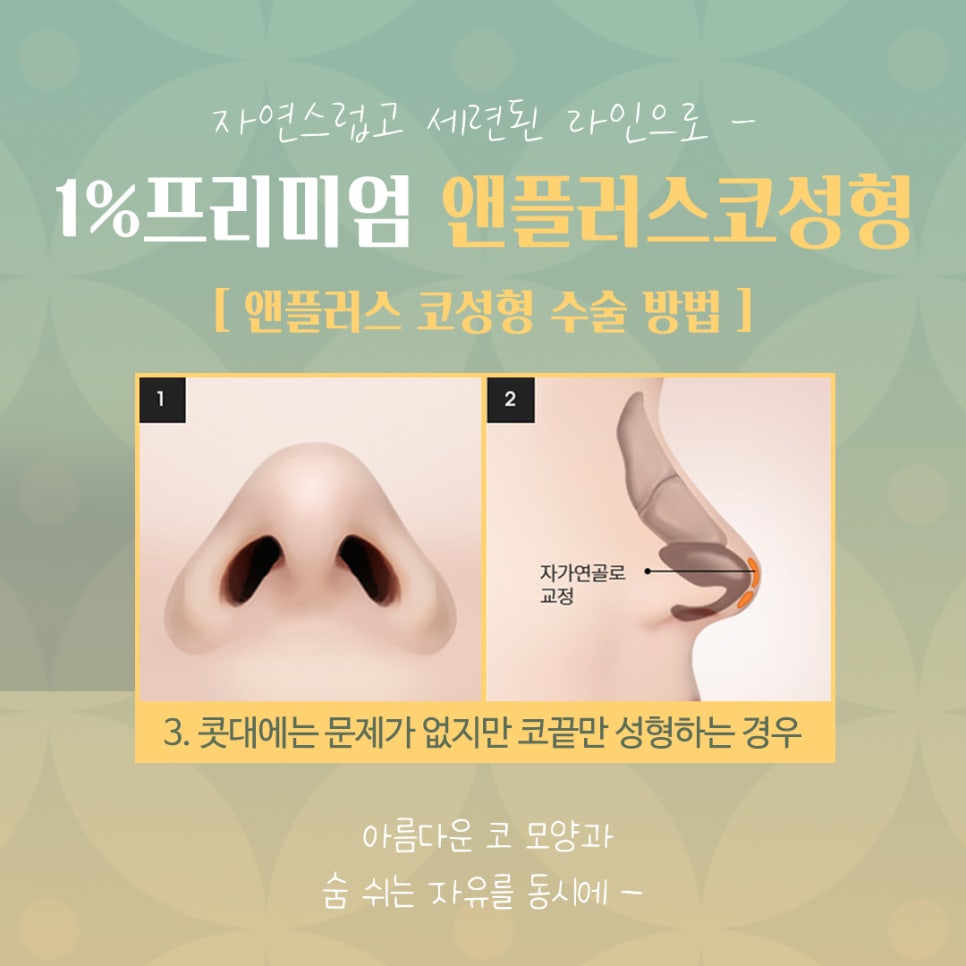
First, if only the bridge is low, it can be corrected using autologous rib cartilage or silicone for the bridge, and it is important to design it so there is no disconnected feeling from the tip. If both the bridge and the tip are low, the bridge can be corrected with silicone or autologous rib cartilage, and the overall nasal line can be corrected with autologous rib cartilage at the tip. If there is no problem with the bridge but only the tip needs correction, autologous rib cartilage is used to refine the tip line, and it is important to design it so that there is no disconnected feeling from the bridge.

In addition, silicone is sometimes used for the bridge. In such cases, the silicone used is not a pre-made commercial product used as is; rather, it is carefully tailored by hand after taking into account the individual’s overall image as well as the bridge’s width, length, breadth, and height.

For those who undergo autologous rib rhinoplasty, improving the external appearance is important, but when harvesting autologous rib cartilage, the skill of an experienced medical team is required. The surgery must also consider both the external and internal functional aspects of the nose in order to achieve a satisfying result. In addition, it is helpful to carefully check whether the medical team has a high level of anatomical knowledge of the nose, whether they have extensive experience and expertise in this area, whether there are devices available that can accurately assess the condition of your nose, and whether aftercare can be clearly guaranteed.

At N+Plus, Director Yoon Hyun-cheol, who has over 20 years of experience, personally handles everything one-on-one, from rhinoplasty consultations and surgical planning to the procedure, treatment, and follow-up care. This allows you to receive high-level medical service from before surgery through after surgery.
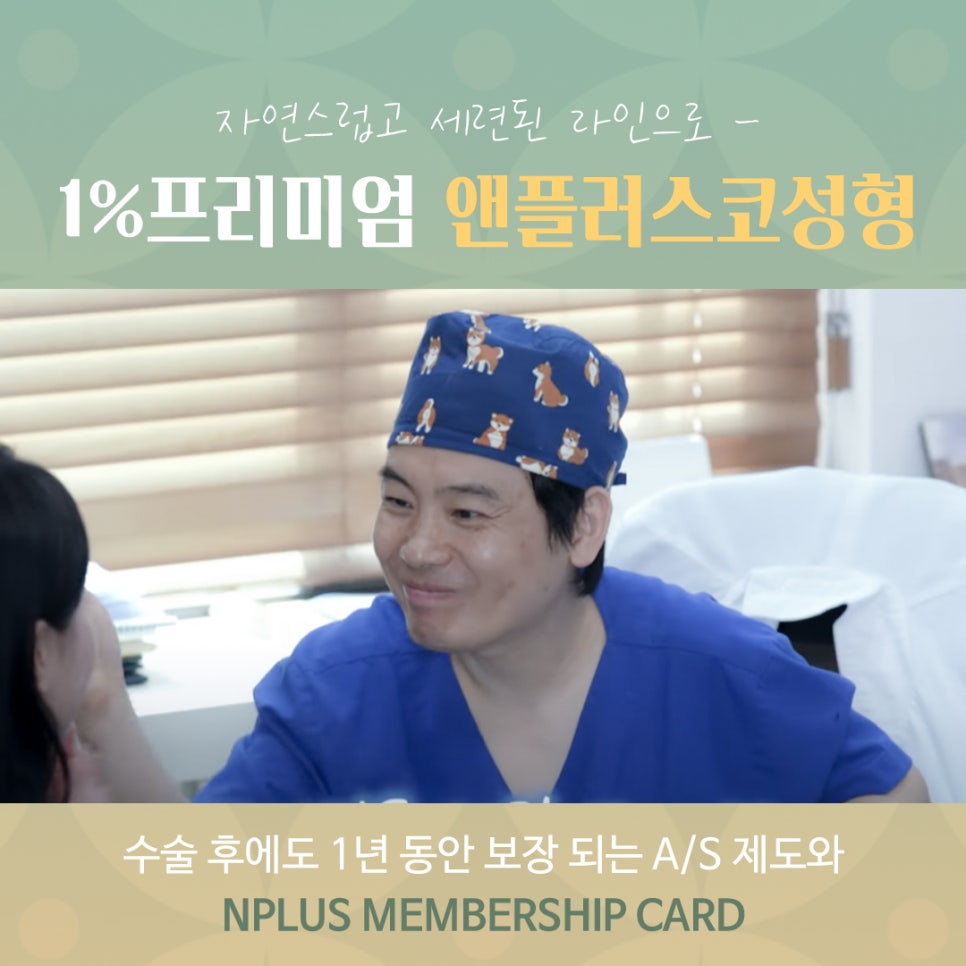
The aftercare provided after surgery also includes an A/S system that guarantees support for one year after the operation, as well as a surgery responsibility guarantee system prepared for all possible post-surgery situations, such as pain, inflammation, or dissatisfaction with the result. This means you can receive reliable aftercare benefits after surgery.
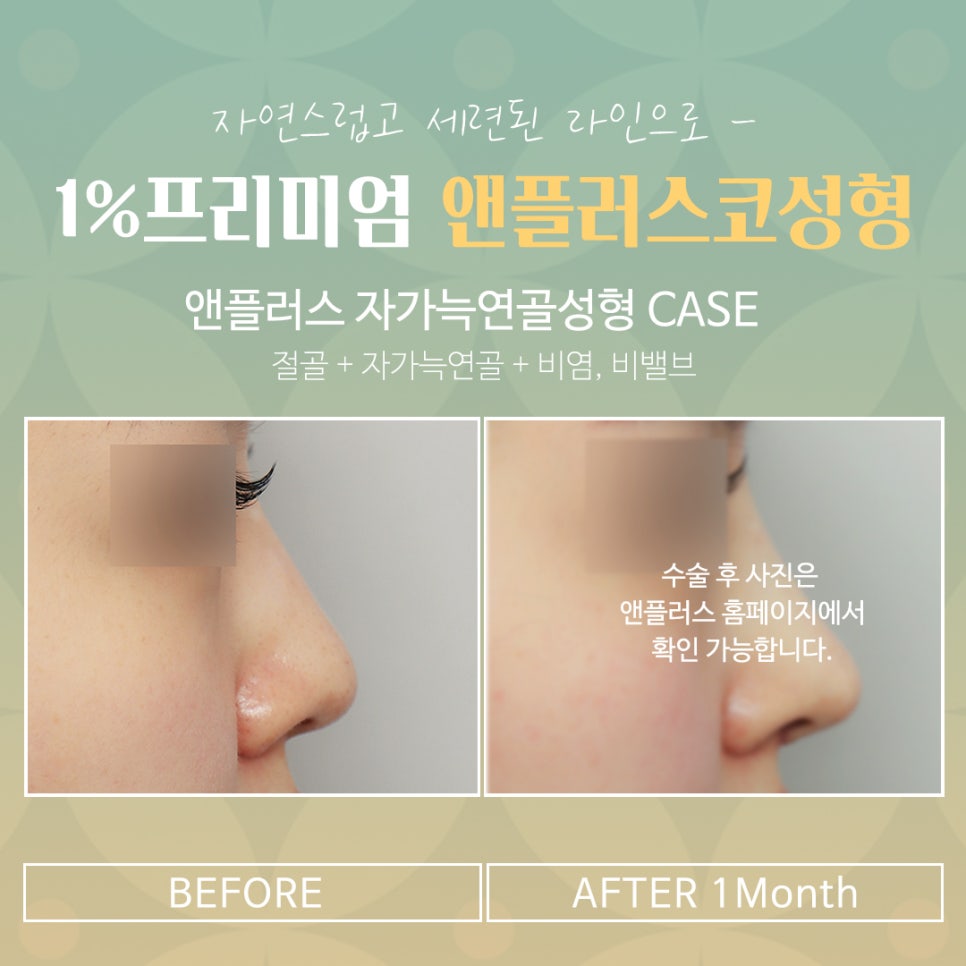
Today, we explained the details related to autologous rib rhinoplasty performed at N+Plus. We hope this has been helpful for those who are looking into autologous rib rhinoplasty because they are unhappy with the current shape of their nose. Thank you.