
Today, we have prepared information related to short nose rhinoplasty performed at N Plus Clinic. In modern times, many people make various efforts to improve their appearance into a more favorable image for a variety of reasons, and many also consider plastic surgery to address areas that are difficult to improve. However, indiscriminate cosmetic surgery can lead to various side effects, so a more cautious approach is needed. Since cosmetic procedures also allow you to choose priorities, the nose can be considered one of the first procedures to consider because it is located at the center of the face and is the most three-dimensional feature, playing a role in balancing the face.

In this way, our nose plays a major role in our image because its shape affects facial balance, and it is also an internal functional organ responsible for breathing and smell throughout the body. Therefore, rhinoplasty should be performed only after checking both the external and internal functional aspects, so as to prevent the need for revision surgery due to functional problems after the operation. If you are looking into short nose rhinoplasty, rather than judging only by the appearance in before-and-after photos, choosing a place that can also check the internal functional aspects will help you achieve the most satisfying short nose rhinoplasty.

Therefore, people generally looking into rhinoplasty try to improve the shape of the nose because the bridge or tip is too low, there is a hump, the nose is upturned, crooked, drooping, or has a bulbous shape. In particular, if the nose is very low or short, the overall facial impression may appear dull or old-fashioned, and because of this image-related complex, you may look into short nose rhinoplasty in more detail.
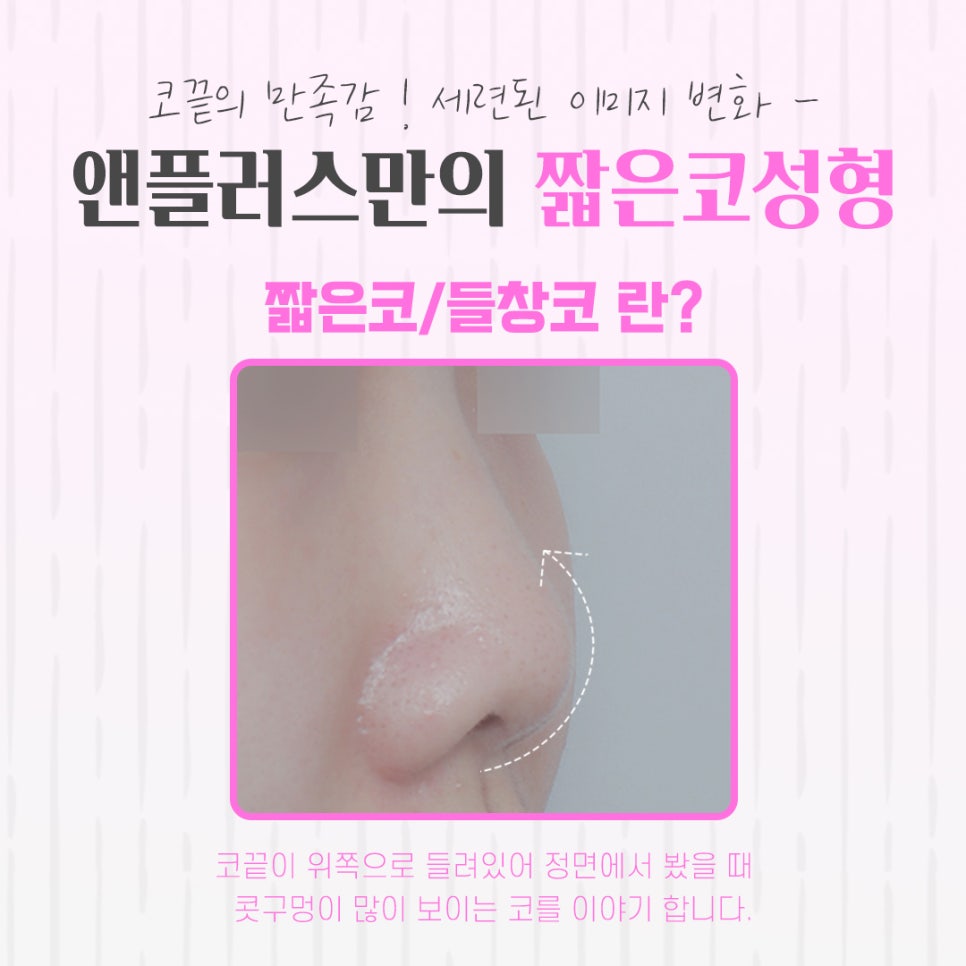
What is short nose rhinoplasty? A short nose refers to a nose whose tip is turned upward, so that the nostrils are highly visible when viewed from the front. The causes of a short nose can be divided into congenital cases and acquired cases that appear as contracture after rhinoplasty. Short nose rhinoplasty refers to surgery that improves a short-looking nose into a more refined line by extending or lowering the upturned tip with a columellar strut or tip extension. In short nose rhinoplasty, it is important to firmly fix the tip so that it does not turn up again.
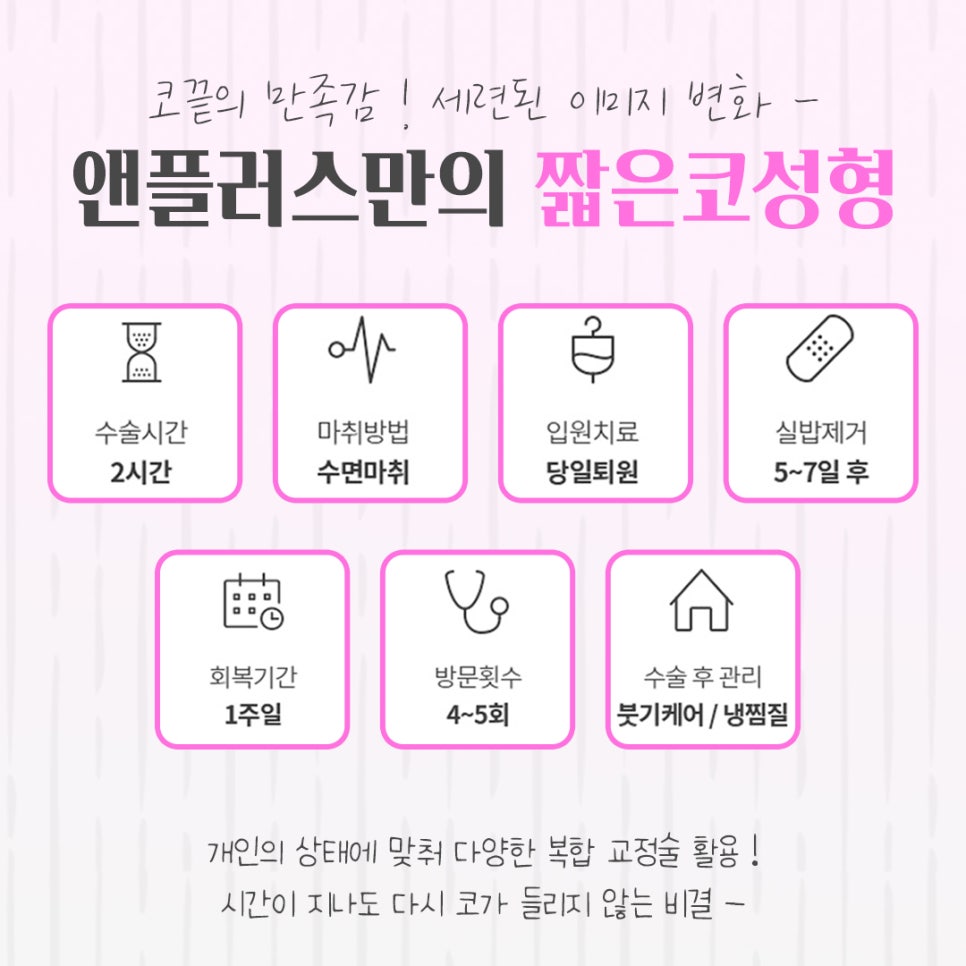
For this reason, people looking into short nose rhinoplasty generally have major concerns about the tip of the nose. When considering short nose rhinoplasty, it is helpful not to choose a clinic based only on before-and-after photos, but also to check whether the medical staff have strong anatomical knowledge of the nose, whether they have extensive related experience, whether the clinic is equipped with devices that can accurately assess the condition of your nose, and whether aftercare is reliably guaranteed.

At N Plus Clinic, to ensure safe and satisfying short nose rhinoplasty, we perform multi-angle photography, internal endoscopic imaging, 3D CT scans, various allergy tests, and nasal internal function tests before surgery. Based on the extracted data after accurately identifying the external and internal condition of each patient’s nose, we establish and carry out a surgical plan.

Short nose rhinoplasty can be performed using multiple combined surgical methods depending on the individual’s condition. The key point is preventing the tip from turning up again. We perform septal extension, columellar strut, skin extension, and cartilage grafting, applying appropriate methods and materials according to the patient’s condition. The surgical approach is divided according to whether tip upturning is mild or severe.
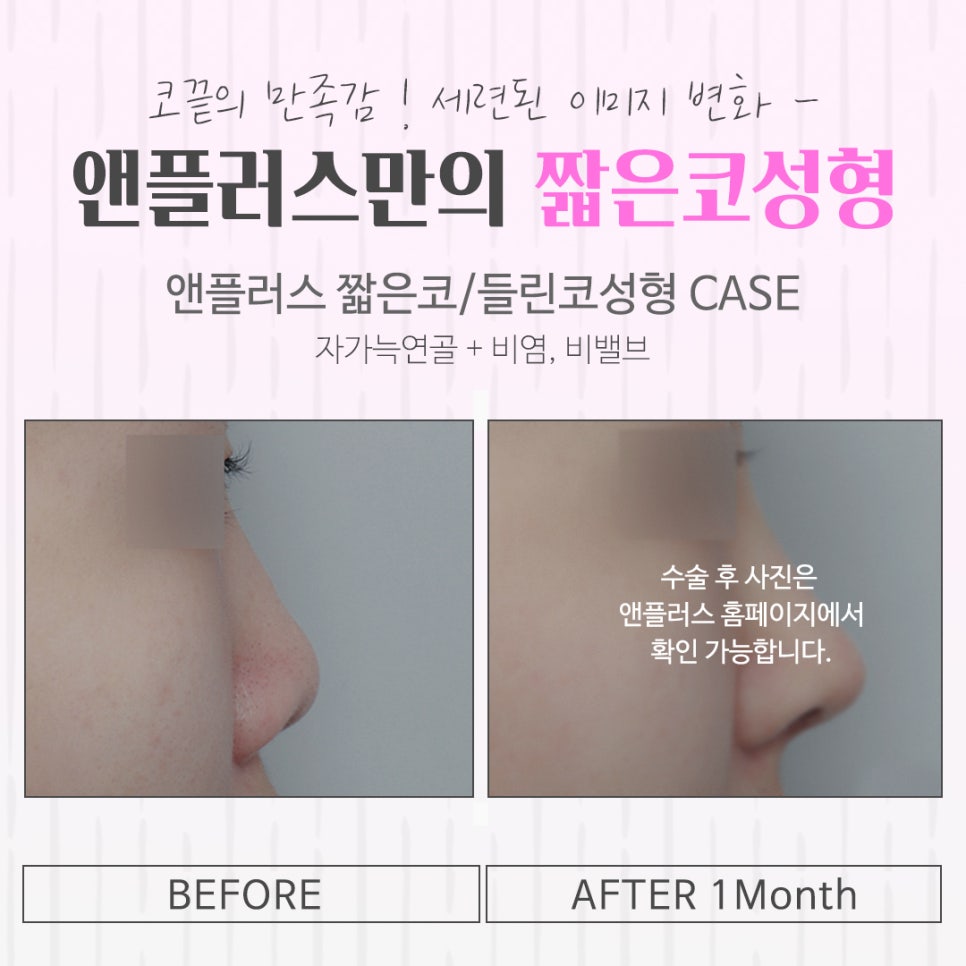
(The image above shows before-and-after photos of short nose rhinoplasty performed at N Plus Clinic.)
If the tip upturning is mild, strong autologous cartilage can be used to create a columellar strut, fix the tip, and add volume to improve the overall nasal line. If the tip upturning is severe, septal extension can be performed, and the tip can be firmly fixed so that it does not turn up again.
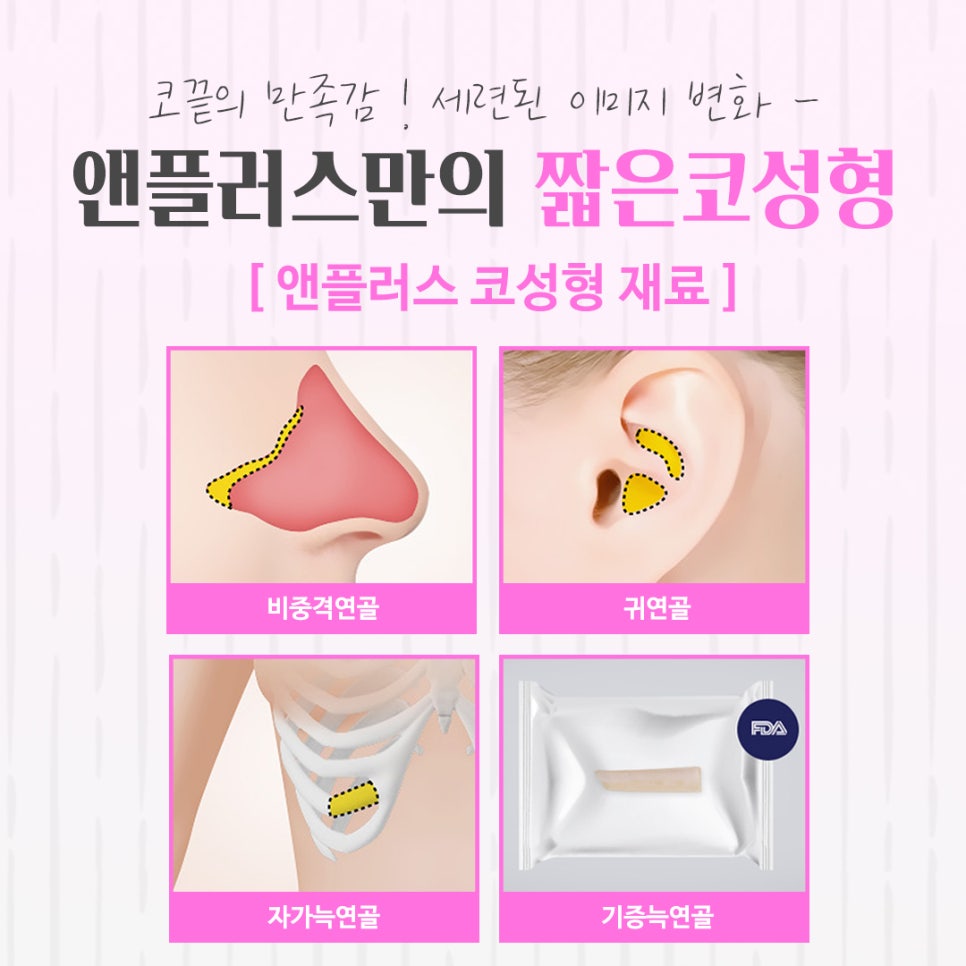
In short nose rhinoplasty, the bridge is corrected with silicone and the tip with autologous cartilage to improve the overall line. For autologous cartilage, suitable materials can be selected for each individual through preoperative testing. Types of autologous cartilage include septal cartilage, ear cartilage, and autologous rib cartilage. If autologous cartilage is difficult to use, FDA-approved donated rib cartilage can be used instead.

When performing short nose rhinoplasty, silicone may be used for the bridge. In this case, the silicone used is not simply a commercially available product as is; it can be carefully shaped by hand after considering the individual’s overall appearance and the bridge’s width, length, breadth, and height, which can lead to a more satisfying short nose rhinoplasty.
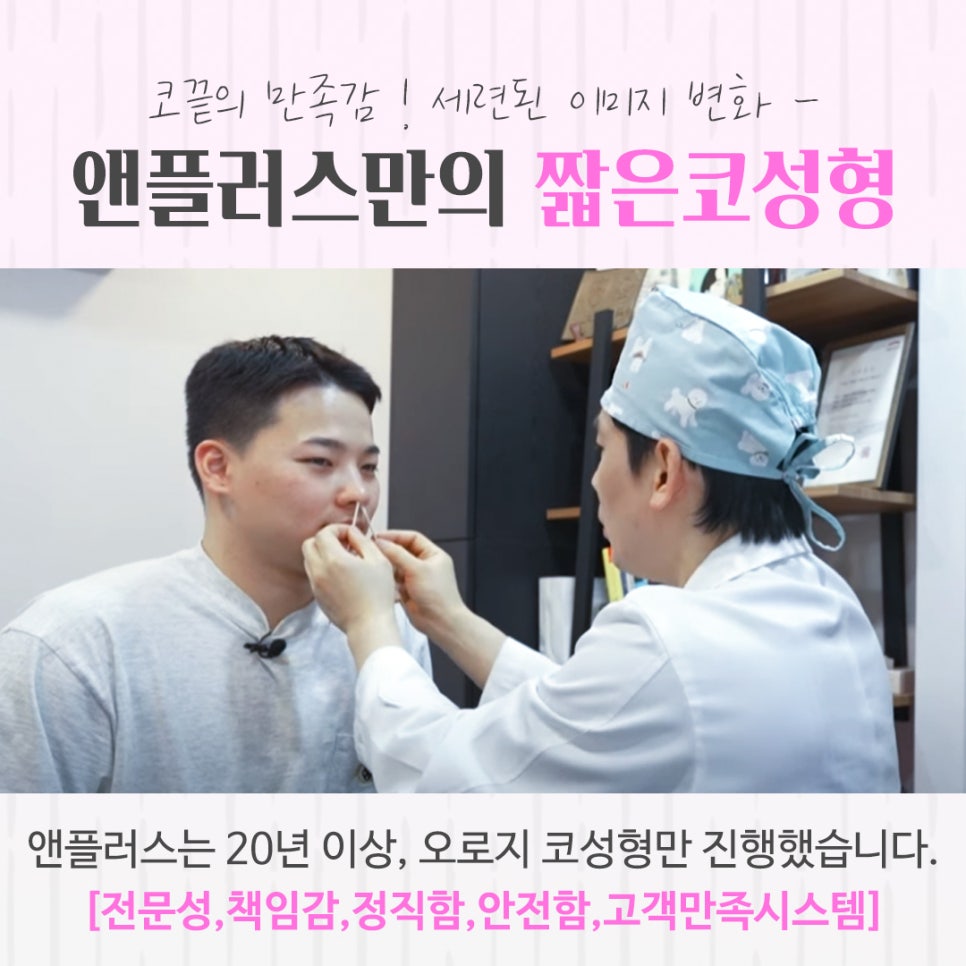
At N Plus, Director Yoon Hyun-cheol, who has over 20 years of experience, personally handles one-on-one consultations, surgical planning, the procedure itself, treatment, and follow-up visits for short nose rhinoplasty, allowing patients to receive high-level medical care from before surgery through aftercare.

The aftercare applied to short nose rhinoplasty includes a free A/S system guaranteed for one year after surgery and a surgical responsibility guarantee system prepared for any situation that may arise after surgery, such as pain, inflammation, or dissatisfaction with the shape. This allows patients to receive clear post-surgery aftercare benefits as well.

Today, we explained information related to short nose rhinoplasty performed at N Plus Clinic. We hope this article is very helpful for those who are currently looking into short nose rhinoplasty because their nose tip is short or because of contracture. Thank you.