This post has been written solely for informational purposes.
We would like to clarify that it is not intended to promote this clinic.
Results may vary depending on each individual’s skin condition,
so we recommend undergoing a thorough consultation with a medical professional.
Botox is a substance used for various purposes not only in cosmetic dermatology but also in the medical field.
Those who have searched for Hapjeong Botox likely have different goals in mind.
“Maybe my wrinkles have become more noticeable because my skin has been dry lately. How can I improve and prevent them?”
“By nature, my hands or underarms sweat excessively. Is there any way to improve this hyperhidrosis?”
Botox is a treatment that can be applied to a variety of skin concerns like these.
Based on data accumulated over nine years of performing cosmetic dermatology treatments in Hapjeong, I will explain the aspects of Botox that many people may be curious about.
I will also discuss precautions that not only those considering Hapjeong Botox but also those who have already received Botox should be sure to know.
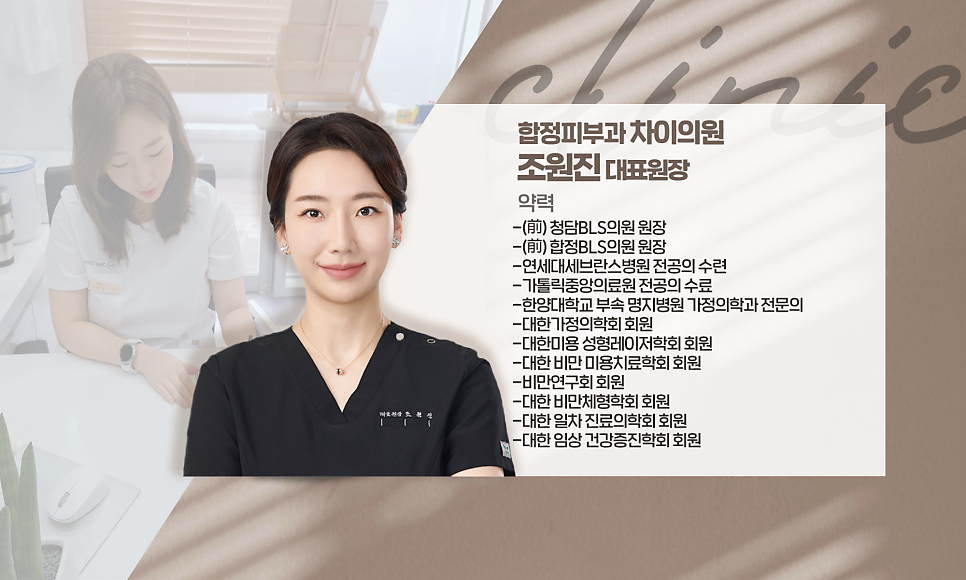
Hello, I am Cho Won-jin, director of 차이의원.
First, I will briefly explain how Botox treatment works.
The treatment called “Botox” blocks acetylcholine, a substance that transmits signals between nerves, at the nerve endings after it enters the body. In other words, it interrupts communication between nerves.
The salivary glands and sweat glands are representative organs where acetylcholine is distributed.
The principle is to block the activity of these glandular tissues, thereby reducing excessive saliva or sweat production.
And what people who have searched for Hapjeong Botox are probably most curious about is
“how Botox is used in cosmetic dermatology.”
The same principle applies in cosmetic dermatology. Botox reduces muscle movement. When muscle activity decreases, the muscle becomes smaller accordingly.
A reduction in muscle activity also means improving wrinkles caused by active muscle movement
and simultaneously preventing wrinkles from forming in the first place.
That is why Botox has a wide range of applications in cosmetic dermatology and is one of the treatments sought by many people.
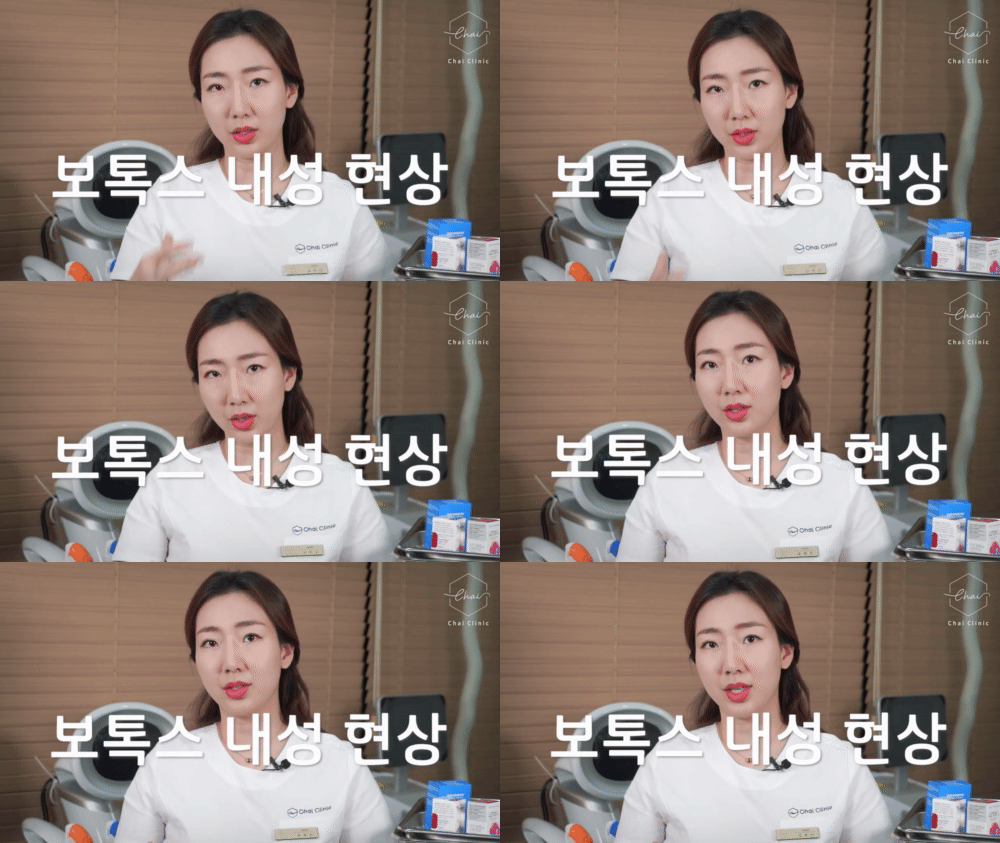
Then, after hearing about various skin concerns over the past nine years, what aspects of Botox do many people worry about?
There are two main things that people searching for Hapjeong Botox for the first time should know.
They are “resistance” and “side effects.”
“I had Botox, but I’m less satisfied than before. Have I developed resistance?”
“ I had the treatment two weeks ago. Should I increase the amount of Botox?”
Yes, Botox is a treatment sought by many people because of its wide range of applications. As a result, many people have these concerns.
However, Botox should never be administered in that manner.
I will explain four rules that must be followed when receiving Botox.
First, an appropriate treatment interval must be observed.
In the case of Botox, I do not recommend receiving another treatment within three months. If you receive another treatment within a short period because you are less satisfied with the results, the likelihood that the body will recognize the Botox component as an antigen increases. This can lead to stronger resistance to Botox.
Second, booster shots should be avoided.
I have seen many people ask for additional small treatments two to three weeks after receiving Botox because they were not as satisfied as they had hoped.
Of course, receiving an additional booster shot two to three weeks after your first Botox treatment may be acceptable. However, if you continue to receive booster shots afterward, this may increase the rate of resistance. In the long term, this is not a desirable approach to treatment.
Third, you should not receive a large amount in a single treatment.
The amount typically used for cosmetic dermatology is around 300 to 400 U. However, receiving more than this amount in a single treatment significantly increases the likelihood of developing resistance.
Fourth, selecting a Botox product is important.
There is a wide variety of Botox products, from imported to domestic products.
It is difficult to say unconditionally that imported products are better or that domestic products are better. This is because there are many high-quality domestic products as well.
If you are concerned about resistance, it would be better to choose based not on whether the product is imported or domestic, but on whether it has a lower rate of resistance.

The next aspect many people worry about is, of course, “side effects.” As with all treatments, Botox can also cause side effects.
However, the important point is that it does not cause life-threatening side effects. In many cases, things return to normal over time.
For example, jaw Botox blocks muscle movement, so you may experience discomfort when chewing food.
Drooping at the corners of the mouth may also occur.
With Botox around the mouth, the muscles around the mouth are used frequently, so you may feel discomfort when speaking, smiling, or eating.
With forehead Botox, headaches may occur because blocking movement of the forehead muscles causes the surrounding muscles to be used instead.
As the muscles become smaller, you may naturally begin to use the temporalis muscles more. Frequent use of the temporalis muscles can cause them to develop, alter the shape of the head, and lead to fatigue.
As mentioned earlier, these side effects are not life-threatening, but naturally, it is better to reduce them as much as possible.
To reduce side effects, it is important to receive an appropriate amount of treatment while maintaining the recommended intervals, as mentioned above.
Yes, today we explored Botox, often regarded as a representative treatment in cosmetic dermatology.
Those who have just started searching for Hapjeong Botox may also wonder:
“Once you start receiving Botox, do you have to keep getting it? If I stop after receiving it, won’t my skin sag more and become worse?”
As a doctor who has consistently performed Botox treatments for nine years, I can tell you that
Botox is a “preventive treatment.”
A well-known example involves identical twins, one of whom received Botox treatment while the other did not.
There are also cases in which, when they were examined more than a decade later, the twin who had consistently received Botox care had significantly better skin condition.
Therefore, Botox should be viewed not as a treatment that makes you dramatically more beautiful, but as a treatment for managing wrinkles and preventing them from forming in the first place.
I hope today’s explanation has helped resolve any preconceptions or concerns you may have about Botox.
This has been 차이의원, customizing your natural beauty.
Thank you.
[Website]
[KakaoTalk]


Click the image to connect by phone.
Click the image to connect to Instagram.

Click the image to connect to YouTube.