
"I'm bothered by the location of this mole. Should I have it removed? Mole removal is fine anywhere, right?"
"Mole removal doesn't seem like a complicated procedure, so should I start by looking at the lowest prices?"
Yes, many people looking into mole removal procedures in Hongdae are likely experiencing stress, whether consciously or unconsciously, because they are unhappy with the location of a mole.

Of course, a mole can become a beauty mark depending on its location, while in other locations it can detract from one's natural appearance. Moles do not affect any particular skin condition or skin health, but depending on their location or size, they can reduce aesthetic satisfaction.
For those people, I will explain the precautions to keep in mind when having a mole removed and why you should not receive the procedure just anywhere.

Hello, I am Won-jin Cho, director of Chai Clinic.
Over the past nine years of performing cosmetic dermatology procedures, I have carried out many procedures related to moles. In most cases, moles are not seriously harmful to skin health. However, I have found that many people experience considerable stress when they dislike a mole's location or notice that it is gradually getting larger.
Therefore, for those looking into mole removal in Hongdae, I will briefly explain why moles develop and what methods can be used to remove them.
First, moles are classified according to their location within the layers of the skin as junctional nevi, compound nevi, or intradermal nevi. Of course, if you are looking into mole removal in Hongdae, it is probably enough to simply know that a mole is a "mass of black melanocytes."
The cause of moles has not yet been clearly established, but they are known to occur frequently on areas exposed to ultraviolet rays. Genetic factors and hormones are also believed to have an influence.

So, what are the methods and principles behind removing a mole?
Mole removal generally uses a laser to lightly remove the mass of melanocytes mentioned above.
Because there are various devices used for mole removal, the mole to be removed must be analyzed in detail before the procedure is performed.
Procedures can broadly be divided into ablative and non-ablative treatments.
The ablative laser devices I will explain first include the erbium:YAG laser called Action and the Mosaic eCO2, which is a CO2 laser.
As mentioned above, laser mole removal works by removing the mass of melanocytes. During the laser removal of mole cells, some surrounding healthy skin may inevitably sustain thermal damage.
The erbium:YAG laser is a solid-state laser with a wavelength of 2,940 nm. It is absorbed by epidermal tissue, allowing precise mole removal. It can reduce thermal damage to the surrounding healthy skin and delicately eliminate the mole tissue.
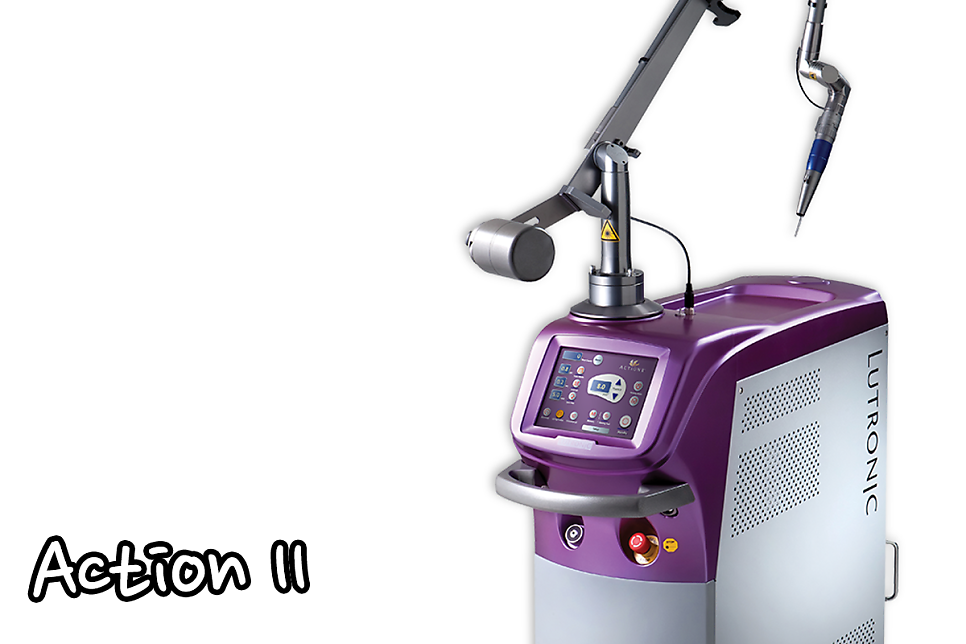
This device can remove only as much tissue as necessary to reach the depth of the cells that need to be eliminated, allowing for a more precise and delicate procedure.
CO2 laser devices, including the Mosaic eCO2, have been widely used for mole removal for many years. They work by inducing controlled thermal damage in skin tissue with an infrared laser at a wavelength of 10,700 nm.
The Mosaic eCO2 is useful for selectively removing only the problematic tissue while preserving healthy skin tissue, and it has the advantage of being applicable to deeper layers of the skin.
The next device I will explain is the non-ablative ClaritY laser.
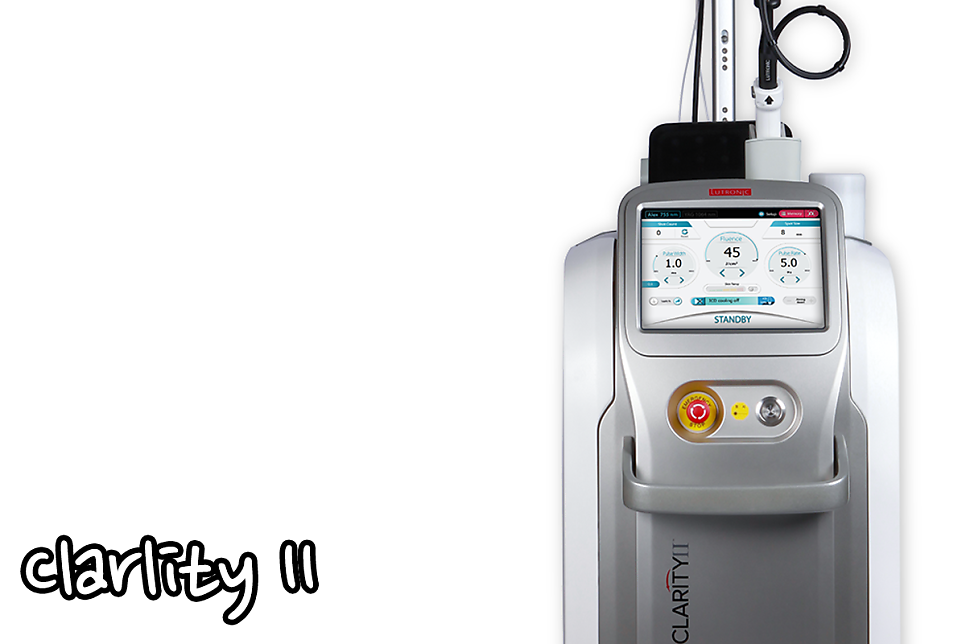
The ClaritY laser has two modes.
They are the long-pulse Nd:YAG mode and the Alexandrite mode. The names sound complicated, don't they?
In simple terms, the long-pulse Nd:YAG mode is used to remove red vascular lesions, while the Alexandrite mode is used to remove dark pigmentation in the epidermis.
The Alexandrite mode works by forming a scab over the epidermal pigment, after which the pigment disappears as the scab falls off. It can be considered a useful procedure when minimizing skin damage and targeting a specific point.
ClaritY may also be used for moles where removing only the pigment located in the epidermis, as with blemishes, appears sufficient.
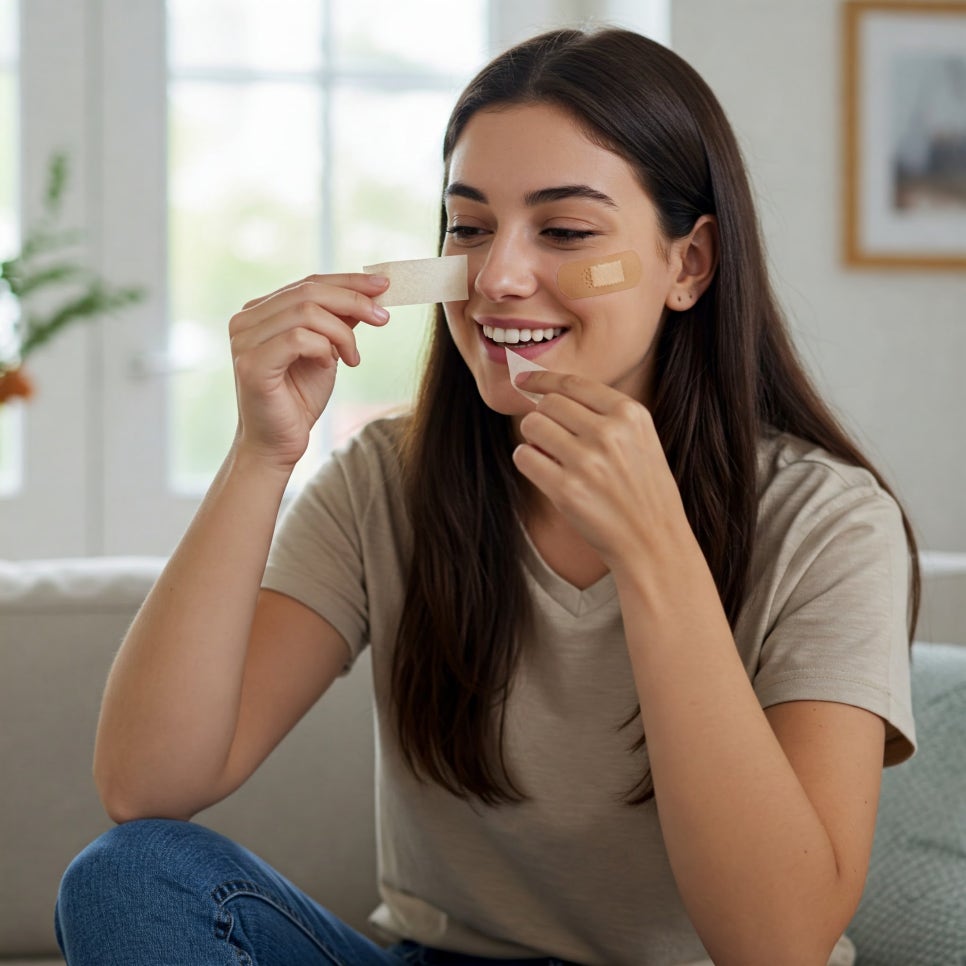
So, how should you care for your skin after an ablative laser procedure?
As mentioned above, an ablative laser procedure removes part of the epidermis, so a certain level of aftercare is necessary.
If you do not pay attention to aftercare, problems such as scarring or hyperpigmentation may occur, and your skin may look even less clear despite having the mole removed.
When a mole has been removed with an ablative laser, a regenerative dressing is generally applied for three to four days to maintain moisture. The area should also be kept covered to prevent bacteria from entering. You should also take care to keep it from getting wet. Antibiotics may be taken when necessary.

Non-ablative lasers generally require relatively simple aftercare. It is recommended that you avoid getting the treated area wet on the day of the procedure.

So, today I have briefly explained mole removal procedures.
If you are looking into mole removal in Hongdae, I hope you will use the information I have shared today to gain a general understanding of the procedure.
When researching mole removal, something more important than the information I have discussed is an analysis of your skin condition and a detailed consultation process.
This is because it is fairly common for an examination to reveal that what someone thought was a mole is not actually a mole. In addition, because it is especially important to use a laser suited to the patient's skin condition during mole removal, a detailed consultation is essential.

When looking into mole removal procedures in Hongdae, I recommend first checking the nature of the consultation process at the dermatology clinic you visit before making your decision.
I will conclude here, hoping this provides useful information for those who have searched for mole removal in Hongdae.
This was Chai Clinic, customizing your beauty. Thank you.
[Website]
[KakaoTalk]

Click the image to connect by phone.
Click the image to go to Instagram.

Click the image to go to YouTube.