I’m Dr. Jo Wonjin, and I’ve been listening to people’s skin concerns in Mapo for 9 years.

Marpo lifting... there are so many types
that I don’t know what to get.
Ulthera, Thermage, Shurink, Serf, Potenza, thread lifting, and more...
There are many types, but it can also be hard to choose which one is right for you.
Today, I’ll set aside the complicated treatment names for a moment,
and clearly tell you two ways to choose the right Marpo lifting treatment for yourself.
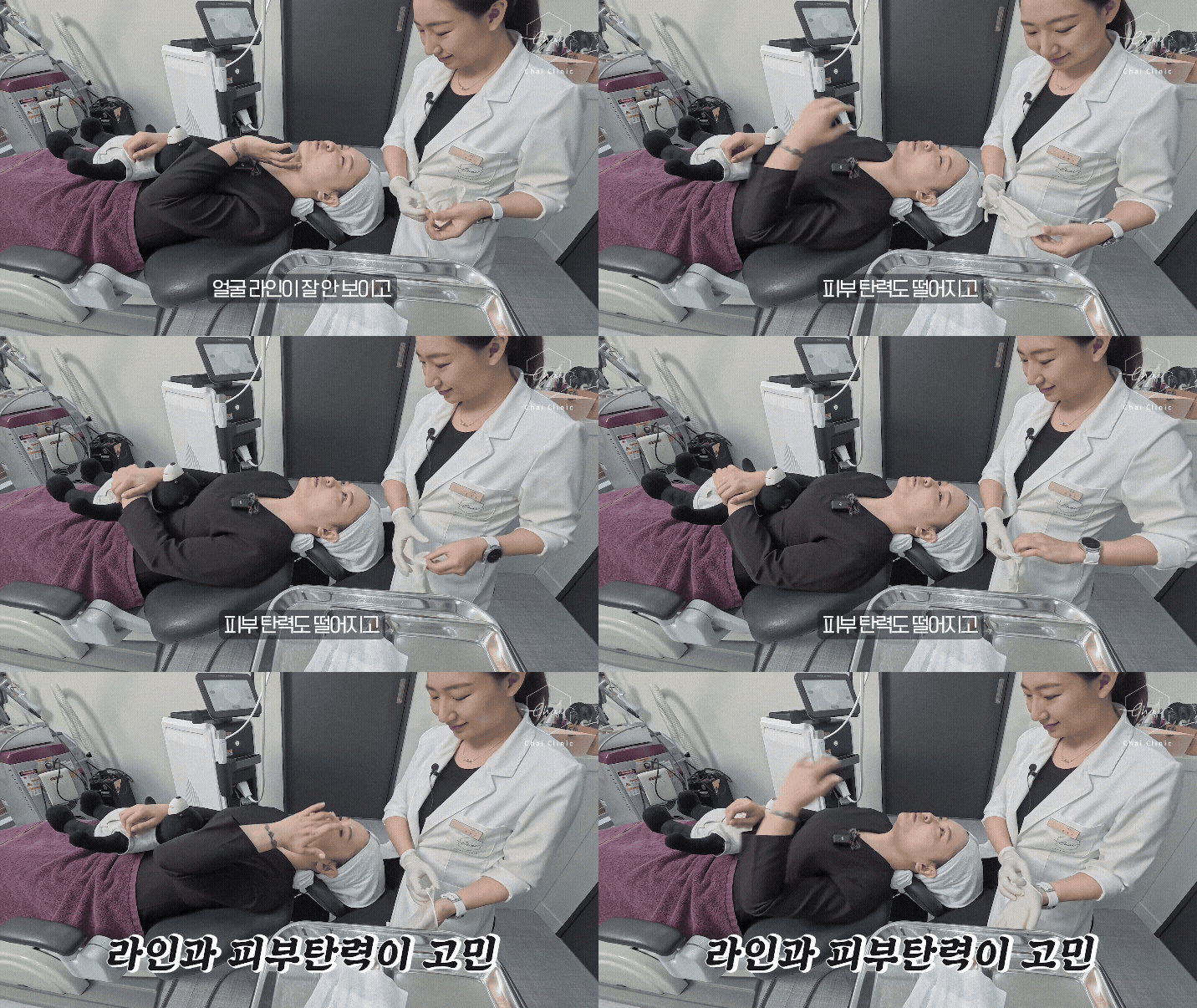
I tend to explain possible problems and realistic effects more carefully during consultations,
rather than giving overly hopeful stories.
If you read just this one article properly,
you’ll no longer be swayed by all kinds of information
and will have a clear 기준 for making the best choice for your face.
Table of contents
Method 1. Set your lifting goal
The most reliable first step in choosing the right Marpo lifting treatment for yourself is
setting a goal for what concern you want to solve.
Many people try to memorize the names of treatments first,
but there’s absolutely no need for that.

If your goal is clear, the many different treatments can be simply narrowed down to just 2 or 3.
I’ll explain it very easily.
Remember only this:
What concern does mine fall under?
- Concern 1: "My jawline has collapsed and my cheeks have sagged."
This means the deep support within the skin has weakened.
Just as you would rebuild the pillars of a collapsed building,
you need to lift the deep fascia layer inside the skin.
Only then will the jawline look slimmer and the facial contour come back.
In this case, I would recommend ultrasound lifting such as Ulthera or Shurink.

- Concern 2: "My skin feels rough and fine lines are all over the place."
This is because the skin’s surface elasticity has decreased.
Like smoothing out wrinkled paper with an iron, you need to fill the shallow layers of the skin with collagen to make it firm and tight.
When you smile, your expression will feel much more natural.
In this case, radiofrequency lifting such as Thermage or Serf is appropriate.

Of course, what I just explained is not the one and only correct answer for everyone.
That’s because each person has a different face shape, skin thickness, and cause of sagging.
So during consultations, if a person’s goal is unclear,
or if their expectations about the treatment do not match reality,
I sometimes do not recommend the treatment itself.

I tend to explain logically why a treatment is suitable for someone, or why I do not recommend it.
That way, the person receiving the treatment can fully understand and make a choice without regret.
Method 2. Consider your own conditions
Once you’ve set the goal for Marpo lifting, the second step is checking your own conditions for getting the treatment.
No matter how good a treatment is, it won’t help if it doesn’t fit your situation.
- "I really can’t tolerate pain."
There are people whose hearts race just from seeing a needle.
I’m actually quite timid too, so I completely understand how that feels. But don’t worry.
There are many devices these days that greatly reduce pain,
and at our clinic, even people who were afraid of injections can receive treatment comfortably
and say, "I should have done this sooner."
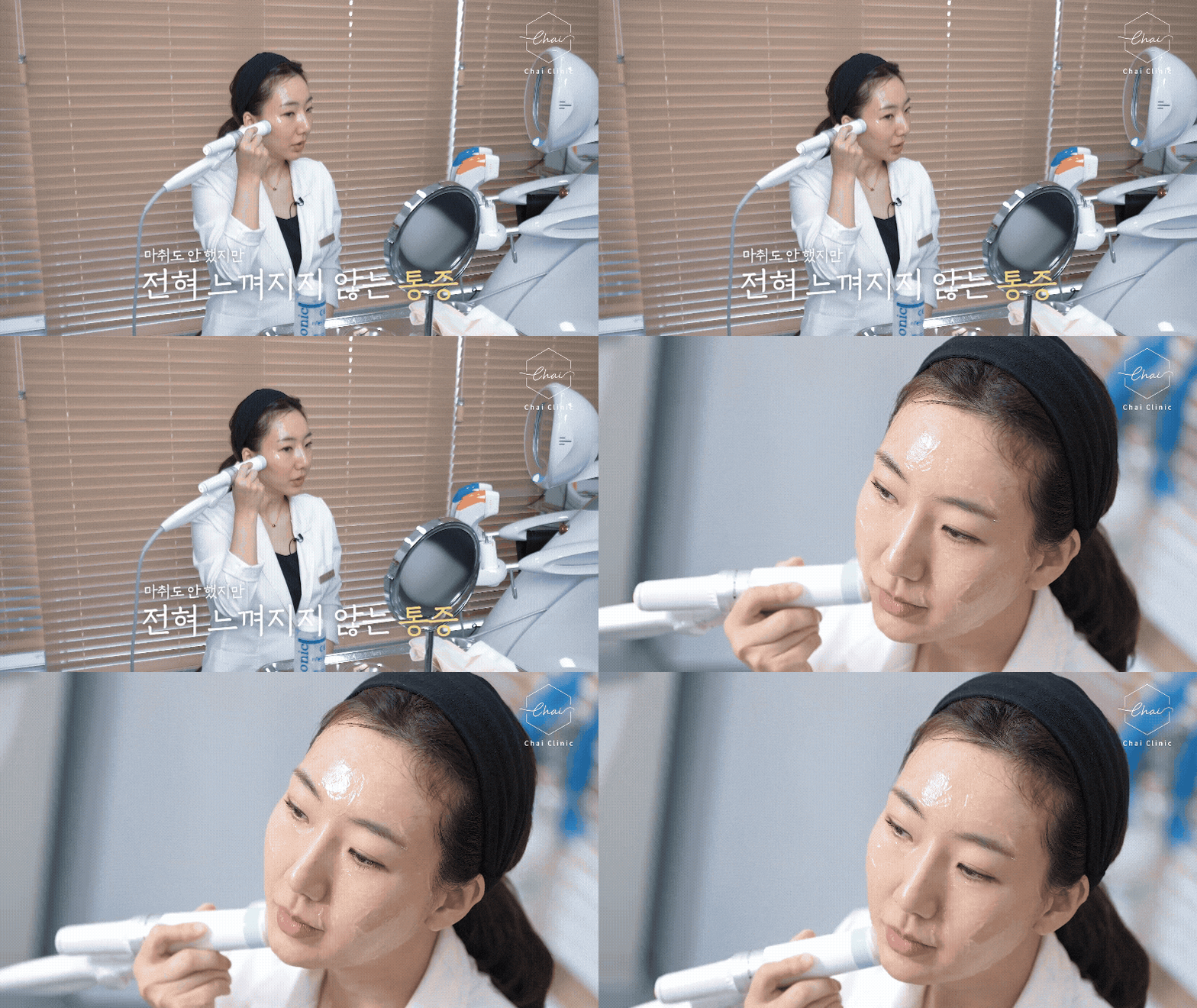
- "It can’t look obvious that I had a procedure done."
If you have an important presentation or appointment next week, it would be wise to choose a treatment with almost no bruising or swelling.
That’s why, when planning treatment, we try to create a more specific plan by reflecting the patient’s treatment history and current skin condition,
and sometimes even their occupation.
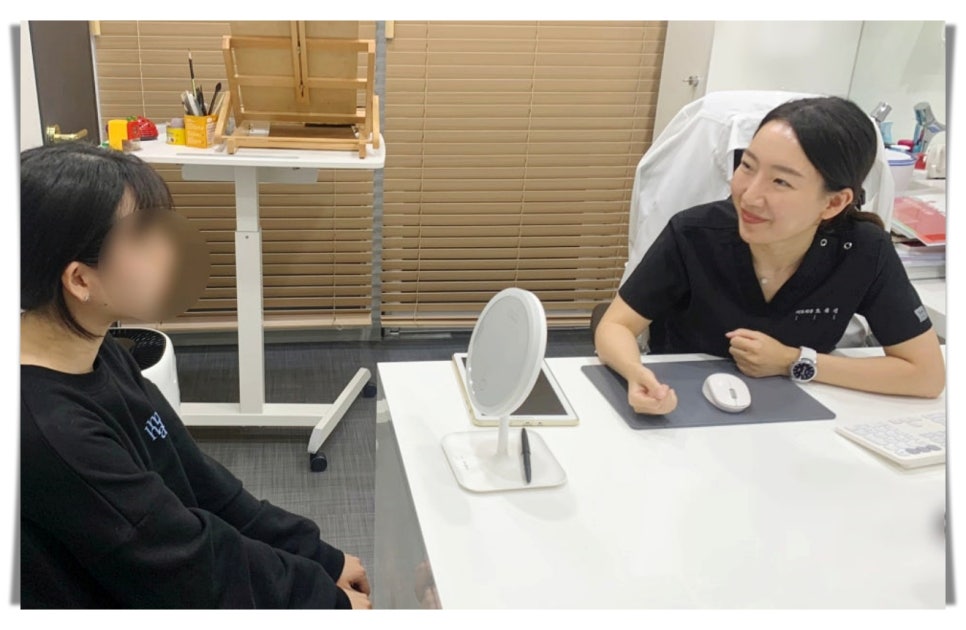
This is the most realistic part.
Honestly, this is something I always emphasize to my staff as well,
rather than simply recommending the most expensive treatment,
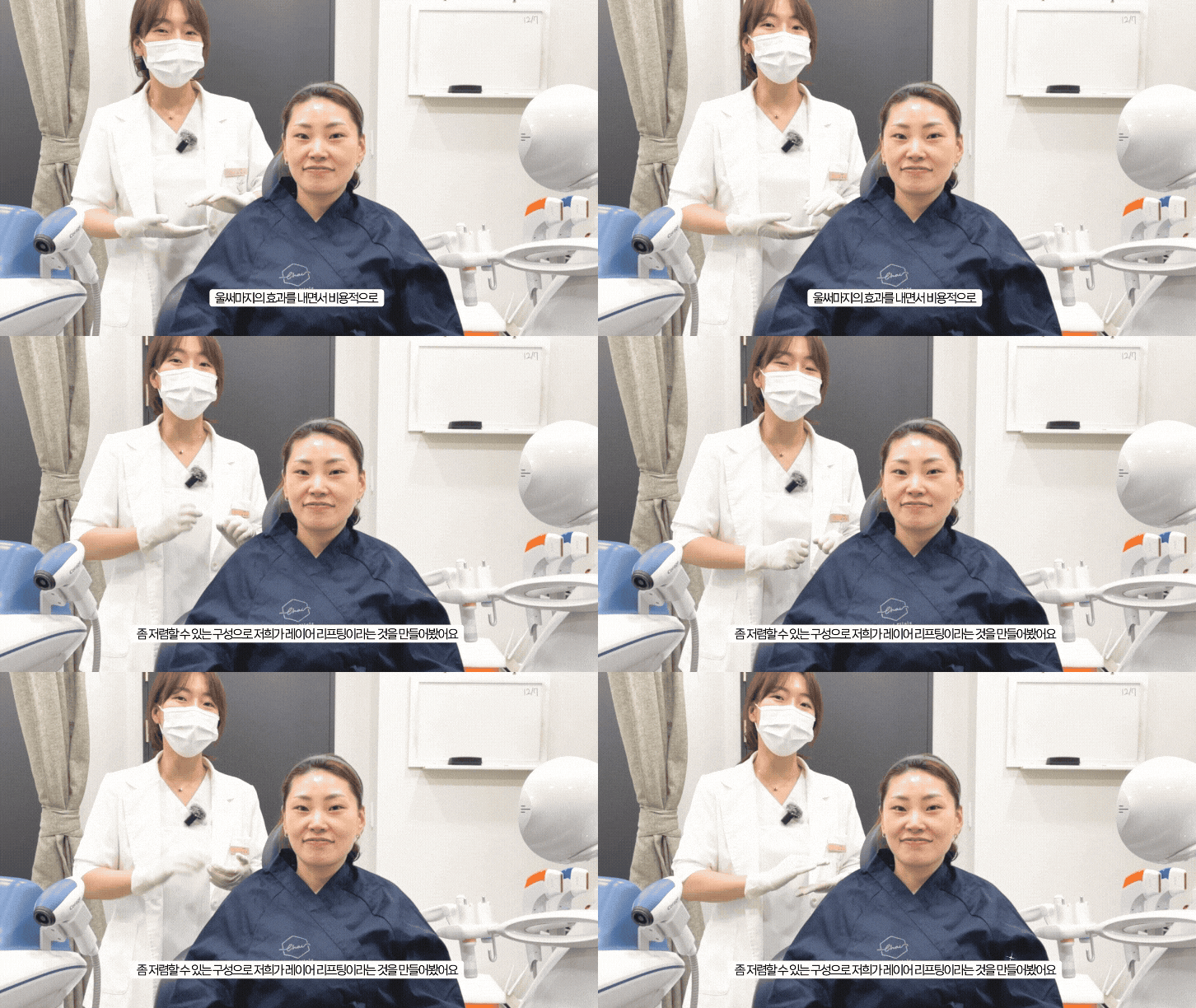
I think it’s important to find a combination that delivers the best effect within the set budget.
In fact, to give the patient more satisfying results, we sometimes find a better option than the original plan
or suggest treatment methods that can create synergy.
Key conclusion
The key to Marpo lifting is that you need to identify your skin condition and various circumstances to set the treatment direction
in order to achieve satisfying results.
Even if you only keep in mind the two things I explained today — your "lifting goal" and "your own conditions" —
instead of vaguely asking at the clinic, "Which lifting treatment is good?"
you’ll be able to say first,
"My biggest concern is my jawline, and I can only allow about 3 days of recovery."
Just saying that will allow the doctor to set a much more accurate and satisfying treatment plan.

If you have questions that can’t be resolved from the text alone,
or if you need an honest diagnosis about which treatment is right for you, feel free to contact us through the channel below.
In particular, you may have many questions about the ultrasound lifting I mentioned today, especially Ulthera.
I previously wrote an article for people like that.
If you are considering Ulthera among lifting treatments, there is at least one thing you must check —
so
▼ I’m sure it will help if you read it together.
Thank you for reading this long post.
This was Jo Wonjin.