Hello, I’m Dr. Jo Won-jin, and I’ve been seeing patients for 10 years.

I got it because I heard it was simple, but my melasma seems to have gotten darker.
I’ve had it several times,
but I’m not sure whether it’s working.
As autumn arrives, more and more people visit the clinic because of spots and melasma that have darkened over the summer.
Naturally, many of you look into “pico toning” first.
But even with the same pico toning, some people call it the treatment of a lifetime,
while others say they only wasted money.

For those who hesitate even to start because they worry,
“Maybe it won’t work on my skin,”
or “What if it gets worse?”
Today, I’m going to explain the clear reasons.
Here are 3 things to check if Hongdae pico toning doesn’t seem effective.
If you focus for just 3 minutes, you’ll be able to judge for yourself how pico toning should be done.
<Table of Contents>
-
Excessive laser intensity
-
Mid-treatment checks and feedback
-
Accuracy of skin diagnosis
- Excessive laser intensity
The first thing you need to let go of for Hongdae pico toning to be effective is the expectation that “it must get better if I just do it stronger and more times.”
The principle of pico toning is simpler than you might think.
It uses a laser in an extremely short moment called a “picosecond” to break pigment particles in the skin into tiny pieces.
You’ve probably heard that pico toning hurts less than other lasers, right?

That’s because energy is delivered in such a short moment that the pigment is broken down more finely and precisely.
The finely broken pigment is then naturally eliminated from the body,
which is how pigmentation conditions such as melasma and spots gradually fade.
Because pico toning is considered a relatively low-pain procedure,
many people ask,
“Can I reduce the number of sessions and just get it stronger at once?”

In most cases, I do not recommend it.
If we were breaking a hard rock, what would happen if we simply struck it with a huge hammer without considering the surroundings?
The rock might break, but the ground around it would also be badly damaged and turn into a mess.
The same applies to pico toning.
When breaking pigment, it is much more important to plan not only how strongly it should be treated, but also how delicately it should be done, while giving the skin time to recover.
- Mid-treatment checks and feedback
When pigmentation gets darker after pico toning, it is mostly because the skin has been stimulated more strongly than it can handle.
If strong laser is applied too often, the skin barrier becomes damaged.
Then even small刺激 can make the skin red and sensitive more easily,
and this becomes another cause of pigmentation.
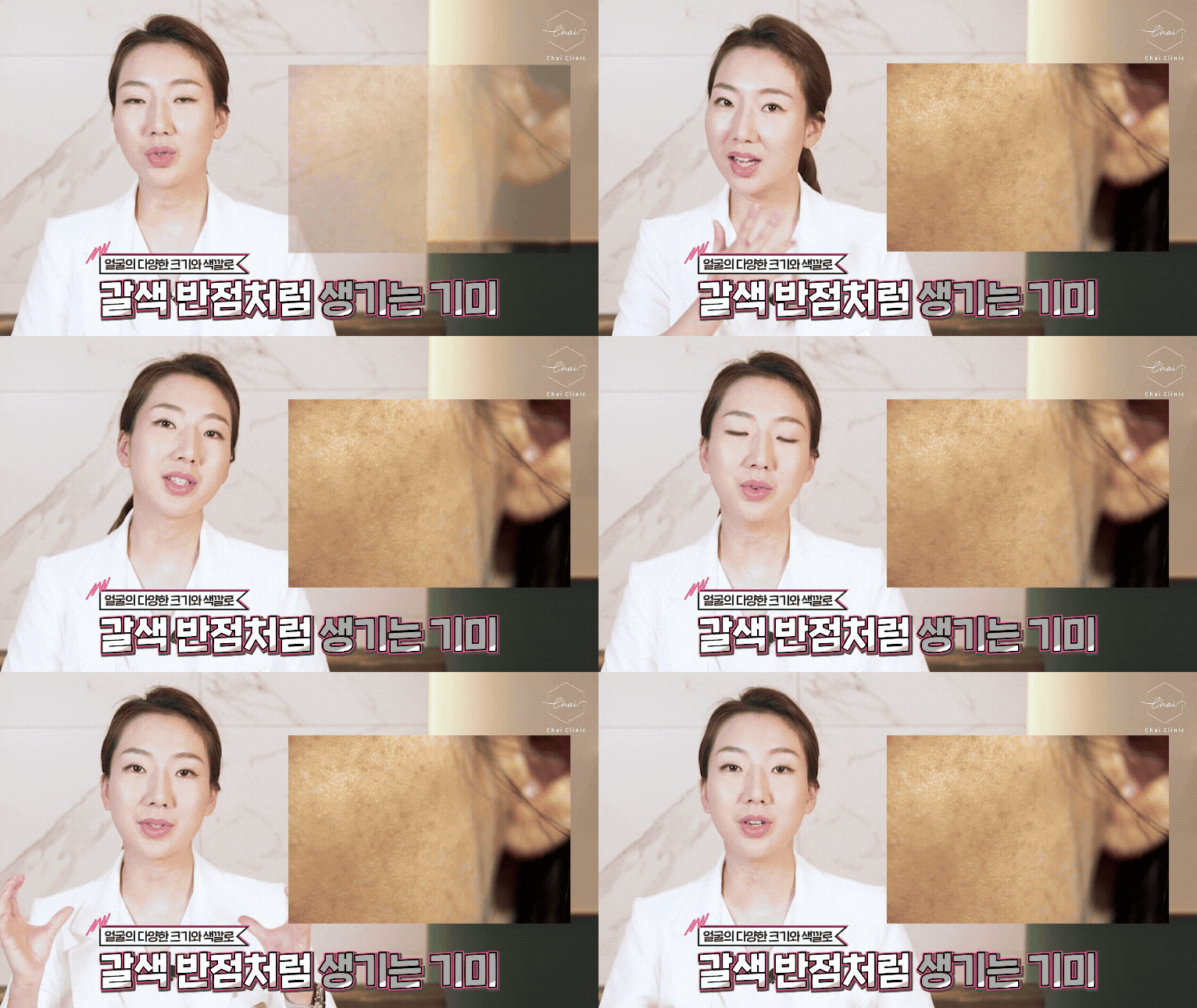
In particular, pigmentation such as melasma is very sensitive,
so if it receives excessive stimulation, it defensively produces darker melanin.
This is why you may feel that “my melasma seems to come up more after pico toning.”
Therefore, fixed rules like “always 10 sessions” or “always every 2 weeks” can be risky.

What matters is carefully observing the skin’s reaction after treatment and flexibly adjusting the interval until the next session,
as well as the laser intensity. That is the key to Hongdae pico toning effectiveness.
But if this process is not done properly?
Then even after repeating the treatment several times, it may still not work.

- Accuracy of skin diagnosis
To be honest, both points 1 and 2 above begin with an accurate pre-treatment diagnosis.
If the first button is fastened wrong, all the effort that follows is pointless.
Successful Hongdae pico toning depends not on how many sessions you receive, but on how accurately your skin condition is identified before starting.
This is also the stage where I spend the most time with the patients who come to see me.
Before treatment, be sure to receive a careful diagnosis of the following three things:
✔️ Type and depth of pigmentation:
You need to accurately distinguish whether the spots on your face are simple freckles, deep melasma, or a mixture of multiple types of pigmentation.
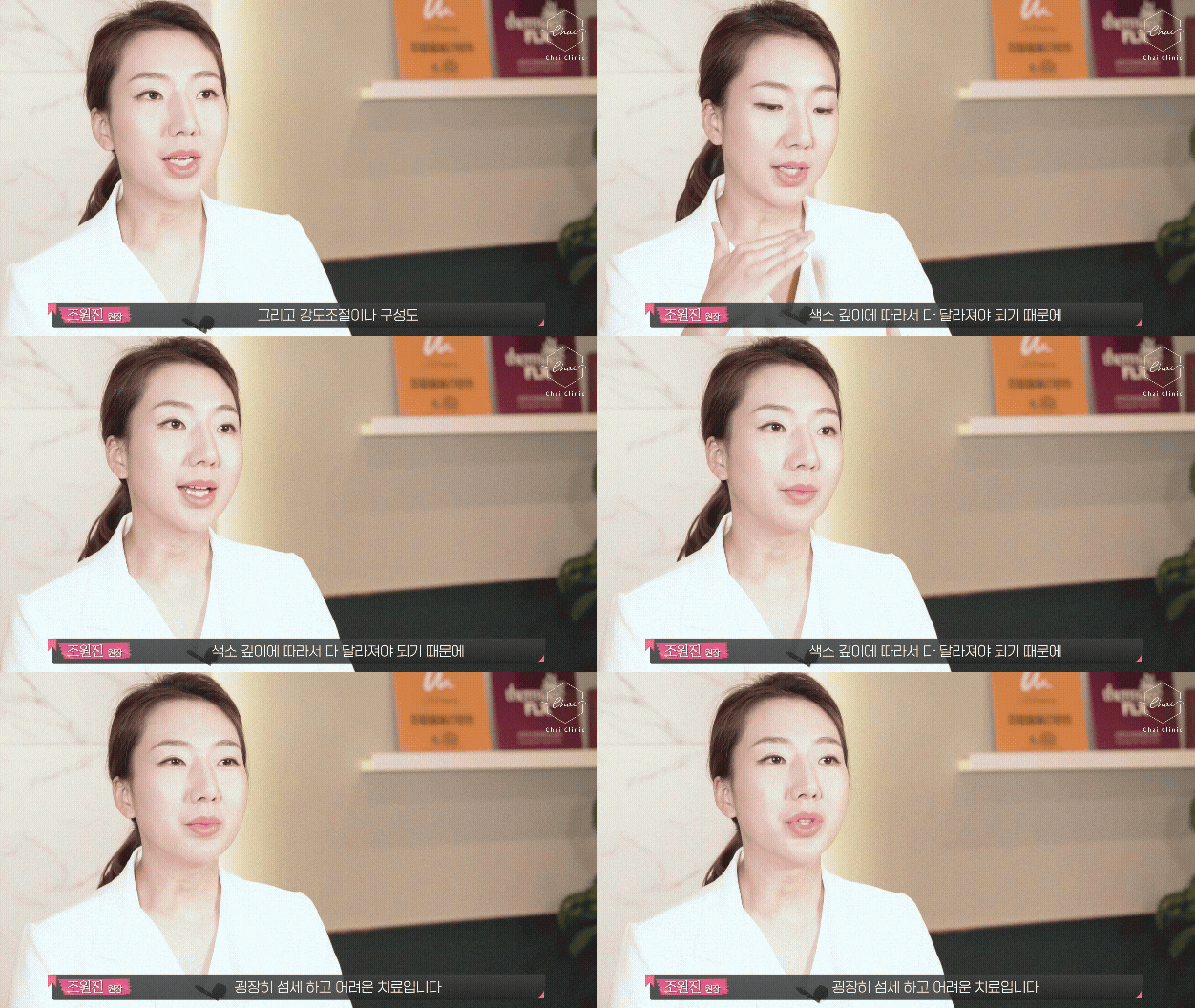
The laser wavelength and energy are completely different depending on how deep the pigment is.
✔️ Current skin sensitivity:
Even if it looks fine on the outside, the inside may be dry and sensitive.
If treatment is done forcefully on such skin, the risk of side effects increases.
✔️ The health of the skin barrier:
A strong skin barrier is the most important factor in helping the skin recover quickly after laser treatment.
If the barrier has been compromised, barrier recovery should come before toning.
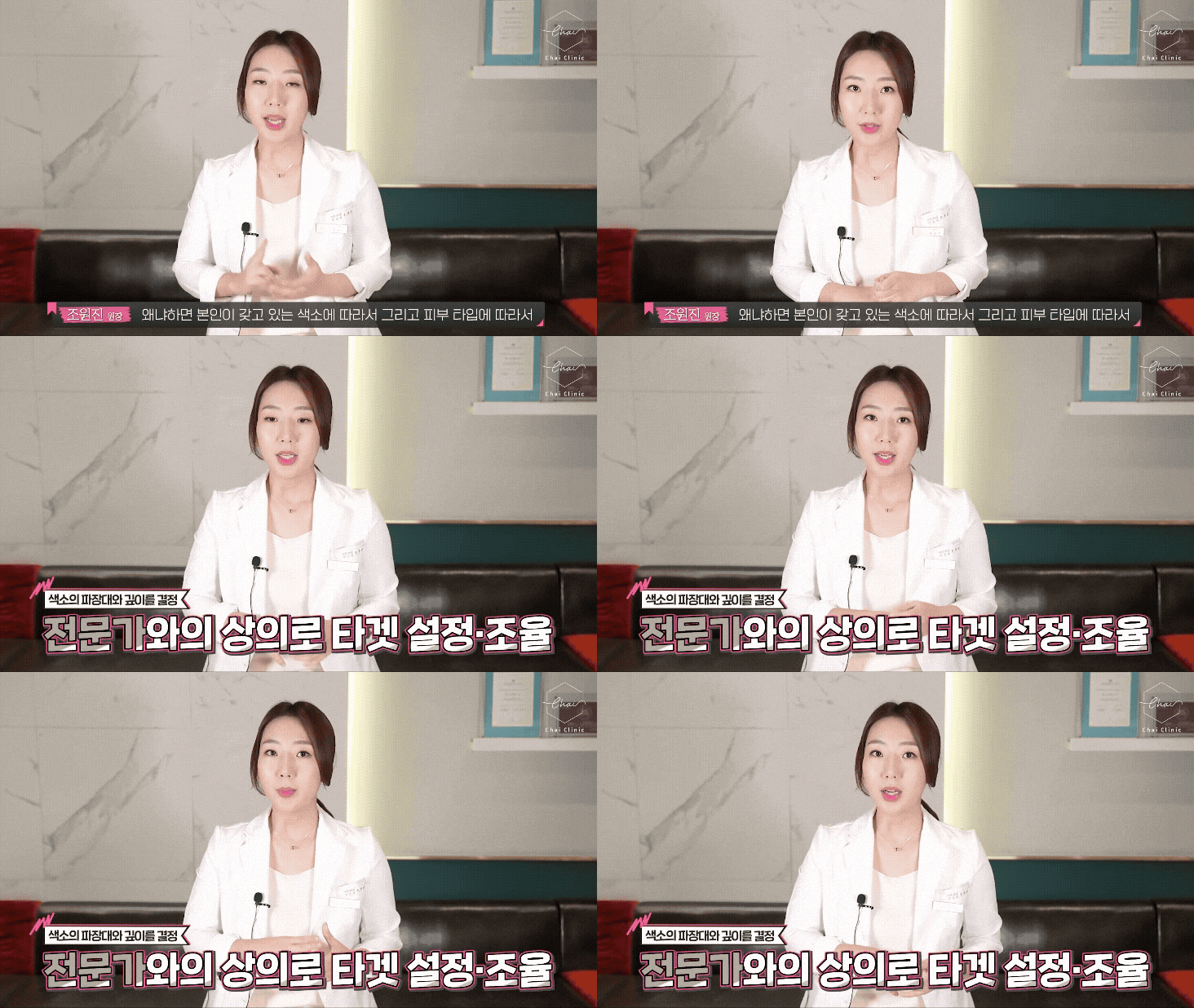
By making this overall judgment,
you should start the first session at the safest possible energy level,
and then gradually revise the plan while observing the recovery response.
Getting treatment just because you heard “pico toning is good” without a detailed diagnosis
is like taking medicine blindly without knowing whether it suits your body.
Today’s key points — please remember these
-
Stronger laser is not the answer.
-
There is no one-size-fits-all formula.
-
The most important thing is the diagnosis before starting.
Pico toning is not simply a machine blasting your face.
It is a medical procedure in which the skin condition is accurately diagnosed, a plan is made accordingly, and fine adjustments are made based on the response.

If you did not get results from Hongdae pico toning before, or if you are hesitating now, choose a clinic based on the three points above.
You will surely get a different result from before.
If you have any more questions, or if you need an accurate diagnosis of your skin condition, please leave an inquiry below.
I will help you with a careful consultation myself.
This has been Dr. Jo Won-jin. Thank you.
<Botox: People Like These May Regret It If It Is Injected Incorrectly>