Hello, I’m Dr. Jo Wonjin, and I’ve been practicing in Hongdae for 10 years.
I’ve heard that fillers can sag later on
or spread out and look flat..
I’m afraid of going blind or having necrosis.
When you’ve made up your mind to come in and get prettier, how upsetting must it be to start by worrying about side effects?
Fillers are definitely a procedure with risks unless precise anatomical knowledge and proper hand technique are both in place.
Today,
under the topic of Three Steps to Prevent Filler Spreading, Migration, Necrosis, and Other Side Effects in Hongdae,
I’ll talk about the questions people have when they’re worried about side effects and three ways to prevent them.
Table of Contents
Step 1. Worried it might spread or move
Step 2. Don’t want it to look excessive
Step 3. Afraid of the risk of blindness or necrosis
A 3-line summary of how to prevent filler side effects
Step 1. Worried it might spread or move
A filler may look fine right after the procedure,
but over time, it can sag or spread out flat.
This often happens because it was injected without properly securing space first.
If you look inside our skin, you’ll find tough fibrous tissues between the muscles and fat,
woven together tightly like a spiderweb.
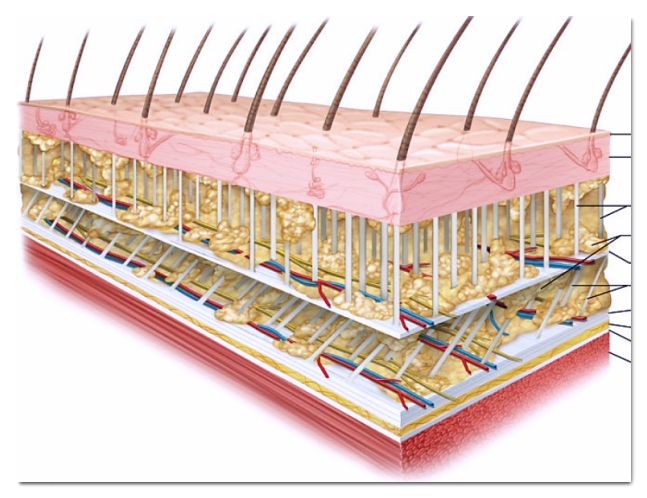
What happens if you force filler through a narrow gap without organizing these tissues first?
Even if you manage to push it in, it may not withstand the strong internal pressure,
and eventually the tissue will bulge out to the weaker side or spread sideways.
That’s why, when performing filler injections, these tissues must be carefully separated
and enough space must be created for the filler to settle.
At this point, the dissection should not be too wide; it needs to be thin and delicate
so the filler stays exactly where it should without migrating elsewhere.
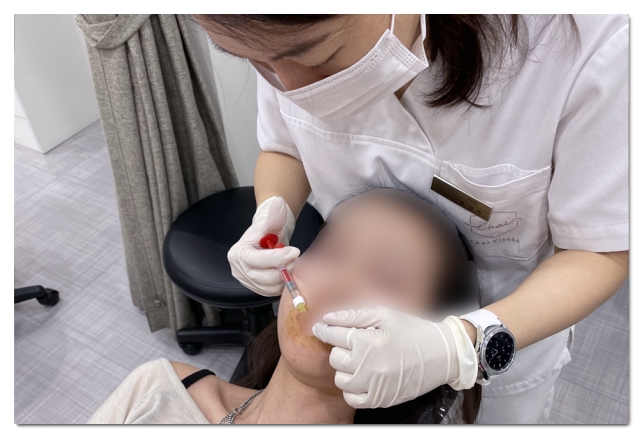
Also, the firmness and viscosity of the filler must be carefully matched to each area.
For example, in places like the chin tip or nose, where shape and structural support are needed,
what happens if a soft, pliable filler is used?
It won’t withstand gravity and skin tension and will spread quickly.
On the other hand, if something too firm is used on the cheeks, which should stay soft, it will feel unnatural.
For Hongdae fillers, using the right material in the right place is the key to long-lasting results.

Step 2. Don’t want it to look excessive
“I don’t want it to look like I had something done.” “Will it get too puffy?”
These are common concerns during filler consultations.
To create a result that looks natural rather than artificial, layering by depth is necessary.
The deep layer comes first; think of it as building the pillars.
A firm support is created deep near the bone to hold up the skin from underneath.
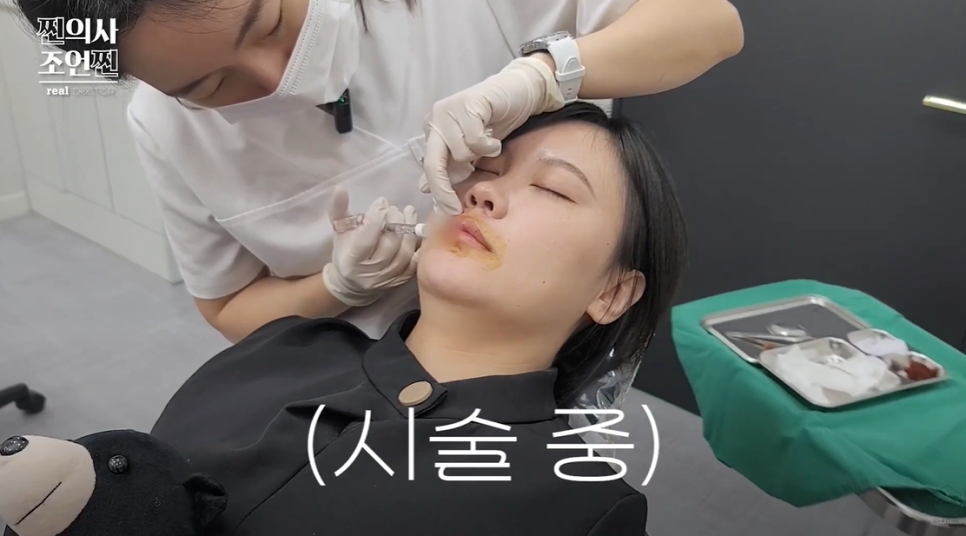
The shallow layer can be thought of as the finishing touch.
From close to the skin surface, it fills in fine irregularities
and gently softens the boundaries to complete a smooth line.
Only by building in layers like this can overfilling be prevented.
It also helps maintain a natural three-dimensional look without feeling awkward when making facial expressions.
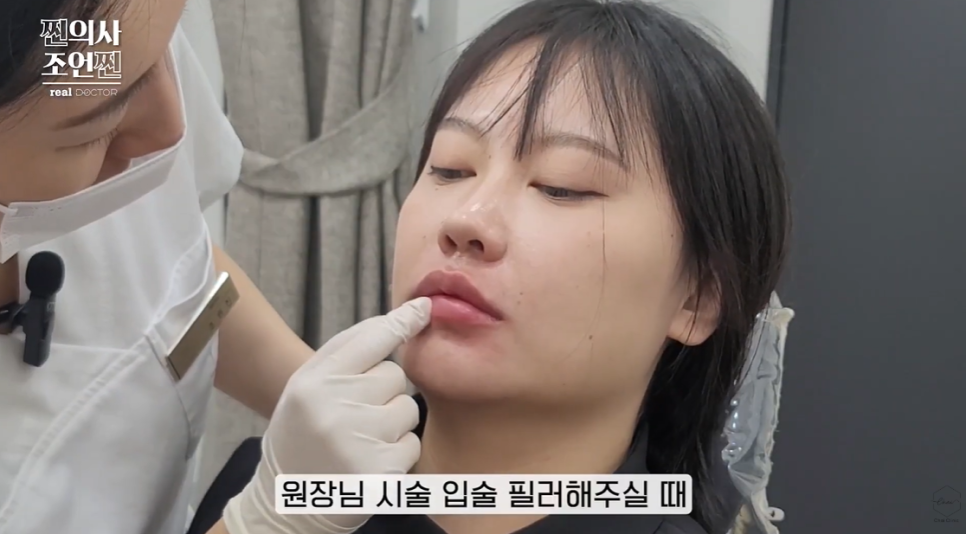
But no matter how good the technique is, if the doctor’s idea of beauty
is different from the patient’s, the result may not be satisfying.
When you consult, take a close look at the doctor’s before-and-after photos.

In fact, rather than filling everything indiscriminately, it’s best to subtly improve only the areas that look hollow so the result is beautiful without being obvious.
If there’s a chance the overall facial harmony could be disrupted or the result could become even slightly excessive, I also advise against it.
There are also cases where people got filler elsewhere in Hongdae and come in because they’re unhappy with the result.
Dissolving filler carelessly can also lead to various side effects,
so it’s best to have it done properly from the start.
Step 3. Afraid of the risk of blindness or necrosis
Among Hongdae filler side effects, the most severe are definitely vascular accidents (necrosis, blindness).
However, if the rules are followed, these are also accidents that can be sufficiently prevented.
That’s why dangerous areas are not treated in the first place.
The glabella is a representative example.
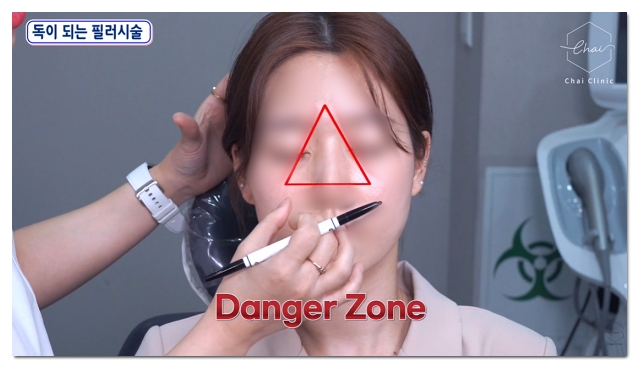
The glabella is an area where important blood vessels connected to the brain and eyes are densely intertwined.
If a blood vessel is compressed or blocked by accident, it can lead to serious consequences such as blindness.
That is why I never perform filler injections in the glabella.
It is not a procedure worth recommending if it means taking on that kind of risk.

And in sensitive areas where many nerves and blood vessels pass through,
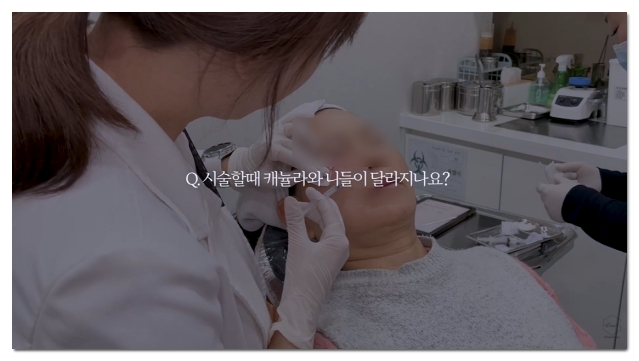
using a blunt cannula instead of a regular injection needle is also an option.
Because it does not puncture blood vessels or nerves as it enters the skin,
and passes by gently, the risk of necrosis from blood vessel damage can be significantly reduced.
A dermatology clinic that honestly and safely recommends only the procedures you truly need
can be chosen like in the post below.
A 3-line summary of how to prevent filler side effects
-
Prevent spreading: Check whether fibrous tissue is separated to create space and whether the filler material is chosen appropriately for the area.
-
Prevent overinjection: Check whether the procedure is done by separating deep and shallow layers, and whether the doctor’s aesthetic standard is natural.
-
Prevent safety accidents: Check whether dangerous areas (such as the glabella) are avoided and whether a cannula is used to prevent blood vessel injury.
Hongdae fillers are all about understanding the anatomical structure of your face and designing safely.
I hope today’s post was helpful.
Thank you. This was Jo Wonjin.
[ Helpful filler-related posts to read ]