Hello. I’m Dr. Jo Won-jin, and I’ve been treating patients for 10 years.
My face has sagged and looks longer.
Many people worry that their face looks tired because they’ve lost facial volume and their skin elasticity has also declined, making their overall impression seem older.
When people usually think of lifting, they imagine having to endure heat or pain.
But today, I’d like to introduce a special device that lifts without pain and, rather, helps keep the skin and muscles healthy.
Beauty influencer Kang Hee-jae also tried it herself and ranked this procedure as one of the top three, after Ulthera and Thermage.
 Source: Heejaeholic
It’s Ems Face.
With the topic “Hongdae Lifting: Ems Face Effect Review for Reducing the Midface Without Pain,”
I’ll share a real review from me and my staff, along with a detailed explanation of why this procedure is special.
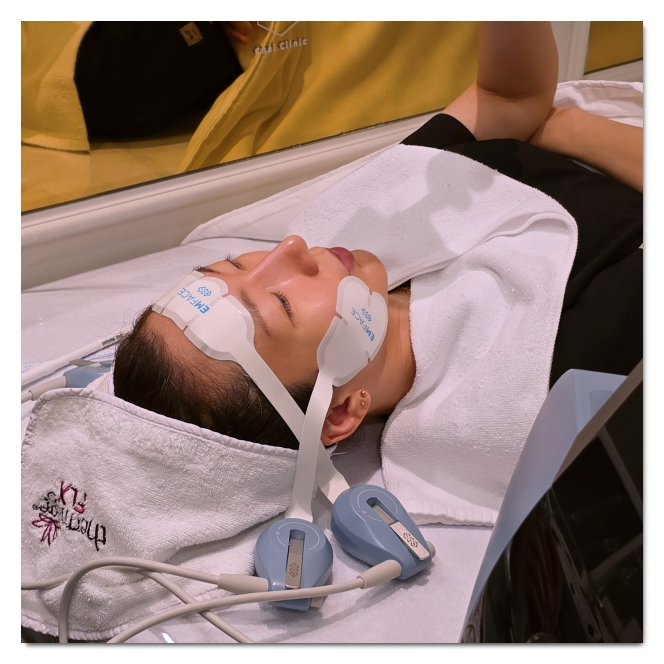
Table of contents
-
What makes it different from other lifting procedures? (No skin damage X, muscle exercise O)
-
“My midface looks shorter” — detailed analysis of the lifting effect
-
Real procedure reviews from the director and staff
-
Who Ems Face is recommended for
Hongdae Lifting
- What makes it different from other lifting procedures? (No skin damage X, muscle exercise O)
Many conventional laser lifting procedures work by causing thermal damage to the skin and using the tightening that occurs as the skin recovers.
The effect is good, but for people with thin or sensitive skin, the stimulation can feel burdensome.
However, Ems Face takes a completely different approach.
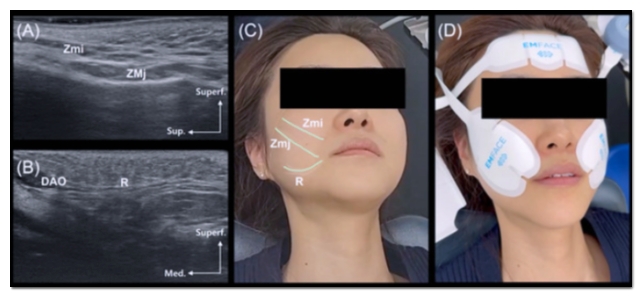 Source: an Ems Face-related paper
First, it does not damage the epidermis or dermis.
At the same time, it exercises the facial muscles that have lost strength and become thinner due to aging, helping them become firm again.
Just as working out at the gym builds a more defined body line,
Ems Face builds up the facial muscles in a healthy way and powerfully lifts the skin in the opposite direction of sagging.
Because it strengthens the body’s natural power without burning or shaving the skin, it is one of the most natural and healthy forms of lifting.
Hongdae Lifting
2. “My midface looks shorter” — detailed analysis of the lifting effect
Simply saying it “gets better” isn’t enough, right? When you receive Ems Face, how does your face change?
The three points that recipients are most satisfied with are as follows.
- Tightening of the sagging midface (a younger-looking effect)
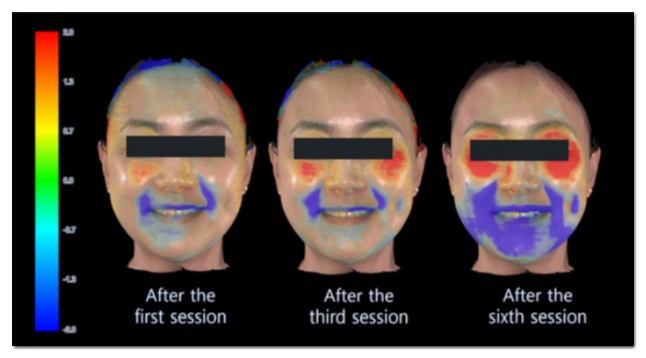
The biggest change is in the front cheek area (midface).
As we age, the zygomatic muscles lose strength and sag, which causes the front cheeks to hollow out and the face to look longer.
Ems Face intensively strengthens the zygomatic muscles (major zygomatic and minor zygomatic muscles), making the front cheek area lift upward.
As the volume point moves upward, the midface looks shorter and the face appears much more three-dimensional and smaller.
- A more defined eye area through forehead lifting
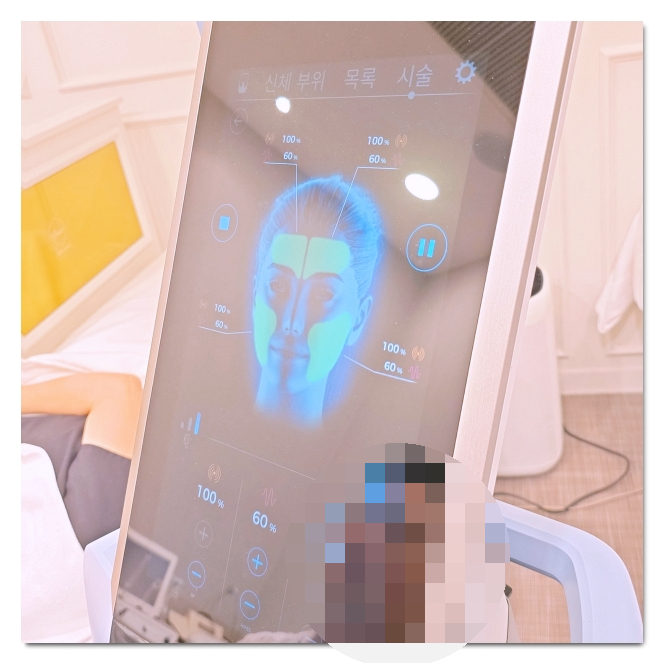
Because the forehead muscle (frontalis) is exercised as well, the brow line that had been drooping heavily is naturally lifted.
This is why people say, “My eyes feel more open.” It becomes easier to open the eyes, and the overall impression looks brighter.
- Refining the sagging jawline and mouth area
As the muscles pull the skin upward, the sagging jawline and the lower cheek line around the mouth are also naturally lifted.
Of course, it does not feel artificially pulled tight.
Instead, because it defines a natural contour line, it can help soften mild nasolabial folds or lower cheek sagging.
 Source: an Ems Face-related paper
Hongdae Lifting
3. Real procedure reviews from the director and staff
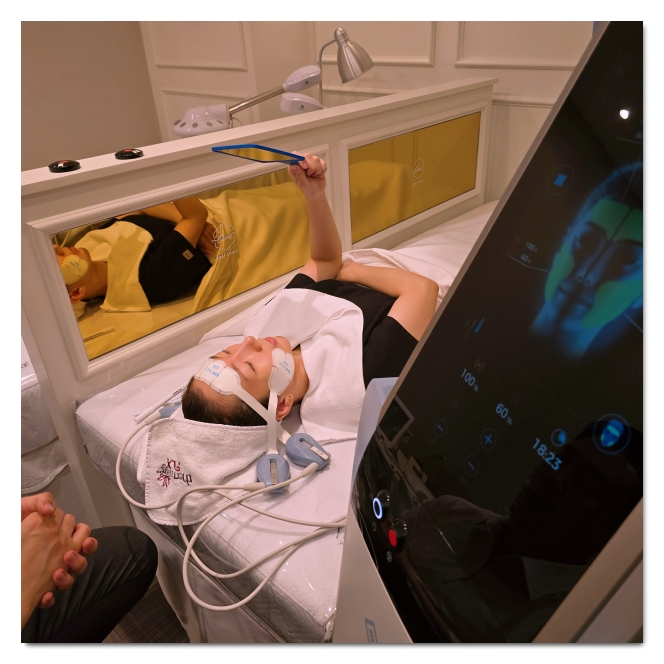
Seeing is believing, so both I and my staff underwent the procedure ourselves.
My front cheeks lifted
Staff’s actual review
Our staff member had been worried that the midface volume seemed to be gradually dropping over time.
After Ems Face, not only did the front cheeks gain a plumper volume, but the skin texture also became noticeably smoother.
Injections had always been intimidating because of downtime such as bruising or swelling, so they hesitated to get them,
but they shared that their makeup went on much better because the volume created by their own muscles lifting naturally also improved the skin condition.
Good for correcting asymmetry
My own review
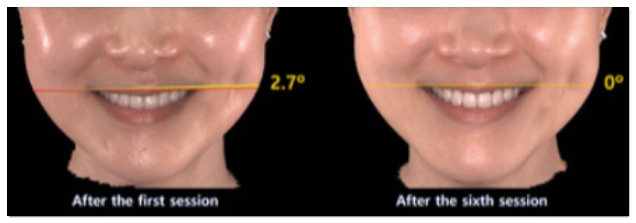
Actually, like most people, I also have facial asymmetry.
Ems Face is excellent for balancing left-right symmetry without pain.
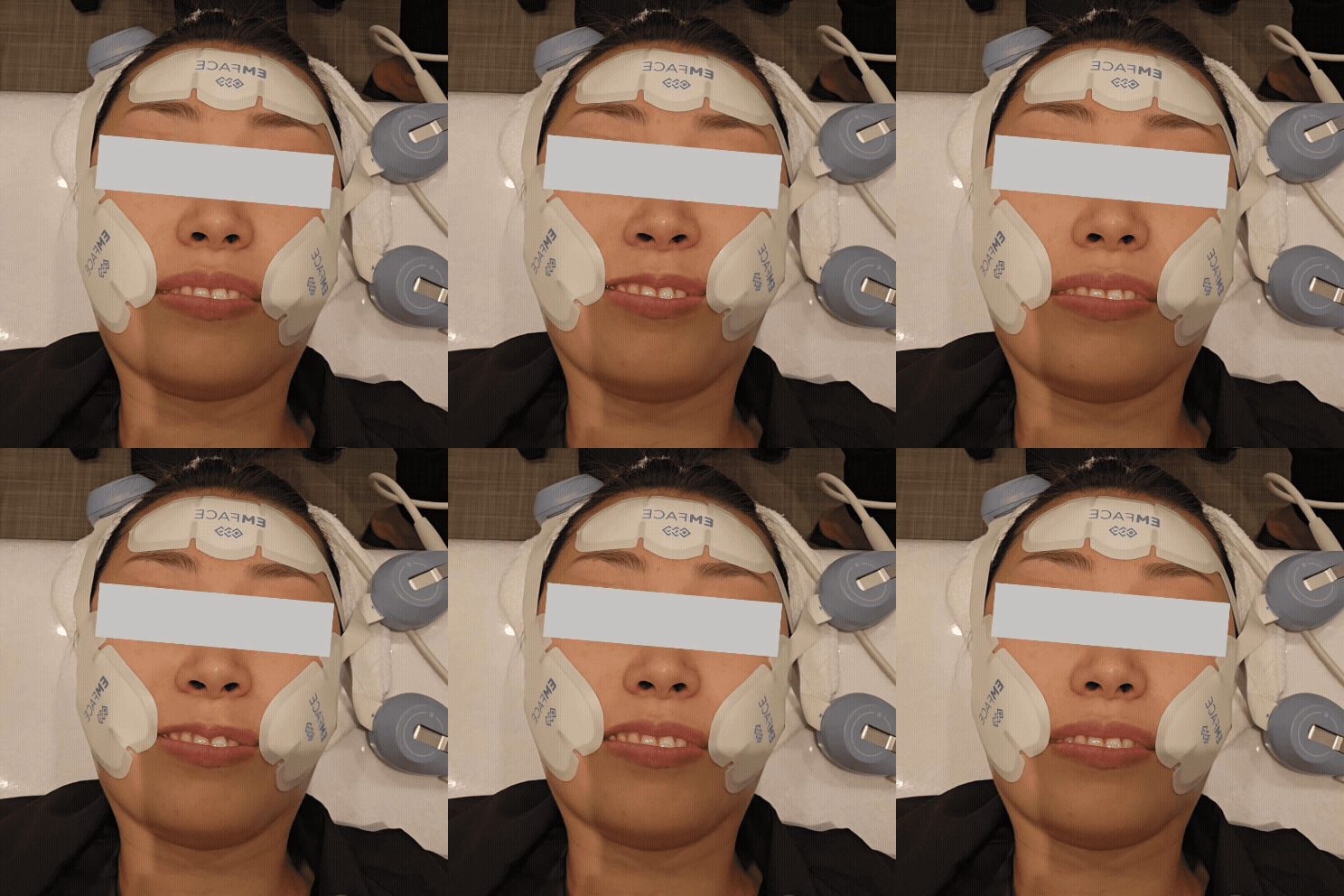
There was no pain at all during the procedure, and I only felt a pleasant warmth and a unique stimulation, almost as if the muscles were dancing on their own.
Right after the procedure, it was nice to feel the midface becoming firmer immediately, but what was even more amazing was the change that, as sessions went on, the height of the corners of my mouth when smiling became more even.
In fact, when I perform procedures for patients, this is one of the treatments that receives very high satisfaction in terms of correcting asymmetry.
Hongdae Lifting
4. Who Ems Face is recommended for
Basically, Ems Face is a procedure with no bruising, swelling, pain, or downtime at all.
That’s probably why people can receive it so comfortably. I would generally recommend it for the following people:
-
People who are extremely sensitive to pain and absolutely cannot tolerate painful procedures
-
People who want to neatly refine a long midface and a peanut-shaped facial line
-
People who want healthy anti-aging care without skin damage
-
People who want natural-looking volume and lifting without fillers
I explained this in more detail in the post below.
Conclusion
The idea that lifting has to hurt in order to work has now become a misconception.
Ems Face is a smart device that trains your facial muscles in a healthy way and helps build the strength to resist the passage of time.
However, please don’t get it blindly just because it looks good.
The best way to save money and time is to first receive a diagnosis to see whether it will be effective for your face, and then proceed with the procedure.
Please receive an honest diagnosis from a clinic like the one below.
Thank you. This has been Dr. Jo Won-jin.