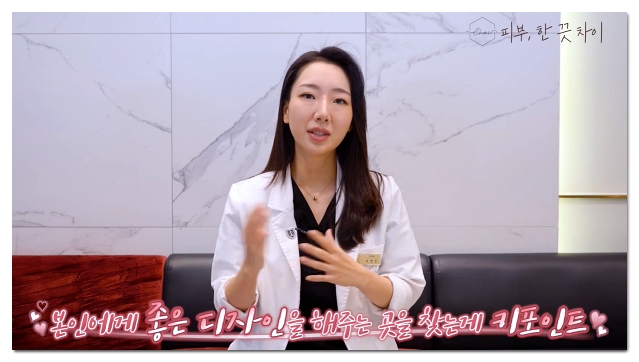
Hello. I’m Dr. Jo Won-jin, and I’ve been treating patients for 10 years.
I got thread lifting, but my cheekbones look bigger ㅠㅠ
My cheeks are indented and look caved in.
Will this go away?
We receive quite a few inquiries about side effects after thread lifting.
Today, under the topic of the causes of and solutions for side effects after thread lifting in Hongdae,
for those who are struggling mentally because of side effects after thread lifting,
I’ll explain why this happens and how it can be resolved.
Many of these problems can be sufficiently prevented once the exact cause is identified.
Table of Contents
-
Causes of side effects after thread lifting
-
How to solve side effects after thread lifting
-
Criteria for choosing a thread lifting clinic
-
Frequently asked questions
-
Key summary of solutions for side effects after thread lifting
- Causes of side effects after thread lifting
Hongdae thread lifting is a procedure in which a threaded material with barbs is inserted under the skin to physically lift sagging tissue.
The principle is intuitive, but the structures beneath the skin are much more complex than you might think.
The most common issues—prominent cheekbones, hollowed cheeks, and dimpling where the skin surface sinks in—
are mostly caused by excessive pulling and an incorrect insertion layer.
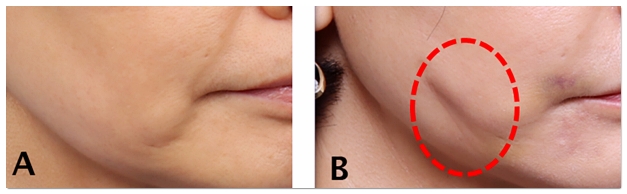
The cheek in the photo is indented like a dimple. This is a representative side effect of thread lifting called dimpling.
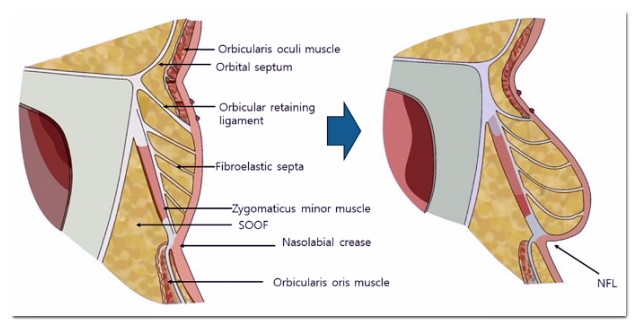
Simply put, if you sew a thick thread into a thin blanket and pull too hard,
the fabric will pucker and wrinkle.
If threads are inserted uniformly into a skin layer that is too shallow without considering each person’s skin thickness and fat volume,
or if too much tension is applied out of a desire to lift sagging tissue as much as possible, these unfortunate results can occur.
- How to solve side effects after thread lifting
So what should you do if hollowing or dimpling has already appeared?
If the symptoms are mild, they may gradually soften and improve naturally as time passes.
On the other hand, if the pulling is too strong and comes with pain or causes significant visual stress, treatment may be needed.
In Hongdae thread lifting, adhesion usually begins to develop within the first few weeks after the procedure.
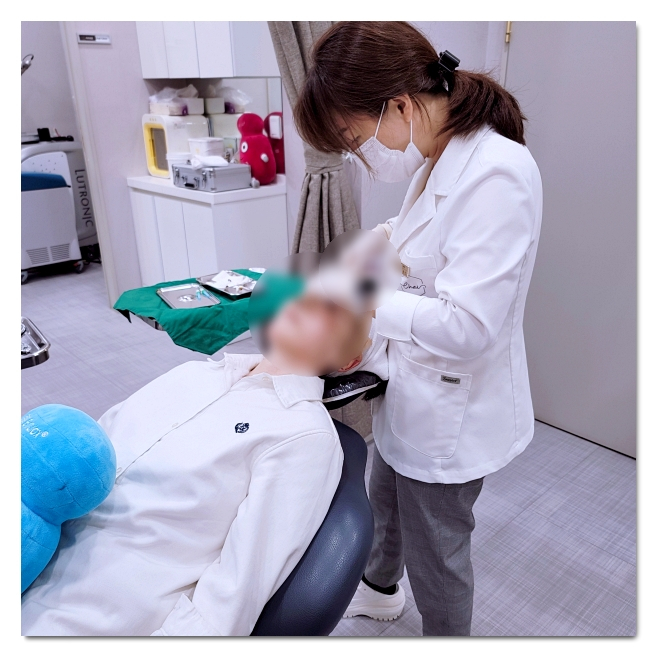
In the early stage, adjusting the degree of tension on the thread or gently releasing the adherent area may be helpful.
Of course, if the insertion layer was completely wrong from the start or the thread was pulled too forcefully,
it may be unavoidable to remove the thread itself.
Sometimes people contact or visit our clinic asking us to remove threads that were placed at another clinic.
In fact, thread removal is best performed at the original clinic where the procedure was done.
That is because the doctor who performed the procedure knows best what kind of thread was used, how deep and in what direction it was inserted, and how many threads were placed.
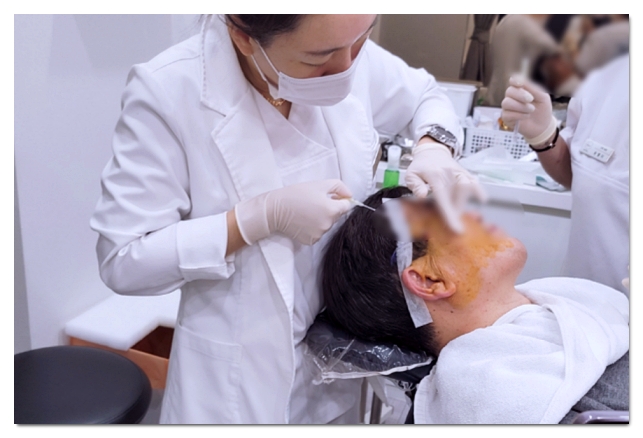
If removal is not necessary but a hollowed area remains over time,
you may need to combine treatment with radiofrequency care that improves the skin environment or procedures that help collagen regeneration
to smooth out the depressed area.
Honestly, the best thing is to receive the procedure properly from the start.
If you have not had it done yet, please be sure to read the post below.
- Criteria for choosing a thread lifting clinic
Then, to avoid these risks from the beginning, what kind of place should you go to for thread lifting in Hongdae?
Thread type, insertion direction, securing fixation points, left-right symmetry, skin elasticity, the pattern of facial muscle use, and more...
If a clinic takes all of these into account and provides thorough consultation?
The chance of a satisfying result is also high.
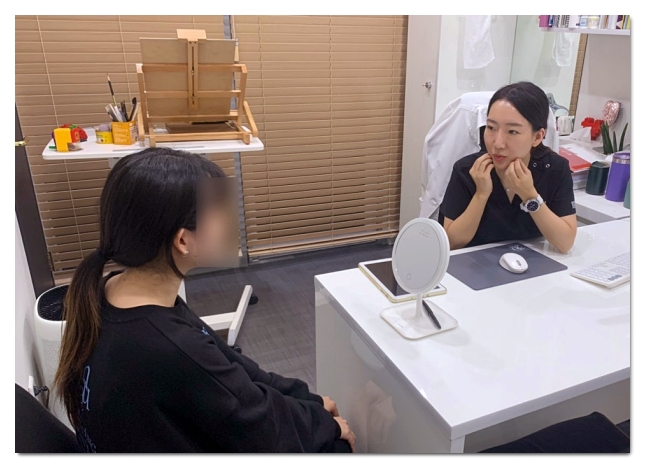
In fact, side effects are not caused by just one or two factors.
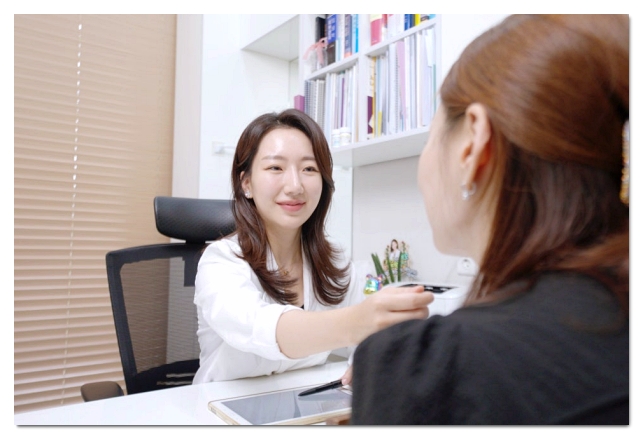
If they carefully assess the condition of my face and explain the procedure plan in a way I can understand,
the level of safety will still improve.
On the other hand, it is best to avoid procedures that are done quickly based only on the face shape while lying still.
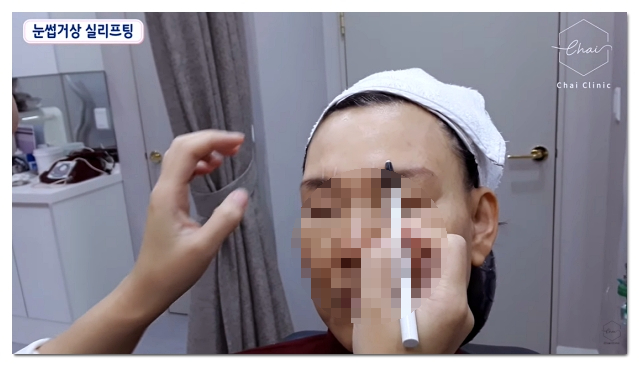
They need to observe in detail what expressions I usually make and in which direction my facial muscles move,
and then find a safe layer that does not interfere with that movement while adjusting the direction and pulling force of the thread.
To do that, in the clinic, you should ask the doctor who will perform the procedure on you as specifically as possible,
and listen carefully to the plan for how the procedure will be carried out.
- Frequently asked questions
Q. How long do bruising and swelling last after thread lifting?
A. It depends on the individual’s skin condition and the type of thread used, but usually mild swelling and bruising subside naturally within 1 to 2 weeks.
If the insertion layer is finely adjusted and the procedure is performed gently while avoiding major blood vessels,
the risk of bruising can be greatly reduced, so there is no need to worry too much^^
Q. It’s hard to open my mouth wide after the procedure. Is that normal?
A. Yes, because the barbs on the thread firmly hold the tissue, during the initial 1 to 2 weeks
you may feel tightness when yawning or chewing hard foods.
This is a natural process as the thread fully settles into place.
- Key summary of solutions for side effects after thread lifting
So far, we have looked at the causes of and solutions for side effects after thread lifting in Hongdae, as well as criteria for choosing a safe clinic.
-
Cause: The main causes are excessive pulling without considering the patient’s skin thickness and setting the insertion layer too shallow
-
Solution: Before the thread adheres, correct by adjusting the tension during the golden time, or by balancing the skin in the depressed area
-
Selection criteria: Side effects are more visible during dynamic movement, so choose a clinic that designs the threads by understanding your usual facial muscle movements
If the cause of the side effects is not properly identified and is left untreated, facial asymmetry or adhesion may become fixed.
Rather than waiting helplessly and struggling mentally,
it can be a good idea to get a consultation at a place that can accurately diagnose your skin condition.
The post below will help you distinguish a good clinic.
Thank you. This has been Dr. Jo Won-jin.