Hello. I am Dr. Jo Wonjin, and I have been seeing patients for 10 years.

I paid a lot of money for Ulthera,
so why do I look the same?
Was it done too weakly because of worry about hollow cheeks?
You made up your mind and got a Hapjeong Ulthera lifting procedure,
but if you looked in the mirror and saw no change, that would be very disappointing.
Today, under the topic of 4 reasons Ulthera didn’t work in Hapjeong,
I’d like to explain the real reasons people feel disappointed after Ulthera treatment.
If you spend just 3 minutes and read this post to the end,
you won’t waste lifting costs into thin air anymore.^^
Table of Contents
-
Ulthera lifting principle
-
4 reasons Ulthera didn’t work
-
Frequently asked questions (Q&A)
-
Key summary of Ulthera’s effects
- Ulthera lifting principle
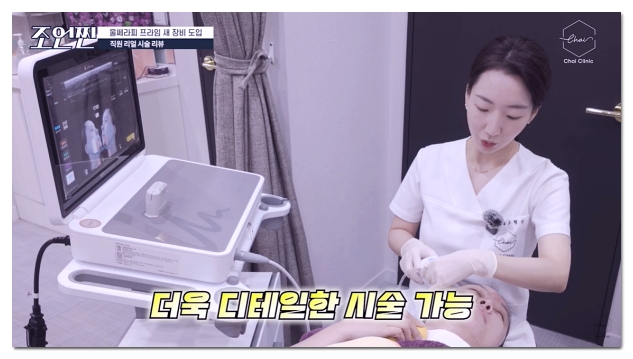
The Hapjeong Ulthera procedure uses ultrasound energy to target the deep fibrous layer of the skin (SMAS).
In simple terms, it is similar to applying heat to stretched knit fabric so it contracts and tightens again.
The ultrasound energy creates thermal coagulation points inside the skin,
and as collagen gradually regenerates around these areas,
firmness improves as sagging tissue is lifted upward.
- 4 reasons Ulthera didn’t work
But why are some people satisfied while others feel it had no effect?
In actual clinical settings, it is usually divided into four main reasons.
- Tip contact and shot angle errors
The first is a problem with technique.
From the outside, the procedure may look very simple because the tip is just placed evenly on the face and fired click, click, done.
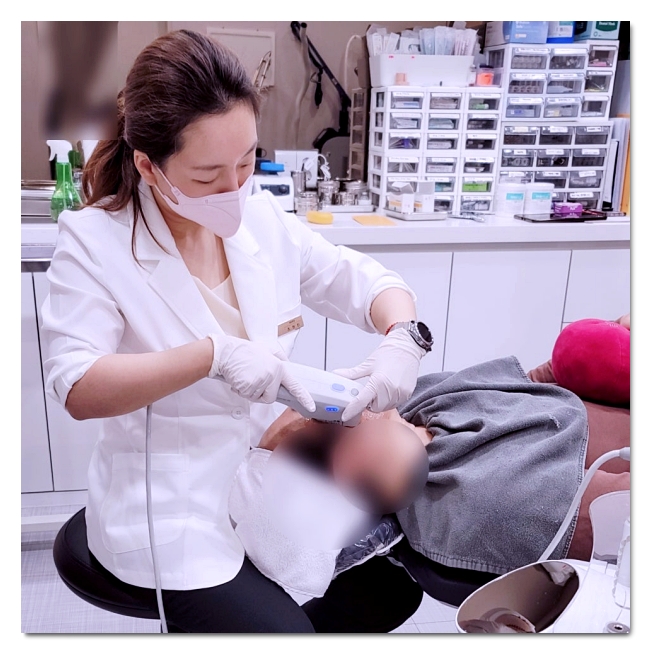
But when each shot is delivered along the contours of the face, the angle matters a lot.
If the ultrasound tip does not fully adhere to the skin or is fired at too flat of an angle,
the energy cannot reach the deep fibrous layer (SMAS) and disperses along the way.
In the end, from the patient’s perspective, even if the full number of shots was delivered,
it means the energy was not properly transmitted into the skin and the money was wasted.
- Too few shots
The third reason is when the number of shots is far too insufficient.
For people whose skin sagging has progressed quite a bit, even 300 to 400 shots are often
far from enough to bring about an overall lifting effect.
Of course, hospitals should naturally avoid excessively increasing the number of shots and pushing treatment unnecessarily.
However, there is clearly a minimum amount physically needed to produce a lifting effect.
It is not enough to simply recommend as few shots as possible to keep the price low;
it is really important to set a cost-effective threshold within your budget that can still produce results,
and then distribute those shots appropriately to the areas of concern.
- Lack of diagnosis and design
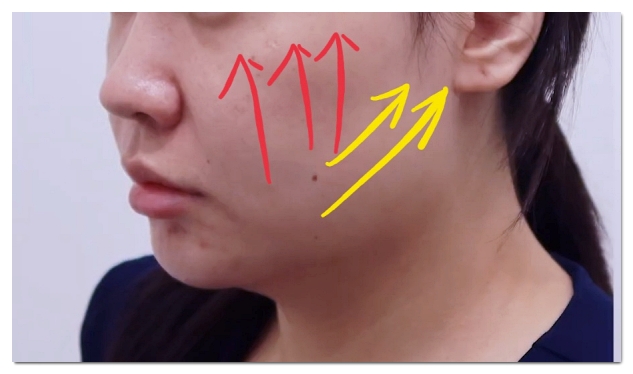
Think back to the pre-procedure design consultation.
Were you lying on the bed when the design was done, or were you seated?
Because the face is affected by gravity, sagging must be checked and the design must be made while seated.
It is also important whether the doctor who personally diagnosed you also performed the procedure all the way through.
Sometimes, there are people with very thin, loose skin who were given Ulthera first without much consideration.
For these people, procedures that help replenish collagen,
or Thermage,
would actually be much more effective.
Before the procedure, check whether you carefully received an explanation about which areas should be avoided according to your facial bone structure.
- It is simply too early for results to appear
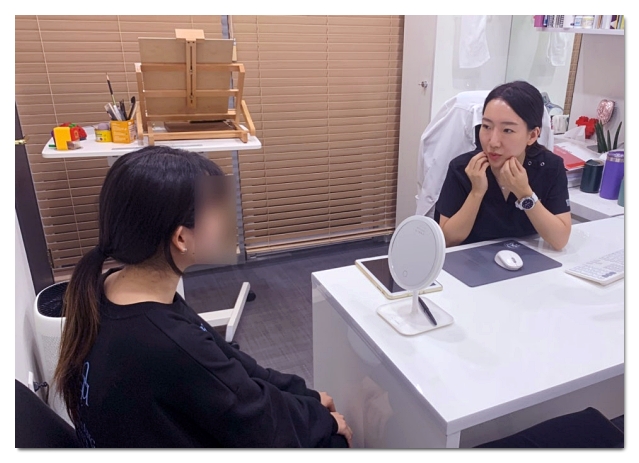
Finally, sometimes people are just too impatient waiting for the outcome.
If it has been less than a month, it is better to wait a little longer.
Some people expect their face to lift immediately after the procedure.
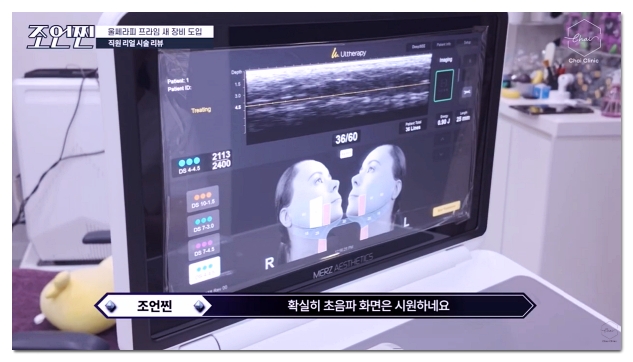
Ulthera creates thermal coagulation points inside the skin and encourages the skin to regenerate collagen on its own.
Therefore, over the course of 1 to 2 months, the contours gradually become firmer and more refined.
- Frequently asked questions (Q&A)
Q. I have little facial fat, so I’m worried about hollow cheeks.
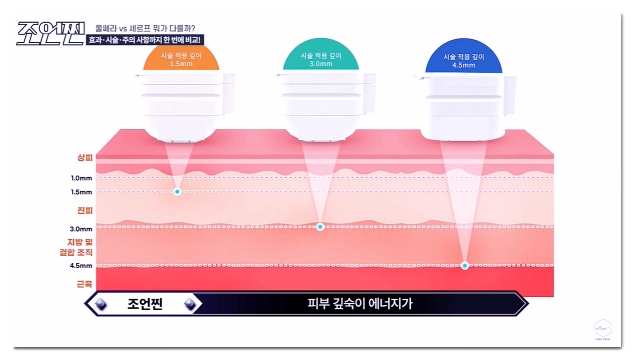
A. In areas with little fat, you can greatly reduce the concern about hollow cheeks by avoiding shots there or using a shallow tip to precisely control the energy.
This part requires especially delicate control,
so we carefully check it during the pre-procedure design consultation, so there is no need to worry too much.^^
Q. Is there a big difference between the Hapjeong Ulthera and Ulthera Prime devices?
A. There is a difference for the clinician performing the procedure as well (shot accuracy improves),
and patients also tend to find Ulthera Prime more comfortable than Ulthera.
If possible, it is better to receive the upgraded Ulthera Prime device, and please refer to the post below for more details.
- Key summary of Ulthera’s effects
Let’s briefly summarize today’s content.
- To get the full effect from Hapjeong Ulthera, an appropriate number of shots and careful custom design are essential
- Precise technique, with close contact to the skin and accurate angles, is important
- It takes 1 to 3 months for collagen to build up after the procedure

If you decide on treatment simply based on low cost or convenience,
the effect may be minimal and concerns such as hollow cheeks may only grow deeper.
You may be wondering which clinic you should go to if you want to pay attention to these details.
The post below will help you identify a good dermatology clinic.
Thank you. This was Jo Wonjin.