Hello. I’m Dr. Jo Wonjin, and I’ve been providing skin care treatment in Hongdae for 10 years.

I got it to make my jaw look slimmer,
so why is my face sagging..?
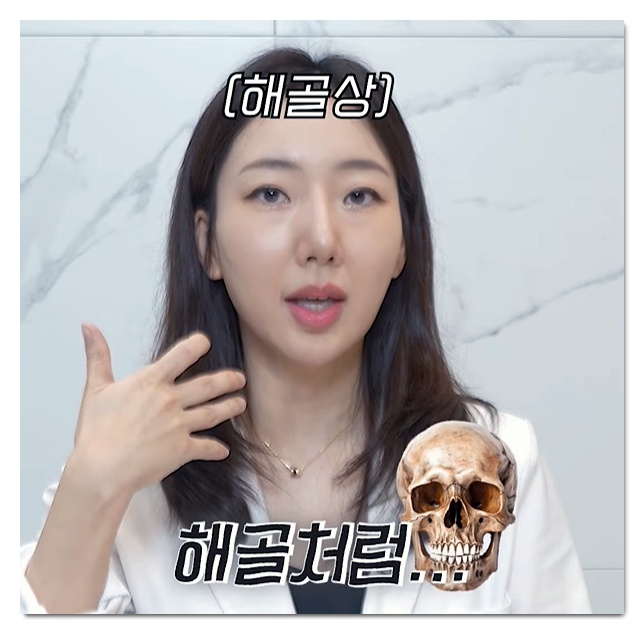
I got jaw Botox wrong and ended up with hollow cheeks ㅠㅠ
When people look at reviews of Hongdae jaw Botox, they sometimes see comments like “my cheeks look sunken”
or “the corners of my mouth don’t lift.”
The side effects of jaw Botox can be broadly divided into five types:
sunken cheeks, facial sagging, candy-cheek phenomenon, left-right asymmetry, and an awkward facial expression when smiling.
Most of these side effects from jaw Botox
can be prevented or minimized by adjusting the dosage, injection site, and repeat interval.
However, if you understand why these side effects happen,
you’ll be able to make a suitable decision for yourself during the pre-procedure consultation, right?
Today, under the topic of Hongdae Jaw Botox: A Complete Guide to Side Effects That Can Occur While Reducing Jaw Muscles,
I’ll organize it in the order below.
-
The principle behind how jaw Botox reduces muscle
-
Five side effects that can actually occur and their causes
-
Key procedure points to reduce side effects
-
Things you must check before getting it
How does jaw Botox reduce muscle?
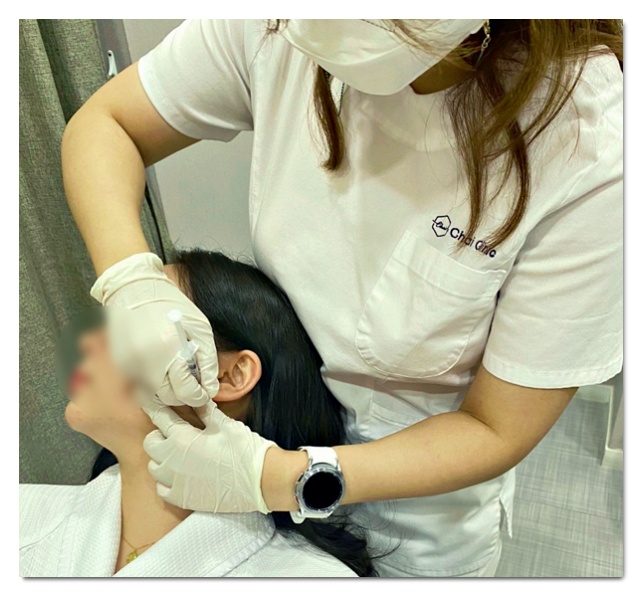
Hongdae jaw Botox is a procedure that injects botulinum toxin into the masseter muscle.
When the jaw Botox solution blocks signal transmission between the nerve and the muscle,
the masseter can no longer contract.
Because muscles tend to atrophy gradually when they are not used,
over time the masseter’s volume decreases and the jawline becomes slimmer.
Usually, the muscle begins to shrink 2 to 4 weeks after the procedure, and noticeable contour changes appear between 4 and 8 weeks.
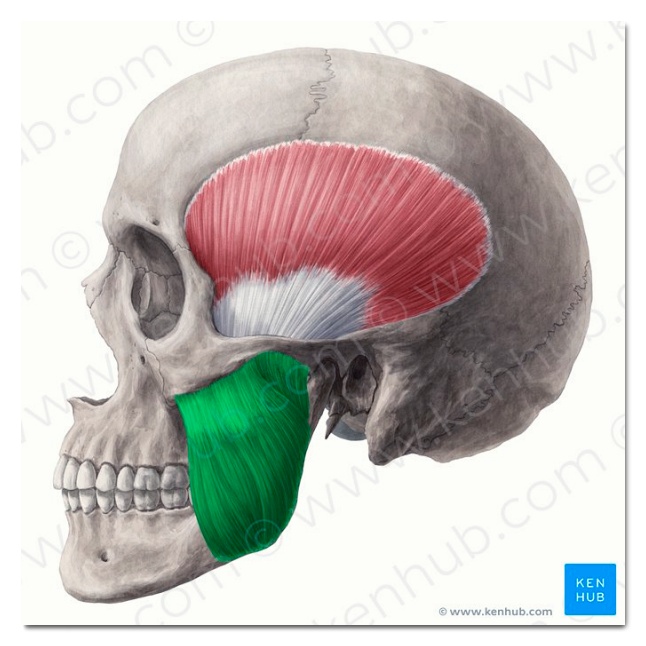 The green area in the photo above is the masseter muscle. That is where jaw Botox is injected.
Five side effects of jaw Botox and their causes
- Sunken cheeks (peanut-shaped face)
The masseter in the square-jaw area spreads quite broadly from top to bottom.
If the medication is injected too high or spread too widely in an effort to make the jaw look slimmer,
the upper part of the muscle that supports the cheeks can also shrink.
As a result, the cheeks become deeply sunken, and the cheekbones can look more prominent, creating what is commonly called a peanut-shaped face.
For people with prominent cheekbones or little cheek fat, the injection points should be set more conservatively (lower and farther outward).
I explained this in more detail in the post below.
- Facial sagging
The jaw muscle also plays the role of a pillar that firmly supports the skin in the lower face.
However, if a large dose of Botox suddenly reduces the volume of this large muscle,
the outer skin can lose support and droop downward like a deflated balloon.
In particular, if people in their 30s or older, whose skin elasticity is starting to decrease, reduce the muscle too aggressively,
the marionette lines (bulldog jowls) can become more noticeable and the face may look saggy.
That is why, for people expected to develop skin sagging, jaw Botox alone is often not recommended.
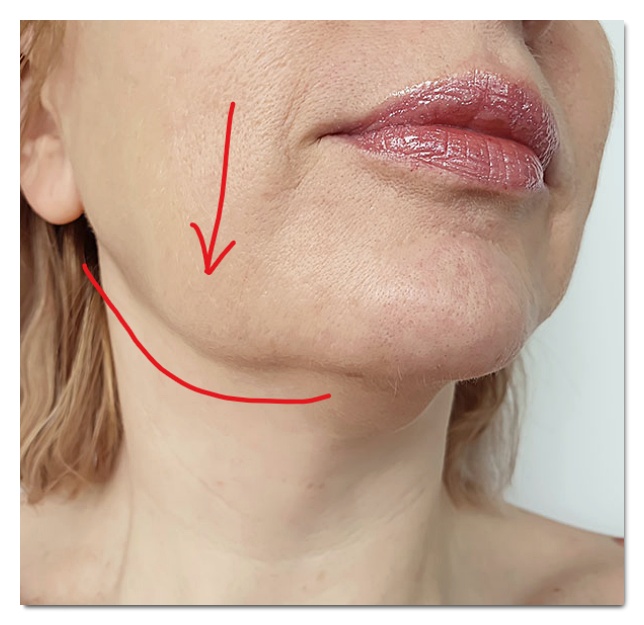 As shown in the photo above, the cheek fat can move downward and sag like marionette lines.
- Candy-cheek phenomenon
A few days after the procedure, when chewing tough food,
the muscle may bulge outward on the outside of the jaw as if holding a piece of candy.
This happens when the jaw Botox does not spread evenly throughout the muscle and only part of it is paralyzed,
causing the remaining un-paralyzed muscle to clench more strongly as compensation.
However, this candy-cheek phenomenon is not something you need to worry about too much.
If needed, a light touch-up on the protruding area will quickly smooth it out.
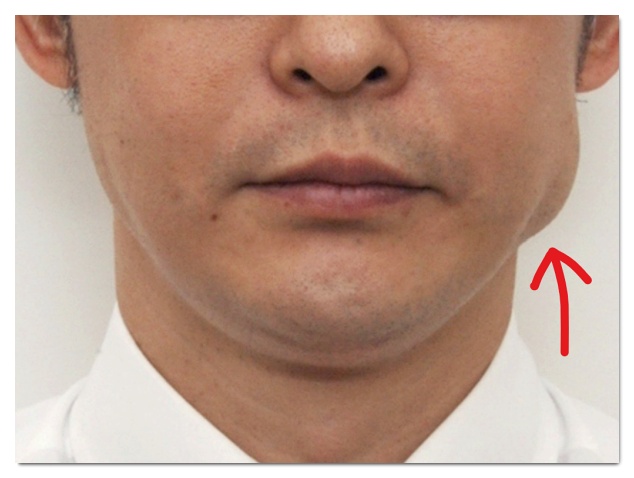 As shown in the photo above, a bulging protrusion can appear at the tip of the jaw.
- Left-right asymmetry
Everyone’s masseter muscles differ in size on each side.
If you have a habit of chewing on only one side, injecting the same dose on both sides can actually create asymmetry.
Before the procedure, the difference between the two sides should be checked and the dosage finely adjusted.
- Awkward facial expression when smiling
In rare cases, if Botox spreads to nearby facial muscles (the zygomaticus major or zygomaticus minor),
the expression may become awkward, such as the corners of the mouth not lifting well.
This is often a problem with the injection site and occurs when the muscle target is incorrect.
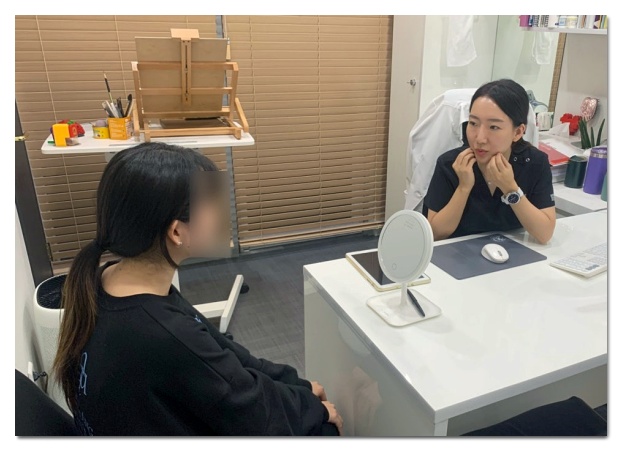
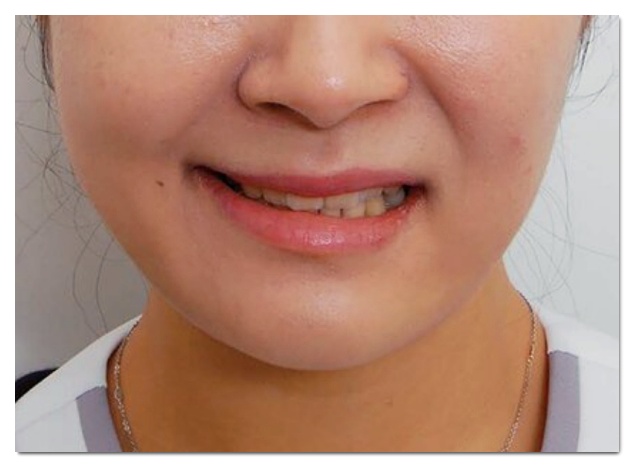 Can you see that, in the mouth shown in the photo above, one corner of the mouth does not lift when smiling?
Procedure points to reduce jaw Botox side effects
The causes of side effects from Hongdae jaw Botox commonly come down to three things: dosage, location, and interval.
- Set the dosage according to facial shape:
Do not inject the same amount for everyone;
determine the appropriate dose by considering the size of the masseter and the condition of the cheek fat.
- Accurate injection site:
To avoid affecting facial muscles or salivary glands, the anatomical boundaries must be
accurately identified, and the injection should be placed at the thickest part of the muscle.
- Proper repeat interval:
A 3 to 6 month interval is generally recommended, and after checking the residual effect of the previous procedure,
the timing should be adjusted to prevent excessive atrophy.
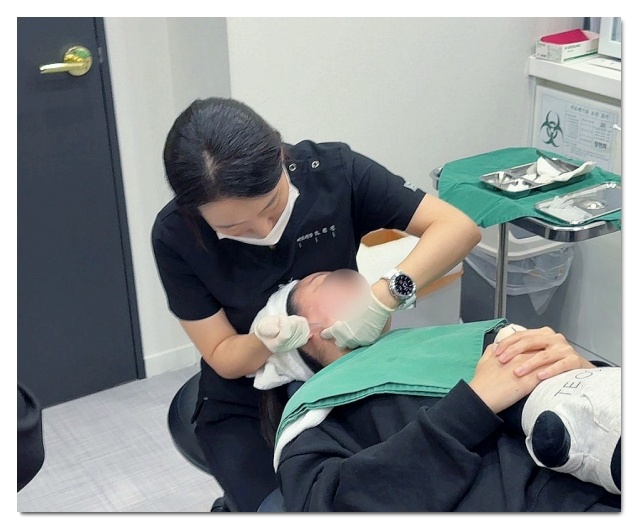
Things to check before getting jaw Botox
| Check item | Key point |
|---|
| Muscle evaluation | Does the doctor who will perform the procedure check the size of both masseter muscles in detail by palpation before treatment? |
| Dosage setting | Is the dose individually adjusted according to your muscle mass and facial shape? |
| Previous treatment history | Are previous procedure counts, dosage, and intervals checked and reflected? |
| Left-right difference | Is the dosage set differently by considering the difference between the left and right sides? |
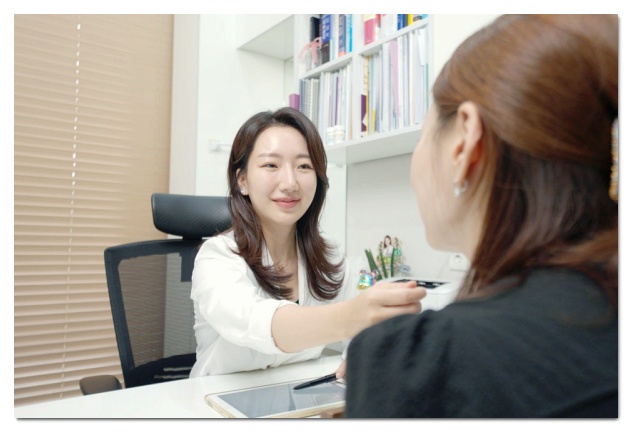
Hongdae jaw Botox may seem simple, but it has to be performed while keeping many different variables in mind.
Please receive treatment from a place that carefully identifies the various conditions and performs the procedure safely.
Thank you. This was Jo Wonjin.
[How to Avoid Being Deceived by a Clinic]