Hello. I’m Doctor Jo Won-jin, and I’ve been treating skin for 10 years.

When you look into Ulthera, there is one question you inevitably face.
Should I get Ulthera with sedation, or just have it done without it?
When you read Ulthera reviews, some people say, "I had it without sedation and it was fine,"
while others say, "I don’t think I could have endured it if I hadn’t,"
so it only gets more confusing.
To put it simply, it goes like this. (How to choose)
People for whom sedation is appropriate: those who have previously had to stop a non-sedated procedure because of pain, or those with extreme fear of procedures
People who can do well without sedation: most other people (a combination of anesthetic cream + local nerve block + AirNox)
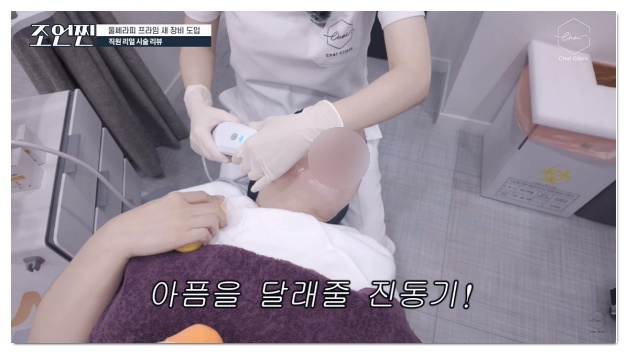 Let me explain the system that lets you undergo it while fully awake, as shown in the photo above.
Sedation is certainly more comfortable, but because the procedure is performed while you are asleep, there are structural drawbacks.
And there are also other methods that can manage pain sufficiently.
In today’s post, I’ll organize it in the following order.
- How painful Ulthera actually is (pain differences by area)
- The disadvantages of Ulthera sedation
- Three ways to reduce pain without sedation, and the actual level of comfort they provide
- Final criteria for choosing Ulthera sedation based on your situation
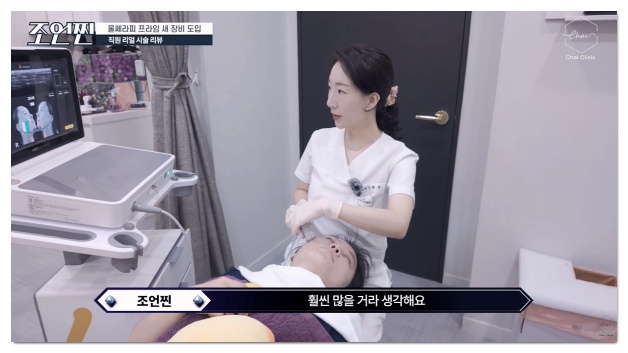
- Ulthera pain: how painful is it really?
Ulthera delivers ultrasound energy deep into the skin
and creates thermal coagulation points in the SMAS layer (the fascia layer)
to produce a lifting effect.
The ultrasound reaches a depth of 3.0 to 4.5 mm below the skin surface,
and because nerves are distributed at that depth, you may feel a tingling or bone-rattling kind of pain.
However, the difference in pain varies quite a bit depending on the area.
| Area | Perceived pain | Reason |
|---|
| Forehead, above the eyebrows | Strong | The bone is 바로 underneath, so the ultrasound vibration is felt more strongly |
| Jawline, chin tip | Strong | The bone is close and the skin is relatively thin |
| Cheeks, midface | Moderate | There is a fat layer, which provides some cushioning |
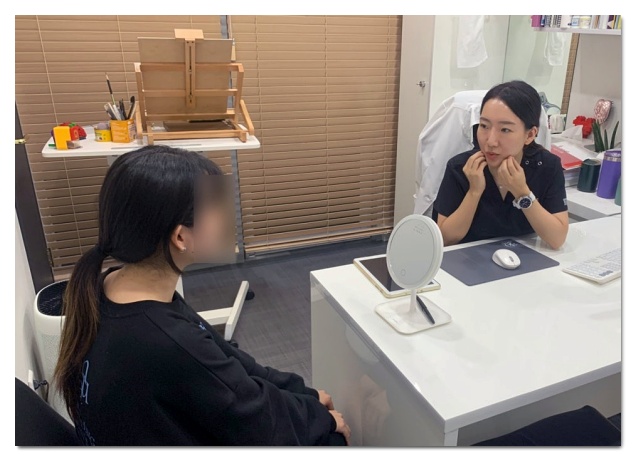
If you are having the full face treated, it is more accurate to say that it is not "painful the entire time,"
but rather that there are moments of strong pain in certain sections.
In other words, if the painful areas are managed well, the entire procedure can be endured 충분히.
- Disadvantages of Ulthera sedation
It is true that if you are asleep, you hardly feel any pain during the procedure.
But there are a few structural limitations.
- You cannot directly check the procedure
It is fundamentally impossible to confirm during the procedure whether the planned number of shots was delivered accurately, or whether genuine tips are being used.
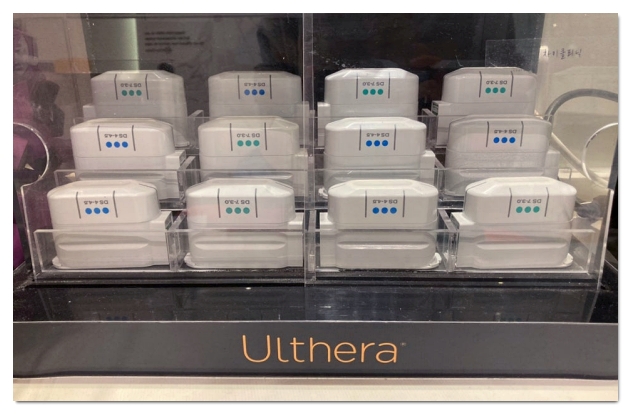 The photo above shows a genuine Ulthera tip. It is important to verify that the procedure was performed exactly according to the number of shots you wanted.
2) Real-time feedback is blocked
When you are not asleep, the patient can communicate the location and intensity of pain, allowing fine adjustments,
The photo above shows a genuine Ulthera tip. It is important to verify that the procedure was performed exactly according to the number of shots you wanted.
2) Real-time feedback is blocked
When you are not asleep, the patient can communicate the location and intensity of pain, allowing fine adjustments,
but in a sedated state, the practitioner has to rely entirely on the device settings.
In fact, giving this feedback is what serves as a standard for checking whether the shots are being delivered properly.
Since feedback and adjustment are not possible from the start, there are cases where the energy is lowered during treatment.
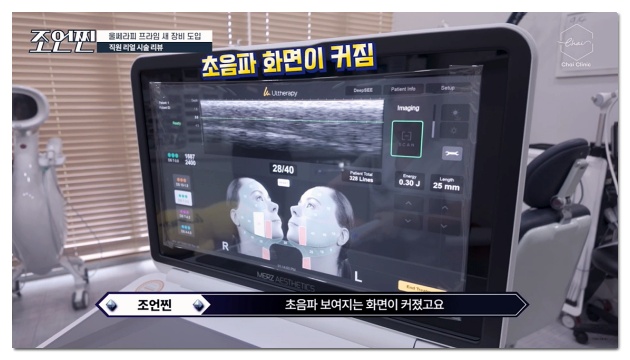
- Risk from unconscious movement
Even if consciousness is asleep, the body can still feel sensations unconsciously,
so there are cases where the head turns or the body moves a lot.
In such cases, the energy may be delivered to unintended areas, increasing the risk of burns or hollowing of the cheeks.
- An emergency response system is necessary
Sedation is a legitimate medical procedure, and oxygen saturation and heart rate, among other things,
must be continuously monitored by specialized personnel and equipment.
If an emergency were to occur and there were no proper response, it would be truly dangerous.
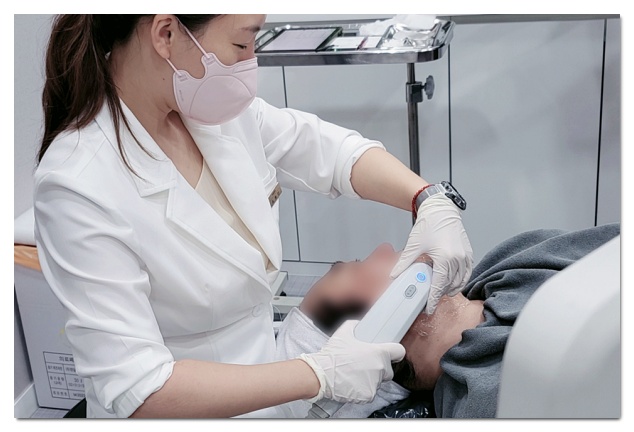
- Three ways to manage Ulthera pain without sedation
The key point is that each of the three methods addresses a different layer of pain.
There is a synergy when they are combined.
- Anesthetic cream (apply for enough time)
Reduces surface stinging. Apply generously for at least 40 minutes so the ingredients can penetrate deeply.
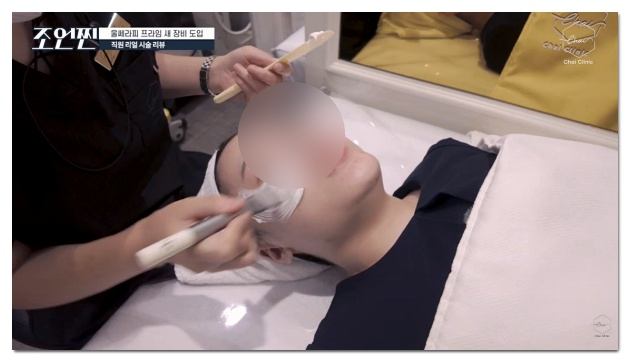 The photo above shows the cream anesthesia process.
2) AirNox (laughing gas)
By inhaling nitrous oxide, it relaxes the body and raises the pain threshold.
The photo above shows the cream anesthesia process.
2) AirNox (laughing gas)
By inhaling nitrous oxide, it relaxes the body and raises the pain threshold.
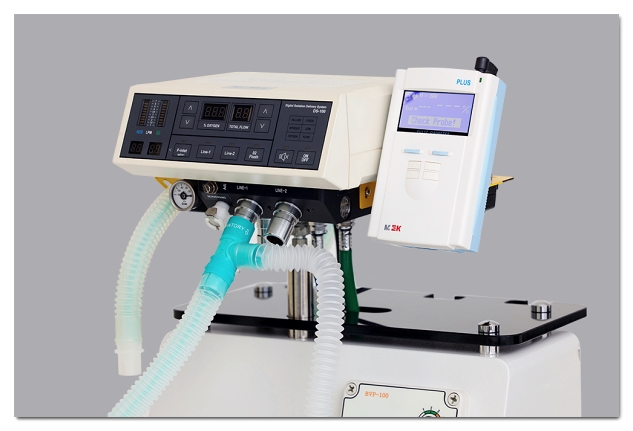
While remaining conscious, it can make you feel drowsily calm and give the sense that the procedure time passes quickly.
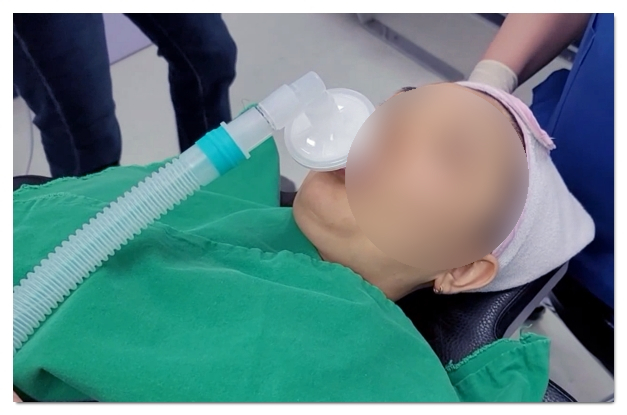 The photo above shows someone inhaling AirNox (laughing gas).
- Local nerve block
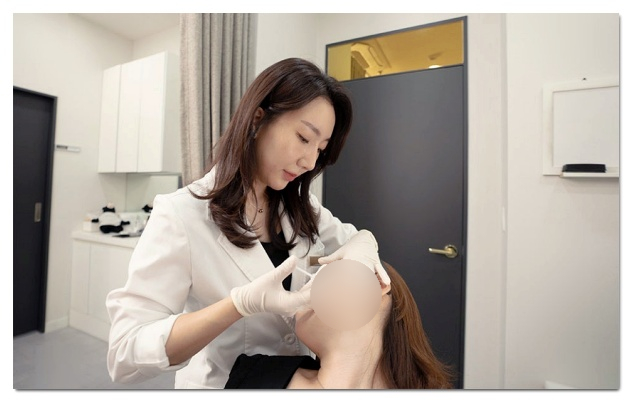
For especially painful areas, a small amount of anesthetic is injected along the sensory nerve pathway.
It effectively controls sharp pain.
| Method | How it works | Coverage | Actual sensation |
|---|
| Anesthetic cream | Surface penetration | Epidermis to shallow dermis | Reduces surface stinging |
| AirNox | Inhalation-based calming | Relieves overall tension | Dulls discomfort and anxiety |
| Local nerve block | Blocks nerve pathways | Deep layers, near bone | Greatly reduces tingling and bone-rattling sensations |
In addition, getting Ulthera’s latest version, Ulthera Prime, can help reduce the feeling of pain.
I wrote more details in the post below.
- Which option should I choose for my situation?
Non-sedated treatment recommended
- People who want to visually confirm during the procedure that genuine tips are being used and that the planned number of shots is properly delivered
- People who want detailed lifting tailored safely to their skin thickness and response
- People who can tolerate some soreness and do not want to take unnecessary risks
Sedation to consider
- People who have trauma from having a procedure stopped because of pain
- People who feel extreme fear that cannot be controlled even with a multilayer anesthesia system

In conclusion, Ulthera is definitely a painful procedure, but sedation is not the only answer.
During consultation, first check how systematically the clinic manages pain and anesthesia.
If the clinic’s system is well organized, you can still receive a satisfying procedure without sedation.
Thank you. This was Jo Won-jin.
[Can you tell a skilled clinic by its lifting equipment?]