Hello, I’m Dr. Jo Won-jin, a dermatologist who has been providing skin care consultations for 10 years.

I made a reservation and then canceled because of the pain ㅠㅠ
Do you just use sedation?
Many people ask this, but even Ulthera’s headquarters does not recommend sedation.
So today, I’ll talk about three ways to reduce Ulthera pain:
- Adjusting the numbing cream application time
- Using AirNox
- Local anesthesia
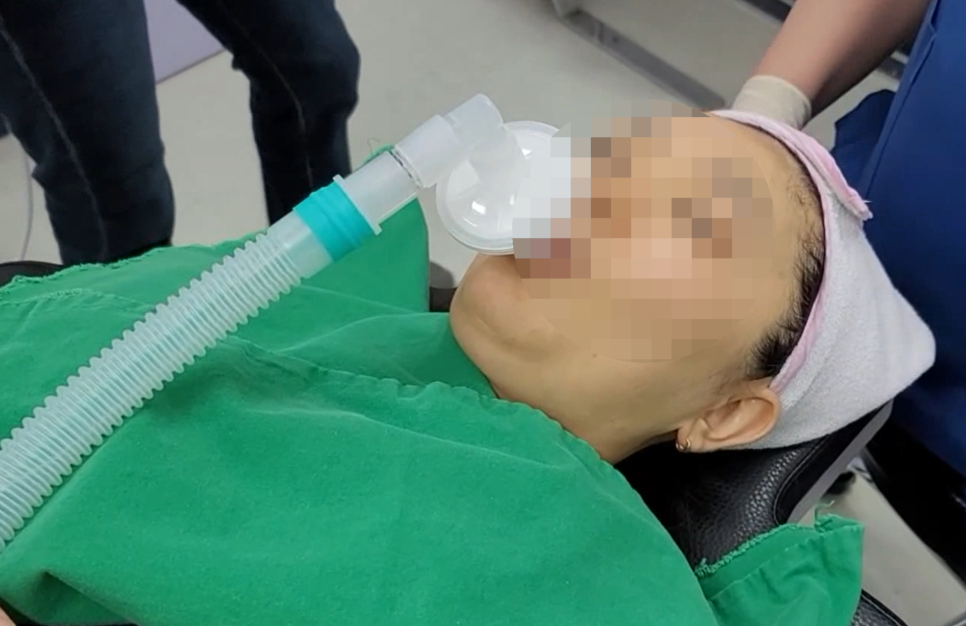
The photo above shows a patient inhaling AirNox before the procedure.
With this setup alone, many people say, “It was more tolerable than I expected.” Today, under the topic
Scared of Ulthera Pain? How to Reduce the Pain (Not with Sedation), I’ll organize the information below.
- Why Ulthera hurts
- How the painful sensation differs between Ulthera and Thermage
- Specific ways to reduce Ulthera pain
Why Ulthera Pain Occurs
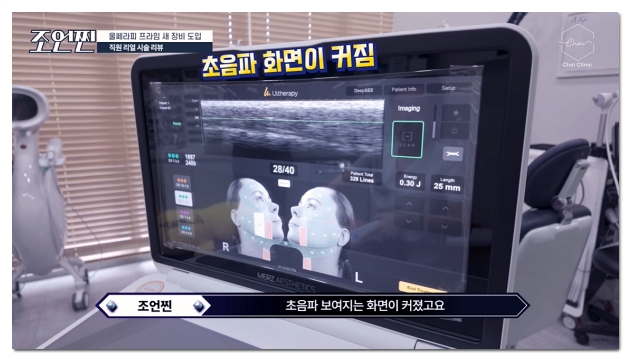
Ulthera is a procedure that sends ultrasound energy deep into the skin (SMAS).
Simply put, it is similar to how a microwave heats food from the inside.
It stimulates the inside directly rather than the surface.
This energy creates thermal coagulation points at depths of 4.5 mm, 3.0 mm, and 1.5 mm in the skin, inducing collagen regeneration.
Heat is generated during this process, and that is felt as pain.
So the fact that Ulthera hurts also means that the energy is reaching deep layers.
What Does Ulthera Pain Feel Like?
Many people describe it as “feeling like someone is scraping the bone.”
With each shot, it feels like a hot, sharp sting coming from inside the skin.
Areas where bone is close to the surface, such as the jawline or forehead, tend to feel stronger.
Compared with Thermage, the type of pain is a bit different.
| Category | Pain sensation | Areas that hurt especially |
|---|
| Ulthera | Sharp, stinging, and a pressing-on-the-bone feeling | Areas close to bone, such as the jawline and forehead |
| Thermage | Hot, burning sensation | Fleshier areas such as the cheeks and under the jaw |
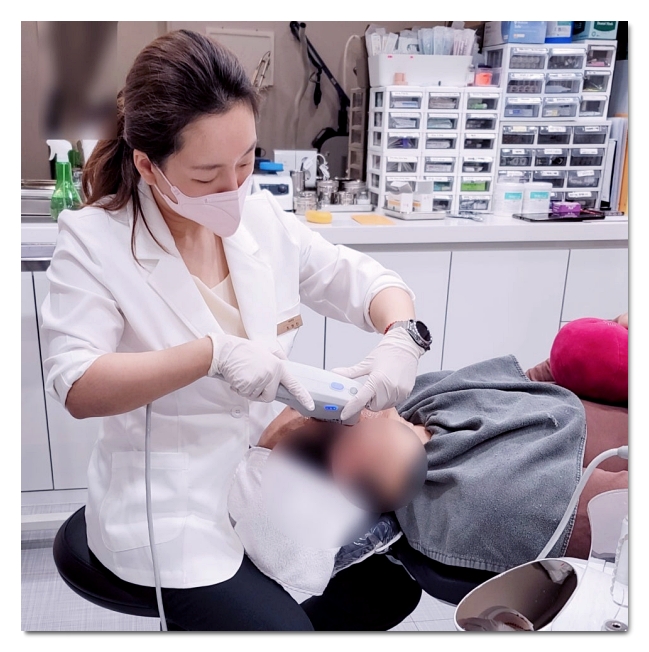
The photo above shows Ulthera being performed without sedation.
In fact, some people say Ulthera hurts more, while others say Thermage was harder to tolerate.
Because the type of pain is different, people are more sensitive to different sensations.
For those who are weak to heat, Thermage may be harder; for those who are sensitive to sharp stinging sensations, Ulthera may be harder.
If the same procedure feels tolerable at one clinic but unbearable at another, it is likely due to differences in the anesthesia system.
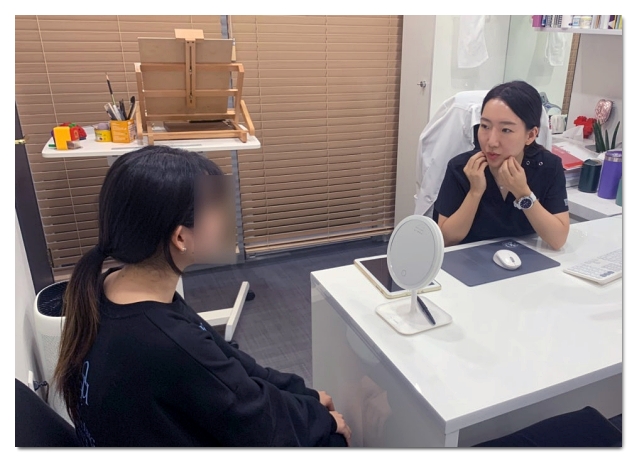
How to Reduce Ulthera Pain
Many people ask, “Can’t you just do sedation?”
People think sedation makes you sleep so you can’t feel the pain,
but in fact, consciousness is not completely blocked, so if they feel pain unconsciously, they may move.
The problem is that this also increases the risk of burns and the risk of facial fat loss.
Because the patient’s exact response cannot be checked,
it also makes it harder to adjust the energy output appropriately.
There is also a risk that any emergency situation that may occur will not be handled immediately.
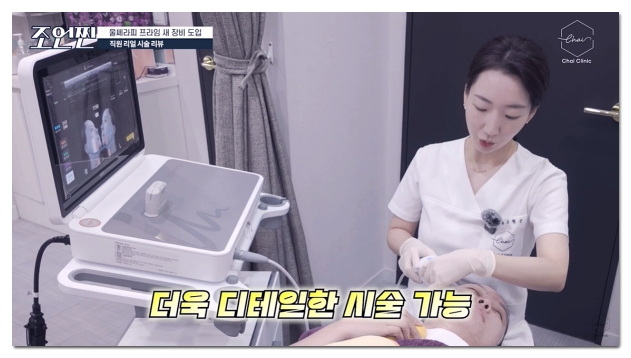
Then you may be wondering what kind of place you should go to.
It is good to check how systematic and step-by-step the clinic’s anesthesia system is.
For example, in our case,
we apply a 3-step pain management protocol instead of sedation.
| Step | Method | Role |
|---|
| Step 1 | Apply numbing cream for 40 minutes to 1 hour | Dulls sensation in the epidermis to dermis layers |
| Step 2 | Inhale AirNox | Reduces pain by dulling sensation itself |
| Step 3 | Local anesthesia (if needed) | Dulls sensation in the nerve areas where pain is strong |
AirNox is similar to the laughing gas used in dentistry.
You remain conscious, but your sensations become dulled.
The effect is surprisingly noticeable.
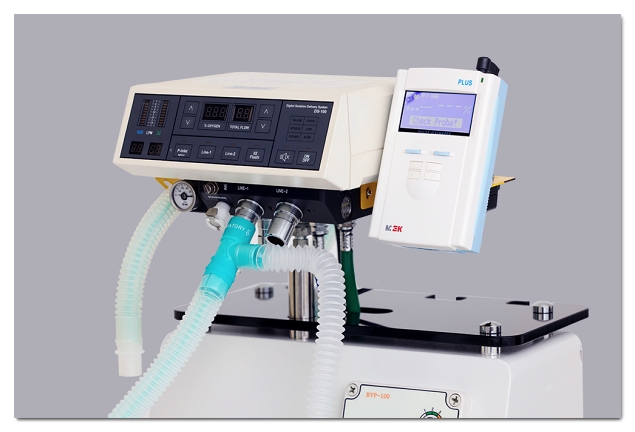 The hose in the photo above delivers laughing gas (nitrous oxide + oxygen). When you inhale it, your sensations become dulled.
Even in Rejuran procedures, which are known to be more painful than Ulthera,
many people say, “This is manageable” when AirNox is used.
We apply the same setup to Ulthera as well.
Of course, pain varies from person to person, so not everyone will feel it the same way.
Still, the difference compared with simply having the procedure done without it is definitely noticeable.
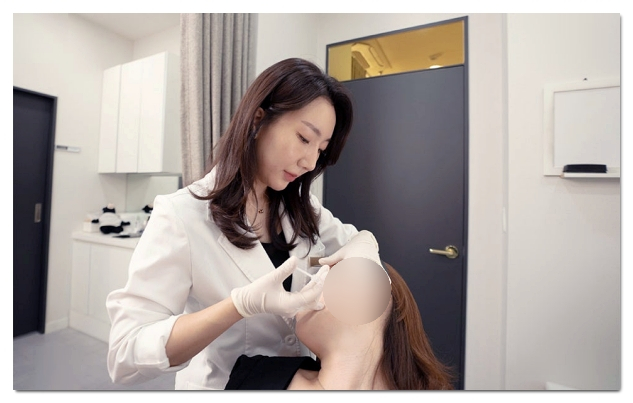
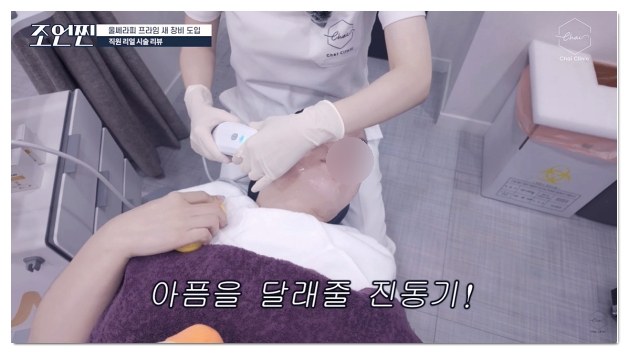
Treating the local area as shown in the photo above also helps reduce pain.
In fact, when it comes to procedures, it is hard to tell a good place from a bad one until you’ve actually had it done.
If you want not only anesthesia but also proper laser lifting treatment, it is best to get it done at a place that meets at least the conditions below.
Frequently Asked Questions
Q. How long does an Ulthera procedure take?
About 1 hour and 30 minutes, including anesthesia time.
Allowing enough time is also the first point in pain management.
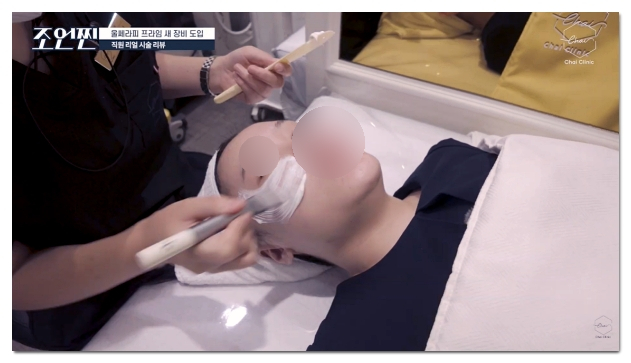 The photo above shows numbing cream being applied, and I recommend receiving it for at least 40 minutes.
Q. Does it still hurt after the procedure?
Right after the procedure, you may feel numbness and swelling.
In most cases, people recover enough to return to daily life within 1 to 2 weeks.
However, please note that this may vary by individual.
Q. How long does AirNox anesthesia take to wear off?
Once you stop inhaling AirNox, your sensation returns within a few minutes.
Since you can resume daily life immediately after the procedure, you do not need to set aside separate recovery time.
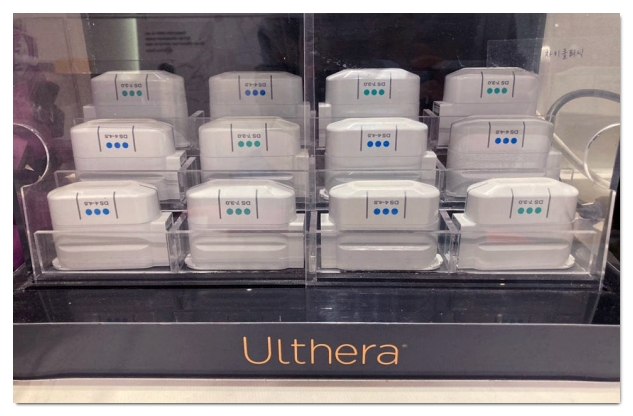
Key Summary
- Pain is a natural response caused by ultrasound reaching deep layers, and the type of pain itself is different from Thermage
- A 3-step protocol of sufficient numbing cream application + AirNox + local anesthesia is a more realistic way to manage pain than sedation
- Even with the same device, the experience can differ greatly depending on the anesthesia setup
If you’ve been hesitating about Ulthera because of the pain, I hope this post was at least a little helpful.
Thank you. This was Jo Won-jin.