Hello. I’m Dr. Jo Won-jin, and I’ve been treating skin conditions in Hapjeong for 10 years.

Can you dissolve filler that was injected incorrectly somewhere else? ㅠㅠ
What should you ask during a filler consultation to tell whether a place is good?
It can be dissolved, but it is most accurate to receive treatment from the doctor who performed the previous procedure.
If you want to avoid side effects, it helps to remember the three points below during a filler consultation.
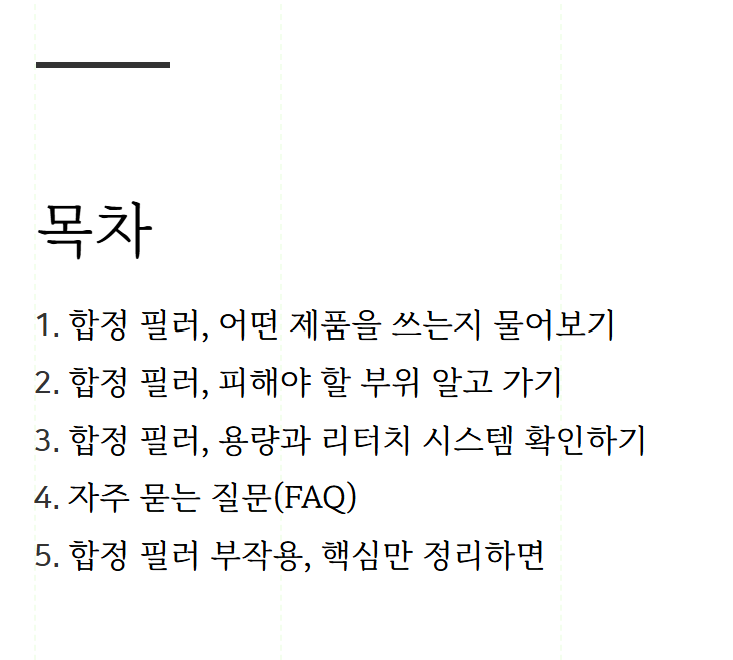
-
Ask what product is being used
-
Know which areas should be avoided
-
Check the amount and touch-up system
The part that people considering Hapjeong filler worry about most is side effects and an unnatural look.
To prevent the procedure from becoming stressful due to unexpected side effects, you need to check carefully from the consultation stage.
Today I’ll explain three things that are good to know before your consultation.
- Hapjeong filler: Ask what product is being used
The first thing to check during a consultation is what product will be used for the area being treated.
Fillers are divided into domestic and imported products, and each differs in duration and viscoelasticity (firmness and cohesiveness).
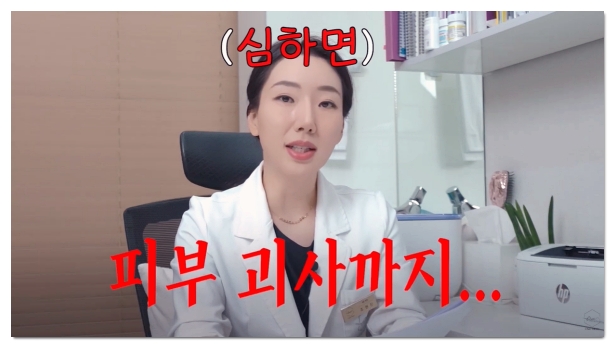
The most serious filler complication is necrosis, right?
There are many domestic products available, but I personally prefer imported fillers with accumulated clinical data over time.
(And in my personal experience, they also seem to dissolve a bit more cleanly and neatly.)
Another possible filler side effect is spreading or an unusual texture.
You need to use products with different physical properties depending on the area being treated.
For example, in areas with little movement that need a firm, defined line,
such as the forehead or the bridge of the nose, products with strong support are advantageous.
If a soft product is injected, it will quickly spread under the firm skin of the nose bridge.
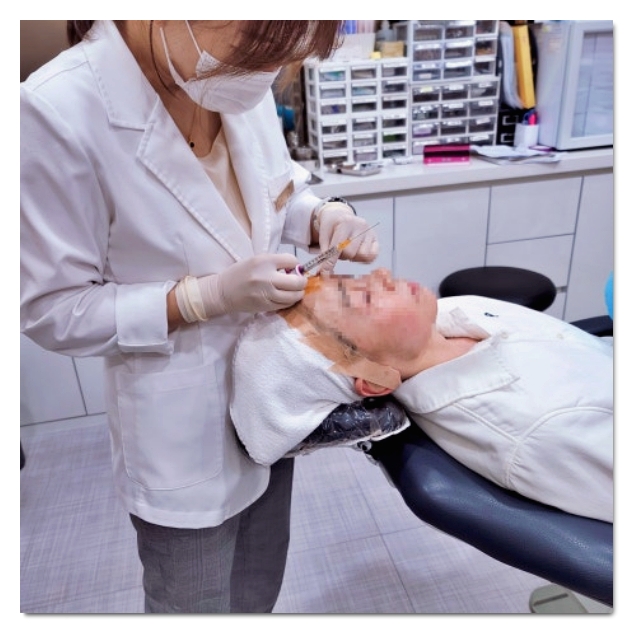
By contrast, in areas with a lot of movement from facial muscles, such as the lips or under the eyes, you should use a product with a softer texture and less foreign-body sensation.
I’ve written more about this in the post below.
- Hapjeong filler: Know which areas should be avoided
The areas that require the most caution during filler procedures are the glabella, nose, and forehead.
That is because important blood vessels leading toward the eyes pass through these areas.
If material enters a blood vessel, complications can occur, ranging from skin necrosis to, in rare cases, vision damage.
It is not common, but because there have been actual reported cases, caution is necessary.
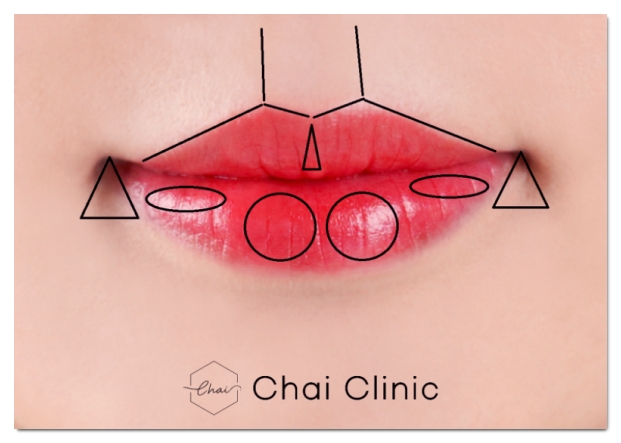
There are also areas where the procedure should not be performed at all (you can tell from the photo below, right?)
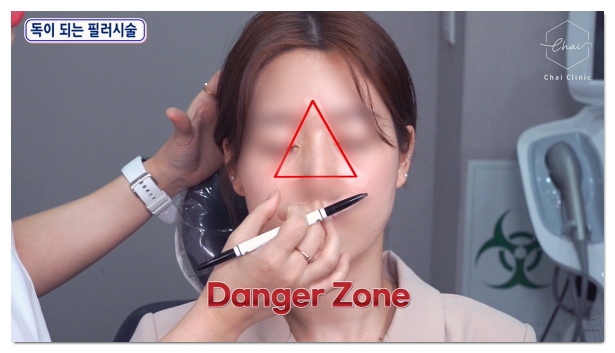 The triangular area in the photo above requires extra caution during treatment.
So it’s good to check the following three things.
- Whether a blunt-tipped cannula is used
- Whether the injection is performed slowly at low pressure
- Whether hyaluronidase (a dissolving enzyme) is kept on hand for immediate response if a vascular issue is suspected
During consultation, check whether the medical staff fully understand the vascular anatomy of the area,
whether they limit the treatment range by considering the risks, and whether emergency response is possible.
- Hapjeong filler: Check the amount and touch-up system
The more filler is injected from the start, the more unnatural it can look,
and the greater the chance it will look different from what you expected once the swelling goes down.
The method I recommend is as follows.
- First treatment: Design and plan with a conservative amount
- After 2 to 4 weeks: Check the progress after swelling has gone down
- If needed: Fine-tune the balance through a touch-up
During consultation, it is good to check whether the touch-up is included in the initial treatment cost and how long the touch-up period lasts.
- Frequently asked questions (FAQ)
Q. If a side effect occurs, can it be dissolved right away?
Hyaluronic acid fillers can be dissolved with hyaluronidase.
However, immediate response is only possible if the clinic always keeps this medication on hand,
so it is a good idea to confirm whether it is stocked during consultation.
Q. How long should I monitor things after the procedure?
In general, swelling subsides over 2 to 4 weeks, and the final shape is determined at that point.
If you have severe pain or any color change in the treated area, it is safest to visit the clinic immediately.
- Hapjeong filler side effects: If you only want the key points
To summarize,
- Before filler treatment, check whether the product’s physical properties match the area
- Whether the safety of the treatment area is explained thoroughly
- Whether aftercare, including touch-ups, is properly managed

If you ignore these details and simply decide based on price or volume, satisfaction will inevitably be low.
Filler is a procedure that fills in the missing 1% to complete overall harmony.
If you use the three questions I shared today well during your consultation, you should be able to make a choice without failure.
If you’re wondering how to choose a clinic that provides this kind of careful consultation, please read the article below.
Thank you. This was Jo Won-jin.