Hello. I’m Doctor Jo Wonjin, and I’ve been treating skin conditions in Hongdae for 10 years.

After one toning session, my face seems even more
blotchy
There are lots of small dots around my cheekbones.
Can these also be removed with toning?
When I see patients for Hongdae laser toning, I hear comments like these often.
Laser toning is definitely a useful and effective procedure.
But if you get it without knowing your skin condition, it can do more harm than good.
Today, under the topic Hongdae Laser Toning: If You Don’t Know This, Melasma Can Actually Get Darker, I’ll talk about the following:
-
Causes of darker pigmentation
-
How to tell different types of pigmentation apart
-
The principles and method of laser toning
-
How to check whether your skin is in a condition suitable for treatment
If you read this article all the way through, you’ll be able to set a clear standard for yourself for whether you can get toning right now.
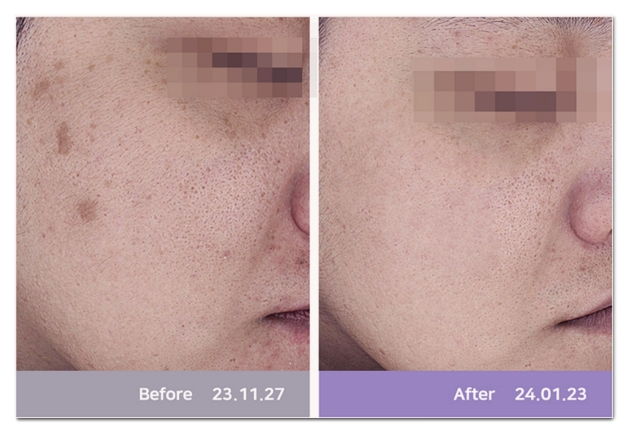
- Check the depth and type of pigmentation in 3 stages
The reason pigmentation doesn’t fade easily is simpler than you might think.
It’s because melanin isn’t only in the shallow epidermis; it can also be present deep in the dermis.
To help explain, let me give a simple analogy.
Epidermal pigmentation is like dust on the outer surface of a window, which can be wiped away easily.
But dermal pigmentation or melasma is like a stubborn stain that has soaked deep into the inside of the glass.
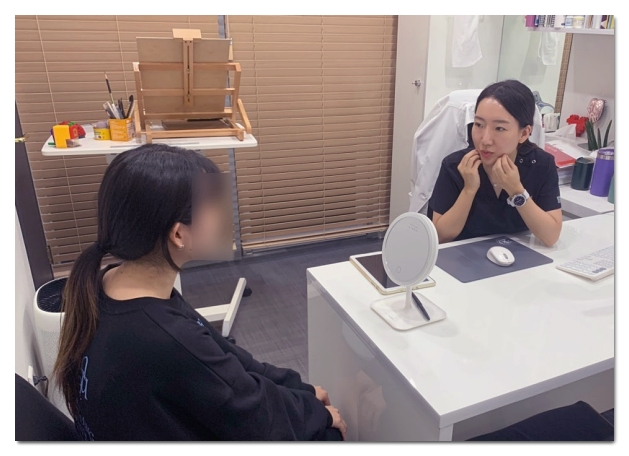
Before your consultation, look in the mirror and check which category your pigmentation falls into using these 3 stages.
Stage 1: Borders
If it spreads out in a blurry, diffuse way, it is closer to melasma.
If it is clearly marked like a dot, it is more likely to be a solar lentigo or a freckle.
Stage 2: Tone
Light brown suggests epidermal pigmentation, while a bluish-gray or grayish-brown tone suggests a higher likelihood that deep dermal melanin is involved.
Stage 3: Distribution pattern
If it is spread almost symmetrically on both cheekbones or the forehead, melasma should be suspected.
Rather than simply repeating Hongdae laser toning, accurately identifying your own pigmentation is the first criterion.
- The principle is not to scrub hard once, but to treat gently many times
"My skin visibly brightened after just one session."
It’s a good idea to be skeptical of reviews or advertisements like this at least once.
There is a high chance that it is only a temporary effect from improved complexion.
For actual melasma or deep pigmentation to meaningfully fade,
cumulative treatment of at least 5 to 10 sessions at 1- to 2-week intervals is essential.

The principle of laser toning is not to erase a stain by rubbing it hard all at once.
It works by repeatedly delivering gentle, low-energy pulses to break the pigment into smaller pieces,
allowing our body’s macrophages to gradually clear it away.
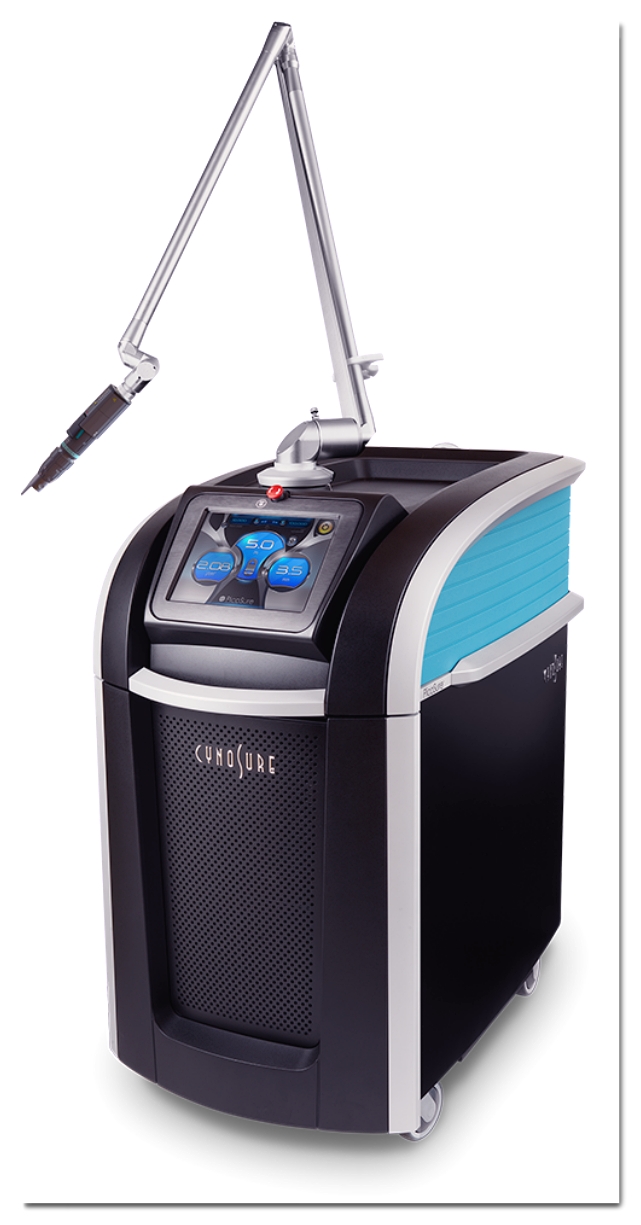 The photo above shows one of the pico toning devices, PicoSure.
What happens if you rush and raise the output too much or shorten the intervals?
Our skin feels strong irritation and, as a defense response, produces even more pigment.
This is called a rebound phenomenon, and it can lead to the worst outcome: melasma becoming even darker.
Therefore, rather than obsessing over the number of sessions,
the results depend on the detailed skill of the medical team, who carefully monitors the skin’s response and knows when to pause.
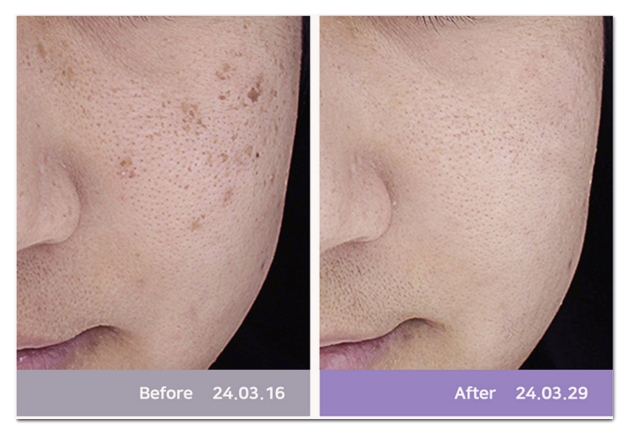 The photo above shows a dual toning procedure.
- Check whether your skin is in a condition suitable for treatment right now
In my clinic, I have criteria for postponing or declining Hongdae laser toning.
If any of the situations below apply to you, starting treatment today would be disadvantageous.
-
A strong sunburn within the past 4 weeks:
If your skin has already been burned by strong sunlight and is red and inflamed, pigmentation can become even darker.
-
Active inflammatory reactions:
If inflammation is active, such as with acne or seborrheic dermatitis, calming the inflammation must come first.
-
A compromised skin barrier:
On skin that is too dry and sensitized, stimulation can be harmful.
You cannot place a heavy building on ground that is full of inflammation and weakened.
First strengthen the skin barrier that serves as the foundation,
and then begin pigmentation treatment. In the end, that is the fastest way to avoid taking unnecessary detours.
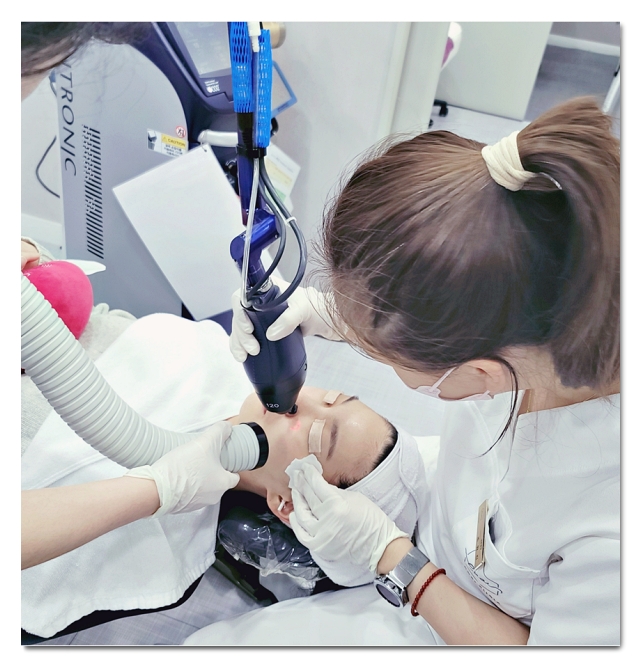 The photo above shows pigmentation treatment in progress.
Q. Once toning is finished, is the result maintained for life?
A. Unfortunately, there is no way to permanently prevent melasma from recurring.
Because it especially responds to female hormones and chronic heat stimulation, you should approach it as a condition that requires ongoing management.
However, if you follow the daily care below, you can significantly extend the maintenance period.
- Sun protection: The number one cause of melasma recurrence. Apply a product with SPF 30 or higher carefully every day
- Avoid heat stimulation: Avoid saunas, steam rooms, and intense exercise on the day of treatment
- Focus on moisturizing: Apply moisturizer thinly and frequently at about 1.5 times your usual amount
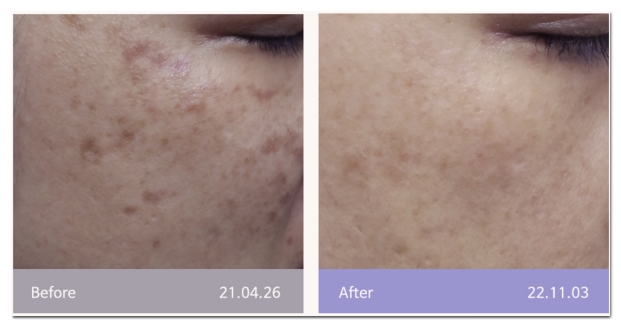
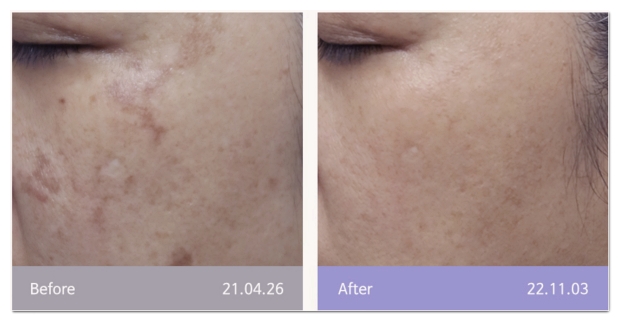 The photo above shows triple pico toning. Various forms of pigmentation have become generally lighter.
Key summary of Hongdae laser toning
- Accurate diagnosis: First distinguish in three stages whether your pigmentation is shallow freckles or deep melasma.
- Safe cumulative treatment: Don’t try to finish it in one session; make a safe plan for 5 to 10 sessions with gentle energy.
- Check the barrier: If your skin is inflamed or very sensitive, barrier treatment and calming care come first.

I sincerely hope you carefully consider these three criteria,
and find a clinic that objectively and honestly evaluates your skin condition.
If you have any additional questions about laser toning, feel free to leave a comment anytime.
Thank you. This has been Jo Wonjin.
[How to Avoid Losses During Laser Procedures]