Hello. I’m Jo Wonjin, the chief director of Chai Clinic, where I have been providing dermatologic care in Hongdae for 10 years.

These days, do people get lip fillers without going overboard and just add volume with 1cc?
My lips are small and look tight. Can they also be widened horizontally?
These are questions I hear very often in the clinic.
Today, under the topic of 'Lip Filler 1cc Before and After, Pain, Duration, and Precautions,'
I’ll cover cases I personally treated with around 1cc,
the level of pain people actually feel during the procedure, how long the results last,
and the precautions you should definitely know before getting lip fillers.
I’ve focused especially on the questions people ask most often when considering lip fillers.
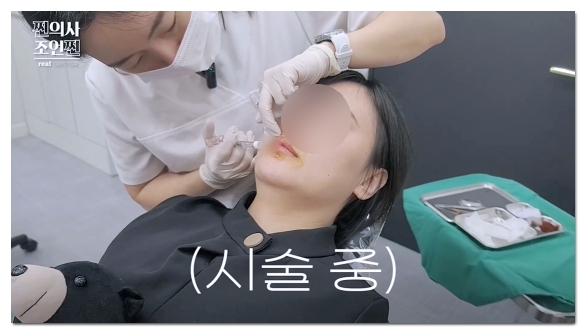
[Key Summary of Lip Fillers]
- Around 1cc cases: Natural volume increase and a clearer lip line (see cases below)
- Pain: Starts with a slight feeling of heaviness, then the anesthetic ingredient in the filler solution spreads and sensation becomes duller
- Duration: About 1 year on average for imported fillers
- Points to note: 1:1 customized design, active use of touch-up treatment, choose imported fillers with good longevity and stability
- Precautions: Avoid alcohol, intense exercise and saunas, and physical pressure
- Lip filler 1cc before and after: What changes can you expect?
1cc is the standard amount most commonly recommended in lip filler procedures.
It is neither too little nor too much, so it is the amount most often recommended for first-time patients.
(To prevent overdoing it, we sometimes recommend injecting less than 1cc for the first treatment, then checking the progress and receiving the remaining amount through a touch-up.)
The main changes you can expect with a 1cc treatment are as follows:
- Thin lips become naturally fuller
- A blurry lip line (border line) becomes more defined
- The M-shape of the upper lip (Cupid’s bow) becomes more noticeable
- Corners of the mouth that looked downturned appear slightly lifted
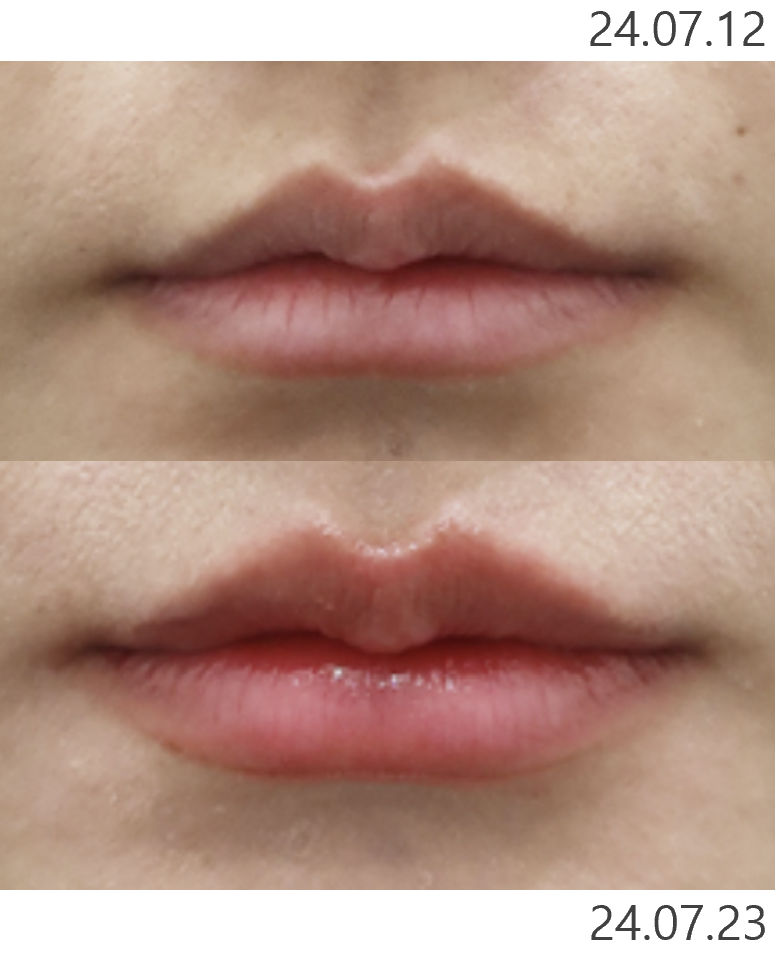 [Before and after lip filler] In the photo above, the ratio between the upper and lower lips has changed more stably, and the slight asymmetry of the upper lip has also been corrected to symmetry. Overall wrinkle improvement is also visible.
Q. Can they also be widened horizontally?
To some extent, yes. If the design is made subtly even toward the corners of the mouth,
it can create the visual effect of widening the lips horizontally.
However, if the ends are filled too much,
the lip shape may become overly emphasized and look unnatural.
That is why delicate distribution that considers both the lip shape and the overall facial proportions is essential.
In the photo below, you can see that it has improved to appear naturally widened horizontally.
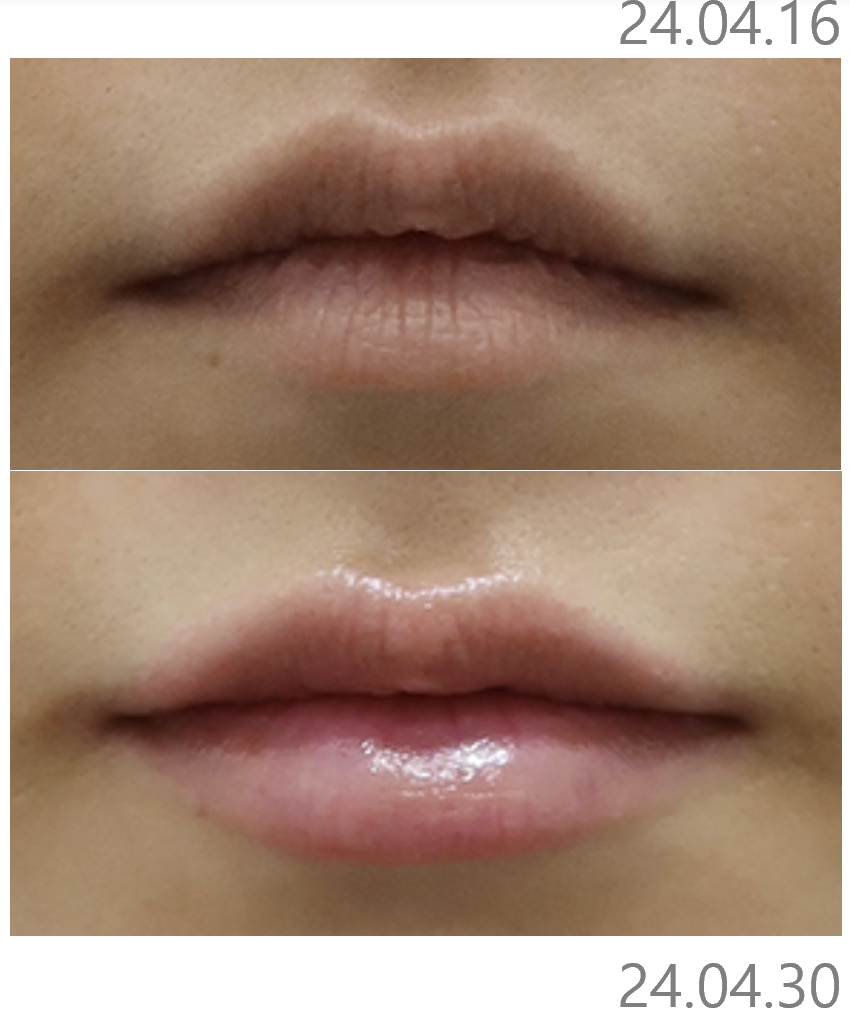 [Before and after lip filler 2] In this case as well, the overall wrinkles and the line of the downturned mouth corners have improved. The lips also appear to have been naturally widened horizontally.
- How much pain does the procedure cause?
The pain usually starts as a slight feeling of pressure or heaviness at the beginning.
However, lip filler solution contains an anesthetic ingredient called lidocaine,
so as the product is injected,
the sensation gradually becomes dulled.
As the procedure progresses, the pain tends to decrease rather than increase.
If expressed as a pain score, it is around 3 to 4 out of 10.
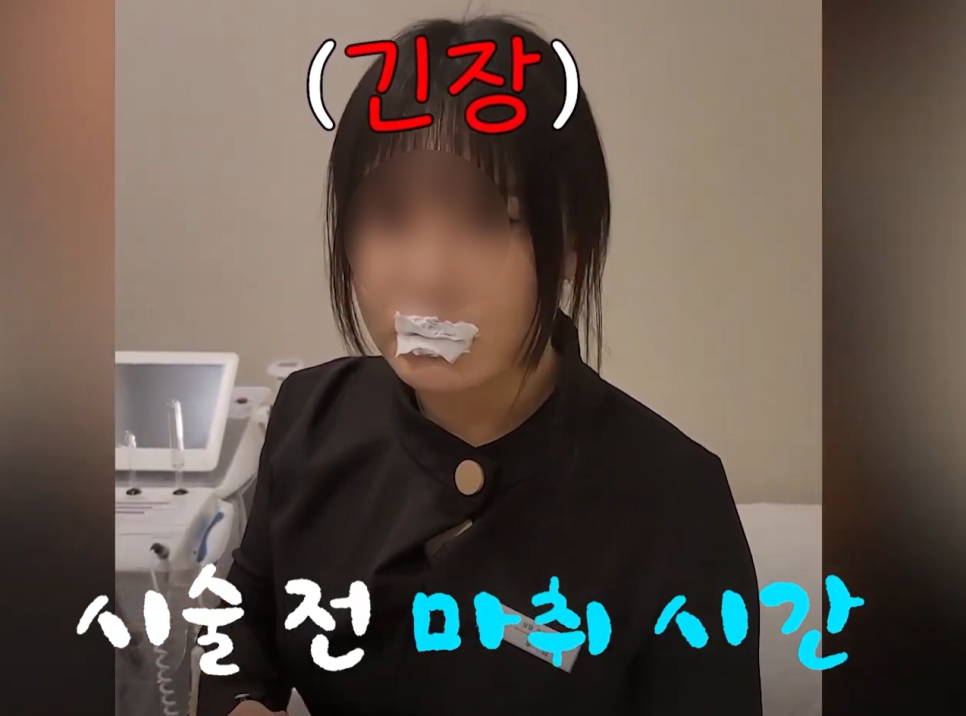
Still, to reduce even the initial pain,
the procedure is usually started after 충분한 anesthesia beforehand.
About 30 to 40 minutes before the procedure, anesthetic cream is applied generously over the entire lip area,
and if anesthesia is maintained for more than 30 minutes,
most people find it much easier to tolerate than with shorter anesthesia.
Immediately after the procedure, the following reactions may occur:
- Swelling (most severe on day 2 to 3, subsides within a week)
- Throbbing sensation
- Bruising in rare cases
- How long does it last?
For imported fillers, the average duration of lip fillers is about 1 year.
I tend to recommend imported fillers designed specifically for the lips over domestic fillers.
The first reason is that they last longer.
Domestic fillers tend to lose volume relatively quickly after the procedure,
whereas imported fillers can remain stable for more than a year if properly maintained.
The second reason is safety.
These products have been used worldwide for a long time and have proven safety,
so the risk of side effects is relatively low.

However, the duration can vary quite a bit from person to person.
It is affected by the following factors:
- Metabolic rate (the faster it is, the faster it is absorbed)
- Amount of facial expression and talking (the more there is, the faster it is absorbed)
- Frequency of smoking and drinking (more frequent means shorter duration)
- Aftercare after the procedure (the better the care, the longer it lasts)
- Important precautions to know before getting lip filler
I’ll first summarize the three points I emphasize most to patients in the clinic.
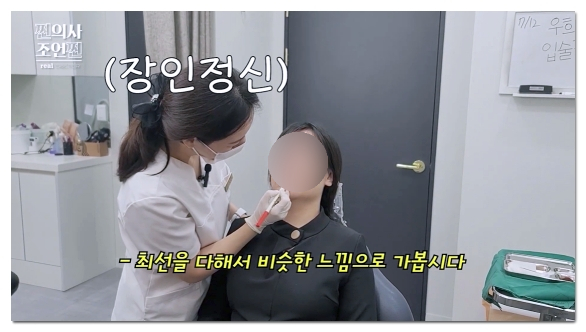
- 1:1 customized design
Even with the same 1cc, the result changes completely depending on where and how it is distributed.
The length of the philtrum, lip thickness, left-right asymmetry, and overall facial proportions
all need to be considered in a 1:1 customized design for a natural result.
If the procedure is performed without proper design,
important details that should be discussed to achieve the result you want are omitted.
This has a very large impact on the outcome.
Examples include an unwanted shape or asymmetry that remains.
- Actively use touch-up treatment
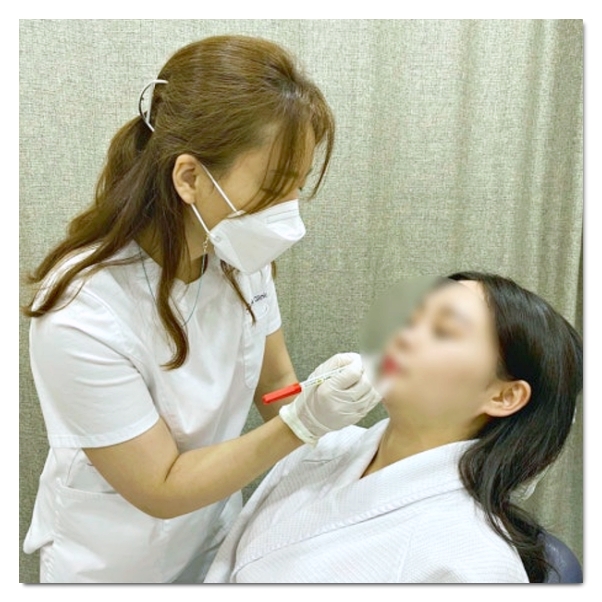
Rather than trying to complete everything in one session from the start,
it is safer to fill about 70–80% of the target amount in the first session and then, after 2 to 3 weeks,
check how the tissue has settled and reinforce any 부족한 parts.
This approach makes it possible to fine-tune the shape while accurately seeing how it looks after the swelling goes down,
and it also reduces the risk of an unnatural appearance or asymmetry.
 3) Choose imported filler with good longevity and stability
If you choose an unverified product just because it is cheap,
3) Choose imported filler with good longevity and stability
If you choose an unverified product just because it is cheap,
not only may the duration be short, but the risk of discomfort or side effects may also increase.
(Actually, I recommend domestic products for Botox, but not for fillers.)
Especially since lip mucosal tissue is a sensitive area,
it is safer to proceed with an imported filler whose stability has been proven.
Regarding the points above, I have written in detail about how a place that does lip fillers well
carries out the procedure.
Please be sure to read it before getting lip fillers.
- Precautions before and after the procedure
Before the procedure (from 1 week before)
- Avoid aspirin and anti-inflammatory painkillers (higher risk of bruising)
- Avoid alcohol as much as possible
- Please let us know in advance if you have a history of lip herpes
- The procedure should be postponed during pregnancy or breastfeeding
Immediately after the procedure (48 hours)
- Apply ice packs frequently (no more than 10 minutes at a time)
- No intense exercise, saunas, steam rooms, or hot showers
- Do not touch or massage with your hands (risk of filler migration)
- Avoid using straws, physical pressure, and smoking
- Avoid spicy foods and hot foods
To wrap up
Let’s review what we discussed today.
- 1cc is the standard amount best suited for a natural volume increase
- Pain is tolerable thanks to the anesthetic cream and the anesthetic ingredient in the filler
- For imported fillers, the average duration is about 1 year
- 1:1 customized design, touch-up treatment, and choosing a stable imported filler are key to good results

Even with the same 1cc, the result changes completely depending on where and how it is designed.
It is most important to meet medical staff who will think along with you about a customized design that fits your facial proportions and lip shape.
Thank you. This has been Jo Wonjin.