Hello. I’m Jo Won-jin, the chief director of Chai Clinic, where I have been treating skin conditions in Hongdae for 10 years.

Rejuran and Juvelook both are said to be effective for pores,
so what’s the difference?
When looking into skin booster procedures, the two that are compared most often are Rejuran and Juvelook.
Both are procedures that directly inject medication into the dermis to improve skin from within,
but because their ingredients and mechanisms of action are completely different, the question should not be “Which is better?” but rather “Which is right for my skin?”
With the topic “Rejuran vs Juvelook: How to Choose Based on Your Skin Concerns?”
in this post, I’ll organize the differences between Rejuran and Juvelook at a glance—from ingredients, effects, treatment intervals, pain, and duration—
and also explain how to choose based on different skin concerns.
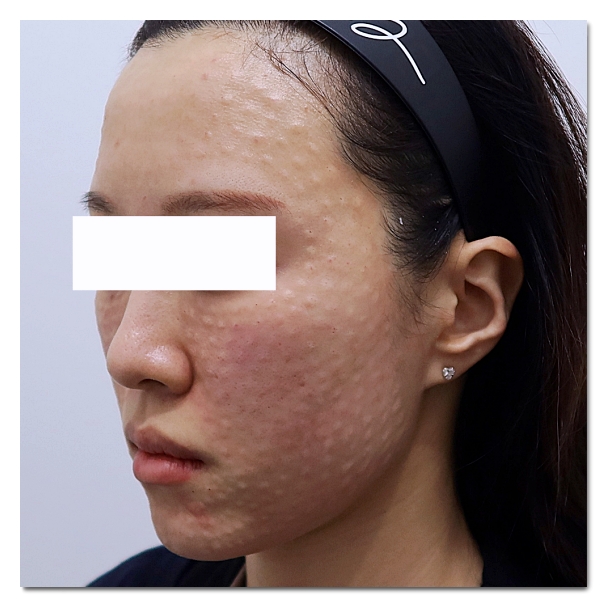 The photo above shows the embossed appearance after a Rejuran treatment. It’s dense and evenly placed, right?
Table of contents
-
What is Rejuran?
-
What is Juvelook?
-
Rejuran vs Juvelook: Key comparison
-
Selection criteria by skin concern
-
3 things to check before treatment
-
Frequently asked questions (FAQ)
What is Rejuran?
The key ingredient in Rejuran is polynucleotide (PN) extracted from salmon DNA.
It causes almost no foreign-body reaction in the human body, and when injected into the dermis, it helps damaged cells regenerate themselves.
Recommended for:
- Those with thin, sensitive skin and frequent redness
- Those with severe inner dryness that makes makeup sit unevenly
- Those with fine lines and rough skin texture
- Those with weakened skin barriers due to breakouts or acne marks
Brief overview of the Rejuran lineup
- Rejuran Healer: the basic version, focused on regeneration and barrier strengthening
- Rejuran HB+: added hyaluronic acid + lidocaine → hydration + pain relief
- Rejuran i: for the eye area only (custom-designed for thin skin)
- Rejuran S: higher viscosity, specialized for depressed areas and scar treatment
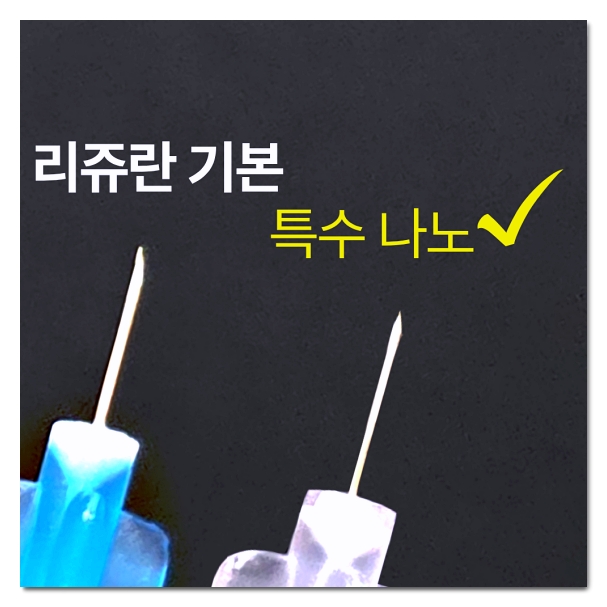
Rejuran is also known for being quite painful.
If you use thinner nano needles and adjust the injection tension instead of the standard package,
you can greatly reduce unnecessary bruising and pain.
Please make sure to read the article below before getting treated.
What is Juvelook?
Juvelook is a collagen booster that combines PDLLA and hyaluronic acid.
The PDLLA particles gradually break down in the dermis, stimulating fibroblasts and inducing your own collagen production.
Its defining feature is that the effect builds gradually over time.

Recommended for:
- Those with enlarged and sagging pores
- Those concerned about acne scars and pitted marks
- Those with reduced overall skin elasticity
- Fine lines and deep expression lines around the mouth, nasolabial folds, and between the brows
- Those who want natural volume restoration but feel fillers are burdensome
Note: Juvelook also has different lines.
Juvelook (skin booster) is for improving skin texture and pores, while Juvelook Volume is for restoring volume in sunken areas.
They are selected differently depending on the purpose.
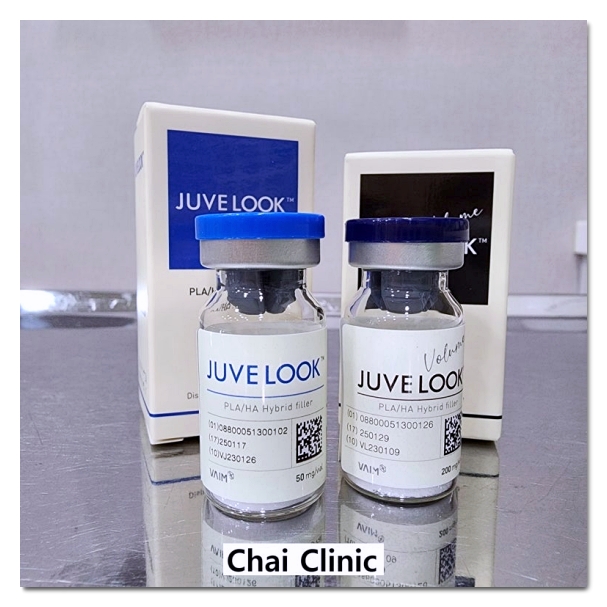 The left side in the photo above is Juvelook, and the right side is Juvelook Volume.
However, if Juvelook is not performed correctly, there is a risk of nodules, where hard particles can be felt under the skin.
Among the factors, hydration is the most important.
Think of it as soaking it in water; if this is not done well, the risk of nodules increases.
You can check how to receive Juvelook while avoiding nodule risks in the article below.
Rejuran vs Juvelook: Key comparison
| Category | Rejuran | Juvelook |
|---|
| Main ingredient | PN (polynucleotide, salmon DNA) | PDLLA (poly-D,L-lactic acid) + hyaluronic acid |
| Mechanism of action | Regeneration and repair of damaged skin cells | Structural rebuilding through collagen production induction |
| Key effects | Strengthens the skin barrier, improves inner dryness, fine lines | Improves pores and scars, elasticity, skin texture |
| Onset of effect | Relatively fast (2–3 weeks) | After collagen production (4–6 weeks and later) |
| Duration | About 3–6 months | About 6–12 months |
| Recommended interval | Every 2–4 weeks, 3–4 sessions | Every 4 weeks, 2–3 sessions |
| Downtime | Embossing for 3 days to 1 week, bruising for 1–2 days | Small marks for 1–2 days |
| Pain | Strong | Relatively less |
Selection criteria by skin concern
- If pores, scars, or pitted areas are your concern → Juvelook
- If inner dryness, sensitivity, or redness are your concern → Rejuran
- If reduced elasticity or sagging are your concern → Juvelook
- If fine lines, skin texture, or makeup sitting unevenly are your concern → Rejuran
- If all of the above apply? → Combination treatment
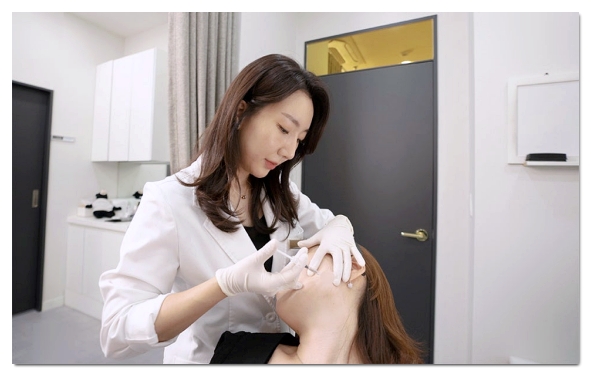
Things to check before treatment
Authenticity verification:
Before treatment, personally check the unopened original product box and tip. For both Rejuran and Juvelook, it is safer to receive treatment at an officially certified clinic.
Customized planning:
Rather than a fixed package, it is better to choose a place that adjusts the dose and depth according to your skin condition (thickness, sensitivity, and the areas of concern).
Anesthesia system:
Rejuran in particular tends to be quite painful because of its high viscosity, so choose a place that offers anesthesia options such as numbing cream or Air Nox.
Post-treatment care tips
- Avoid using irritating cosmetics for 24 hours after treatment
- Use soothing ingredients such as ceramides, panthenol, and madecassoside
- Use sunscreen with SPF 50 or higher every day
- Avoid alcohol, saunas, and intense exercise for one week
Frequently asked questions (FAQ)
Q. Between Rejuran and Juvelook, which one is ultimately more effective?
There is no superior option; the purpose is different.
If your goal is regeneration and hydration, Rejuran is suitable. If your goal is elasticity, pores, and structural improvement, Juvelook is more suitable.
Q. Is the pain very severe?
Rejuran can be somewhat more painful because PN is highly viscous, while Juvelook tends to be less painful because its particles are smaller.
One tip is to wait with the numbing cream on for up to 1 hour before treatment, which greatly reduces pain.
Other methods include using nano needles, adjusting tension, and using Air Nox (laughing gas).
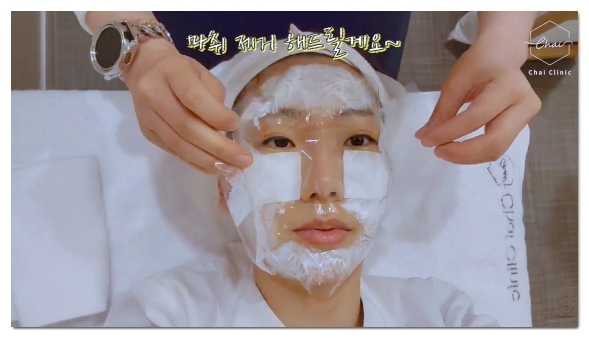 The photo above shows numbing cream applied before a self-administered Rejuran treatment. Even before Rejuran, I make sure the numbing time is sufficient for more than 30 minutes.
Closing
The key difference between Rejuran and Juvelook ultimately comes down to “What does my skin need right now?”
Even though they are both skin boosters, their mechanisms of action are completely different,
so if pores, scars, and elasticity are your concerns, start with Juvelook, and if inner dryness, sensitivity, and fine lines are your concerns, start with Rejuran.
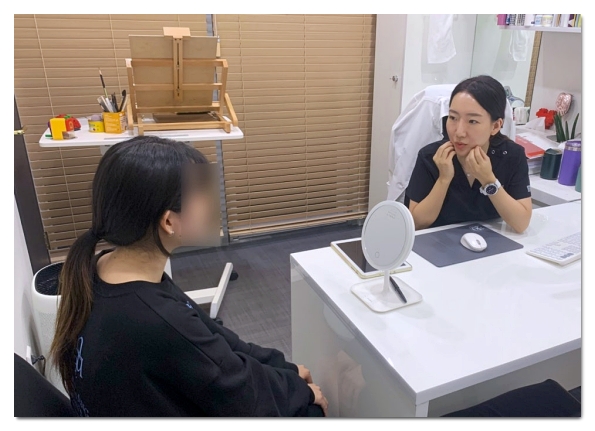
Please consult with an experienced medical professional.
Thank you. This was Jo Won-jin.

[How to avoid losses when choosing a hospital]