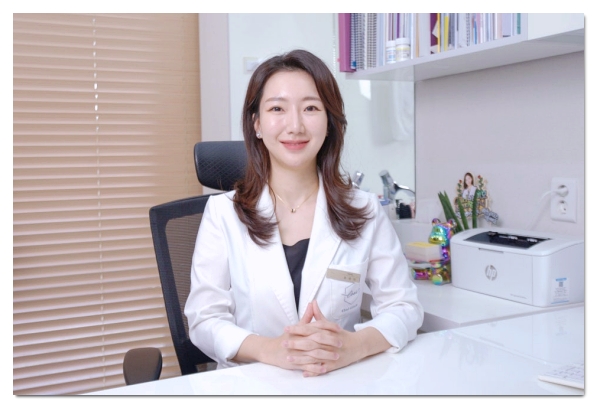
Hello. I’m Jo Won-jin, the chief director of Chai Clinic, and I’ve been treating skin in Hongdae for 10 years.
When you look for a place to get skin care in Hapjeong, many of you have probably thought this at least once.
When you check a skin care studio’s brochure, it says things like “LDM available,” “lifting care,” and “laser toning.”
Yet the price is often less than half of what a clinic charges.
If it seems like the same procedure, of course you’d lean toward the cheaper option.
And when you search for reviews online, opinions are divided, which only makes things more confusing.
But is it really the “same procedure”?
To get straight to the point, even if the name is the same, the grade of the device used,
how deep it acts in the skin, and who performs the procedure are usually different.
Even just in Hapjeong, Mangwon, and Sangsu, there are many skin care studios and dermatology clinics.
Knowing this difference before choosing, versus not knowing it, can lead to very different results.
In this post, I’ll honestly explain the differences in Hapjeong skin care.
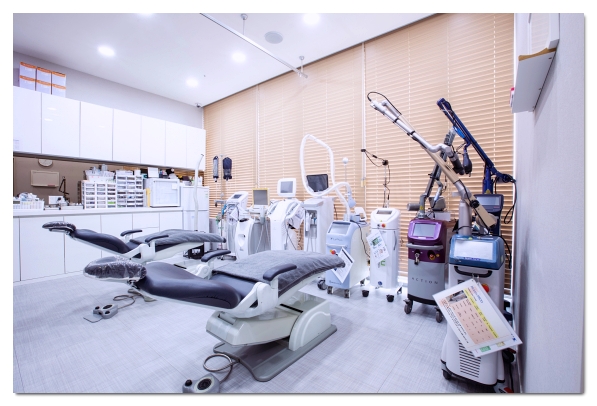
Table of Contents
-
Even when it’s the same “LDM,” the device grade is different
-
Not every device called a “laser” is the same laser
-
Lifting results also vary depending on output
-
It’s not just the device that creates the price gap
-
How to check whether it is a medical device or a cosmetic device
-
So how should you choose skin care in Hapjeong?
-
Frequently asked questions
Even when it’s the same “LDM,” the device grade is different
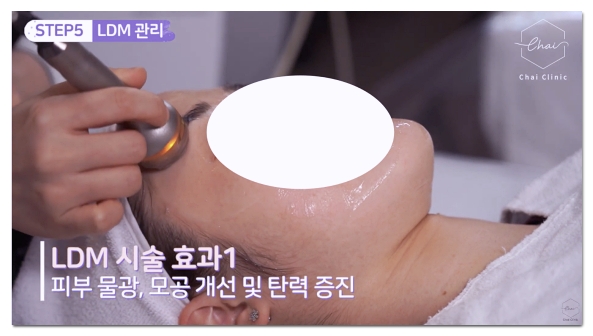
LDM is a device that delivers microscopic vibrations hundreds of millions of times per second to the skin to help calm and regenerate it.
The LDM-MED used in medical institutions and the general cosmetic-grade LDM used in skin care studios differ in output and protocols.
Medical-grade devices can stimulate even the dermal layer,
and are used for treatment purposes such as calming inflammatory breakouts, speeding recovery after procedures, and restoring the skin barrier in sensitive skin.
On the other hand, cosmetic-grade devices mainly focus on soothing and moisturizing effects, making them closer to temporary condition improvement.
Even though the name is the same, the range of changes they can create is different.
Not every device called a “laser” is the same laser
Legally, medical lasers may only be used in medical institutions by physicians or under a physician’s supervision.
“Laser toning” and “laser care” performed in skin care studios are often low-output cosmetic devices.
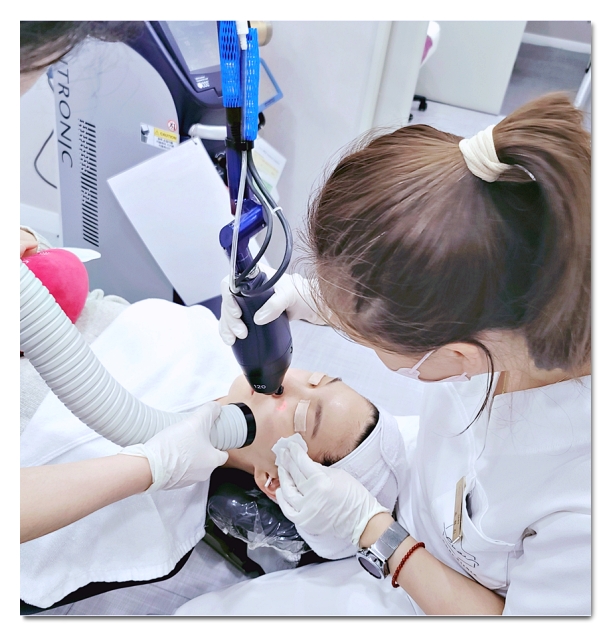
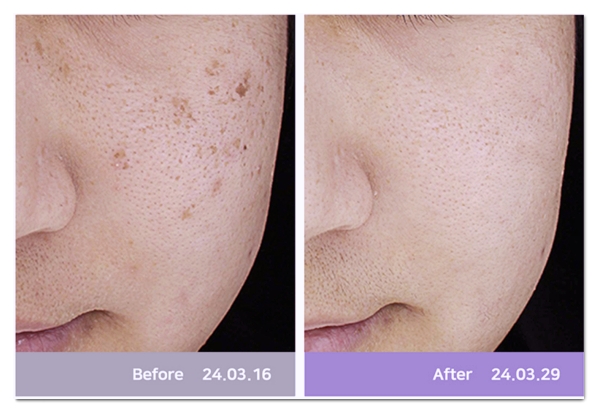
Compared with medical toning lasers such as pico lasers, which actually act on pigmentation and melasma,
the output and wavelength are different, so the results can differ even for the same pigmentation concern.
Whether the energy reaches a level that can break down melanin pigment or not makes a difference,
so surface brightening and actual improvement of pigmentation should be considered separately.
Lifting results also vary depending on output
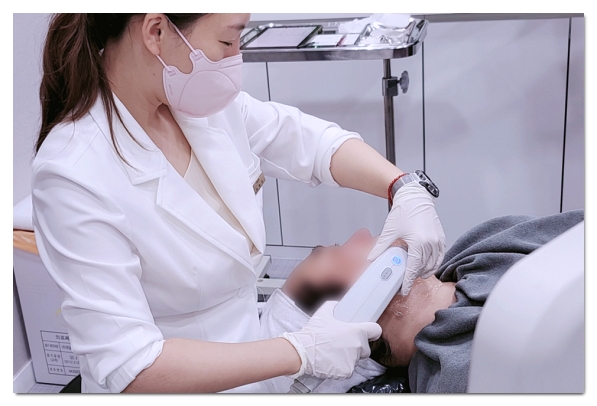
High-Intensity Focused Ultrasound (HIFU), such as Ulthera or Shurink, is a device that reaches the SMAS layer, meaning the fascial layer beneath the skin.
Devices that act at this depth are classified as medical devices and cannot be used in care studios.
In care studios, “lifting care” usually only provides temporary firmness improvement in the epidermis and upper dermis,
and has limitations when it comes to creating deeper sagging improvement or contour changes.
It may look better right after the procedure, but then return to its original state after a few days.
If you are looking into lifting because sagging is bothering you, this difference is crucial.
It’s not just the device that creates the price gap
Dermatology costs include more than the device usage fee. They also include the following:
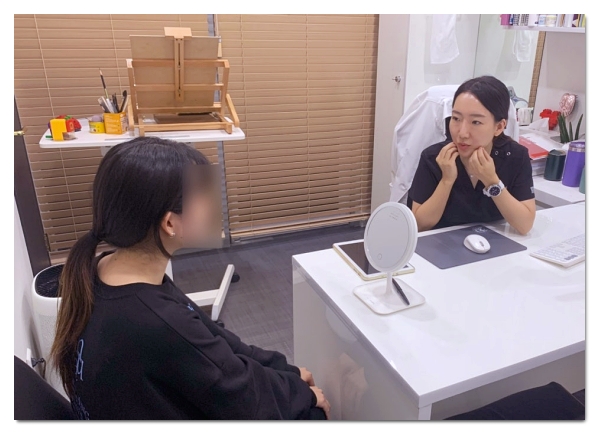
- Diagnosis: A doctor examines the skin condition and determines the output, number of sessions, and procedure combination.
- Prescription: Acne medication, whitening ointments, anti-inflammatory drugs, and similar treatments can only be obtained by prescription.
- Response to side effects: If pigmentation, burns, or redness occur, immediate medical treatment is possible.
- Scope of procedures: Medical procedures such as dermal penetration, peeling, and injections cannot be performed in care studios.
In other words, even when the procedure has the same name, a dermatology clinic’s cost structure includes the device, medical judgment, and a safety net.
Rather than simply comparing prices, it makes more sense to look at what kind of change you can get for the same cost.
How to check whether it is a medical device or a cosmetic device
The surest way is to check whether it has MFDS medical device certification.
Medical devices are assigned an MFDS certification number and may only be used in medical institutions.
Before the procedure, ask for the name of the device being used,
then search to see whether it is registered as a medical device.
Also important are whether the person performing the procedure is a doctor or trained personnel under a doctor’s supervision,
and whether immediate medical response is possible if side effects occur.
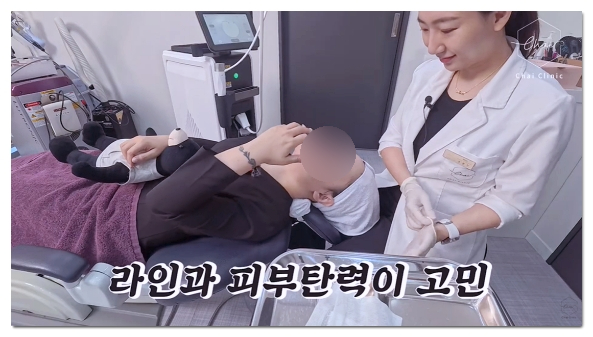
So how should you choose skin care in Hapjeong?
The criteria are simple. First, organize what result you want.
If your goal is fatigue recovery, temporary condition improvement, cleansing, and massage, a skin care studio is enough.
On the other hand, if you want changes to the skin structure itself, such as pigmentation, pores, acne, scars, or sagging, a dermatology clinic is more appropriate.
You can also combine both.
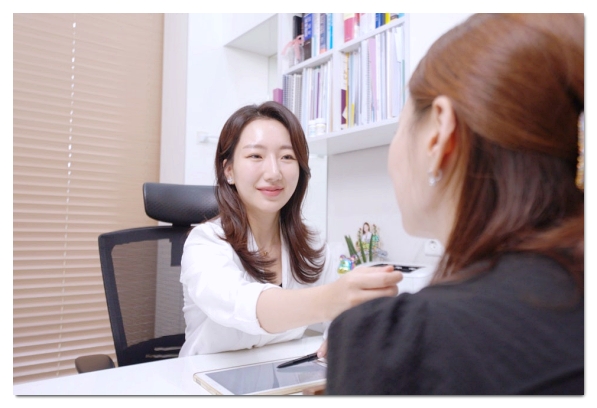
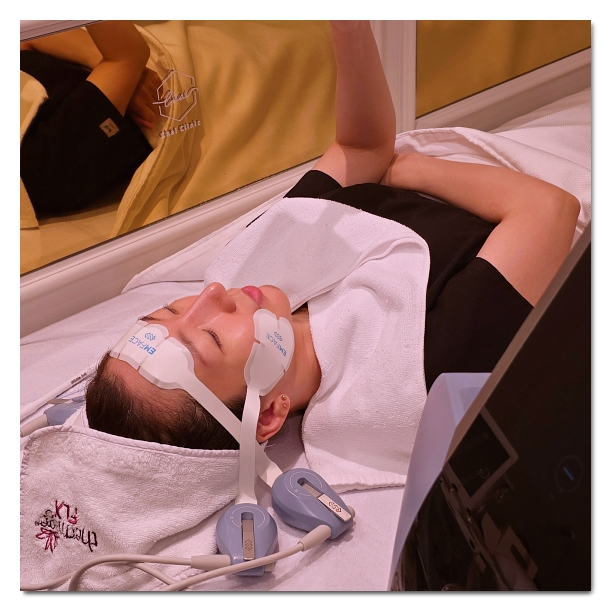 The procedure shown in the photo above is a device called Emface. It is effective for lifting the sagging mid-face.
If you received several sessions at a care studio and saw almost no change,
it may not be that the procedure was ineffective, but rather that the device simply did not have enough output to create that change in the first place.
Conversely, using a high-output medical device for simple condition management may be an excessive choice.
The first step in choosing is to identify what level your skin concern belongs to.
Frequently asked questions
Q. Is it okay to switch from a skin care studio to a dermatology clinic?
A. Not at all a problem. However, if you share your recent care details (procedure name and timing),
the doctor can adjust the output and treatment interval more safely.
Q. Are dermatology procedures always strong and highly irritating?
A. No. Medical devices have a wide range of output adjustments,
so they can actually be set more gently to suit sensitive skin.
In many cases, they are performed more softly than cosmetic devices.
Q. Will there be any change after just one procedure?
A. It depends on the type of procedure.
For toning treatments, effects accumulate over multiple sessions, and for lifting, collagen responses occur over 2 to 3 months after the procedure,
leading to gradual changes.
Closing
When looking into skin care in Hapjeong, rather than asking, “Which place is cheaper for the same procedure name?”
I recommend first checking, “Is this the device and procedure that can create the result I want?”
A higher price does not automatically mean better, and a lower price does not automatically mean more reasonable.
You need to understand where the cause of your skin concern lies before your money can be spent meaningfully.
Before comparing prices for Hapjeong skin care, please first check what your skin truly needs.
An accurate diagnosis ultimately leads to the most reasonable choice.
I hope you receive treatment from a place that carefully examines your face and honestly recommends the most suitable procedure.
Thank you. This was Jo Won-jin.