Hello. I’m Jo Won-jin, the director of Chai Clinic, where I have been providing dermatology care in Hongdae for 10 years.

What’s the difference between Ultherapy and Thermage?
Which one should I get?
People looking into lifting procedures usually find themselves choosing between Ultherapy and Thermage.
Some say Ultherapy is better, while others say Thermage is more effective.
Because opinions differ, it is not easy to reach a quick conclusion about which one to choose.
But the reason the results differ from person to person is actually simple.
Both procedures can help with lifting,
but their mechanisms of action and suitable skin types are completely different.
If you undergo a procedure without fully understanding these differences,
you may inevitably be disappointed by results that differ from what you expected.
In today’s post, I will organize the differences between Ultherapy and Thermage,
including how each works and which skin types they are more suitable for.
You will have clear criteria for deciding which procedure to choose.
Table of Contents
-
How Ultherapy Works
-
How Thermage Works
-
Differences in the Effects of Ultherapy vs. Thermage
-
Tips for Getting the Most Out of the Procedures
-
Ultherapy vs. Thermage Q&A
-
How Ultherapy Works
Our skin is not made up of just one layer.
It consists of multiple layers, including the epidermis, dermis, fat layer, and SMAS fascia layer.
The SMAS fascia layer is the “support layer” that defines the contours of the face and can be considered a key factor influencing skin elasticity.
Ultherapy is a lifting method that delivers strong ultrasound energy to this fascia layer to encourage improved elasticity.
Simply put, you can think of it as lifting the skin from within.
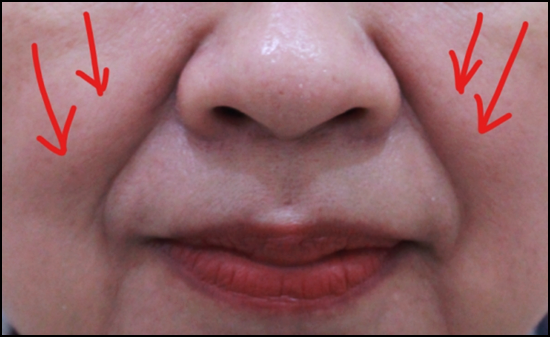
As shown in the photo above, tightening the fascia layer is one way to help prevent the tissue from sagging.
Because Ultherapy stimulates the deep layers that support the facial contours rather than the skin’s surface,
it is often used for concerns such as:
- How Thermage Works
While Ultherapy targets the deep fascia layer,
Thermage delivers thermal energy to the relatively shallow dermal layer.
This dermal layer is rich in collagen and elastin, which are responsible for skin elasticity.
Thermage delivers monopolar radiofrequency (RF) energy throughout this area,
causing existing collagen to contract and encouraging the production of new collagen.
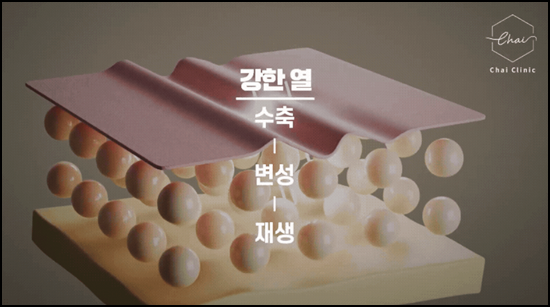
In other words, rather than creating the sensation of strongly lifting the face like Ultherapy,
it is closer to improving the overall condition of the skin and tightening its surface to make it more resilient.
Thermage is mainly used to address concerns such as these.
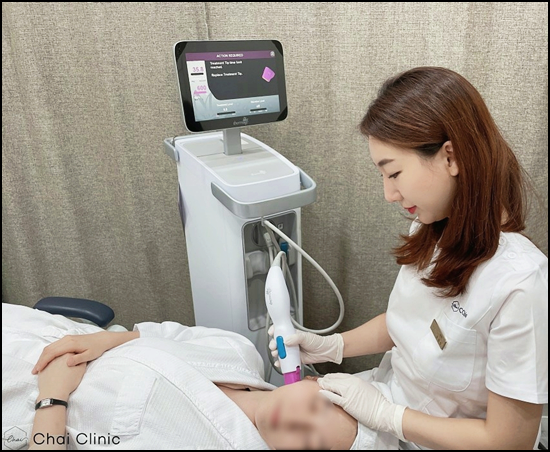
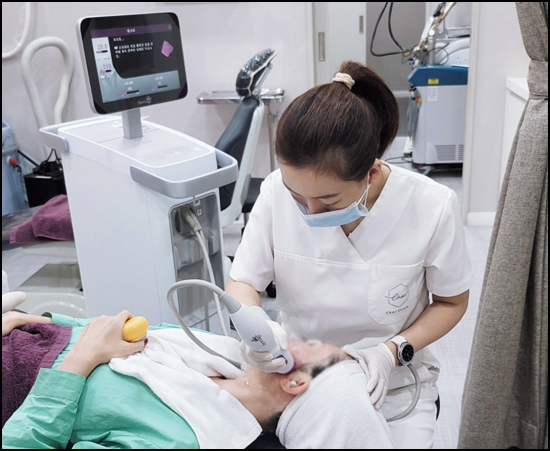
The photo above shows Thermage equipment being used during a procedure.
Then, would receiving Thermage at the highest possible energy level automatically produce much better results?
Fortunately, that is not the case.
(Thermage can be fairly painful, so this may actually be good news.)
Research has found that improvement was greater when energy was delivered multiple times with overlapping passes at an intensity appropriate for the individual’s skin.
If you think Thermage may be suitable for your skin, be sure to read the article below.
- Differences in the Effects of Ultherapy vs. Thermage
Let’s summarize the difference in the effects of Ultherapy and Thermage in one phrase:
Ultherapy → focused on lifting
Thermage → focused on improving elasticity
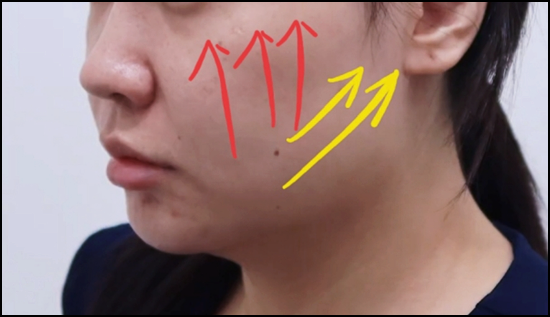
In other words, Ultherapy lifts sagging skin and can therefore change the overall facial contours.
Thermage, on the other hand, improves the condition and elasticity of the skin’s surface, so it can help with fine lines and skin texture.
For example,
if the jawline has sagged and the definition of the facial contours has become less distinct, Ultherapy may be suitable.
If the skin has become thinner and fine lines have increased, Thermage may be more suitable.
However, because each person’s skin condition is different, it is necessary to analyze it first and choose the most appropriate procedure.
- Tips for Getting the Most Out of the Procedures
Ultherapy and Thermage have generated plenty of discussion, so I will also share tips for getting the most out of them.
Checking the following two things before your procedure may help you achieve more satisfactory results.
- Check whether the device is ‘Ultherapy Prime.’
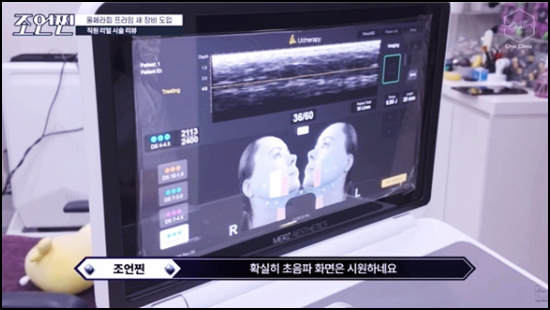
Ultherapy devices can be divided into the original devices and the later-released Ultherapy Prime.
Although the original devices also perform well, they naturally cannot match the upgraded subsequent model.
The biggest difference between the two is the measurement of skin depth.
In other words, Ultherapy Prime displays the skin thickness, fat layer, and location of the SMAS fascia layer in greater detail,
which can reduce unnecessary energy loss and deliver energy precisely to the required layer.
Because this precise assessment process can affect the quality of the procedure, be sure to check the lifting device being used.
- If you are getting Thermage, check whether a ‘genuine tip’ is being used.
The uniformity of energy delivery with Thermage can vary significantly depending on the condition of the tip.
Genuine tips are designed to deliver consistent energy reliably, and the number of shots is also managed through the system.
By contrast, counterfeit or reused tips may deliver energy unevenly or cause excessive heat to concentrate in certain areas.
Naturally, this can also negatively affect the results.
Therefore, I hope you will carefully check whether the tip is genuine and whether a new tip is being used.
- Ultherapy vs. Thermage Q&A
Q1. Which is more painful, Ultherapy or Thermage?
In fact, each person experiences pain differently, so I cannot give an absolute answer.
In general, however, Ultherapy is often perceived as being more intense.
This is because energy is delivered to the deep fascia layer.
Thermage, on the other hand, tends to be felt mainly as a sensation of heat.
Q2. Is it okay to have both procedures together?
Yes, it is possible.
Because they act on different layers, many people also expect a synergistic effect when they are combined.
However, if they are performed in a way that does not suit your face, they could instead negatively affect your facial shape, so please be sure to refer to the article below.
Q3. When do the effects begin to appear?
With both procedures, changes often appear over the course of one to three months.
Q4. I would like to have sedation. Is that okay?
I generally recommend avoiding sedation whenever possible.
Under sedation, involuntary movements can sometimes cause burns or hollowing of the cheeks.
The intensity is adjusted while observing your response as the shots are delivered,
but this cannot be done under sedation, so the procedure may be performed with the energy set much lower.
Instead of sedation, you can use AirNox, a type of nitrous oxide gas used at dental clinics,
which can significantly dull sensation and pain during the procedure.
If you wait after applying AirNox and numbing cream for at least 40 minutes to an hour so that they can take full effect before the procedure,
most people can undergo it without much difficulty.

That concludes this comparison of the differences between Ultherapy and Thermage.
I think many of your questions have been answered to some extent.^^
The important thing is to determine through a thorough consultation which approach is more suitable for your skin
and whether the procedure aligns with the results you are hoping for.
I also strongly recommend reading the article below.
When choosing a clinic for laser procedures, setting at least the following criteria can help you avoid wasting your money.
Thank you. This was Jo Won-jin.