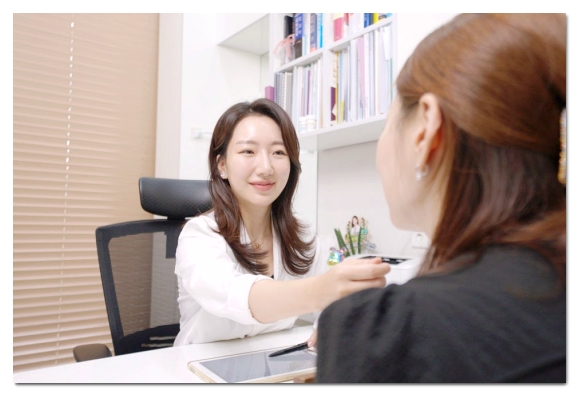
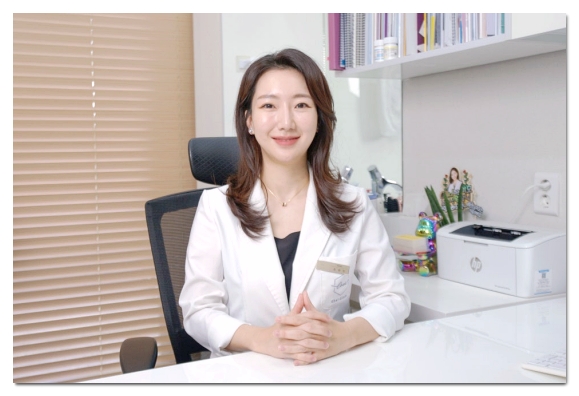
Hello. I am Wonjin Cho, the director of Chai Clinic, where I have been providing dermatological care in Hongdae for 10 years.
I heard Ultherapy is extremely painful without sleep anesthesia.
Ultherapy is expensive, so what if I get it done and it doesn't work?
These are the two questions people researching Ultherapy in Hongdae usually ask first.
Ultherapy is certainly a procedure that involves some pain.
However, the level of pain and the results can vary considerably depending on how the practitioner performs the treatment.
Today, I will outline some practical guidelines for receiving Ultherapy with less pain while maximizing its results.
Table of Contents
-
Why is Ultherapy so painful?
-
Practical sedation methods to reduce the burden of pain
-
Even with the same number of shots, the results can differ! Three criteria for maximizing the effects of Ultherapy
-
Post-treatment care and when the lifting effects appear
- Why is Ultherapy so painful?
Let's start by looking at why Ultherapy hurts.
Ultherapy works by focusing ultrasound energy not on the skin's surface but on deeper layers, particularly the fascial layer called the SMAS, where it creates thermal coagulation points.
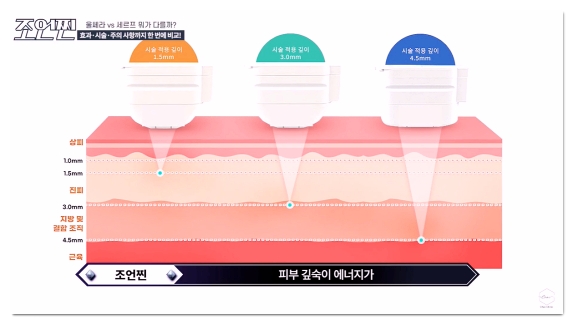
The SMAS is a structure that supports the face, so when heat is applied to it, you may feel a heavy, tingling sensation that seems to resonate.
This is also why areas close to the bone, such as the cheekbones and jawbone, tend to feel more painful.
In other words, feeling pain can also be a sign that the energy is reaching the intended layer properly. However, simply enduring as much pain as possible is not necessarily the answer.
- Specific ways to reduce the discomfort of Ultherapy
There are several ways to reduce pain.
Applying sufficient numbing cream before the procedure can dull sensation in the superficial layers. (Waiting at least 30 minutes is even better.)
For people who are particularly sensitive to pain, AirNox (laughing gas) may also be used.
AirNox is a sedation method inhaled through the nose. Its characteristic feature is that it reduces sensitivity to tension and pain while keeping you fully conscious.
(When the body relaxes, it is easier to maintain a stable treatment position, which also makes it easier for the practitioner to deliver the energy more precisely.)
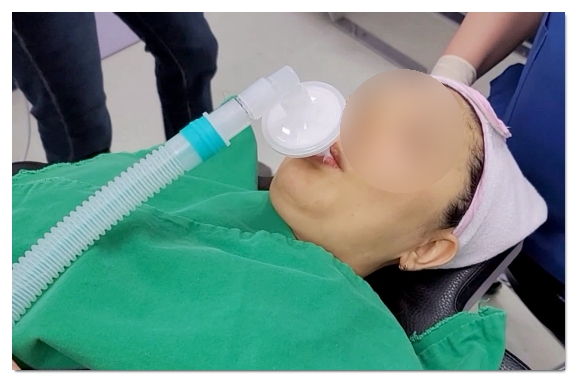
The photo above shows AirNox being administered before the procedure.
If you have been postponing the procedure because you are afraid of the pain, simply knowing that this type of sedation is available may make it feel considerably less burdensome.
However, it is not necessary for everyone. It is best to decide together during the consultation based on your sensitivity to pain and the treatment area.
Rather than finishing quickly with unconditionally high energy, it is better for both comfort and results to observe the response and adjust the treatment by layer and intensity.
Getting enough sleep the night before and reducing your caffeine intake can help prevent you from becoming more sensitive to pain to some extent.
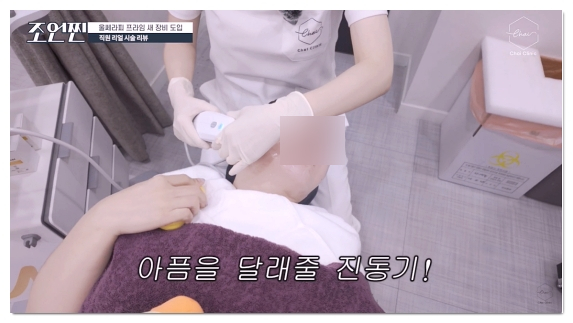
- Three criteria for maximizing the effects of Ultherapy
Now, let's talk about the results.
Even with the same Ultherapy, where and how you receive it can determine the outcome.
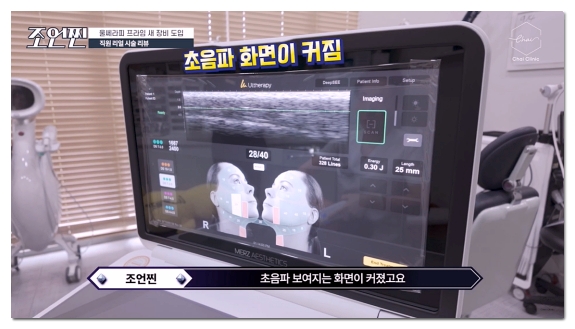
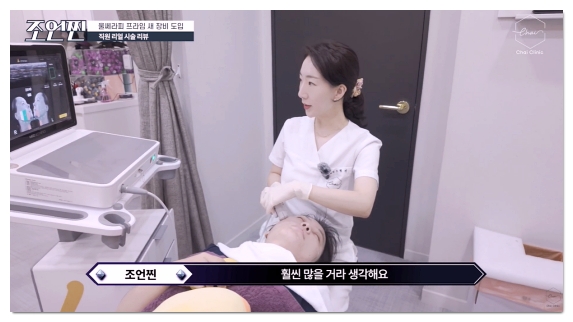
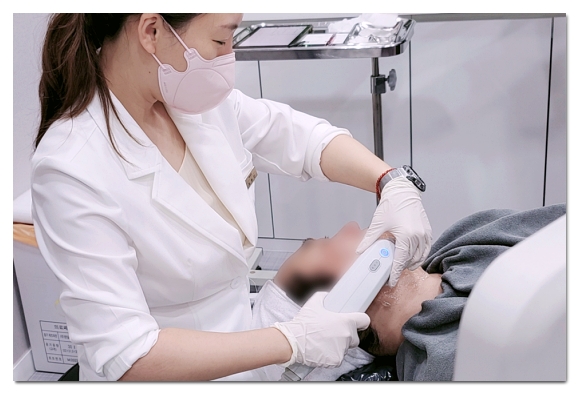
Using an authentic device and alternating between the ultrasound images during treatment and the actual face to confirm the location of the SMAS is the basic requirement.
After that, I recommend carefully considering the following three points.
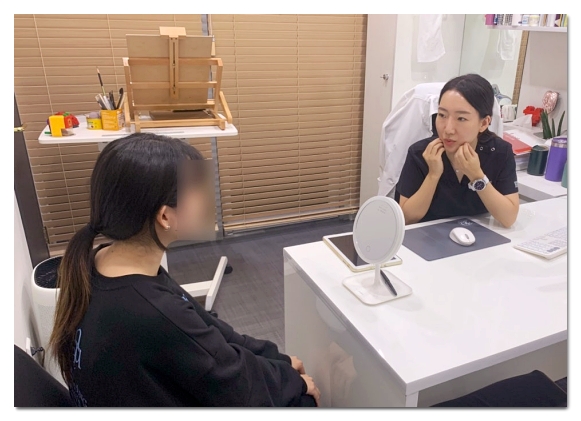
- Is it a clinic where the doctor who will personally perform the procedure sits down and designs the treatment plan?
There can be an unavoidable difference in results between going straight into the treatment room and receiving shots according to a set manual, and having the actual practitioner face you directly and design the treatment by assessing the pattern of sagging, bone structure, and skin thickness.
If the consultation is conducted separately and the procedure is performed by a different doctor, it is difficult for the original design intent to be conveyed fully to the treatment.
- Is it a clinic that develops a systematic lifting plan for each area?
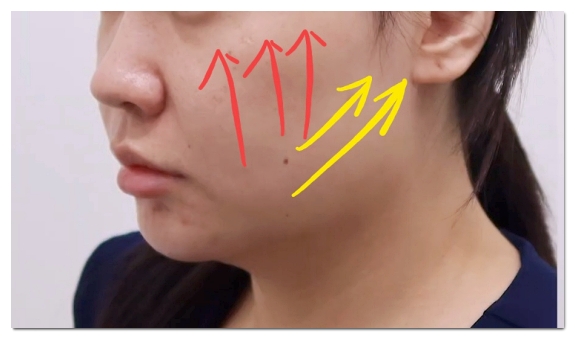
Many people seek Ultherapy because of jowls or nasolabial folds, but focusing shots only on those areas often does not solve the problem.
Depending on whether the front cheek is sagging because excess volume is weighing it down or because elasticity throughout the face has decreased, the way the shots are allocated can be completely different.
To achieve natural improvement, you need to address not only the area that feels problematic but also the area causing the sagging.
If the jawline, cheeks, and neck are not considered together and shots are delivered only to one spot, such as the nasolabial fold area, that area may become more hollow.
- Is enough treatment time allocated?
If you want Ultherapy to be performed thoroughly and with focused attention, it is best to allow about one and a half to two hours, including the time for numbing.
At clinics where the scheduled time is too short, it is difficult to finely adjust the energy while observing the response in each area.
As a result, the treatment can easily become a matter of quickly completing the prescribed number of shots.
Even with the same number of shots, the finishing result differs between checking the location of every shot one by one and rushing through them because of time constraints.
- Post-treatment care and when the lifting effects appear
Post-treatment care also affects the results.
Some redness, swelling, or a pressure-like sensation may remain for several days immediately afterward, but in most cases these symptoms subside naturally.
It is a good idea to drink plenty of water, moisturize, and use sunscreen to support collagen regeneration.
To be honest about expectations, Ultherapy is not a procedure that produces an immediate tightening effect right after treatment.
It usually takes two to three months for the collagen stimulated by heat to build up and create a lifting effect.
In many cases, the condition is best two or three months after the procedure rather than on the day of treatment, and the usual interval between treatments is around one year.
Receiving a small number of shots frequently does not produce effects in proportion to the frequency, so from a cost-effectiveness perspective as well, it is better to have the treatment properly planned and performed each time.
In Closing
If you are considering Ultherapy near Hongdae, I recommend looking beyond just the price or number of shots and also considering who designs the treatment, how much time is devoted to it, and what treatment plan is used.
Maximizing the results is very important, but I believe the first priority is determining whether Ultherapy is suitable for your skin concerns in the first place.
If you are especially considering a lifting laser treatment, please be sure to read the article below before proceeding.
It explains how to reduce the risk of choosing the wrong clinic.
Thank you. This was Wonjin Cho.