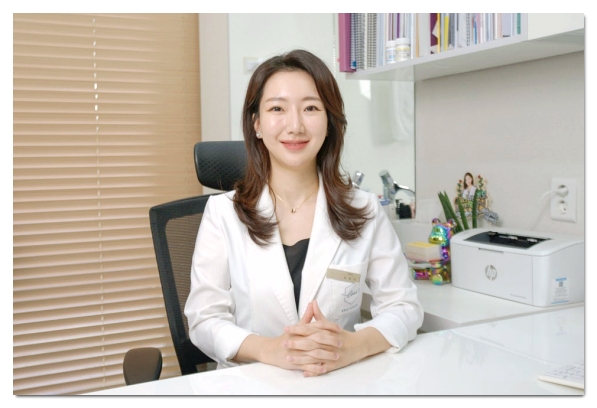
Hello. I’m Wonjin Cho, the director of Chai Clinic, where I have been practicing dermatology in Hongdae for 10 years.
Emface looks like it moves
like a massage device. Does it really work?
They say it doesn’t hurt,
so couldn’t that mean the results are also weak?
These are the two questions patients ask almost without exception when consulting about Emface.
When a new device is released, I try it myself and have our staff try it as well, measure the results, and only bring in the ones we find worthwhile.
I also brought in Emface for somewhat personal reasons—I want to keep receiving it myself from now on.^^
Today, from Emface’s effects to the treatment process and pain, as well as when results appear and the recommended schedule,
I’ll give you an honest summary from the perspective of both a practitioner and someone who has undergone the treatment.
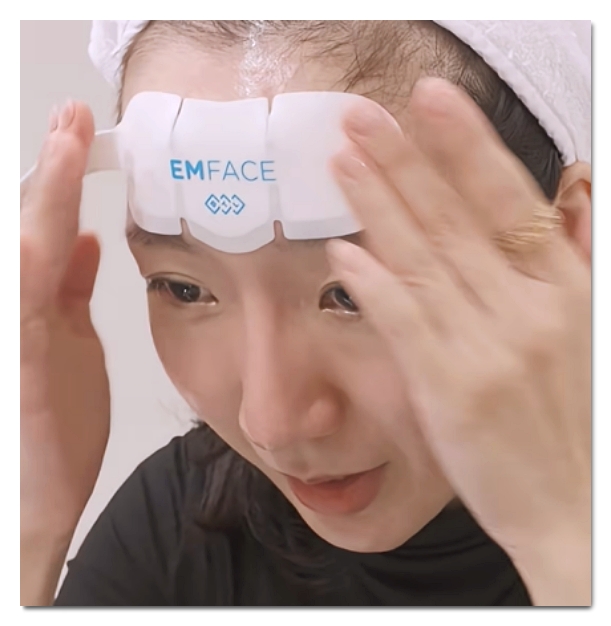
Table of Contents
-
Emface results (lifting · elasticity · asymmetry · facial contours)
-
Why does Emface target the “muscle layer”? (Treatment principles)
-
The Emface treatment process, pain, and how it felt to receive it myself
-
When results appear and the recommended schedule
-
To be honest, I do not recommend Emface for these people
Emface Results (Lifting · Elasticity · Asymmetry · Facial Contours)
Emface’s effects can be broadly summarized in four areas.
| Effect | Description |
|---|
| Perceived lifting | “Lifting” by targeting muscles associated with sagging, such as those in the forehead and midface |
| Improved skin elasticity and texture | Helps improve wrinkles and skin texture by inducing collagen production in the dermis with radiofrequency |
| Correction of asymmetry | Eases asymmetry around the eyebrows and eyes by balancing the muscles on the left and right sides |
| Refined facial contours | Helps refine areas such as nasolabial lines, sagging in the front cheeks, and the jawline |
In the clinic, patients often first describe feeling that “the facial contours look more defined and lighter.”
Rather than creating a dramatic, forceful pull, it is closer to making the midface, which has sagged, return to its proper position and making the overall impression look more defined.
Why Does Emface Target the “Muscle Layer”? (Treatment Principles)
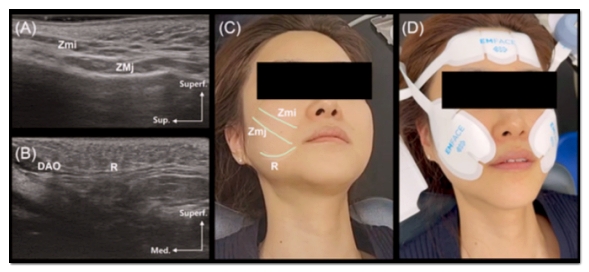
Most lifting treatments deliver energy to the dermis or fascial layer.
Emface differs in that it also addresses the deeper muscle layer.
| Treatment | Main layer addressed |
|---|
| Thermage | Dermis (superficial layer) — tightening |
| Ulthera | Fascial layer (SMAS, middle layer) |
| Emface | Muscle layer (deepest layer) + dermis (RF) |
The principle involves two types of energy working on two tracks.
RF (radiofrequency) helps regenerate collagen and elastin in the dermis,
while HIFES (electromagnetic muscle stimulation) directly exercises the muscles that lift the face, increasing their density and tension.
In simple terms, it “fills out the inner muscles to lift the outer contours.”
The point I emphasize most is that although Emface may look like a treatment where “the device does everything,” the placement of the patches can determine the results.
That is because the location of the cheekbone muscles and the degree of asymmetry vary from person to person.
The Emface Treatment Process, Pain, and How It Felt to Receive It Myself
The treatment usually proceeds in this order.
-
The doctor designs the placement according to the location of the muscles
-
Applicators (patches) are attached to the face
-
The intensity is adjusted while observing the degree of muscle contraction and the balance between the left and right sides
-
The treatment ends after approximately 20 minutes
Depending on how the patches are placed, you may not see any results from Emface at all.
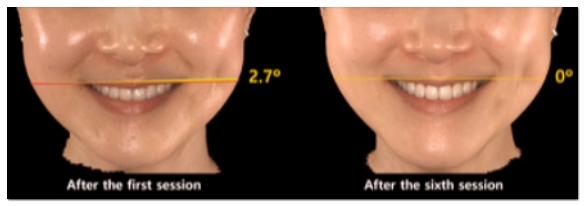
That is why it is important to determine the patch placement by observing not only the face at rest, but also how the muscles move when you smile or speak.
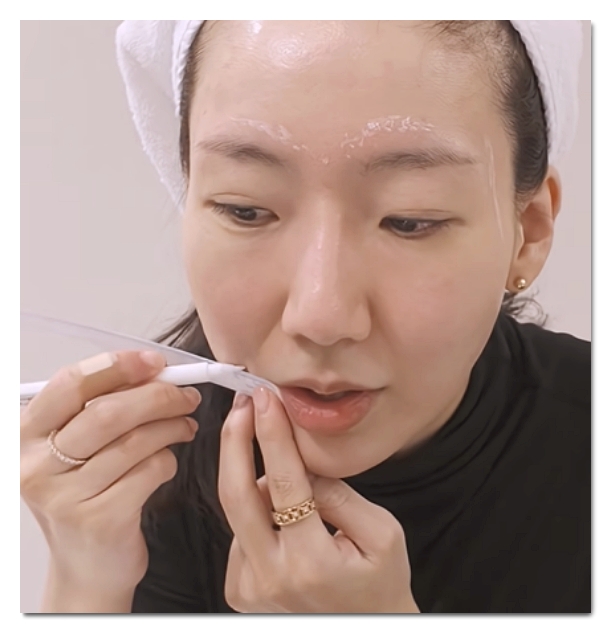
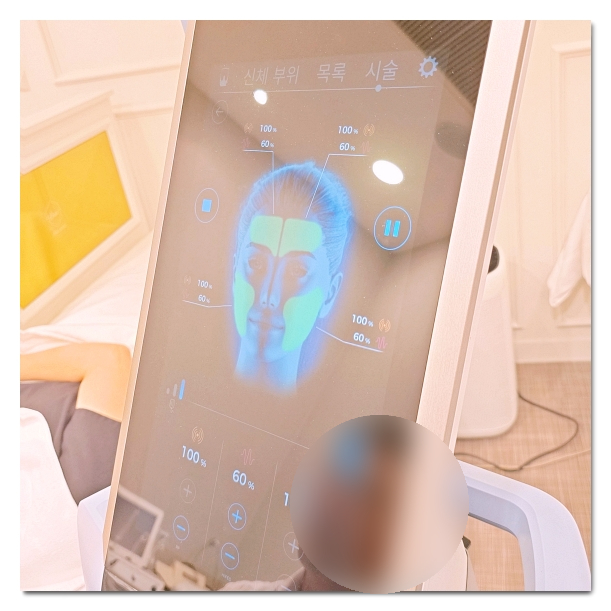
After the patches are attached, the intensity is gradually increased and adjusted while Emface is operating.
If there is asymmetry between the two sides, the intensity is set differently for the left and right sides.
(This is also why Emface is often used to address asymmetry. It is designed to allow the energy to be adjusted for each area.)
When my staff and I received the treatment ourselves, it was comfortable enough that we felt no pain at all, even without numbing cream.
Rather than pain, the main sensations were a peculiar feeling of electricity flowing, similar to physical therapy in an orthopedic clinic; muscles twitching; and a warm sensation.
There was almost no bruising or swelling, so we were able to return to our daily activities immediately after the treatment.
When Emface Results Appear and the Recommended Schedule
When results are noticeable:
Some people feel that their skin is “firmer and more refined” immediately after one session, while others notice changes starting around two weeks later. (Individual results vary.)
Cumulative effects:
Although changes can be felt after one session, many people say that their skin feels firmer as they continue with additional sessions. Many patients noticed more significant improvement after around the fourth session.
Recommended schedule:
We generally recommend 4–6 sessions at intervals of 1–2 weeks, after which the results may be maintained for several months to approximately one year.
The exact plan varies depending on the condition of the muscles and the purpose of treatment.
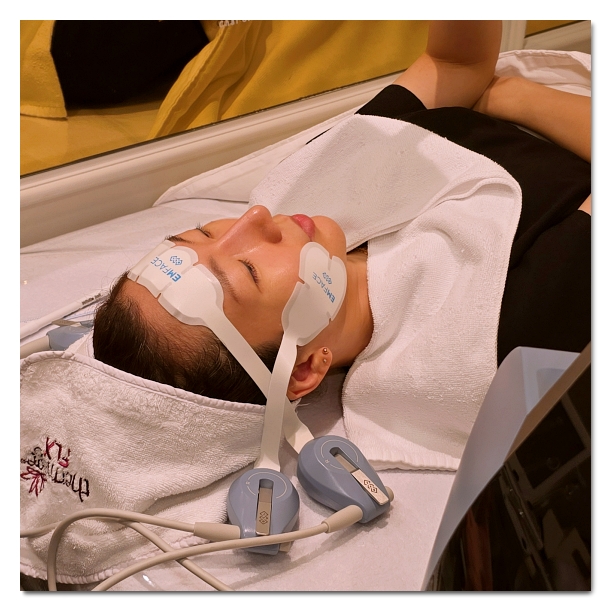
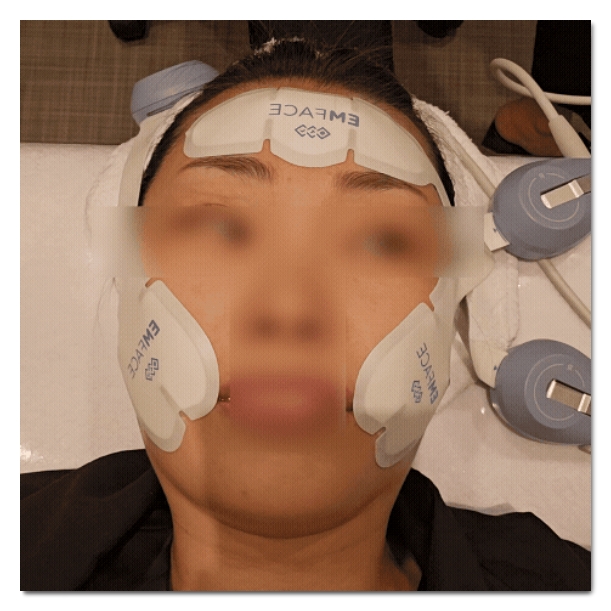 The photo above shows one of our staff members receiving Emface.
Because the principle involves “exercising” the muscles, you can think of it as building up the sessions to strengthen the core rather than finishing with just one treatment.
For this reason, I tell patients that starting in the early stages of sagging, before the muscles have completely lost their strength, may be more efficient.
For reference, clinical studies related to Emface have reported approximately 23% lifting in the eyebrow (forehead) area and more than 80% improvement in skin elasticity at six months.
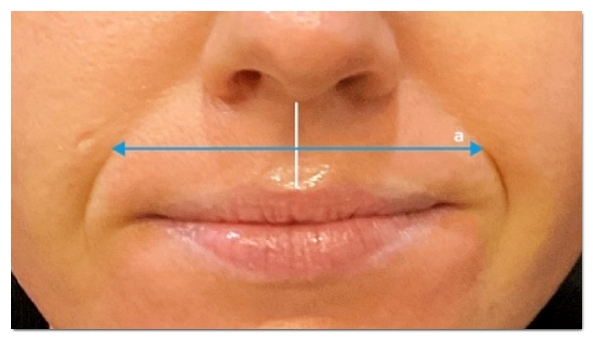
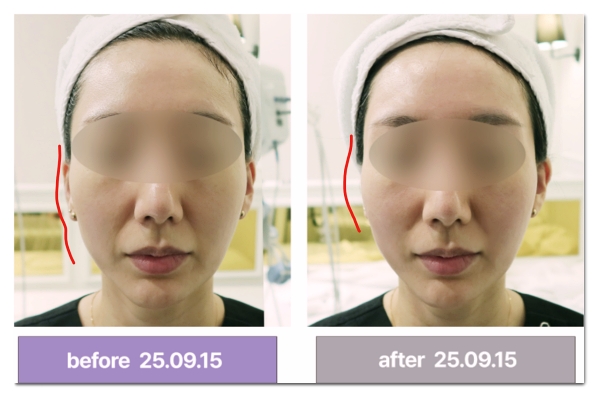 The photo above shows my before-and-after results immediately after my first session. You can see that the nasolabial lines extending down to the corners of the mouth became shorter, both corners of the mouth lifted, and the lower cheeks moved upward, shifting the volume.
Emface: To Be Honest, I Do Not Recommend It for These People
Emface is particularly well suited to people with thin skin and little facial fat, people whose midface has become elongated and makes them look older, and people who find pain or downtime burdensome.
When there is less fat, the energy can be delivered to the muscles more effectively.
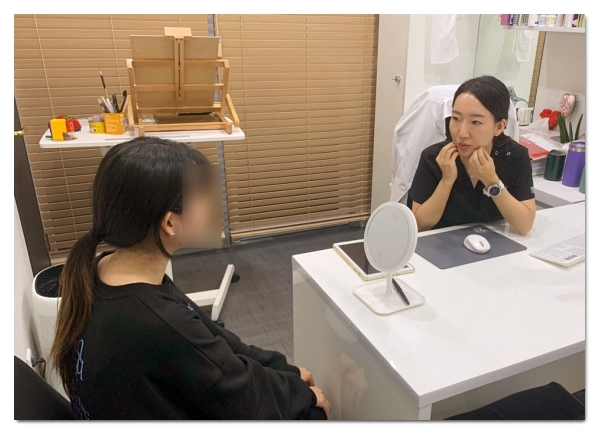
On the other hand, Emface alone may be insufficient for people with substantial cheek fat or those whose sagging has already progressed significantly.
In these cases, I honestly tend to suggest considering Ulthera or treatments that address fat as well.
Recommending a treatment that is not a good fit would be disadvantageous for everyone involved.
(You can find more details about the types of people who are likely to see results from Emface in the article below.)
In Closing
To summarize, Emface is a treatment that addresses both the dermis and muscles, aiming to improve lifting, elasticity, asymmetry, and facial contours,
with results generally noticeable immediately or within two weeks and becoming firmer as additional sessions are completed.
However, the results vary depending on the patch design, intensity settings, and your individual facial structure.
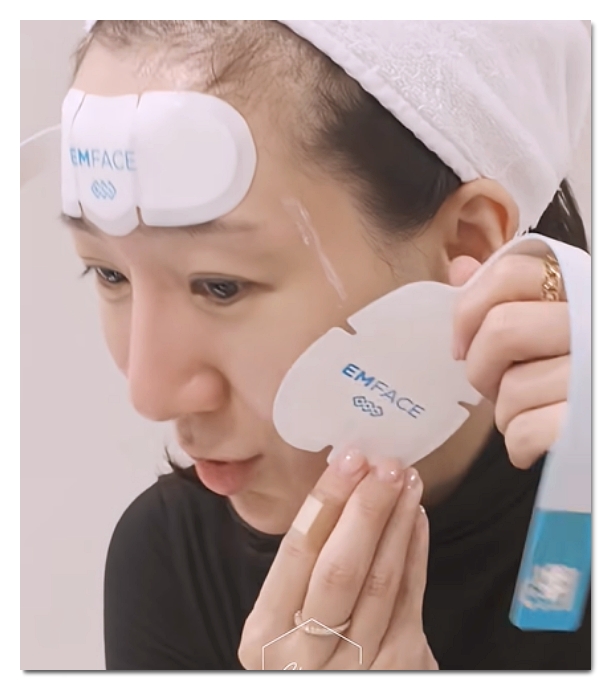
Because Emface is also a treatment whose results accumulate over multiple sessions, it may be difficult to maximize the treatment results without recording the treatment energy and changes in detail for each session.
Please read the article below before deciding, as it explains why a clinic’s records are important and how to choose a clinic with a well-organized system.
Thank you. This was Wonjin Cho.