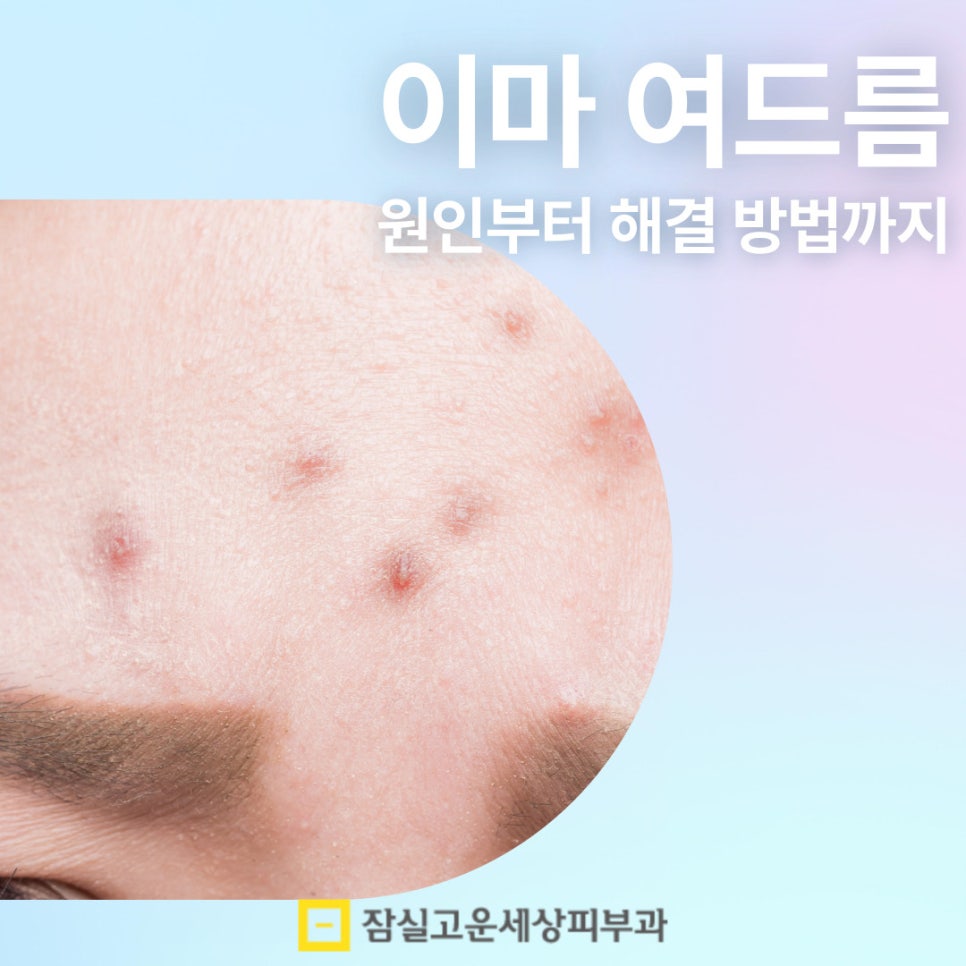
Forehead acne,
Why does it keep appearing?
Hello, this is Jamsil Gounsesang Dermatology Clinic :)
You wash your face diligently, and you even try changing your skincare products,
but acne keeps appearing only on your forehead.
You try to hide it by letting your bangs down,
but if it seems to get worse, it can be upsetting—
something almost everyone has experienced at least once.
You may have thought it was simply due to excess sebum, but sometimes
stress, lack of sleep, the hair products you use,
and even vitamin deficiency can all be causes
of forehead acne.
Even if it looks similar on the surface, the approach
depends completely on the cause.
Today, I’ll cover everything from the causes of forehead acne,
the types of symptoms, effective treatments, and
prevention methods in daily life.
- Forehead acne: what causes it?
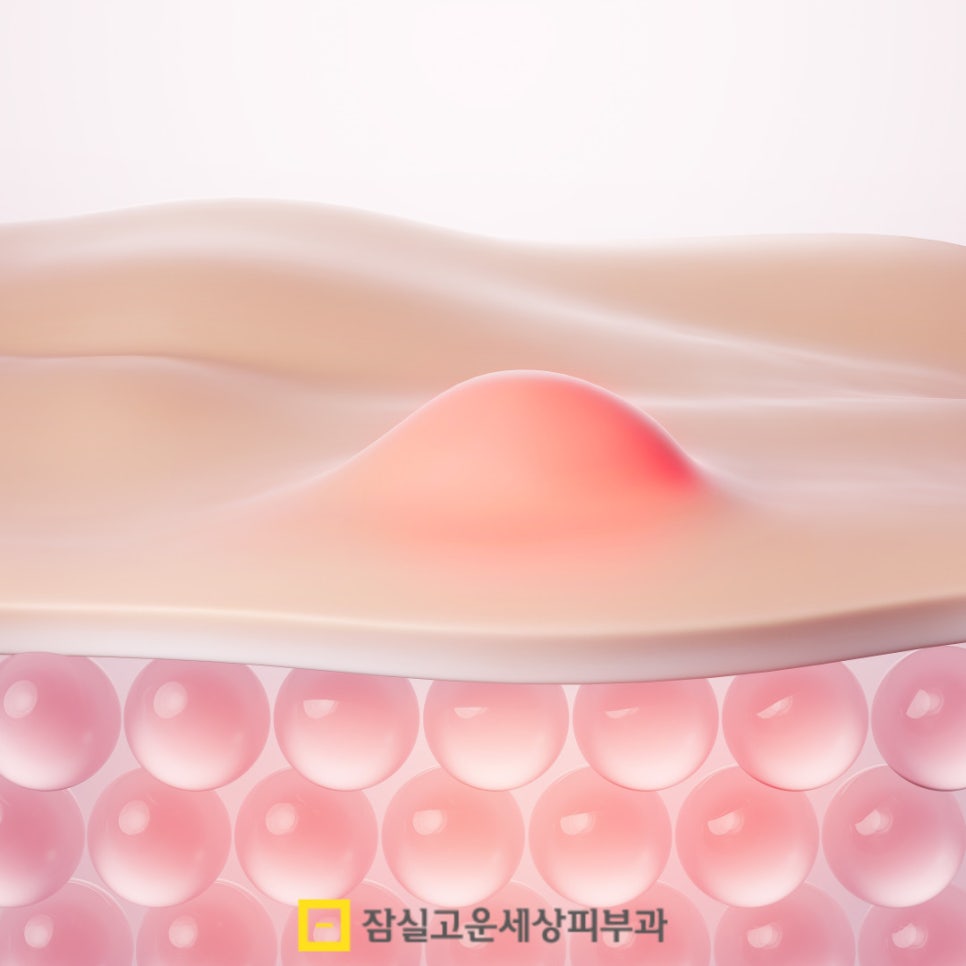
- Excess sebum production and pore blockage
The forehead is an area with a high concentration of sebaceous glands,
so it is one of the most sebum-active parts of the face.
During puberty or hormonal changes, androgen
(male hormone) secretion increases, causing excess sebum
to be produced. This sebum blocks pores and leads to acne.
When sebum oxidizes inside the pores, it becomes blackheads
(open comedones), and when a sebum plug becomes trapped inside the pore,
it leads to whiteheads (closed comedones). If that condition
continues, it can develop into inflammatory acne.
- Cutibacterium acnes infection
C. acnes bacteria living in the hair follicle break down sebum to
produce free fatty acids, which then irritate the hair follicle wall
and trigger inflammation.
In this process, it can progress into red, swollen papules or
pus-filled pustular acne, and in more severe cases, it can develop
into nodules or cysts. In this way, bacterial infection can also be
a key factor in worsening acne.
- Irritation from hair and skincare products
Waxes, hair sprays, and cosmetics with a lot of oil-based ingredients
can clog the pores around the forehead and trigger acne. In particular,
when hair products touch the forehead because of styles that let hair
fall forward or due to wearing hats, the product ingredients can build
up in the pores and easily cause inflammation. Also, if cleansing is not
done properly, foreign substances accumulate and lead to breakouts.
- Stress and hormonal changes
Stress causes cortisol to be secreted, which stimulates the sebaceous glands
and lowers the skin’s immune function.
For women, acne around the chin and forehead can easily appear due to
hormonal imbalance from before and after menstruation, taking oral
contraceptives, or lack of sleep.
In such cases, in addition to simple external skin care,
stress relief and adjustment of daily rhythms need to be
carried out together.
- Pantothenic acid (vitamin B5) deficiency
Pantothenic acid is a vitamin that helps regulate sebum.
If stress or an unbalanced diet continues, it can be used up in the body
and become deficient.
As a result, sebum production increases and acne becomes more likely to form.
Supplementing pantothenic acid in enteric-coated form can help improve acne,
and it is ideal to take it together with biotin.
- Main acne symptoms and types
Forehead acne can appear in various forms depending on its type and symptoms.
The earliest stage is an open comedone, that is, a blackhead,
which appears black because the pore is open and the sebum is oxidized.
On the other hand, when the pore is blocked and the sebum plug is trapped
inside the skin, making it appear white, it is a closed comedone, commonly
called a whitehead. If inflammation develops in this state, the skin may become
red and swollen papules or progress into pustular acne with pus,
and if the condition becomes more severe, nodules or cysts may form,
feeling like hard lumps deep in the skin.
If this inflammatory acne is left untreated or managed incorrectly, it can
leave scars, pigmentation, or depressed marks on the skin, so it is very
important to start appropriate treatment from the early stage.

- Treatment methods for forehead acne
Acne treatment varies depending on the severity of symptoms and the condition
of the skin, and in general, various approaches are used, including topical
treatment, oral medication, surgical procedures, and scar treatment.
For relatively mild symptoms, improvement is possible through topical treatment
using retinoid ingredients such as tretinoin or adapalene, benzoyl peroxide,
and antibiotic ointments such as clindamycin.
For moderate to severe acne, oral antibiotics
(for example, doxycycline) or isotretinoin (Roaccutane), which suppresses
sebum production and reduces inflammatory responses, are used. These are
especially effective for recurrent acne or patients with oily skin.
When more active treatment is needed, procedures may be applied. Typical
examples include acne extraction performed at dermatology clinics, steroid
injections to calm inflammation, peeling to remove dead skin cells and help
skin regeneration, Fraxel laser, or photodynamic therapy (PDT).
If acne has persisted for a long time and left scars, scar treatments may also be
combined, such as cross treatment (TCA dot peeling), laser resurfacing,
filler injection, or punch excision to remove the scarred area.
Above all, the important point is that if you squeeze acne yourself or leave
it untreated, inflammation may worsen and the likelihood of scarring becomes
higher. Therefore, if acne keeps recurring or inflammation is severe, you must
receive professional care and choose an appropriate treatment method.
Prevention methods for forehead acne
that you can practice in daily life
To prevent forehead acne and keep the skin in healthy condition,
careful management of lifestyle habits is necessary.
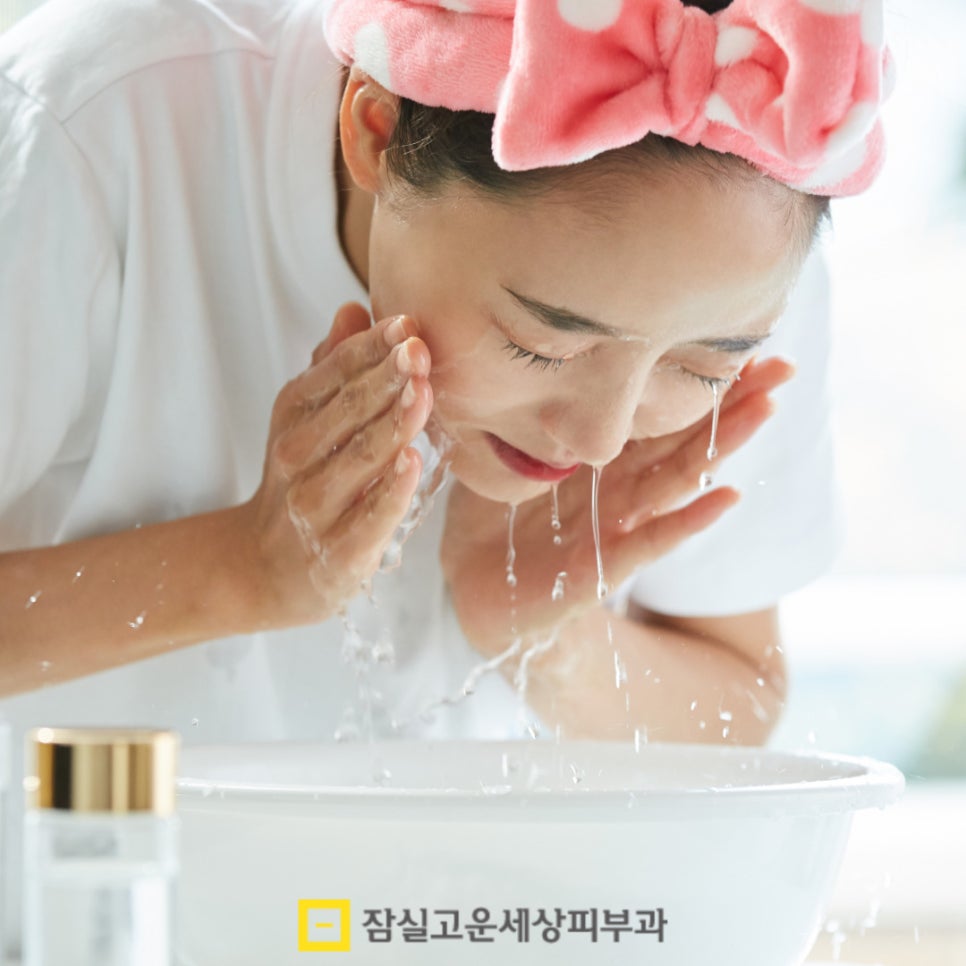
The most basic thing is cleansing habits.
Rather than strong cleansing products, it is better to use a mild, slightly
acidic, fragrance-free cleanser that is less irritating to the skin.
Also, it is important to make sure that the skincare or makeup products you use
are non-comedogenic, meaning they are formulated with ingredients that do not
clog pores.
Hair styling products, hats, and hair strands that come into direct contact
with the forehead can also be causes of acne, so they should be washed often,
and after use, they should be cleaned off thoroughly so they do not remain on
the skin. In particular, more thorough care is needed during seasons when sebum
production is active or after exercising.
Water intake and sleep habits are also essential in acne care.
Drinking at least 1.5 to 2 liters of water a day and getting sound sleep during
the time when skin regeneration is most active, between 10 p.m. and 2 a.m.,
is a great help in skin recovery.
Also, since acne is deeply related to mental stress, it is important to manage
stress through regular exercise, meditation, hobbies, and similar activities.
Diet can also affect acne, so it is a good idea to adjust greasy or dairy-heavy
meals, and if acne tends to worsen after eating certain foods, keeping a food
diary can help identify the cause.

Acne reflects daily life as it is.
Forehead acne is not just a skin problem that appears on the surface.
It is a skin condition caused by a complex combination of factors such as sebum
production, hormonal changes, stress, lifestyle habits, and environments that
irritate the skin.
No matter how effective the medicine or procedure may be,
if your usual lifestyle patterns remain the same, acne will inevitably recur.
To fundamentally reduce acne, along with treatment suited to your skin,
you need to look at your daily life and make steady improvements.
The skin reflects today’s choices, and the habits built from those choices.
Start practicing one thing at a time from now on.
Regular sleep, a balanced diet, proper cleansing,
and even the space to manage stress.
In the end, that changed daily routine will change your skin.
Your skin never turns away from your consistency.
👇 Jamsil Gounsesang Dermatology Clinic Directions 👇
👇 Jamsil Gounsesang Dermatology Clinic Information 👇
👇 Jamsil Gounsesang Dermatology Clinic Homepage 👇
This article is provided by Jamsil Gounsesang Dermatology Clinic to offer medical information in accordance with Article 56, Paragraph 1 of the Medical Service Act. All procedures/surgeries carry the risk of side effects such as bleeding, infection, and nerve damage, so please proceed carefully after sufficient consultation with medical professionals.