As the season when ultraviolet rays and melanin become more active,
it’s time to start a routine to prevent pigmentation!
Hello.
This is Jamsil Gounsesang Dermatology!
As the weather gets warmer and outdoor activities increase in spring,
and in summer, the skin goes through a kind of test.
UV rays become stronger, and with yellow dust, fine dust, and pollen added in,
the skin is easily irritated.
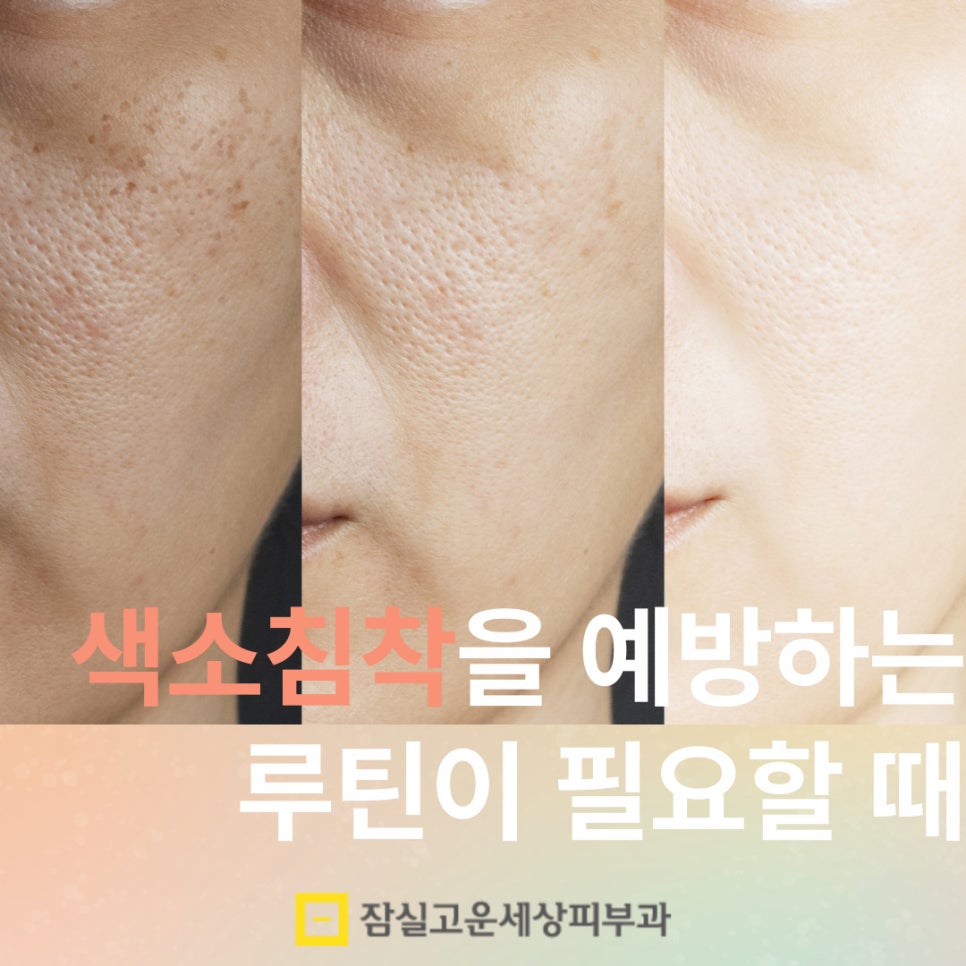
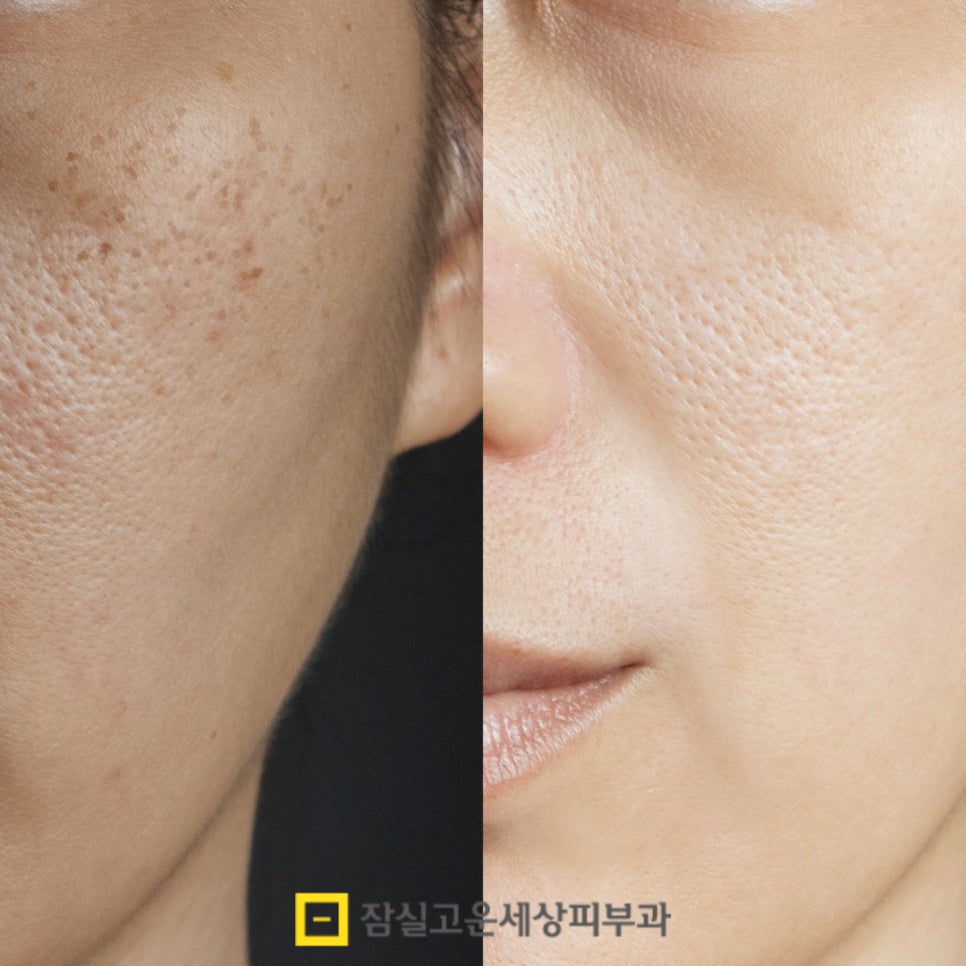
In particular, pigmentation conditions such as melasma, freckles, and dark spots often become darker
or appear newly during this season.
Brown patches that slowly spread in areas frequently exposed to sunlight,
such as under the eyes, the cheekbones, and the bridge of the nose.
Once they appear, they are difficult to disappear naturally,
and if left unmanaged, they can gradually darken and spread more widely.
Therefore, during spring and summer, it is very important to prevent melanin from settling deep within the skin,
and to have a routine that suppresses and removes already formed pigmentation.
Today, we will organize step-by-step actions to reduce pigmentation conditions
and maintain clear skin.
Why do melasma and dark spots worsen when it gets hotter?
Melasma and freckles occur when melanin pigment is excessively produced and deposited in the skin.
The main cause is UV exposure, and in addition,
hormonal changes, genetics, stress, fatigue, and post-inflammatory hyperpigmentation
can all work together.
In spring and summer in particular, the intensity of UVB rises sharply,
which easily stimulates melanocytes.
As the days get longer and outdoor activities increase,
repeated outings without sun protection can gradually reveal melasma under the eyes,
around the cheekbones, and near the forehead.
Pigment that has already deposited may also settle in the deeper dermal layer rather than the epidermal layer,
and in such cases, home care or whitening cosmetics alone may be difficult,
and professional treatment is often needed.

The key to preventing pigmentation conditions is 'UV protection'
The beginning and end of melasma and freckle care is UV protection.
Even if spring sunlight feels warm and gentle,
the UV index is quite high and becomes a cause of accelerated melanin production.
Apply sunscreen with SPF 30 or higher and PA++ or higher thoroughly
30 minutes before going out, and make a habit of reapplying every 2 to 3 hours.
In particular, the under-eye and cheekbone areas where melasma is prone to form should be applied carefully,
reapplying in small amounts several times.
Since UV rays can pass through windows, do not let your guard down even when indoors,
and it is also good to combine physical protection methods such as hats, parasols, and sunglasses.
Melanin suppression routine using vitamin C and retinol
Representative ingredients that help prevent or alleviate melasma and dark spots include vitamin C and retinol.
Vitamin C is a representative brightening ingredient that inhibits tyrosinase,
an enzyme involved in melanin synthesis, and prevents already formed pigment from oxidizing,
making the skin tone clearer and more even.
Using a vitamin C serum in the morning skincare step is effective in reducing oxidative stress caused by UV rays.
Retinol is an ingredient that promotes the skin renewal cycle,
helping pigment be shed quickly as dead skin cells before it settles.
It blocks the movement of melanin pigment and helps improve fine wrinkles by promoting collagen production.
However, if the two ingredients are used together, skin irritation may occur,
so it is recommended to use them separately in the morning and evening,
or on alternate days.
Recently, many low-irritation formula products have been released,
so even sensitive skin can use them relatively safely.

Foods that are good for improving pigmentation,
can create synergy when eaten together
Just as important as external skin care is dietary control that protects skin health from within.
In particular, consistently eating foods that help improve and prevent pigmentation such as melasma and dark spots
can enhance not only skin brightening effects but also overall skin condition.
First, job’s tears, a representative brightening food,
contains abundant coixol, an ingredient that suppresses melanin production,
and has long been used in traditional medicine as an ingredient for skin care.
It has the effect of making the skin clearer and more translucent,
and because it also has excellent anti-inflammatory effects, it is good for those with acne or oily skin.
It also helps maintain moisture and is effective in refining skin texture.
However, job’s tears have a strong diuretic effect, so it is appropriate to consume about 1 to 2 cups a day as job’s tears tea,
and pregnant women or people with sensitive stomachs should be cautious before consuming it.
Next, salmon is a very beneficial food for strengthening the skin barrier and improving pigmentation.
It is rich in omega-3 fatty acids, the antioxidant astaxanthin, and vitamin D,
which help reduce inflammation in the skin, suppress melanin deposition,
and maintain overall skin elasticity.
In particular, adding lemon juice or avocado to dishes such as grilled salmon or salmon salad
can provide both moisture and brightening effects through the synergy of vitamin C and healthy fats.

Lastly, red paprika is a food rich in antioxidant components that help improve pigmentation.
It contains various antioxidant substances such as capsanthin, beta-carotene, and lutein,
which help prevent melanin from oxidizing and also aid in recovering skin damaged by UV rays.
In particular, beta-carotene reduces oxidative stress in the skin and prevents collagen breakdown,
making it effective in preventing wrinkles.
Since paprika is absorbed better when consumed with oil,
it is even better to use it in salads with olive oil dressing or in stir-fried dishes.
In this way, job’s tears, salmon, and red paprika are skin-friendly foods that help not only with simple brightening,
but also with melanin regulation in the skin, inflammation relief, and barrier strengthening.
Along with external care for preventing and improving pigmentation conditions,
try steadily incorporating these ingredients into your daily diet.
You may notice your skin becoming much more even and clearer.
Already formed melasma and dark spots may require treatment in combination with a specialist.
Melasma and dark spots may fade with care,
but if pigment has already deposited deeply, home care alone may not improve it,
and in some cases the pigmentation may even become darker.
In such cases, it is a good idea to consider appropriate treatment through a dermatology consultation.
A representative treatment is laser toning.
Taking into account the activity cycle of melanocytes, which cause melasma,
it is performed about 10 times at 1 to 2 week intervals,
gradually breaking down melanin and improving skin tone.
Recently, the picosecond-based 'PicoWay' laser, which is shorter than nanoseconds,
has made it possible to reduce irritation and precisely destroy pigment.
However, if the laser is applied too strongly, side effects such as hypopigmented spots or hyperpigmentation may occur instead,
so it is important to proceed in a planned manner after sufficient consultation and diagnosis with a medical professional.
Stress and sleep also affect melanin in the skin.
Melasma and pigmentation conditions do not arise from external stimuli alone.
Internal factors such as stress, lack of sleep, hormonal changes, and lifestyle habits
are also important causes that trigger and worsen pigmentation.
In particular, stress increases cortisol hormone secretion, making melanocytes more sensitive,
and lack of sleep reduces the skin's regenerative capacity, causing existing dark spots to remain longer.
Therefore, basic lifestyle management such as getting 7 to 8 hours or more of sleep every day,
maintaining a regular sleep schedule, and avoiding excessive caffeine or stimulating diets
can also be seen as an extension of skin brightening care.

Pigmentation prevention
is the most reliable treatment.
Once melasma and dark spots appear, it takes a lot of time and effort to remove them,
and because they are highly likely to recur even after treatment,
'prevention' is the most reliable management method.
Thorough UV protection,
consistently practicing a routine that suppresses melanin production,
and receiving advice from a specialist according to your skin condition.
All of these efforts accumulate and gradually make the skin clearer and more even.
Starting today, try changing small habits.
You may be able to enjoy outings with clear skin free of dark spots.
🔽 Jamsil Gounsesang Dermatology directions 🔽
🔽 Jamsil Gounsesang Dermatology consultation information 🔽

🔽 Jamsil Gounsesang Dermatology website 🔽
This article is provided by Jamsil Gounsesang Dermatology for the purpose of providing medical information in accordance with Article 56, Paragraph 1 of the Medical Service Act. All procedures/surgeries carry the risk of side effects such as bleeding, infection, and nerve damage, so please proceed carefully after sufficient consultation with a medical professional.