A Skin Routine to Slow Aging for People in Their 20s and 30s
(Starting with the Habits of Washing, Applying, Eating, and Sleeping)

Hello, this is Jamsil Good Dermatology!
The phrase “appearance is also a competitive edge” is not just a passing trend.
The impression skin gives in social life is more significant than many people think,
and the belief that appearance affects job hunting and interpersonal relationships
is widely held. Skin care goes beyond simple beauty care and is an important
self-care factor connected to health, confidence, and even mental health.
Today, we will summarize practical skin slow-aging care methods for people in
their 20s and 30s, focusing on the essentials.
Use sun protection every day, and use it correctly
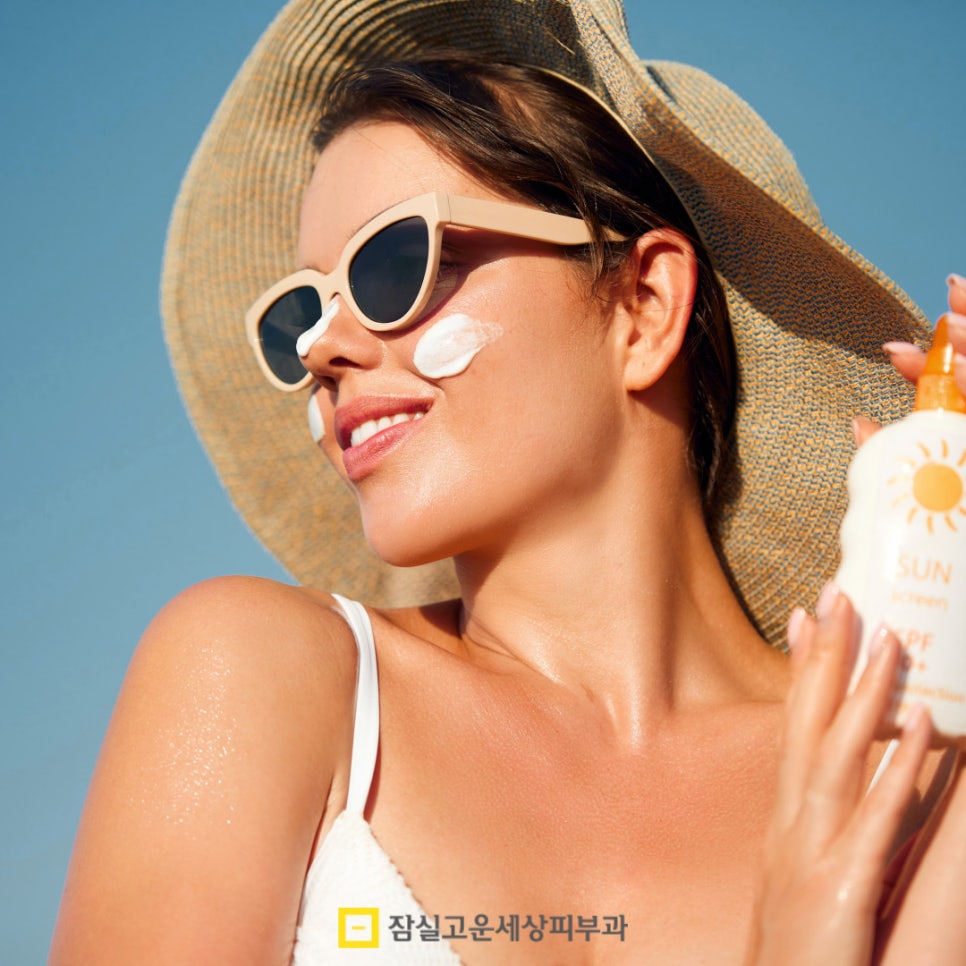
UV rays are one of the biggest external factors that cause skin aging.
In particular, ultraviolet A (UVA) and ultraviolet B (UVB) penetrate deep into
the dermis, damaging collagen and elastin and creating wrinkles, loss of
elasticity, pigmentation, and blemishes. Many people think they only need to
worry about UV rays in the middle of summer when sunlight is strong, but in fact,
UV rays are present to a certain extent even on cloudy days and indoors,
and the skin cannot be free from their effects. UVA that passes through glass is
especially a quiet culprit that damages the skin.
Therefore, sunscreen should become a daily habit regardless of weather or season.
It can only be effective when applied carefully to the face, neck, ears, and backs of
the hands 30 minutes before going out. If you are repeatedly exposed to UV rays
throughout the day, you must reapply every 2 to 3 hours. Expecting one application
to last all day is, in reality, almost impossible.
For everyday life, a product with SPF 25 to 30 and PA++ or higher is sufficient.
SPF refers to the UVB protection index, and PA refers to the UVA protection index.
A higher number is not automatically better. In fact, applying a sunscreen with too
high a protection level too heavily can cause skin irritation or trigger breakouts,
so it is important to choose an appropriate level for the situation. Also, sunscreen
alone may not provide complete protection.
In these cases, using physical protection tools such as hats, sunglasses, and parasols
is much more effective. In particular, between 12 p.m. and 3 p.m., when UV rays are
strongest, it is best to reduce outdoor activities themselves.
In conclusion, sun protection is not merely a beauty routine but a defense strategy
for skin health. UV rays bring the skin’s age forward and accumulate invisible damage
in daily life. Simply building the habit of blocking UV rays every day in a set way can
slow the pace of skin aging and help maintain healthy skin for a long time.
Cleansing should be done within 3 minutes, and not too often
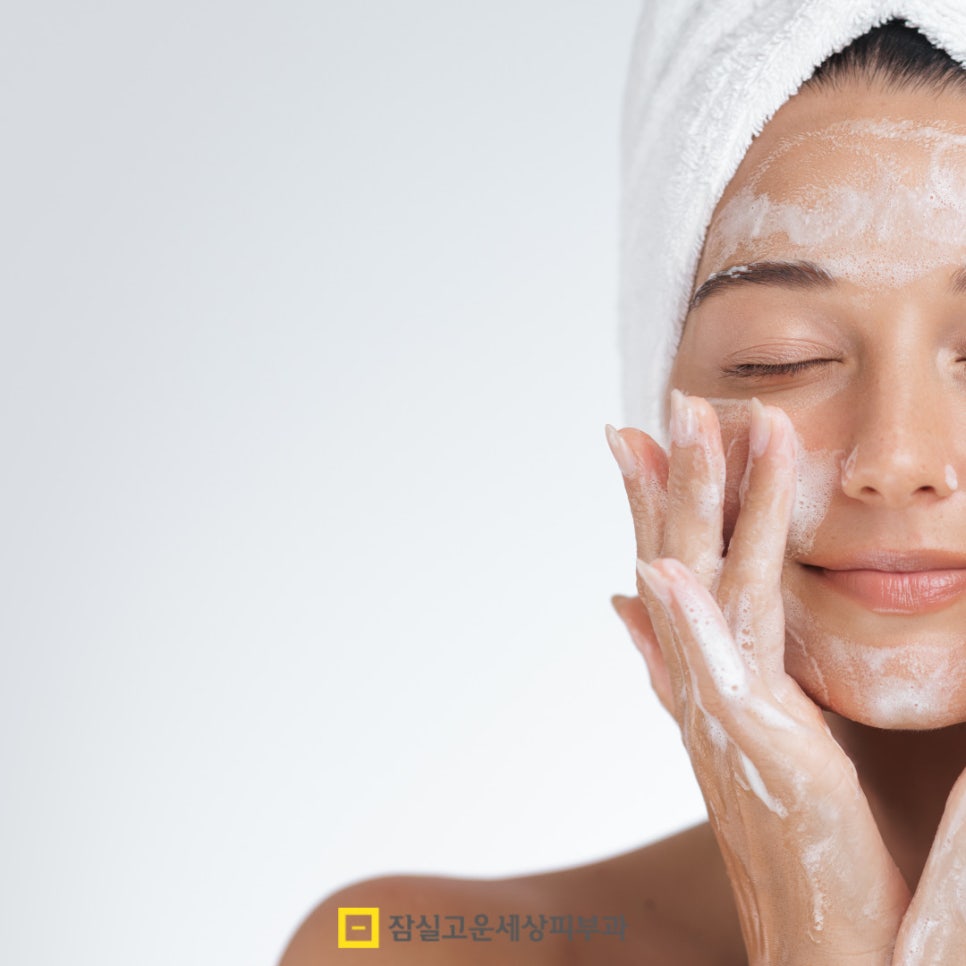
Cleansing is the most basic step in skin care and a key habit that determines skin
condition. However, due to the misconception that “the more you wash, the better,”
many people actually damage their skin barrier.
Cleansing is a process that should effectively remove waste, sebum, sunscreen, and
makeup residue left on the skin while ending with minimal irritation.
First, if you are wearing makeup, double cleansing is necessary. In this case, the
first step should use an oil- or balm-type cleanser to dissolve makeup residue, and
the second step should use a mild, slightly acidic foam cleanser to gently wash the
skin. On the other hand, on days when you do not wear makeup, one cleanse is
enough, and unnecessary double cleansing can remove even beneficial oils,
causing dryness or sensitivity.
It is ideal to finish cleansing within 3 minutes. Rubbing for too long or using hot
water can irritate the skin and accelerate moisture loss, so it is important to cleanse
briefly and gently with lukewarm water.
Deep-cleansing products, such as exfoliants, clay masks, or wash-off products with
strong cleansing power, should be used only about once or twice a week. If your skin
is sensitive or thin, you should consider reducing use to once a week or less.
The more often they are used, the more they can damage the skin barrier and cause
dryness, breakouts, and irritation.
After cleansing, it is very important to apply moisturizer immediately. If you do not
apply anything after wiping off the water, the moisture inside the skin quickly
evaporates and the skin can become even drier. Right after cleansing, before the
skin is completely dry, quickly applying toner and a moisturizing cream helps keep
the skin hydrated and calm.
In short, cleansing should be short and non-irritating, and the routine should connect
to moisturizing afterward for the skin to maintain its healthy, natural function.
Rather than viewing cleansing as simply washing, it is necessary to recognize it as an
important first step that determines skin condition.

Use masks for only 15 to 20 minutes, and do not apply them too often
Sheet masks are a convenient skincare method that can quickly supply moisture and
soothing ingredients to the skin, and many people enjoy using them.
In particular, when skin is dry or irritated, many people have experienced the skin
condition visibly recovering after using just one sheet mask well.
However, if sheet masks are overused under the belief that “more is better,” they can
actually harm the skin. Especially for those with sensitive skin, irritation may occur
depending on the ingredients, or the skin barrier may break down, so it is best to
limit use to about 2 to 3 times a week. Even for normal skin types, it is healthier to
use them at intervals based on skin condition rather than every day.
Also, leaving a sheet mask on longer does not necessarily make it more effective.
The proper usage time is within 15 to 20 minutes. If used beyond this time, the sheet
can dry out and create the opposite effect by drawing moisture back out of the skin.
In particular, falling asleep with a mask on or leaving it on for more than 30 minutes
can dry out the skin and cause irritation, so caution is needed.
Storage matters too. In summer, many people refrigerate sheet masks for a cooler
feeling, but in that case it is better to leave the mask at room temperature for about
1 to 2 minutes to take off some of the chill before using it. Temperatures that are too
cold can cause capillaries to constrict and may be burdensome for sensitive skin.
Another tip is to store sheet masks lying down rather than upright. When kept flat,
the essence inside is distributed evenly throughout the sheet, reducing the chance of
insufficient or uneven essence during use.
In short, sheet masks are an effective way to soothe and hydrate the skin, but you
need to pay attention to how often and how long you use them, as well as how you
store them, to get the proper effect. Please use them wisely with the correct method
so that a mask that is good for the skin does not become harmful instead.
Skin is also determined by what you eat.

Skin health is hard to maintain with cosmetics alone.
Above all, what matters most is what you eat every day.
To slow skin aging and maintain elasticity, it is essential to get enough antioxidant
nutrients. Antioxidant nutrients reduce free radicals in the body and help inhibit
collagen breakdown, playing a role in preventing skin cell aging.
Representative antioxidant ingredients include vitamin C, vitamin E, omega-3 fatty
acids, and polyphenols. Vitamin C is directly involved in collagen synthesis and is
abundant in foods such as strawberries, kiwifruit, broccoli, and red bell peppers.
Vitamin E protects cell membranes and helps prevent aging, and it is found in high
amounts in nuts and avocados.
Omega-3 fatty acids reduce inflammation in the skin and strengthen the barrier,
and fish such as salmon and mackerel are good sources. Polyphenols are powerful
antioxidants that can be obtained from pomegranates, blueberries, green tea, and more.
Also, collagen, which is said to be good for the skin, has different effects depending
on the type. For example, collagen found in pork skin or chicken feet has a large
molecular size and is not easily absorbed by the body. On the other hand, fish-derived
collagen has a smaller molecular weight, a higher absorption rate, and a greater
possibility of actually affecting the skin, so it is recommended as a more efficient way
to take it.
Skin recovers at night.
- Creating a 'sleep routine'

The skin restores and regenerates itself while you sleep.
In particular, from 10 p.m. to 2 a.m., skin cell regeneration is most active, and if you
do not get enough sleep during this time, skin regeneration ability drops significantly.
It is good to secure at least 7 hours of deep sleep per day, and if sleep time is
insufficient or the sleep cycle is irregular, collagen production can decrease and skin
elasticity may visibly decline. When fatigue builds up, it leads to dark circles,
dull complexion, and more fine lines, and the skin barrier weakens, making it more
sensitive to external irritation. When you feel that your skin has “gone bad,” it is best
to check your sleep habits before anything else, rather than your cosmetics.

If you change your lifestyle habits, your skin changes too.
What damages the skin is often not cosmetics but your everyday habits. Small habits in
daily life can speed up skin aging, and conversely, they can also become the key to
improvement.
First, excessive sugar intake causes glycation reactions in the body, damaging collagen
and elastin, lowering skin elasticity and making wrinkles more likely. Therefore, it is
important to reduce sweets and processed foods and balance the diet. Also, lack of
moisture causes dryness inside the skin and, over the long term, becomes a factor in
creating fine lines. In dry environments, maintaining indoor humidity and frequently
reapplying moisturizer are also necessary habits.
Exercise can also be a problem if taken too far. Excessive exercise increases oxidative
stress in the body and destroys collagen, which can actually accelerate aging. This is
why balancing appropriate exercise intensity with rest is important. Overly strict diets
or fat-free diets also have a negative effect on the skin. Fat is one of the essential
components that make up the skin, and if it is completely removed, the skin easily
dries out and loses elasticity.
Finally, chronic stress and lack of sleep increase systemic inflammation, worsening
skin troubles and aging.
On days when stress is high, you need your own release routine, such as a light walk,
meditation, or writing in a journal.
If necessary, consider the help of procedures.
- However, naturalness is the standard.
People in their 20s and 30s are at the stage where skin elasticity begins to gradually
decline, but deep wrinkles or severe sagging have not yet appeared. At this stage,
combining procedures that help collagen production and regeneration within the skin
can help slow aging.
Representative non-surgical lifting procedures include the following. Laser lifting uses
radiofrequency or ultrasound to deliver heat to the deeper layers of the skin, inducing
collagen production and helping restore skin elasticity.
Baby collagen injections directly act on skin with reduced collagen, giving a natural and
plump sense of volume and positively affecting skin texture improvement.
Skin boosters, especially hyaluronic acid injections, are effective for deeply hydrating the
skin and restoring elasticity, and they are useful for improving overall skin quality.
These procedures have the advantage of relatively short treatment times and little to no
recovery period, making them easy options for busy modern people. However, all
procedures should be approached differently depending on each person’s skin condition,
and it is important to make the decision only after 충분히 상담 with a medical professional.

The skin is
'an organ that remembers habits'
Good skin is partly something you are born with, but a larger part comes from the
habits you have maintained. Keeping up the basics every day—cleansing, hydration,
sleep, diet, and sun protection—is the starting point of slow aging.
The small changes you start today will create a healthier and more confident face
tomorrow.
🔹 Jamsil Good Dermatology Directions 🔹
🔹 Jamsil Good Dermatology Treatment Information 🔹

🔹 Jamsil Good Dermatology Website 🔹
This article is provided by Jamsil Good Dermatology for the purpose of offering
medical information in accordance with Article 56, Paragraph 1 of the Medical
Service Act, and all procedures/surgeries carry the risk of side effects such as
bleeding, infection, and nerve damage. Please proceed carefully after thorough
consultation with the medical staff.