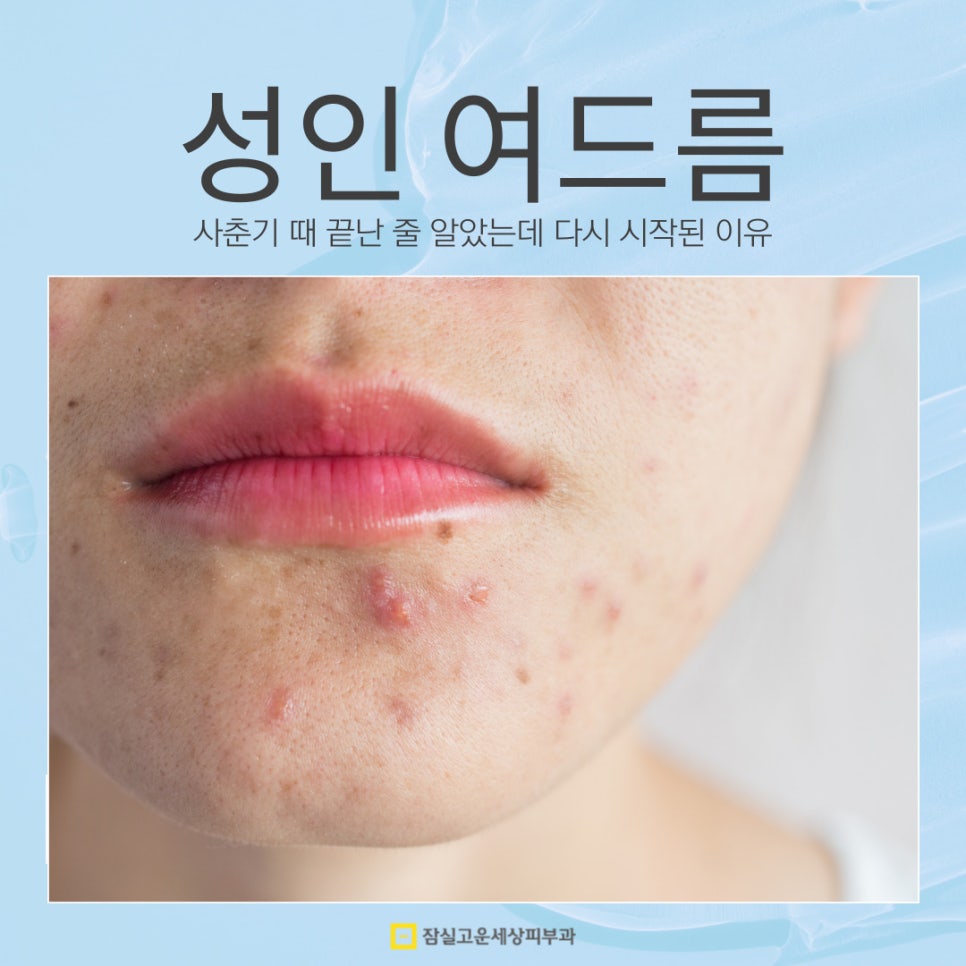
Adult acne,
I thought it ended during puberty,
but the reason it started again
Hello, this is Jamshil Gounsesang Dermatology!
Many people think acne is something that only teenagers get.
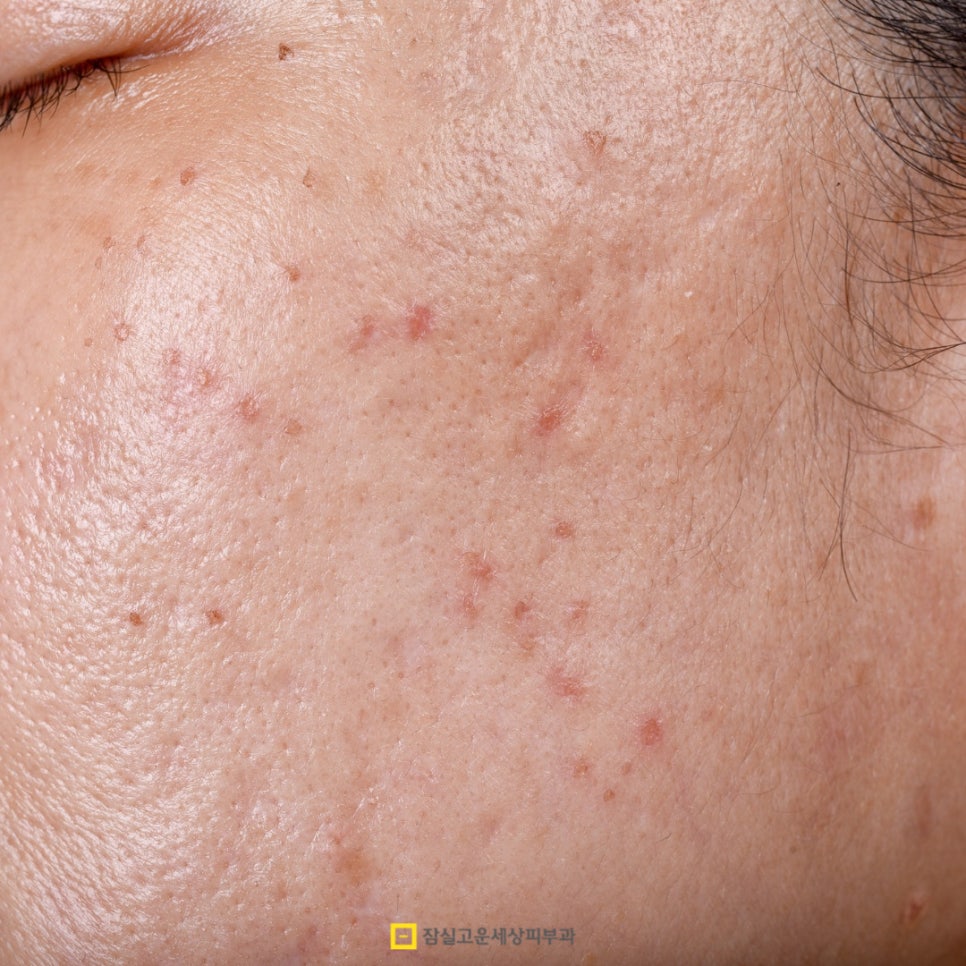
But even after their late 20s or mid-30s, many people are surprised when acne keeps appearing, or inflammatory breakouts suddenly return on skin that had been clear for a while. In particular, red, hard acne often forms deeply around the jawline, around the mouth, and under the cheeks, and it tends to improve and worsen repeatedly, leaving marks over time.
It is not simply caused by excessive sebum production; treatment is more difficult because it results from a complex mix of factors such as hormonal changes, lifestyle habits, stress, and damage to the skin barrier. That is why an individualized approach is needed.
So why does adult acne happen?
What are its characteristics, and how should it be managed?
Also, why does it require a different approach from teenage acne, and which treatments are effective?
Let’s take a closer look.
- Causes of adult acne:
Problems more complex than sebum
1.1 Hormones are the biggest culprit
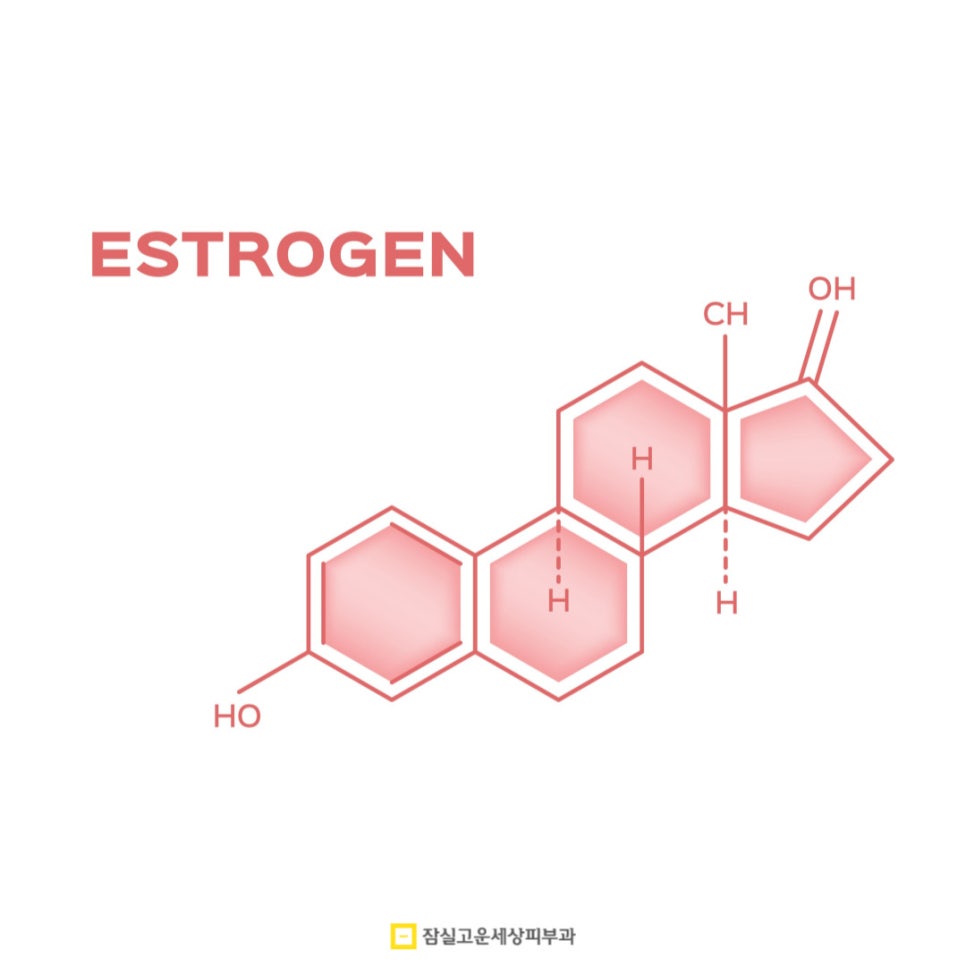
Adult acne develops through a combination of sebaceous gland activity, hormonal changes, stress responses, and skin barrier abnormalities. While teenage acne is mainly caused by increased sebum and clogged pores, adult acne is more strongly influenced by hormonal imbalance and environmental factors.
The most representative cause is hormonal change.
In women, hormonal imbalances in androgens can occur around the menstrual cycle, ovulation, or with conditions such as polycystic ovary syndrome, leading to acne concentrated around the chin and mouth. These areas are especially sensitive to male hormones.
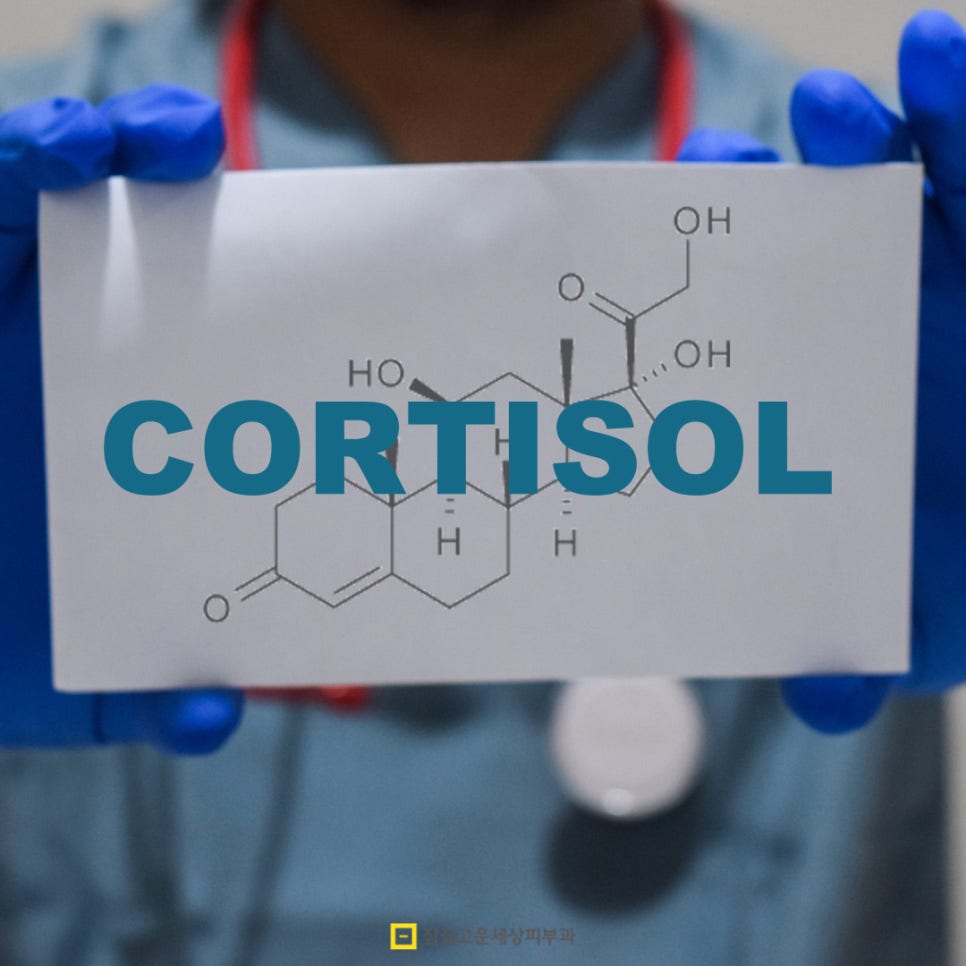
Men are not exempt either. Lack of sleep, protein supplement intake after exercise, and increased cortisol from chronic stress can disrupt hormonal balance and trigger acne. In particular, for office workers, late nights and ongoing stress can easily disrupt hormonal rhythms.

1.2 Lifestyle and environmental factors
Irregular eating habits and daily routines also have a major effect.
Frequent intake of instant foods, high-sugar foods, and dairy products can raise insulin levels and worsen acne. In addition, frequent late nights, drinking and smoking, and even mask wearing, which has become part of daily life, can continuously irritate the skin.
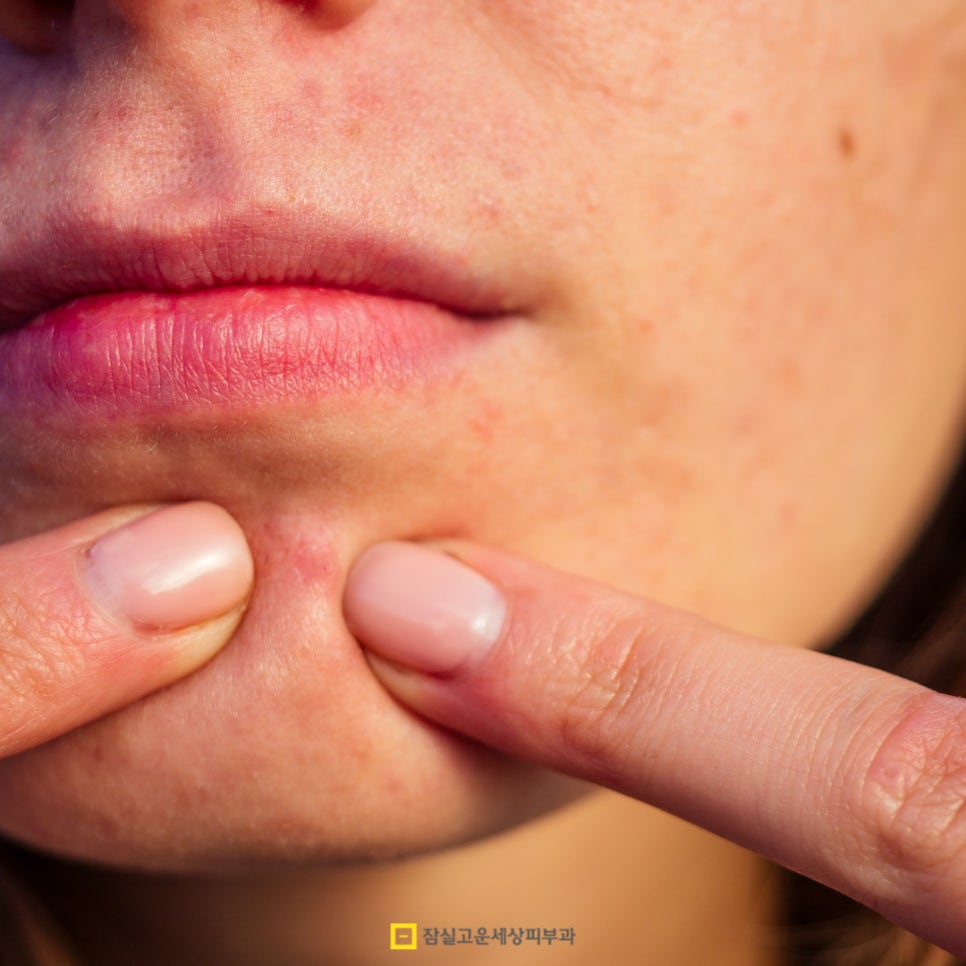
Incorrect skin care can also be a problem.
Overwashing and over-moisturizing, or on the other hand being too careless with skin care, can destabilize the skin barrier and easily lead to breakouts. In particular, if you have acne and then wash too much or use harsh products, the skin barrier can be damaged and the condition may worsen.
Stress is another major cause.
Chronic stress increases cortisol secretion, which promotes sebum production and worsens inflammatory responses. Work stress, relationship stress, financial burden, and other factors can all affect the skin.
- Characteristics of adult acne:
How is it different from teenage acne?
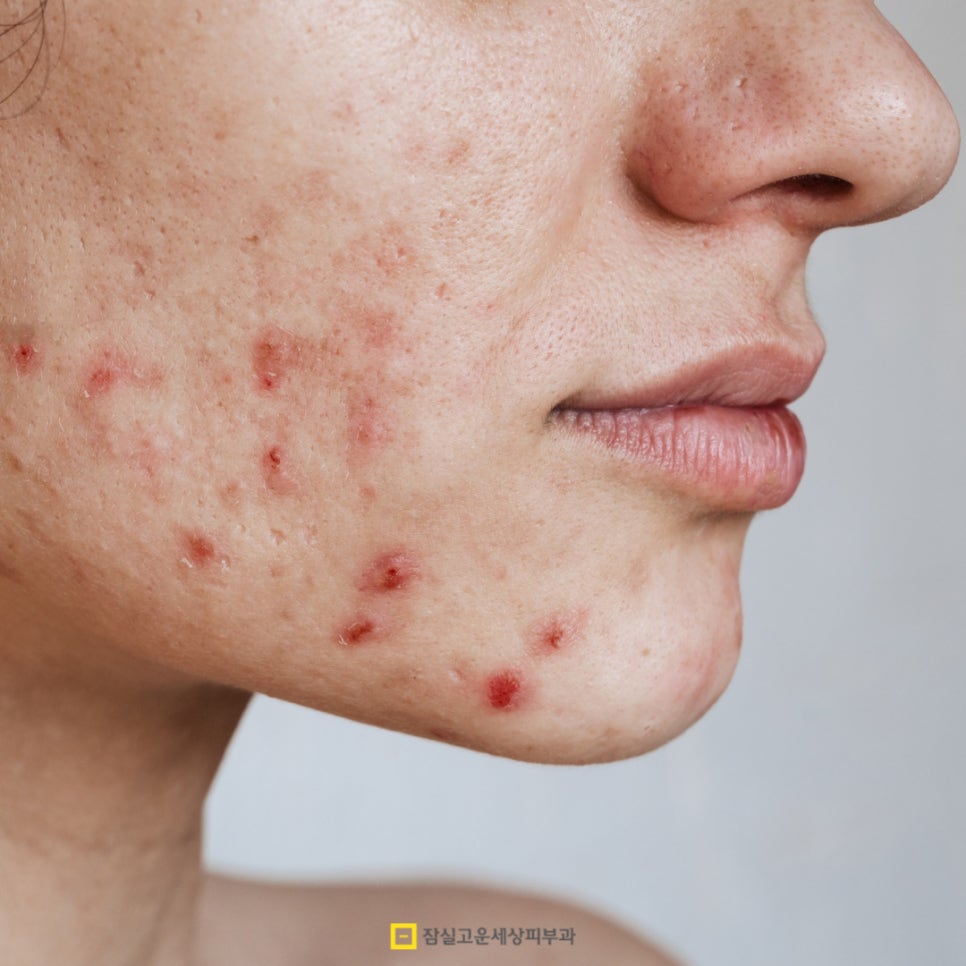
2.1 Differences in location and form
Adult acne tends to recover more slowly and recur repeatedly compared with teenage acne. In general, rather than appearing mainly on the forehead or nose where sebum production is high, it tends to concentrate on the lower face, such as the jawline, under the cheeks, and around the mouth. These areas are highly affected by hormones.
It usually appears as hard, red inflammatory acne, and because it can develop into pustules or root deeply in the skin, it has a higher risk of leading to scars or pigmentation.
While teenage acne is relatively superficial and changes quickly, adult acne tends to be deeper and longer-lasting.
2.2 Differences in pattern and persistence
Adult acne may appear periodically, one or two lesions at a time, or suddenly break out in several spots at once depending on stress or hormonal changes. It may also show a monthly pattern, appearing in the same area around the same time each month in connection with the menstrual cycle.
Some lesions remain inflamed continuously or stay for a long time as lumps that can be felt under the skin, even if they are not visibly large. In such cases, it is easy to miss the timing for treatment, and if left untreated, they can develop into deeper inflammation.
Adult acne also tends to react immediately to stress or changes in daily routines. It often appears on the skin right away when work becomes busy, sleep patterns are disrupted, or eating habits change.
- Treatment strategy for adult acne:
You should not treat only the surface
3.1 A root-cause approach is needed
For adult acne, it is important to start by correcting the internal condition of the skin. Temporary topical medication or extraction alone will not solve the problem; effective treatment requires a customized approach based on skin condition, daily routine, and hormonal changes.
For mild symptoms, anti-inflammatory topical agents, topical antibiotics to suppress acne-causing bacteria, or retinoid products may be used. However, if acne is chronic inflammatory acne or recurrent acne, oral medication may be necessary, and in women, hormonal treatment may be used alongside it.
3.2 Various treatment methods
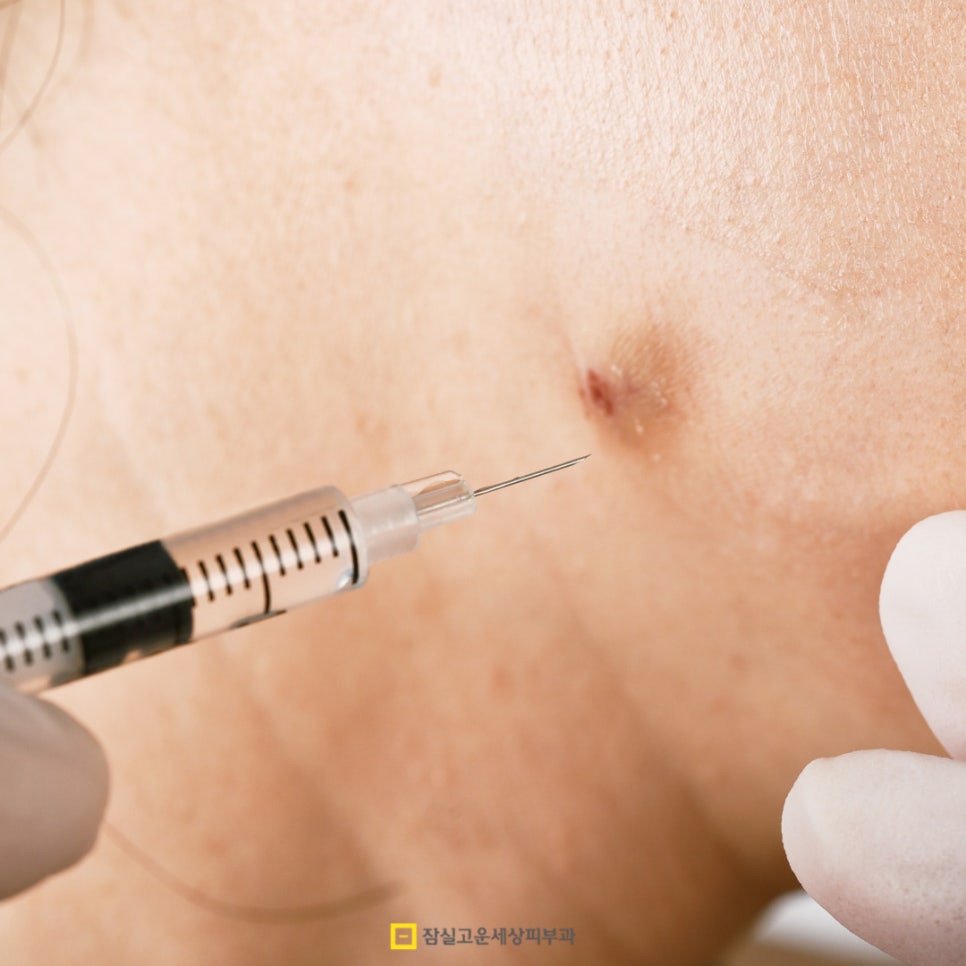
When acne is deep or accompanied by pus, a local steroid injection may be used to quickly calm the inflammation, or treatment may proceed with drainage followed by regenerative care. These treatments also help prevent scarring.
In addition, skin regeneration care that restores the skin barrier and stabilizes sebum secretion, gentle peeling, and dermal-stimulating treatments can be used together to improve treatment response. Rather than strong device-based treatment, the key is a gradual treatment plan tailored to the skin’s response and changes in the acne cycle.
3.3 Improving lifestyle habits is essential
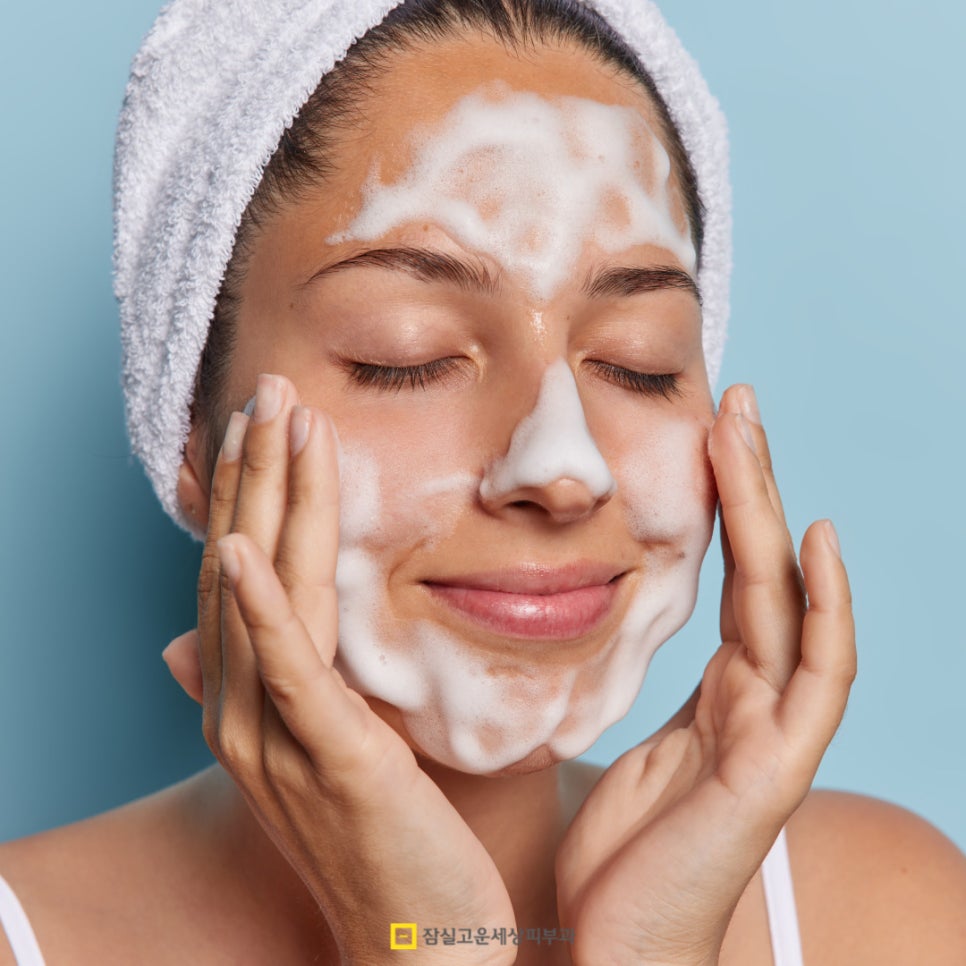
All treatments should be carried out together with lifestyle habits, balance of moisture and oil, and basic care that reduces irritation for the effects to last. Adequate sleep, regular exercise, a balanced diet, and stress management can all be seen as part of treatment.
In particular, gentle cleansing and proper moisturizing are the most basic of basics.
When the skin barrier is healthy, it becomes more resistant to external irritation, and acne treatments also work better.
- Key points in managing adult acne

4.1 Early treatment is important
Because adult acne recovers more slowly than teenage acne and carries a higher risk of scarring, early response is very important. Do not leave it alone just because one or two lesions appear; observe the pattern, and if it seems to recur, consult a specialist.
In particular, if hard, red acne repeatedly appears around the chin or mouth, it is likely hormonal adult acne. In such cases, professional treatment may be needed rather than ordinary acne products.
4.2 Personalized care
Adult acne differs from person to person in cause and appearance, so individualized care is important.
A product that worked for a friend may not suit you, and even the same treatment can work differently depending on your lifestyle.
It is important to observe your own acne pattern and identify when it worsens. Look for connections between acne and your menstrual cycle, stress, changes in eating habits, sleep patterns, and other factors.
Adult acne is
a signal sent by the skin.
Adult acne is not simply a breakout on the skin; it is a signal that internal imbalances in the body are appearing on the skin. Products or methods that worked before may now actually make things worse, and one or two breakouts that are brushed off as minor can repeat and develop into a chronic inflammatory skin problem.
The most important thing is not trying to get rid of it in the short term, but understanding why your skin keeps having acne and taking a systematic approach. Stress in daily life, sleep patterns, how you use basic skincare products, and even eating habits are all closely connected to acne, so you need to check not only skin care but also your overall lifestyle environment.
Adult acne does not improve on its own.
In fact, the longer it is left untreated, the deeper the inflammation can become, and the slower the treatment response may be. Recognizing your current acne as an important signal from your skin and starting an accurate diagnosis and treatment is the first step toward healthy skin.
Remember. Adult acne is a problem that can be managed well enough.
With the right approach and consistent care, it can definitely improve.
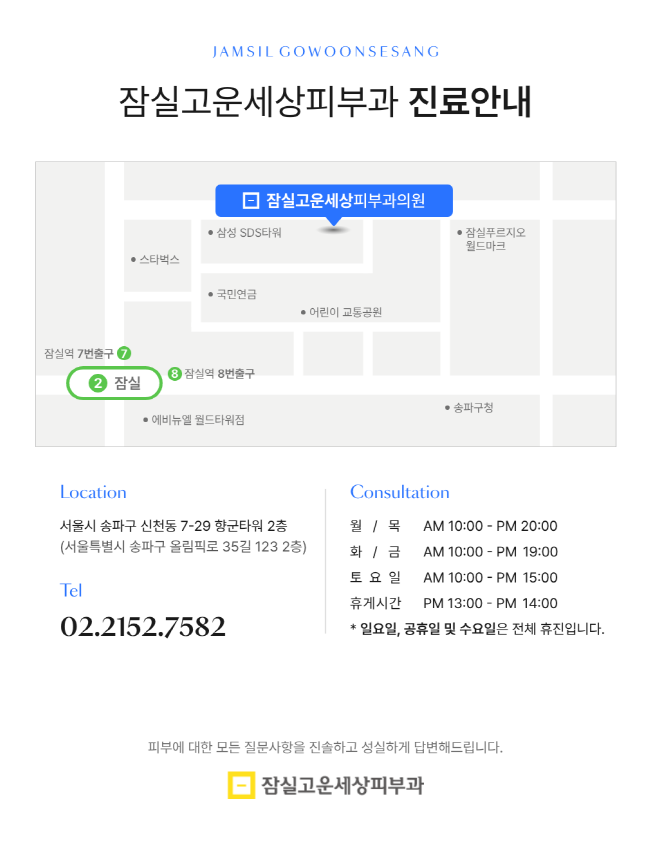
❤ Directions to Jamshil Gounsesang Dermatology ❤
❤ Jamshil Gounsesang Dermatology Clinic Information ❤
❤ Jamshil Gounsesang Dermatology Homepage ❤
This article is provided by Jamshil Gounsesang Dermatology for the provision of medical information in accordance with Article 56, Paragraph 1 of the Medical Service Act. All procedures/surgeries carry the risk of side effects such as bleeding, infection, and nerve damage, so please proceed carefully after sufficient consultation with medical staff.