Acne scars, why they don’t fade even over time!
Hello, this is Jamsil Gounsesang Dermatology!
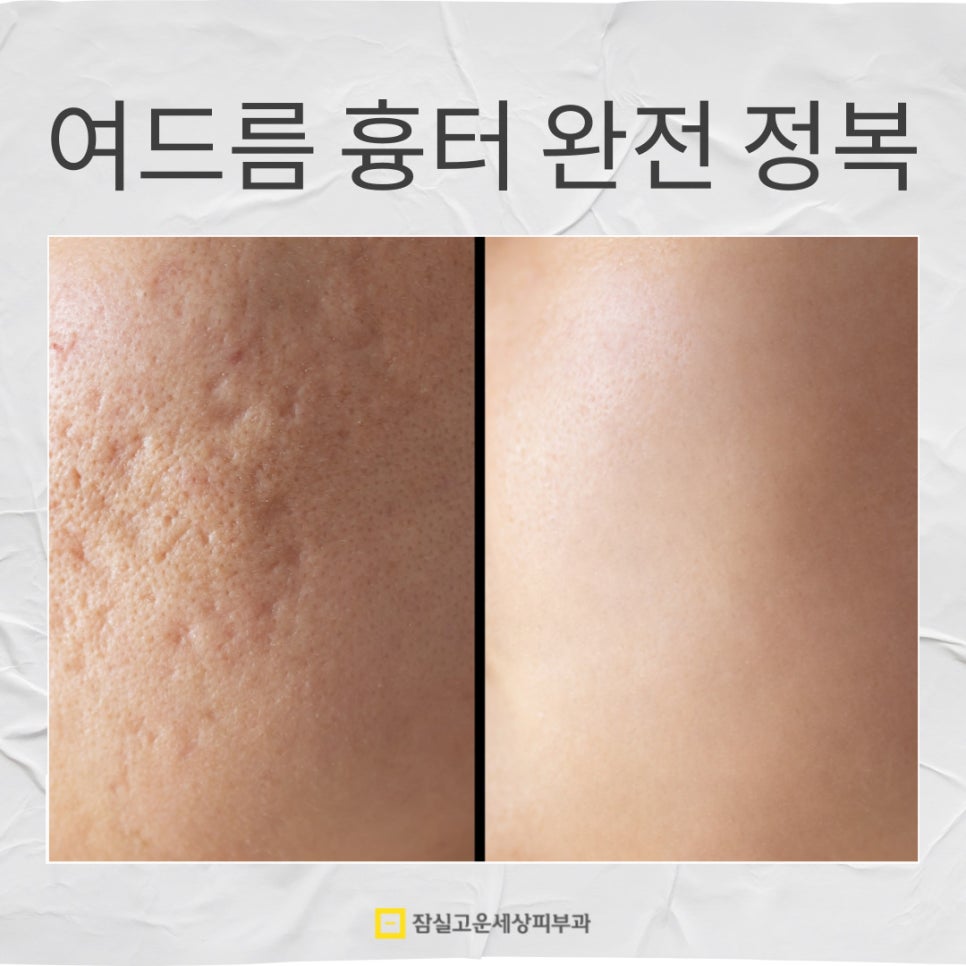
Many people worry that even after acne subsides, their skin looks rougher and more indented than before.
What seemed like a simple mark often does not disappear over time and may even become more noticeable, lowering confidence. In many cases, this is not just pigmentation, but likely an 'acne scar.'
Acne scars are the result of damage to the dermal structure beneath the skin, not just the surface, so they have a much deeper cause than what is visible externally. Therefore, they do not improve simply with basic skincare or by waiting for time to pass; treatment tailored to the scar’s characteristics and depth is needed.
Many people think that consistent use of cosmetics or at-home care products will help, but in reality, care that only affects the epidermis cannot resolve damage in the dermis. In fact, improper stimulation or excessive care can make scars worse, so caution is needed.
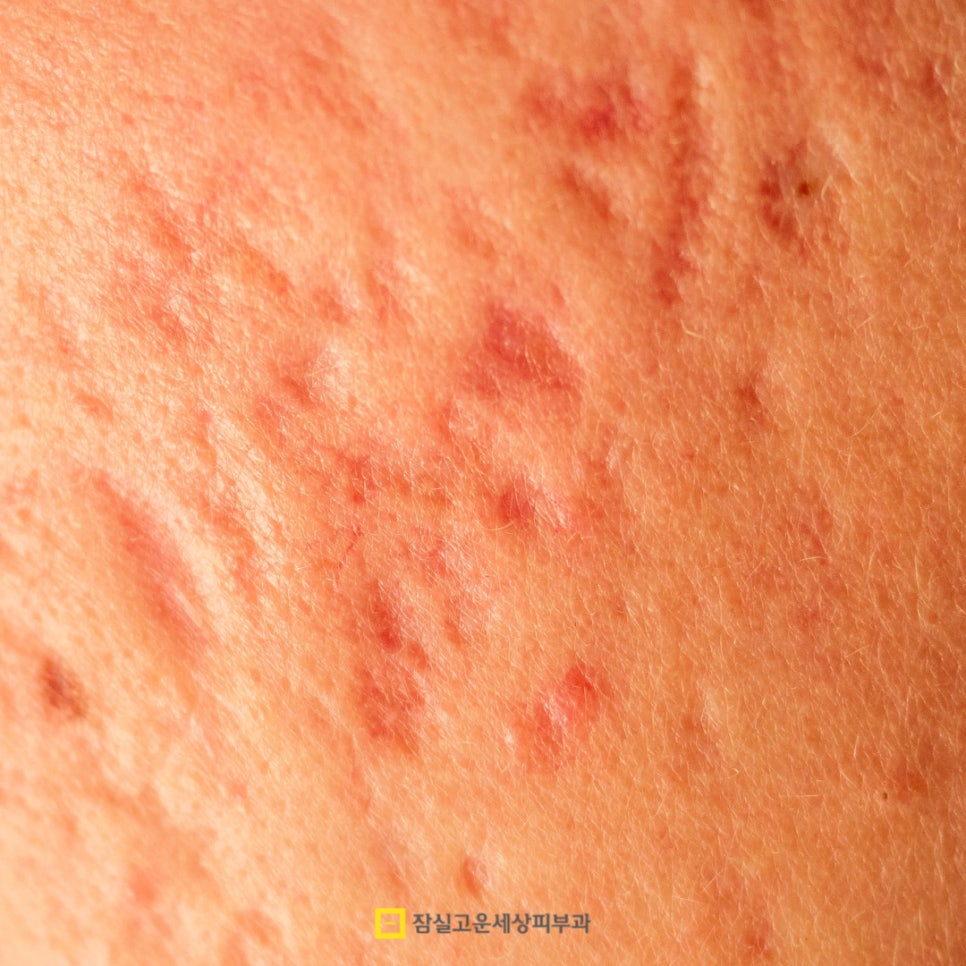
So how do acne scars form?
To choose an effective treatment, you need to understand how scars develop. We will also look at why treatment methods differ depending on the scar type, and the principles behind each treatment.
- Causes and Formation Process of Acne Scars
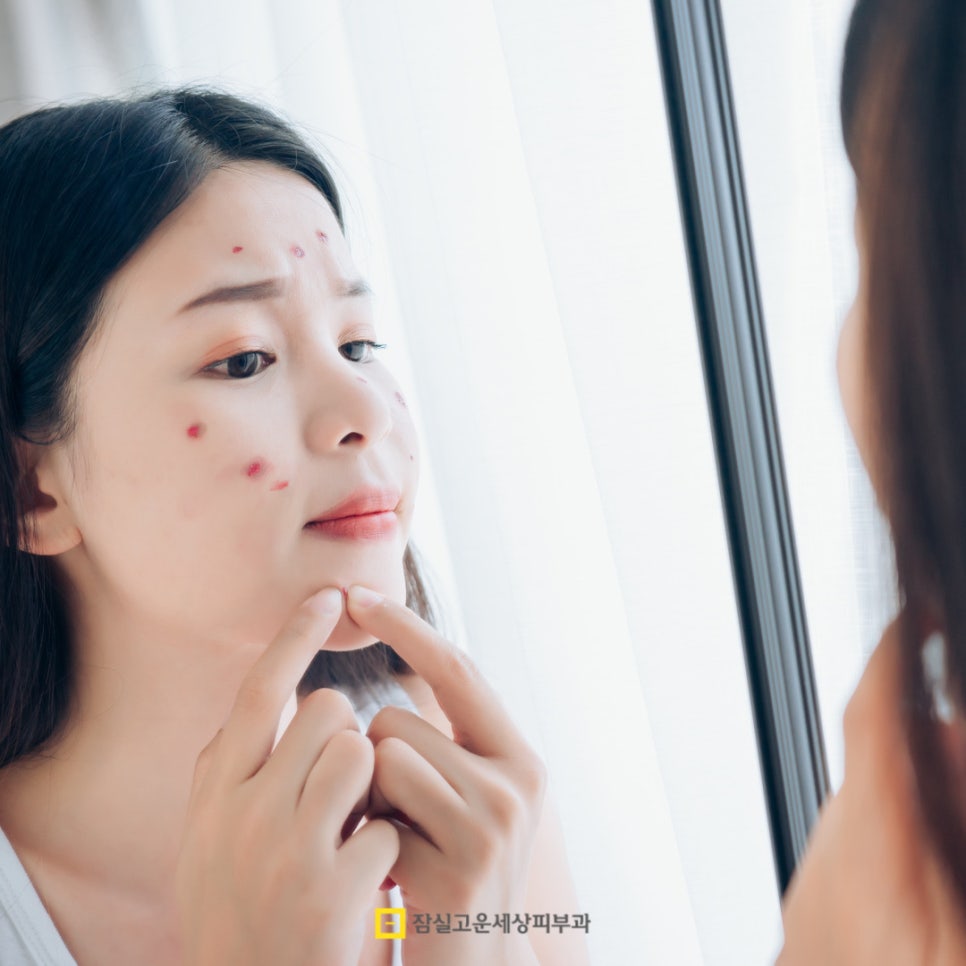
- Damage to the dermis is the key
Acne scars form during the healing process of inflammatory acne when collagen tissue in the dermis is damaged or an excessive response occurs.
In particular, when pustular acne sits deeply or when repeated squeezing or touching causes irritation, fibrous tissue forms unevenly during recovery, and the skin becomes depressed or raised.
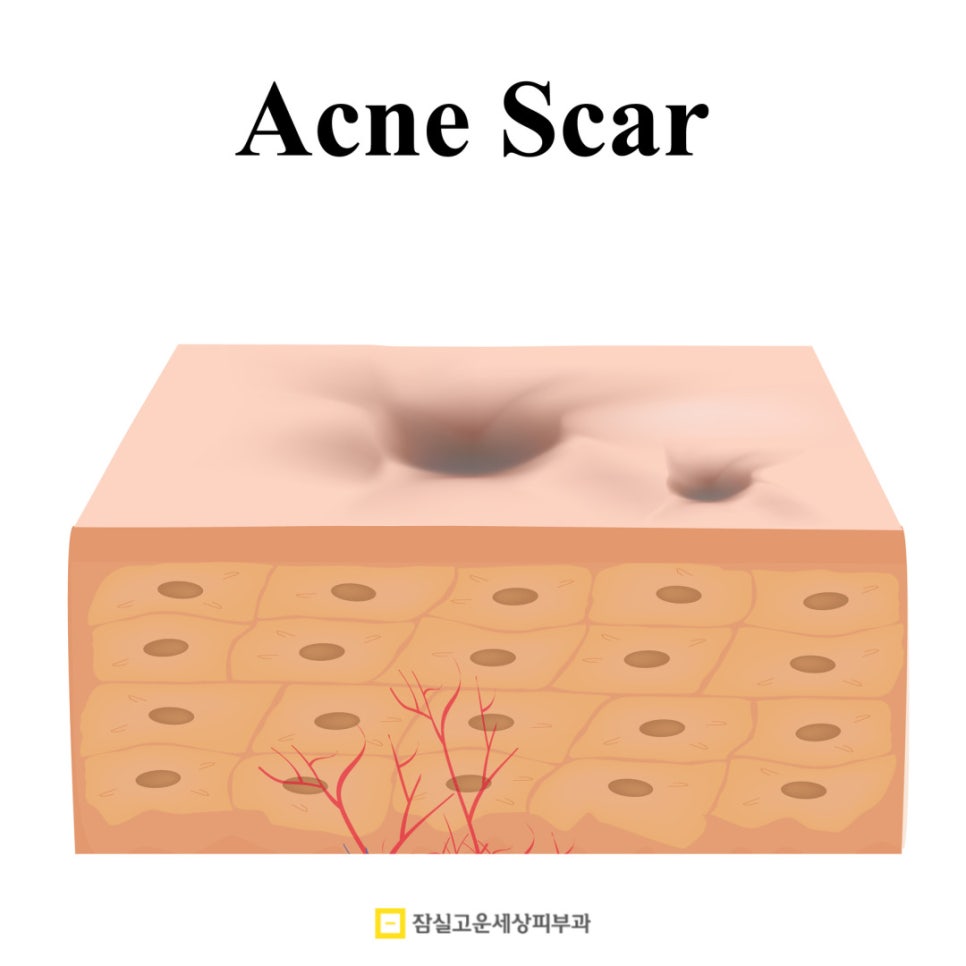
Because these scars are the result of incomplete skin regeneration, treatment is needed to re-stimulate and reorganize the structure itself. In the normal skin regeneration process, collagen is produced in balance to create a smooth skin surface, but when this process is disrupted by severe inflammation or repeated irritation, uneven collagen production leaves scars behind.
- Three types of acne scars
Acne scars are generally divided into three types. Understanding their characteristics makes it clear why treatment methods must differ.
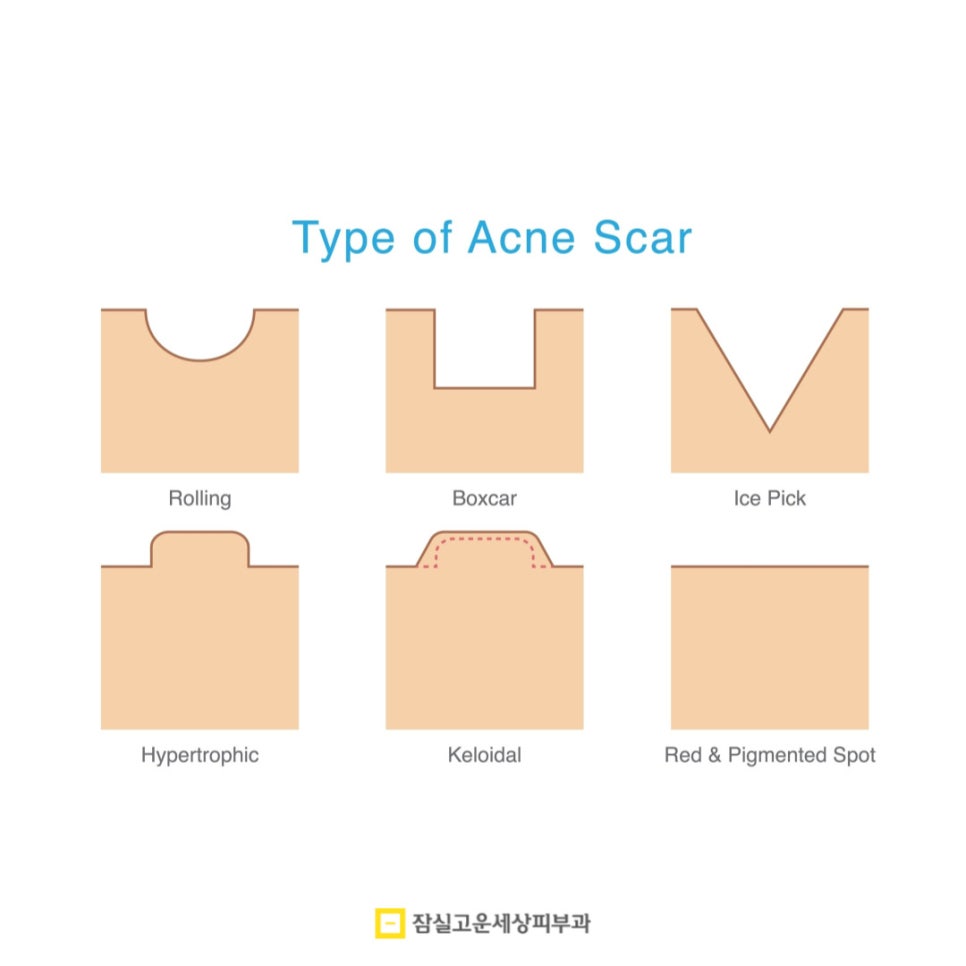
Rolling scars are broad, gently depressed scars that have a wavelike contour, almost like hills. In many cases, the fibrous tissue beneath the skin is firmly attached, so improvement is difficult with surface treatment alone.
In particular, they tend to stand out more because of shadowing when viewed from the side.
Boxcar scars are relatively well-defined, square-shaped depressions. They look as if a box has been turned upside down, with clear edges and a flat bottom. These also require different approaches depending on depth and size, and shallow boxcar scars tend to respond relatively well to treatment.
Ice pick scars are narrow, deep, puncture-like indentations, and they often appear on the cheekbones and around the sides of the nose. The opening is narrow but the depth is substantial, so they reach depths that are difficult to access with general laser treatment, which is why separate intensive treatment is needed.
This type is the most difficult to treat and requires a professional approach.
- Acne Scar Treatment: Step-by-Step Approach
- Subcision
Acne scars are difficult to improve by stimulating only the superficial layers of the skin. The key is treatment that stimulates the dermis, induces collagen regeneration, and encourages the reorganization of damaged tissue.
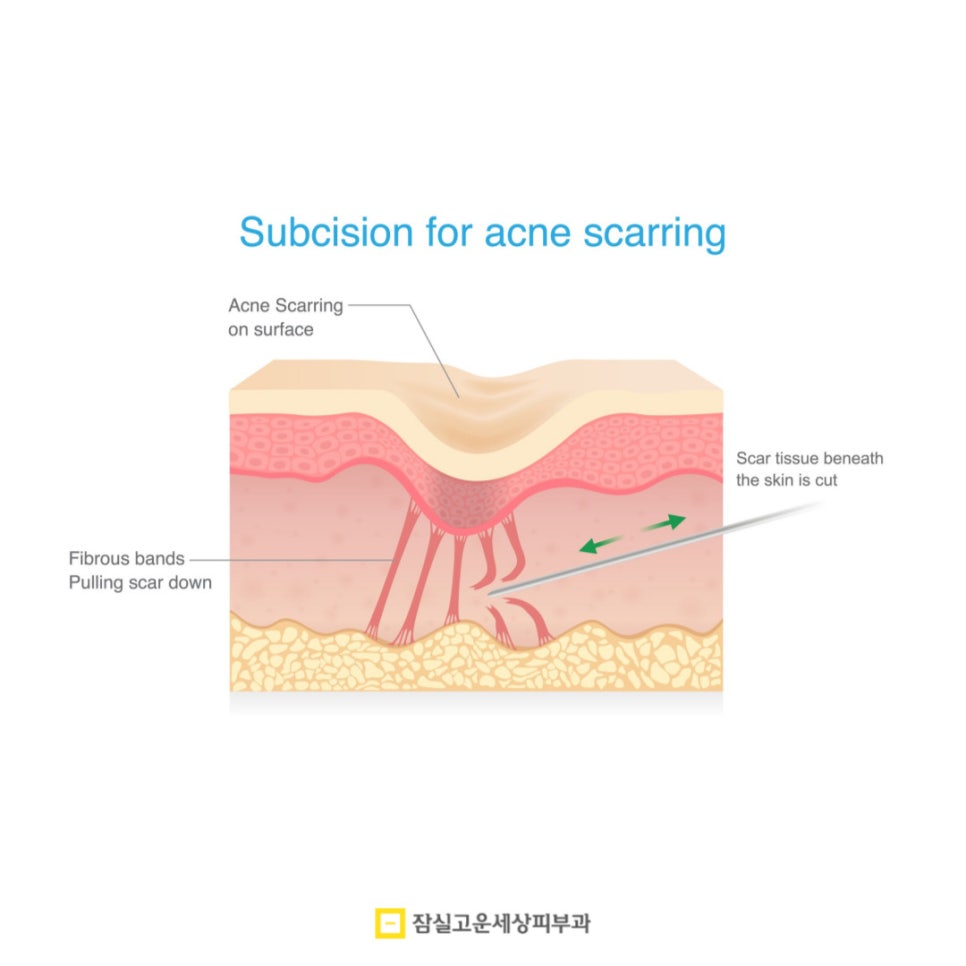
One of the most basic treatment methods is 'subcision.' It works by physically cutting the tissue firmly attached beneath the scar, creating space that allows the depressed skin to rise on its own.
This procedure is effective for deep and firm scars, and it helps stimulate collagen production to gradually restore volume.
During the procedure, a very fine instrument is used to precisely separate the tissue attached beneath the scar. There may be slight bleeding or swelling at this time, but that is a normal reaction. The separated area is naturally filled with new collagen, allowing the skin surface to rise.
- Regenerative treatment
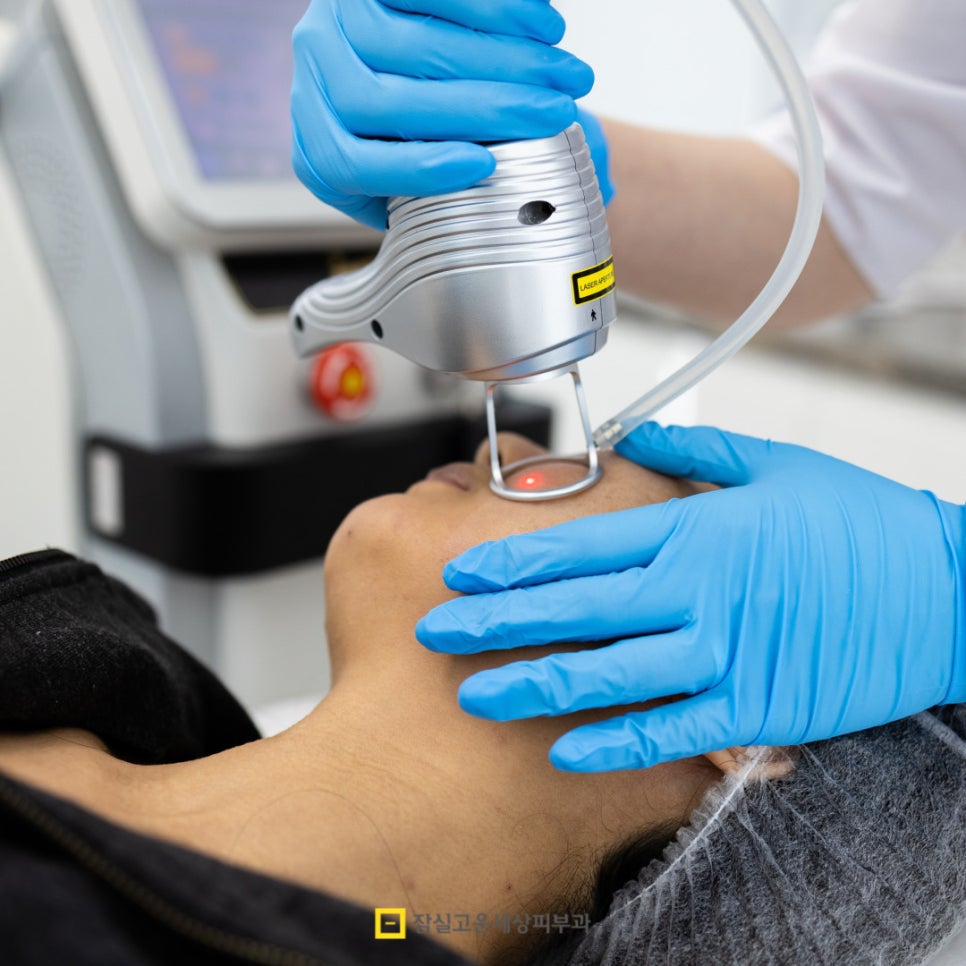
The second is 'treatment that induces dermal regeneration.' By delivering microthermal stimulation or radiofrequency energy deep into the skin, it stimulates fibroblasts in the dermis to newly produce collagen and elastin.
This method intentionally creates microscopic damage to the skin to induce a healing response, and through repeated procedures, the skin texture becomes smoother and the depressed areas gradually fill in. Because it has the advantage of causing little damage to the epidermis, recovery is quick, and the risk of pigmentation is relatively low, making it applicable to various skin types.
With recent advances in technology, more precise and safer energy delivery has become possible, and the intensity and depth can be adjusted to match each person’s skin condition, making effective treatment possible while minimizing side effects.
- Intensive treatment for deep scars
Deep, sharply indented scars such as ice pick scars have limited response to the methods above. In these cases, a method is used that applies strong chemical stimulation only to the local area to induce regeneration of the surrounding tissue.
A very small amount of a specific agent is applied directly inside the scar, temporarily causing necrosis of the surrounding tissue and encouraging it to be replaced by new cells. Immediately after the procedure, a scab forms and then falls off, and over time the depth of the scar gradually becomes shallower.
Such treatment requires very precise technique and must be performed by an experienced specialist. Improper procedures can actually worsen the scar, so it is important to choose medical staff with extensive experience and expertise.
- Supportive treatments
For some deep depressed scars, injection treatments or fillers that help tissue regeneration may be used together for temporary volume compensation. In addition to simply filling the area, they also serve a supportive role by increasing the regenerative response of surrounding tissue through minor stimulation within the skin.
They are more effective when used together with other treatments rather than on their own, and the ingredients or concentrations are selected differently depending on the regenerative goal. In particular, treatment effects can be maximized by using formulations that promote collagen production or contain growth factors that help cell regeneration.
- Treatment Plan and Precautions
1)The importance of personalized treatment
Not all depressed scars are treated the same way. The treatment technique varies depending on the depth, width, degree of adhesion, and border shape of the scar, and it is difficult to resolve all scars with only one method.
In general, a combination of treatments is used, and progressive improvement is possible only after 3 to 5 or more sessions. The treatment should be adjusted step by step according to the skin’s response. At the beginning, the focus is usually on improving the basic structure, and then gradually moving toward finer texture improvement.
2)The importance of post-treatment care
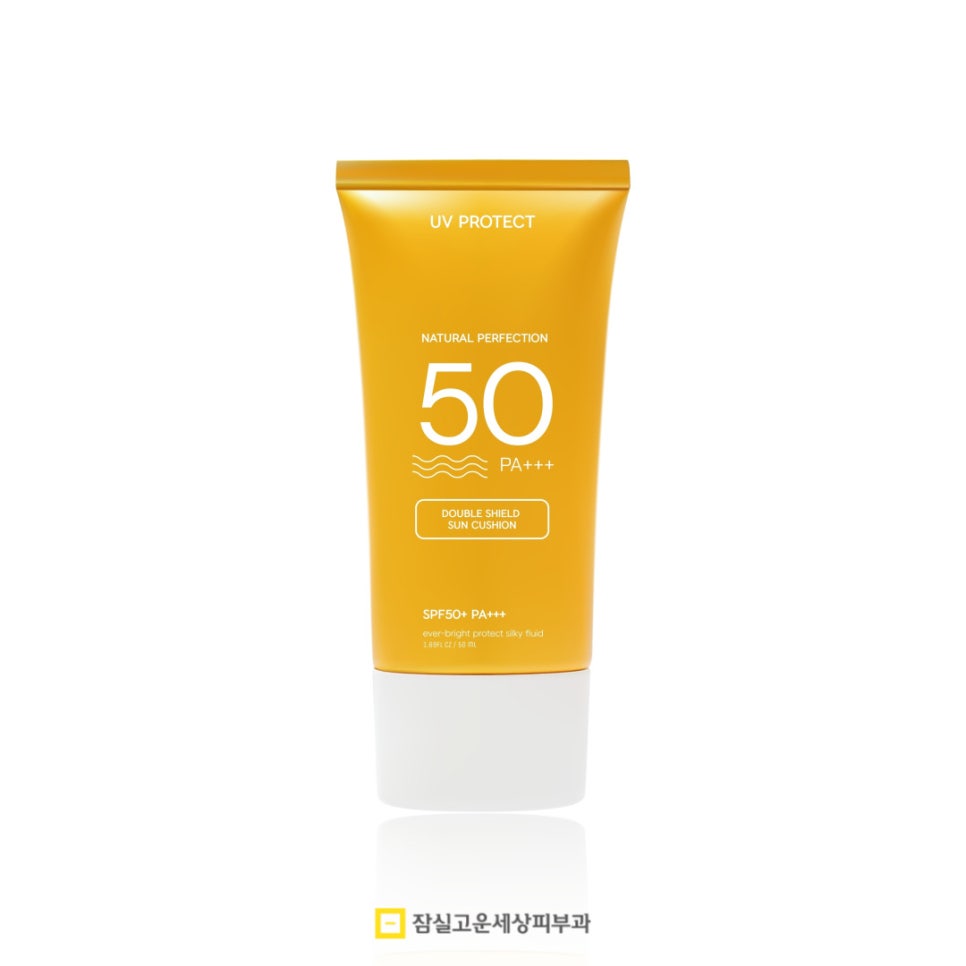
Scar treatment is just as dependent on aftercare as it is on the procedure itself. During the skin’s recovery process after treatment, proper moisturizing and sun protection are essential, and excessive irritation or improper care can reduce treatment effectiveness.
Especially in the early stages after treatment, the skin becomes sensitive, so it is best to use gentle products and get enough rest. It is also important to monitor progress through regular follow-up visits and adjust the treatment plan as needed.
Acne scars rarely improve naturally over time; in fact, fibrosis may progress and harden further, reducing treatment response.
While treatment is delayed, scars become more fixed, and more procedures may be needed than in the early stage.
Just because the acne is gone does not mean treatment is over. True skin improvement means recovering even the scars left deep within the skin. The earlier appropriate treatment begins, the better the results can be, and the treatment period can also be shortened.
Skin is not just an appearance issue; it is also connected to confidence in life. To ensure that the scars visible now do not remain in your mind for a long time, treatment is needed to reactivate the skin’s ability to recover.
Scars are not wounds that cannot be erased, but marks that can be sufficiently improved through proper treatment.
Through consultation with a specialist, accurately identifying your scar type and creating a personalized treatment plan is the first step toward successful scar treatment.
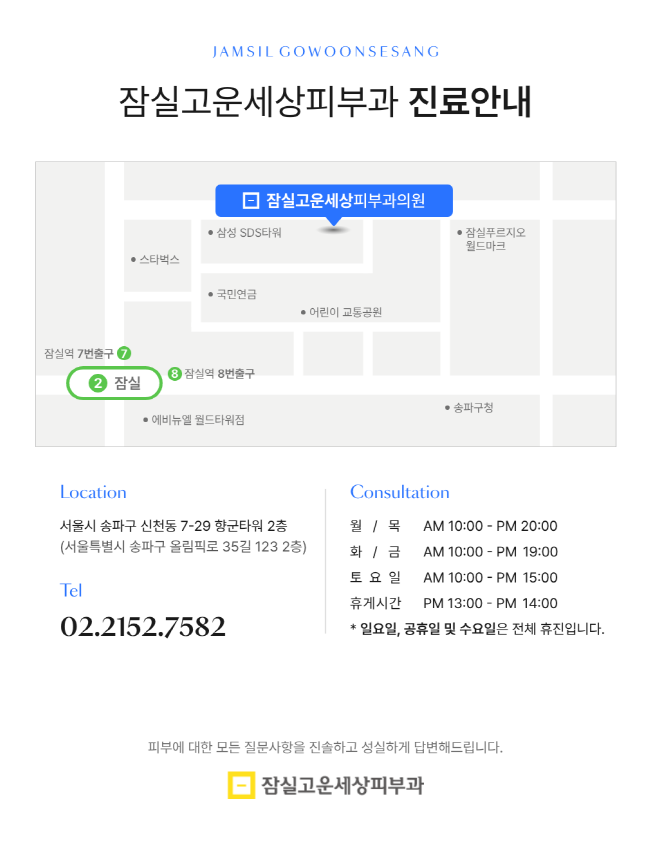
↓ Directions to Jamsil Gounsesang Dermatology ↓
↓ Jamsil Gounsesang Dermatology Treatment Information ↓
↓ Jamsil Gounsesang Dermatology Website ↓
This article is provided by Jamsil Gounsesang Dermatology for the purpose of providing medical information in accordance with Article 56, Paragraph 1 of the Medical Service Act. All procedures/surgeries carry the risk of side effects such as bleeding, infection, and nerve damage, so please proceed carefully after thorough consultation with medical staff.