In summer,
Why acne gets worse and
how to address it
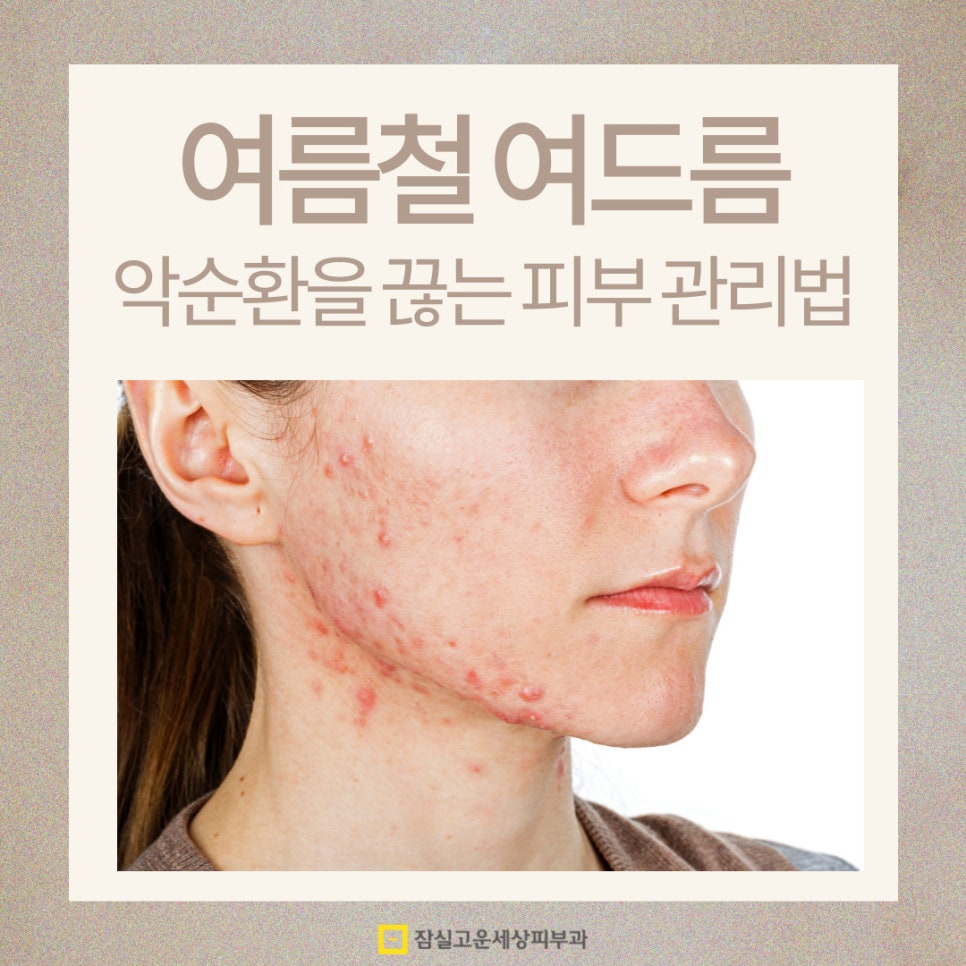
Hello, this is Jamsil Gounsesang Dermatology!
When summer begins, a variety of external factors that can irritate the skin arrive all at once.
Much higher temperatures than usual, strong ultraviolet rays day after day,
and unpredictable environmental changes such as fine dust and yellow dust can
easily disrupt the skin’s balance. These changes are not just a concern for some teenagers;
they are a real skin problem that can affect anyone, regardless of gender or age.
Acne is never just a temporary blemish. Because it can develop into repeated
skin inflammation and chronic problems, if you have ever lost sleep over a skin concern,
you will likely relate even more.
In this post, we will calmly go over what the root cause of acne worsening in summer is,
how effective treatment and management should differ,
and skin habits you can put into practice right away in daily life.
Rather than vaguely fearing or avoiding acne, if you properly understand the signals your skin sends
and carry out management methods suited to your skin type one by one, you can move a step closer
to much healthier skin than you have now.
Why acne gets worse in summer
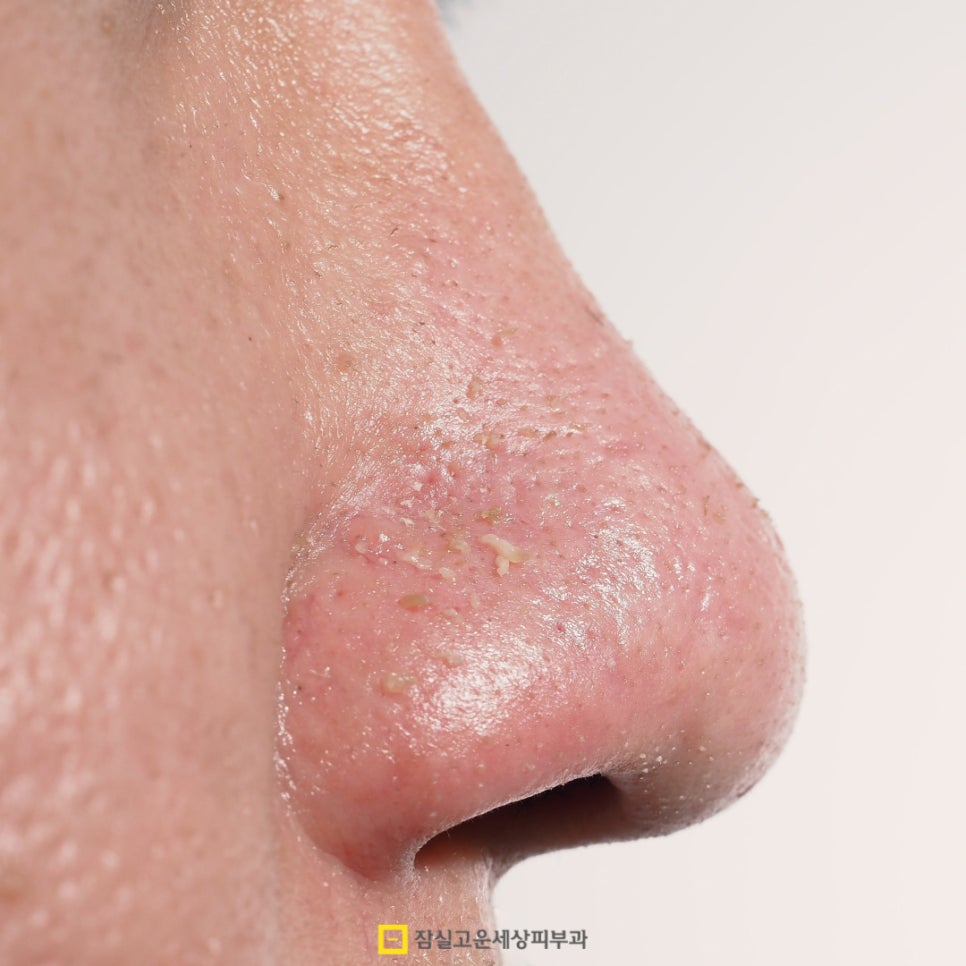
In summer, there is more than one change happening to the skin. The midday temperature rises quickly,
temperature shifts repeat as you move between indoors and outdoors, ultraviolet rays are strong,
and there is fine dust and yellow dust too... If mask-wearing adds skin occlusion to all of this,
the skin is put under far more stress than usual.
In particular, during summer, both sweat and sebum are secreted in large amounts. When the secreted sebum
and sweat remain on the skin surface, waste in the air, fine dust, and various pollutants
easily stick to them. In this environment, pores become clogged much faster than you might expect.
Once a pore is clogged, oxygen supply inside it is not smooth, creating conditions that allow
acne-causing bacteria (Propionibacterium acnes) to multiply, and as a result,
inflammatory acne can easily occur.
In this way, the external environment and lifestyle habits in summer can easily become direct causes
of worsening acne. In other words, it is not simply a matter of "sweating because it is hot";
when the combined conditions of waste on the skin surface, sebum, and external pollutants build up,
acne can worsen much more easily.
During this period, it is important to take extra careful care and pay attention to products or habits
that come into direct contact with the skin. Please remember that summer skin changes are not just a minor
discomfort, but can develop into chronic acne.
Acne: lifestyle habits matter more

Acne is not simply a blemish that appears on the skin surface, but a skin condition that arises when
various factors in the body act together. In particular, areas with abundant sebaceous glands such as the face,
the back, and the chest have more active sebum secretion, making them representative areas where acne
easily develops.

In summer, sebum secretion increases even more, but that is not the only factor that worsens acne. Hormonal changes,
irregular sleep, chronic stress, ultraviolet exposure from frequent outdoor activities, greasy and irritating foods,
excessive drinking and smoking, and a reversed day-night routine all add up to make the skin quickly lose balance
and send out signals in the form of breakouts.
Many people immediately turn to home remedies or cosmetics recommended by others when acne appears, but such stopgap measures
can actually irritate the skin even more. In particular, squeezing acne with your hands or touching it frequently may seem
fine in the short term, but in the end it can lead to long-term problems such as skin damage, scarring,
and hyperpigmentation.
Ultimately, the key to acne care is not simply changing products, but reviewing your overall lifestyle habits
and consistently practicing the right routine. Because the skin is a sensitive mirror that responds to every change in the body and daily life,
taking action one habit at a time is more important than rushing.
Acne: early treatment and expert diagnosis are key
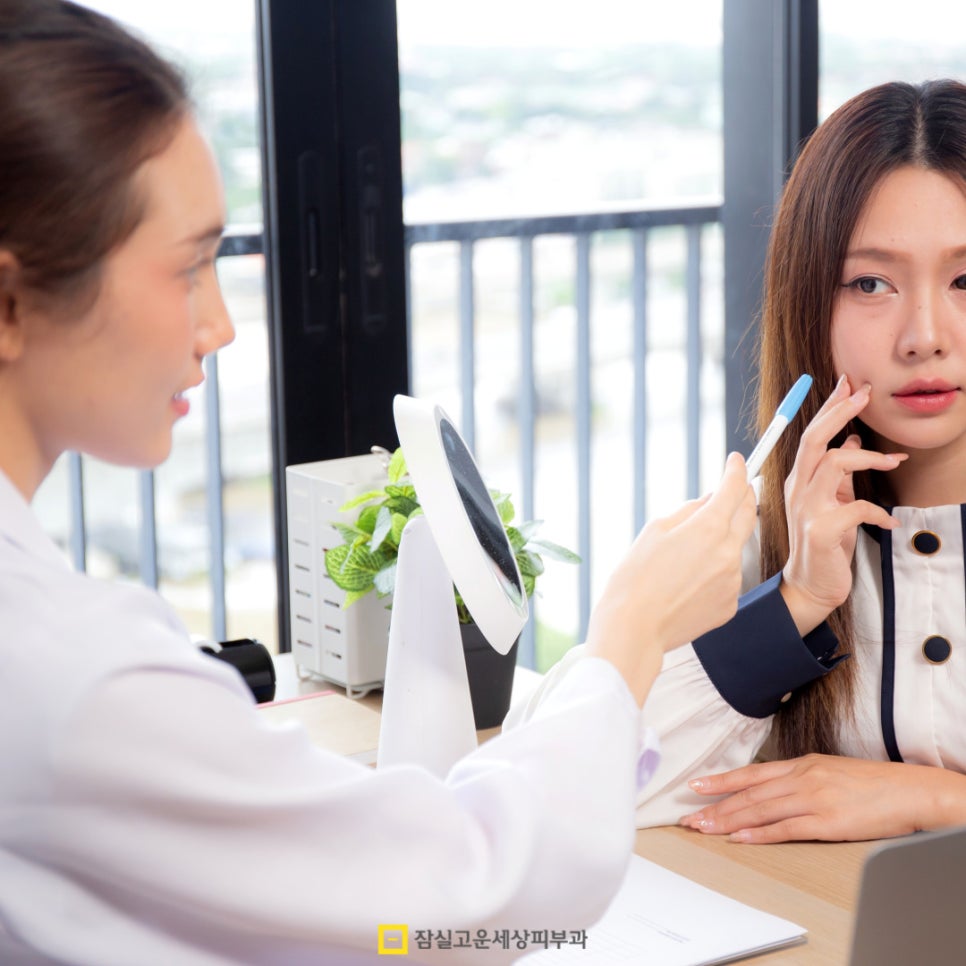
It is easy to leave acne alone, thinking it will go away on its own over time, but in reality,
the earlier you accurately identify your skin condition and the cause of acne and begin personalized treatment,
the better the results tend to be.
If a breakout is self-extracted or left unattended, inflammation can spread deep into the skin,
damaging tissue and later leading to pitted scars, hyperpigmentation, and repeated recurrence,
which makes more careful management necessary.
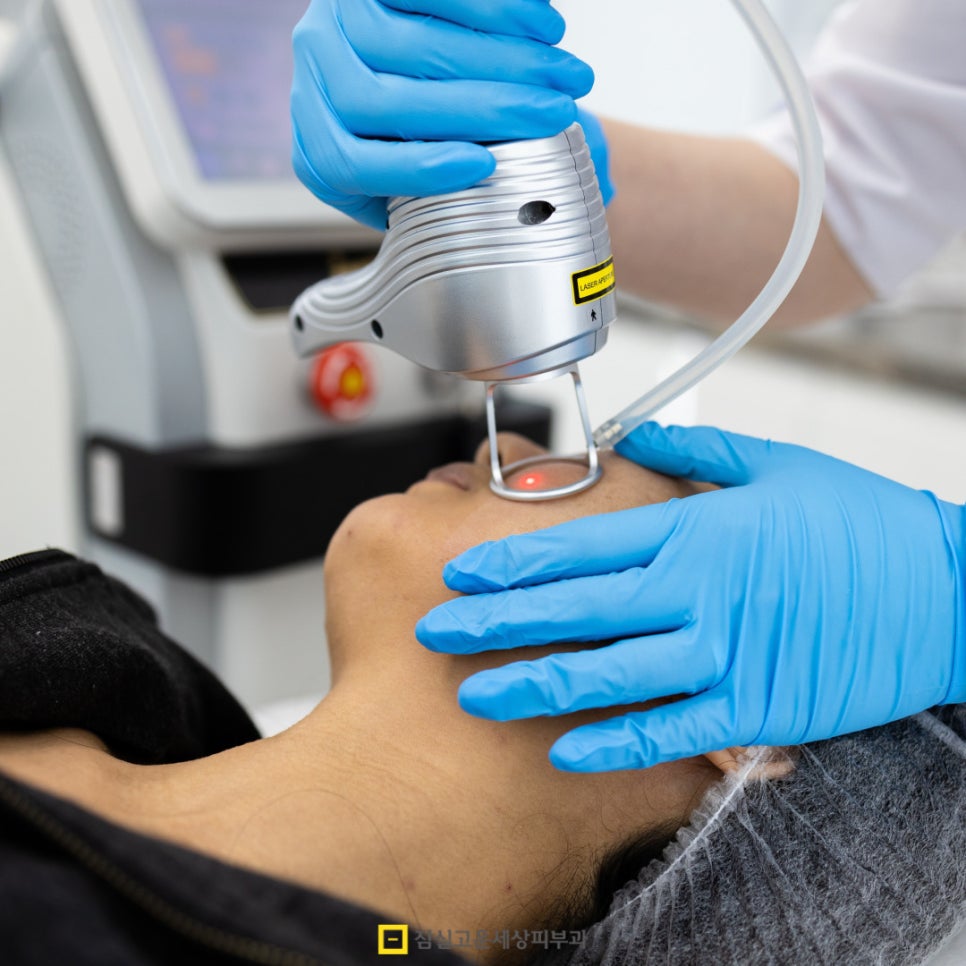
In dermatology, after carefully diagnosing the patient’s skin type, the cause of the breakout,
and the current condition, various treatments such as extraction,
scaling, and laser therapy are applied step by step. For example, when sebum secretion has increased excessively and acne worsens easily,
a procedure that selectively targets the sebaceous glands in the dermis, such as the NeoBeam laser,
may be effective.
Also, when red marks or pitted scars remain even after acne has cleared and become a concern, various skin regeneration
and pigmentation treatment devices such as Potenza laser (radiofrequency RF) and Vbeam laser can be used to further improve skin tone
and texture more smoothly.
Because all treatments must be designed to match each person’s skin characteristics,
the degree of acne progression, skin thickness, and breakout type, sufficient consultation and diagnosis must always come first
to expect the best results.
Under the careful care and plan of a board-certified dermatologist, I hope you can break the acne cycle early
and regain confident skin.
Basic acne care: a low-irritation routine
The more acne-prone the skin is, the more even small daily care steps make a big difference. In particular, from cleansing and moisturizing to UV protection,
minimizing irritation throughout the entire process is key to preventing breakouts.
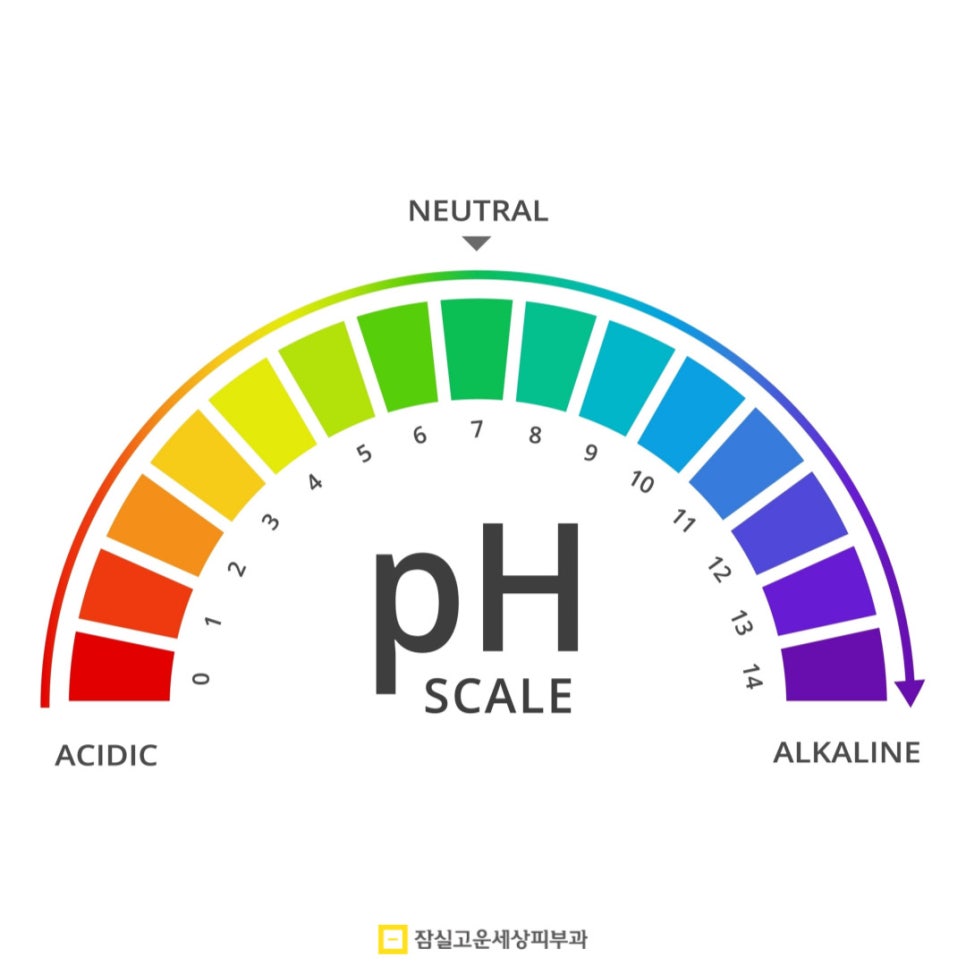
First, it is necessary to develop the habit of gently cleansing the skin twice a day with a mildly acidic cleanser,
not too frequently. At this time, lightly wipe in circular motions with your fingertips,
and avoid excessive exfoliants, grain scrubs, or rough towels, as they can damage the skin barrier and worsen inflammation.
After cleansing, use a light moisturizer suited to your skin to balance oil and moisture,
and make sure the skin does not become dry.
Sun protection is also an essential step that must be included in acne skin care. After checking the SPF and PA ratings,
apply it carefully 30 minutes before going out and reapply every 2 to 3 hours.
In addition, items that come into direct contact with the skin, such as makeup brushes, puff applicators,
and masks worn every day, should always be kept clean to prevent unnecessary breakouts.
What matters in acne care is not "too much effort" but "the right habits."
The more sensitive the skin is, the more you should minimize irritation and remember that a routine built step by step from the basics of daily life
is the surest way to restore healthy skin.
If acne scars or marks are a concern
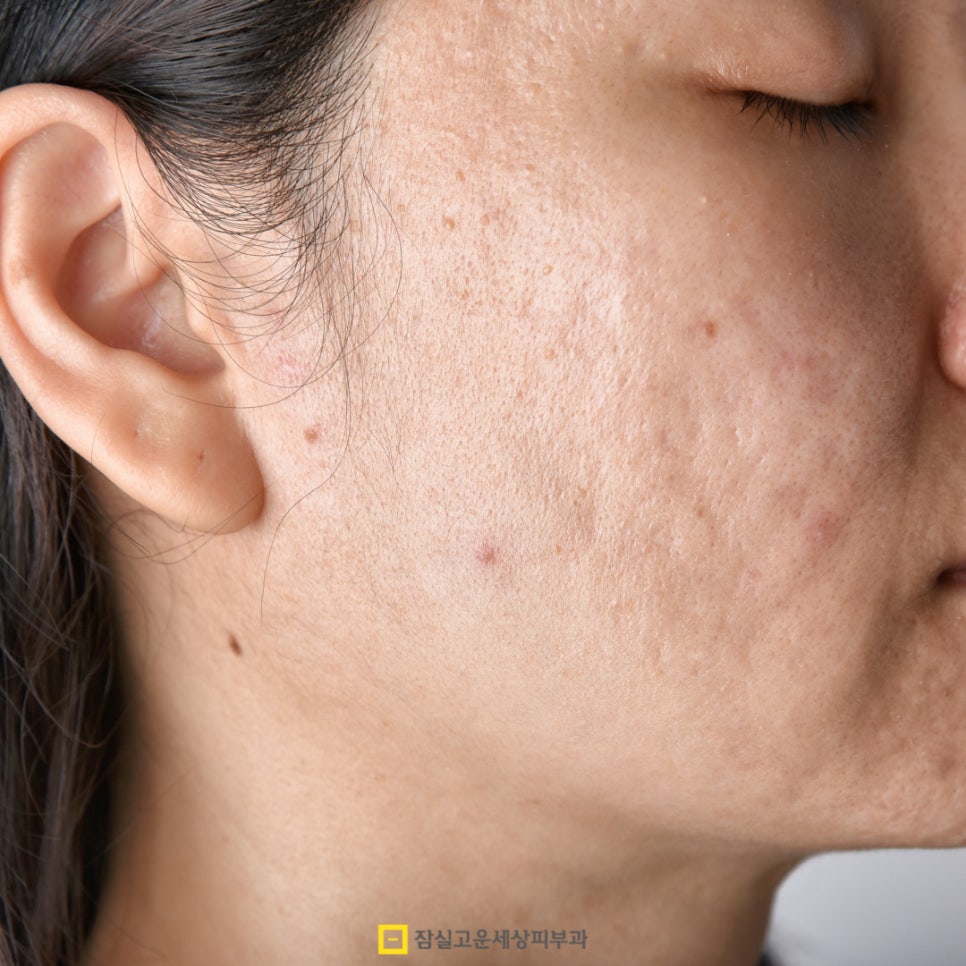
Even after acne has subsided, red marks, pitted scars, or dark hyperpigmentation often remain on the skin and weigh on your mind.
In particular, pitted scars (atrophic scars) are often difficult to recover from naturally, so the worry can deepen if they are left untreated.
Because these traces on the skin do not simply disappear with time, professional approaches such as laser treatment
and radiofrequency (RF) procedures that promote skin regeneration may be necessary. In fact, the degree of damage on the skin surface,
the depth of the scar, skin thickness, and texture vary from person to person, which is why they cannot always be resolved with one standardized treatment.
Therefore, if you are considering treatment for acne scars and marks, the first and most important step is to consult with medical staff who have sufficient experience,
accurately diagnose your skin condition, and find the most suitable treatment method.
Only when a personalized treatment plan is established can the remaining skin marks be systematically improved as well.
Even after acne is gone, for confident skin, I recommend checking carefully once more and proceeding step by step.
Healthy skin is built through small daily habits

One reason acne recurs easily and does not heal well is that the surrounding lifestyle habits are not properly established.
In reality, the skin is constantly influenced by everyday factors such as daily rhythm, meals, and stress.
First of all, sufficient sleep is one of the most basic elements that help skin regeneration and recovery.
If you look at your smartphone late into the night or your sleep schedule is irregular, the skin also accumulates fatigue to that extent
and may react more sensitively to breakouts.
Stress is also an important factor that directly affects the skin.
When stress builds up, the hormonal balance in the body is disrupted, sebum secretion increases, and acne can develop more easily,
so try building habits that calm the mind and body through regular exercise, your own rest methods, or hobbies.

Diet is also something you should not overlook.
Greasy and sugary foods, instant foods, and late-night snacks can trigger inflammatory responses in the skin and worsen breakouts,
so it is best to reduce them as much as possible. On the other hand, if you eat plenty of fresh vegetables and fruits,
vitamins and minerals can help skin health, and consistently drinking 1.5 to 2 liters of water a day can help remove waste from the body more smoothly,
keeping the skin cleaner from within.
Ultimately, healthy skin begins with small changes and actions in daily life.
As you take care of your basic daily habits one by one, your skin’s resistance and recovery ability will naturally improve.
Please remember that skin never improves by effort alone; change begins with care for yourself and consistent management.

Acne,
the starting point for changing your skin from today
Acne is a familiar concern for many people, but it is by no means a condition to take lightly.
In fact, if left untreated or addressed only with temporary measures, skin breakouts can repeat and leave deeper marks.
Many people dismiss acne as merely a puberty-related phenomenon or something caused by stress, but over time they experience it leading to more complex problems such as scars,
hyperpigmentation, and reduced confidence.
The key to acne care is to get an accurate diagnosis early and begin systematic treatment suited to your skin condition.
Rather than simply hiding the breakouts, you need to listen to the signals your skin is sending and consult a specialist to correct the root causes one by one.
Also, the skin never forgets the small choices and repeated habits of each day. The more consistently you practice basic routines such as cleansing,
UV protection, enough hydration, a healthy diet, and stress management, the more your skin balance will gradually recover,
and the repeated cycle of acne will slowly be broken.
Are you perhaps sighing in front of the mirror because of acne, or putting it off, thinking it will pass on its own?
Please remember that small changes today lead to healthier, more confident skin tomorrow.
Do not worry alone; start by accurately understanding your skin’s current condition and the cause.
And if necessary, get help from a specialist, find a routine that suits you, and practice it consistently.
Even if you do not see immediate changes, the process will accumulate and your skin can definitely change.
Take proper care of acne from today.
Thank you.
⭐ How to get to Jamsil Gounsesang Dermatology ⭐
⭐ Jamsil Gounsesang Dermatology Treatment Information ⭐
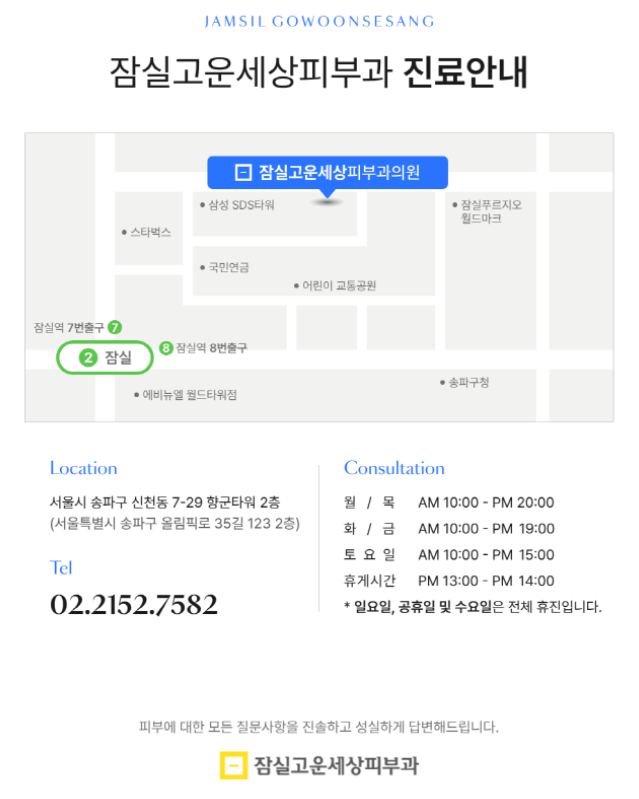
⭐ Jamsil Gounsesang Dermatology Website ⭐
This post is provided by Jamsil Gounsesang Dermatology for the purpose of providing medical information in accordance with Article 56, Paragraph 1 of the Medical Advertising Act. All procedures/surgeries carry the risk of side effects such as bleeding, infection, and nerve damage, so please proceed carefully after sufficient consultation with medical staff.