Recurring acne,
starting from the question,
"Why only me?"
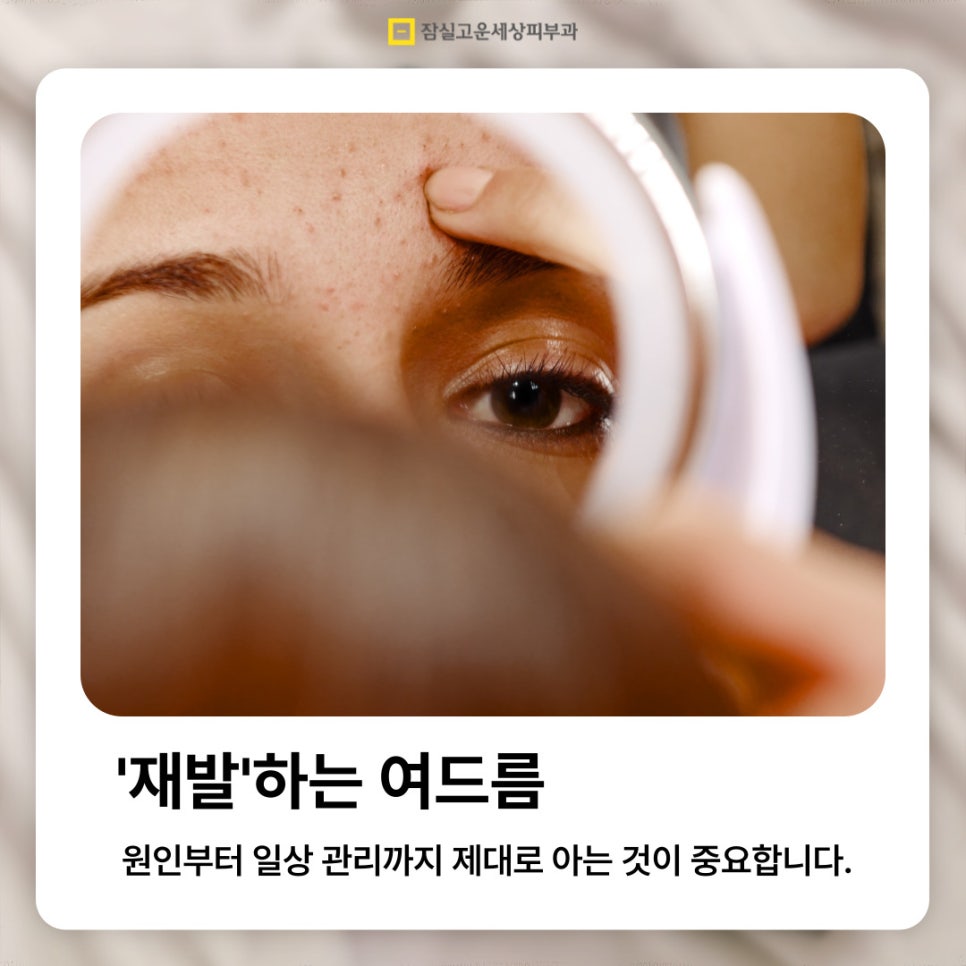
Hello, this is Jamsil Gounsesang Dermatology!
When the seasons change, when you are under stress, or even when you rest enough and take care of your skin, acne can still come back. Many people experience this.
You may have heard reassuring words from people around you, such as, “At this point, aren’t you managing it well?” But for the person living with it, the moments when confidence crumbles in front of the mirror every morning may stand out more clearly.
Acne is not simply a concern that appears on the skin surface. It is a representative chronic skin condition caused by a complex combination of factors, including lifestyle habits, hormones, the environment, and the structure of the skin itself. In other words, this is exactly why it is not easily solved by a single cause or a single treatment.
At times like this, what matters most is starting with an accurate understanding of “what the problem is.” Simply changing cosmetics or changing the way you wash your face may not be enough to solve the root cause. This is why acne should be approached by considering various factors together, such as your own daily pattern, seasonal changes, and stress levels.
In particular, because the causes and aggravating factors of acne differ from person to person, it is most important to carefully analyze your skin condition and living environment and practice a personalized care method that suits them. Recently, technology has also advanced to the point where skin diagnostic devices can more precisely assess things such as sebum levels inside pores, acne bacteria activity, and the health of the skin barrier.
Today, for those who have struggled with recurring acne, we have prepared content that can help you calmly check “what care methods my skin really needs” and “whether there are any overlooked points.”
From prevention to proper lifestyle habits, and even frequently asked questions, we will guide you step by step so that you can care for your skin with accurate information rather than vague anxiety.
- How does food affect acne?

For those wondering, “Is there really a connection between food and acne?”
Food is always at the center of debate in acne care.
You may have heard things like, “Chocolate causes acne” or “You should absolutely avoid fried foods.” In reality, however, research to date has not provided clear scientific evidence that specific foods directly cause acne. In other words, it is difficult to conclude that acne is caused simply by eating certain foods.
But there is one thing that should not be overlooked here.
Even if two people eat the same food, one may show no change while another may notice their acne getting worse. If, based on your own experience, you feel that a certain food consistently worsens breakouts after you eat it, it is wise to personally control that food.

Also, rather than expecting that “one food will completely transform my skin,” it is more realistic to first look at your overall eating habits and nutritional balance. In particular, foods with a high glycemic index (such as white bread and desserts high in sugar) can cause large blood sugar fluctuations, which may stimulate sebum secretion and inflammatory responses, so it is best to naturally reduce excessive intake.
In the end, remember that “there is no absolute food that causes acne,” and maintain the habit of closely observing your own skin’s reactions.
In the process of managing your diet, calmly but consistently observing your skin and building a healthy diet that suits you can be the starting point of recurring acne care.
- Ultraviolet rays: excessive exposure can be harmful to the skin.
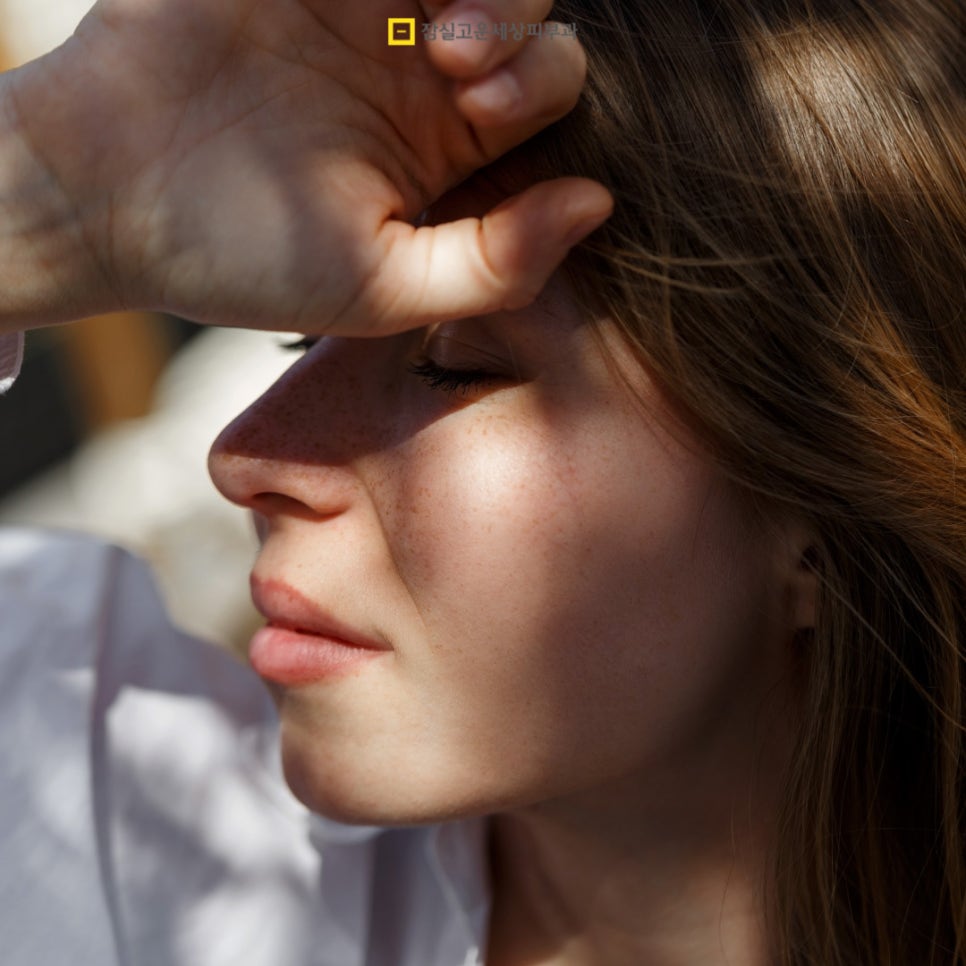
Ultraviolet rays and acne: misconceptions about “Is sunlight really good for the skin?”
Sometimes, after being in the sun, acne may look temporarily faded or your skin may feel noticeably better.
In fact, some people with acne may have tried sunbathing after hearing that “tanning actually makes the skin clearer.”
However, this effect is only temporary. Ultraviolet rays can thicken the outermost layer of the skin, which may make acne look less visible right away, but in the long term they are a factor that can increase skin aging, pigmentation, and even the risk of skin cancer. In particular, repeated UV exposure can stimulate sebaceous gland activity and worsen acne, and on already sensitive skin it may leave frequent redness or irritation reactions.
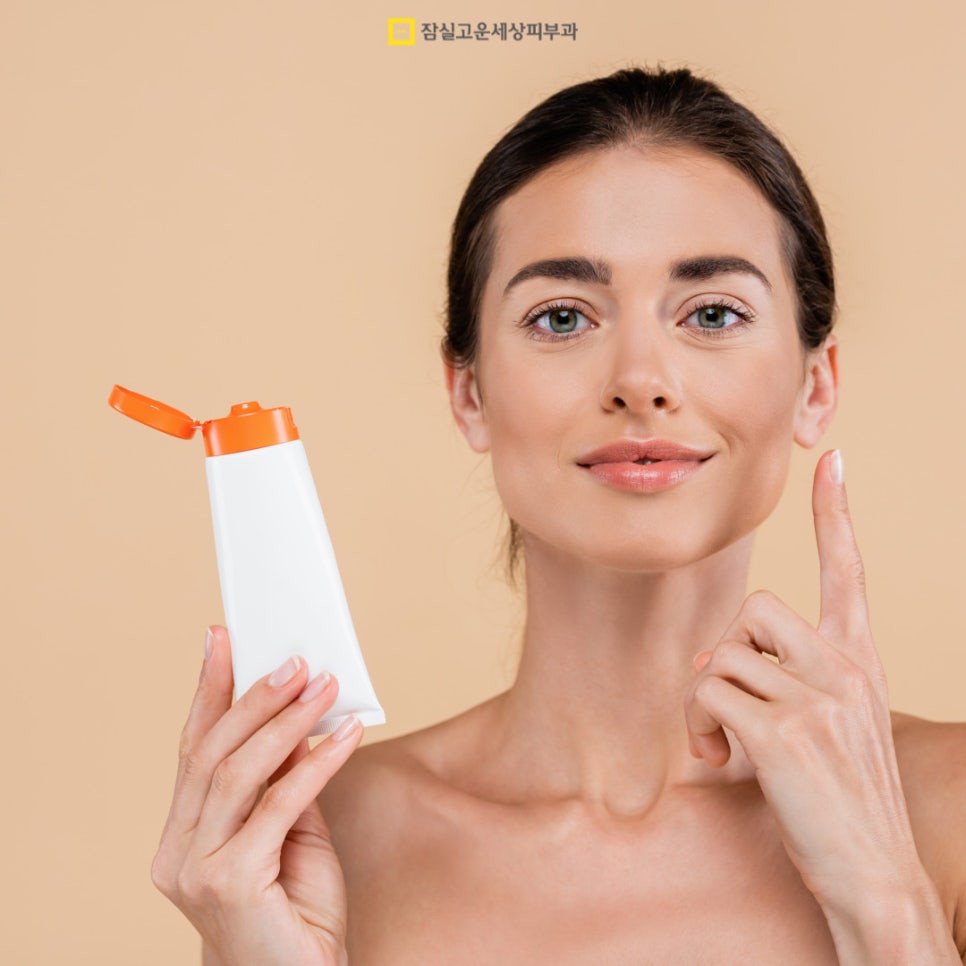
For those with acne-prone skin, choosing sunscreen is especially important. Rather than oily lotion types, it is better to choose a fresh gel type or a product labeled “oil-free” or “non-comedogenic” (does not clog pores). And it is most important to make sunscreen a regular habit, both indoors and outdoors.
It is safest to avoid intentionally exposing yourself to sunlight for long periods, such as through “tanning” or “sunburn.” Please remember that rather than the vague belief that “sunlight is good for acne,” the habit of protecting and maintaining healthy skin is more effective in the long run.
- Cosmetics: pay attention to ingredients.

If you have skin that breaks out easily, the standards for choosing cosmetics should be different.
Rather than simply trusting a label that says “for acne-prone skin,” it is important to carefully check what ingredients are actually included.
The basics are to choose products labeled oil-free, non-comedogenic (does not clog pores), and non-acnegenic. These products minimize unnecessary oil, prevent pores from being blocked, and reduce the chance of new acne forming.
Also, when using hairspray or gel, be careful not to let it touch your face directly. Styling products for hair that may accidentally splatter onto or come into contact with the face can also clog pores and cause breakouts.
On days when you wear makeup, thorough cleansing at night is essential. If residue remains or cleansing is insufficient, sebum, dead skin cells, and waste materials can clog pores and worsen acne.
And if you consistently use a moisturizer for acne-prone skin, it can protect the skin barrier and help prevent excessive sebum production caused by over-dryness. The first step in acne care begins with choosing products that suit your skin type properly and practicing regular cleansing and moisturizing every day.
- Cleanliness: excessive washing can actually have a negative effect
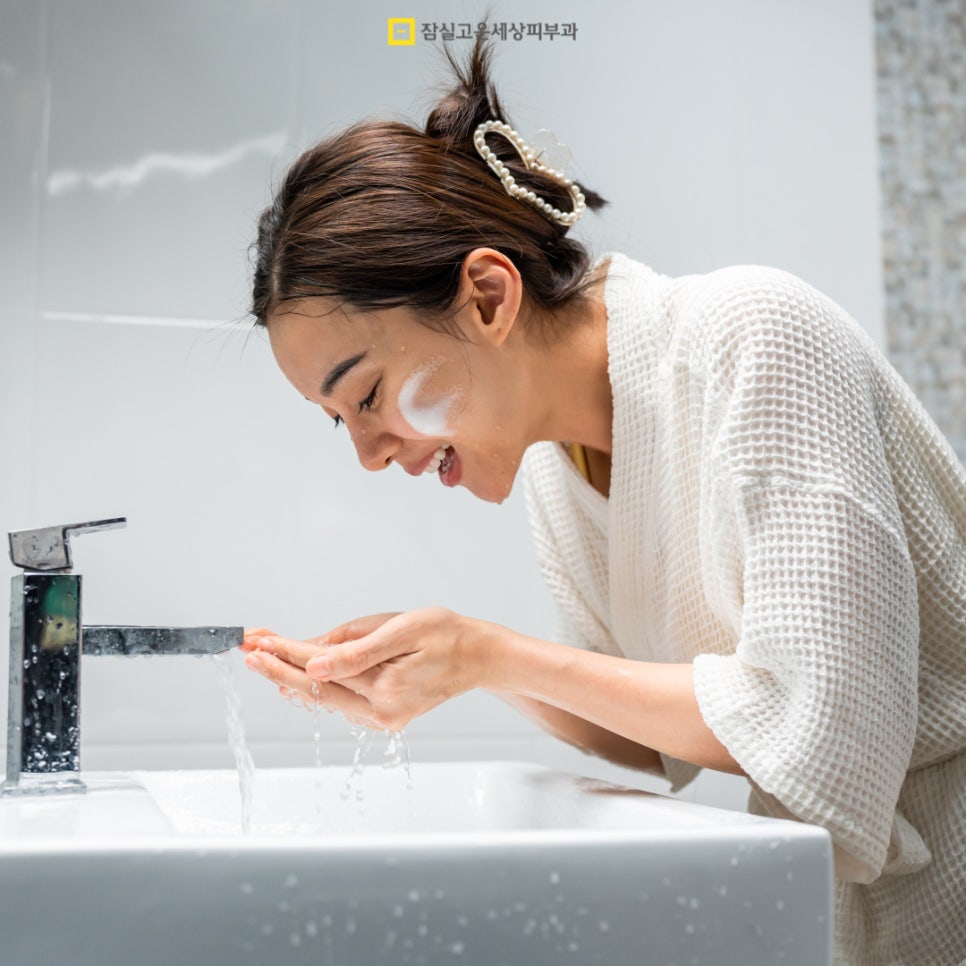
Acne is not a condition that occurs because the skin is “dirty.”
Blackheads are often mistaken for dirt, but in fact they are simply sebum and dead skin cells that have oxidized inside the pores and turned black. For this reason, washing the face too often, rubbing too hard, or repeatedly cleansing can actually weaken the skin barrier and stimulate sebum production, which may worsen breakouts.
Washing twice a day with lukewarm water and a low-irritation cleanser is ideal for the skin. Washing too often can cause even more sebum production, so regular cleansing alone is sufficient.
In particular, if acne frequently appears on the forehead and around the hairline, oil from bangs or the scalp may be affecting it, so washing your hair often can also be a helpful care method.
Above all, it is important not to become overly fixated on cleanliness habits.
Please remember that the key to preventing acne from worsening is the basic principle of protecting the skin’s natural defense barrier while practicing regular cleansing.
- Shaving: minimizing skin irritation is important
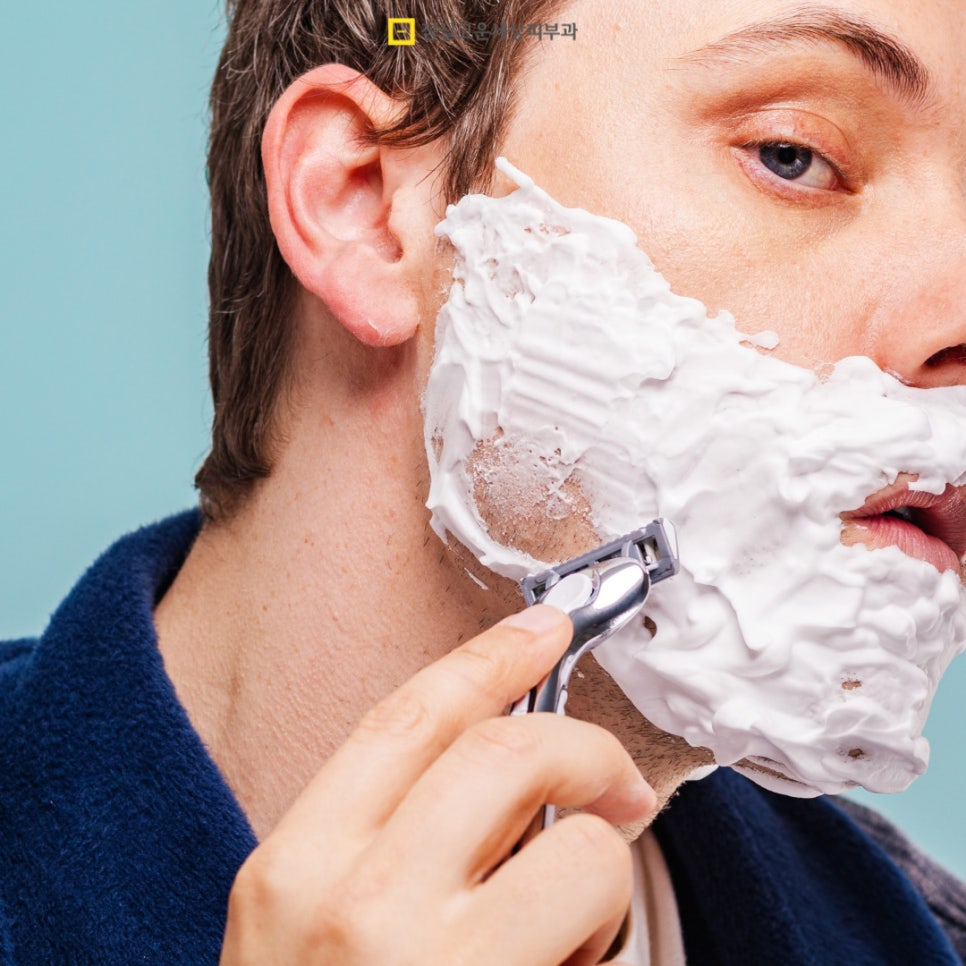
Men who experience recurring acne may have noticed that even shaving makes the skin more sensitive and increases breakouts. Since shaving itself can irritate the skin, it is very important to find the method that suits your skin.
Whether an electric shaver or a safety razor is less irritating varies from person to person.
Try both methods, but when using a safety razor, it is good to first soften the beard and skin by thoroughly soaking the facial hair with soap and lukewarm water. Using enough shaving cream or gel helps the blade irritate the skin less.
Above all, you should shave carefully while avoiding blemishes and inflamed areas. To prevent wounds, scars, and secondary infection, be sure to use a sharp razor blade and, if possible, shave only when truly necessary to reduce the burden on the skin.
Please remember that maintaining a hygienic shaving habit while minimizing irritation to the skin is a wise first step in preventing acne from worsening.

The skin remembers habits.
“Patience and consistency are the answer to acne care.”
Acne does not disappear completely with just one or two treatments or a short period of care.
The first step is to carefully observe how your skin reacts and what lifestyle habits and environmental factors affect it. From small daily habits to cleansing methods, cosmetic choices, stress management, sufficient sleep, and proper eating habits—all of these gradually accumulate and are reflected in the skin.
What matters is continuing to practice a routine that suits your skin even if there is no noticeable change right now. Remember that even if changes are slow, if you move in the right direction, your skin will definitely change positively.
And rather than worrying alone without direction, regularly checking your skin condition with a dermatologist and receiving the advice you need becomes the starting point for long-term healthy skin care.
The most important things in acne care are not to rush and not to give up. Do not forget that the right choices you make today lead to healthier skin and a more confident daily life tomorrow.
Thank you.
▼ Directions to Jamsil Gounsesang Dermatology ▼
▼ Jamsil Gounsesang Dermatology Treatment Information ▼
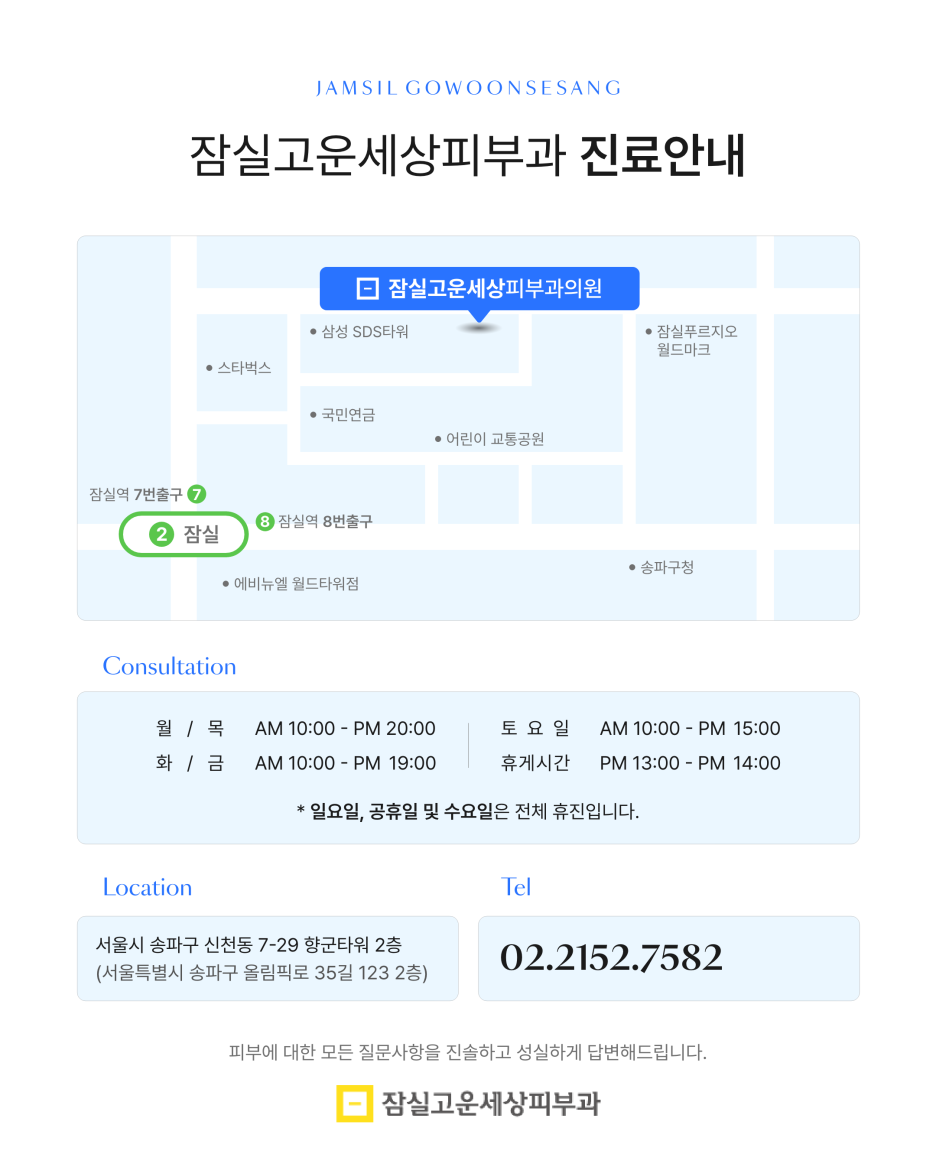
▼ Jamsil Gounsesang Dermatology Website ▼
This post is provided by Jamsil Gounsesang Dermatology for the provision of medical information in accordance with Article 56, Paragraph 1 of the Medical Service Act. All procedures/surgeries carry the risk of side effects such as bleeding, infection, and nerve damage, so please proceed carefully after sufficient consultation with medical staff.