Hello, this is Jamsil Gounsesang Dermatology Clinic.
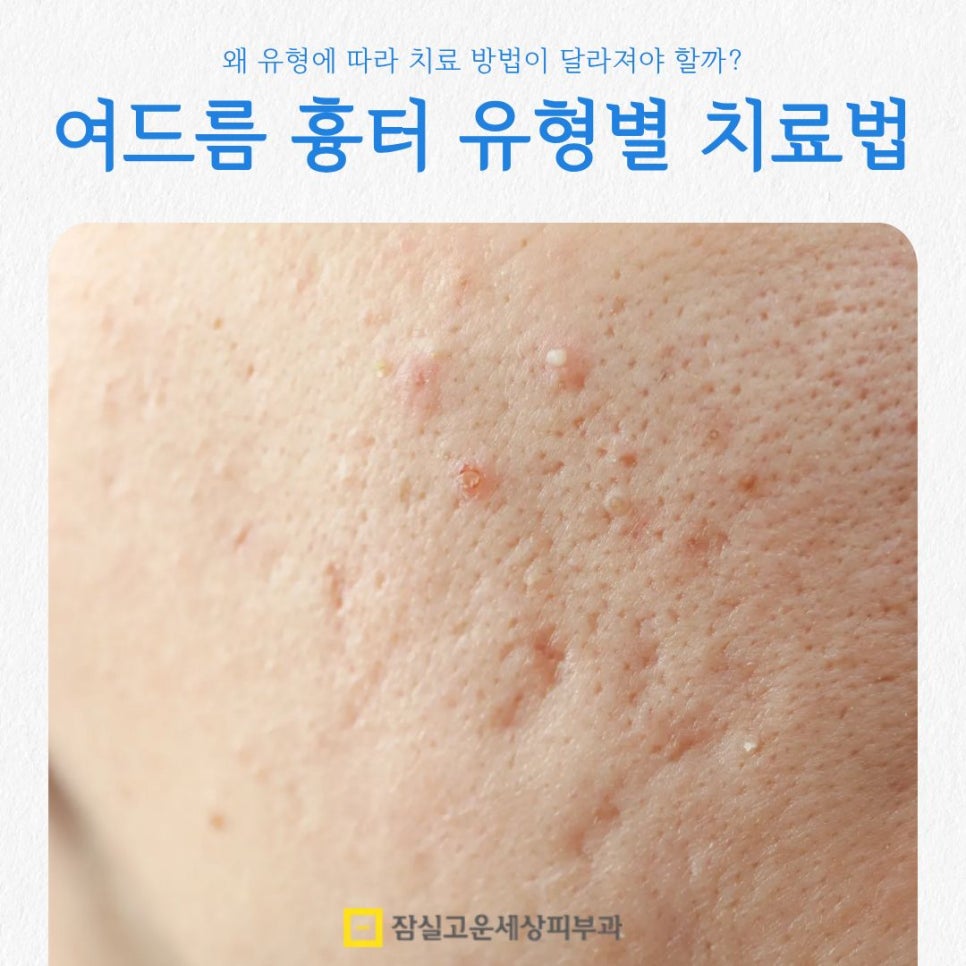
Even after acne has calmed down, the marks left on the skin
become another concern for many people. Makeup
doesn't sit well, the skin texture becomes uneven, and
every time you look in the mirror, it catches your eye.
Many people have already tried treatment several times
but haven't felt a big difference and are beginning to give
up, wondering, “Is this just something I have to live with?”
But the most important thing in acne scar treatment is
not the number of procedures, but the correct approach.
That is because not all scars can be treated the same way.
Even if they look similar on the surface, the treatment
strategy must change completely depending on the scar's
shape, depth, and the type of tissue adhesion.
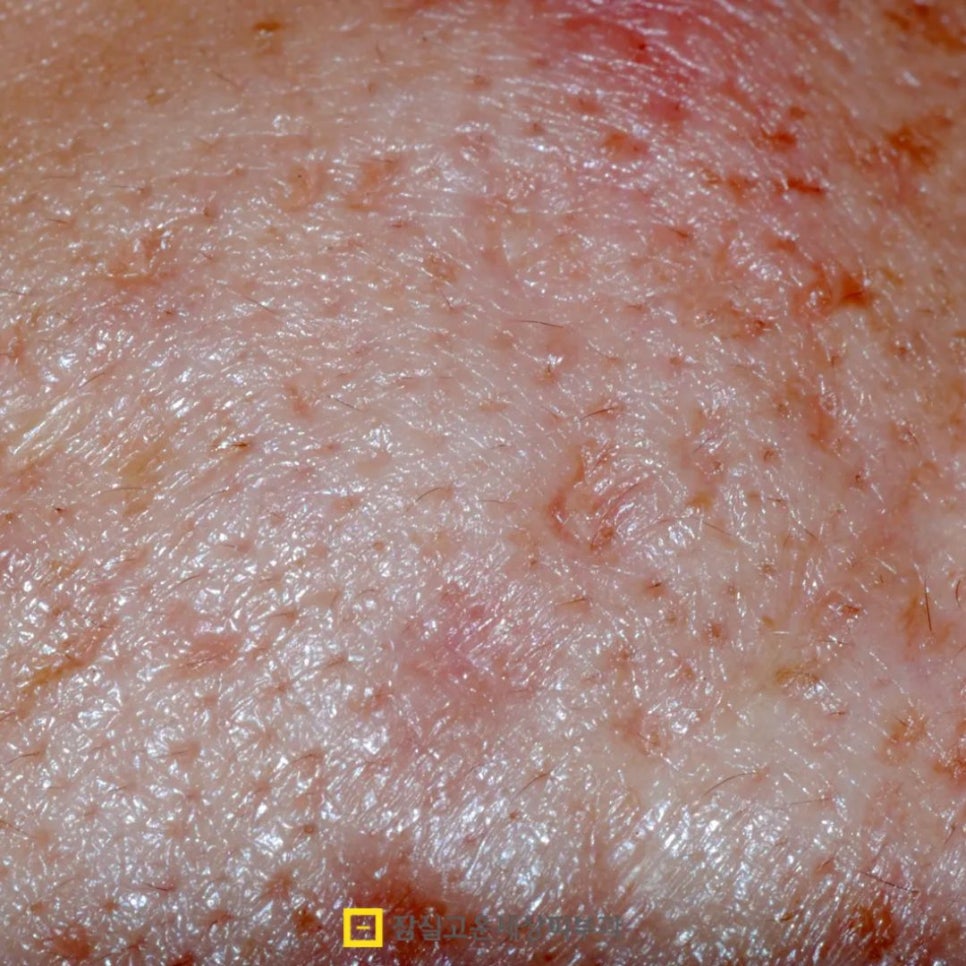
In this post, we will look at the characteristics and treatment
methods by scar type, why personalized treatment is
necessary, and further, why it is important to receive a
diagnosis from a specialist.
- Characteristics and Treatment Methods by Acne Scar Type
Acne scars are not a single form; they have various
structures, depths, and widths, and can be broadly
classified into four types depending on the pattern of skin
tissue damage. Each scar differs not only in its visible
appearance, but also in the condition of the fibrous tissue
under the skin, the extent of adhesion, and the depth of
damage, so the treatment method must also differ.
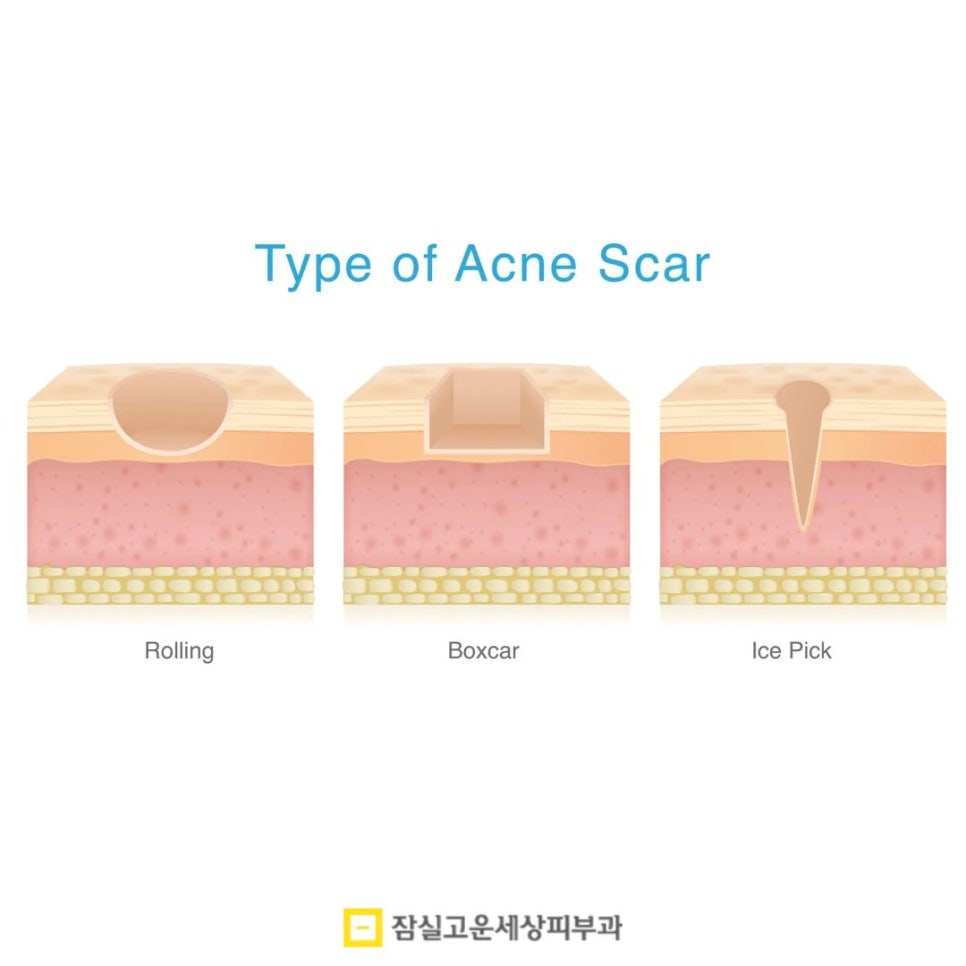
The first is the ice pick type.
These are narrow, deep scars that look as if they were
pierced by a needle, and because they often extend deep
into the dermis, improvement with laser alone is difficult to
expect. In such cases, punch excision to remove the scar,
or subcision to release adhesions, is combined with
regenerative treatment.
The second is the boxcar type.
These scars have clearly defined edges and a sunken,
square-like shape, and they often occur around the cheek-
bone area. They are mid-depth scars, but because they are
often spread over a broad area, subcision and fractional
laser are used together, and collagen regeneration
injections may be added if needed.
The third is the rolling type.
These scars have unclear borders, and the skin as a whole
looks uneven like waves. Because widespread adhesions
are the cause, extensive release procedures should come
first, and then dermal regeneration should be induced with
radiofrequency devices or collagen injections to expect
effective results.
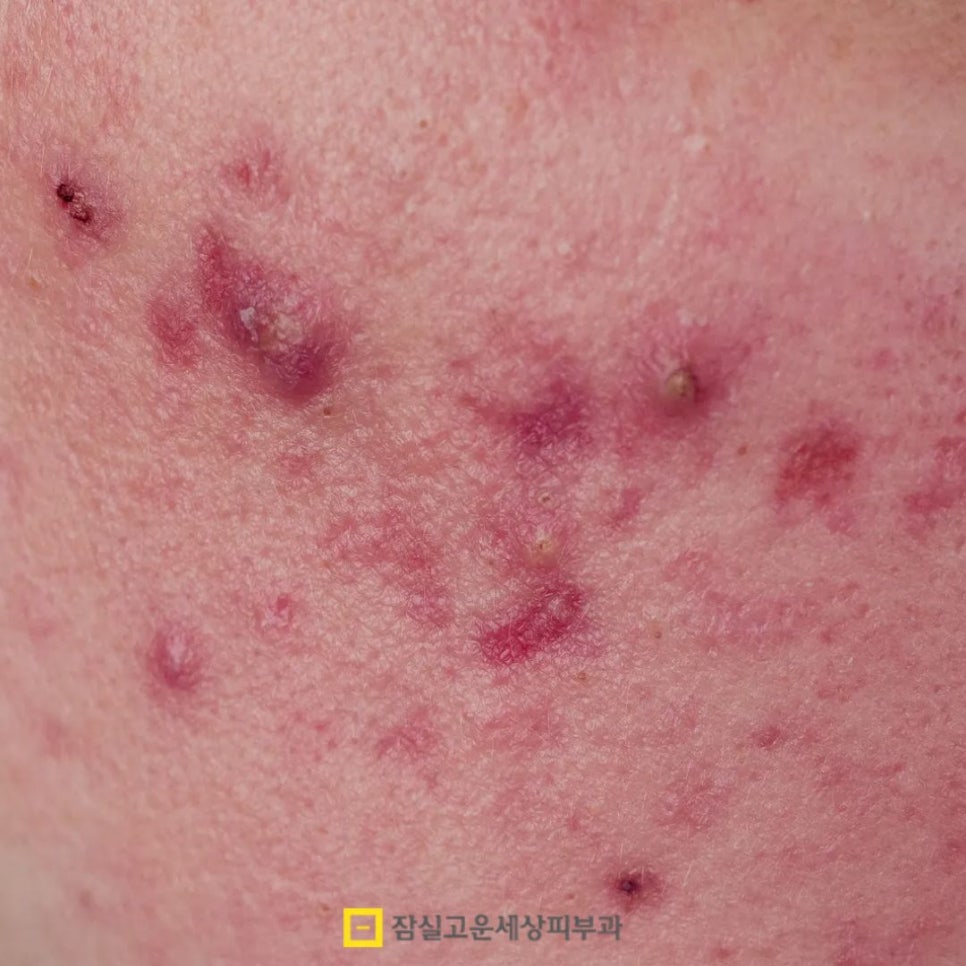
The last is the hypertrophic or keloid type.
During the healing process of acne lesions, the skin instead
forms a firm raised bump, and these are commonly seen on
the jawline, back, or chest. In this case, unlike depressed
scars, the basic approach is treatment that suppresses the
overgrowth of fibrous tissue. Typical approaches include
steroid injections, radiofrequency ablation, and CO2 laser.
- Why Type-Specific Treatment Is Important
The most common reason scar treatment fails is repeatedly
performing the same procedure without distinguishing the
type of scar. When procedures such as Fraxel or laser are
repeated simply because scars exist, skin irritation
accumulates, but the tissue release or reconstruction that is
actually needed does not occur, and the procedure ends
with little change.
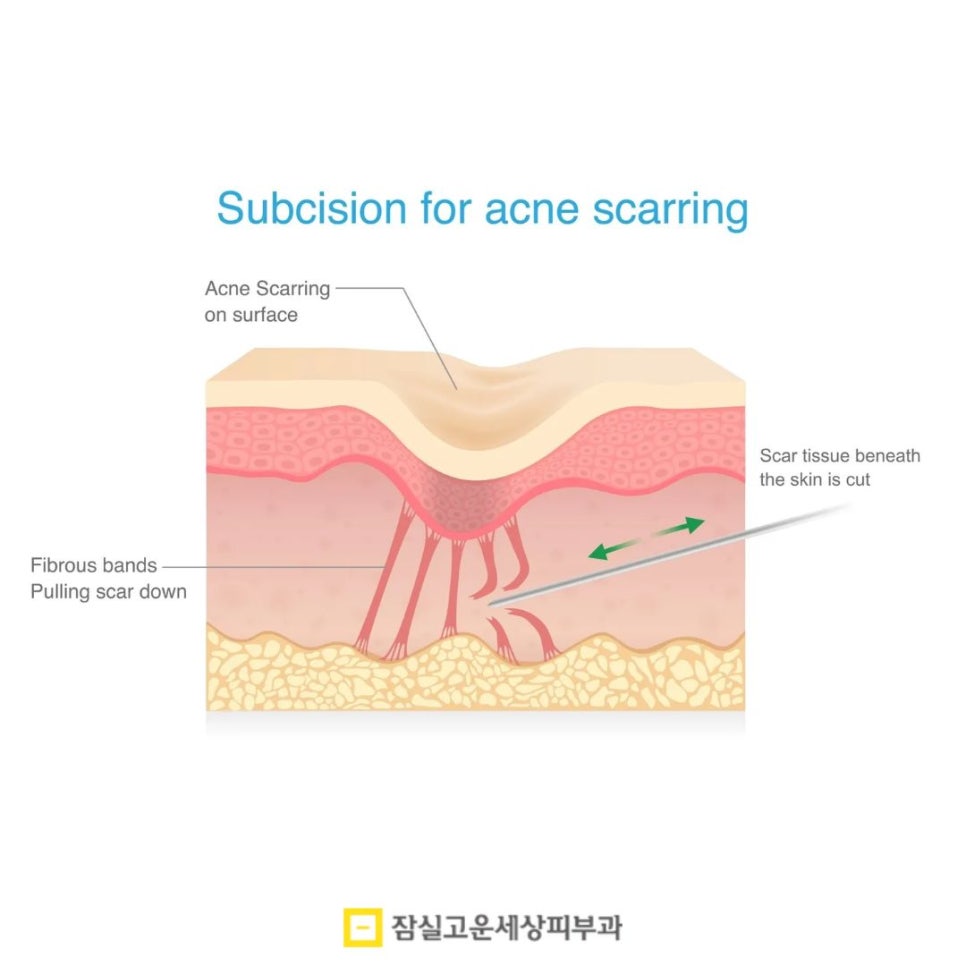
For example, narrow and deep scars like the ice pick type
have limits with laser alone, and direct excision or
measures to release adhesions must come first. On the
other hand, rolling scars may look shallow on the surface,
but because they involve widespread adhesions, a procedure
that loosens the fibrous bands beneath the skin is definitely
necessary.
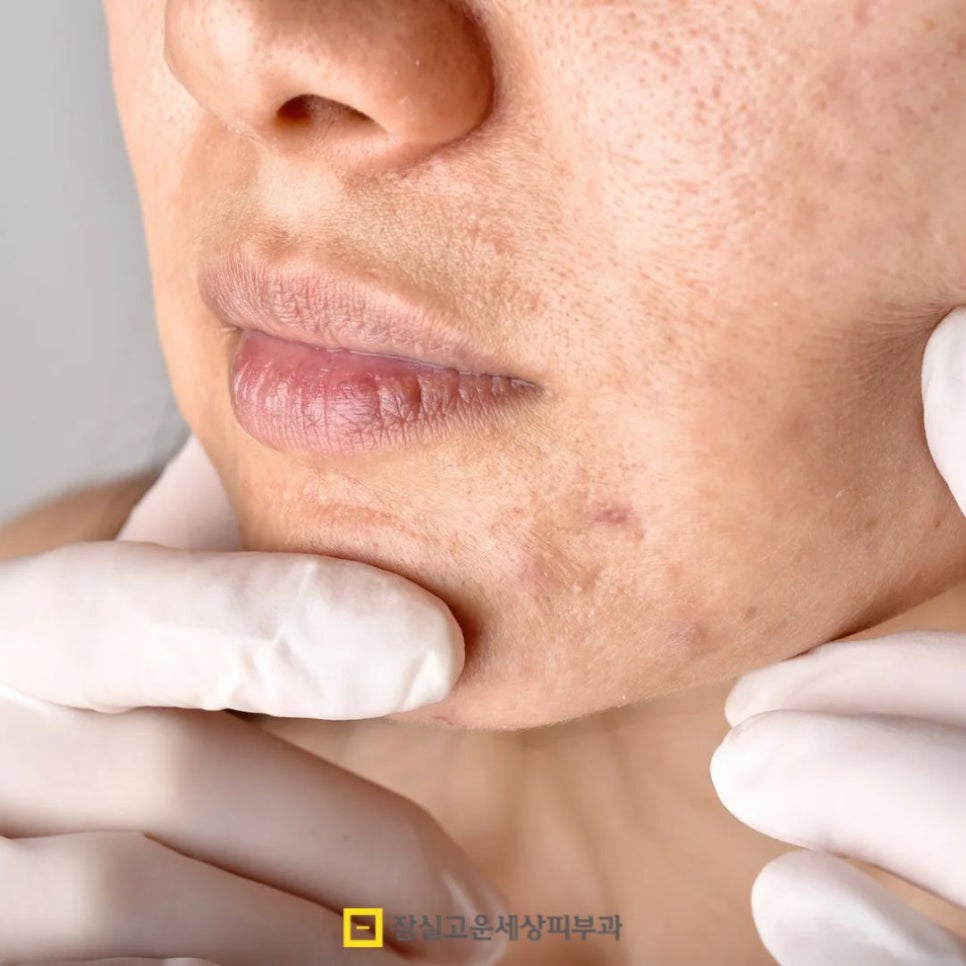
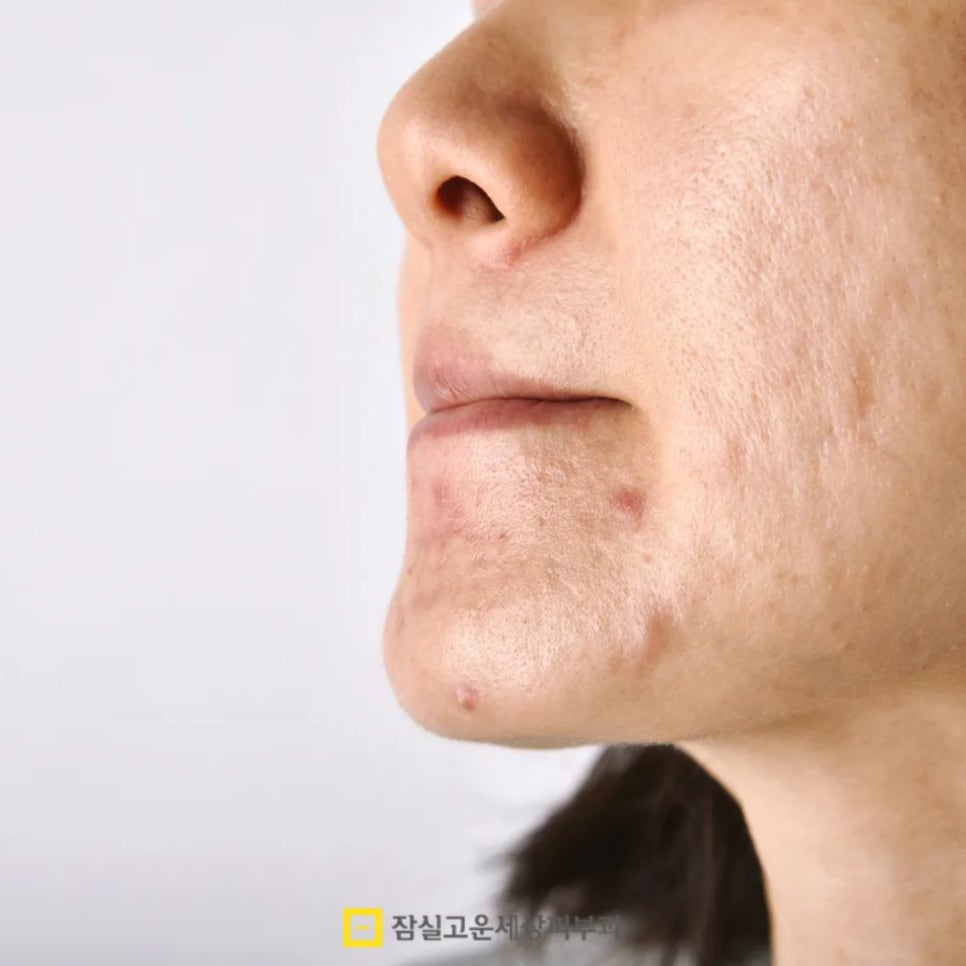
In addition, it is common for multiple scar types to appear
mixed together on one face. On the center of the cheeks,
there may be boxcar scars, on the jawline rolling scars, and
beside the nostrils ice pick scars at the same time. In such
cases, a layered approach that combines different
procedures according to each scar is needed.
If you receive a uniform procedure without an accurate
diagnosis like this, the skin may be unnecessarily irritated,
while the deep tissue that actually needs improvement may
be left untouched. If treatment takes a long time and the
effect is minimal, the cause should be found in an approach
that ignores the structural characteristics of the scar.
- Why You Should See a Dermatology Specialist
Acne scar treatment is not simply a cosmetic procedure; it
is a medical treatment that structurally restores damaged
tissue below the dermis. Determining the scar's structure
and depth, and deciding which device and procedure order
to apply, is an area that requires the analytical ability of an
experienced medical professional.
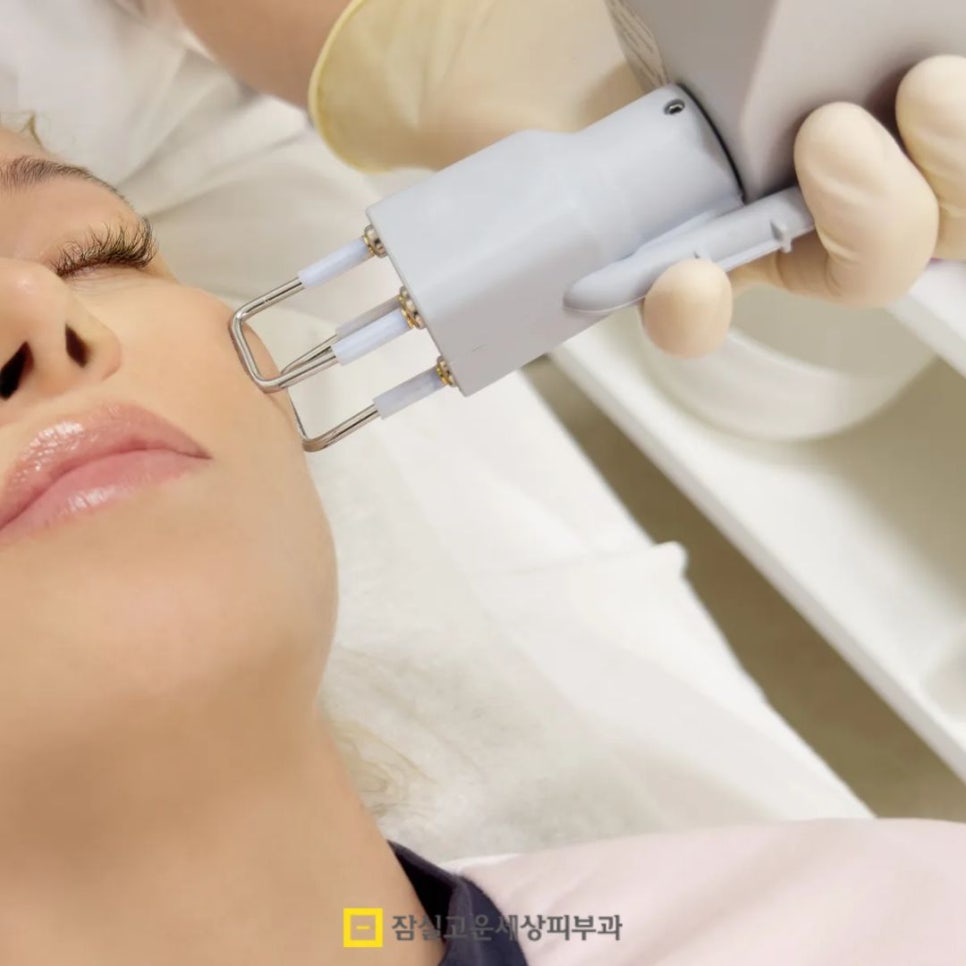
In particular, procedures such as subcision, punch excision,
radiofrequency needles, and air dissection can be risky
without an understanding of the skin's anatomical structure
and the depth of the procedure, and may instead lead to
pigmentation, excessive inflammation, or abnormal
reactions. In addition, when inducing collagen regeneration,
high-level adjustment is needed to deliver energy deeply
enough while minimizing damage to the basal layer.
Dermatology specialists are experts with the most clinical
experience in classifying these structural scars and
establishing treatment strategies. If the goal is not merely
cosmetic improvement but the restoration of tissue damage
known as scars, it is advisable to consult with and plan
treatment with medical staff who have both medical
knowledge and procedural skill.
In addition, an experienced specialist can design a long-
term treatment plan, including appropriate adjustment of
treatment intensity based on the course of treatment,
monitoring for side effects, and designing combination
treatments. This integrated approach can be said to be the
core of acne scar treatment.
Scar treatment is about doing it properly,
not doing it often
Acne scar treatment is not simply about smoothing the
surface of the skin. True improvement is only possible when
adhesed tissue deep in the skin is released and collagen
regeneration is induced to restore the structure. To do that,
the starting point is to accurately know what type of scar you
have and what treatment is most needed.

Above all, the important thing is not a procedure that is the
same for everyone, but treatment that is right for you.
Meeting medical staff who structurally analyze each scar
and design the appropriate treatment step by step is the
fastest and most accurate way.
If you are struggling with acne scars, it may not be time to
start treatment again, but time to take a different approach.
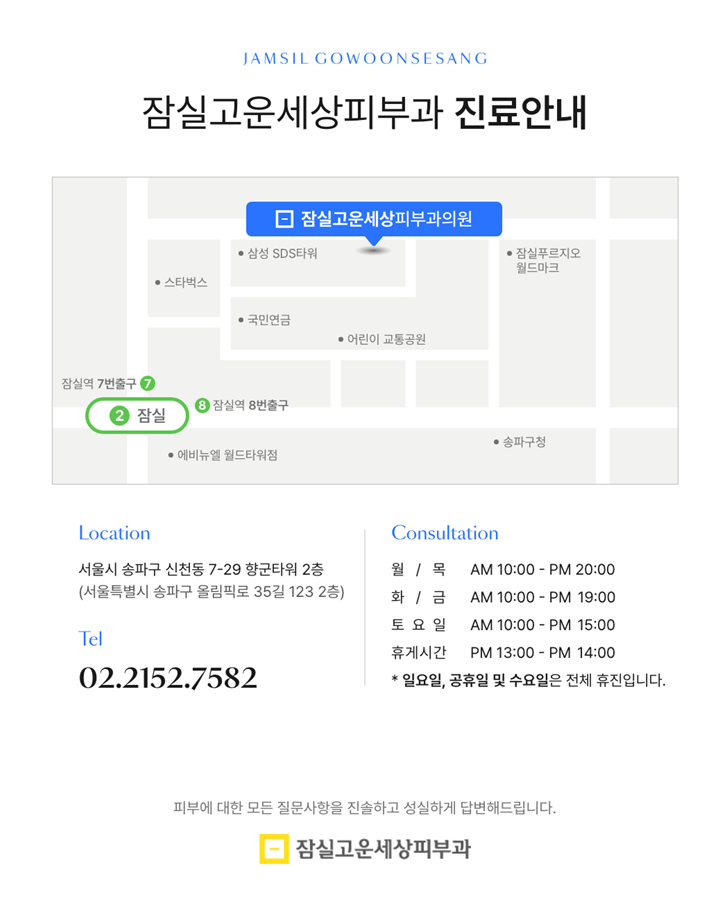
🖤 Directions to Jamsil Gounsesang Dermatology Clinic 🖤
🖤 Jamsil Gounsesang Dermatology Clinic Treatment Information 🖤
🖤 Jamsil Gounsesang Dermatology Clinic Homepage
In accordance with Article 56, Paragraph 1 of the Medical Service Act, this post is provided by Jamsil Gounsesang Dermatology Clinic for the purpose of providing medical information. Please note that all procedures/surgeries carry the risk of side effects such as bleeding, infection, and nerve damage, so please proceed carefully after sufficient consultation with medical staff.