Acne scar treatment,
Why the approach should differ
depending on skin type!
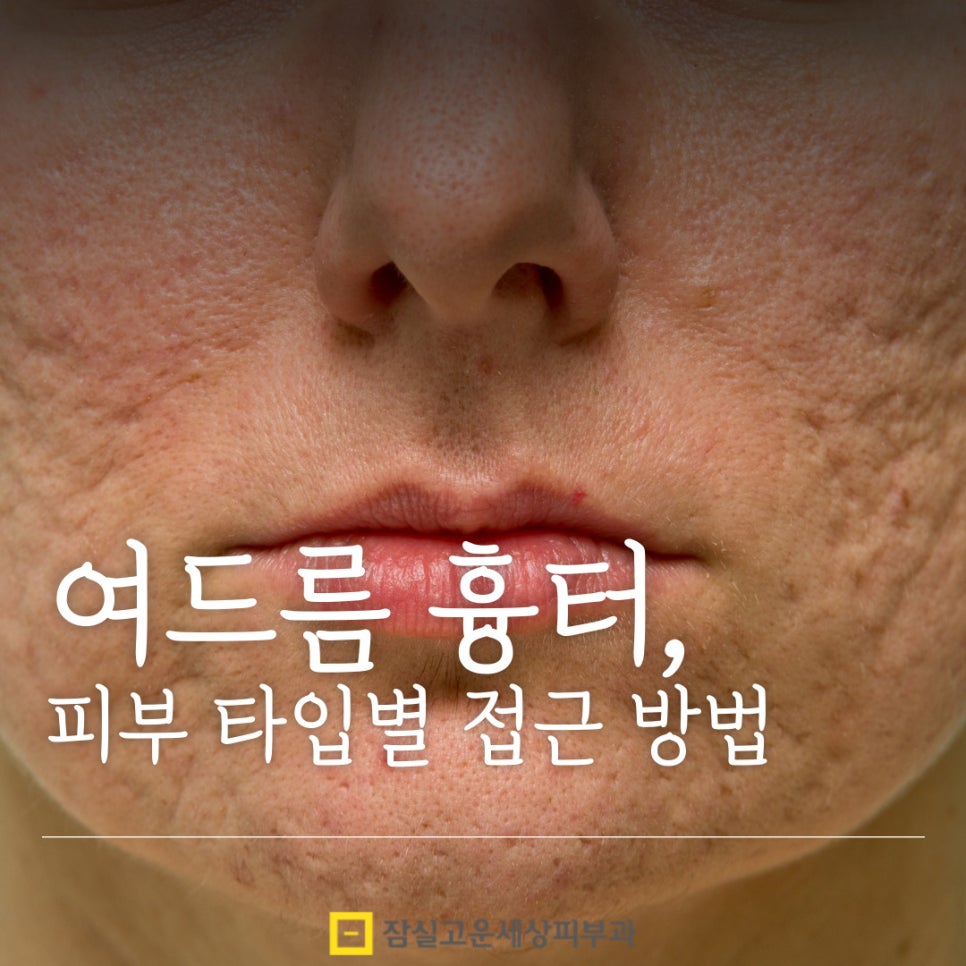
Hello, this is Jamsil Gounsesang Dermatology!
When thinking about acne scar treatment, you may wonder: “Since scars are already sunken in, can’t they just be shaved down with a laser or regenerated to make them flat?”
But in actual dermatology treatment, it is not that simple. Even scars that look similar on the surface can require different treatment approaches depending on skin type, and even with the same procedure, the recovery speed, response, and results can be completely different.
For example, oily skin tends to have more sebum and is relatively thicker, while dry skin is thinner and more sensitive. This is why the same procedure cannot produce the same outcome. Skin cannot be judged by the shape of the scar alone; the “environment” in which the scar exists—in other words, the overall characteristics and condition of the skin—plays an important role.
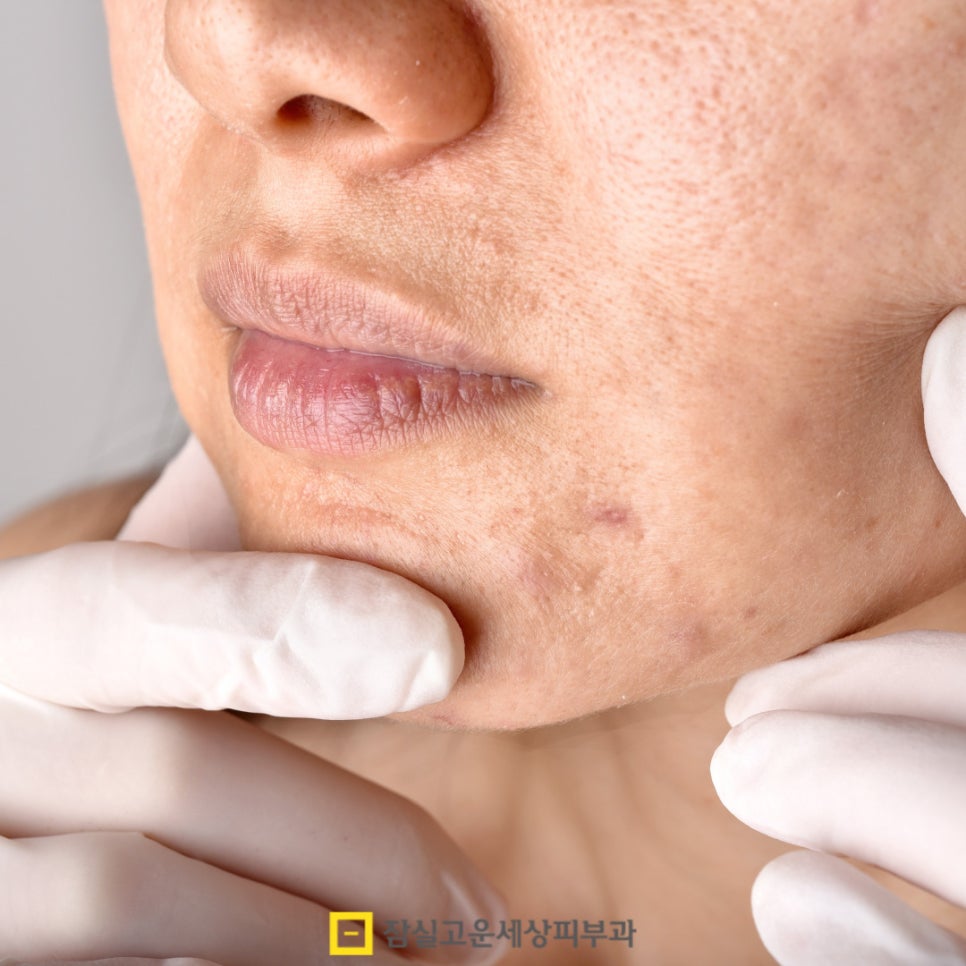
That is why dermatology clinics make treatment plans by considering not only the shape and depth of the scar, but also the skin type and condition where the scar is located. By viewing the skin as one organic system and applying the most suitable method within it, stable results can be expected.
Today, I will explain one by one why skin type matters in acne scar treatment and by what criteria the approach changes. If the skin is different, the treatment must also be different—let’s take a closer look.
The effect of skin type on scar treatment
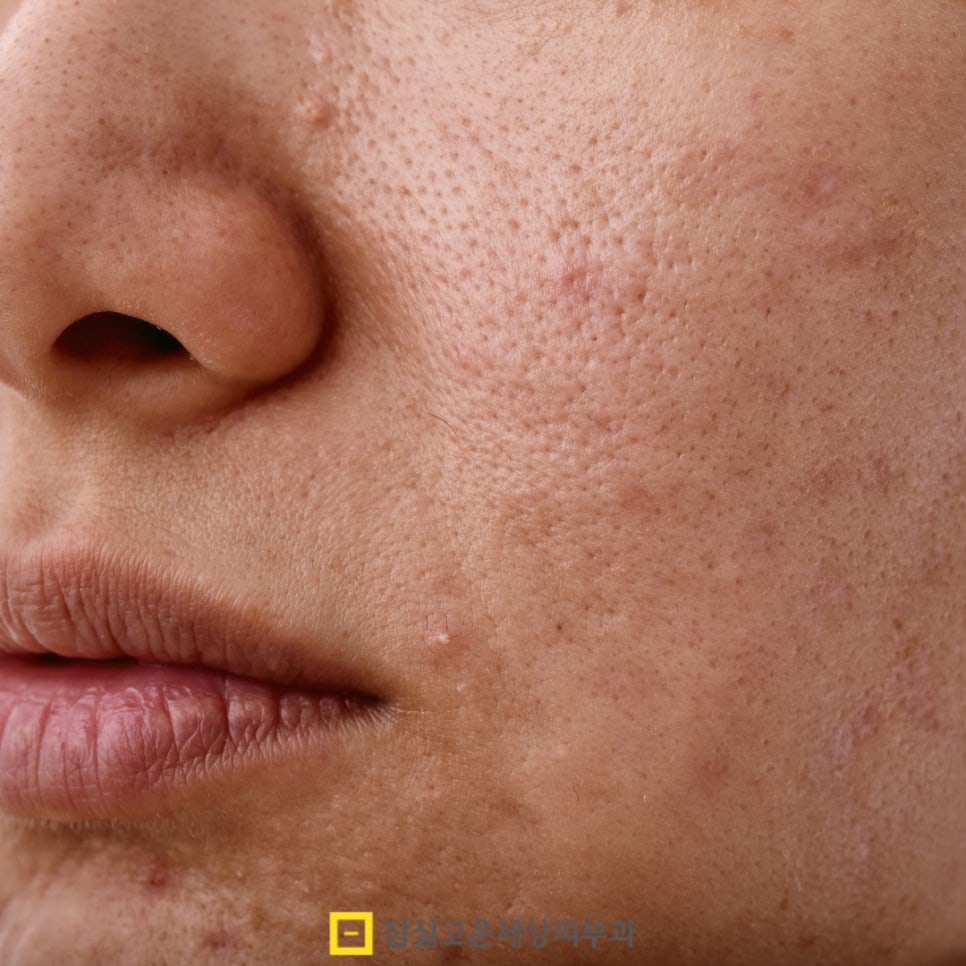
- Skin thickness and barrier condition change the treatment response
Oily skin has well-developed sebaceous glands and is relatively thick. In such cases, regeneration tends to be faster, but inflammation may recur due to sebum production, or post-procedure pigmentation may remain for a long time. That is why, rather than performing a strong treatment all at once, it is safer and more effective to approach it with repeated sessions while adjusting the intensity.
Also, because oily skin has larger pores and more sebum secretion, sebum can clump around the treated area and interfere with recovery. Therefore, pore care and sebum control before and after treatment are also important. Even if the skin looks strong on the outside, inflammatory reactions can be sensitive, so the overall treatment strategy matters more than procedure intensity.
In contrast, dry skin often has a weak skin barrier and is thin, making it more sensitive to irritation. If strong laser or peeling treatments are applied, recovery can be slow, and skin troubles or redness may last longer.
Therefore, dry skin needs a strategy of gradually improving scars with low-intensity procedures after going through a preparation process centered on hydration and soothing.
Dry skin, in particular, reacts easily to changes in the external environment. If dryness worsens after a procedure, flaking and redness can become more severe, so post-care is very important. The skin barrier should be restored first, and treatment should be carried out only after creating an environment in which the skin can regenerate on its own, so that good results can be expected without side effects.
In the case of sensitive skin, the response is difficult to predict. Because it reacts hypersensitively to certain stimuli or procedure ingredients, it is more appropriate to confirm the reaction with a single procedure first and then expand slowly, rather than doing several procedures at once. For sensitive skin, pre-treatment soothing care is very important, and not only the treatment intensity but also the regenerative products, soothing packs, and moisturizers used should be customized.
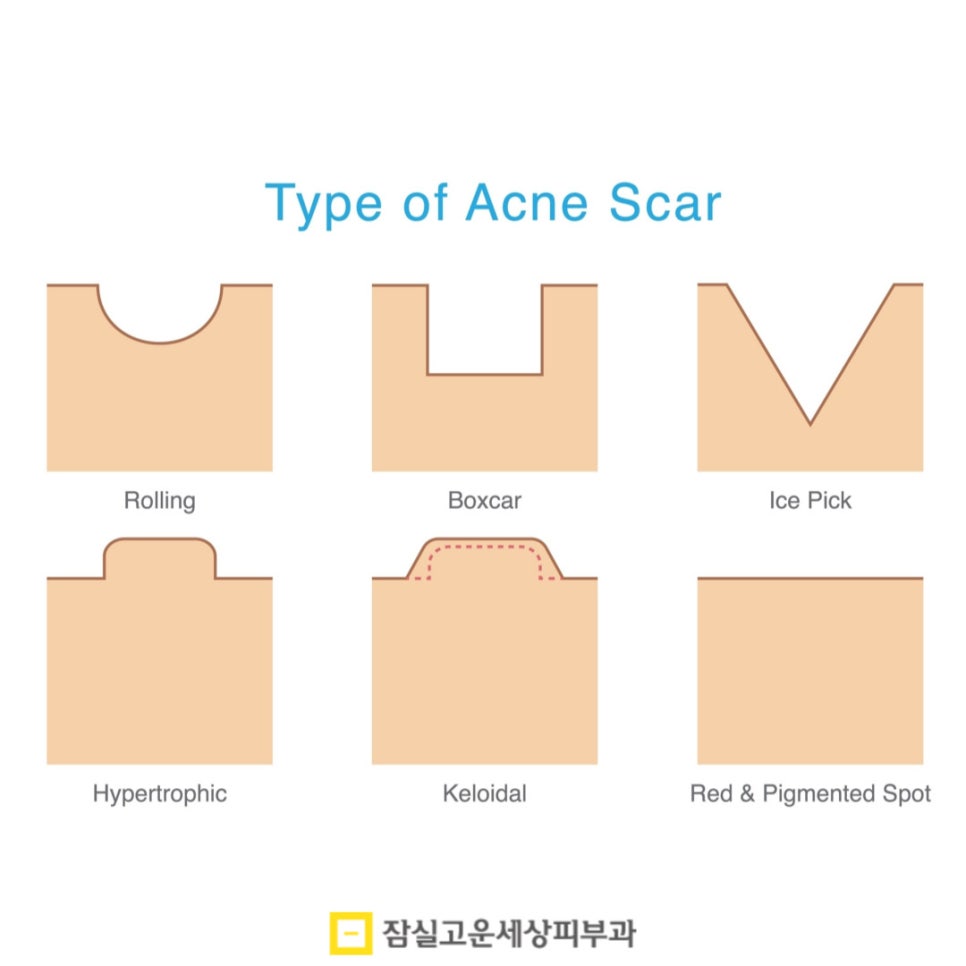
- The compatibility between scar type and skin type is also important
Even the same scar can appear more noticeable or, conversely, less noticeable depending on skin type.
For example, rolling scars that are broad and shallow may look more distinct on oily skin where sebum and pores are also more developed, so smoothing the surface and controlling sebum together can improve results.
Rolling scars are actually shallow in depth but spread widely, so the key is treatment that smooths out the skin texture. At this point, the thickened stratum corneum and excessive sebum secretion characteristic of oily skin can interfere with treatment absorption, so exfoliation care and sebum suppression should be carried out during the preparation stage.
On the other hand, boxcar scars with clear borders are more difficult to treat on dry, thin skin. This is because if the epidermis is damaged by improper peeling or laser treatment, uneven tone changes can occur easily. In such cases, the focus should be on depth control and recovery ability rather than intensity.
In particular, when the skin is thin, the tissue around the scar may lack elasticity and take time to recover, and the response after treatment can be inconsistent. For this type of skin, repeated low-irritation treatments combined with regeneration and hydration are appropriate.
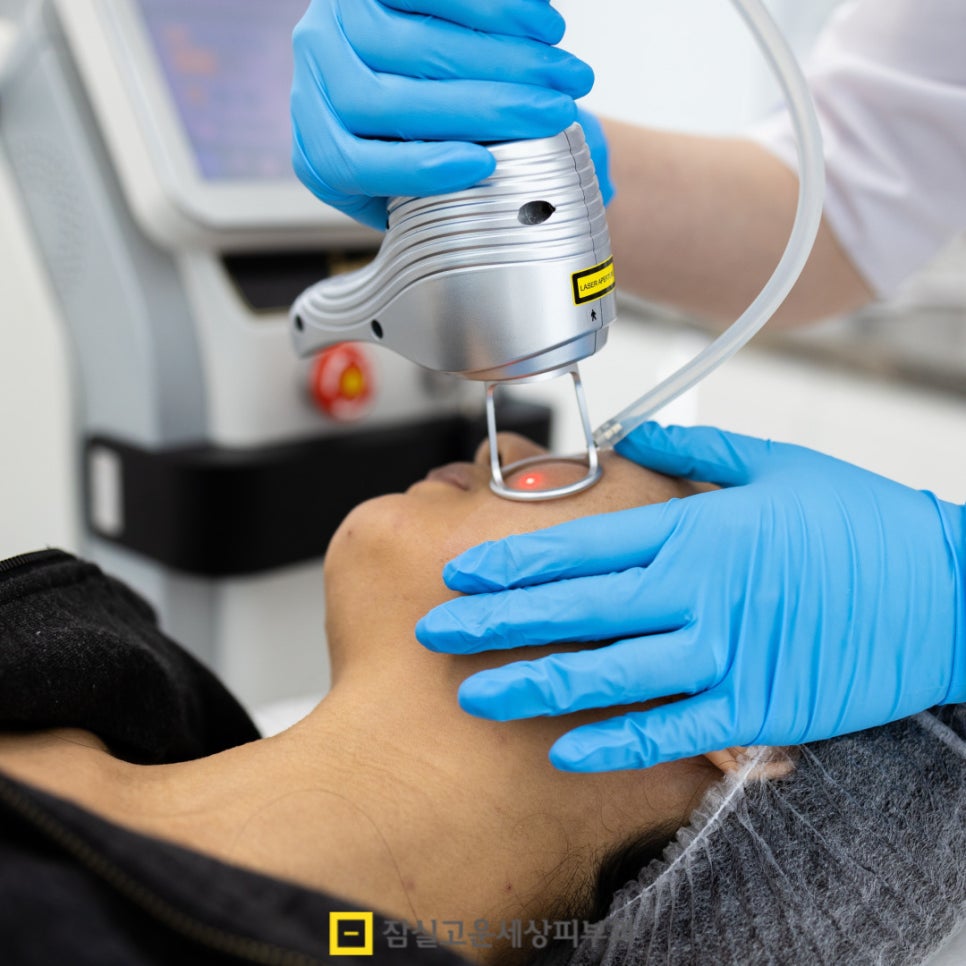
Deep and narrow scars such as icepick scars are relatively difficult to treat, and because high-intensity procedures are hard to apply to sensitive skin, repeated micro-treatment methods are safer and can still be effective. Icepick scars are better suited to precise invasive treatments or methods that induce collagen regeneration than to lasers or peeling, and the treatment interval also needs to be adjusted according to skin condition.
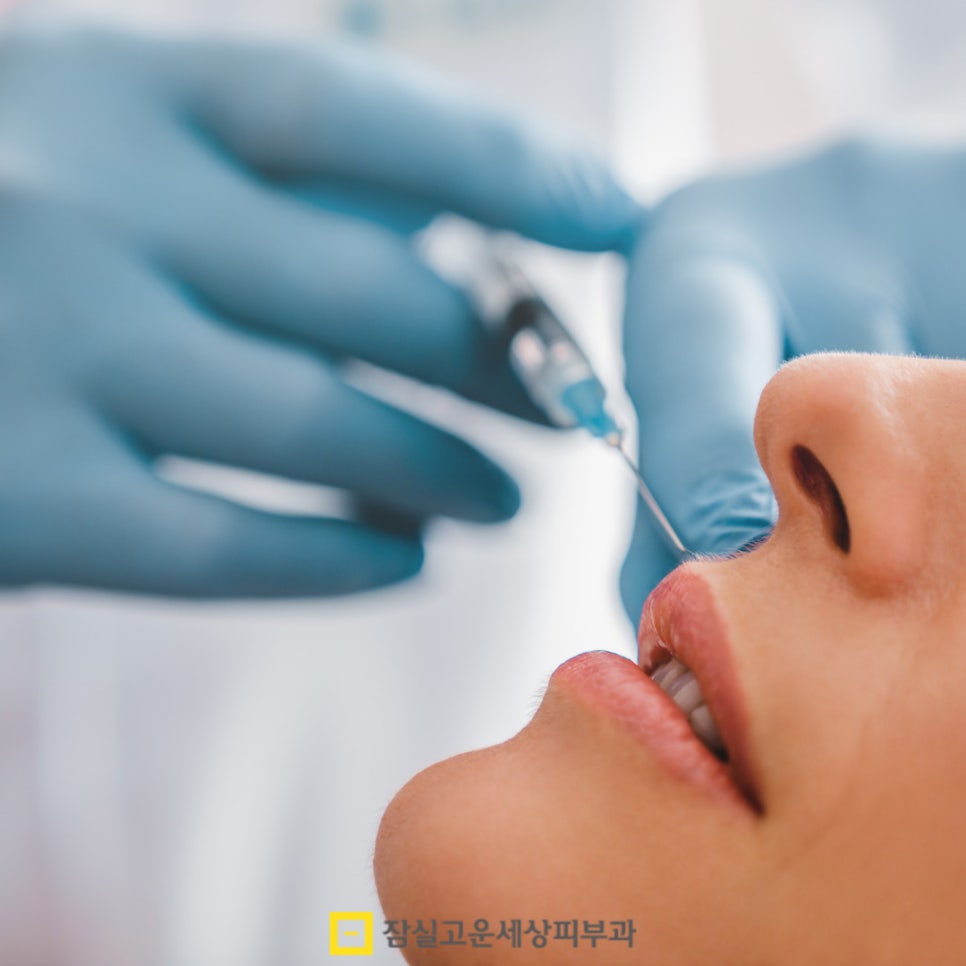
- The duration of pigmentation and red marks must also be considered
In the scar treatment process, one issue that cannot be left out is pigmentation and erythema (red marks). Depending on skin type, these marks may last a long time, and sometimes the marks themselves become more stressful than the scars.
In particular, skin with a darker tone or skin with a strong inflammatory response tends to have pigmentation that lasts longer after procedures, so instead of simply using strong treatments, the intensity should be adjusted with pigmentation reactions in mind.
For example, if a person tends to leave severe post-inflammatory marks, pigment-stabilizing treatment should be performed first, rather than laser treatment, so that the skin tone does not worsen after scar treatment. As such, skin with strong pigmentation reactions requires precise planning of treatment intensity, frequency, and post-care in order to expect good results without side effects.
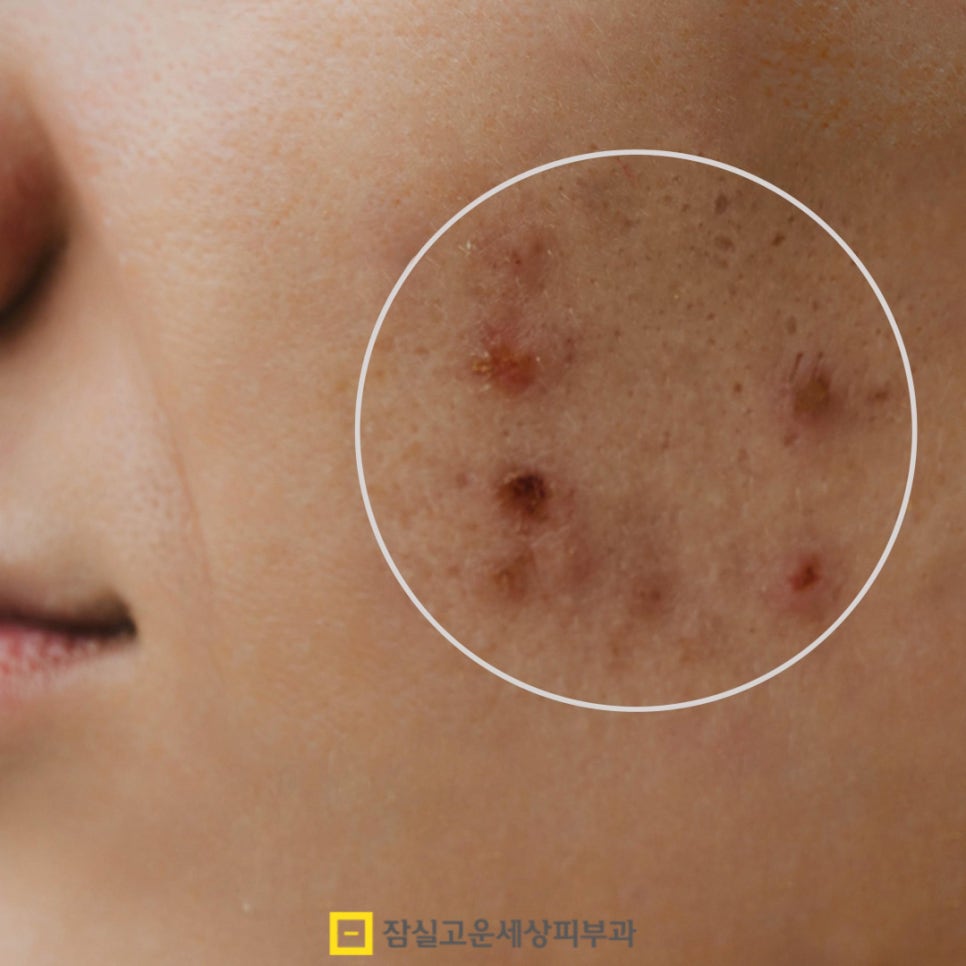
Scar treatment is not something that can be judged simply by looking at the depressed marks on the skin. Only by considering the thickness of the skin where the scar is located, oiliness, sensitivity, barrier recovery ability, and degree of pigmentation reaction can a safe and effective treatment plan be made.
Even the same scar will require different treatment intensity, show different responses, and have different recovery speeds depending on which skin it is on.

So rather than blindly repeating strong treatments based only on the scar itself, it is important to first identify the condition of your own skin and then approach it in a way that matches it. In the end, skin is not just a surface but a living structure, so treatment should not be about cutting or covering it up, but about helping the skin recover on its own.
Remember this: scar treatment strategies vary by skin type. To get real results, you need to look not only at the scar, but at the entire skin surrounding it.
<< Directions to Jamsil Gounsesang Dermatology >>
<< Jamsil Gounsesang Dermatology Consultation Guide >>
<< Jamsil Gounsesang Dermatology Website >>
This post was provided by Jamsil Gounsesang Dermatology for the purpose of providing medical information in accordance with Article 56, Paragraph 1 of the Medical Service Act. All procedures/surgeries carry risks of side effects such as bleeding, infection, and nerve damage, so please proceed carefully after sufficient consultation with medical staff.